Michael Peifer
43.5K posts

Michael Peifer
@flakyfarseer
'For my part I know nothing with any certainty, but the sight of the stars makes me dream.' ― Vincent van Gogh
United States انضم Mart 2010
1.9K يتبع2.2K المتابعون
تغريدة مثبتة
Michael Peifer أُعيد تغريده

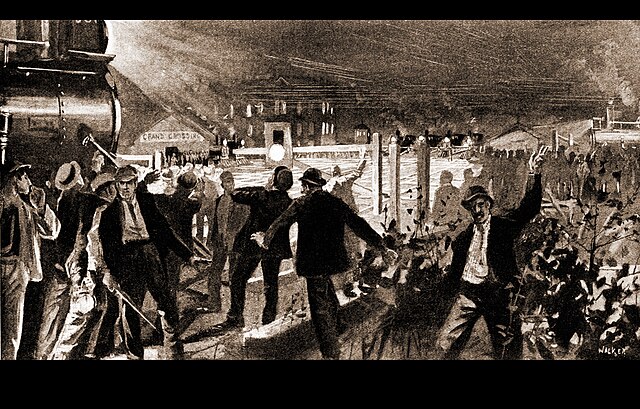
#OtD 11 May 1894 the Pullman railroad strike began in Chicago after the firing of 3 workers. The biggest strike in US history to date, it was only eventually broken by federal government troops and the killing of at least 24 strikers stories.workingclasshistory.com/article/8336/p…

English
Michael Peifer أُعيد تغريده

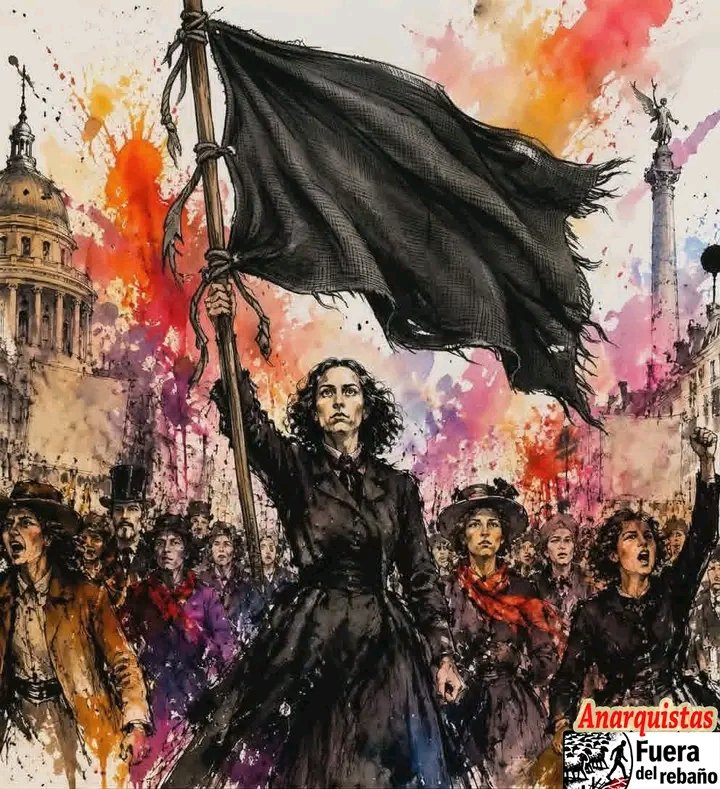
El 9 de mayo 1883 marcó un hito fundamental para el imaginario libertario cuando la bandera negra apareció por primera vez como símbolo del anarquismo en una manifestación de desempleados en París.
Aquel día, la destacada luchadora social Louise Michel encabezó una protesta que buscaba denunciar el hambre y la miseria de la clase trabajadora bajo la consigna de pan o trabajo.
Al frente de la marcha, Michel enarboló un viejo chal negro amarrado a un palo, transformando un pedazo de tela en un emblema de resistencia que buscaba diferenciarse claramente de la bandera roja de los republicanos y socialistas de la época.
Para los participantes, el color negro representaba el duelo por las víctimas del sistema y la miseria de los explotados, pero también funcionaba como una negación de todas las banderas nacionales que dividían a los pueblos.
Desde aquel momento en la explanada de los Inválidos, el negro dejó de ser solo un color de tristeza para convertirse en el símbolo de la anarquía, representando un vacío de poder donde no caben autoridades ni jerarquías.
Este gesto de Michel no fue un simple detalle estético, sino un acto de autonomía política que definió la identidad de un movimiento que se negaba a marchar bajo los colores del estado o de partidos reformistas, estableciendo una tradición visual que hasta el día de hoy une a quienes, como nosotros en el grupo fuera del rebaño, elegimos caminar bajo nuestros propios términos y mantenernos firmes en el apoyo mutuo sin amos ni fronteras.
#MemoriaAnarquista

Español
Michael Peifer أُعيد تغريده

Saif has been released from israeli captivity and after 6 brutal days, his message is clear - we must continue to mobilize!
Still, thousands of Palestinian prisoners are being held hostage in israeli dungeons, subjected to inhumane conditions. We are one small step closer to a free Palestine but our fight is far from over. We must continue to push against empire on all fronts!
A heartfelt thank you Saif and Thiago’s legal team at Adalah and to all who mobilized and applied pressure at every level for the safe return of our comrades.
Until liberation.
English
Michael Peifer أُعيد تغريده

"Such a fine, sunny day, and I have to go. But what does my death matter, if through us thousands of people are awakened and stirred to action?"
Sophie Scholl spoke these words on February 22, 1943, moments before she was executed by guillotine. She was twenty-one years old. Her crime: distributing leaflets that called on Germans to resist Adolf Hitler.
The Nazis thought they had silenced her. Instead, her words would be dropped by the millions from Allied planes over Germany -- reaching more people than she could ever have dreamed.
Sophie Scholl was born on this day in 1921 in Forchtenberg, Germany, the fourth of six children. Her father, Robert Scholl, was a politician who despised the Nazi party from the start. He kept banned books on the family shelves, remained friends with Jews when others looked away, and spoke against Hitler in his own home -- even knowing that his children could turn him in.
At twelve, Sophie joined the League of German Girls, the female wing of the Hitler Youth, along with most of her classmates. Her brother Hans joined the boys' division. They argued constantly with their father about politics. But one evening, walking along the Danube, Robert Scholl turned to his children and said: "All I want is for you to walk straight and free through life, even when it's hard."
It took years, but the words took root. In 1937, Hans and several of his siblings -- including Sophie -- were arrested by the Gestapo for participating in a youth group the Nazis had outlawed. Sophie was released the same day, but the experience shattered her faith in the party. Then she heard an anti-Nazi sermon by Bishop Clemens August Graf von Galen, who spoke of the "theology of conscience" -- the idea that Christians had a moral duty to resist evil, even when obedience was easier. Her disillusionment hardened into determination.
In 1942, Sophie enrolled at the University of Munich to study biology and philosophy. Hans was already there, studying medicine. That same year, their father was arrested after a colleague overheard him calling Hitler "the scourge of humanity" and was sent to prison. Sophie was forced into compulsory labor at a metallurgical plant.
Meanwhile, Hans and his friends had begun meeting secretly, discussing philosophy, theology, and what it meant to live under a dictatorship. Friends who had served as medics on the Eastern Front returned with stories of what they had witnessed: the mass killing of Jews, Soviet prisoners shot in open graves, the machinery of genocide in full operation. Sophie's boyfriend, Fritz Hartnagel, was still serving there -- and his letters home described the same horrors.
They decided to act. They called themselves the White Rose -- an image of purity and innocence in the face of evil -- and began writing leaflets denouncing the Nazi regime and calling on Germans to resist. "We will not be silent," they declared. "We are your bad conscience. The White Rose will not leave you in peace!"
When Sophie discovered what her brother was doing, she insisted on joining. She bought an illegal typewriter and helped craft the arguments. Because the Gestapo rarely searched young women, she became essential to distributing the leaflets -- mailing them to professors and doctors, leaving them in phone booths and lecture halls, taking trains to other cities to create the impression of a vast network.
She knew the risks. She told Fritz she understood that resistance could cost her "both her head and her neck." She asked him for money to buy a printing press anyway.
On February 18, 1943, Sophie and Hans entered the University of Munich carrying a suitcase filled with copies of their sixth leaflet. They moved quickly through the empty corridors, leaving stacks outside classrooms before lectures ended. They were almost finished when Sophie noticed a few leaflets still in the bag. She ran to the top floor and flung them over the railing into the atrium below.
© A Mighty Girl
#archaeohistories

English

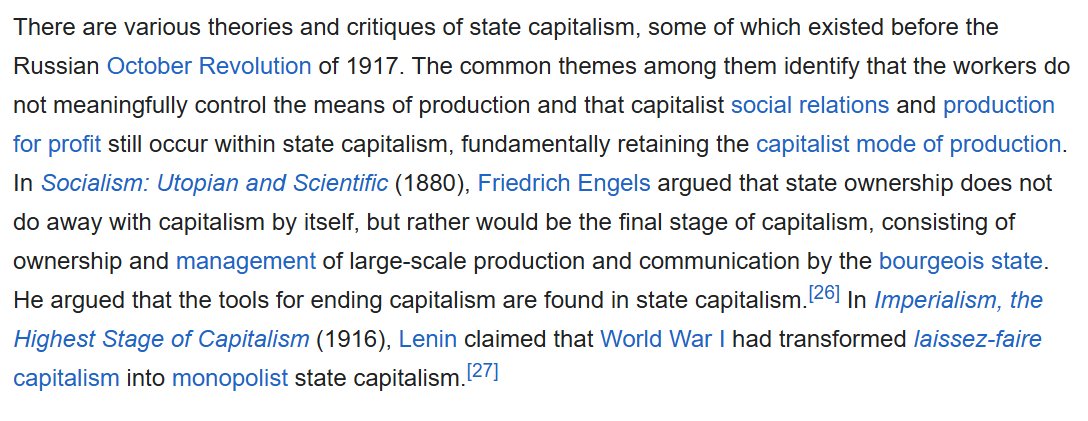
@mattsinz94 @quill67 @ProudSocialist Since I'm not a Marxist, I do not let Marx, Engels, or Lenin define what "socialism" means or how to achieve it. Anarchists never considered "State Capitalism" to be a necessary step in the development toward socialism.
English

@mattsinz94 @quill67 @ProudSocialist "State Capitalism" became associated with "socialism" due to the Marxist interpretation of how socialism is achieved, with State Capitalism as the final stage of capitalism before it transitions to "socialism" (decentralized worker control rather than centralized State control).

English
Michael Peifer أُعيد تغريده

@KuroKatball @quill67 @ProudSocialist To be fair, it's only the Gospel of John (most late-dated gospel) that portrays Jesus whipping people...all earlier gospels do not. So it's a question whether that particular author made up some details on their own.
Other texts portray Jesus differently:
x.com/flakyfarseer/s…
Michael Peifer@flakyfarseer
"This video reveals a shocking secret in early Christianity: ancient texts where Christ narrates his own crucifixion... while LAUGHING. These preserved Gnostic texts discovered in 1945 are so radical orthodox Christianity tried to erase them from history." youtube.com/watch?v=MPZyRQ…
English

@flakyfarseer @quill67 @ProudSocialist Jesus fashioned a whip and beat these people for their crimes against humanity, hardly a passivist move. How angry do you have to be to MAKE a whip to beat a group of people?
English

@KuroKatball @quill67 @ProudSocialist Leo Tolstoy & Gustav Landauer were both influenced by the Christian mystic tradition, and were thus pacifists in the same way Jesus was pacifist. It's a long-term spiritual mission rather than just a short-term material mission. We have many lives to live.
x.com/flakyfarseer/s…
Michael Peifer@flakyfarseer
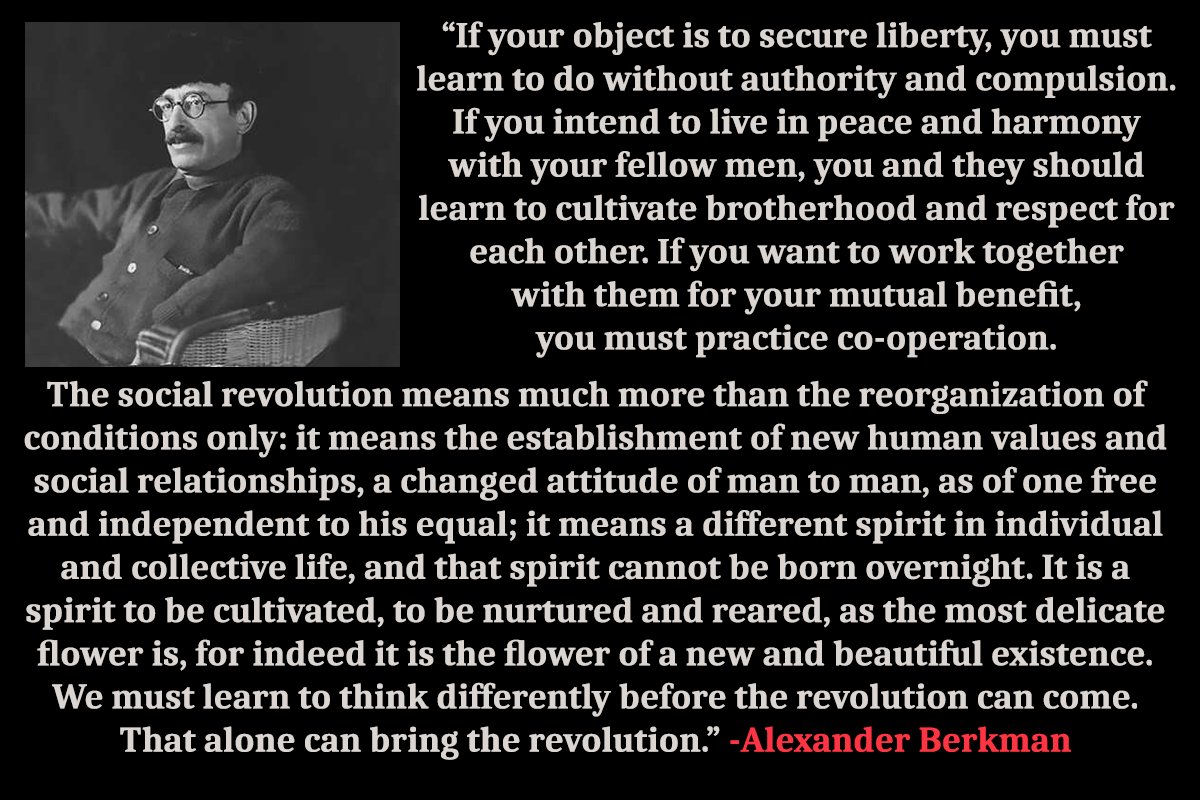
Gustav Landauer's "12 Articles of the Socialist Bund" (1912): "Socialism has nothing to do with state politics, demagogy, or the working class fighting for power. Neither is it reduced to the transformation of material conditions. It is first and foremost a movement of spirit."
English

@flakyfarseer @quill67 @ProudSocialist I'm more concerned with these same groups trying to kill my people right now. Pacifism is death, it just leaves you defenseless and defenseless people get killed.
English