

victorkyle.eth
939 posts
victorkyle.eth
@hellovictorkyle
follow me on BLUESKY: @victorkyle.bsky.social
انضم Ağustos 2013
311 يتبع329 المتابعون


victorkyle.eth أُعيد تغريده

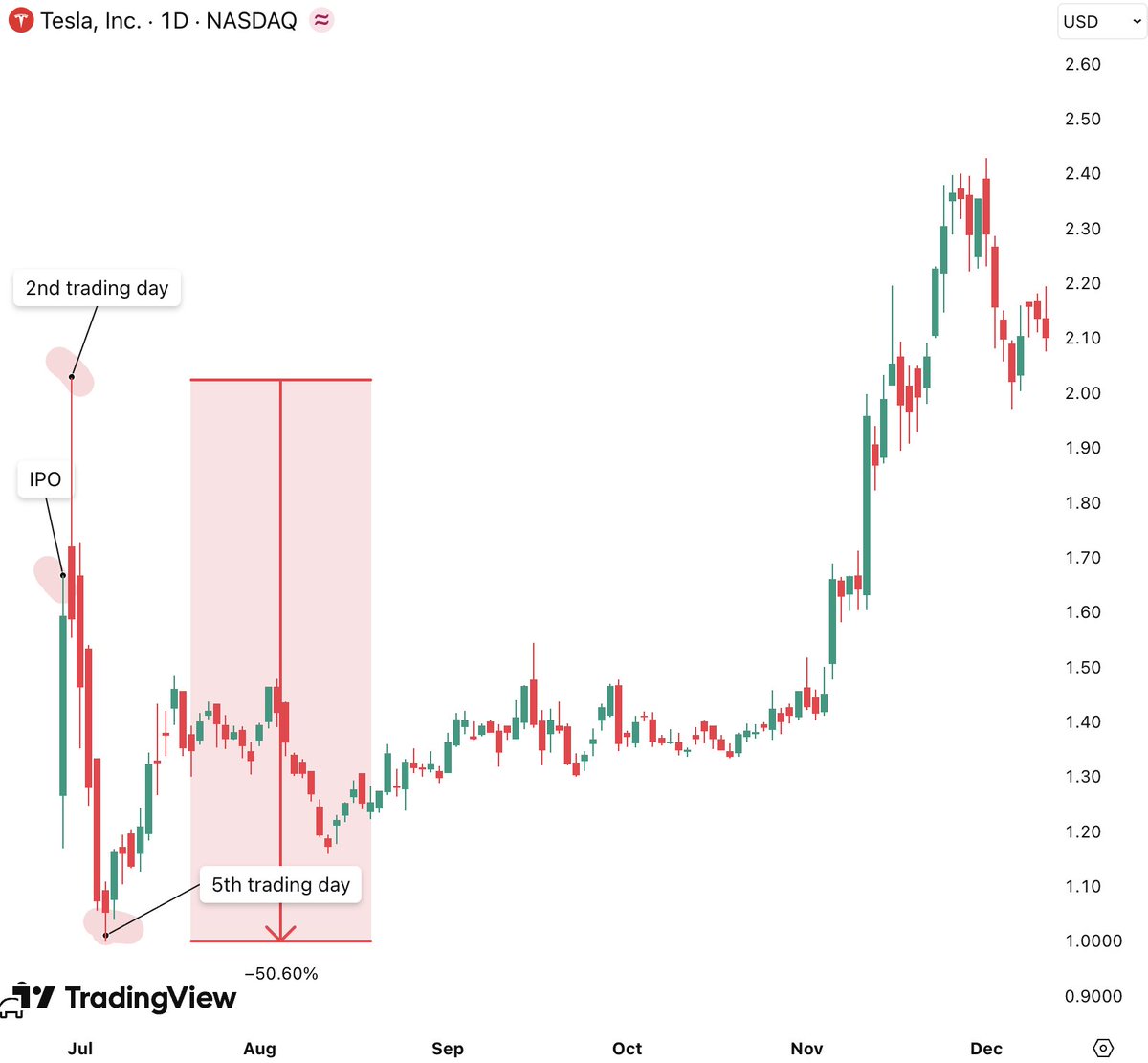
Everyone loves talking about the people who bought the $TSLA IPO and made 100x.
Nobody talks about what happened right after.
Tesla ran to $30, then crashed almost 50% from its post-IPO high within 3 days.
Now it’s SpaceX’s turn.
Could we see the same pattern?
English
victorkyle.eth أُعيد تغريده



Another OG Altcoin loosing its 2022 bear market lows is avalanche-2:native
So many altcoins in the same position
Got another 50-60% drop before our next support, too
Get out!

English

Following the Clarity Act, a situation will arise where the accumulated GMX 1.2% rewards since 2023 will be released. Chainlink Labs will be forced to be more transparent, as the Act mandates it. The GMX accumulation is currently likely around $3 million. This reward will only be transferred to stakers. In the coming years, it will also be linked to stakers when Aave SVR - reserve purchases are completed. If a few more protocols are added to the system, Sergey Nazarov will be able to connect his dream of loyal Marines to a regular monthly income... Unfortunately, you need to be patient. 🙏♥️
$LINK

English
victorkyle.eth أُعيد تغريده

My outline for #Bitcoin:
2019-2020: Accumulation
2021-2022: Uptrend
2023-2024: $BTC @ $100k
2025-2026: Bear Market
2027-2028: Accumulation
2029-2030: Uptrend
2031-2032: $BTC @ $300k-$500k
2033-2034: Bear market
2035-2037: Accumulation
2038-2039: Uptrend
2040-2042: $BTC @ $1M
English
victorkyle.eth أُعيد تغريده


@ryandcrypto Someone need desperately exit liquidity from retailers 🫠
English

only ~7,000 wallets hold 1,000+ hyperliquid:native
most people have zero exposure
holders are quietly accumulating

English

BREAKING
Der Krypto Clarity Act wurde soeben vom Senat Banking Committee verabschiedet ✅
Deutsch
victorkyle.eth أُعيد تغريده

victorkyle.eth أُعيد تغريده

Over 2,000+ Chainlink oracle networks actively secure $110,000,000,000+ in onchain value today
✅ $50,000,000,000+ in DeFi TVL secured via Data Feeds
✅ $60,000,000,000+ in cross-chain tokens secured via CCIP
For the past 220,000,000 seconds (7 years), Chainlink's data and cross-chain oracle standards have securely enabled over $30,000,000,000,000 in transaction value
~70% of the global DeFi economy now runs on Chainlink (~80% on Ethereum, ~90% on leading L2s) across 2,600+ integrations and 80+ blockchains
And yet some devs still choose to use centralized, insecure VC-slop infra solutions that have already been hacked for $300,000,000 🤔
Why any dev would willingly expose their users to such unnecessary risk boggles the mind
The historical track record speaks for itself, just use Chainlink

English
victorkyle.eth أُعيد تغريده

victorkyle.eth أُعيد تغريده
This is a MUST read for anyone who wants to understand why @Chainlink CCIP is the cross-chain standard
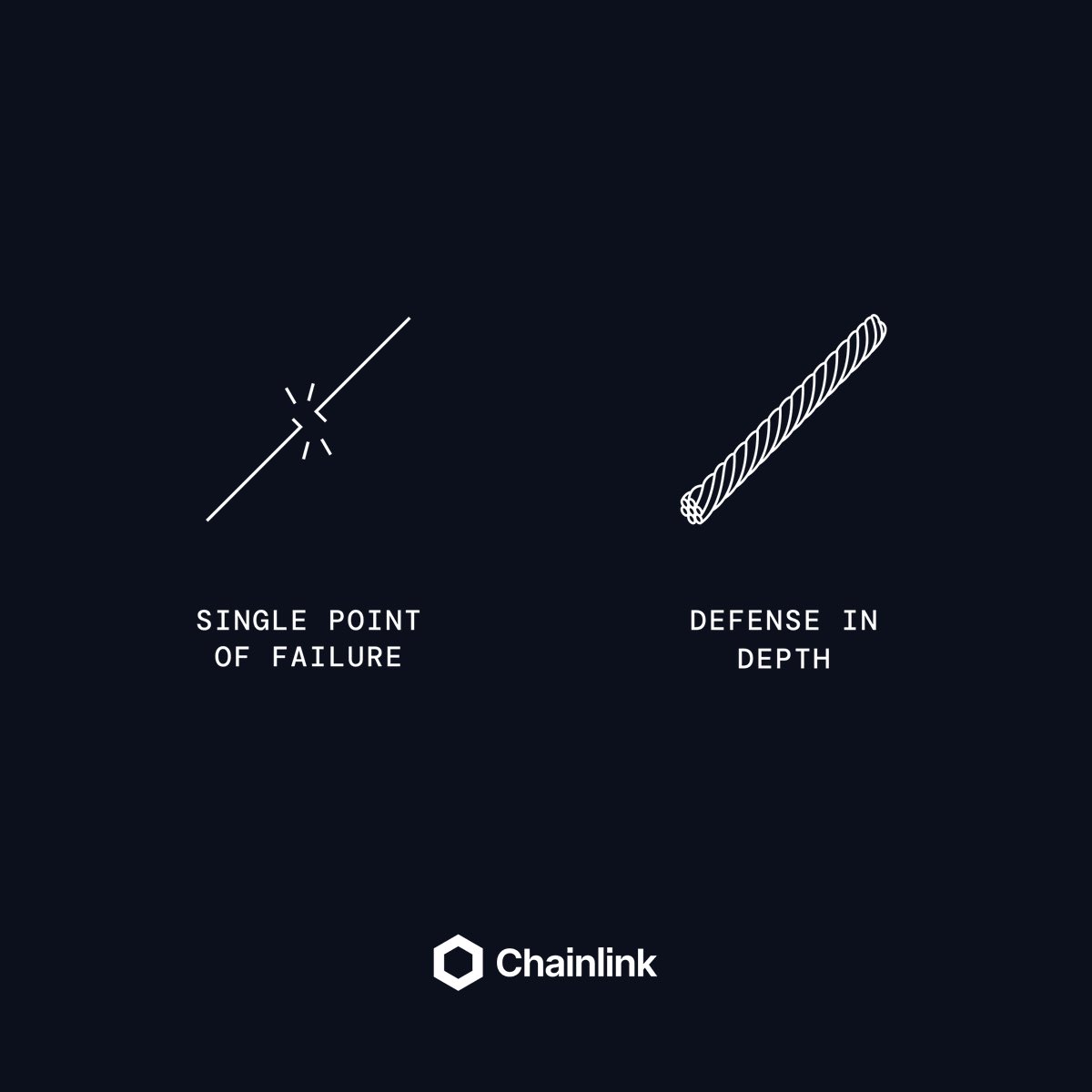
• Security is built into the protocol itself, secure by default with defense in depth
• Decentralizes both observation and validation, not just the verifier layer, avoiding “decentralization theater”
• 16 independent, Sybil-resistant node operators with geographic and infrastructure diversity
• Separate committing and executing DONs for additional security layering
• Zero downtime during the October 20, 2025 AWS outage that impacted other cross-chain providers
• Protocol-level risk controls including configurable rate limits and circuit breakers
• Token Developer Attestations let issuers participate directly in verification
• Automated Compliance Engine (ACE) enables pre-transaction checks and policy enforcement for regulated assets
• CCT standard eliminates vendor lock-in, no CCIP code required in token contracts
• $29 trillion in transaction value secured across 80+ blockchains since 2019
• Only oracle platform with SOC 2 Type 2, SOC 2 Type 1, and ISO/IEC 27001:2022 certifications
• Adopted by Swift, DTCC, Euroclear, UBS, Wellington Management, ANZ, and Fidelity
• Powers Aave, Lido, Coinbase Wrapped Assets, the Base-Solana Bridge, Ondo, xStocks, and Maple
Nearly $3B has been stolen in cross-chain bridge hacks, the direct result of poor design choices, unsafe defaults, centralized dependencies, and cost-cutting shortcuts
Chainlink CCIP solves this
As Sergey put it: “You’re not building the systems for the 363 days when everything is smooth. You’re building the system for the 2 days when everything goes crazy.“
Chainlink@chainlink
Chainlink’s mission from day one: build the most secure & decentralized infra to safely scale DeFi into a trillion-dollar industry. This uncompromising approach to security is what makes Chainlink CCIP the industry-standard for cross-chain interop. 🧵⬇️ blog.chain.link/ccip-cross-cha…
English
@ChainLinkGod @AncientMedicin3 Damn. I am 100% to dump for this to even understand 😶🌫️
How do people figure this kinda shit out and executed properly
FML
English
Look guys, it's actually really straightforward, a bunch of people staked their ETH on the Ethereum blockchain to earn yield, except they didn't want their capital to be locked up, so they actually staked with a liquid staking protocol called Lido who provided them a liquid staking receipt token called stETH, except they decided to juice their yield further by depositing their stETH receipt tokens into a restaking protocol called Eigenlayer, except they didn't want to lock up their capital, so they actually restaked with a liquid restaking protocol called KelpDAO who provided them with a liquid restaking receipt token called rsETH, except they decided to juice their yield further by depositing their rsETH tokens into a lending protocol called Aave so that they could open a leveraged looping position that borrows ETH against the rsETH collateral and restakes the ETH into rsETH which is then deposited as collateral, except it turns out rsETH used a cross-chain bridge called LayerZero that was hacked by north koreans causing rsETH to become undercollateralized and now these looping positions are stuck and unprofitable, and everyone is pointing fingers at each other, and also DeFi is a very serious industry

English
@FurkanCCTV „Der Krieg im Golf trifft nicht nur dein Auto. Er trifft deinen Teller“. Digggiiii… zu dramatisch. Wo ist der neutrale und nüchterne Schreib-Stil hin?
Deutsch
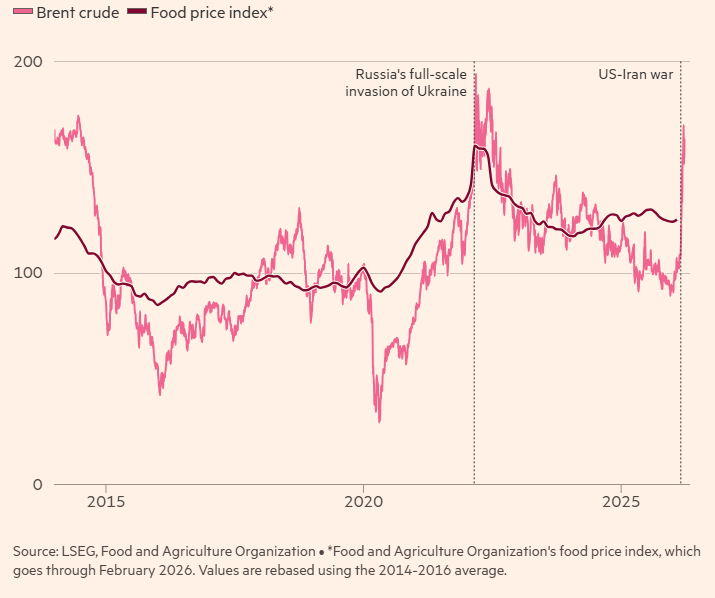
Alle reden über Öl. Über Benzinpreise. Über Gaspreise.
Niemand redet über den nächsten Schock: deine Lebensmittel.
43 Prozent des wichtigsten Düngemittels der Welt werden durch die Straße von Hormuz verschifft. Seit vier Wochen steht der Verkehr still. Und Dünger kann man nicht überspringen. Ohne Stickstoff, kein Ertrag. Ohne Ertrag, kein Essen.
Der Krieg im Golf trifft nicht nur dein Auto. Er trifft deinen Teller.
Moderne Landwirtschaft funktioniert so: Erdgas wird zu Ammoniak verarbeitet. Ammoniak wird zu Harnstoff. Harnstoff ist der meistgenutzte Stickstoffdünger der Welt. Ohne ihn wächst auf kommerziellen Feldern fast nichts in den Mengen, die 8 Milliarden Menschen brauchen.
Das Problem: Ein Drittel des weltweit verschifften Harnstoffs kommt aus dem Persischen Golf. 45 Prozent der globalen Schwefelexporte, ein Schlüsselrohstoff für Phosphatdünger, ebenfalls. Zwei von drei essenziellen Pflanzennährstoffen hängen direkt an der Meerenge, durch die seit Kriegsbeginn kaum noch ein Schiff fährt.
Dawid Heyl, Portfoliomanager bei Ninety One, bringt es auf den Punkt: Man kann eine Saison Kali auslassen. Man kann eine Saison Phosphat auslassen. Aber Stickstoff kann man nicht auslassen. Der muss jedes Jahr in den Boden. Ohne Ausnahme.
Der Harnstoffpreis in Ägypten, ein globaler Referenzwert, ist seit Kriegsbeginn von 400 bis 490 Dollar pro Tonne auf rund 700 Dollar gestiegen. In den USA kostet Harnstoff im Einzelhandel 677 Dollar pro Tonne, 11 Prozent mehr als vor einem Monat. Ammoniumnitrat hat die 930-Dollar-Marke durchbrochen. Der höchste Stand seit Mai 2023.
Und das Timing könnte nicht schlimmer sein. Auf der Nordhalbkugel läuft die Frühjahrspflanzung. Jetzt. In drei bis vier Wochen muss in den USA der Mais in den Boden.
Indien ist der zweitgrößte Düngemittelverbraucher der Welt. Ein Drittel des Bedarfs wird importiert. Und die eigene Produktion? Hängt am Gas. 40 Prozent des indischen Flüssiggases kamen aus Katar. Aus dem Land, dessen größte Gasanlage durch iranische Angriffe beschädigt wurde. Die indische Regierung hat die Gasversorgung der Düngerfabriken bereits auf 70 Prozent der Normalkapazität gedrosselt.
Bangladesch trifft es härter. Vier von fünf staatlichen Düngerfabriken stehen still. Das restliche Gas wird in Kraftwerke umgeleitet, um Blackouts zu verhindern. Ein Land mit 170 Millionen Menschen, das seinen Reis normalerweise selbst produziert. Wenn die Düngerfabriken nicht rechtzeitig zum Monsun im Juni wieder laufen, muss Bangladesch Reis importieren. Genau dann, wenn auch alle anderen importieren müssen.
Algerien hat die Gaslieferungen an seine Düngerfabriken um 50 Prozent gekürzt. In der Slowakei hat mindestens eine Fabrik die Produktion komplett eingestellt.
Alzbeta Klein, Chefin des Internationalen Düngemittelverbands, fasst die Lage in einer Rechnung zusammen: Die Lagerkapazitäten für Dünger liegen bei 10 bis 30 Tagen. Der Krieg dauert dreieinhalb Wochen. Dünger ist riesig, sagt sie. Man kann ihn nicht in die Tasche stecken. Die Lager laufen leer.
Und hier wird es systemisch.
2022, nach Russlands Einmarsch in die Ukraine, wurde eine globale Lebensmittelkrise ausgelöst. 349 Millionen Menschen wurden in Hunger getrieben. Aber damals ging es um Sanktionen und Logistik. Die Getreiderouten im Schwarzen Meer waren blockiert, aber Getreide konnte woanders angebaut werden. Handelsströme wurden umgeleitet. Sanktionen angepasst.
Chris Lawson von CRU, einem der führenden Rohstoffdatenunternehmen, sagt: 2022 fand man Lösungen. Diesmal ist es ein rein physisches Limit.
Denn Dünger kann man nicht einfach woanders herstellen. Stickstoffdünger braucht Erdgas. Phosphatdünger braucht Schwefel. Beides ist an Geografie und Infrastruktur gebunden. Konzentriert in wenigen Regionen. Und genau diese Regionen sind jetzt abgeschnitten.
In den USA waren die Lebensmittelpreise im Februar noch moderat: plus 1,1 Prozent im Jahresvergleich. Stephanie Roth von Wolfe Research rechnet vor, was kommt. Selbst wenn der Krieg innerhalb von Wochen endet, steigt allein durch die Düngerstörung die US-Lebensmittelinflation von rund 2 auf 4 Prozent. Wenn die Kämpfe in den Sommer hineinreichen, wird sie zweistellig.
Für Deutschland, wo Lebensmittel 10 Prozent des Verbraucherpreisindex ausmachen und Haushalte nach drei Jahren Dauerteuerung seit dem Ukraine-Krieg bereits am Limit sind, wäre ein neuer Preisschub bei Grundnahrungsmitteln politisch explosiv.
Die Forschung von Peter Alexander an der Universität Edinburgh beziffert das Worst-Case-Szenario: Wenn Düngerpreise von 300 bis 350 Dollar auf 900 bis 1.000 Dollar steigen und dort bleiben, könnten die globalen Lebensmittelpreise um 60 bis 100 Prozent steigen. Bis zu 100 Millionen zusätzliche Menschen würden in Unterernährung abrutschen.
Das UN-Welternährungsprogramm warnt bereits: 45 Millionen zusätzliche Menschen könnten bis Mitte des Jahres in akute Ernährungsunsicherheit fallen. Zusätzlich zu den 318 Millionen, die schon jetzt betroffen sind. In Somalia sind die Preise für Grundnahrungsmittel seit Kriegsbeginn um 20 Prozent gestiegen.
Und dann beginnt die Spirale, die 2022 alles verschlimmert hat. China hat Düngerexporte eingeschränkt, um den eigenen Markt zu schützen. Russland signalisiert Exportlimits. Indien könnte erneut Reis-Exportbeschränkungen verhängen.
FAO-Chefökonom Máximo Torero benennt die Falle: Jedes Land wird zuerst an seine eigenen Bürger denken. Aber wenn alle egoistisch handeln, kaufen die Reichen mehr und die Armen bekommen nichts.
Die Welt redet über Ölpreise und Tankstellen. Dabei wird die eigentliche Krise in drei Monaten sichtbar. Nicht an der Zapfsäule. Im Supermarkt. Auf den Feldern. In den Ländern, in denen eine verpasste Ernte keine Unannehmlichkeit ist, sondern Hunger.
In diesen Recherchen steckt eine Menge Arbeit. Wenn dich solche Makro Insights interessieren und dir helfen, interagiere gerne mit dem Post. 🧡
Deutsch
victorkyle.eth أُعيد تغريده

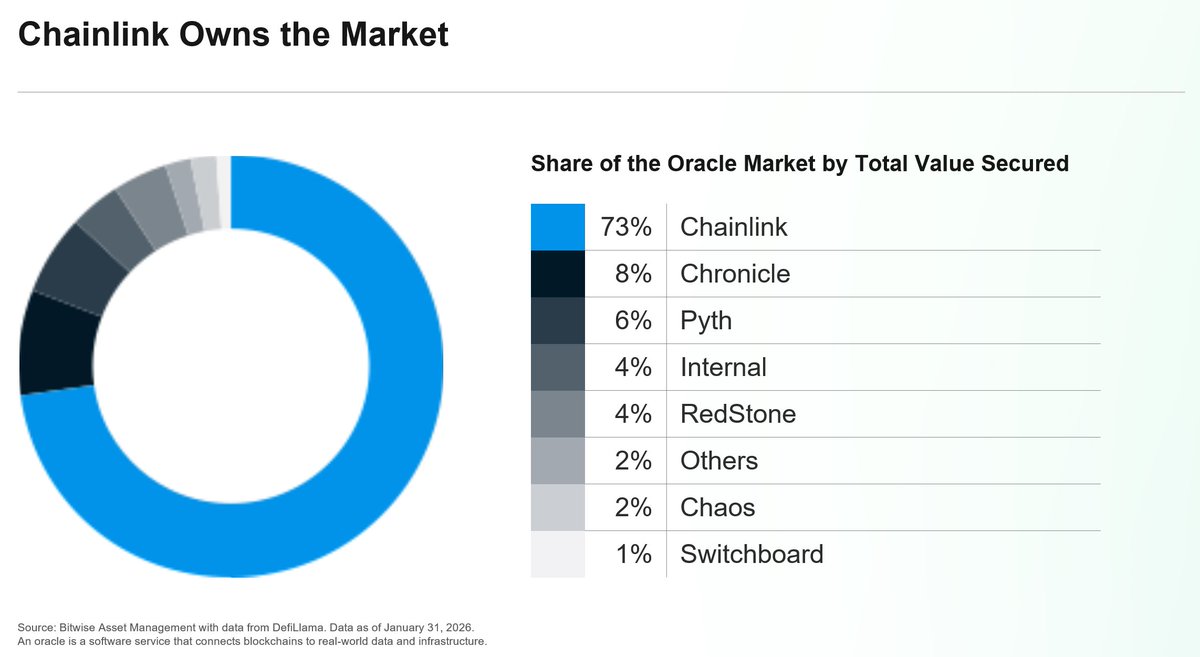
2) Chainlink vs. Nobody 🏆
Chainlink dominates the data oracle market
Data oracles bring real-world info to blockchains (asset prices, NAVs, real-world outcomes, etc) = essential for tokenizing the world
Chainlink owns this crucial market today, and it isn't even close
English
English

victorkyle.eth أُعيد تغريده
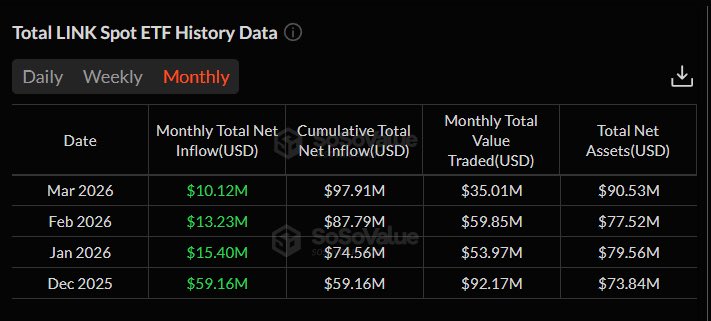
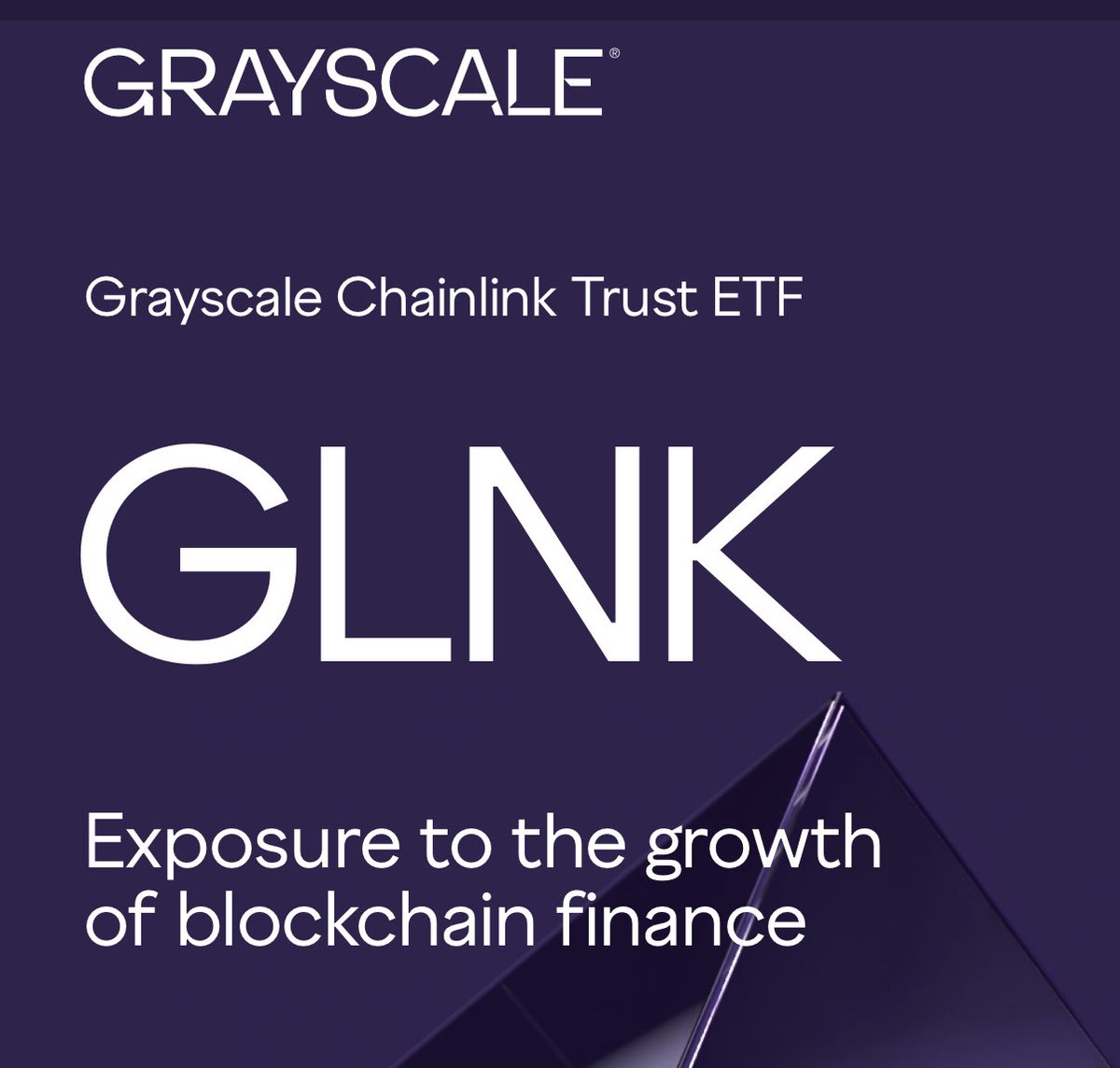
$LINK ETFs hold a higher percentage of LINK’s circulating supply (~1.4%) than $XRP ETFs hold of XRP’s circulating supply (~1.2%)
When you adjust for market cap (mid cap vs large cap), LINK’s ~$97M in net inflows would be equivalent to ~$1.35B in inflows for an asset XRP’s size (13.8x market cap difference)
LINK ETFs have never had a single day of outflows while XRP ETFs have had at least over a dozen days with net outflows
The more you know

English