Gianluca Brugnoli

12.1K posts

Gianluca Brugnoli

Gianluca Brugnoli

@lowresolution

VP UX @TomTom. PhD, UX, CX, Service Design, Automotive UX and digital cockpit. Former @frogdesign, @mckinseydesign, Design professor @polimi. Guitar player.

انضم Mart 2007
976 يتبع2.6K المتابعون
Gianluca Brugnoli
Gianluca Brugnoli@lowresolution·
Cari amici del @sole24ore è inutile offrire promozioni per gli abbonamenti digitali, se poi è impossibile completare la sottoscrizione online. Ho fatto molti tentativi con vari browser ma non riesco mai a chiudere il pagamento. Forse dovreste fare dei test.
Italiano
0
0
0
32
Gianluca Brugnoli
Gianluca Brugnoli@lowresolution·
@MarcoCantamessa Le auto sono da tempo computer su ruote, anzi sono più complesse di un computer e la UX è sempre più fondamentale. Però Italdesign non c’entra niente con questo, a meno che non li riconvertano a fare il mio lavoro.
Italiano
1
0
0
25
@·
Al netto della solidità dei soggetti, è meglio un acquirente indiano/USA e specializzato nel software o, come qualcuno vagheggia, una cordata puramente nazionale e profondamente “manifatturiera”?
Italiano
1
0
5
175
Gianluca Brugnoli أُعيد تغريده
@·
Jon Gruber on why the failed Apple Intelligence launch is huge red flag for the company (Apple even pulled this ad of a Siri “feature” that was straight vapourware): ➡️ “What Apple showed regarding the upcoming “personalized Siri” at WWDC was not a demo. It was a concept video.
English
12
15
120
148.3K
Gianluca Brugnoli
Gianluca Brugnoli@lowresolution·
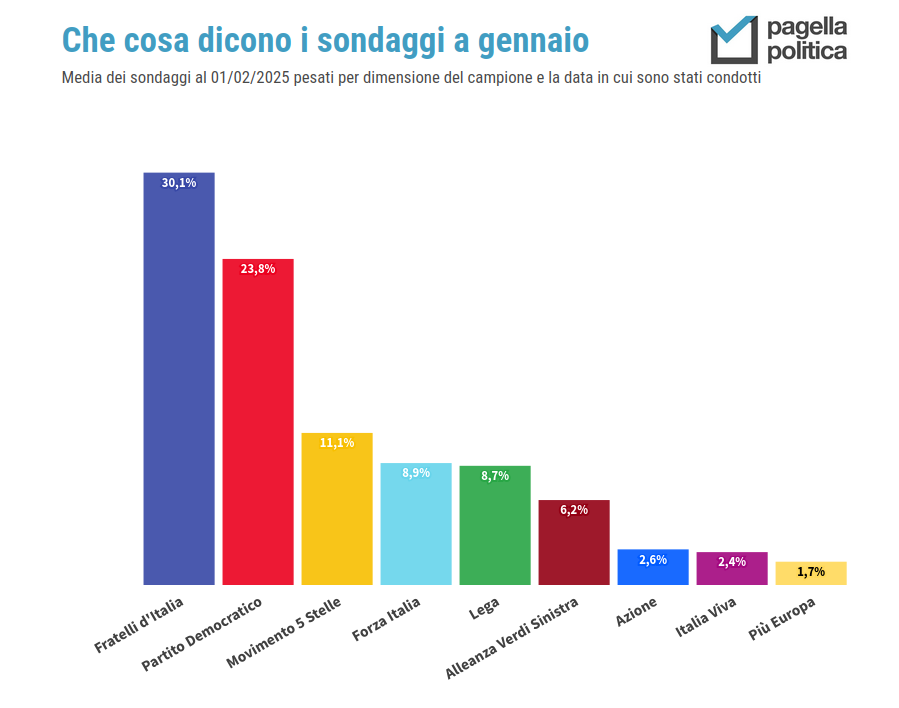
@Ruffino_Lorenzo Non vedo il dato sull’astensione. Tutti i sondaggi degli ultimi mesi mostrano che circa la metà degli intervistati non si esprime. Una situazione che non ha molti precedenti.
Italiano
3
0
1
1.2K
Lorenzo Ruffino
Lorenzo Ruffino@Ruffino_Lorenzo·
Fratelli d'Italia è di nuovo al 30% nei sondaggi. Ha guadagnato due punti a gennaio. Il consenso di Meloni non scende nonostante gli ormai due anni di governo, una situazione che non ha molti precedenti.
Lorenzo Ruffino tweet media
Italiano
332
114
1.2K
130K
Gianluca Brugnoli
Gianluca Brugnoli@lowresolution·
@micheleboldrin @carloalberto Quella roba è complottismo da social network. Trump ha più volte ribadito anche recentemente che non vuole la de-dollarizzazione del commercio mondiale che in ogni caso offre enormi vantaggi strategici e economici agli US.
Italiano
0
0
1
284
@·
@carloalberto NO. Analisi erronea (profondamente erronea). Infatti, guarda caso, se le e' rimangiate (per ora? Vedremo ...) le tariffe.
Italiano
1
0
19
2.4K
C.A. Carnevale-Maffè
C.A. Carnevale-Maffè@carloalberto·
Non guardate il dito delle tariffe. La vera partita è la luna del Dollaro. Un’interessante interpretazione del possibile scenario dietro alle apparentemente irrazionali scelte dell’amministrazione Trump. Se così fosse, reagire sul fronte commerciale invece che su quello monetario sarebbe una mossa perdente.
Samuel Hammond 🦉@hamandcheese

This is not an endorsement, but I think the "Trump just likes tariffs"-take is missing the forest for the trees. I think there's a p(=30%) chance that we are instead witnessing the first (albeit somewhat clumsy) phase of a deliberate strategy for controlled de-dollarization. People will dismiss this as 5D-chessing Trump's economic ignorance, but I've been in or around this world (libertarian-populist fusionism) for over a decade, know many of the relevant thinkers and theories, and have a reasonable track record at interpreting the context clues. I've had o1 summarize a steel-manned version of what I think might be going on (again, 70% chance I'm totally wrong / I'm right but they hit a political wall): A steel-manned version of this strategy would argue something like the following: 1) Immediate Shock to the System (Tariffs) - By imposing universal tariffs, the US intentionally undermines the stability of the dollar as a trade currency and signals that global partners can’t rely on “business as usual.” - This short-term shock (“raising entropy”) is precisely the point: disruption forces other countries to reduce dollar holdings or consider alternative reserve arrangements, setting the stage for a monetary reset. 2) Controlled De-Dollarization & Fiscal Retrenchment - Once international partners start pivoting away from the dollar, the US simultaneously slashes spending and raises tariffs to build fiscal resilience. - This is meant to head off the classic “fiscal theory of the price level” risk—i.e., that ballooning debt would trigger an inflationary spiral when faith in Treasuries falters. - By being the first mover, the US can control the pace of de-dollarization and mitigate the risk of a full-on default or hyperinflation event. 3) Future Phase: Capital Flow Controls - Merely using tariffs might not be enough to pry the world away from entrenched dollar reliance, so the US steps up to more powerful levers: capital flow restrictions, transaction taxes, or “market access charges.” - That further discourages foreign entities from holding US assets while bolstering domestic funding channels (or pushing the US to self-finance more of its debt). - Though draconian, these measures accelerate the pivot to a new monetary arrangement by removing the implicit promise that foreigners can freely invest or transact in dollars. 4) Reset to a “Harder” Monetary Standard - After orchestrating the initial storm, the US reveals a new, more disciplined monetary regime (for instance, a partial gold- or commodity-backed system) or at least a big Bretton Woods–style conference. - The aim is to restore credibility by showing that, under the new rules, neither Congress nor the Fed can perpetually run deficits or inflate away debt. - This new system, by design, makes it harder for the US to finance endless military adventures or large domestic deficits through reserve currency status—tying policymakers’ hands in the future. 5) Reindustrialization & Domestic Reset - As the dollar eventually depreciates once its “exorbitant privilege” fades, US manufacturing becomes far more competitive internationally. - Lower real wages and cheaper assets (in dollar terms) entice domestic investment in industrial capacity. Over time, that fosters a base of production and skilled labor that the US has struggled to retain in a dollar-dominant environment. - Yes, US consumers face immediate pain through higher import costs and austerity, but the steel man argument says the country emerges with a more balanced external account and healthier industrial sector. In short, the “positive spin” is that deliberate chaos now forestalls a worse forced collapse later, and that by preemptively engineering the demise of the dollar standard, the US can steer toward a monetary regime less prone to endless deficits or foreign entanglements—and ultimately emerge with a revitalized industrial base. The next key phase (if tariffs alone fail) would likely be direct controls on foreign capital flows, culminating in an overt reset to a “harder” standard meant to restore confidence post–de-dollarization. --- Me again: To reiterate, I'm not endorsing this strategy or even its internal coherence. This is just an educated guess at the underlying method to the madness, and a potential interpretive framework for understanding the admin's actions going forward (including things like dismantling USAID, etc).

Italiano
43
33
208
39.9K
N4poliVertical
N4poliVertical@NapoliVertical·
È la colpa è proprio dell'Europa.
Italiano
1
0
0
89
Gianluca Brugnoli
Gianluca Brugnoli@lowresolution·
RT @satyanadella: Jevons paradox strikes again! As AI gets more efficient and accessible, we will see its use skyrocket, turning it into a…
English
0
1.9K
0
0
Gianluca Brugnoli
Gianluca Brugnoli@lowresolution·
@marattin In Europa non abbiamo ancora capito la lezione di Nokia leader globale spazzato via dall’innovazione dell’iPhone. Il ritardo digitale dell’Italia è tangibile, costa punti di PIL, mancata crescita, stipendi fermi, e giovani che emigrano. Il fallimento di tutta la classe politica.
Italiano
3
3
51
4K
@·
ChatGpt (americana) è stata una grande innovazione, e si è diffusa rapidamente creando valore per le aziende coinvolte in quella filiera. DeepSeek (cinese) pare essere un ulteriore avanzamento, che costa meno e funziona meglio, al netto dell’odiosa e inaccettabile censura su
Italiano
322
143
1.1K
85.8K
Gianluca Brugnoli
Gianluca Brugnoli@lowresolution·
@pwk @emme_emi L’AI moltiplica dove c’è già una base digitale, è uno strato sopra il software. Come fare leapfrogging con l’AI se non abbiamo economia, servizi e cultura digitale. Siamo arretrati su tutti i fronti con una classe politica retrograda e ignorante in materia, specchio del paese.
Italiano
0
0
9
202
Peter W. Kruger
Peter W. Kruger@pwk·
La sfida della produttività UE con gli USA non la stiamo perdendo. L’avevamo già persa 25 anni fa. Qualcuno lo diceva gia allora… Ma come per tutte le economie sottosviluppate (la nostra), l’opportunità è nel fare leapfrogging, cioè saltare a piè pari gli stadi intermedi. Quella opportunità si chiama AI.
Patrick Collison@patrickc

Which are the best explanations for/analyses of the post-GFC divergence in labor productivity between the US and other OECD economies?

Italiano
18
24
159
15.5K
Gianluca Brugnoli أُعيد تغريده
@·
I talked to the CEO of a moderately big tech co who said they'd replaced Figma with Replit. This surprised me because I don't even think of them as being in the same business. But he said Replit is so good at generating apps that they just to straight to prototype now.
English
373
610
10.1K
1.5M
Gianluca Brugnoli
Gianluca Brugnoli@lowresolution·
So, this is the Empire Strikes Back phase. Let’s hope for the Return of the Jedi.
English
0
0
1
76
Gianluca Brugnoli
Gianluca Brugnoli@lowresolution·
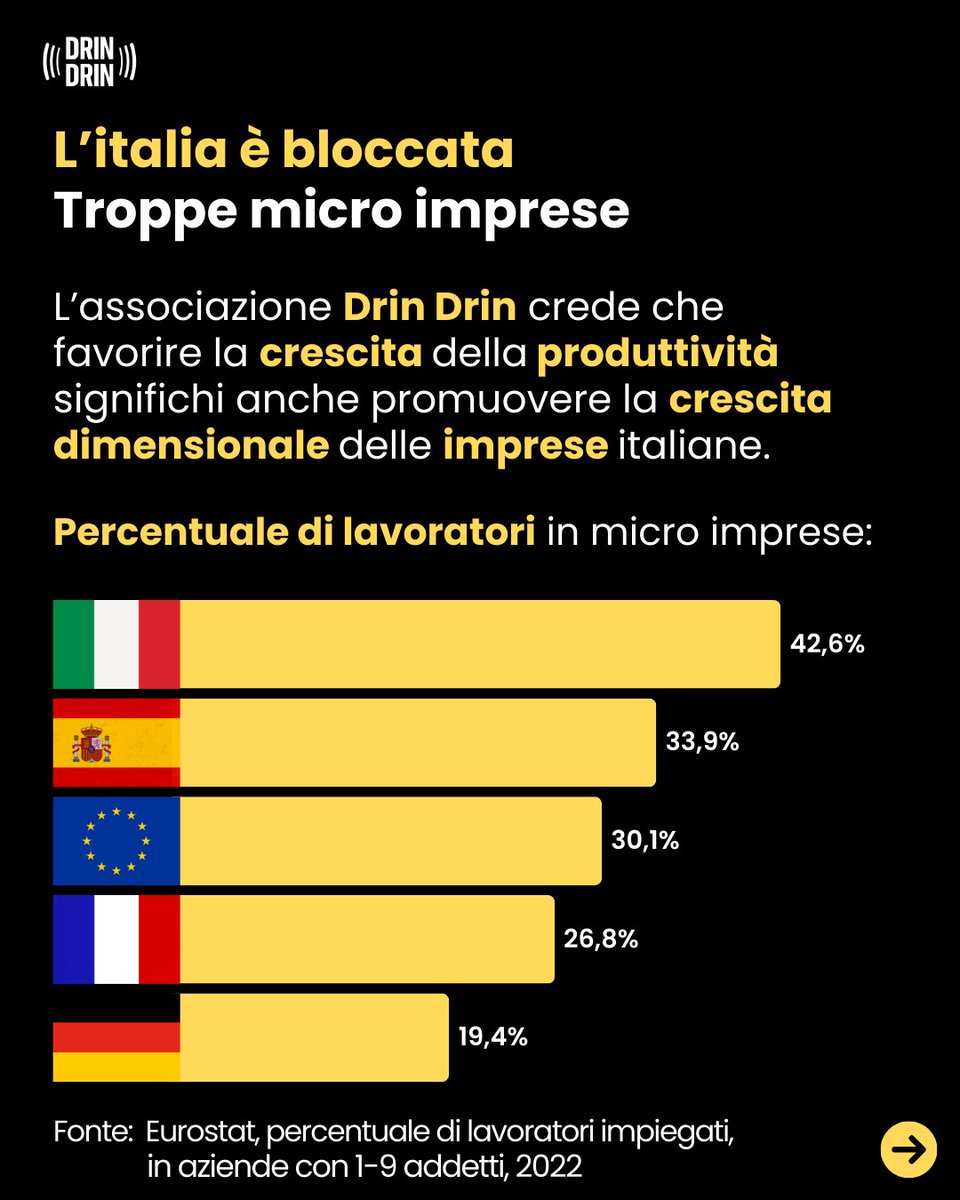
@MovDrinDrin @micheleboldrin L’ incentivo più grande e perverso è la tolleranza dell’evasione fiscale delle microimprese. È parte del modello di business, molte esistono solo grazie all’evasione. Bisogna far pagare le tasse a tutti e questo è molto difficile. Si vede anche nei commenti qui.
Italiano
0
0
13
406
ORA!
ORA!@ora_italia·
🇮🇹 PERCHÉ L’ALTO NUMERO DI MICRO IMPRESE È UN PROBLEMA? 📊 Il dato: In Italia, il 42,6% dei lavoratori è impiegato in micro imprese (con meno di 10 dipendenti). Questo percentuale è significativamente superiore alla media europea (30,1%) e ai livelli registrati in Germania
ORA! tweet mediaORA! tweet media
Italiano
128
107
683
51.5K
Gianluca Brugnoli
Gianluca Brugnoli@lowresolution·
RT @GuitarWorld: BREAKING: John Sykes, a legend of hard rock guitar who made his mark with stints in Whitesnake, Thin Lizzy, and Tygers of…
English
0
162
0
0
Gianluca Brugnoli أُعيد تغريده
@·
TomTom’s Traffic Index would be nothing without the data. The same goes for its traffic products. With some of the highest resolution traffic data in the world, TomTom’s yearly Traffic Index is the perfect display of how its data sets it apart. Learn more about what makes our
 tweet media
English
2
3
9
1.6K
Gianluca Brugnoli
Gianluca Brugnoli@lowresolution·
Lo stato della UX in Italia: cosa diventa uno UX designer quando cresce? Com'è l'equilibrio di genere nel settore? Queste sono domande su cui si basa una ricerca del Politecnico di Milano aperta a tutti i professionisti UX in Italia. Partecipa anche tu. form.jotform.com/243454832185359
Gianluca Brugnoli tweet media
Italiano
0
0
1
255
Gianluca Brugnoli
Gianluca Brugnoli@lowresolution·
Il profondo ritardo culturale dell’Italia su innovazione, digitale e nuove tecnologie sul @Corriere dei boomer oggi. Dopo aver publicato veline su Musk e Starlink, siamo tornati alla normalità. Un paese di vecchi seduti a guardare i treni dell’innovazione passargli davanti.
Gianluca Brugnoli tweet media
Italiano
1
0
2
99
Gianluca Brugnoli
Gianluca Brugnoli@lowresolution·
RT @TomTom: Every year, cities move goods, people and ideas. What can we learn from their traffic patterns to help create a world where cit…
English
0
4
0
0
Gianluca Brugnoli
Gianluca Brugnoli@lowresolution·
@pwk Sono in forte disaccordo. Conosco quei tempi. Lei descrive i problemi dei faccendieri romani. Con Fastweb ho la FTTH a casa dal 2001. Non solo la rete terrestre è superiore al satellite ma è nostra e rimane sul territorio. Il problema non è tecnologico ma politico e di execution.
Italiano
1
0
3
117
Peter W. Kruger
Peter W. Kruger@pwk·
P.S. nella foto l'unico fisico per cui siete autorizzati ad essere ossessionati...
Italiano
23
2
178
6.6K
Peter W. Kruger
Peter W. Kruger@pwk·
Tutti a scannarsi per i gomitoli di rame in uno spettacolo circense che veniva raffigurato come la battaglia decisiva che avrebbe segnato il futuro tecnologico dell’Italia. E non parliamo delle reti “mobili” e delle assegnazione delle frequenze… 3/24
Italiano
2
6
110
16.8K
Gianluca Brugnoli
Gianluca Brugnoli@lowresolution·
@e_pagliarini Non ho nulla contro Starlink, chiunque è libero di abbonarsi se vuole. Non mi piace la narrativa per cui Starlink sia una tecnologia “superiore”. Non è così. A casa ho una normale fibra Fastweb da 1gbit. Anche troppo per usi consumer, ma è certamente meglio del satellite.
Italiano
1
0
0
57
@·
@lowresolution Si, va giustamente specificato che per sistemi tradizionali si intendono quelli usati dove non c’è fibra. Dove c’è fibra non c’è propio paragone e la fibra si diffonderà sempre di più. Starlink rimarrà marginale e sempre meno rilevante in Paesi come Italia. Hai ragione.
Italiano
2
1
2
325
@·
Fra i tanti commenti che ho letto questa riflessione mi sembra una delle più importanti.
Italiano
2
0
2
613