تغريدة مثبتة

@WotCoasts It was a naan-stop fight, yet still lost her Baguettes.
English
rwsanders
12.4K posts

@rwsanders
pol H tech sci soc psy phl rel econ g:rok tpyos “Engaging with what the feed provides” Perhaps worth a follow.
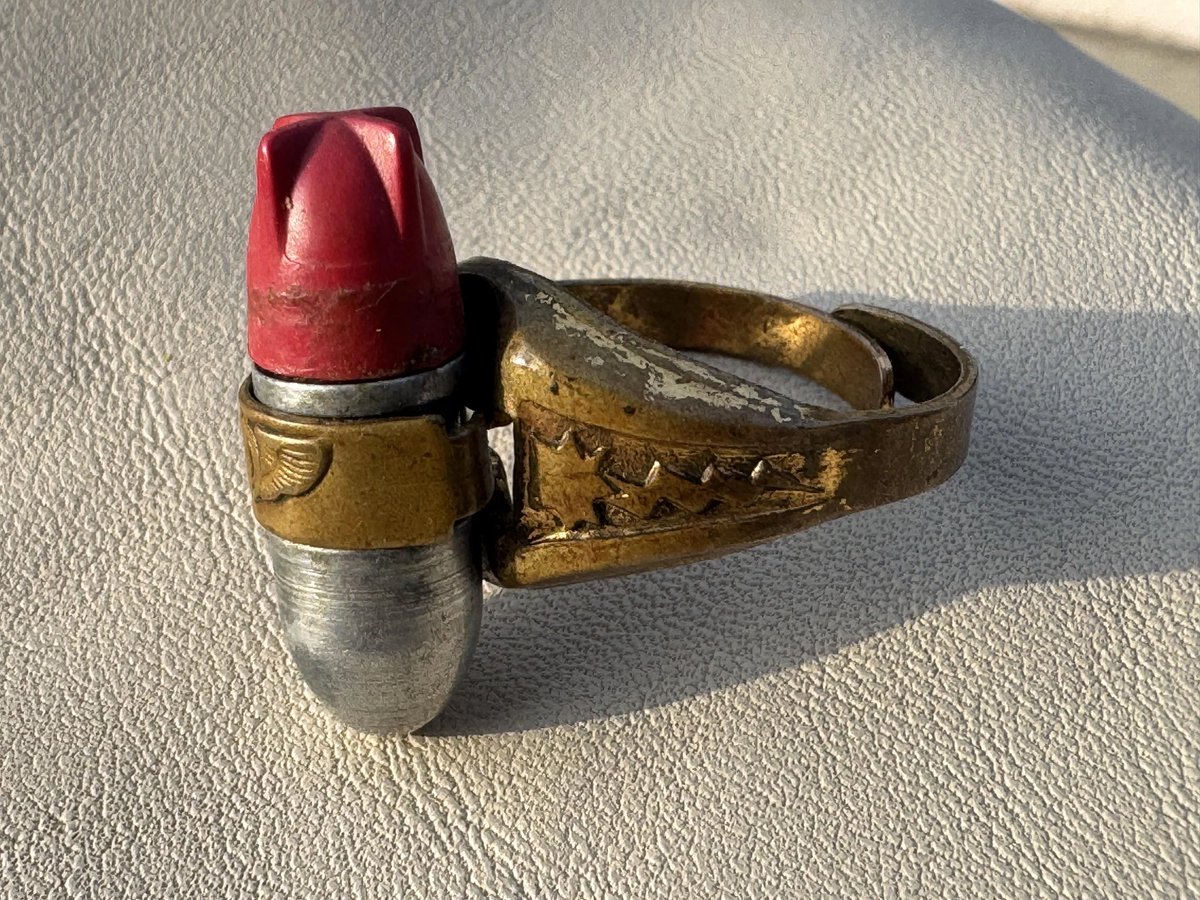
This Lone Ranger Atomic Bomb ring was distributed by Kix cereal in the late 40's, for 15 cents and a mail-in box top. It was actually a spinthariscope containing radioactive Polonium-210 (one of the most toxic substances out there). A child would take the toy into a pitch-black room, remove the tail cap from the 'bomb', and look through a tiny lens to see flashes of light from the Polonium-210 atoms decaying into Lead-206.


@acnewsitics Remember how from the 1920’s - 1960’s thousands of stores used X-ray shoe-fitting fluoroscopes so customers could place their feet (with shoes on) into an opening, and the X-rays would create a live image of the foot’s bones and the shoe’s outline?







Always pay attention to you surroundings:

g: Solomon Asch’s Conformity Experiments (1951) • Purpose: Solomon Asch’s 1951 Conformity Experiments examined how social pressure affects individual judgments. • Methodology: • Male college students participated in groups of 7–9, with one true subject and the rest confederates. • Task: Match a standard line’s length to one of three comparison lines, with the correct answer obvious. • In 12 of 18 critical trials, confederates unanimously gave incorrect answers; subjects answered publicly. • Key Findings: • ~75% of subjects conformed to the incorrect majority at least once; average conformity rate was 32%. • Control trials (no pressure) showed <1% error, confirming task simplicity. • Conformity driven by normative influence (desire for acceptance) and some informational influence (self-doubt). • Influencing Factors: • Increased with group size (up to 3–4 confederates), unanimity, and public responses. • Decreased with a single dissenting confederate or clearer task. • Significance: • Demonstrated the power of social influence on behavior, even when the majority is wrong. • Influenced research on group dynamics, obedience, and minority influence. • Applications in organizational behavior, education, and social policy. • Limitations: Limited to male students, ethical concerns by modern standards, and artificial task context.











H5N1 Lab Leaks g: Here are details on lab leaks associated with H5N1, based on available information: University of Wisconsin-Madison Incident (2019): Details: A safety breach occurred in a lab at the University of Wisconsin-Madison where researchers were working with a lab-engineered strain of H5N1. This incident involved an accidental exposure due to a spill or needle prick, but it was downplayed, and the public was not informed initially. Implications: The incident highlighted concerns about the oversight and safety protocols for gain-of-function (GOF) experiments, which involve modifying viruses to study their potential for human transmission. There was criticism over the lack of transparency and immediate notification to public health officials. CDC H5N1 Contamination Incident (2014): Details: An experienced but overworked CDC scientist accidentally contaminated a benign bird flu virus sample (H9N2) with the dangerous H5N1 strain in a biosafety cabinet. This was due to rushing to a meeting and not following proper decontamination procedures. The contaminated sample was then sent to a USDA lab, where the error was discovered after the test chickens died. Response: The incident led to a delay in reporting, revealing gaps in CDC's incident reporting protocols. It prompted disciplinary actions, new training, and safety reforms within CDC. USDA and Erasmus Medical Center (2024): Details: A study suggested that the current outbreak of HPAI H5N1 might have originated from lab leaks at the USDA Poultry Lab in Athens, GA, and the Erasmus Medical Center in the Netherlands. These labs were involved in gain-of-function research, manipulating H5N1 to study its transmissibility. Claims: The study pointed to genetic mutations in the virus from human cases that matched those expected from lab experiments, suggesting a possible escape from these facilities. However, this claim requires further scientific scrutiny to be confirmed. Historical Context - Gain of Function Research: General Concerns: The history of lab leaks with H5N1 often ties back to gain-of-function research, notably by scientists like Yoshihiro Kawaoka and Ron Fouchier. Their work in the early 2010s, where they modified H5N1 to make it transmissible among ferrets, sparked international debate over the risks versus benefits of this research. Accidents and Oversight: There have been multiple instances where the safety and oversight of such research were questioned, leading to calls for stricter regulations and transparency. These incidents underline the complexities and risks associated with research on high-risk pathogens like H5N1. They have fueled debates over the balance between scientific gain from such research and the potential dangers to public health if containment fails. Each case involved different levels of oversight failure, from procedural errors to issues in transparency and public health communication.