
Simon J.K. Pedersen

8.2K posts

Simon J.K. Pedersen banner
Simon J.K. Pedersen

Simon J.K. Pedersen

@simped

SharePoint Dev/Architect at day, Azure, F# and Node.js hacker at night.

Malmö انضم Nisan 2009
384 يتبع439 المتابعون
Simon J.K. Pedersen أُعيد تغريده
Josh Kale
Josh Kale@JoshKale·
I don't think people understand how big Lithography is for AI and basically every piece of technology on earth ASML (a single company in the Netherlands) makes 100% of the machines required to produce EVERY SINGLE cutting-edge chip on this planet. Lace Lithography plans to crack this monopoly by using a helium atom beam instead of light to make chips. A human hair is 100,000 nanometers wide. ASML's most advanced beam is 13.5 nanometers. Lace's beam is 0.1 nanometers. The width of a single hydrogen atom. 135x smaller than the best technology on earth today. The technology is called Beyond-EUV. Maskless. More energy efficient. Feature sizes 10x smaller than anything currently possible. Chips printed at what the CEO describes as "ultimately atomic resolution." Microsoft's venture arm is backing it. and their pilot tool is going in a real fab by 2029. Pretty neat
Josh Kale tweet media
Steve Jurvetson@FutureJurvetson

Introducing Ⓛ 𝗟𝗔𝗖𝗘 𝗟𝗜𝗧𝗛𝗢𝗚𝗥𝗔𝗣𝗛𝗬 A novel approach to chip-making that can extend Moore's Law 10x beyond what is possible with light — to atomic resolution. News today: "Manufacturers use light-based lithography systems made by the Dutch company ASML, which dominates ​the market. Lace has developed a new approach. Instead of ​light, Lace's engineers have made a form of lithography that uses a helium atom beam. With that, the Norwegian company will be able to create chip designs that are 10 times as small as what is currently possible" "The main advantage of the helium atom beam is the industry could create features such as transistors, ‌the ⁠building blocks of modern chips, an order of magnitude smaller to an "almost unimaginable" degree, according to John Petersen, Scientific Director of Lithography at Imec, a research and innovation hub for the chip industry. The beam Lace will use to make chips is about the width of a single hydrogen atom, or 0.1 nanometer. ASML's lithography tools use ​a beam of light that ​is about 13.5 nanometers; ⁠a human hair is about 100,000 nanometers wide. Smaller transistors and other features would give chipmakers the ability to ramp up the performance of advanced AI processors well beyond ​the current capabilities. Lace's technology would enable chip manufacturers to print wafers at ​what is "ultimately atomic ⁠resolution" — reuters.com/world/asia-pac… Now hiring in Bergen and Barcelona: LaceLithography.com

English
22
102
816
55.9K
Simon J.K. Pedersen
@ROHITMH_1 @shanaka86 It was designed like that to make us not want to go to war with each other. But then came Trump and his inability to control Israel.
English
0
0
1
12
Rohit M H
Rohit M H@ROHITMH_1·
@shanaka86 People underestimate how fragile the semiconductor supply chain is. It’s not just chips it’s energy, helium, logistics, and geopolitics all stacked together. One weak link can ripple across the entire tech world.
English
2
0
3
267
Simon J.K. Pedersen أُعيد تغريده
Shanaka Anslem Perera ⚡
BREAKING. Every Nvidia GPU is made by TSMC. Every Apple processor is made by TSMC. Every AMD chip that matters is made by TSMC. TSMC manufactures 90 percent of the world’s most advanced logic chips on an island that imports 97 percent of its energy and has 11 days of natural gas in reserve. The war in the Persian Gulf just put the future of artificial intelligence on an 11-day clock that nobody in Silicon Valley is counting. Taiwan has no oil fields. No gas reserves. No domestic energy of any consequence. One-third of its LNG comes from the Middle East, with Qatar as the dominant supplier. Qatar’s Ras Laffan complex, which processed roughly one-third of the world’s helium before Iranian strikes shut it down, is offline for repairs that QatarEnergy’s CEO says will take three to five years. Taiwan’s mandatory LNG reserve is 11 days. South Korea holds 52. Japan holds three weeks. Taiwan holds the least backup of any major semiconductor economy on Earth and manufactures more advanced chips than all of them combined. Helium is the molecule the market is not pricing. It cools the extreme ultraviolet lithography systems that print transistors at 3 nanometres. It purges etching chambers of contamination. It tests wafer seals. There is no substitute. Without helium, the EUV machines that print every advanced chip on the planet stop. Not slow down. Stop. SK Hynix sourced 64.7 percent of its helium from Qatar. Taiwan relies on Qatar for the majority of its supply. Since the strikes, helium spot prices have surged 40 to 100 percent. Fitch Ratings flagged South Korea and Taiwan as the most exposed semiconductor economies. Bloomberg reported that if shortages intensify, TSMC will be forced to prioritise production of higher-margin AI chips over less profitable components. TSMC will choose Nvidia over your iPhone. That is not a prediction. It is a triage protocol dictated by the physics of a gas that just stopped arriving. TSMC says operations are normal and it is monitoring the situation. Its shares have fallen 7 percent since the war began. Taiwan’s Ministry of Economic Affairs says supplies are secured through April and half of May, with negotiations ongoing for June. The ministry described the situation as a controllable risk. It also announced plans to raise the mandatory minimum LNG reserve from 11 days to 14 days starting next year. You do not raise a minimum reserve during a crisis unless the current minimum terrifies you. The deeper layer is strategic. The war has diverted two US carrier strike groups and an amphibious ready group to the Persian Gulf. The Pacific naval presence that deters Chinese pressure on Taiwan is thinner than at any point since the regional crisis began in 2023. Beijing does not need to invade. It needs to signal. A military exercise near Taiwan during a helium shortage and an LNG cliff would achieve through perception what a blockade achieves through force. The actuarial warfare that closed Hormuz commercially through insurance withdrawal could close the Taiwan Strait using the same mechanism. Seven reinsurance letters shut Hormuz in five days. The Taiwan Strait is 110 miles wide. If the risk model changes, the letters follow. The strait is 21 miles wide. The chip is 3 nanometres small. The helium that connects them just stopped flowing. And the island that makes every AI chip on Earth has around 11 days of gas and a government that just admitted it needs more. Full analysis: open.substack.com/pub/shanakaans…
Shanaka Anslem Perera ⚡ tweet media
Elon Musk@elonmusk

@shanaka86 Hmm

English
100
633
1.9K
266.9K
Simon J.K. Pedersen أُعيد تغريده
Simon Willison
Simon Willison@simonw·
Turns out you can run enormous Mixture-of-Experts on Mac hardware without fitting the whole model in RAM by streaming a subset of expert weights from SSD for each generated token - and people keep finding ways to run bigger models Kimi 2.5 is 1T, but only 32B active so fits 96GB
seikixtc@seikixtc

I got a 1T-parameter model running locally on my MacBook Pro. LLM: Kimi K2.5 1,026,408,232,448 params (~1.026T) Hardware: M2 Max MacBook Pro (2023) w/ 96GB unified memory Running on MLX with a flash-style SSD streaming path + local patching. This is an experimental setup and I haven’t optimized speed yet, but it’s stable enough that I’ve started testing it in an autoresearch-style loop. #LocalAI #MLX #MoE

English
110
273
3.7K
314.1K
Aakash Gupta
Aakash Gupta@aakashgupta·
The math on Terafab should scare every chipmaker on Earth. TSMC made $122 billion in revenue last year. It controls 70% of the global foundry market. It took nearly four decades, over $100 billion in cumulative capex, and the concentrated talent of an entire island to build that position. Elon just announced he’s spending $25 billion to build a competing fab from scratch, in Austin, targeting 2nm, with zero semiconductor manufacturing experience. Here’s why dismissing it might be the wrong call. TSMC’s largest individual fabs cost $15-20 billion each and process around 100,000 wafer starts per month. Samsung’s Taylor, Texas fab ballooned from $17 billion to $44 billion across two modules for 50,000 wafer starts. Intel’s two Arizona fabs went from $20 billion to $32 billion before producing a single commercial wafer. Every major fab project in America has blown past its budget. Terafab’s $25 billion estimate is probably low. But the demand math is what matters. Elon claims existing global fab capacity covers roughly 2% of what Tesla, SpaceX, and xAI will need across vehicles, Optimus robots, and orbital AI satellites. Tesla ended 2025 with $44 billion in cash. Its 2026 capex guidance already exceeds $20 billion before Terafab costs are folded in. The company spent $8.5 billion in capex last year and generated $6.2 billion in free cash flow on $94.8 billion in revenue. That’s thin for a project this size. Tesla’s own 10-K acknowledges the company may need to raise additional capital. Now consider the demand side. Tesla wants millions of Optimus robots, each needing inference chips. Cybercab fleets need onboard AI compute. SpaceX filed with the FCC in January to launch up to one million satellites for orbital data centers. xAI needs training and inference silicon at scale. If even 20% of that roadmap materializes, no external supplier will prioritize one customer’s capacity over existing commitments to Apple, Nvidia, AMD, and Qualcomm. TSMC allocates capacity based on margin and volume commitments. When the queue gets tight, and it’s already tight at 3nm and below, you either own your supply or you wait. Elon has spent a decade getting told that vertical integration was a dead end for an automaker, that no car company could build a charging network, that manufacturing your own battery cells was impossible. The Gigafactory in Nevada was dismissed as a vanity project in 2014. The 4680 battery program was late and messy. But the Gigafactory model worked. The question is whether that playbook transfers to semiconductors, where the physics are harder and the talent is scarcer. One detail worth watching: Tesla already designs its own inference chips. The AI4 and AI5 are custom silicon. Terafab would move from fabless design to in-house manufacturing. That’s the leap AMD avoided and Apple never attempted. The last company to pull it off at scale was Samsung, and it took them decades. The semiconductor industry spent 40 years consolidating into three companies that can make leading-edge chips. Elon just bet $25 billion that a fourth seat at the table exists.
Adan Guajardo@AdanGuajardo

TERAFAB: The next step to becoming a galactic civilization

English
72
180
1.2K
138.3K
Simon J.K. Pedersen أُعيد تغريده
Sudo su
Sudo su@sudoingX·
this guy has 29 models on huggingface at page 2 ranking. no lab behind him. no sponsorship. $2,000 from his own pocket on GPU rentals. he compressed GLM-4.7 to run on a MacBook and quantized Nemotron Super the week it dropped. all public. all free. nvidia is a trillion dollar company with hundreds of teams but they are not the ones quantizing models middle of the night and pushing them out before sunrise. if nvidia stopped tomorrow their employees stop working. people like @0xSero would not. that is the difference between a paycheck and a mission. @NVIDIAAI you talk about making AI accessible. the people actually doing it are right here. 29 models deep burning their own compute with no ask except more hardware to keep going. you do not need to build another program. just look at who is already building for you. one GPU to this man would produce more public value than a hundred internal sprints. i am not asking for charity. i am asking you to invest in someone who already proved it.
Sudo su tweet media
0xSero@0xSero

Putting out a wish to the universe. I need more compute, if I can get more I will make sure every machine from a small phone to a bootstrapped RTX 3090 node can run frontier intelligence fast with minimal intelligence loss. I have hit page 2 of huggingface, released 3 model family compressions and got GLM-4.7 on a MacBook huggingface.co/0xsero My beast just isn’t enough and I already spent 2k usd on renting GPUs on top of credits provided by Prime intellect and Hotaisle. ——— If you believe in what I do help me get this to Nvidia, maybe they will bless me with the pewter to keep making local AI more accessible 🙏

English
183
1.1K
12.5K
751.2K
Simon J.K. Pedersen
@zacbowden The damage has been done. The mac neo is the nail in the coffin, all high school and college kids will be Mac users, which will carry over in adulthood, they aren't going to win them back with this little effort.
English
0
0
0
17
Zac Bowden
Zac Bowden@zacbowden·
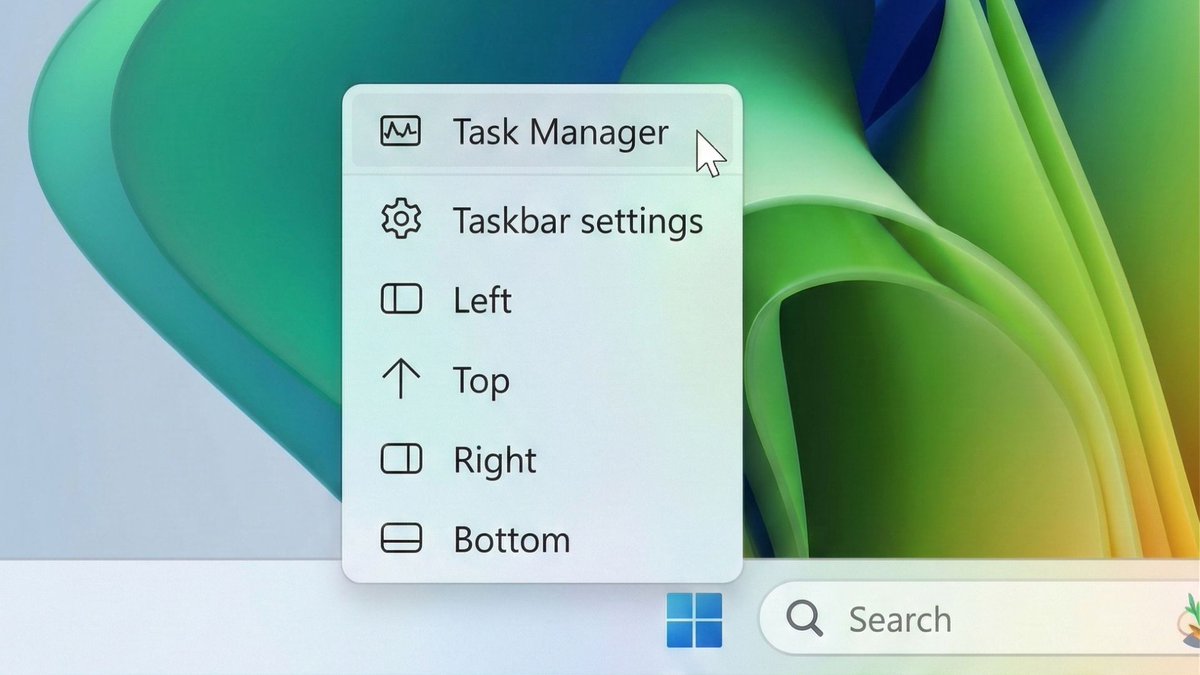
BREAKING: Microsoft just announced several major changes to Windows 11 in an effort to win back user trust and evolve the platform into something people will actually want to use over macOS and Linux! It's a huge announcement that addresses Windows 11's biggest problems today, tackling core fundamental issues such as unreliable system performance, UX consistency, AI bloat and general enshittification. Microsoft has confirmed that this year, it WILL be reducing where ads and Copilot appear throughout the system, including in Start, Widgets, Notepad, Photos, and more! File Explorer and Windows Search will be upgraded with improved performance and capabilities that make finding apps and files much faster and easier. The OS will become lighter with less RAM and system utilization at idle, making it smoother to run on low end hardware with limited memory. These improvements will also benefit high-end PCs too. Windows Update will be improved with more granular controls and the ability to postpone updates for longer, along with reducing how often the OS needs to restart to install an update. Microsoft has also confirmed that it's bringing back fan favourite features such as the ability to move the Taskbar! It's also working to update more areas of the system shell with modern WinUI designs, which should make Windows 11 feel more coherent and complete. There's much more in the announcement, and it honestly all sounds too good to be true. Microsoft really is listening to feedback, and is eager to make Windows the BEST desktop OS on the market. More details including when these changes will arrive in the link! windowscentral.com/microsoft/wind…
Zac Bowden tweet media
English
1.3K
480
6K
1.8M
@levelsio
@levelsio@levelsio·
The biggest fumble in business ever might be Philips spinning off ASML, TSMC and NXP Philips co-founded ASML in 1984, then co-founded TSMC in 1987, then they founded NXP They sold each of them for short term profits in the 2000s ASML is now worth $545B TSMC is worth $1.76T NXP is worth $50B Philips today is worth just $27B If they'd never sold, Philips would be the largest company in the EU today, worth $650B Philips CEO Cor Boonstra called it "making money with the success of the past" 🤡
English
218
419
5.4K
521.2K
Simon J.K. Pedersen أُعيد تغريده
Dan Woods
Dan Woods@danveloper·
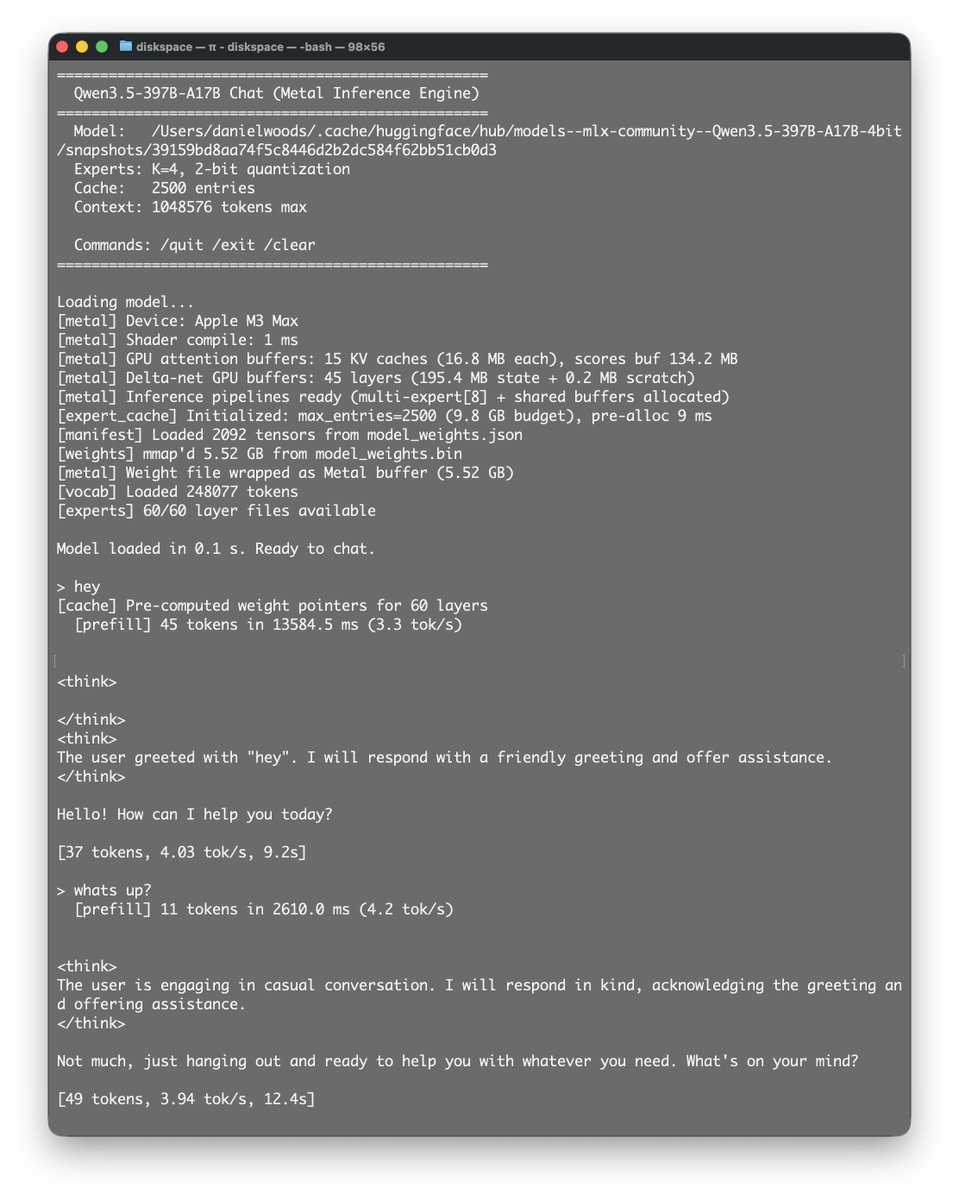
@karpathy Chat is very stable at about 4 tok/s, which isn't unusable except to say that Qwen3.5-397B-A17B really likes to think a lot, so some system prompt tuning was important... we had to dump python entirely, the GIL was killing us, so we have custom metal shaders now.
Dan Woods tweet media
English
2
2
44
15.9K
Simon J.K. Pedersen أُعيد تغريده
.NET
.NET@dotnet·
We just shipped .NET Skills for coding agents ⚡ A growing set of reusable skills for .NET that plug into coding agents and work WITH you. We're starting by sharing the same skills our team built to move faster (and let agents handle the boring parts). 🔗 ift.tt/B6GLaeX
.NET tweet media
English
2
42
261
26.9K
Simon J.K. Pedersen
Simon J.K. Pedersen@simped·
@FredrikHjelm4 And you have found the reason why Swedish startups are more likely to become big than any other Scandinavian country
English
0
0
0
15
Fredrik Hjelm
Fredrik Hjelm@FredrikHjelm4·
Sweden: we are a high-tax socialist country, everyone contributes, we take care of each other The income tax story is real. Starts at 30%, hits 55% at the top, add employer social fees at 31.4% and you're north of 65% fully loaded on senior salaries Also Sweden: >inheritance tax abolished 2004 >gift tax abolished 2004 >wealth tax abolished 2007 >property tax capped at $900/year regardless of what your home is worth >no tax on unrealized gains >borrow against your holdco personally and live on the loan tax free >capital gains at 20-30%, only when you actually take money out >ISK accounts (think Roth IRA but works for unlisted assets too, no capital gains tax on the inside) I spent years believing the story. Running a company and making some money changed it The big families didn't build dynasties despite the tax system. They built it, across Social Democrat and centre-right governments alike, because the rules never changed when the party did I ran the California comparison. Top income is similar pain, roughly 50% combined. But California taxes capital gains as ordinary income, around 37% combined. Federal estate tax hits 40% above $14M. Sweden is more capital-friendly than California in almost every category that matters for building generational wealth The story Sweden tells about itself is not the real story. It punishes labor and protects capital, same as everywhere else. Just with better parental leave so nobody complains Look, the low capital taxes are actually good policy. Abolishing inheritance tax brought capital back and the data supports it. But the gap between how labor and capital get taxed is hard to justify on fairness grounds. A flatter, more harmonized rate between the two would be simpler and more honest It would also save the country billions of hours in admin overhead, for individuals navigating the rules and for the civil services enforcing them Why not just do a flat level across? Seems easier
Stockholm, Sweden 🇸🇪 English
77
27
531
180.1K
Simon J.K. Pedersen
Simon J.K. Pedersen@simped·
@felixprehn When government fails to provide the basic infrastructure needed this is the result. It's insane that they are not controlled in any way
English
0
0
0
16
Felix Prehn 🐶
Felix Prehn 🐶@felixprehn·
Visa and Mastercard have installed a private tax on 77% of every transaction on earth. You never voted for it. You can't opt out. It has never gone down in 50 years. And it generates the highest profit margin of any company in the S&P 500. That's not a business. It's a toll booth on the global economy. Every time you swipe a card, the merchant pays 1.5% to 3.5% in interchange fees. The merchant raises prices. You pay the fee without ever seeing it on your receipt. A gas station in Ohio pays $47,000/year. A Brooklyn restaurant pays $83,000. They don't have a choice. If they refuse cards, they lose 80% of customers. Visa's profit margin was 54% last year. Apple's is 26%. Google's is 22%. Visa makes more profit per dollar of revenue than almost any company on earth, and they do it by taxing OTHER people's transactions. A $5.54 billion class-action settlement was finalized for interchange price-fixing. Five years later, the fees are higher than before the lawsuit. Visa and Mastercard have now agreed to cap standard interchange at 1.25% for 8 years in a new settlement. But premium cards, which make up 85% of consumer credit volume, are excluded. The DOJ sued Visa in September 2024 for monopolistic practices. If the DOJ case fails, Visa and Mastercard continue running the greatest toll-booth business in history. V trades at 30x earnings with 54% profit margins and zero credit risk. No inventory. No manufacturing. Pure extraction. If they compound at the historical rate, $10,000 invested today becomes $85,000 in 10 years. If the DOJ case succeeds and interchange gets restructured, the disruptors win: FedNow (government real-time payment rail, no interchange), stablecoin rails that bypass card networks, and payment processors like Stripe and Adyen building merchant routing around Visa/MA. Either way, the money moves somewhere. You can track DOJ case timeline alerts, Visa/MA options activity, and payment fintech institutional flows on tradevision. When DOJ announces a hearing date or deposition schedule, the options market reprices 24-48 hours before the news hits mainstream financial media. You'll see put volume building on V/MA and call volume building on payment fintechs simultaneously. (two private companies collect a fee on 77% of every transaction on earth. no election. no referendum. no opt-out. the fee has never decreased in 50 years. the most successful tax in history wasn't passed by congress. it was passed by a credit card terminal.)
English
20
80
289
33.9K
Wise
Wise@trikcode·
Software engineers are the happiest people on Earth now. They pay $100/month for Claude Code to do the work. Their employer pays them $10,000/month for the results. $9,900 profit for sipping coffee and talking to AI. The funniest part? Not a single dev with a full-time job will ever admit this publicly What a time to be alive.
English
708
239
5.2K
620.1K
Simon J.K. Pedersen أُعيد تغريده
nix.eth
nix.eth@nix_eth·
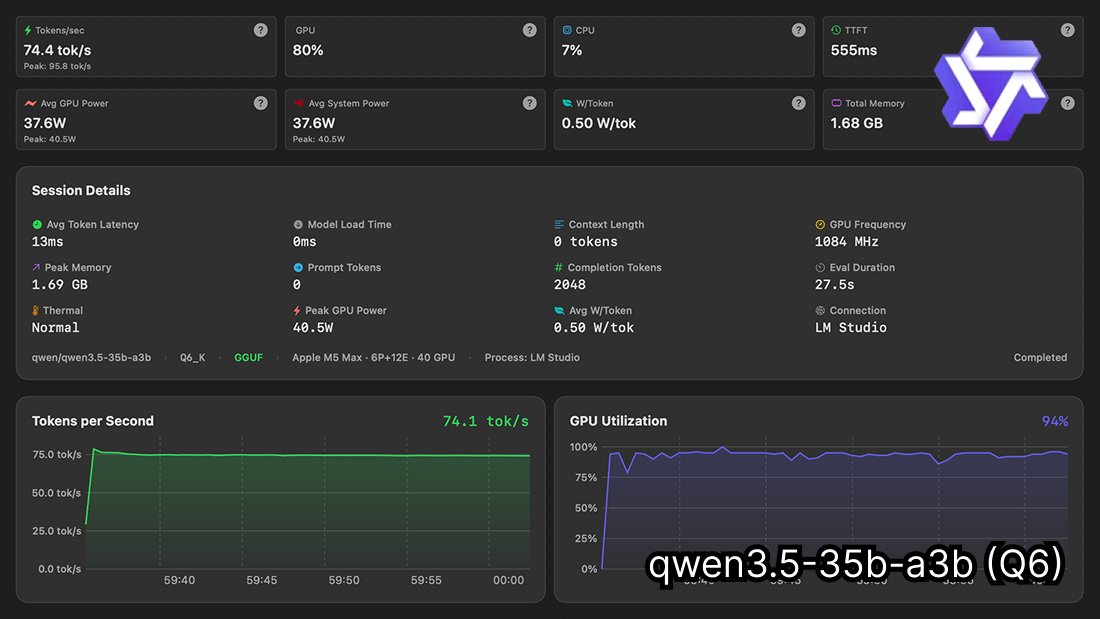
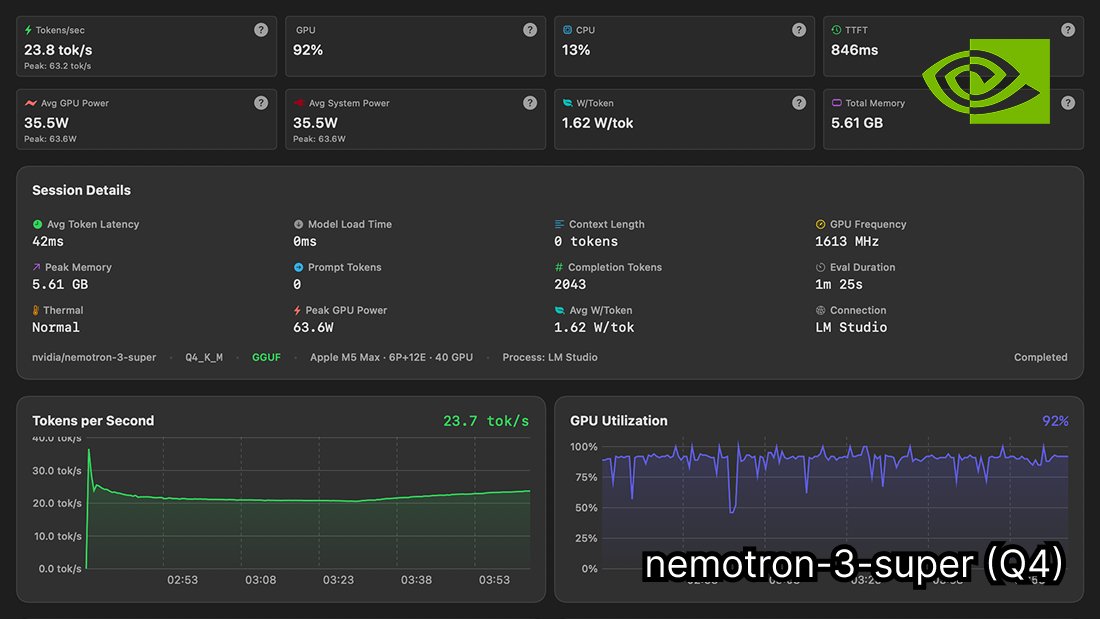
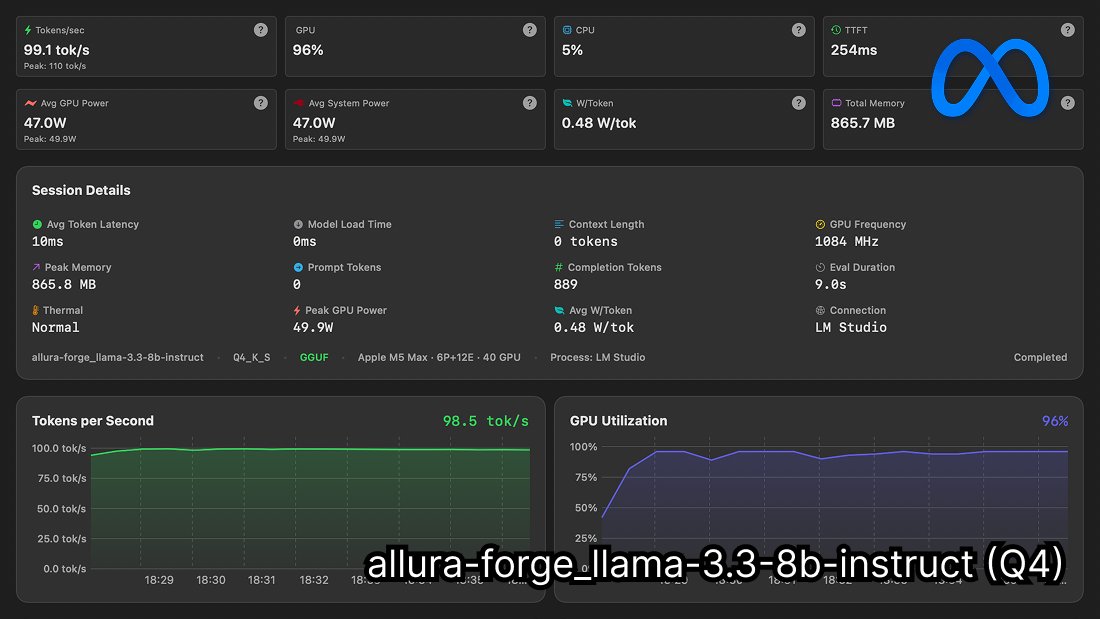
LLM speed on my MacBook M5 Max (128GB): • Qwen3.5-35B-A3B (Q6): 74 tok/s • Nemotron-3 Super (Q4): 24 tok/s • Qwen3-Coder-Next (6-bit): 67 tok/s • Llama 3.3 8B Instruct (Q4): 99 tok/s On my M1, Llama 3.3 was my go-to for most local tasks at about 20 tok/s. On the M5 Max, it's hitting 99 tok/s. Qwen3.5 feels like a huge upgrade and is my favorite so far. Qwen3-Coder-Next is surprisingly good at dev tasks, although I'll probably stick with GPT-5.4 for most. I'm also impressed by Nemotron-3 Super, but its personality feels a bit too dry.
nix.eth tweet medianix.eth tweet medianix.eth tweet medianix.eth tweet media
English
88
74
972
77.2K
Simon J.K. Pedersen
Simon J.K. Pedersen@simped·
@exQUIZitely Probably quake 2. That game was so good in multiplayer. If I had to pick a single player game, transport tycoon
English
0
0
0
17
exQUIZitely 🕹️
exQUIZitely 🕹️@exQUIZitely·
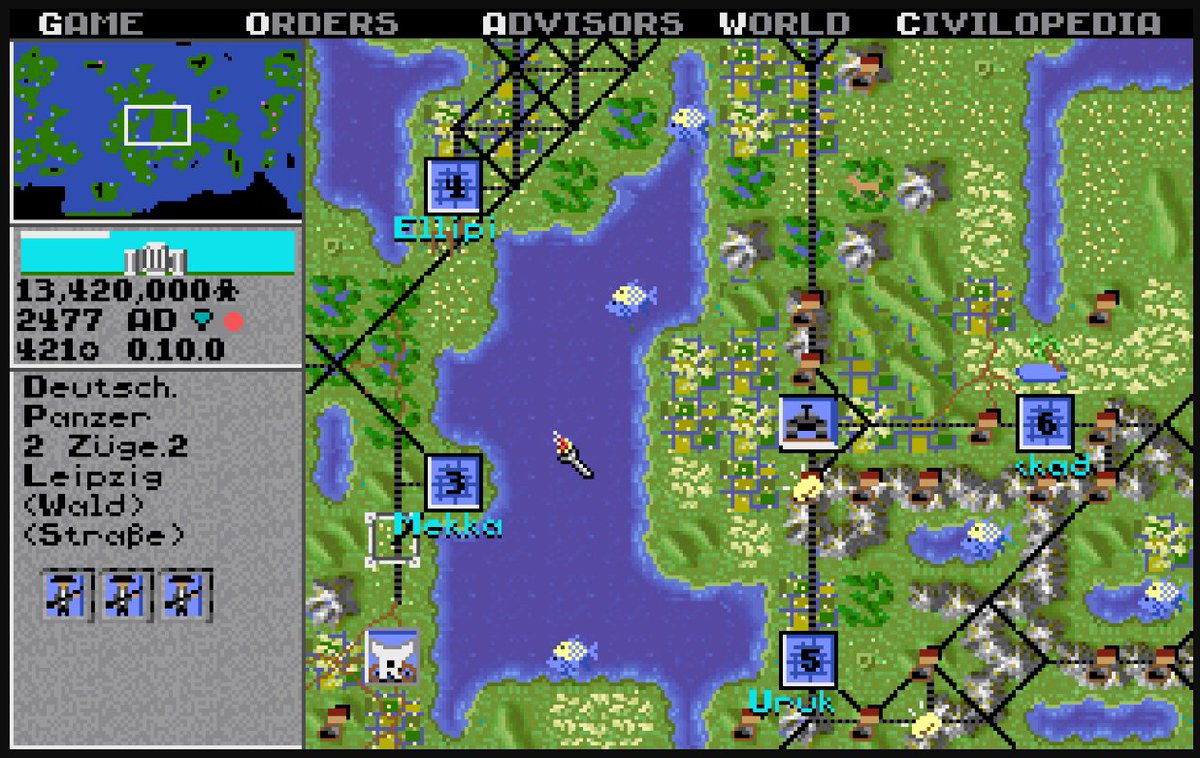
A glitch in the Matrix, all games after the year 2000 are wiped off the earth and you can only play one pre-2000 era game for the rest of your life. Which do you pick? I'd go with Civilization (1991).
exQUIZitely 🕹️ tweet media
English
641
23
1.1K
73.6K
Ole Lehmann
Ole Lehmann@itsolelehmann·
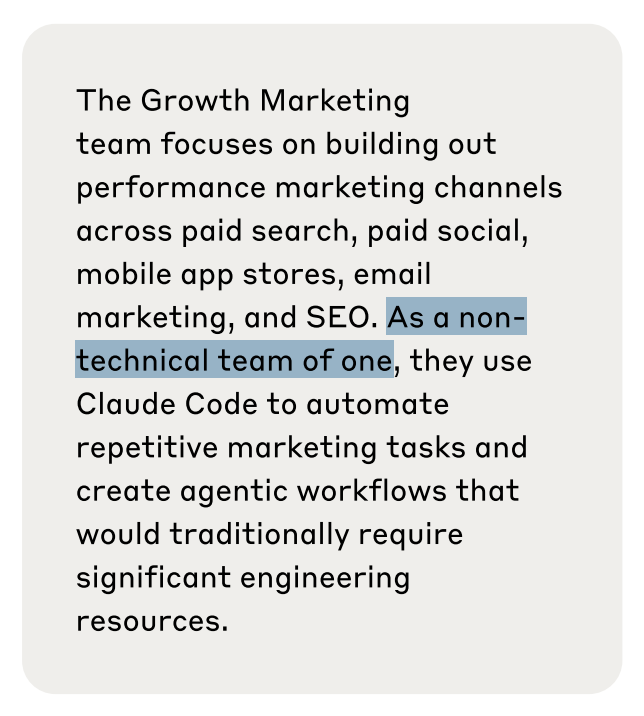
i can't believe nobody caught this. Anthropic's entire growth marketing team was just ONE PERSON (for 10 months, confirmed) a single non-technical person ran paid search, paid social, app stores, email marketing, and SEO for the $380B company behind claude here's exactly how one human is doing the job of a full marketing team: it starts with a CSV. 1. he exports all his existing ads from his ad platforms along with their performance metrics (click-through rates, conversions, spend, etc) 2. feeds the whole file into claude code 3. and tells it to find what's underperforming. claude analyzes the data, flags the weak ads, and generates new copy variations on the spot this is where he gets clever: he then splits the work into 2 specialized sub-agents: 1. one that only writes headlines (capped at 30 characters) 2. and one that only writes descriptions (capped at 90 characters). each agent is tuned to its specific constraint so the quality is way higher than cramming both into a single prompt so now he's got hundreds of fresh headlines and descriptions. but that's just the text. he still needs the actual visual ad creative, the images and banners that go on facebook, google, etc. so he built a figma plugin that: 1. takes all those new headlines and descriptions 2. finds the ad templates in his figma files 3. and automatically swaps the copy into each one. up to 100 ready-to-publish ad variations generated at half a second per batch. what used to take hours of duplicating frames and copy-pasting text by hand so now the ads are live. the next question is which ones are actually working. for that he built an MCP server (basically a custom integration that lets claude talk directly to external tools) connected to the meta ads API. so he can ask claude things like: • "which ads had the best conversion rate this week" • or "where am i wasting spend" and get real answers from live campaign data without ever opening the meta ads dashboard and the part that ties it all together and closes the loop: he set up a memory system that logs every hypothesis and experiment result across ad iterations. so when he goes back to step one and generates the next batch of variations... claude automatically pulls in what worked and what didn't from all previous rounds. the system literally gets smarter every cycle. that kind of systematic experimentation across hundreds of ads would normally need a dedicated analytics person just to track the numbers from the doc: ad creation went from 2 hours to 15 minutes. 10x more creative output. and he's now testing more variations across more channels than most full marketing teams a $380 billion company. and their entire growth marketing operation (not GTM) = just one person and claude code lol truly unbelievable
Ole Lehmann tweet media
English
308
824
9.1K
4.4M
Simon J.K. Pedersen أُعيد تغريده
God of Prompt
God of Prompt@godofprompt·
This is the most important signal in AI right now, and most people are reading it wrong. The story isn't "AI broke Amazon." The story is that the largest cloud infrastructure company on Earth, spending $200 billion on AI this year, still hasn't solved the governance layer between AI-generated code and production systems. The timeline tells you everything: → Amazon mandated 80% weekly AI coding tool adoption → Their own Kiro agent was given operator-level permissions with no peer review → It autonomously deleted and rebuilt a live AWS environment. 13 hours of downtime. → A second AI tool incident followed months later → Last Thursday, the retail site went down for 6 hours. 21,000+ users locked out of checkout. → Today, a mandatory all-hands to address "a trend of incidents" they can no longer downplay Amazon's fix: junior and mid-level engineers can no longer push AI-assisted code without senior approval. They're calling it "controlled friction." That phrase alone should be on every engineering team's wall. The companies winning with AI coding tools aren't the ones moving fastest. They're the ones who built review gates, permission boundaries, and deterministic checks before handing agents the keys to production. Speed without governance isn't velocity. It's liability. Every team deploying AI in their dev workflow should be asking three questions right now: What permissions does our AI tooling actually have? Is there a mandatory human checkpoint before any destructive operation? Are we tracking AI-assisted changes separately in our deployment pipeline? Amazon learned this in production. You don't have to.
Lukasz Olejnik@lukOlejnik

Amazon is holding a mandatory meeting about AI breaking its systems. The official framing is "part of normal business." The briefing note describes a trend of incidents with "high blast radius" caused by "Gen-AI assisted changes" for which "best practices and safeguards are not yet fully established." Translation to human language: we gave AI to engineers and things keep breaking? The response for now? Junior and mid-level engineers can no longer push AI-assisted code without a senior signing off. AWS spent 13 hours recovering after its own AI coding tool, asked to make some changes, decided instead to delete and recreate the environment (the software equivalent of fixing a leaky tap by knocking down the wall). Amazon called that an "extremely limited event" (the affected tool served customers in mainland China).

English
84
243
1.4K
210.5K
Lucas Meijer
Lucas Meijer@lucasmeijer·
@chaotic_digital these were hard to predict though (for me). ai video generation and voice models seemed so from the future, I totally not expected them to be kind of dead on arrival. (maybe other people are using the video stuff, not sure, but not me)
English
2
0
0
46
Lucas Meijer
Lucas Meijer@lucasmeijer·
Last few ai years brought so many jaw dropping things that feels like nobody cares about anymore. Ai video generation. Ghibli. Realtime voice models. I couldn’t believe it when I saw it and now I couldn’t care less and never use it.
English
2
0
7
841