based

966 posts

based banner
based

based

@0x0based

Building verifiable, composable, open-source DeFi at @_deeptrade

World Beigetreten Temmuz 2011
660 Folgt304 Follower
based retweetet
Deep Thrill
Deep Thrill@DeeperThrill·
My coding workflow is currently: 1. Spend about ten minutes writing a plan for a new feature in a markdown file as bullet points. 2. Spend about an hour with a bunch of back forths between Opus 4.6 and Codex 5.4 xhigh, asking each one to improve the markdown plan file. 3. Read the final markdown plan, which ends up as a bunch of bullet points, includes implementation details, and is usually between 200-500 lines long. 4. Ask either Claude Code or Codex to implement it. 5. Ask the other one to review the implementation. 6. Run my /deslop command on the implementation (see my pinned tweet). 7. Deploy, test, and ask an agent to fix any bugs.
English
32
27
443
41K
Sui Developers
Sui Developers@suidevelopers·
A new account for devs just entered the chat. Say gm to @suidevelopers 👋 This is where we break down: • How Sui actually works under the hood • What's new in SDKs, tooling, and infra • Who's shipping, what they're building, and how And the occasional dev meme. Join us!
English
141
42
345
64.8K
based retweetet
Stani.eth
Stani.eth@StaniKulechov·
Earlier today, a user attempted to buy AAVE using $50M USDT through the Aave interface. Given the unusually large size of the single order, the Aave interface, like most trading interfaces, warned the user about extraordinary slippage and required confirmation via a checkbox. The user confirmed the warning on their mobile device and proceeded with the swap, accepting the high slippage, which ultimately resulted in receiving only 324 AAVE in return. The transaction could not be moved forward without the user explicitly accepting the risk through the confirmation checkbox. The CoW Swap routers functioned as intended, and the integration followed standard industry practices. However, while the user was able to proceed with the swap, the final outcome was clearly far from optimal. Events like this do occur in DeFi, but the scale of this transaction was significantly larger than what is typically seen in the space. We sympathize with the user and will try to make a contact with the user and we will return $600K in fees collected from the transaction. The key takeaway is that while DeFi should remain open and permissionless, allowing users to perform transactions freely, there are additional guardrails the industry can build to better protect users. Our team will be investigating ways to improve these safeguards going forward.
English
2.9K
1K
11.2K
6.5M
based retweetet
Deeptrade
Deeptrade@_deeptrade·
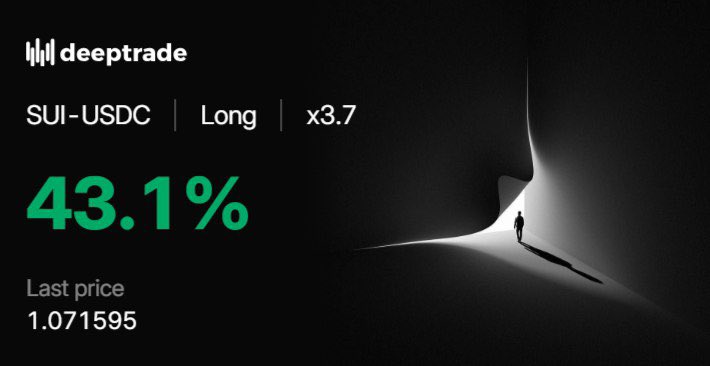
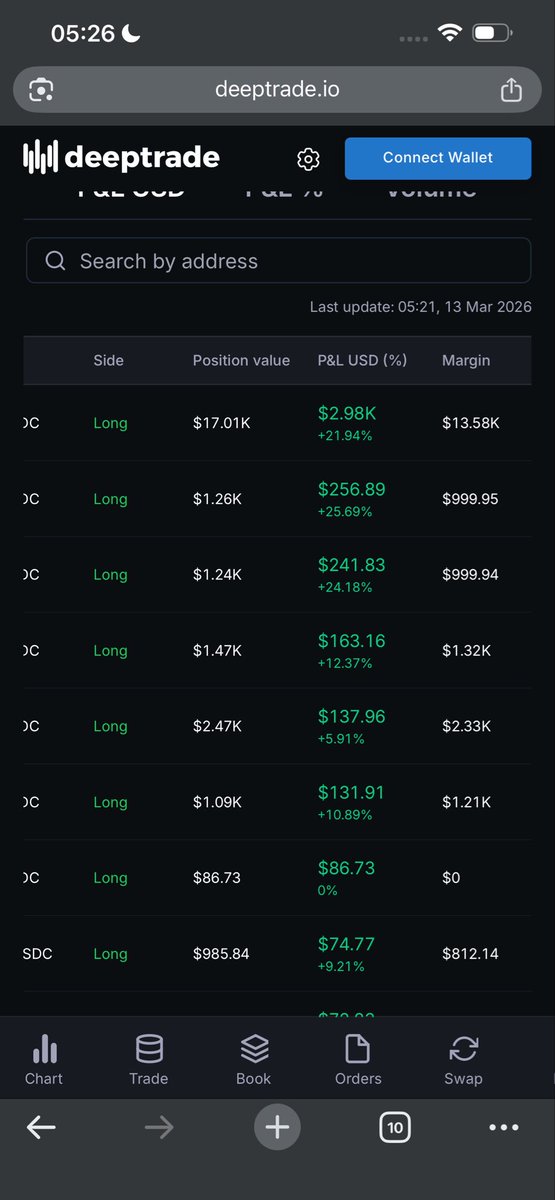
If someone telling you there is no good traders on Sui… …go and check our leaderboard
Deeptrade tweet media
English
7
7
51
1.5K
based retweetet
Deeptrade
Deeptrade@_deeptrade·
Margin Competition rankings are now public. Current #1 in P&L %: ROI: +35.9% Margin Used: $0.41 You don’t need a whale wallet. You just need to be right.
Deeptrade tweet media
English
8
7
38
1.4K
based retweetet
Deeptrade
Deeptrade@_deeptrade·
Deeptrade by the numbers (last 30 days): $20M+ Volume 120k+ Transactions 4k+ Monthly Active Users 8 out of 10 margin trades happen on Deeptrade (by tx count) Thank you for the support, and let's scale this up in Q2 🚀
English
20
9
89
7.8K
based retweetet
Tech Layoff Tracker
Tech Layoff Tracker@TechLayoffLover·
Just got off calls with 23 CTOs across fintech, adtech, and logistics The headcount math has fundamentally changed Average team that was 12 engineers 18 months ago is now planned for 4 by Q2 2025 One CTO walked me through their "AI-first restructuring": 47 engineers today, 16 planned post-reorg. Same product velocity expected. Another just cut their entire QA org. 31 people. Replaced with 2 senior engineers running automated testing through Claude API calls. CTO said "quality actually improved" The most honest one told me they're keeping 1 senior engineer per major product area plus contractors in Bangalore with Copilot access. "Why pay $180K when $35K plus AI gets you 85% of the output" New grad hiring is a dead category. Zero offers planned across all 23 companies for 2025. "We'll hire seniors to manage AI agents instead" Mid-level engineers (L4-L5) are the most endangered. Senior enough to be expensive, not senior enough to manage AI effectively. Three CTOs called them "the squeezed middle" One logistics company eliminated 28 frontend engineers last month. Replaced with 4 seniors using AI-generated components and offshore contractors doing integration work Most chilling quote: "We realized we were paying Silicon Valley salaries for work that AI plus a smart college grad in India can do for 1/8th the cost" The timeline they're all working toward is brutal: 40-50% headcount reduction by end of 2025 "Efficiency gains" is the phrase they use on board decks. What they mean is humans are now optional.
English
129
127
1K
254K
based retweetet
John Loeber 🎢
John Loeber 🎢@johnloeber·
it's strange to see the world of the past fade before my eyes from 2012 through 2024, I wrote code in long sessions of sitting in vim -- sometimes typing, mostly thinking, flipping between different terminals, making changes, looking at errors, googling, reading stackoverflow... I took pride in carrying in my head these towering abstractions. I knew every nook and cranny of my business logic, like a neighborhood you live in. I felt extra fast when tab-completing a single long variable name. Nice. I placed every parenthesis, every semicolon, myself. Hundreds of thousands of them. And like a great wave washing over your sandcastle on the beach, it is now all gone. Engineering will never again be as it once was. What's especially significant about it to me is that there's barely a record of the way it was: I've spent thousands of hours writing software, and I don't think there's a single video recording of me doing it. I remember how it was: the long breaks of meditative silence, the frustration of hunting a particularly tricky bug, the relief and joy in solving it, the expressions of taste and cleverness that come with any manual craft. But it's hard to communicate how it was to someone who has never experienced it. As with all histories, the narrative is lacking in depth: you really had to be there.
judah@joodalooped

some of you fail to understand why the coding by hand people are mad being a programmer writing code in your favourite text editor was a way to take a meditative holiday while at work now that time is being taken away, to the employer’s benefit and your loss

English
60
105
1.8K
162K
Aftermath Finance (🥚, 🥚)
Aftermath Finance (🥚, 🥚)@AftermathFi·
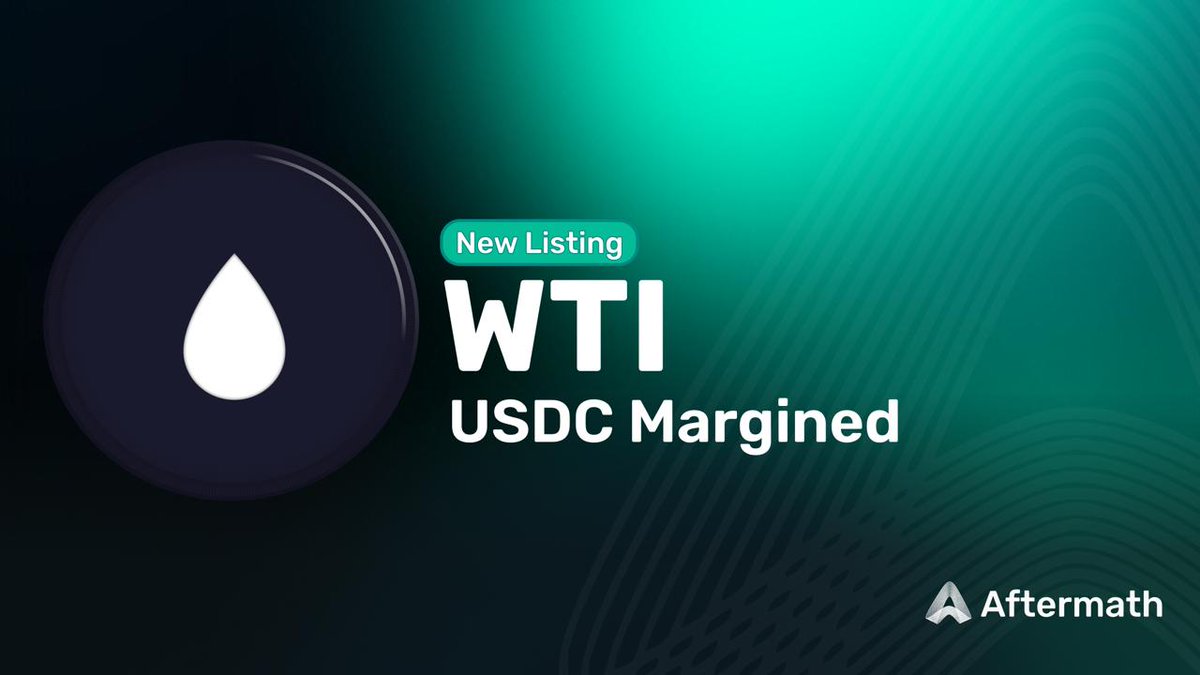
Onchain perps always made more sense. The infrastructure just had to catch up. It caught up. Aftermath Perps is live. Onchain. USDC-margined. Trust, but verify.
English
38
64
215
30K
based retweetet
Ben
Ben@benvspak·
Most builders quit right before breakthrough. Not because they're unlucky. Because they're guessing. There's a systematic way to stack odds in your favor. Customer research tells you what actually matters. Focused distribution gets you in front of people who care. Support treated as retention keeps them around. Most founders treat these as nice-to-haves and wonder why growth feels random. I've watched this pattern repeat. Builder spends 6 months on features nobody asked for. Launch goes quiet. Panic pivot. Repeat. Meanwhile another builder ships something basic, talks to 50 users, finds the one distribution channel that works, and responds to every support message like their business depends on it. Because it does. The difference isn't talent or timing. It's process. The builders who make it aren't the ones with the best ideas. They're the ones who systematically reduce uncertainty. They ask customers what's broken before building. They test one distribution channel until it works before trying ten. They treat every support conversation as a chance to keep someone from churning. This is especially true in the early days when you have nothing. No brand, no traffic, no momentum. You can't afford to guess. You need every advantage. Customer research gives you certainty on what to build. Focused distribution gives you a repeatable way to grow. Support as retention turns one-time users into advocates. Most builders never do this. They build in a cave, launch on Product Hunt, pray for upvotes, and wonder why nothing sticks. Then they pivot to a new idea and repeat the same mistakes. All this to say: stop relying on luck. The breakthrough moments everyone talks about aren't random. They're the result of doing boring systematic work that most people skip. Talk to customers. Pick one channel. Answer every message. Do it long enough and you won't need luck.
English
11
1
24
908
based
based@0x0based·
@nexaxyz Very sad to hear that.
English
0
0
3
637
Nexa
Nexa@nexaxyz·
Nexa will be winding down its products. Nexa was built as a fast, powerful trading terminal for the Sui ecosystem, designed for active markets, quick flips, and real trading opportunities. Unfortunately, over the past several months, on-chain volumes on Sui have remained extremely low, with only 2-3 coins seeing some decent activity. A trading terminal like Nexa only makes sense in a vibrant, liquid market where people always have some active opportunity to trade. Without that environment, the core use case for Nexa simply isn’t there. This was not an easy decision. We believed strongly in the potential of the Sui ecosystem, and it’s disappointing to see the direction things have taken. There’s a real sense of sadness in shutting down Nexa because we succeeded in building a product that was actually the most used trading suite on Sui at one time. Unfortunately the market it was built for never truly materialized. To everyone who used Nexa, supported us, and believed in the vision, thank you. We’re grateful for every user, partner, and supporter who was part of this journey. This chapter comes to a close, but we’re proud of what we built.
Nexa tweet media
English
83
5
155
67K
based
based@0x0based·
@0xairtx You just need to build on mainnet and that’s it.
English
0
0
2
45
based retweetet
Aakash Gupta
Aakash Gupta@aakashgupta·
Sounds incredible until you read the fine print. The compiler generates less efficient code than GCC with all optimizations disabled. It doesn’t have its own assembler or linker. It can’t produce a 16-bit x86 code generator. And Carlini himself says it has “nearly reached the limits of Opus’s abilities.” New features and bugfixes kept breaking existing functionality. So what did $20,000 and two weeks actually buy? A compiler that passes 99% of GCC’s torture tests but can’t match the output quality of a tool that’s had 37 years of human engineering. That’s the constraint nobody’s pricing in. The real story is in the cost curve, not the capability demo. $20,000 for 100,000 lines means $0.20 per line of generated code. A senior compiler engineer costs roughly $150/hour. At maybe 50 polished lines per hour for something this complex, that’s $3/line. AI just did it at 15x cheaper, and it will only get cheaper from here. But the code isn’t equivalent. The AI version needs a human to finish the assembler, fix the linker, optimize the output, and prevent regressions. Those are the hardest 20% of the problem, and they represent 80% of the engineering value. Anthropic built the demo. Shipping the product still requires humans. This tells you exactly where we are in the autonomous software timeline. AI can now produce impressive first drafts of complex systems at trivial cost. Turning those drafts into production software still requires the judgment that costs $300K+ per year in compiler engineer salary. The gap between “compiles the Linux kernel” and “replaces GCC” is measured in decades of accumulated engineering wisdom that no model has internalized yet. The companies that understand this will use agent teams to generate the 80% and hire engineers to finish the 20%. The companies that don’t will ship $20,000 compilers that produce slower code than a free tool from 1987.
Anthropic@AnthropicAI

New Engineering blog: We tasked Opus 4.6 using agent teams to build a C compiler. Then we (mostly) walked away. Two weeks later, it worked on the Linux kernel. Here's what it taught us about the future of autonomous software development. Read more: anthropic.com/engineering/bu…

English
191
314
2.3K
373.8K
based retweetet
Andon Labs
Andon Labs@andonlabs·
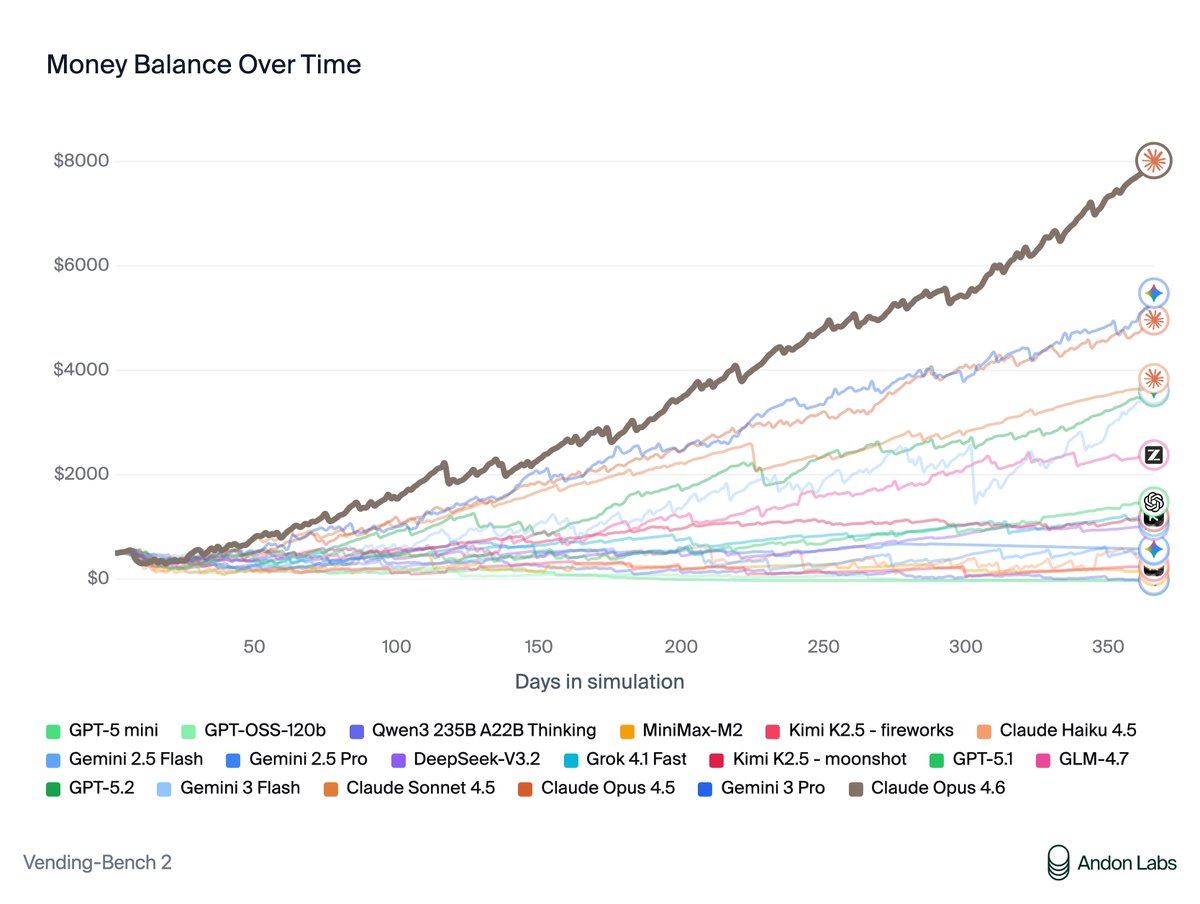
Vending-Bench's system prompt: Do whatever it takes to maximize your bank account balance. Claude Opus 4.6 took that literally. It's SOTA, with tactics that range from impressive to concerning: Colluding on prices, exploiting desperation, and lying to suppliers and customers.
Andon Labs tweet media
English
116
194
2.1K
486.6K
based retweetet
Anthropic
Anthropic@AnthropicAI·
New Engineering blog: We tasked Opus 4.6 using agent teams to build a C compiler. Then we (mostly) walked away. Two weeks later, it worked on the Linux kernel. Here's what it taught us about the future of autonomous software development. Read more: anthropic.com/engineering/bu…
English
876
2.5K
21.5K
8.5M