
Andrew Keys

5.2K posts

Andrew Keys banner
Andrew Keys

Andrew Keys

@AK_EtherMachine

Everything changes. Everything is connected. Pay attention.

Dorado, Puerto Rico Beigetreten Haziran 2015
5.8K Folgt32.3K Follower
Layer33
Layer33@Layer_33_·
A new all-time low for total @solana validators. Sadly, Layer33 has already been affected, as one of our own had to close down shop today. We need to work faster to strengthen independent validators and keep our home decentralized. 33 🏁
Layer33 tweet media
English
33
35
175
60.7K
Andrew Keys
Andrew Keys@AK_EtherMachine·
Stud.
vitalik.eth@VitalikButerin

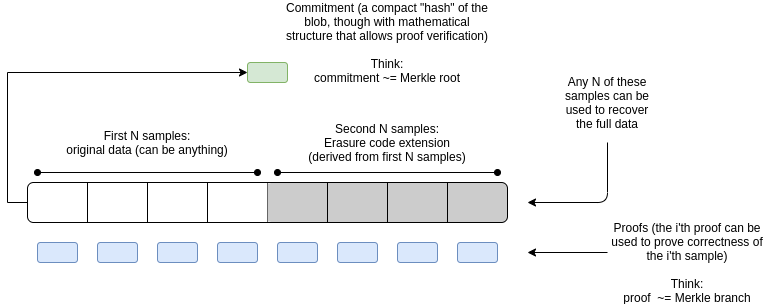
PeerDAS in Fusaka is significant because it literally is sharding. Ethereum is coming to consensus on blocks without requiring any single node to see more than a tiny fraction of the data. And this is robust to 51% attacks - it's client-side probabilistic verification, not validator voting. Sharding has been a dream for Ethereum since 2015 , and data availability sampling since 2017 ( github.com/ethereum/resea… ), and now we have it. That said, there are three ways that the sharding in Fusaka is incomplete: * We can process O(c^2) transactions (where c is the per-node compute) on L2s, but not on the ethereum L1. If we want to scaling to benefit the ethereum L1 as well, beyond what we can get by constant-factor upgrades like BAL and ePBS, we need mature ZK-EVMs. * The proposer/builder bottleneck. Today, the builder needs to have the whole data and build the whole block. It would be amazing to have distributed block building. * We don't have a sharded mempool. We still need that. But even still, this is a fundamental step forward in blockchain design. The next two years will give us time to refine the PeerDAS mechanism, carefully increase its scale while we continue to ensure its stability, use it to scale L2s, and then when ZK-EVMs are mature, turn it inwards to scale ethereum L1 gas as well. Big congrats to the Ethereum researchers and core devs who worked hard for years to make this happen.

English
6
2
132
12.6K
Andrew Keys retweetet
vitalik.eth
vitalik.eth@VitalikButerin·
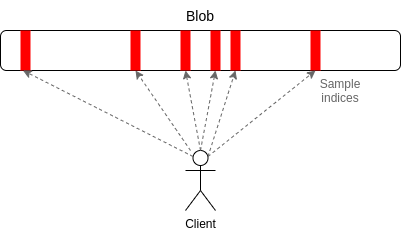
PeerDAS in Fusaka is significant because it literally is sharding. Ethereum is coming to consensus on blocks without requiring any single node to see more than a tiny fraction of the data. And this is robust to 51% attacks - it's client-side probabilistic verification, not validator voting. Sharding has been a dream for Ethereum since 2015 , and data availability sampling since 2017 ( github.com/ethereum/resea… ), and now we have it. That said, there are three ways that the sharding in Fusaka is incomplete: * We can process O(c^2) transactions (where c is the per-node compute) on L2s, but not on the ethereum L1. If we want to scaling to benefit the ethereum L1 as well, beyond what we can get by constant-factor upgrades like BAL and ePBS, we need mature ZK-EVMs. * The proposer/builder bottleneck. Today, the builder needs to have the whole data and build the whole block. It would be amazing to have distributed block building. * We don't have a sharded mempool. We still need that. But even still, this is a fundamental step forward in blockchain design. The next two years will give us time to refine the PeerDAS mechanism, carefully increase its scale while we continue to ensure its stability, use it to scale L2s, and then when ZK-EVMs are mature, turn it inwards to scale ethereum L1 gas as well. Big congrats to the Ethereum researchers and core devs who worked hard for years to make this happen.
vitalik.eth tweet mediavitalik.eth tweet media
English
528
775
4.3K
359.8K
Andrew Keys
Andrew Keys@AK_EtherMachine·
@0xkydo This was really well written. What would be ideal for your stakeholders is a dashboard of the best potential opportunities and their associated risks, rewards, and where they are in terms of development (poc, production, etc).
English
0
0
1
126
Kydo
Kydo@0xkydo·
wrote a long reflection on restaking (2nd tweet). you probably won’t read it all, so i asked ai to turn it into a song. hope you get some useful insights from our chapter 1. what didn’t land: • we picked a niche market that moved slower and was smaller than we expected • we stayed quiet during the regulatory fog and let narratives run ahead of us • early AVSs diluted the brand and pulled us into noise • we focused on the perfect design and shipped slower what went well: • we proved we can win in brutal, crowded markets • eigenda powering ethereum's most ambitious builders • massively accelerated preconf • we kept billions secure with real operational discipline • we prevented more ethereum infighting around lido 33% • we got clarity on where the actual frontier is where we’re going: • putting EIGEN at the center of the system • letting developers build verifiable applications, not just AVSs • going deep on AI agents with EigenAI, EigenCompute, EigenDA • building a cleaner, transparent story around stake, yield, and real risk hope you enjoy the emo song or the read.
English
23
1
46
3.3K
Andrew Keys
Andrew Keys@AK_EtherMachine·
@Lomashuk Read the whole report. Really eloquently written.
English
0
0
3
207
Konstantin Lomashuk cyber/acc
Crypto Twitter is discussing how to evaluate crypto assets - that’s a great conversation, and one we started thinking about back in 2014. Simply, a large share of tokens are memecoins with almost no intrinsic value. Another big portion functionally behaves like equities. But some blockchains, like Ethereum, are protocols with strong potential for network effects. Traditional valuation multiples don’t work well here. Ethereum can keep blockspace costs low, while still capture massive value later as network effects scale and major parts of finance and programmable infrastructure are built on top of it. Read our report on why Ethereum is becoming the World Ledger.
cyber•Fund@cyberfund

Below we attach the arc of Ethereum as we see it. Critical steps to win include: 1. Scaling L1 & DA in order to keep fees low & continue winning the customers 2. Hardening & talking about Ethereum’s security Solving the L2<>L2 interop to expand liquidity moat

English
34
27
213
48.8K
Andrew Keys
Andrew Keys@AK_EtherMachine·
⚙️Operational progress. All of the ETH in our treasury is staking onchain and generating a ~2.94% implied annual yield, outperforming CESR. Treasury stands at ~$369M pro forma cash + 496,735 pro forma ETH. Validator performance and operational readiness continue to scale. 👇
English
0
1
17
676
Andrew Keys
Andrew Keys@AK_EtherMachine·
⚙️A pullback is our advantage. For our impending public listing, when ETH and sentiment are off the highs, new investors aren’t underwriting peak-cycle implied ETH prices or inflated mNAV premiums. Cleaner fundamentals. Less overhanging debt. Healthier entry levels aligned with long-term value creation. 👇
English
1
0
16
704
Konstantin Lomashuk cyber/acc
Ethereum never was in better position ever from fundamentals. It is also the best time to build products that used crypto as technology. There isn’t much competition, beyond a few large institutions, and the regulatory landscape is better than ever. Until recently, it was almost impossible to: • on-ramps and off-ramps with 0 fees • good UX • regulatory compliance • and a great product where users don’t see crypto, only more value than traditional companies. Now you can.
Konstantin Lomashuk cyber/acc@Lomashuk

x.com/i/article/1990…

English
38
34
296
31.6K
Andrew Keys
Andrew Keys@AK_EtherMachine·
@pbrody is a crown jewel of the @ethereum community. Privacy enabling technology like zero knowledge proofs will enable enterprises do deploy production environments on Ethereum.
Ethereum@ethereum

0/ I believe that 2026 will be the golden year for Ethereum privacy. That's especially true when it comes to enterprises. Here’s how the Ethereum ecosystem is leading the way and why that matters for institutions. A guest thread by @pbrody from @EYnews and @EntEthAlliance.

English
1
17
100
10.8K
Andrew Keys
Andrew Keys@AK_EtherMachine·
Big week for @0xIntuition. At the core is the $TRUST token, which powers this market for verifiable information — the foundation of a new category called Information Finance (InfoFi). $TRUST turns information into an asset class, enabling anyone (human or AI) to publish, verify, and exchange knowledge under economic consensus.
English
17
11
96
14.2K
Andrew Keys
Andrew Keys@AK_EtherMachine·
@Ethereum is entering its hyper-growth stage.
English
9
19
254
30K