Peter Adams🇪🇺🇺🇳

1.6K posts

Peter Adams🇪🇺🇺🇳 banner
Peter Adams🇪🇺🇺🇳

Peter Adams🇪🇺🇺🇳

@AdamsBioAging

Director NCI-designated Cancer Genome and Epigenetics Program at SBP, Co-Editor-in-Chief Aging Biology Journal, Road/Gravel/Mtn Cycling, Wolf Pack Cycling.

San Diego, CA Beigetreten Ağustos 2020
2.6K Folgt4.8K Follower
Angehefteter Tweet
Peter Adams🇪🇺🇺🇳
Peter Adams🇪🇺🇺🇳@AdamsBioAging·
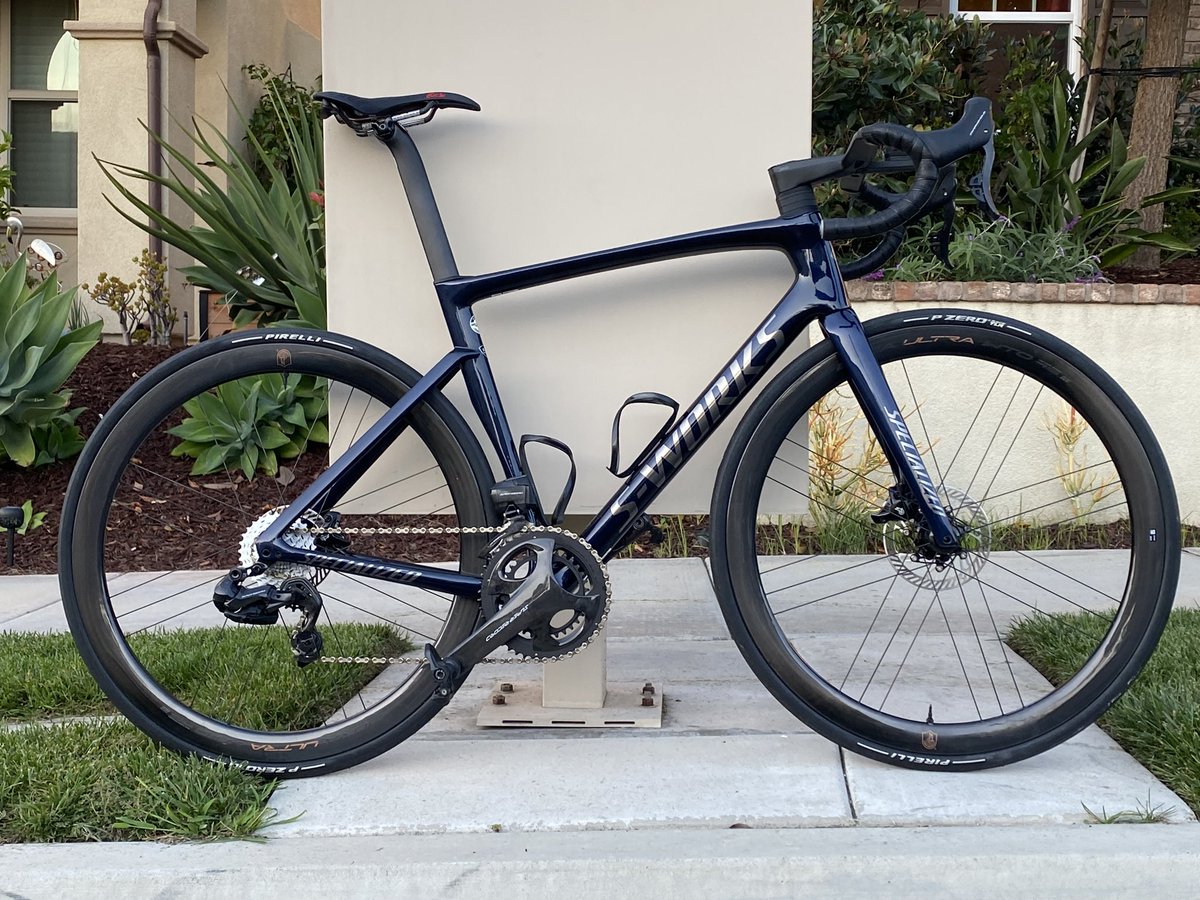
New road bike. S-WORKS Tarmac SL7, Campy SR wireless and disc, Campy Bora Ultra WTO wheels👍 No excuses now😧
Peter Adams🇪🇺🇺🇳 tweet mediaPeter Adams🇪🇺🇺🇳 tweet mediaPeter Adams🇪🇺🇺🇳 tweet mediaPeter Adams🇪🇺🇺🇳 tweet media
English
5
1
47
7.2K
Zane Koch
Zane Koch@zanehkoch·
for a while i've had a slight fear that the bluetooth from my airpods could be frying my brain this weekend i pulled the raw data from a $30m government study of 1,679 mice blasted with cell phone radiation and reanalyzed it what i found was...not what I expected? 🧵
English
403
684
9.2K
4.3M
Peter Adams🇪🇺🇺🇳
Peter Adams🇪🇺🇺🇳@AdamsBioAging·
A great meeting organized by Xiangmin Xu and colleagues at UC Irvine Center for Neural Circuit Mapping (CNCM)
Peter Adams🇪🇺🇺🇳 tweet media
English
0
1
6
329
Peter Adams🇪🇺🇺🇳
Peter Adams🇪🇺🇺🇳@AdamsBioAging·
@doctorsaluja @Aaron_Havas @AdarshRajesh11 Difficult to predict what will work in humans. However, I think there is a case to be made for Rapamycin against many pathologies of human aging, likely more versus early pathology or preventative than curative of advanced disease.
English
0
0
0
35
Peter Adams🇪🇺🇺🇳
Peter Adams🇪🇺🇺🇳@AdamsBioAging·
I’m looking forward to speaking at the 2026 Annual Scintillon Innovator Forum on aging research, Friday March 27, 2026. Thanks for the invite, @VFCracan and colleagues. See here scintillon.org/2026-1st-scint…
Valentin F. Cracan@VFCracan

If you are in the San Diego area on March 27, 2026 you are cordially invited to attend our inaugural 2026 1st Annual Scintillon Innovator Forum. The main focus of this meeting is aging research. I will be presenting along with other fantastic speakers including Dr. Peter Adams @AdamsBioAging from Sanford Burnham Prebys and Dr. Hideyuki Okano, Scientific Advisory Board Member of @Scintillon, President of @ISSCR and Professor at @Keio_Univ. Registration is free, please read more about our meeting and RSVP here: scintillon.org/2026-1st-scint…
English
0
1
6
724
Peter Adams🇪🇺🇺🇳
Peter Adams🇪🇺🇺🇳@AdamsBioAging·
@OKNathanShock Thanks again! I had a great day hearing about your super science and I was excited to hear about your plans for growth. I look forward to seeing your important contributions to aging, epigenetics, metabolism, diet etc…….fascinating and important interactions.
English
0
0
8
188
Oklahoma Nathan Shock Center
Oklahoma Nathan Shock Center@OKNathanShock·
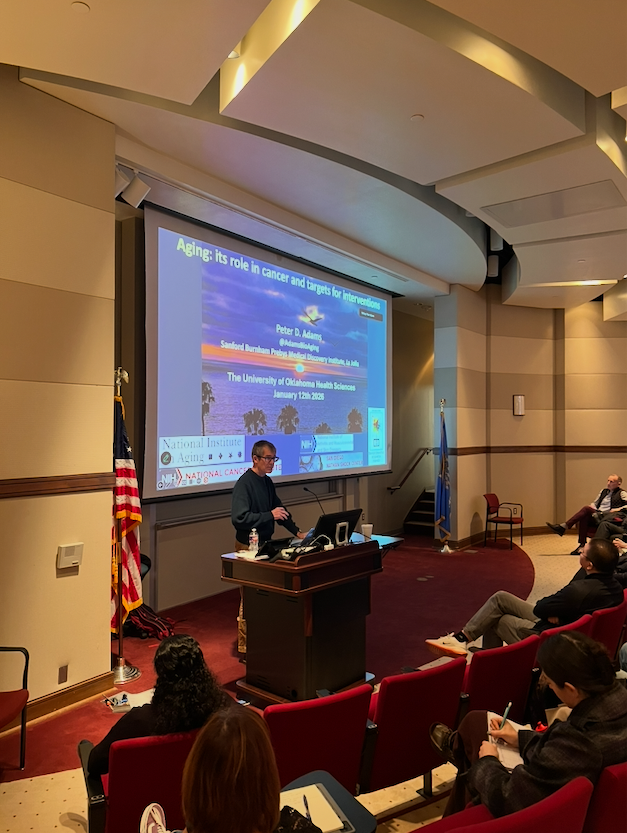
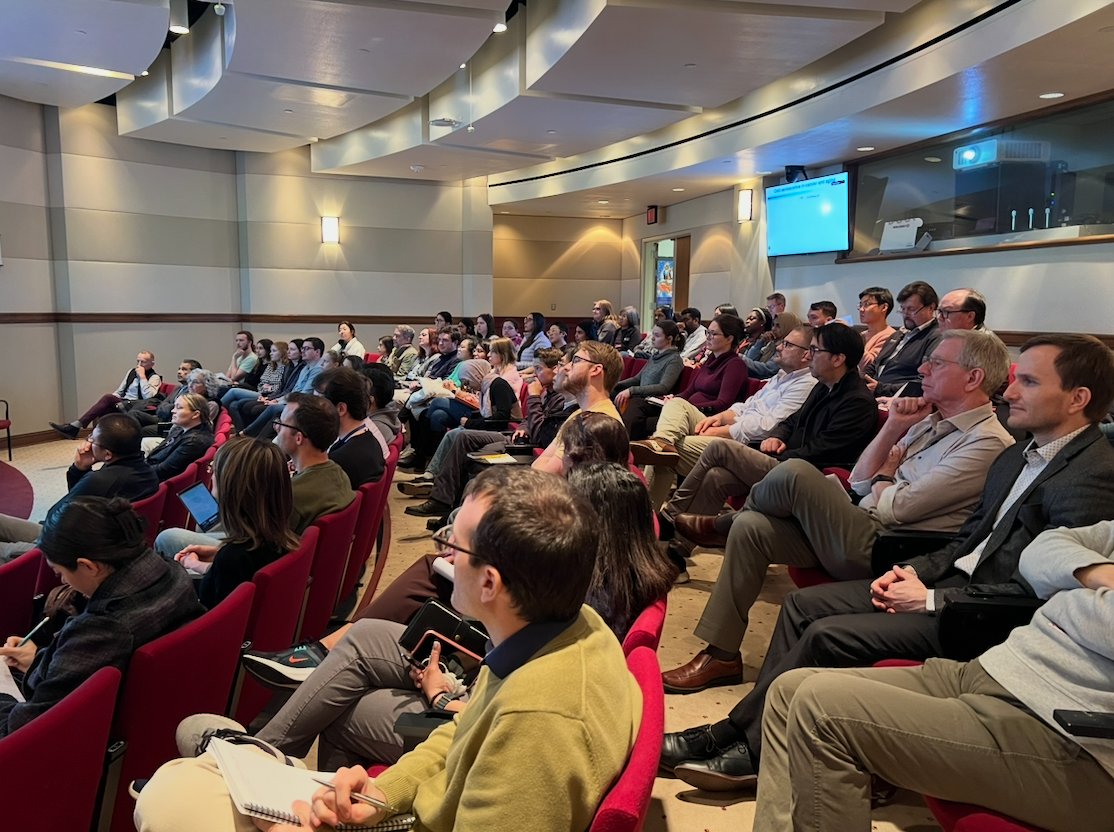
Thank you to Dr. Peter Adams from Sanford Burnham Prebys for delivering an outstanding talk as part of our Johnson and Sokatch Lecture Series, presenting “Aging: its role in cancer and targets for interventions.” @AdamsBioAging
Oklahoma Nathan Shock Center tweet mediaOklahoma Nathan Shock Center tweet media
English
1
0
8
346
João Pedro de Magalhães
João Pedro de Magalhães@jpsenescence·
Many activities and lifestyles are claimed to be linked to longevity, but be cautious, as causality is difficult to establish. First, studies may not properly control for socioeconomic factors. Because wealthier people live longer on average, anything associated with higher socioeconomic status will, in turn, be associated with longevity. Other factors may be at play as well. For instance, it may be the social interaction around an activity, not the activity itself, that matters. Lastly, individuals who enjoy certain activities (e.g., sauna) may have personalities them predisposes them to longer lives. And the activity may merely reflects their personalities rather than having a direct benefit. By all means, pursue a healthy lifestyle, but avoid the hype.
Aging Science News@AgingBiology

Do saunas really boost your health? bbc.com/news/articles/…

English
1
7
32
4.1K
Peter Adams🇪🇺🇺🇳
Peter Adams🇪🇺🇺🇳@AdamsBioAging·
More great work from Stella Victorelli, Joao Passos and coworkers. Extending their previous work on mtDNA leakage as a trigger of SASP.
Agingdoc🩺Dr David Barzilai🔔MD PhD MS MBA DipABLM@agingdoc1

Mitochondrial RNA cytosolic leakage drives the SASP nature.com/articles/s4146… 👉"Furthermore, BAX and BAK play a key role in mtRNA leakage during senescence, and their deletion diminishes SASP expression in vitro and in a mouse model of Metabolic Dysfunction-Associated Steatohepatitis (MASH). These findings highlight mtRNA’s role in SASP regulation and its potential as a therapeutic target for mitigating age-related inflammation." 🔥 Fig. 1: Cytosolic mtRNA leakage is a feature of senescent cells. 👨‍⚕️👇

English
0
2
14
2.1K
Peter Adams🇪🇺🇺🇳 retweetet
Charles Brenner, PhD
Charles Brenner, PhD@CharlesMBrenner·
happy to announce new post-doc positions for mid-2026 please read our new paper and suggest insightful experiments nature.com/articles/s4225…
English
3
29
153
29.1K
Peter Adams🇪🇺🇺🇳
Peter Adams🇪🇺🇺🇳@AdamsBioAging·
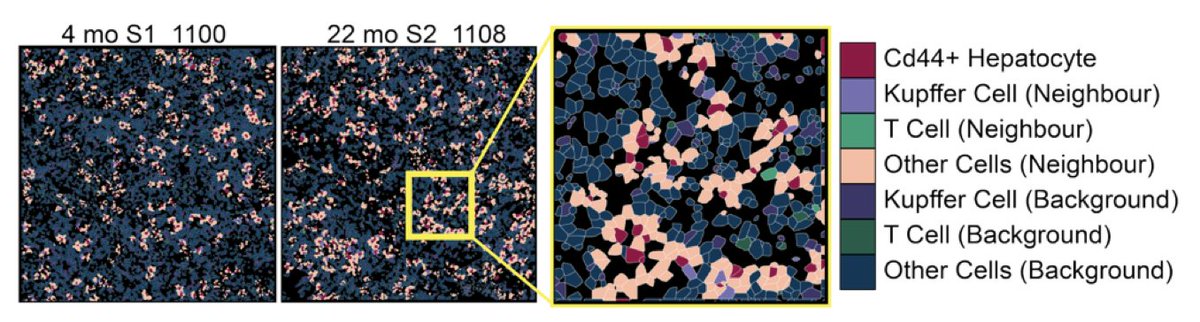
Excited to share recent study led by fabulous postdoc in the lab, Armin Gandhi : Aging-induced hepatocyte CD44 drives IL6/STAT3 signaling and associates with impaired neighboring T cell function. Our latest effort to understand the role of aging in cancer tinyurl.com/3erv7u55
Peter Adams🇪🇺🇺🇳 tweet media
English
1
3
40
3.1K
Feng Zhang
Feng Zhang@zhangf·
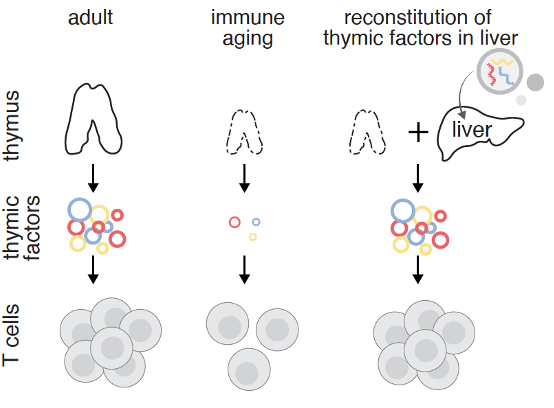
Excited to share our new work on immune aging! We explored whether the liver could serve as a temporary "factory" to produce immune factors that decline with aging, potentially helping to rejuvenate aged immunity. @mircoscopy.
Feng Zhang tweet media
English
22
234
1.1K
140.2K
Peter Adams🇪🇺🇺🇳
Peter Adams🇪🇺🇺🇳@AdamsBioAging·
Great commentary, David
Agingdoc🩺Dr David Barzilai🔔MD PhD MS MBA DipABLM@agingdoc1

Ozempic just took its biggest swing at Alzheimer’s. …and missed. That sounds like bad news—until you realize what we finally got: A clean, Phase 3 answer to one of the most hyped “repurposing” bets in medicine. Because for a year, the storyline was everywhere: GLP-1 drugs help the heart. Help the kidneys. Help weight. Help inflammation. So people started asking the most tempting question of all: Could they help the brain, too? The setup was blockbuster-level Novo Nordisk ran two huge, randomized, placebo-controlled Phase 3 trials—EVOKE and EVOKE+: → 3,808 people (ages 55–85) → Early symptomatic Alzheimer’s (MCI or mild dementia) with confirmed amyloid positivity → Once-daily oral semaglutide 14 mg (Rybelsus) vs placebo → 104 weeks of treatment, with a planned 52-week extension This wasn’t “signals.” This wasn’t “maybe.” This was the class getting tested under stadium lights. The headline outcome Semaglutide did not slow Alzheimer’s progression. On the primary endpoint (CDR-Sum of Boxes): → EVOKE: estimated difference –0.06 points vs placebo (P = .7727) → EVOKE+: estimated difference 0.15 points (P = .4604) Secondary outcomes didn’t rescue it either: → No meaningful functional slowing on ADCS-ADL-MCI → No clear benefit on major cognition scales → No delay in progression to dementia from MCI (pooled HR 0.96) And Novo dropped the planned 1-year extension based on the overall results. Here’s the part most headlines miss Biology moved. People didn’t. In a CSF biomarker substudy (199 participants): → ~10% “nominally significant” reductions in several AD-relevant markers (including p-tau measures) → plus shifts in markers tied to inflammation and synaptic injury Blood markers also showed something: → hs-CRP fell (systemic inflammation signal) → but some exploratory markers like NfL and GFAP increased (small but statistically significant in places), complicating the picture Translation: Semaglutide wasn’t “doing nothing.” It just wasn’t doing enough, in the right place, at the right time to change real-world decline. So why is this exciting? Because it resolves a major confusion that was fueling false hope: Prevention signals ≠ treatment success. A JAMA Neurology–published study in people with type 2 diabetes supported continued investigation by showing lower Alzheimer’s risk in those on GLP-1 receptor agonists (and also SGLT2 inhibitors) compared with other glucose-lowering drugs—and no clear difference between GLP-1RAs and SGLT2is overall. One line that captures the “why keep looking?” logic: “patients with type 2 diabetes receiving GLP-1 receptor agonists… had a significantly lower risk of developing AD” That’s the paradox: → In diabetes populations, GLP-1s look protective in real-world data → In symptomatic Alzheimer’s, semaglutide doesn’t slow decline in Phase 3 Those two things can both be true if the real opportunity is upstream. What the trials actually taught us (the “new map”) Lowering systemic inflammation/metabolic stress isn’t a solo fix once symptoms start. Timing may be everything. The field is now openly talking about dose, population, and even designing drugs that enter the brain more effectively. Alzheimer’s is drifting toward an oncology-style era: combinations + precision subgroups. The follow-up everyone should watch The story isn’t “done.” What’s next is the deep dive: → subgroup analyses (who, if anyone, benefited?) → mechanistic readouts (which pathways moved, which didn’t?) → and how to pair metabolic drugs with other disease-modifying strategies And full EVOKE/EVOKE+ results are expected to be presented at AD/PD in March 2026. The most credible “exciting ending” here The Ozempic-Alzheimer’s dream didn’t die. It evolved. From: → “One blockbuster drug fixes Alzheimer’s.” To something more realistic—and potentially more powerful: → Treat earlier. → Target multiple pathways at once. → Use blood biomarkers to match the right patient to the right combo. Alzheimer’s has been the graveyard of single-shot miracles. EVOKE didn’t give us a miracle. It gave us something rarer: A massive, expensive, definitive result that tells researchers exactly where not to stand… so the next trials can finally aim where it might actually work.

English
1
2
9
1.9K