Sabitlenmiş Tweet

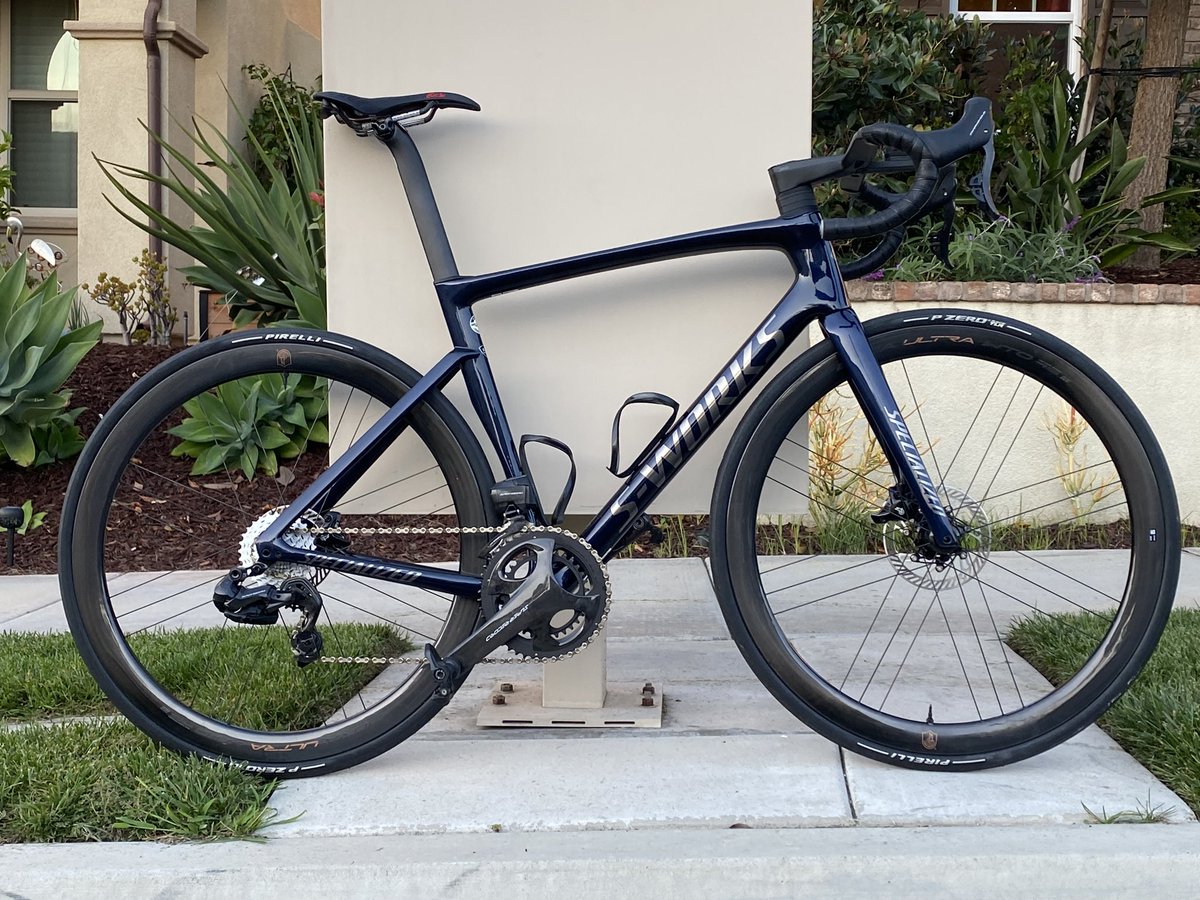
New road bike. S-WORKS Tarmac SL7, Campy SR wireless and disc, Campy Bora Ultra WTO wheels👍 No excuses now😧


English
Peter Adams🇪🇺🇺🇳
1.6K posts

@AdamsBioAging
Director NCI-designated Cancer Genome and Epigenetics Program at SBP, Co-Editor-in-Chief Aging Biology Journal, Road/Gravel/Mtn Cycling, Wolf Pack Cycling.
📅 Save the date – October 22 Join us in Nice for the Workshop “Senescence & Immune Surveillance: Implications in Cancer and Aging” 🎓 Free participation – international speakers – lunch & networking! #Senescence #Cancer #Aging #Immunology @ircaninstitute

Peter Misses the Plot: a Swift Debunking 👇 It’s come to my attention that @PeterAttiaMD has come out with an attempted debunk to The Cholesterol Code documentary and, more broadly, the research on lean mass hyper-responders. I won’t mince words: It’s embarrassing. It’s simultaneously arrogant, deeply misinformed, and, as I read it, a transparent avoidance of the facts at hand. It’s posturing, not insight. And I’m prepared to back that up. First, Peter attempts to discredit the documentary, the research on lean mass hyper-responders, and the Lipid Energy Model, on superficial grounds: credentials and authority. He almost exclusively referring to the work as a product of the Citizen Science Foundation (CSF), i.e., @realDaveFeldman: the 'uncredentialed' outsider. He conspicuously avoids discussing the broader teams involved, many of whom carry credentials that would easily meet the standards typically valued in more traditional, credential-focused settings (and exceed his own). Even setting aside myself, an MD-PhD, there is: Dr. Adrian Soto-Mota, MD-PhD, ith the Lundquist team, there are others who have co-authored work in this space, including Anatol Kontush, Ronald Krauss, William Cromwell, and, notably, Peter’s own former head of research, Bob Kaplan. Go figure. Might have been a fact fact for Peter to include: "My former head of research was a coauthor on the Lipid Energy Model paper I'm inadequately trying to debunk." And that’s the short list. I’ll also point out that when I was writing an editorial on lean mass hyper-responders, I reached out to Peter, and he declined to contribute, citing that it was not his area of expertise. He instead referred me to Ronald Krauss at “the expert,” who has now collaborated with us on a couple of projects. So even at a superficial level, what we’re seeing here is avoidance, posturing, and frank hypocrisy. Peter further attempts to cast doubt on lean mass hyper-responders by questioning the existence of the phenotype, which is, frankly, comical. It exists. It is defined by three clear cut points, and people meeting those criteria unquestionably exist. It is also a dynamic and reproducible phenomenon, as demonstrated by multiple experiments, case series, and even meta-analyses of randomized controlled trials that we have published. Peter forgot to talk about those data. No surprise there. Peter also demonstrates a misunderstanding of the Lipid Energy Model, for example by incorrectly suggesting a contradiction between the model and the low triglycerides observed in lean mass hyper-responders. And, more broadly, he reveals a lack of familiarity with the practical realities and constraints of clinical study design. If we are going to lean on authority, then it is fair to ask about experience. To my knowledge, Peter has not conducted clinical trials, and frankly, that gap shows here. At a deeper level, I don’t think Peter understands this physiology or this domain. And behavior like this, particularly when presented under the banner of scientific critique, is exactly the kind of thing that fuels “broader distrust in institutions and experts.” This is a textbook case of the pot calling the kettle black. I could go on, but I think the core point is clear. If further discourse is needed, Peter and his colleagues, including Tom Dayspring, have had ample opportunity to engage, collaborate, and discuss these ideas directly. If they choose not to, that speaks for itself. In the meantime, we’re not going anywhere. And no amount of pedantic posturing is going to change the trajectory of the data. Oh, and two more things… i. For those tempted to fall back on the overly simplistic take that “they’re saying high LDL is good” and “fear mongering about pharma,” or similar caricatures, you’ve entirely missed the plot. And, I have something coming this week. Again, if you interpret it as a pivot, you’ve missed the point entirely, as Peter has. ii. Finally, Peter’s central criticism seems to be that the documentary and our research suggest that even very high LDL cholesterol may not always indicate cardiovascular risk. Well, yes. The alternative is to argue that in all circumstances, at all times, very high LDL necessarily drives cardiovascular disease. This isn’t about discrediting, with a blanket statement, any role of ApoB or LDL in cardiovascular disease. This is about asking important questions at the frontier of science, because the status quo has been wholly inadequate in addressing the problem at hand. That's obvious. At least to some extent, we have been barking up the wrong tree. Anyone with a modicum of perspective can see that. And anyone with genuine curiosity would be willing to engage with the nuance, rather than lecture, avoid, and misrepresent, as Peter is doing here. Lastly: See the Cholesterol Code Documentary. It's on Amazon. And judge for yourself.
New @ScienceMagazine Why is the heart resistant to cancer? Role of the heart beat! Mechanical force helps protect the heart from cancer science.org/doi/10.1126/sc…



An FDA-Approved Tenofovir Alafenamide-Based Antiretroviral Therapy Reduces Biological Age in Healthy Adults: First Human Proof-of-Concept for Retrotransposon-Targeted Gerotherapeutics medrxiv.org/content/10.648…
Revisiting changes in cognitive function and biomarkers of Alzheimer’s disease in REWIND alz-journals.onlinelibrary.wiley.com/doi/10.1002/al…
Human Lymph Node Cellular Senescence Atlas Reveals Age-Dependent Alteration in Germinal Center B Cell Function and Niches biorxiv.org/content/10.648…

This review is one of the most important syntheses in years. It doesn’t just catalog things. It proposes a unifying framework. ie. aging is a breakdown of epigenetic fidelity, the ability of cells to maintain correct gene expression over time...