BRICS Coin ($BC) 💫✨️💥
444 posts

@BC_Web3
Official account of #BRICS Coin ($BC): The globalized utility #cryptocurrency as Gold BRICS 🚀 but independent of any specific #country or economic #alliance.


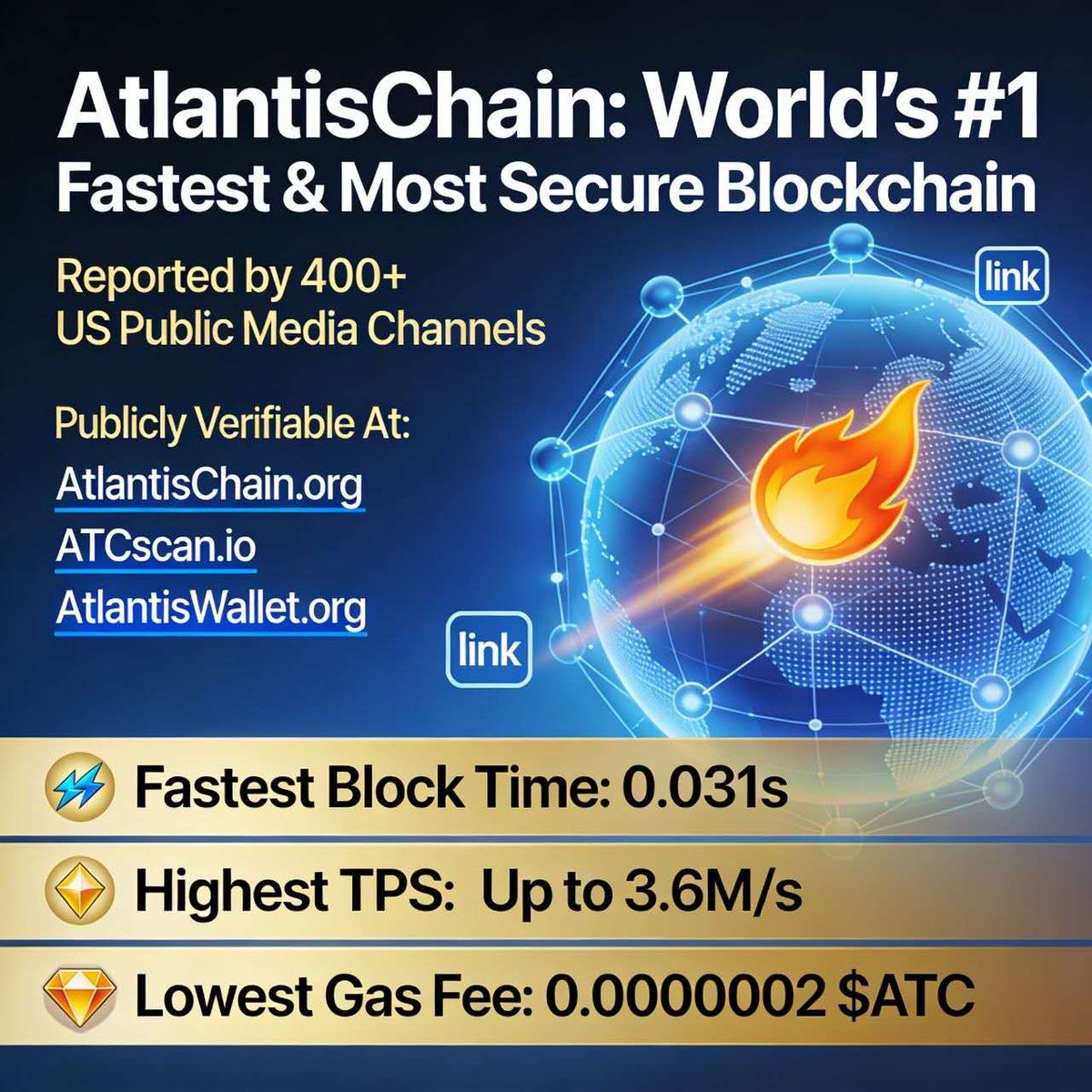
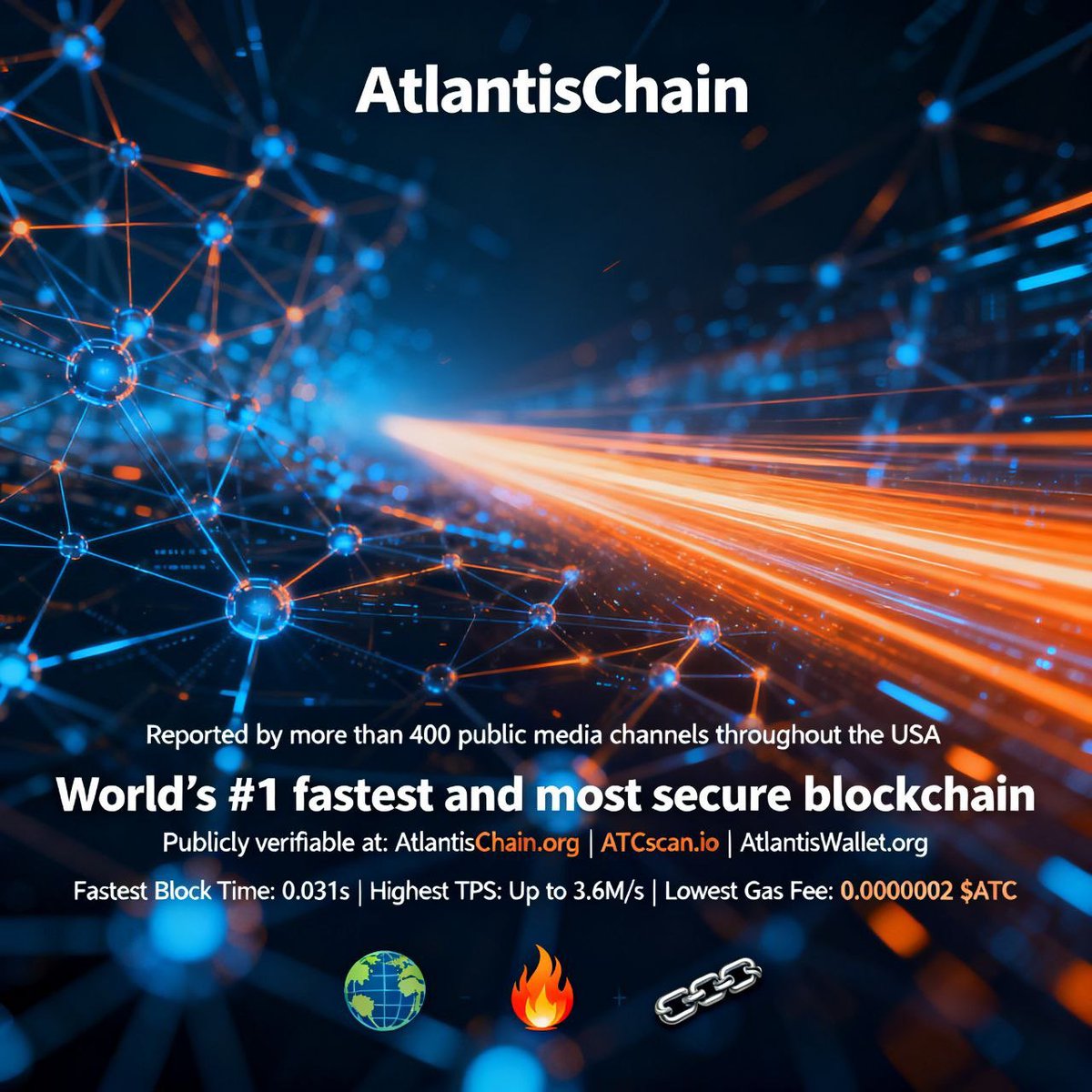
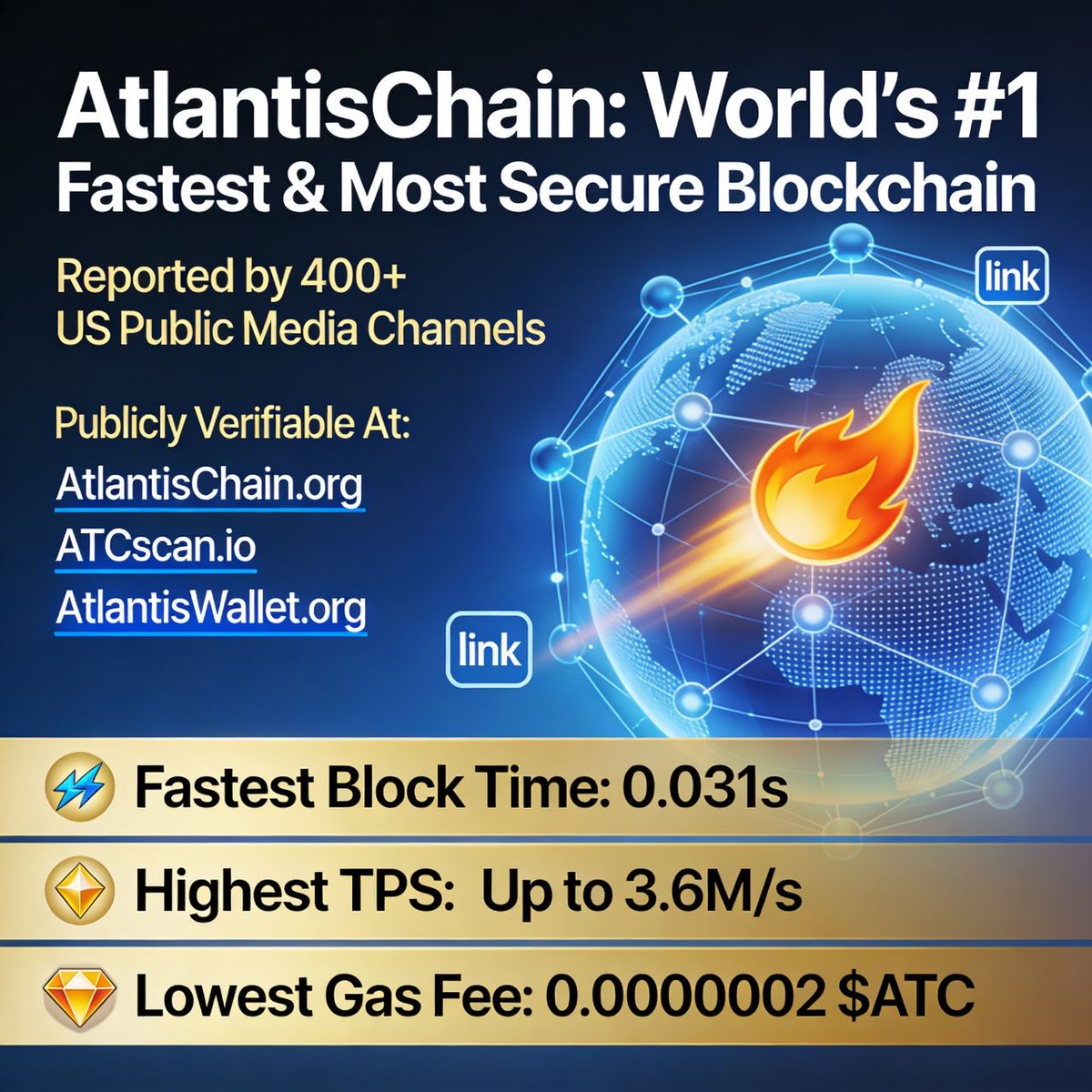
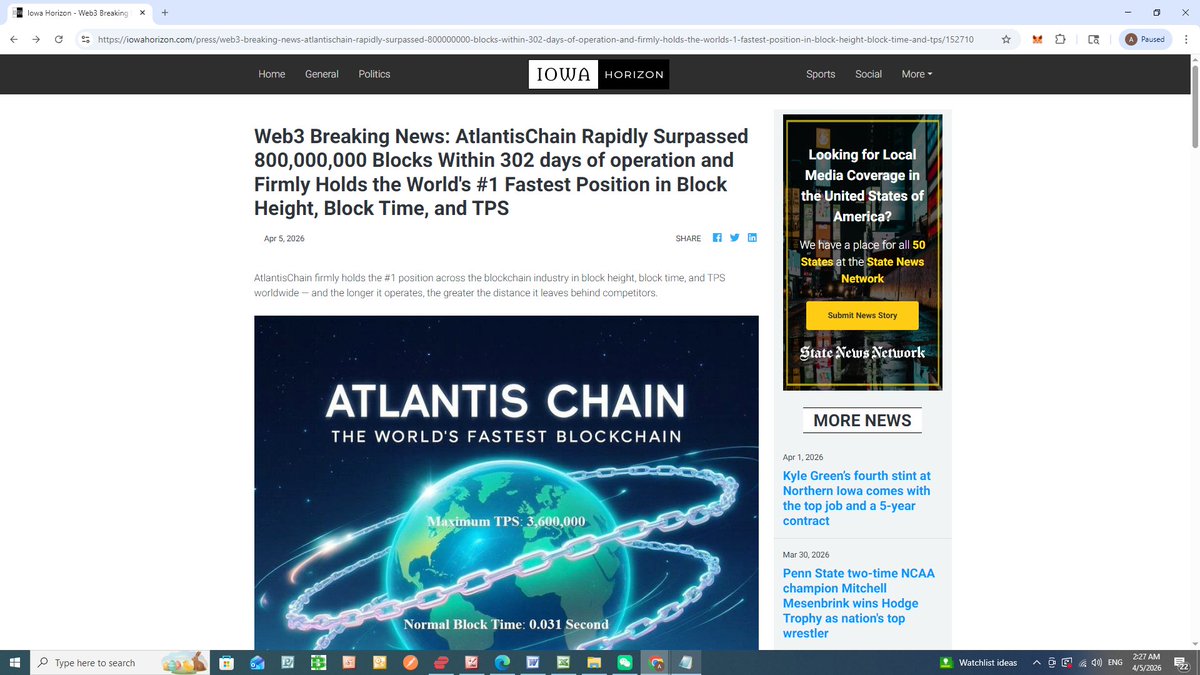
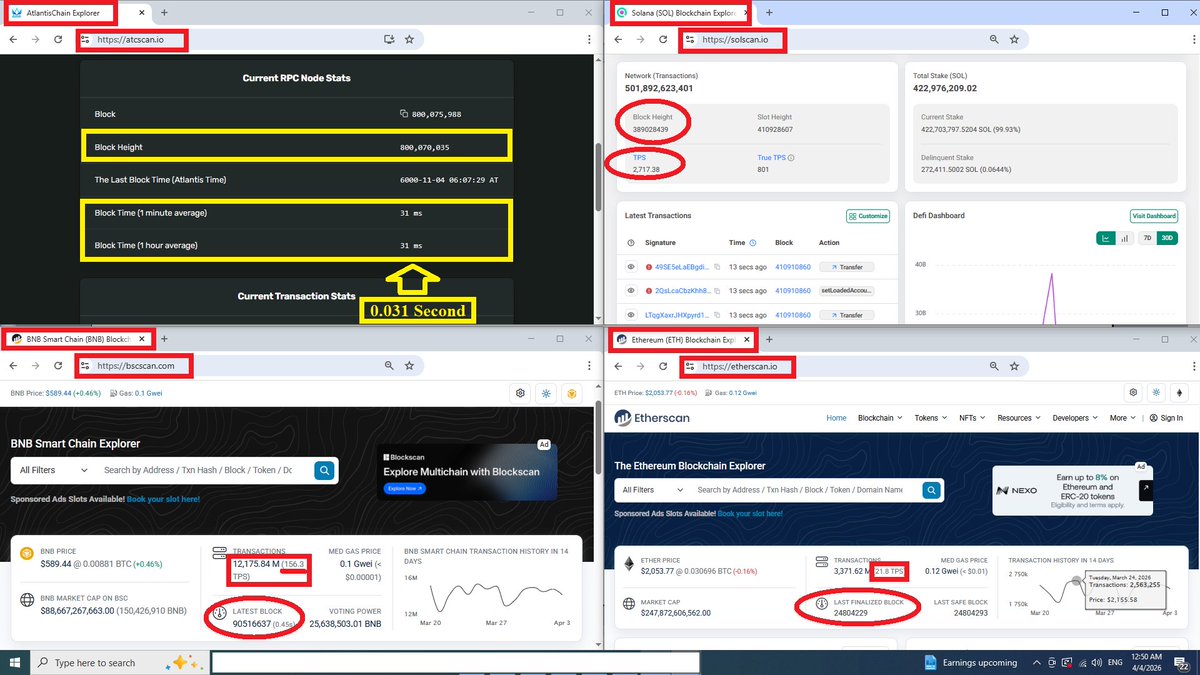
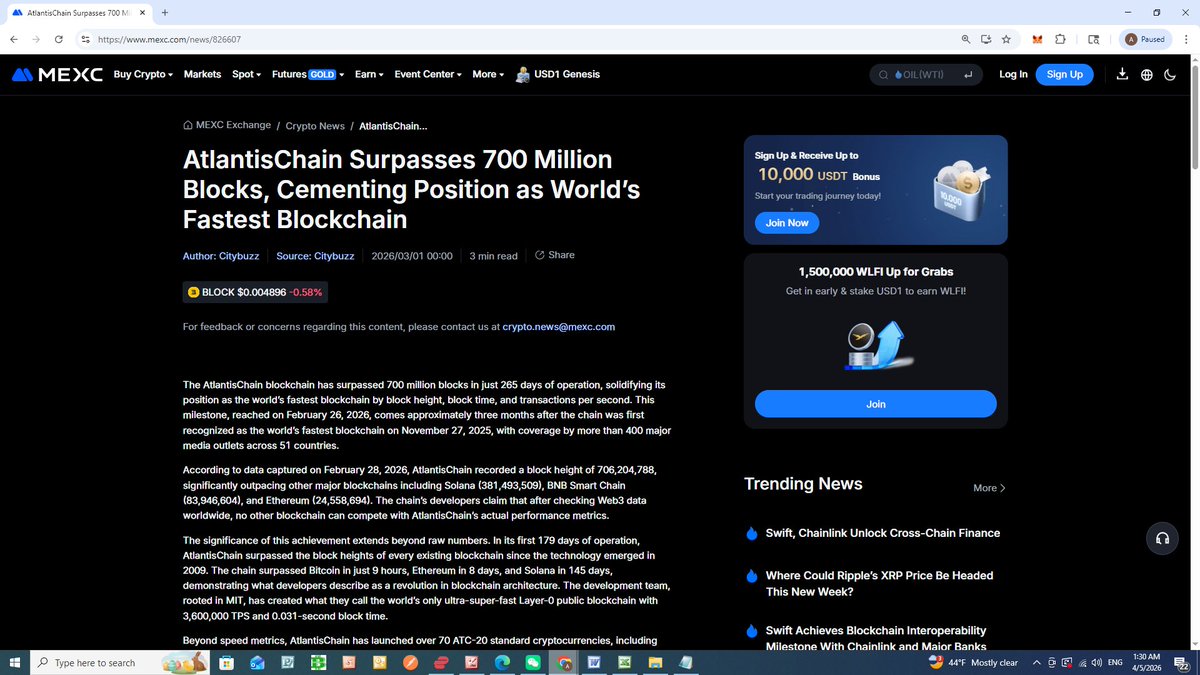
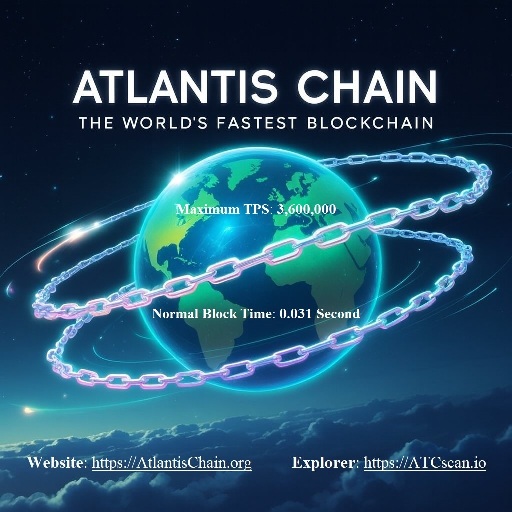
📣 Vernon Morning Star Web3 Breaking News: AtlantisChain Rapidly Surpassed 900,000,000 Blocks Within 336 Days of Operation and Firmly Holds the World’s #1 Fastest Position in Block Height, Block Time, Finality, and TPS 🌎🔥🚀 💥 Date: May 18, 2026 💥 Summary: At 20:05 on May 16, 2026, Pacific Time, the block height of AtlantisChain — the world’s ONLY ultra-super-fast Layer-0 public blockchain with 3,600,000 TPS and 0.031-second block time — successfully surpassed 900,000,000 blocks. This milestone comes approximately 5 months after AtlantisChain was recognized as the world’s fastest blockchain on November 27, 2025, a distinction widely reported by more than 400 major media outlets across the United States, with coverage reaching audiences in 51 countries. According to the screenshot captured at 8:02 PM (Pacific Time) on May 16, 2026, the recorded block heights of the following 4 leading blockchains were as follows: 1️⃣ AtlantisChain: 900,000,571 blocks (since April 2025) 2️⃣ Solana: 398,340,925 blocks (since March 2020) 3️⃣ BNB Smart Chain: 98,731,609 blocks (since September 2020) 4️⃣ Ethereum: 25,111,775 blocks (since July 2015) In comparison, AtlantisChain’s block height is 225.9373% of Solana’s, 911.5628% of BNB Smart Chain’s, and 3583.9783% of Ethereum’s, even though all of them began operations many years earlier, dating back to 2015 or 2020. After extensive review of publicly available Web3 blockchain data worldwide, no other blockchain is able to compete with AtlantisChain’s exceptional real-world performance across block production speed, scalability, transaction throughput, and infrastructure efficiency. The unmatched speed, capacity, scalability, cost per transaction (CPT), advanced architecture, and USPTO-registered intellectual properties firmly establish AtlantisChain as the world’s most advanced blockchain and the global leader in Web3 technology. ... 💥 For full news article, visit: smb.vernonmorningstar.com/article/Web3-B… 💥 For latest on-chain performance data, visit: ATCscan.io #BreakingNews #AtlantisChain #AtlantisCoin #AtlantisKingdom #AtlantisWallet #AtlantisExchange #AtlantisPay #AtlantisEarn #AtlantisX #AtlantisWTF #AtlantisSpace #AtlantisTime #ProofOfLight #QuantumLock #Stablecoin #SpaceNode #AIContract #Blockchain #AmazonBookstore #ATC #BTC #ETH #XRP #Pi #Binance #BNB #BSC #TRON #TRX #Polygon #Coinbase #Robinhood #Solana #USDA #USDB #USDC #USDT #Web3 #Web4 #AI


I sent €5,000 across 8 payment rails. The fastest arrived in 2 seconds. The slowest took 5 days. And the fees? $235 difference on the exact same transfer. Here's what that experiment taught me about the future of money. Rail #1: USDC on Base: 2 seconds, $0.01 fee The recipient received $5,882.50. Rail #8: SWIFT Wire: 5 days, $25 + 1.5% FX markup The recipient received $5,794.26. Same sender. Same recipient. Same €5,000 on Monday. One settled before I closed my laptop. The other arrived on Friday. 𝗡𝗼𝘄 𝘇𝗼𝗼𝗺 𝗼𝘂𝘁. In 2025, stablecoins processed $33 trillion in volume. Visa processed $16.7 trillion. For the first time in financial history, a "crypto" rail moved more value than the world's largest card network. Most people missed it. The financial press barely covered it. But inside every major payment company, someone is reading those numbers and losing sleep. 𝗪𝗵𝘆 𝗶𝘁 𝗺𝗮𝘁𝘁𝗲𝗿𝘀 𝗳𝗼𝗿 𝘆𝗼𝘂𝗿 𝗻𝗲𝘅𝘁 𝗽𝗮𝘆𝗺𝗲𝗻𝘁 Ask anyone: "Is paying by card instant?" They'll say yes. They're wrong. What's instant is the authorization, the 2-second green checkmark that tells the merchant "this card is legit." The actual money? It sits in batch processing queues for 1 to 3 days, hopping between acquirers, schemes, and issuing banks on infrastructure built in the 1970s. Stablecoins collapse that gap. Authorization and settlement happen in the same transaction. No T+2. No batch windows. No correspondent banks taking a cut. That's why the fee on my €5,000 transfer dropped from $25+ to $0.01. 𝗪𝗵𝗼'𝘀 𝗮𝗰𝘁𝘂𝗮𝗹𝗹𝘆 𝗰𝗼𝗺𝗽𝗲𝘁𝗶𝗻𝗴 𝘄𝗶𝘁𝗵 𝘄𝗵𝗼? Most people frame this as "crypto vs banks." It's not. The real war is: - Stablecoin rails vs Visa & Mastercard (the interchange model) - Stablecoin rails vs Swift (correspondent banking) - Stablecoin rails vs Stripe (merchant acquiring) And the incumbents know it. Mastercard added Polygon Labs, Ripple, Solana, and Aptos to its Crypto Partner Program. Visa is already settling USDC through Circle. PayPal shipped its own stablecoin (PYUSD). They're publicly calling stablecoins a threat while privately integrating them into their stack. Classic frenemy move. APMs were the first wave. Stablecoin rails are the second. Huge thanks to Benji Audigé for the great work he put into this during the hackathon I organized 🫡 PS: I post weekly about payments, stablecoins, and the reality of building a payment startup. Follow for more!


Let’s make America the crypto capital of the world.