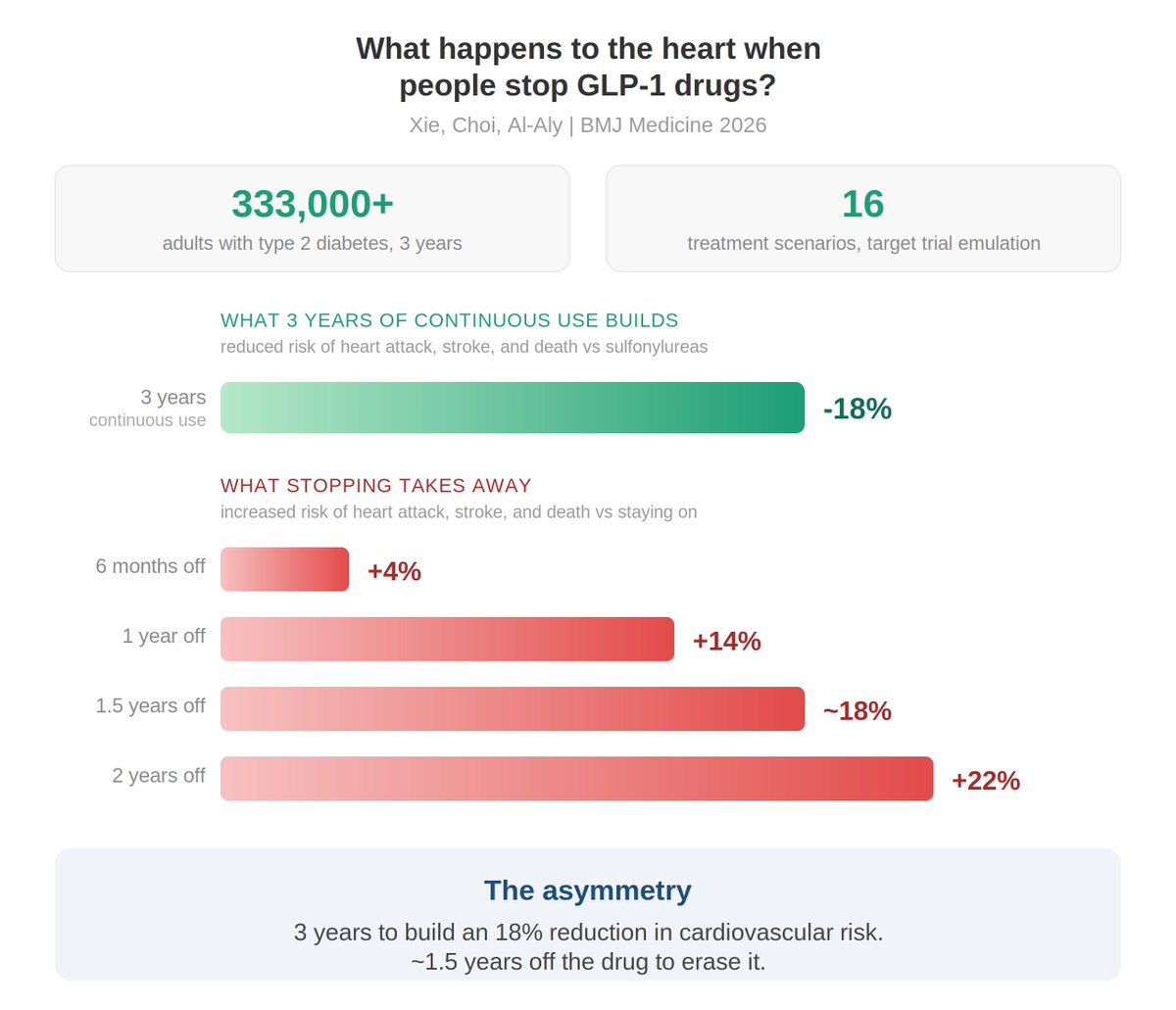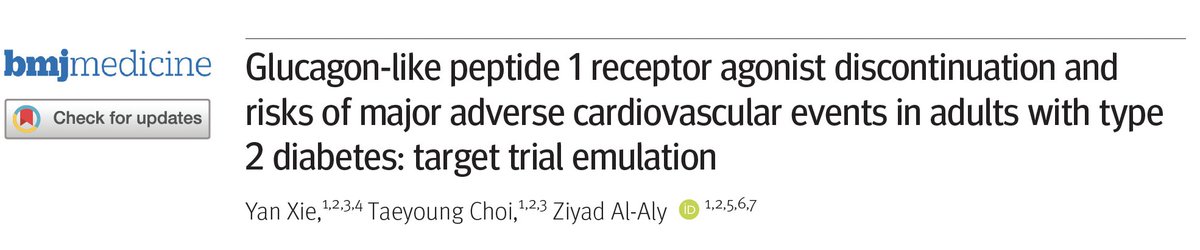

What happens to the heart when people stop GLP-1 drugs? The short answer: nothing good. New from our team: a study of 330,000+ people in @BMJMedicine 🧵
Yan Xie
382 posts

@Biostayan
Biostatistician, clinical epidemiologist


What happens to the heart when people stop GLP-1 drugs? The short answer: nothing good. New from our team: a study of 330,000+ people in @BMJMedicine 🧵


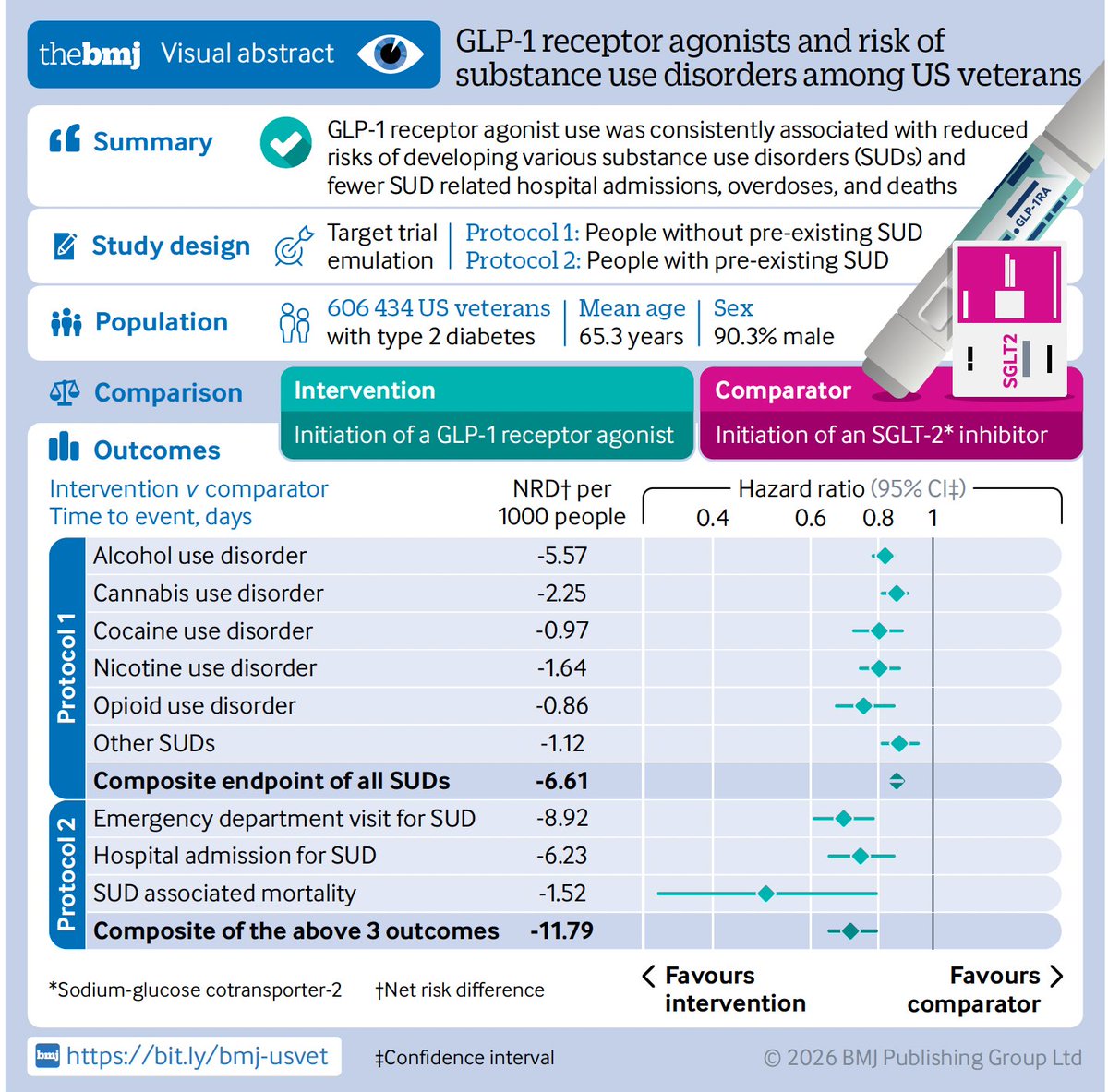
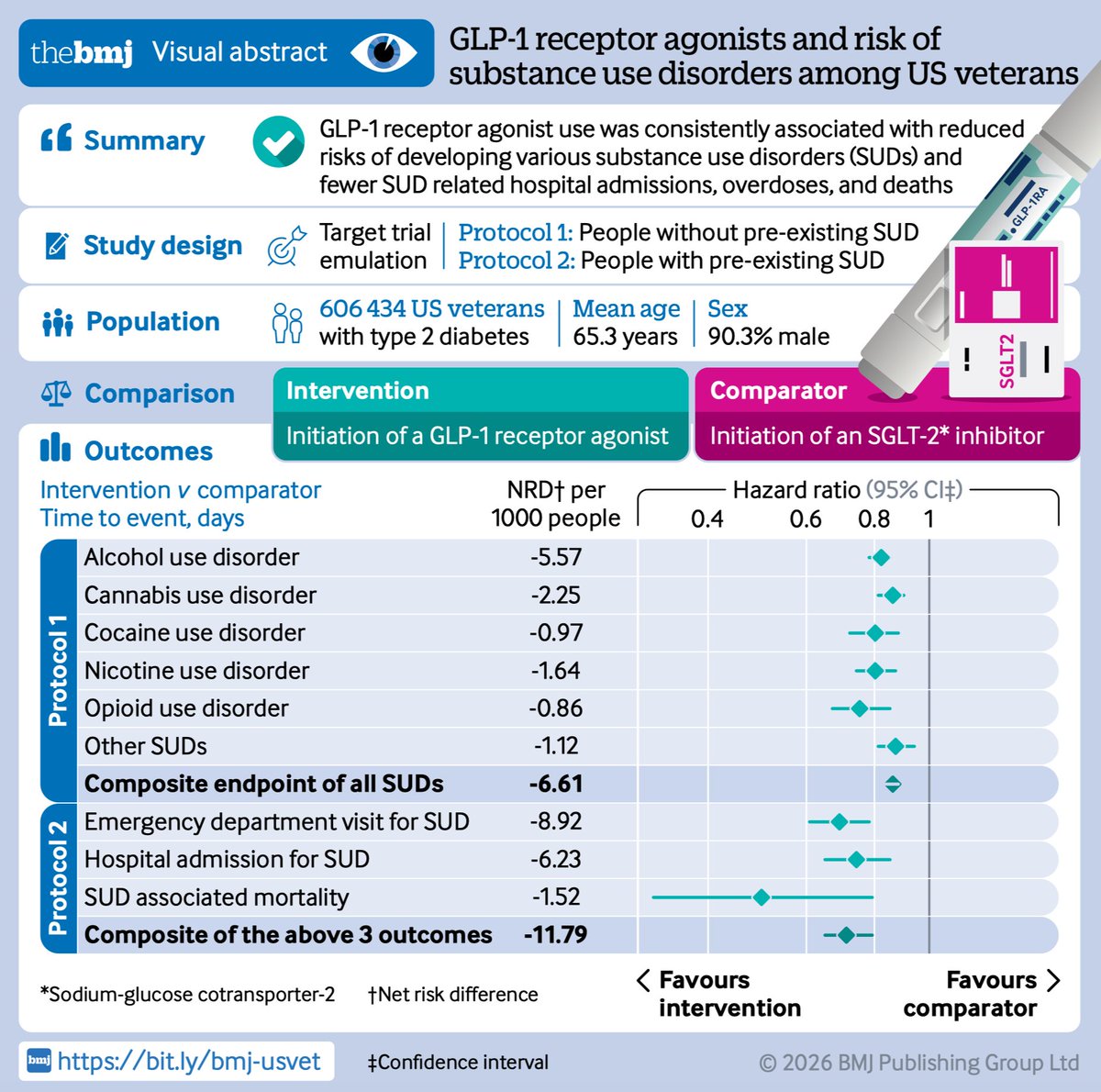
New ep: Are GLP-1s "the greatest medical breakthrough of the 21st century"? A new study of 2m Veterans Affairs patients with diabetes found GLP1 use was associated with a reduced risk of: - substance use disorders - psychotic disorders - Alzheimer's and dementia - clotting and heart attacks - infectious illnesses - several respiratory conditions To be blunt: WTAF is going on here? How did we turn synthesized Gila monster spit into a drug that seems to control diabetes, promote weight loss, and have such a absurdly wide range of positive effectiveness? Today we speak with @zalaly, an author of the new paper. What did his research look at? Why should we trust it? Where was the strongest signal? What new risks did we uncover? How on earth can a single drug do all of this? And how is it teaching us more deeply about "pleiotropic" medicine—single drugs that have a zillion unrelated positive side effects—and even the nature of willpower and free will in health? open.spotify.com/episode/0UtT3D…


1. What are the benefits and risks of GLP1? Our new study in @naturemedicine comprehensively maps all the benefits and risks of GLP-1 receptor agonists (GLP-1) (Ozempic, Wegovy, Mounjaro, Zepbound). By @Biostayan, Taeyoung Choi and me 🧵 nature.com/articles/s4159…