Angehefteter Tweet

Report of the High-Level committee to study the Impact of NEET on Medical Admissions in Tamil Nadu.
#DrAKRajanCommitteeReport 🧵
English
𝓢𝓪𝓷𝓴𝓪𝓻
34.1K posts

@CodeNDrive
Freethinker | Ailurophile | Programmer | Petrolhead | Arakkan | Stoic | Perfectionist

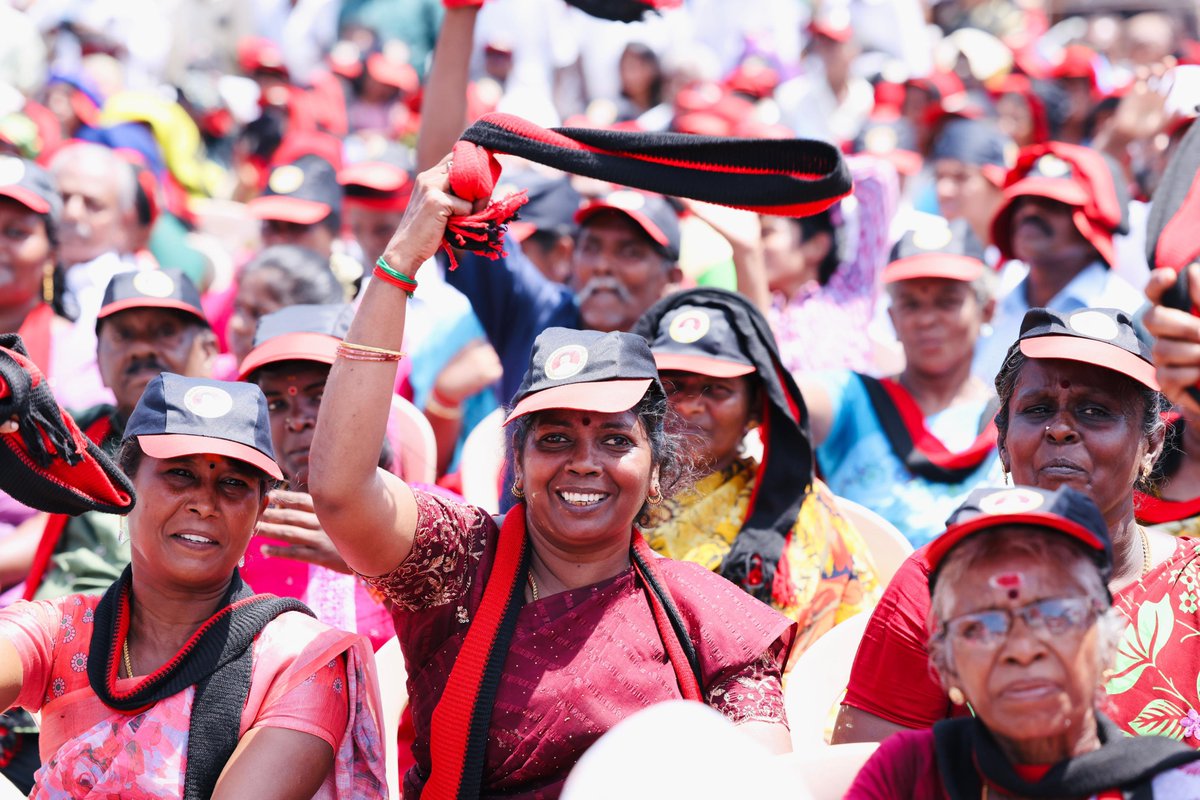




@yaaro_offl திமுக காரனுக மொதோ விசிகவ தலித் ரெப்ரெசன்ட் பண்ற பார்ட்டியா பாக்கறத நிறுத்தனும்.. திமுகதான் தலித்தையும் ரெப்ரெசன்ட் பண்ணுதுன்றத புரிஞ்சா தேவை இல்லாத முட்ட குறைக்கலாம்


The recently unveiled curriculum framework by the Central Board of Secondary Education, aligned with the National Education Policy 2020, is not an innocent academic reform—it is a calculated and deeply concerning attempt at linguistic imposition that vindicates our long-standing apprehensions. Under the guise of promoting “Indian languages,” the BJP-led NDA government is aggressively advancing a centralising agenda that privileges Hindi while systematically marginalising India’s rich and diverse linguistic heritage. The so-called three-language formula is, in reality, a covert mechanism to expand Hindi into non-Hindi speaking regions. For students in southern states, this framework effectively translates into compulsory Hindi learning. Yet, where is the reciprocity? Will students in Hindi-speaking states be mandated to learn Tamil, Telugu, Kannada, Malayalam—or even languages like Bengali and Marathi? The complete absence of such clarity exposes the one-sided and discriminatory nature of this policy. The irony is stark and unacceptable. The same Union government that has failed to make Tamil a mandatory language in Kendriya Vidyalaya Sangathan schools—and has consistently failed to appoint adequate Tamil teachers—now seeks to lecture states on promoting Indian languages. This is not commitment; this is rank hypocrisy. Does the Union government have any understanding of ground realities—of teacher availability, training capacity, and infrastructure? Where are the qualified teachers to implement this sweeping exercise? And crucially, where is the funding to support this enormous burden on the education system? This appears to be yet another ill-conceived policy announced without planning, resources, or accountability. This is not merely a question of language—it is a question of fairness, federalism, and equal opportunity. By structurally privileging Hindi-speaking students, this policy risks creating entrenched advantages in higher education and employment, further widening regional disparities. At a time when the world is moving forward at an unprecedented pace, our children must be prepared for the future. The priority should be to equip them with skills in emerging sectors like artificial intelligence, AVGC (Animation, Visual Effects, Gaming, and Comics), and to strengthen scientific temper and critical thinking. Instead, this regressive and rigid language burden threatens to derail their progress. The Union government appears determined to impose Hindi, brushing aside the legitimate, consistent, and democratic concerns raised by Tamil Nadu and several other states. This approach is a direct affront to the principles of cooperative federalism and an insult to the linguistic identity of millions of Indians. India’s strength lies in its diversity—not in enforced uniformity. Any attempt to disturb this delicate balance is not just misguided; it is dangerous. Such policies strike at the very foundation of our pluralistic nation and will be firmly opposed. Does the Thiru Palaniswami-led AIADMK and its NDA allies in Tamil Nadu subscribe to this imposition? Or will they, for once, stand up for the rights, identity, and future of our students? #StopHindiImposition


Important Context on the @GrapheneOS x Motorola Partnership Motorola is now a subsidiary of Lenovo (which acquired it from Google in 2014). Lenovo is headquartered in Beijing and its largest shareholder is Legend Holdings -- company founded and partially controlled by the Chinese Academy of Sciences (state institution of the People’s Republic of China). [China’s 2017 National Intelligence Law (Article 14) legally compels Chinese organizations to support and cooperate with state intelligence work. This is the mandatory operating framework for any company under that jurisdiction.] Lenovo’s security track record: - 2006: the US State Department restricted 16K Lenovo computers to unclassified use only after security objections regarding hardware intended for classified embassy networks. - Intelligence agencies across the Five Eyes alliance enacted similar bans on their secret networks after MI5 identified backdoor vulnerabilities in Lenovo firmware. - 2013: Motorola Droid phones were silently transmitting personal data (including email and social media passwords) to Motorola’s servers every 9 minutes (often unencrypted). - 2015: Lenovo was caught preinstalling Superfish on consumer laptops -- which performed MITM attacks. - 2026: privacy class action was filed alleging that Lenovo’s own website tracking technologies expose American behavioral data to Chinese entities. The technical transition away from Pixel hardware involves significant trade-offs. Google Pixels use the Titan M2 - a RISC-V security chip with air-gapped manufacturing controls that provides hardware-backed key storage and verified boot protection isolated from the main CPU. Motorola does NOT have this. GrapheneOS publishes a non-exhaustive list of hardware requirements that any future device must meet (#future-devices" target="_blank" rel="nofollow noopener">grapheneos.org/faq#future-dev…
): - hardware memory tagging (ARM MTE), - hardware-based control flow integrity (BTI/PAC), - isolated radios and components, - StrongBox keystore via secure element, - Weaver disk encryption throttling, - insider attack resistance for secure element updates, - inline disk encryption with wrapped key support, - verified boot with rollback protection for both firmware and OS, - hardware key attestation with attest key pinning support. Current Motorola hardware, including the flagship Motorola Signature, does not yet meet these standards. GrapheneOS is pursuing this to break the hardware monoculture where a single vendor dictates the project’s future. Future devices (targeted for 2027) are expected to feature physical sensor kill switches to disconnect cameras and microphones. However, a hardware kill switch is not a total solution. It can disable the mic and camera - it does NOT cover the baseband processor, storage controller, or other components with Direct Memory Access. If the underlying hardware or firmware is compromised at the factory level - a sensor switch cannot prevent data from being exfiltrated via the cellular modem or manipulated within the storage.genuinely why is there not an alternative to Android or IOS? it cant be that hard, we have hundreds of linux distros