Consensus Long

326 posts

Consensus Long banner
Consensus Long

Consensus Long

@ConsensusLong

Former hedge fund manager (TMT) now playing the private equity game

Beigetreten Aralık 2023
311 Folgt785 Follower
Consensus Long
Consensus Long@ConsensusLong·
@JonahLupton But bro didn’t you know that North American logged in DAU growth is going to be 200k this quarter and the street has 300k + these deals won’t be announced for another 4-5 months… clearly a funding short!
English
1
0
2
1.1K
Jonah Lupton
Jonah Lupton@JonahLupton·
$RDDT -- just finished reading a expert network transcript from one of the services we use. This expert thinks $RDDT will move to usage based pricing for the LLMs (ChatGPT, Gemini, etc) when they re-negotiate their current licensing deals which expire in the next 6-12 months. Right now $GOOG is paying $60M per year... this expert thinks $GOOG (ie Gemini) might end up paying $300-400M per year in a new licensing deal with usage/dynamic pricing. I know for a fact the sell side is not modeling any of these new LLM licensing deals into their forward estimates so this is a major catalyst if/when it happens. Right now $RDDT is making $130M per year from Gemini and ChatGPT, it's possible that number could be $600-800M in the next 12-24 months at approximately 100% profit margins. Currently the sell side is looking for $4.1B of revenues in CY2027 with 41.5% net income margins.. which is $1.7B of net income. Even without these new deals, I think $RDDT does $4.6B of revenues in CY2027 with 43% net income margins... which is $2.0B of net income. Now let's assume we get these bigger LLM licensing deals... it's possible that CY2027 revenues are $5.0B to $5.4B but net income margins would be more like 52-54%.. which implies $2.75B of net income. In this last scenario (if it plays out the way I suggest)... then it means you'd be buying $RDDT today at 9x CY2027 net income. NFA. DYOR. **I own $RDDT personally and we own $RDDT at @FirstWaveFund
Jonah Lupton@JonahLupton

… and yet $RDDT trades at less than 20x NTM EPS which makes no sense… easily one of the most undervalued growth stocks in this market with multiple catalysts on the horizon… 1+ billion MAUs… the fastest growing ARPU… new licensing deals with the LLMs… expanding margins… only $10-12M of annual capex

English
31
37
367
103.5K
Consensus Long
Consensus Long@ConsensusLong·
@buccocapital Customer bases got hollowed out. Big chunk of business from start-ups doing drug discovery and running early trials - VC funding dried up for the cohort in 2022
English
0
0
2
537
BuccoCapital Bloke
BuccoCapital Bloke@buccocapital·
What happened to TMO and DHR? I’m not close to these names but they were investor and FinTwit darlings for years and years and years and years And then they just…died. What gives?
English
28
2
140
55.7K
Consensus Long
Consensus Long@ConsensusLong·
@HedgeyeTech Bro the BTC miner thesis is literally BTC mining is a $0 and they are converting to DC developers. Most of these guys have successfully made the transition
English
0
0
5
569
Felix Wang, CFA
Felix Wang, CFA@HedgeyeTech·
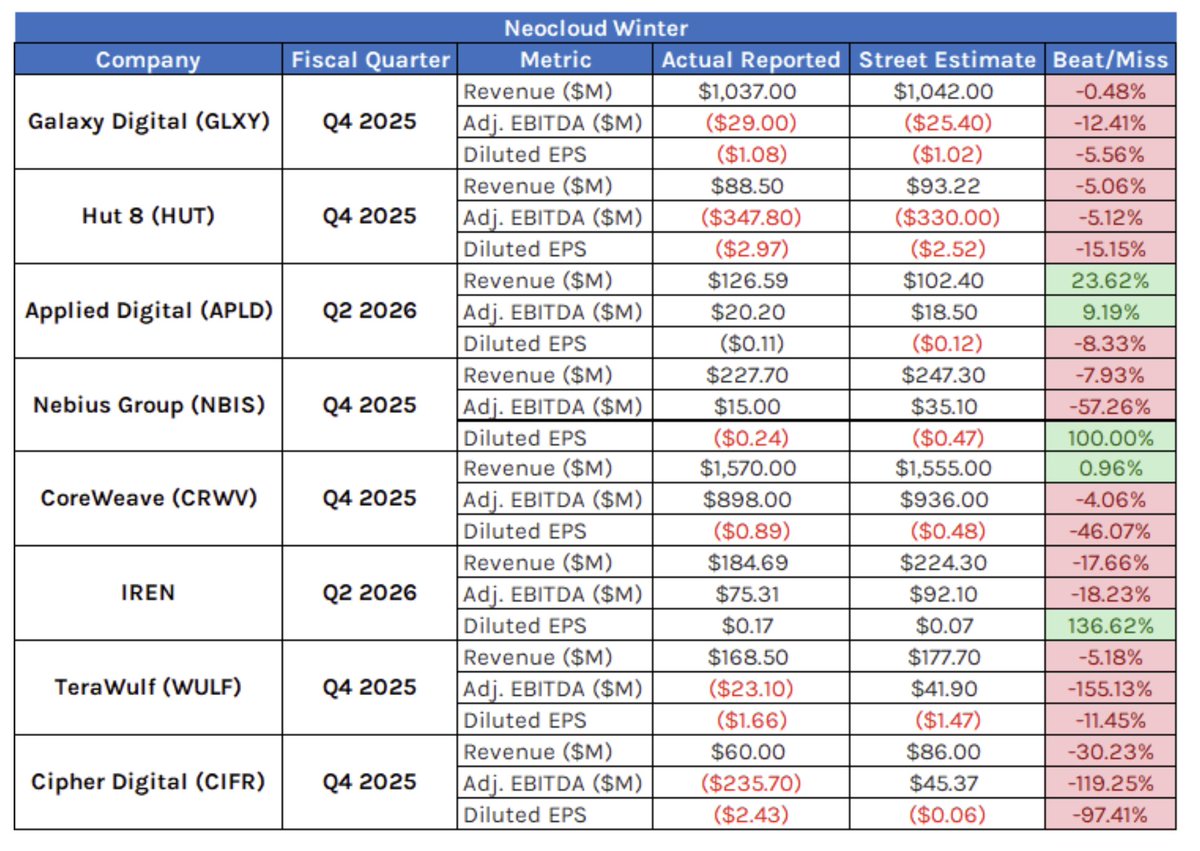
A few months ago, we warned of a neocloud winter. The earnings table below speaks for itself. Almost all of the neoclouds/bitcoin/HPC miners who reported earnings missed Q4 2025 expectations, badly. $GLXY, $HUT $APLD $NBIS $CRWV $IREN $WULF $CIFR
Felix Wang, CFA tweet media
English
18
18
99
21.9K
Consensus Long
Consensus Long@ConsensusLong·
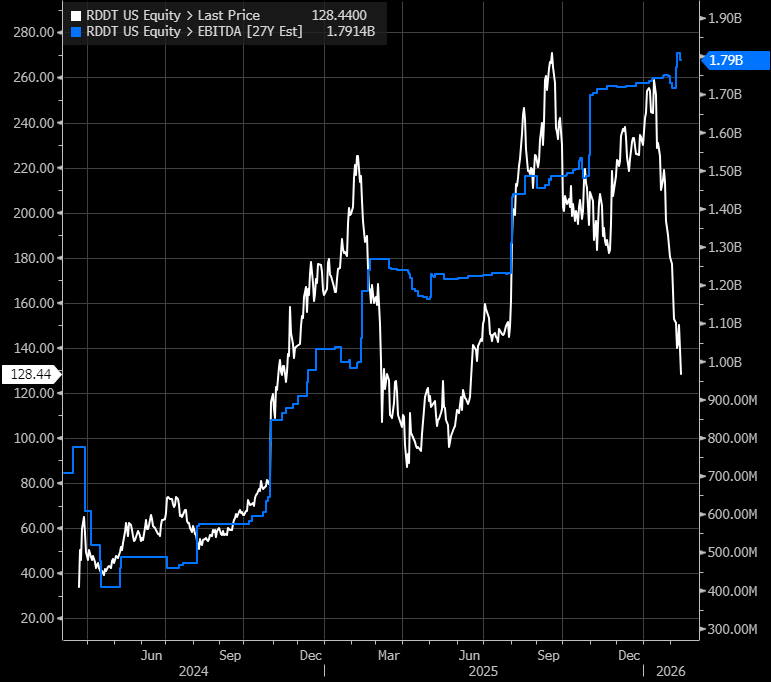
I had the opportunity to meet with $RDDT in a large group meeting for institutional investors this week. RDDT is a stock I have owned since the IPO and I have been consistently pleased with their execution. RDDT’s business is firing on all cylinders. Advertising revenue grew +75% last quarter – growth was broad based across all verticals, geographies, and advertiser objectives. Growth is being driven by a variety of levers – primary user and engagement growth (high quality growth) and to a lesser extent increasing ad load and higher ad pricing. The company positively highlighted the traction they see in performance advertising, which is over 50% of total advertising revenues and growing >100% YoY. To be fair, RDDT includes both mid-funnel (lead-gen type advertising) and true bottom the funnel (immediate conversion type advertising) as performance advertising. My channel checks point to significant strength in mid-funnel with true bottom-funnel direct response still being in the early days. RDDT management spoke optimistically about the traction they are seeing with true direct response ad units, like dynamic product ads and shopping ads, and were excited about the rollout of app download ads in 2026. The bottom line here is that growth and momentum appear to be highly durable. The company runs an extremely tight ship – one of the best teams in the sector (I know it’s a low bar!) when it comes to expense discipline and capital allocation. EBITDA margins expanded to 38% in 2025 from 23% in 2024 and the company has been profitable on a GAAP basis for six quarters in a row. During the meeting management pointed to more of the same – we should expect 50%-ish incremental margins going forward and RDDT is heading towards being a 50% EBITDA margin company over the medium term. For 2025 RDDT scored a 108% on the rule-of-40% score, one of the best in the market. The one rub on the story is around user growth. After some turbulence in 1H25 RDDT is on more solid footing but trends are still just okay; total daily users grew +19% in 4Q25. Management’s continues to highlight the significant opportunity they have to convert their 470M+ weekly users to daily users. They also made it clear that they are prioritizing growing user engagement and time spent on the platform by allowing people to interact with communities and engage with other users without forcing them to log in. I think that this is good for the long-term health of the business and good for current advertising trends, albeit at the expense of the KPI that short-term investors are most focused on. Unfortunately, RDDT’s stock has not performed anywhere close to its business performance. The company’s stock is down -44% YTD and the stock is down by more than 50% relative to the all-time-high it made in September 2025. I struggle to find a reason for its terrible performance, especially since it never traded at an egregious multiple to begin with. I guess one can point to US “logged-in” DAUs falling -100K QoQ (less than 1%), but its hard to see how that can take away from a company that saw forward EBITDA revised up by 60%+ over the past year. Currently RDDT trades at 25x 2026 free cash flow and 16x 2027 free cash flow, an absolute bargain compared to the broader market before you even factor in RDDT’s best-in-market growth rate. Its very rate that the market gives you the opportunity to own a rapidly growing, highly profitable, network effect business model at such an attractive price. Below is a picture of RDDT’s stock price (white line) versus RDDT’s 2027 EBITDA estimate (blue line). In my experience jaws like this always close – given my expectation for 2027 EBITDA to continue to be revised up, it is highly likely this resolves itself with RDDT moving meaningfully (100%+) higher.
Consensus Long tweet media
English
0
0
1
255
Consensus Long
Consensus Long@ConsensusLong·
Great analysis! Any idea how the compute usage (MWs) splits out between training and revenue generating activities? The hyperscalers/neoclouds make $10B/GW renting out GPUs. This is the COGS for anyone sitting on top of their infrastructure (everyone) so revenue/GW needs to grow and be a lot higher than $10B/GW for the model layer and application layer to work
English
0
0
0
64
Consensus Long
Consensus Long@ConsensusLong·
@JaredSleeper Great survey work! Seems like cutting SBC is an easy win, yet none of the companies pulling the lever. Market is doing it for them… making the value of that SBC worth less and less everyday 😂
English
0
0
1
403
Jared Sleeper
Jared Sleeper@JaredSleeper·
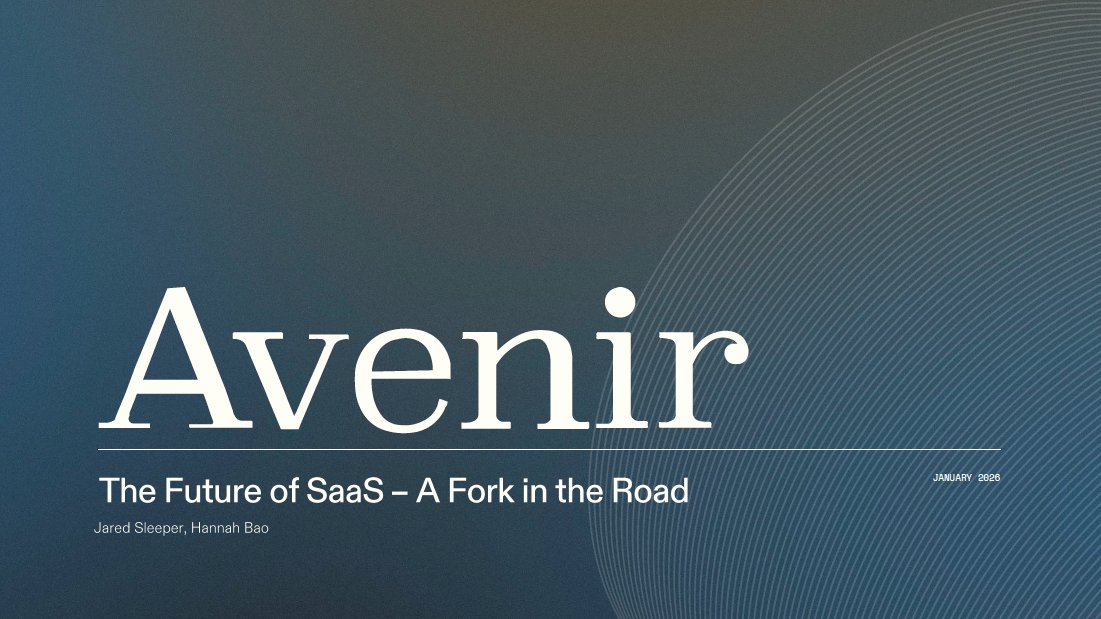
At Avenir, we’ve followed the emerging bear cases on SaaS closely. This 46-page deck contains our reflections and research on the path ahead. We see opportunity and risk as SaaS companies vie with AI natives to be "systems of context." Link in replies, excited to discuss!
Jared Sleeper tweet media
English
73
84
913
364.5K
Consensus Long
Consensus Long@ConsensusLong·
Great advice from someone who has been there and done that in a (very) big way!
Henry Schuck@HenryLSchuck

Over the last 12 years, I've worked with 4 Private Equity funds at ZoomInfo. Here’s my 12-step playbook for working with PE Owners. In 2014, I took on my first PE investors (TA Associates and 22C Capital). In 2018, we brought on Carlyle and CPPIB. Private Equity is in the headlines everywhere now - buying businesses like Smartsheet, Zuora, SolarWinds, Avalara… Here are lessons I learned on how to make working with them a LOT easier. 1. Get aligned from Day 1 Ask them what they underwrote the deal to. That’s a fancy way of asking: “What did you tell your investment committee this business would be worth in 4–5 years in the base case?” Then ask about the upside case. If you want real alignment, ask for the memo. If they get squirrely, just say: “I assume there might be some misgivings about me in there - can we talk about those so I’m aware?” There is no faster way to get aligned than seeing exactly how they described the investment. 2. Understand the clock If you want to invest in growth and bring down margins to do it, do it early. As you approach exit, EBITDA becomes a sacred cow. Want to launch a new product? Great. Show what sales is committing to it and when. If you can’t do that, don’t even bother asking. 3. You don’t have to do everything they tell you After my second board meeting I went to D. Randall Winn (my PE board member and CEO of S&P Capital IQ) and said, “Randy, just tell me what you want me to do and I’ll go do it.” He laughed and said: “Whoa whoa, that's not how it works - no one here knows your business as well as you do. We’re going to give you advice and pattern match. Your job is to listen and decide.” That said, you MUST listen to their advice and explain your choice. This doesn't have to happen immediately. Try phrases like this: “I hadn’t thought about that - it’s a good point, I want to take some time to think it through and get back to you.” Then actually follow-up. 4. You NEED a strong CFO and FP&A team Most of your private equity investors’ interactions are with your CFO. A strong CFO and FP&A team build trust. They help you craft strategy around data AND they're endlessly valuable to your PE partners because they can build models and get them the data they need to understand what’s happening in the biz. This makes life easier for you and them. 5. Response time matters PE employees work all hours. One of the associates on our deal told me that she was sleeping in her car outside their office for ~2 hours and then starting to work again cause she didn’t want to waste 30 mins driving home. When they email asking for clarification or making a suggestion, respond fast - even if it’s just to say you’ll follow up. 6. Send them swag This one might sound dumb, but you want them to FEEL like they are on your team. When you get new swag, put it in an envelope and send it with a nice note - you want them to feel the same level of pride you feel in your company. 7. Expect pressure to do M&A I remember being at a PE conference where they flashed a slide showing that portfolio companies that did M&A far outperformed the ones that didn’t. Every firm had the same slide, they all believe it and you should expect pressure here. 8. Be prepared to offshore They believe deeply in offshoring because labor offshore can be equally talented at 1/2 to 1/3 the cost. There is an organizational tax that comes with this, you can’t negotiate it away. You just have to prepare the company to manage it. 9. When a metric goes sideways, don’t show up like a macho man If you show up with a confident solution, you’re begging for a fight. Instead: present the metric, share POTENTIAL hypotheses, explain what you’re testing and ask what they think you might be missing Make them partners in solving, otherwise you’ll quickly turn them into adversaries poking holes. 10. Cutting costs is easier than driving growth This is just objectively true. If your strategy increases costs in the hope of faster growth, you need to answer two questions: - What metrics and checkpoints will tell us this is working - and when do we kill it if it’s not? - Does the additional growth actually change the multiple and valuation of your business? If you go from 15% to 20% growth in an EBITDA-dilutive way, you may have made the business worth less, not more. Your PE partners will care a lot about this. 11. They LOVE pedigree. Hiring someone from Stanford or Salesforce is almost never questioned. But take a risk on a state school or a non A-plus company hire and you’ll be defending that person even in good times - your job is to build the best team you can so the price of doing that is owning those hiring decisions at the board level. 12. Relationships matter There were a handful of times where I knew that I got on the wrong side of one of my PE board members. So I would tell my wife, “hey listen, I’m flying to San Francisco or New York on Sunday and I’m going to have breakfast with them and then fly home.” Then I’d call them and just say “Hey, do you have time for breakfast on Sunday? Maybe a workout before.” They always said yes and it gave me 4 hours of time, some relationship building and then we got right into the reasons we were misaligned and what I could do better. These were super valuable - don’t EVER underestimate the power of getting in person with your partners - same rule applies to your team. The thing I loved about working with Private Equity is that there is no singing kumbaya pretending we are some happy family. It’s a 4-5 year relationship and the expectations are very clear. I really appreciated that.

English
0
0
1
158
Consensus Long
Consensus Long@ConsensusLong·
@cjgustafson Everyone has to stop with the EV/sales multiples. Software is just an ordinary business, nothing special. The illusion that these businesses will just magically print money when they stop “investing” has been disproven. Come back to me when this trades at 20-25x PE
English
0
0
2
616
Consensus Long
Consensus Long@ConsensusLong·
The structure of the deal and partnerships itself (tranche 2 and 3) and the fact that $HUT management @ashergenoot @bigsuey alluded to another party losing out on tranche 1 points to additional deals to come - perhaps multiple deals. Its very reasonable to assume that every deal $HUT announces adds another $30-40/share in equity value to the stock. Pretty easy to sketch out the stock doubling or tripling from here!
Consensus Long tweet media
English
0
0
2
154
Consensus Long
Consensus Long@ConsensusLong·
Capitalizing this one deal alone at 15x EV/EBITDA yields an equity value of $36/share. Add in another $7/share in BTC and cash and your at $43/share - basically today's stock price. What the market is missing and not pricing in is the next deal and the next deal after that. $HUT created $36/share in equity value using less than 10% of the power (MWs) that they have locked up.
English
1
0
1
130
Consensus Long
Consensus Long@ConsensusLong·
$HUT signed a $7B revenue, 15 year agreement (with additional 15 year extensions) with Fluidstack (fully backed by $GOOGL AA+ credit rating) who will be renting capacity to @AnthropicAI This deal is one of the best infrastructure deals I have ever seen: 1/ $HUT set a new high watermark in terms of economics - NOI of $1.9M/MW (average BTC miner deals $.53) 2/ Triple net lease with all lease payments, utility payments, and maintenance costs fully backed by $GOOGL - one of the highest quality counterparties in the world 3/ 85% of construction costs will be financed by $GS and $JPM at a rate in the low 6% range (already locked in). This works out to an unlevered project yield of 19% (amazing!) and a levered equity yield of 66% (muy bueno!)
English
1
0
0
220
Consensus Long
Consensus Long@ConsensusLong·
$HUT has successfully transitioned from being a BTC miner to a premiere infrastructure developer. In mid-2024 $HUT hired Sean Glennan a former of Citi's Power, Utilities, and Renewables banking group. In early 2025 $HUT spun out its BTC mining operations into a separate company $ABTC run by @EricTrump $HUT completed its transformation this week with the announcement of a $7B+ data center development deal with $GOOGL and @AnthropicAI
English
1
0
3
14.2K
Consensus Long
Consensus Long@ConsensusLong·
Pretty amazing to hear the leaders of the largest, most profitable, more performant businesses in the history of mankind clearly articulate that they are NOW seeing strong ROI on AI capex spend and that every dollar is being spent thoughtfully… and the bears hanging out in their basements continue to claim that we are in a bubble!
Consensus Long@ConsensusLong

This one is for all the AI Capex bears 1% of GDP today versus 2-5% of GDP (peak) for other major technology investment cycles. *If* we are in a bubble still have a hell of a long way to go to the top $CLS $AMD $NVDA $VRT $AVGO $HUT $APLD

English
0
0
3
164
Consensus Long
Consensus Long@ConsensusLong·
@ContrarianCurse Agreed! So much low hanging fruit and the incrementality is totally misunderstood. If a business with 5% EBIT margins can figure out a way to cut costs by just 3%, profits increase by 57%
English
0
0
0
104
Consensus Long
Consensus Long@ConsensusLong·
$CLS so hot right now. Monster quarter and guide. >$8 in EPS in 2026. Better yet, management beats their initial EPS guidance by >30% when everything is said and done. Puts >$10 EPS on the table with continued growth in 2027 and beyond!
English
0
0
3
262
Consensus Long
Consensus Long@ConsensusLong·
Tweet of the year candidate!
tae kim@firstadopter

Why AI is Underhyped and Isn't a Bubble Yet Here's why AI isn't a bubble today. I've distilled the data points and ideas from my previous columns and coverage. If you prefer facts and evidence-based reality over vibes and conflated narratives, enjoy! -Big Tech valuations are reasonable and leverage is low. We're at the beginning of multiple AI super product cycles in the year ahead -We are in the early innings of a technology computing shift to AI, the largest in decades. Think 1994 versus 1999. -Every credible source reports overwhelming demand for AI computing capacity. Where is the overcapacity glut? Nowhere. Valuations -During the dotcom bubble, top technology stocks like Microsoft and Cisco traded at 70 to 100 times forward P/E in December 1999 (remember these stocks went significantly higher in Q1 2000 too) versus today's top stocks (Nvidia etc.) trading at 30x with materially better underlying fundamental growth prospects. -The positive cycle sentiment remains in early stages. The Netscape IPO occurred in 1995, five years before the cycle peak. Is there any doubt the eventual OpenAI IPO will be a Netscape-type success? AI is only two to three years in. Think 1994 versus 1999. -The major buyers of AI infrastructure are the most profitable businesses in history, each generating roughly $100 billion in annual net profit. This is nothing like the debt-driven fiber optic network buildout of the dotcom era. Generational Secular Computing Shift -The global TAM for IT spending is $5-6 trillion annually. The entire technology stack needs restructuring and rearchitecting for AI because this new technology produces better results for corporations and consumers. You either use it or get disrupted by rivals who do. -Think electrification. Think the advent of the microprocessor and personal computer in the early 1980s. It's that significant. -The first growth wave was driven by natural language processing with LLMs and the application of parallel GPU computing. For the first time, computers could understand context from user language input. Previously, if you typed one character wrong in a query request, the computer would fail. GPUs allowed companies to apply incredible computing power to distill and compress knowledge from vast pools of unstructured data. -The current second wave of growth is driven by reasoning models that are significantly more accurate and useful by spending more time working on requests and searching dozens of websites. Reasoning models use 100 to 1,000 times more compute resources than prior models. The next wave will feature increased use of multi-modal models (audio/video) and agents (workflow automation, multi-step tasks). The following wave will be driven by physical AI, drug discovery, factory simulation, and robotics. AI Bubble Skeptic Arguments -Skeptics focus on simplistic narratives without nuance. It's up a lot, so it must be a bubble. OpenAI is losing a lot money! -This mirrors narratives from earlier this year when skeptics claimed the DeepSeek moment meant expensive training runs were no longer needed because DeepSeek was trained with only $6 million in spending (a false statement especially as literally in the same week China announced $140 billion in new AI investment). They also claimed DeepSeek's efficiency meant a computing glut was ahead. Both views proved categorically false and misleading as reasoning models (including DeepSeek!) and better AI models sparked an exponential wave of AI computing demand over the last nine months. -OpenAI's business model divides into two parts. Training new models requires enormous fixed investment, with each model driving roughly 10x more spending. Inference, serving already developed and built models, is extremely profitable. -Do you believe leading AI edge models will be a foundational technology transforming every business worldwide? The answer is yes. Companies view the risk as existential. -100% of Nvidia's engineers use AI coding assistants like Cursor. These AI assistants make engineers more productive by autocompleting code and automatically fixing bugs. All developers will use AI assistants in the future. Customer service? Same. AI will improve chatbots for customer service while giving live agents all the information they need from prior conversations and the latest product updates to improve service quality. Sales agents? Same. Product research and development? Same. AI will test product ideas and iterations while simulating every permutation. -This is happening and will continue happening. It’s inevitable. Every company will use AI in every part of their business. I spoke with executives from Nvidia, Dell, and Microsoft this month. It's occurring everywhere and accelerating. Circularity -Thus far, the vast majority of spending has come from profitable large technology companies. Now concerns about circular vendor spend is rising. -Despite what you hear, much of this hasn't occurred yet, and each gigawatt of spending depends on specific performance technical milestones on both sides (AMD-OpenAI deal). -Yes, the Oracle-OpenAI deal is real with hundreds of billions in RPO. Let's assume it's $300 billion over five years, requiring roughly $60 billion annually. -Alphabet/Google generates about $400 billion in sales with $120 billion profit. Meta generates $200 billion in sales with $73 billion profit. -Markets and investors look at the potential future not the present or past. The question becomes can OpenAI eventually become a technology giant using their AI model advantage and product execution abilities? ChatGPT's user base has grown from 0 to 800 million in three years. Can it reach 2 or 3 billion in another three years? It seems achievable. Like Google in its early years, ChatGPT currently has a scale advantage where the large user base has started a flywheel, enabling ChatGPT to iterate, improve, get more data, and A/B test better answers for users. Nvidia NVL72 Super Cycle – Pre-iPhone Moment -Dan Benton noted that technology investing revolves around product cycles. In just over two years, Nvidia has increased its quarterly data center revenue tenfold. As impressive as this is, the company will likely experience its best product cycle ever over the next few quarters, comparable to the iPhone launch. -Nvidia has recently begun shipping GB200/GB300 NVL72 servers in volume for the first time. Foxconn, a major AI server manufacturer for Nvidia, reports that current quarter AI server revenue will increase 170% year-over-year. -What is the NVL72? The first AI server with 72 GPUs in one server rack versus 8 GPUs in prior models. It offers 25 to 30 times better performance than the previous model and will enable more AI capabilities and use cases. Each server weighs 1.5 tons, contains 5,000 copper cables (2 miles), and offers unprecedented computing density. AI Demand Signs -EVERY credible industry source reports off-the-charts demand and overwhelming compute shortages everywhere. EVERY SINGLE ONE. -Microsoft's Scott Guthrie, head of the Cloud + AI group at Microsoft and member of the senior executive team, told me this month he sees an "explosion" of AI infrastructure usage ahead, driven by reasoning/agents and workflow automation. -TD Cowen: "Based on our checks, 3Q25 would represent the largest inflection in demand we have seen since the inception of the data center industry... a staggering ~7.4GW of U.S. data center capacity was leased by hyperscalers in 3Q25, which would exceed all capacity leased in 2024." Largest inflection in demand in history. Right now. More capacity in one quarter than all of last year. -TSMC's CEO says AI demand is "stronger than" they thought three months ago. Given the strength three months ago, that's remarkable. He then literally describes today's growth as "insane," strongly hinting at guidance and capex raises in January. -Four-year-old A100 GPUs remain profitable today on inference tasks. -Microsoft AI startup employee states: "Many days it feels my whole job is begging for GPUs. It's been that way since 2020 and hasn't become easier." -Anthropic's ARR grew from $1 billion to $7 billion in 10 months. -Crusoe CEO: "Every single customer we talk to is compute-constrained right now." -AI token consumption data points from Microsoft, OpenAI, and Google show exponential growth YTD. Conclusion -Hold on to your hats. We're just getting started. The next several quarters are going to be off the charts.


English
0
0
1
162