
Angehefteter Tweet
RT
15K posts


RT
@CorgiSquirrel
"Fascism is the stage reached after communism has proved an illusion" F A Hayek
Beigetreten Mart 2014
1.5K Folgt182 Follower
And another 'Catholic' blocks me after stating:
"Bro... The level of blindness of protestants is staggering... May God have mercy on your soul. I give up trying, it's like talking to wood planks. Praying is better indeed."
All of this is just opinion. He offers no Scriptural support for anything he argues/d. Nothing. Just argues from his own resources.
English
Considering we didn't have the Book of Revelations by then,
That is your opinion.
and who knows how many other letters, then those aren't in the Bible?
There were quite a few (cf. 2 Peter 3:15-16). The more you know.
Can't you see how flawed that interpretation is?
Right, I can see how ignorant of Scripture yours is.
What is Paul even talking about here?
Pretty straight forward. I suggest you start at the beginning.
English

Show me in the Bible where it says we are only supposed to believe what is in the Bible ALONE.
English
@Catholicizm1 Interesting statement given that Luther was "Catholic," and thus "Protestant" is just another name for "Catholic."
English


Nowhere in Matthew 16 is a pope mentioned, described, or authorized. So, still waiting for Scriptural evidence to support your org structure.
For example, Matthew 16:18:
And I tell you that you are Peter, and on this rock I will build my church, and the gates of Hades will not overcome it.
The Greek word used for Peter is masculine. The Greek word used for 'rock' in the verse is petra, which is feminine. The petra is never used to reference a person in Scripture. It is used to reference Christ in 1 Corinthians 10:4 and refers to Christ as the 'rock.'
The poster cannot claim that Jesus was speaking Aramaic here as he does not know such to be true. For example, if the Holy Spirt had wanted Matthew 16:18 to be in Aramaic, then we would have the verse in Aramaic, just like Matthew 27:46.
Additionally, I doubt that Pilate and Jesus were speaking Aramaic/Hebrew when they met.
Here we have Jesus renaming Simon to Rock (Petros in Greek) and telling him that he will build his church on him that the gates of hell will not overcome.
This is false as shown above. If the Holy Spirit had written what the poster claims then it would have been very simple to write Matthew 16:18 as:
And I tell you that you are Peter, and on [Peter] I will build my church, and the gates of Hades will not overcome it.
However, the Holy Spirit did not do so because Peter was not the focus of the verse nor of the chapter. Peter's confession was though.
Jesus, who regularly quoted from Isaiah (over 20 times), closely follows the formula in Isaiah 22:20-22.
Again false. Isaiah speaks of a 'key' and not 'keys' as stated in Matthew 16:19. Note closely Revelation 3:7:
To the angel of the church in Philadelphia write: These are the words of him who is holy and true, who holds the key of David. What he opens no one can shut, and what he shuts no one can open
The One that can open and shut is Christ. He is the only one who can do so. There is no substitution for the 'keys' given in Matthew 16:19 and the 'key' Jesus has. Jesus is the only one who could open and shut. Thus, the meaning of 'keys' must be something else. This is plainly given in Acts 2 and Acts 15. Peter is given the job in Matthew 16:19 to take the Gospel to the Jews and Gentiles, something he admits to in Acts 15.
The parallels are striking. A key is given. Peter/Eliakim is then given the power to bind/shut or loose/open.
Again, the poster is imputing his opinion into Scripture. Peter was given 'keys' not a 'key.' Note carefully the the bind and loose language given to us in Matthew 16:19:
I will give you the keys of the kingdom of heaven; and whatever you bind on earth shall have been bound in heaven, and whatever you loose on earth shall have been loosed in heaven (my bold)
Past tense implying that there was nothing that Peter or any other disciple of Jesus (the same authority was given to all Jesus' disciples in Matthew 18:18) could add to the Gospel that God had already foreordained. So, the 'keys' given in Matthew 16:19 were not the keys of authority, but the keys to further the Gospel.
Consider Acts 1:12-26. In that passage, Judas (one of the twelve apostles) has died an ignominious death and Peter (acting as the leader of the Apostles) says that “it is necessary to choose” someone to take his office (v 20-21). The word for office here is “episkopēn” which is the Greek word for bishopfrik. And then Matthias is chosen to replace Judas “in this ministry and apostleship” (v25) and that he “was numbered with the eleven apostles.” (v26) Here we have an apostle dying and a successor being chosen. How in the world is this not apostolic succession? And, relevant to the topic of Peter, it explicitly states that Matthias would take the office (bishopfrik) of Judas. This is a handing down of an ecclesial office.
Finally, we have this defense of 'Apostolic Succession' that ignores Acts 1:21-22:
Therefore it is necessary to choose one of the men who have been with us the whole time the Lord Jesus was living among us, beginning from John’s baptism to the time when Jesus was taken up from us. For one of these must become a witness with us of his resurrection (my bold)
Note the constraints of the replacement for Judas. At some point, there would be no more who would meet the qualifications, thus ending the office of Apostle. This was necessary as there would be no need for Apostles once the Gospel had been fully delivered (cf. Jude 3).
The poster ignores these verse even though they are referenced. To justify his position he goes on to quote from non-biblical (non-inspired) sources. Willful ignorance at least at this point.
In short, the papacy is clearly a biblical office instituted by Christ.
In short, this is a willfully false statement, as demonstrated above.
English
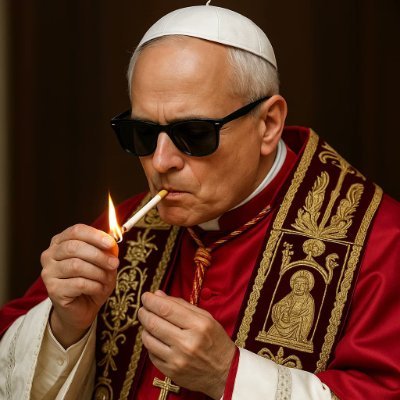
@CorgiSquirrel Here you go.
x.com/poperespecter1…
Pope Respecter@poperespecter1
The Biblical Case for the Pope : The most famous passage supporting the papacy is Matthew 16:16-19 but I think most people do not realize how much it says. Let's start with reviewing the text. "Simon Peter answered, “You are the Messiah, the Son of the living God.” Jesus replied, “Blessed are you, Simon son of Jonah, for this was not revealed to you by flesh and blood, but by my Father in heaven. And I tell you that you are Peter, and on this rock I will build my church, and the gates of Hades will not overcome it. I will give you the keys of the kingdom of heaven; whatever you bind on earth will be bound in heaven, and whatever you loose on earth will be loosed in heaven.” Here we have Jesus renaming Simon to Rock (Petros in Greek) and telling him that he will build his church on him that the gates of hell will not overcome. But then Jesus begins a ceremony. I call it a ceremony because it appears that Jesus is following a ceremonial formula for ordaining the Vicar (representative) of a King. Jesus, who regularly quoted from Isaiah (over 20 times), closely follows the formula in Isaiah 22:20-22. Consider: “In that day I will summon my servant, Eliakim son of Hilkiah… I will place on his shoulder the key to the house of David; what he opens no one can shut, and what he shuts no one can open." The parallels are striking. A key is given. Peter/Eliakim is then given the power to bind/shut or loose/open. The similarity of the phrasing and the tendency of Christ to quote from the prophet Isaiah make it seem HIGHLY unlikely that this is coincidental. Jesus is nearly quoting the Prophet Isaiah on purpose. What is he getting at? To understand, let’s look at who Eliakim was. He was the Vicar of King Hezekiah. And we see his role in 2 Kings 18:18. In that passage, the Assyrian Commander calls for King Hezekiah. But instead of the King going out, Eliakim is sent to speak on his behalf. Eliakim was the vicar, the representative and the spokesperson for King Hezekiah. With that in mind, let's get back to the ceremony that Jesus performed on St Peter in Matt 16:16-19. Jesus (a king) was performing a ceremony of a Vicar and the Vicar's role (as seen in 2 Kings) is to speak on behalf of the King. He is making Peter his Vicar. There are other proofs in the bible. Jesus promised that Peter would be the one to strengthen the brothers (Luke 22:31-32). In John 21:10-14 Peter hauled in the fish (a symbol for the faithful) by himself when all the disciples together couldn't do it (v6) and the text says the net did not tear (the greek for tear is schism). And throughout the book of Acts you see Peter acting as Pope. In Acts 5, it is Peter (not the other apostles) who sits in judgement of Ananias and Sapphira. In Acts 15, at the first council only Peter speaks during the deliberations and when James wraps up the discussion he quotes one person: Peter. We see St Paul say that when completed his period of contemplation, he went to Peter first (Galatians 1:18). And the list of the apostles changes in order quite a bit throughout the New Testament but it always starts with St. Peter (and ends with Judas) - the others change in order. In many cases, it just says “Peter and the others.” Peter is clearly given a unique role of leadership, vicarship of Christ, and spokesman for the Christian movement. But did he pass it on? Is it possible that Peter was indeed given a special role but that ended with Peter? The answer to this is no. The offices off the apostles were passed on. We know this both from the bible and from history. Consider Acts 1:12-26. In that passage, Judas (one of the twelve apostles) has died an ignominious death and Peter (acting as the leader of the Apostles) says that “it is necessary to choose” someone to take his office (v 20-21). The word for office here is “episkopēn” which is the Greek word for bishopfrik. And then Matthias is chosen to replace Judas “in this ministry and apostleship” (v25) and that he “was numbered with the eleven apostles.” (v26) Here we have an apostle dying and a successor being chosen. How in the world is this not apostolic succession? And, relevant to the topic of Peter, it explicitly states that Matthias would take the office (bishopfrik) of Judas. This is a handing down of an ecclesial office. And lest people think this is a one off situation with Judas, there is another very interesting account from St Clement of Rome writing in 90AD. He writes, “Our apostles knew through our Lord Jesus Christ that there would be strife for the office of bishop. For this reason, therefore, having received perfect foreknowledge, they appointed those who have already been mentioned and afterwards added the further provision that, if they should die, other approved men should succeed to their ministry” (Letter to the Corinthians 42:4–5, 44:1–3) In short, the papacy is clearly a biblical office instituted by Christ.
English
Orthos and Prots: The papacy developed late
6th century Roman Legal Code: The whole church is subject to Rome because Jesus said so.

English
This is a nonsense argument. First, Jesus was speaking aramaic
You do not know this. You do not know what language He spoke at that point. Besides it does not matter as the Holy Spirit gave us the verse in Greek. Petra is feminine and cannot be a reference to Peter. Plain and simple. Petra is never used in Scripture in the manner you seem to claim.
It does not matter that his name is Cephas in Aramaic. Cephas is masculine as well and cannot be used to replace petra. Again, plain and simple.
Petra for Peter's name is because it is feminine and that would be weird.
lol...exactly. God's word is not wrong but your whole premise is wrong. That is your whole problem: you want to impute your reasoning/meaning in the verse and it does not fit.
Greek has a gender issue that would not have been an issue in the Aramaic Jesus was speaking but both Petros and Petra meant Rock in Greek during the first century.
Again, you do not know if He spoke Aramaic here or not. You have assumed it because it helps your opinion narrative.
Did you ever consider for one moment that the Holy Spirit used Greek in M16:18 in order to be clear a gender difference so that those who came after would not read the verse and do exactly what "Catholics' have done?
English
This is a nonsense argument. First, Jesus was speaking aramaic. Paul regularly calls Peter by his aramaic name which is just Cephas (see 1 Cor 1). Cephas (or Kepha) is just rock in Aramaic and has no gender issue. Second, the reason Matthew didn't translate the aramaic to Petra for Peter's name is because it is feminine and that would be weird. Greek has a gender issue that would not have been an issue in the Aramaic Jesus was speaking but both Petros and Petra meant Rock in Greek during the first century.
English
The Biblical Case for the Pope :
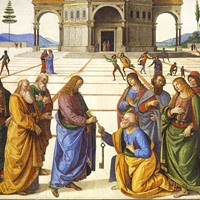
The most famous passage supporting the papacy is Matthew 16:16-19 but I think most people do not realize how much it says. Let's start with reviewing the text.
"Simon Peter answered, “You are the Messiah, the Son of the living God.” Jesus replied, “Blessed are you, Simon son of Jonah, for this was not revealed to you by flesh and blood, but by my Father in heaven. And I tell you that you are Peter, and on this rock I will build my church, and the gates of Hades will not overcome it. I will give you the keys of the kingdom of heaven; whatever you bind on earth will be bound in heaven, and whatever you loose on earth will be loosed in heaven.”
Here we have Jesus renaming Simon to Rock (Petros in Greek) and telling him that he will build his church on him that the gates of hell will not overcome. But then Jesus begins a ceremony. I call it a ceremony because it appears that Jesus is following a ceremonial formula for ordaining the Vicar (representative) of a King. Jesus, who regularly quoted from Isaiah (over 20 times), closely follows the formula in Isaiah 22:20-22.
Consider:
“In that day I will summon my servant, Eliakim son of Hilkiah… I will place on his shoulder the key to the house of David; what he opens no one can shut, and what he shuts no one can open."
The parallels are striking. A key is given. Peter/Eliakim is then given the power to bind/shut or loose/open. The similarity of the phrasing and the tendency of Christ to quote from the prophet Isaiah make it seem HIGHLY unlikely that this is coincidental. Jesus is nearly quoting the Prophet Isaiah on purpose. What is he getting at?
To understand, let’s look at who Eliakim was. He was the Vicar of King Hezekiah. And we see his role in 2 Kings 18:18. In that passage, the Assyrian Commander calls for King Hezekiah. But instead of the King going out, Eliakim is sent to speak on his behalf. Eliakim was the vicar, the representative and the spokesperson for King Hezekiah.
With that in mind, let's get back to the ceremony that Jesus performed on St Peter in Matt 16:16-19. Jesus (a king) was performing a ceremony of a Vicar and the Vicar's role (as seen in 2 Kings) is to speak on behalf of the King. He is making Peter his Vicar.
There are other proofs in the bible. Jesus promised that Peter would be the one to strengthen the brothers (Luke 22:31-32). In John 21:10-14 Peter hauled in the fish (a symbol for the faithful) by himself when all the disciples together couldn't do it (v6) and the text says the net did not tear (the greek for tear is schism). And throughout the book of Acts you see Peter acting as Pope. In Acts 5, it is Peter (not the other apostles) who sits in judgement of Ananias and Sapphira. In Acts 15, at the first council only Peter speaks during the deliberations and when James wraps up the discussion he quotes one person: Peter. We see St Paul say that when completed his period of contemplation, he went to Peter first (Galatians 1:18). And the list of the apostles changes in order quite a bit throughout the New Testament but it always starts with St. Peter (and ends with Judas) - the others change in order. In many cases, it just says “Peter and the others.”
Peter is clearly given a unique role of leadership, vicarship of Christ, and spokesman for the Christian movement. But did he pass it on? Is it possible that Peter was indeed given a special role but that ended with Peter? The answer to this is no. The offices off the apostles were passed on. We know this both from the bible and from history.
Consider Acts 1:12-26. In that passage, Judas (one of the twelve apostles) has died an ignominious death and Peter (acting as the leader of the Apostles) says that “it is necessary to choose” someone to take his office (v 20-21). The word for office here is “episkopēn” which is the Greek word for bishopfrik. And then Matthias is chosen to replace Judas “in this ministry and apostleship” (v25) and that he “was numbered with the eleven apostles.” (v26) Here we have an apostle dying and a successor being chosen. How in the world is this not apostolic succession? And, relevant to the topic of Peter, it explicitly states that Matthias would take the office (bishopfrik) of Judas. This is a handing down of an ecclesial office.
And lest people think this is a one off situation with Judas, there is another very interesting account from St Clement of Rome writing in 90AD. He writes, “Our apostles knew through our Lord Jesus Christ that there would be strife for the office of bishop. For this reason, therefore, having received perfect foreknowledge, they appointed those who have already been mentioned and afterwards added the further provision that, if they should die, other approved men should succeed to their ministry” (Letter to the Corinthians 42:4–5, 44:1–3)
In short, the papacy is clearly a biblical office instituted by Christ.
English
@PopeDefendersX Why? Nowhere in Scripture can I find anything resembling the "Catholic church." Thus, your premise is false.
English

The Catholic Church is necessary for salvation.
This should not be controversial.
Oliver Burdick@oliverburdick
The Pope is not the leader of Christianity, Jesus is. This should not be controversial.
English
@CorgiSquirrel @grok In the Bible, does the word “spirit” mean something is just symbolic?
English
Show me in the Bible, where it says that the Holy Eucharist (communion bread and wine) is only symbolic, and not literally the body and blood of Jesus Christ.
English
You provided no references.
I did. Go back and read my prior posts for comprehension. If you need specific verses for the books, I can provide those and additional as well.
Read a book
lol...I am confident I have read more than you.
It’s common knowledge that literacy rates back then were extremely low
Your opinion has no value. Just because most people believe something does not make such true. Scholars also believe that King David ruled over a village made of huts. So there is that too. You know very little.
English

@CorgiSquirrel @LizzieMarbach You provided no references. Read a book. It’s common knowledge that literacy rates back then were extremely low
English

First century Christians read New Testament letters and gospels and recognized them as scripture.
English
@ShaneSchaetzel No, you need to address the verse in its context. You have read John 6, yes?
English
Oh, I see, so if the word “spirit” means symbolic then that means angels are just symbolic, because they are spirits. Thanks.
And of course, God is just symbolic too because it also says in scripture that God is spirit and those who worship him worship him in spirit and truth. So God must be a symbol, and we who worship him are just being symbolic in our worship.
Thanks for the clarification.
Or… Maybe… The word spirit does not mean symbolic?
English
Well, with regard to Sola Scriptura:
Now, brothers and sisters, I have applied these things to myself and Apollos for your benefit, so that you may learn from us the meaning of the saying, “Do not go beyond what is written.” Then you will not be puffed up in being a follower of one of us over against the other (1 Corinthians 4:6; my bold)
So, there is that.
English

Where are any of the five solas in the Bible (Scripture)?
Sola Scriptura
Sola Fide
Sola Gratia
Sola Christus
Sola Deo Gloria
English
That was written before the NT was canonized
You are confused. That is your opinion and your opinion does not matter. An uninspired political council did not decide what was God's word.
Paul's writings were well know to first century believers. The bible we have today was finished and known in the first century.
English

@CorgiSquirrel That was written before the NT was canonized
Knucklehead
English
No, my lost brother
The reason Roman Catholics hate sola scriptura is because none of it can be found in Scripture
5 Solas@5Solas2
The reason Roman Catholics hate sola scriptura is because much of their theology cannot be found in it.
English
@GeniusCPA1 @Catholicizm1 It doesn't have to. The first century believers knew the Apostles, knew who was inspired, and knew which letters mattered.
English

@CorgiSquirrel @Catholicizm1 Nowhere in scripture does it say what books belong in The Bible .
English
It’s the truth. On average very few Christians could read. Few people could read or write at all. The letters were to church leaders who could read.
Your opinion does not make something true or not. You have presented no evidence. I, on the other hand, provided evidence that fully refutes your opinion statement.
Even prior to Paul’s letter, the tradition was getting passed on form the apostles by word of mouth. Many early church fathers and students of the apostles considered it to be a more reliable method
False. I have already provided references showing that your opinion statement is not true. So there is that.
English
It’s the truth. On average very few Christians could read. Few people could read or write at all. The letters were to church leaders who could read.
Even prior to Paul’s letter, the tradition was getting passed on form the apostles by word of mouth. Many early church fathers and students of the apostles considered it to be a more reliable method
English
@bsquared6987 @BreeSolstad How so? Where in the Scriptures are we directed to pray to anyone except God? And if one could and is directed to pray to God, praying to someone who is not God would be a step down. Just saying.
English

@CorgiSquirrel @BreeSolstad Bring us closer to Jesus.
Who knows her child better than a mother.
English

I pray to Mary everyday.
Please stop pretending like we don’t pray to her and all the Saints. It is proper and just.
Santa Trump.. 🇺🇸🇺🇸🇺🇸@lovetocook12345
Nobody is praying to mary. You people accuse us of something you don’t even understand.
English
@Kenogaia @BreeSolstad Your opinion has as much value as the original poster. What you write can be found nowhere in Scripture.
English

@CorgiSquirrel @BreeSolstad It is a good and noble thing to go to those to whom Christ has entrusted portions of His beautiful Kingdom. It honors the King.
English
@valev_28 @BreeSolstad That Jesus was respectful of His mother does not make your point.
English

@CorgiSquirrel @BreeSolstad Do you know the Wedding at Cana? Jesus does something he did not have a need to do because his Mother asks him; when we pray to Mary, we appeal to that intercession. 1/2
English