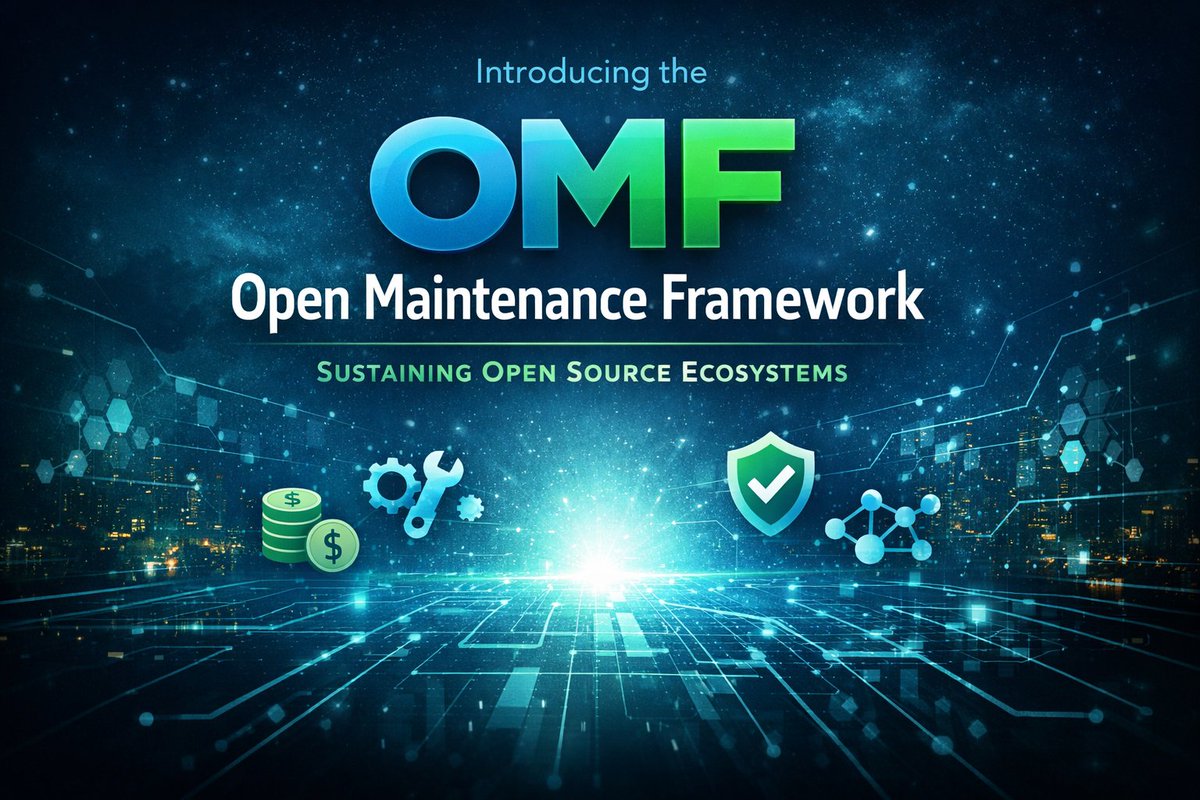

Over the last decade I’ve been involved in open source both directly and indirectly. But the last five years in particular have been a deep learning journey around one persistent challenge: open source sustainability, especially inside Web3 ecosystems and their funding structures. Blockchains are built on open source software. Yet outside of infrastructure costs and the core protocol, we rarely have clear answers for what sustains the broader ecosystem—SDKs, APIs, tooling, and the many projects developers rely on every day. After years of observing, experimenting, and learning from peers across the open source and Web3 communities, I’ve tried to compile what I’ve learned into something practical. The result is two complementary ideas: • The decentralized OSPO d(OSPO) — a concept for who coordinates open source sustainability in decentralized ecosystems. (opensourcecowboy.org/wp-content/upl…) • The Open Maintenance Framework (OMF) — a framework for how open source maintenance can actually be operationalized. (opensourcecowboy.org/wp-content/upl…) OMF is designed to be adaptable. It offers guiding philosophies, operational methodologies, practical considerations, and existing models that ecosystems can adapt or build upon. The goal isn’t to prescribe a single solution, but to give builders something tangible they can use to start addressing a fundamental issue. Because if Web3 ecosystems want to mature, we need to move beyond simply saying we value open source by ethos. We need structures that actually support the maintainers, projects, and community ladders that make these ecosystems work. This framework is my attempt to give something back to the community; a collection of lessons learned and insights from many contributors and peers who helped shape this thinking along the way. I hope others take it, adapt it, and build something even better. Special thank you to my peers on this one. opensourcecowboy.org/publications-2/