Klotzen, nicht kleckern! Anil Kelkar

12.9K posts

Klotzen, nicht kleckern! Anil Kelkar banner
Klotzen, nicht kleckern! Anil Kelkar

Klotzen, nicht kleckern! Anil Kelkar

@DerMovingFinger

Deutsch-Englisch Übersetzungen. MemoQ fan. Cricket. Big fan of PGW -the greatest English humourist ever. Also of Sudden. Suffering badly from solastalgia.

Pune, India/Indien Beigetreten Aralık 2012
203 Folgt282 Follower
Klotzen, nicht kleckern! Anil Kelkar retweetet
Nachiket Deshpande
Nachiket Deshpande@nachiket1982·
Really? MH has the worst quality of roads across Indian states. Be it Mumbai - Goa which is perpetually work in progress, or be it the Ghodbunder stretch of Mumbai Ahmedabad road or be it the Pune Bengaluru road, none of the roads match up to even other states, forget being world class.
TeaChaiLa टीचायला ಟೀಚಾಯ್‌ಲಾ ٹیچائےلا ટીચાઇલા@TeaChaiLa

Both Bihar and Kerala have one such road each that they peddle on X 24/7. Maharashtra has many such roads, yet our influencers are busy making cringe reels instead of promoting this.

English
55
37
309
144.8K
Klotzen, nicht kleckern! Anil Kelkar
@nitin_gadkari You need to monitor enforcement of traffic rules everywhere first. All this drivel about technology is of no use if the will to enforce basic traffic rules is absent everywhere.
English
0
0
0
7
Nitin Gadkari
Nitin Gadkari@nitin_gadkari·
🔸The National Highways Authority of India (NHAI) is set to transform highway operations and maintenance by deploying AI-powered Dashcam Analytics Services (DAS) across nearly 40,000 km of the National Highway network. This initiative leverages Artificial Intelligence (AI) and Machine Learning (ML) to enable data-driven, high-tech monitoring of highways and expressways. 🔸Under this system, advanced dashboard cameras installed on Route Patrol Vehicles will conduct weekly surveys, capturing high-resolution images and videos. AI/ML models will automatically detect over 30 types of defects, including potholes, cracks, and pavement damage. It will also monitor road furniture such as lane markings, crash barriers, and streetlights. 🔸The system will identify safety risks like illegal encroachments, unauthorized signboards, and parking. Additionally, periodic nighttime surveys will assess visibility of signages, markings, and lighting, ensuring improved road safety and timely maintenance. #PragatiKaHighway #GatiShakti
English
623
355
2.4K
139K
Klotzen, nicht kleckern! Anil Kelkar retweetet
Anant
Anant@Infinity7476·
@nitin_gadkari Are you saying that we dont know how to make flat longlasting roads? The whole world will laugh at us if you tell them we are using AI ML to identify road defeats. Defects which should not be there in the first place.
English
0
1
1
61
Klotzen, nicht kleckern! Anil Kelkar retweetet
CitizenView
CitizenView@secane50·
@sagi_occ @aparanjape @mohol_murlidhar It is no long a river. So instead of wasting crore of rupees on pouring concrete, spend money on maintaining river flow, fining the industries who’re polluting it, ensure river water ecosystem doesn’t get impacted. But corrupt bosses invite tenders to fill contractor’s pockets.
English
0
1
2
102
Klotzen, nicht kleckern! Anil Kelkar retweetet
Vijay Patil
Vijay Patil@v_c_p·
@sagi_occ @aparanjape @mohol_murlidhar @aparanjape request you to visit Ram - Mula confluence, close you eyes, breath in oxygen rich air, hear birds sing and tell us if Pune needs cement concrete tracks/banks. Pune is not sabarmati or Mumbai where everything is measured in rupees.
English
0
6
14
331
Klotzen, nicht kleckern! Anil Kelkar retweetet
Prajakta Divekar
Prajakta Divekar@prajpanshikar·
On one hand, Indian politicians talk about having #nationalpride and urge people to have more confidence in their own history, tradition, and culture; but on the other hand, they are constantly selling us foreign ideas of development. They want our cities to look like some other- Singapore, Shanghai, London etc. They want our #riverfronts to look like European riverfronts (#Sabarmati project is also inspired by #Thames like projects in London) We are unable to see whats good in what we have and build around it. Our rivers and riverfronts are different and some are unique. Instead of knowing what we have, conserving it, and enhancing our own beauty, we would rather erase and redevelop. Where is the national pride here? No innovation, no cultural specificity, no love for your own land, biodiversity, and rivers. Just proud that #BimalPatel is leading PuneRFD, the same man who did Sabarmati Riverfront! We are happy with too little and sometimes about wrong things! We really need to address this underlying hypocrisy in our politics. @mohol_murlidhar @aparanjape @CMOMaharashtra @PuneRivers @Jeevitnadi #puneriverfrontdevelopment #heritageconservation #vikasitbharat #savetrees #cleanrivers
ChaloPMC Puneसंवाद@ChaloPmc

𝐀 𝐤𝐢𝐥𝐥𝐢𝐧𝐠 𝐢𝐬 𝐚𝐛𝐨𝐮𝐭 𝐭𝐨 𝐭𝐚𝐤𝐞 𝐩𝐥𝐚𝐜𝐞. Not in secrecy, but through files, stamps, and official approvals. More than 600 trees along Pune’s riverbanks—mute, rooted, and defenseless—are marked for felling. In a determined push to replicate the Sabarmati riverfront model, Political Leaders and authorities in Pune have set in motion an expansive Riverfront Development (RFD) along the Mula-Mutha river. Stretch by stretch, permissions are being issued—hundreds , thousands of trees cleared through due process, each sanctioned in the language of governance. What is unfolding is not beautification. It is erasure. As work advances, century-old trees—living archives of the city’s ecological past—are being cut down in succession. The riverbanks are being excavated, packed with concrete, and sealed with embankments. A living river is being straightjacketed into a narrow, engineered channel. Under the banner of “development,” Pune is steadily dismantling its own natural defenses. The project’s consultant, the Gujarat-based HCP Consultant, has effectively classified Pune’s riverine ecosystem—its dense canopy, its sacred groves, its biodiversity—as an "impediment". The logic is chillingly simple: if nature stands in the way, remove it. But who decides that a thriving ecosystem must give way to concrete? Who authorizes the transformation of a living landscape into a sterile corridor of cement? The consequences are no longer theoretical. Birds are abandoning their nests mid-season. Small animals are being driven out of shrinking habitats. The microclimate that once moderated heat and sustained moisture is being stripped away. And as this ecological unraveling accelerates, the city’s residents are left to confront a growing sense of unease. Yet, those elected to represent them remain conspicuously silent. Municipal corporators, state legislators, members of Parliament—those entrusted with public mandate—have offered little more than quiet acquiescence. The silence is not incidental; it is structural. Decisions of this magnitude are not made in a vacuum. The risks, however, are plain. Strip the riverbanks of vegetation, and flooding becomes inevitable. Replace green cover with concrete, and temperatures will rise. Destroy natural water channels, and drought will follow. This is not speculation; it is environmental arithmetic. But the calculus driving this project appears different—centered not on ecology, but on economics. Reclaimed land, commercial potential, curated public spaces: jogging tracks, gardens, and real estate value. The question is no longer what is being built, but at what cost—and for whom. Legal recourse has offered limited resistance. Courts have, in effect, deferred to regulatory procedure—directing authorities to secure environmental clearance from the State Environment Impact Assessment Authority (SEIAA) and proceed. The machinery moves forward. And so, the burden shifts to the citizens. Across Pune, voices are beginning to gather force. Residents are stepping out—raising objections, organizing peaceful protests, demanding accountability. What was once a quiet concern is hardening into public resistance. A critical moment now looms. A public hearing scheduled for tomorrow will decide the fate of 689 more trees slated for removal under the riverfront project. It is not merely a procedural exercise; it is a test of whether public participation can still influence the course of development. The stakes are no longer abstract. This is not just about trees. It is about the future of a river. And the survival of a city that may not yet realize what it is losing. #Pune #RFD #Trees @mohol_murlidhar @AUThackeray @rautsanjay61 @SidShirole @MDNagpure @prashantjagtapn @BalwadkarAmol @ChDadaPatil @Medha_kulkarni @SalimAli_Bird @MrMcgreely @SVYadwadkar @vandymini @mhemachari @suratkal @ameetgsingh @VinitaDeshmukh @AnathpindikaS @whattosayfolks @TamhiniGhat @PuneRivers @bonyuppal @SpeakUpPune @amardasbhalla @RajaSubramani22 @navipeth @sumedh_bp @Pushkaraj2020 @ultra__sonic @Jeevitnadi @pushkar_k09 @RupeshSarode03 @RupeshKesekar @mayurekbote @aparanjape @sanadiipbbiswas

English
5
18
26
827
Klotzen, nicht kleckern! Anil Kelkar retweetet
sushma date
sushma date@sushmadate·
A riparian forest was removed, hundreds of old growth trees cut and replaced with saplings planted in small holes surrounded by concrete. #RFDPune NOTHING done to clean up the river which remains a gutter And politicians like @mohol_murlidhar and our PMC commissioner @navalMH are actually PROUD of this 'achievement'. I don't know whether to laugh or cry 😔
ChaloPMC Puneसंवाद@ChaloPmc

𝐀 𝐤𝐢𝐥𝐥𝐢𝐧𝐠 𝐢𝐬 𝐚𝐛𝐨𝐮𝐭 𝐭𝐨 𝐭𝐚𝐤𝐞 𝐩𝐥𝐚𝐜𝐞. Not in secrecy, but through files, stamps, and official approvals. More than 600 trees along Pune’s riverbanks—mute, rooted, and defenseless—are marked for felling. In a determined push to replicate the Sabarmati riverfront model, Political Leaders and authorities in Pune have set in motion an expansive Riverfront Development (RFD) along the Mula-Mutha river. Stretch by stretch, permissions are being issued—hundreds , thousands of trees cleared through due process, each sanctioned in the language of governance. What is unfolding is not beautification. It is erasure. As work advances, century-old trees—living archives of the city’s ecological past—are being cut down in succession. The riverbanks are being excavated, packed with concrete, and sealed with embankments. A living river is being straightjacketed into a narrow, engineered channel. Under the banner of “development,” Pune is steadily dismantling its own natural defenses. The project’s consultant, the Gujarat-based HCP Consultant, has effectively classified Pune’s riverine ecosystem—its dense canopy, its sacred groves, its biodiversity—as an "impediment". The logic is chillingly simple: if nature stands in the way, remove it. But who decides that a thriving ecosystem must give way to concrete? Who authorizes the transformation of a living landscape into a sterile corridor of cement? The consequences are no longer theoretical. Birds are abandoning their nests mid-season. Small animals are being driven out of shrinking habitats. The microclimate that once moderated heat and sustained moisture is being stripped away. And as this ecological unraveling accelerates, the city’s residents are left to confront a growing sense of unease. Yet, those elected to represent them remain conspicuously silent. Municipal corporators, state legislators, members of Parliament—those entrusted with public mandate—have offered little more than quiet acquiescence. The silence is not incidental; it is structural. Decisions of this magnitude are not made in a vacuum. The risks, however, are plain. Strip the riverbanks of vegetation, and flooding becomes inevitable. Replace green cover with concrete, and temperatures will rise. Destroy natural water channels, and drought will follow. This is not speculation; it is environmental arithmetic. But the calculus driving this project appears different—centered not on ecology, but on economics. Reclaimed land, commercial potential, curated public spaces: jogging tracks, gardens, and real estate value. The question is no longer what is being built, but at what cost—and for whom. Legal recourse has offered limited resistance. Courts have, in effect, deferred to regulatory procedure—directing authorities to secure environmental clearance from the State Environment Impact Assessment Authority (SEIAA) and proceed. The machinery moves forward. And so, the burden shifts to the citizens. Across Pune, voices are beginning to gather force. Residents are stepping out—raising objections, organizing peaceful protests, demanding accountability. What was once a quiet concern is hardening into public resistance. A critical moment now looms. A public hearing scheduled for tomorrow will decide the fate of 689 more trees slated for removal under the riverfront project. It is not merely a procedural exercise; it is a test of whether public participation can still influence the course of development. The stakes are no longer abstract. This is not just about trees. It is about the future of a river. And the survival of a city that may not yet realize what it is losing. #Pune #RFD #Trees @mohol_murlidhar @AUThackeray @rautsanjay61 @SidShirole @MDNagpure @prashantjagtapn @BalwadkarAmol @ChDadaPatil @Medha_kulkarni @SalimAli_Bird @MrMcgreely @SVYadwadkar @vandymini @mhemachari @suratkal @ameetgsingh @VinitaDeshmukh @AnathpindikaS @whattosayfolks @TamhiniGhat @PuneRivers @bonyuppal @SpeakUpPune @amardasbhalla @RajaSubramani22 @navipeth @sumedh_bp @Pushkaraj2020 @ultra__sonic @Jeevitnadi @pushkar_k09 @RupeshSarode03 @RupeshKesekar @mayurekbote @aparanjape @sanadiipbbiswas
English
13
37
85
2.1K
Klotzen, nicht kleckern! Anil Kelkar retweetet
ChaloPMC Puneसंवाद
𝐀 𝐤𝐢𝐥𝐥𝐢𝐧𝐠 𝐢𝐬 𝐚𝐛𝐨𝐮𝐭 𝐭𝐨 𝐭𝐚𝐤𝐞 𝐩𝐥𝐚𝐜𝐞. Not in secrecy, but through files, stamps, and official approvals. More than 600 trees along Pune’s riverbanks—mute, rooted, and defenseless—are marked for felling. In a determined push to replicate the Sabarmati riverfront model, Political Leaders and authorities in Pune have set in motion an expansive Riverfront Development (RFD) along the Mula-Mutha river. Stretch by stretch, permissions are being issued—hundreds , thousands of trees cleared through due process, each sanctioned in the language of governance. What is unfolding is not beautification. It is erasure. As work advances, century-old trees—living archives of the city’s ecological past—are being cut down in succession. The riverbanks are being excavated, packed with concrete, and sealed with embankments. A living river is being straightjacketed into a narrow, engineered channel. Under the banner of “development,” Pune is steadily dismantling its own natural defenses. The project’s consultant, the Gujarat-based HCP Consultant, has effectively classified Pune’s riverine ecosystem—its dense canopy, its sacred groves, its biodiversity—as an "impediment". The logic is chillingly simple: if nature stands in the way, remove it. But who decides that a thriving ecosystem must give way to concrete? Who authorizes the transformation of a living landscape into a sterile corridor of cement? The consequences are no longer theoretical. Birds are abandoning their nests mid-season. Small animals are being driven out of shrinking habitats. The microclimate that once moderated heat and sustained moisture is being stripped away. And as this ecological unraveling accelerates, the city’s residents are left to confront a growing sense of unease. Yet, those elected to represent them remain conspicuously silent. Municipal corporators, state legislators, members of Parliament—those entrusted with public mandate—have offered little more than quiet acquiescence. The silence is not incidental; it is structural. Decisions of this magnitude are not made in a vacuum. The risks, however, are plain. Strip the riverbanks of vegetation, and flooding becomes inevitable. Replace green cover with concrete, and temperatures will rise. Destroy natural water channels, and drought will follow. This is not speculation; it is environmental arithmetic. But the calculus driving this project appears different—centered not on ecology, but on economics. Reclaimed land, commercial potential, curated public spaces: jogging tracks, gardens, and real estate value. The question is no longer what is being built, but at what cost—and for whom. Legal recourse has offered limited resistance. Courts have, in effect, deferred to regulatory procedure—directing authorities to secure environmental clearance from the State Environment Impact Assessment Authority (SEIAA) and proceed. The machinery moves forward. And so, the burden shifts to the citizens. Across Pune, voices are beginning to gather force. Residents are stepping out—raising objections, organizing peaceful protests, demanding accountability. What was once a quiet concern is hardening into public resistance. A critical moment now looms. A public hearing scheduled for tomorrow will decide the fate of 689 more trees slated for removal under the riverfront project. It is not merely a procedural exercise; it is a test of whether public participation can still influence the course of development. The stakes are no longer abstract. This is not just about trees. It is about the future of a river. And the survival of a city that may not yet realize what it is losing. #Pune #RFD #Trees @mohol_murlidhar @AUThackeray @rautsanjay61 @SidShirole @MDNagpure @prashantjagtapn @BalwadkarAmol @ChDadaPatil @Medha_kulkarni @SalimAli_Bird @MrMcgreely @SVYadwadkar @vandymini @mhemachari @suratkal @ameetgsingh @VinitaDeshmukh @AnathpindikaS @whattosayfolks @TamhiniGhat @PuneRivers @bonyuppal @SpeakUpPune @amardasbhalla @RajaSubramani22 @navipeth @sumedh_bp @Pushkaraj2020 @ultra__sonic @Jeevitnadi @pushkar_k09 @RupeshSarode03 @RupeshKesekar @mayurekbote @aparanjape @sanadiipbbiswas

English
12
57
108
9.3K
Klotzen, nicht kleckern! Anil Kelkar retweetet
THE SKIN DOCTOR
THE SKIN DOCTOR@theskindoctor13·
Twitter is full of mostly disappointing, negative news. So here is an inspiring, heartwarming story of rising against the odds to bring back positivity: Manoj Kumar Rajak was a regular govt job aspirant, so poor that he was struggling to repay just an ₹85,000 education loan. But Rajak didn’t give up. He kept trying and trying, finally cracked the code, became an electrical engineer in the Bihar govt, and thus began his journey of jan-seva. By the time Bihar’s Economic Offences Wing caught him yesterday, he had amassed more than ₹100 crore in property, with a modest salary of ₹12 lakh a year. He built properties across Bihar, Bengal, and Nepal, land, houses, warehouses, even a tea garden, mostly routed through benami holdings in family members’ names, like a petrol pump for his wife and a gas agency for his brother, along with real estate investments. Despite being married, he overcame those restrictions and even managed to make a Nepali girlfriend, for whom he built a luxurious bungalow in Nepal and made other investments. Manoj’s life is a shining example that with relentless dedication, hard work, and bold vision, no dream or goal is too big.
THE SKIN DOCTOR tweet media
English
439
2K
8.5K
227.9K
Klotzen, nicht kleckern! Anil Kelkar retweetet
Aravind
Aravind@aravind·
Amazing to see. An Indian startup @Airbound_Aero from Bengaluru, calling themselves the "most audacious hardware company" is doing this:
English
174
1.7K
11.8K
458.1K
Klotzen, nicht kleckern! Anil Kelkar retweetet
MilesPointsGuru
MilesPointsGuru@gurumilespoints·
Dear Indian parents, please teach some basic civic sense to your kids instead of hiding under the guise of, “He’s just 6 years old.” Story time: On my flight from Phu Quoc to Da Nang, two kids were seated behind me. They were super noisy and constantly kicking my seat. I politely asked them to stop three times. The fourth time, I had to get up, turn around, and call out their parents. Instead of being remorseful, they started defending their kids. Mom: “They are on their third flight.” “They are just 6 years old.” I replied, “How is that my problem? You need to teach them how to behave in shared public spaces or atleast take care when you can clearly see what they are doing.” Dad: “If you have any issues, please talk to the cabin crew. Take business class next time.” Mom: “When you have kids, you will understand.” Actions like these are part of why Indians often face racism abroad. It’s not all Indians but it only takes a few to damage our reputation and become a global embarrassment.
English
249
404
3.9K
187.5K
Klotzen, nicht kleckern! Anil Kelkar retweetet
Vineeth K
Vineeth K@DealsDhamaka·
Shocking Incident!! This is a dark chocolate from NOICE. Do you notice anything unusual? Look closely... a piece of glass One of my followers @Pras_SwiftMojo ordered this dark chocolate from Instamart (Swiggy’s brand NOICE). While he was eating it, he broke a piece to give to his child. The child immediately returned it, saying something had pricked him. To his absolute shock, there was a piece of glass embedded inside the chocolate. This is extremely concerning and unacceptable; food safety should never be compromised. Shameful
Vineeth K tweet mediaVineeth K tweet media
English
226
1.3K
4.5K
415K
Klotzen, nicht kleckern! Anil Kelkar retweetet
Sucheta Dalal
Sucheta Dalal@suchetadalal·
This is absolutely irresponsible BS. Atanu chakrabarty was heading a sensitive bank in the middle of a chaotic global situation!!He cannot make a very serious charge, resign with immediate effect and and walk back from it in less than 24 hours and get away unscathed. If he was sulking- the bank and investors are paying a huge price. Let’s see @RBI @SEBI_India @FinMinIndia @nsitharaman step up to investigate. Will they act against one of their own biradari??
Soumeet Sarkar@soumeet_sarkar

HDFC Bank In Focus - No wrongdoings says Atanu Chakroborty Atanu Chakroborty to @NDTVProfit @NDTVProfitIndia - HDFC Bank is an organization I nurtured for 5 years - I am not pointing out to any wrong doings at the bank - My ideologies did not match with the organization and hence it was time to part ways #HDFCBank

English
88
337
1.2K
180.8K
Klotzen, nicht kleckern! Anil Kelkar retweetet
Naresh
Naresh@TopDriverIndia·
Wife & I lived in US for 25 years and returned to India. As we are approaching retirement age some US friends are asking how life in India really is, as they are debating moving to India for retirement. So many positives here, but you know what the deal breaker for many is? The horrendous Traffic. Just think about it, NRI’s with $$ to contribute to Indian economy, but not coming back because of our chaotic traffic. There are so many hidden costs to our bad traffic. We need to fix it on a war footing. #RoadSafety @narendramodi
English
805
565
6K
824.8K
Klotzen, nicht kleckern! Anil Kelkar retweetet
Oppressor
Oppressor@TyrantOppressor·
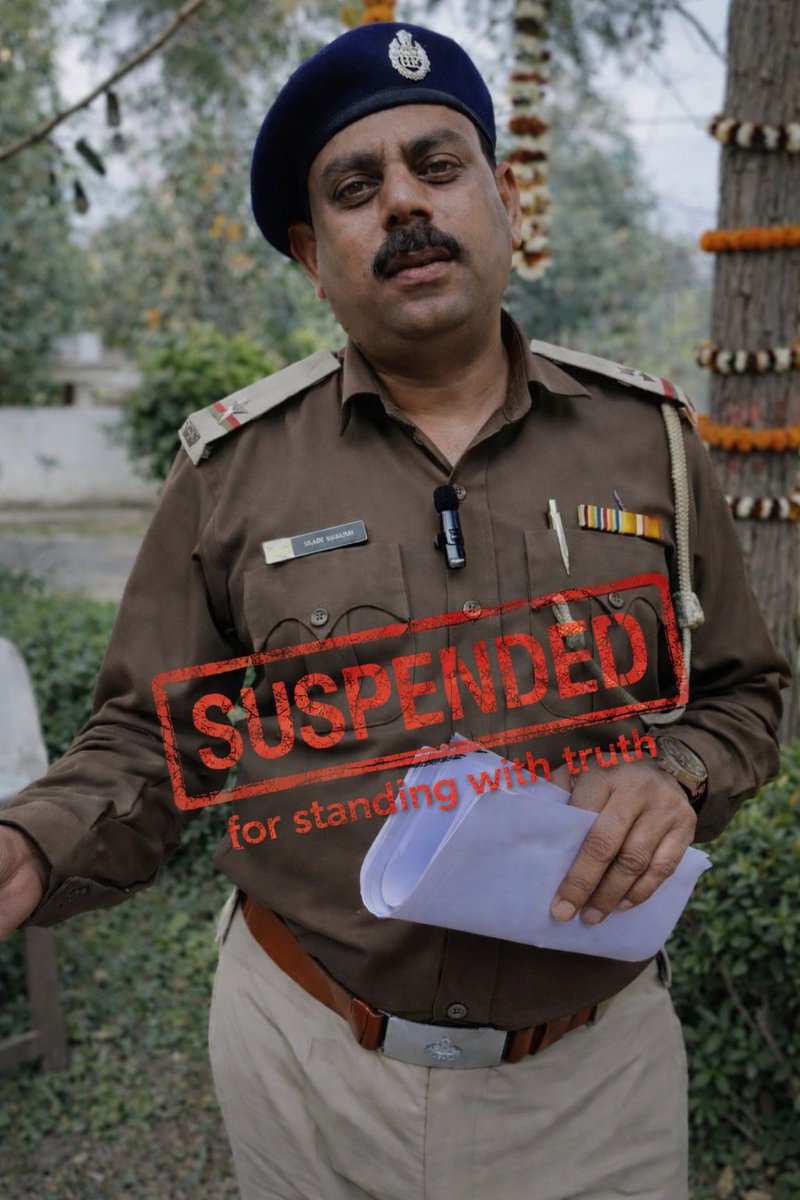
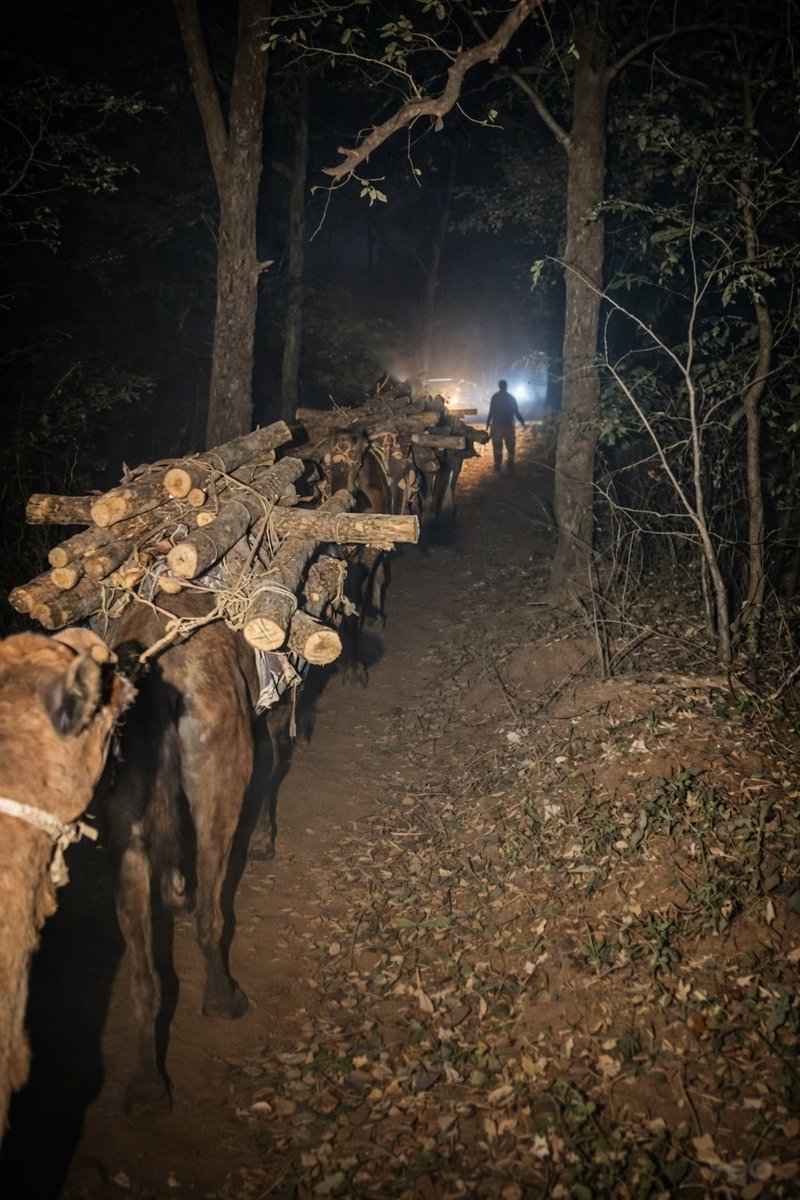
In Panchkula, near the Khair forest area, more than 10,000 trees were cut overnight using silent cutters. Khair wood is expensive, and the logs were transported on camels. To avoid suspicion, the remaining stumps were burned. This came to the notice of a forest guard named Vijay Kumar. He said his father was a gardener, and seeing trees being cut felt like losing a part of his own family. He raised a complaint with the forest minister. But instead of action, he was suspended. He is now sitting on a protest alone. All this is happening in Haryana, where forest cover is already very low, around 3.25 percent. So far, the issue has received very little media attention.
Oppressor tweet mediaOppressor tweet media
English
210
5.9K
13.2K
300.9K
Klotzen, nicht kleckern! Anil Kelkar retweetet
🚨Indian Gems
🚨Indian Gems@IndianGems_·
>Everyone was riding on the footpath. >Even there was young cop on the road. >Cop turned his bike and blocked footpath >He ordered them to go via road Civic Sense installed successfully 🤡
English
101
1.1K
10.5K
261.7K
Klotzen, nicht kleckern! Anil Kelkar retweetet
Naresh
Naresh@TopDriverIndia·
Most of the Driving problems in our country is because of lack of Driver Education most drivers don’t know that they should drive between the lane markings. They also don’t know the difference between broken line and solid line. They don’t understand lane discipline, usage of mirrors and indicator before changing lanes, etc etc. I propose the Rta should have a compulsory Online Driver Education course of at least 3 hours before issuing a license. According to @MORTHIndia 7 hours of theory is recommended. Let us at least start with 3 hours for now. #roadsafety
खुरपेंची ढांचे@Khurpenchinfra

True 🤡 🤡

English
44
57
445
32.6K
Klotzen, nicht kleckern! Anil Kelkar retweetet
Nachiket Deshpande
Nachiket Deshpande@nachiket1982·
Of these 9 million, just find out how many are OCIs, and how many arrive to get their root canal done for cheap, the numbers remaining will be even more dismal. Hell, even Indians with some money and awareness don't want to vacation in India. Everything u mentioned can be fixed, but India still won't become a preferred tourist destination. The biggest reasons for this - the great Indian civic sense, the pride Indians take in bending and breaking rules, the zubaan kesari gang who don't spare a square foot of public space. : You want tourists, fix the Indians' mindset first.
Harsh Goenka@hvgoenka

India at #12 with just 9M tourists despite unmatched culture, history and diversity- this chart says it all. To unlock our true tourism potential: - Shift from “places” to immersive experiences - Simplify visas & boost air connectivity - Fix infrastructure & last-mile access - Market India like a global brand - Make our country clean

English
4
3
25
948