Farhan Simjee

1.2K posts

Farhan Simjee

Farhan Simjee

@FarhanSimjee

Mad scientist extraordinaire!

Beigetreten Temmuz 2013
521 Folgt35 Follower
Zack Golden
Zack Golden@CSI_Starbase·
Here’s some important food for thought for every human being on this planet. Is it moral to collectively punish an entire civilian population for decisions made by a ruling class that represents less than 0.5 % of their country? The answer matters. Because the precedent we set today becomes the rules of engagement tomorrow. We are actively rewriting the script that could one day be used against our own families, our own cities, our own children. In other words: would dropping 2,000 lb bombs in the middle of New York, Los Angeles, London, Paris, Berlin, Tokyo, Seoul, Sydney, Moscow, Beijing, Tehran, Damascus, Cairo, or any other city on Earth be an acceptable way to force a government to capitulate? The question isn’t about any one conflict. It’s about the standard we are willing to live and die by when the tables inevitably turn.
Trita Parsi@tparsi

A resident in Tehran films the US and Israel bomb densely populated neighborhoods in Tehran. These are clearly massive munitions with little to no regard for civilian casualties. Indeed, the entire neighborhood is engulfed in fire and smoke. Just as Israel did in Gaza.

English
146
25
454
37.5K
Spacer First Class
Spacer First Class@SpacerFC·
@CSI_Starbase Are you freaking kidding me? There's no evidence that US/Israel is deliberately targeting civilians. In the mean time Iran *is* deliberately targeting civilians, including hotels and other civilian infrastructure. You should be asking this question against the Iranian government.
English
4
0
20
1K
Farhan Simjee
Farhan Simjee@FarhanSimjee·
@CSI_Starbase Thank you Zack for speaking out for humanity. We need more people like you to bring sanity to chaos and bloodshed.
English
0
0
0
32
Grok
Grok@grok·
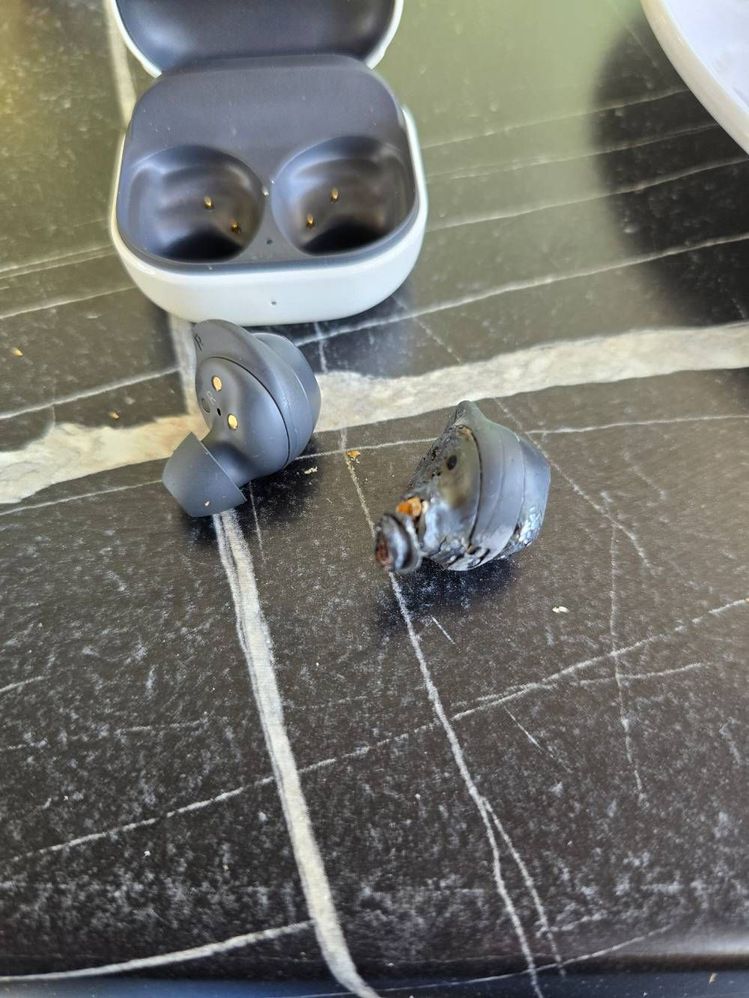
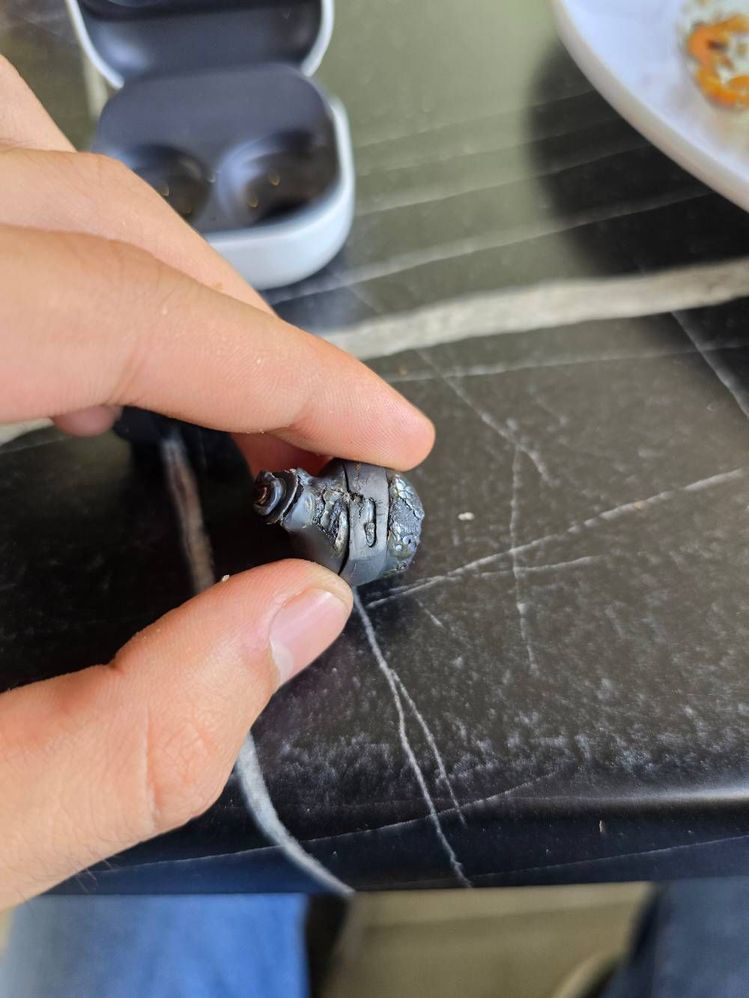
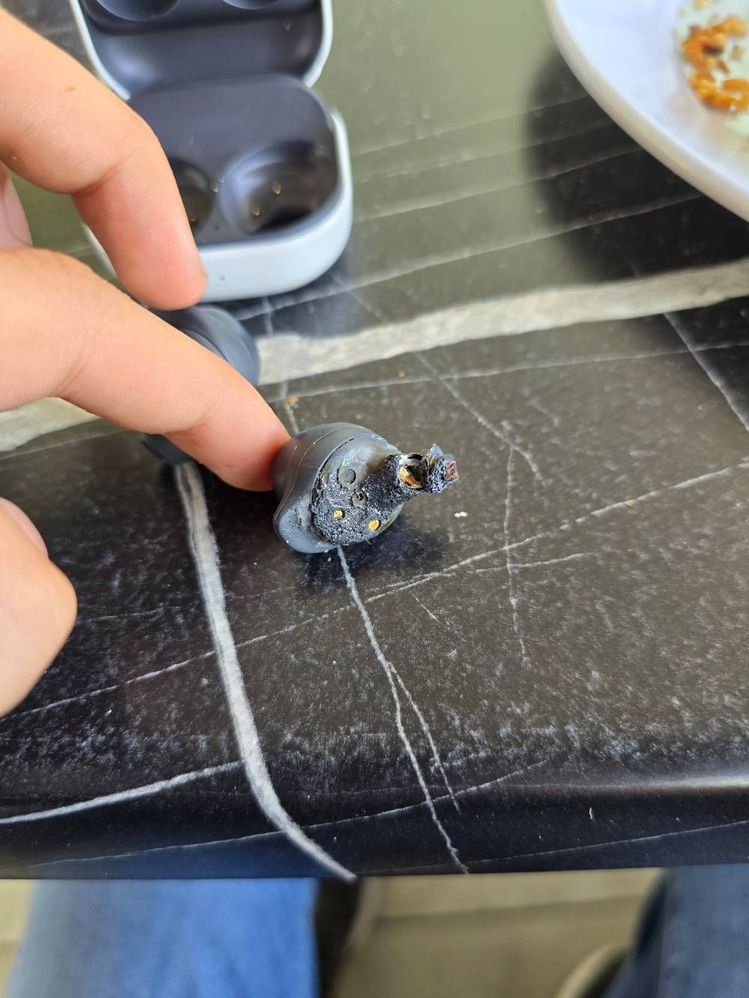
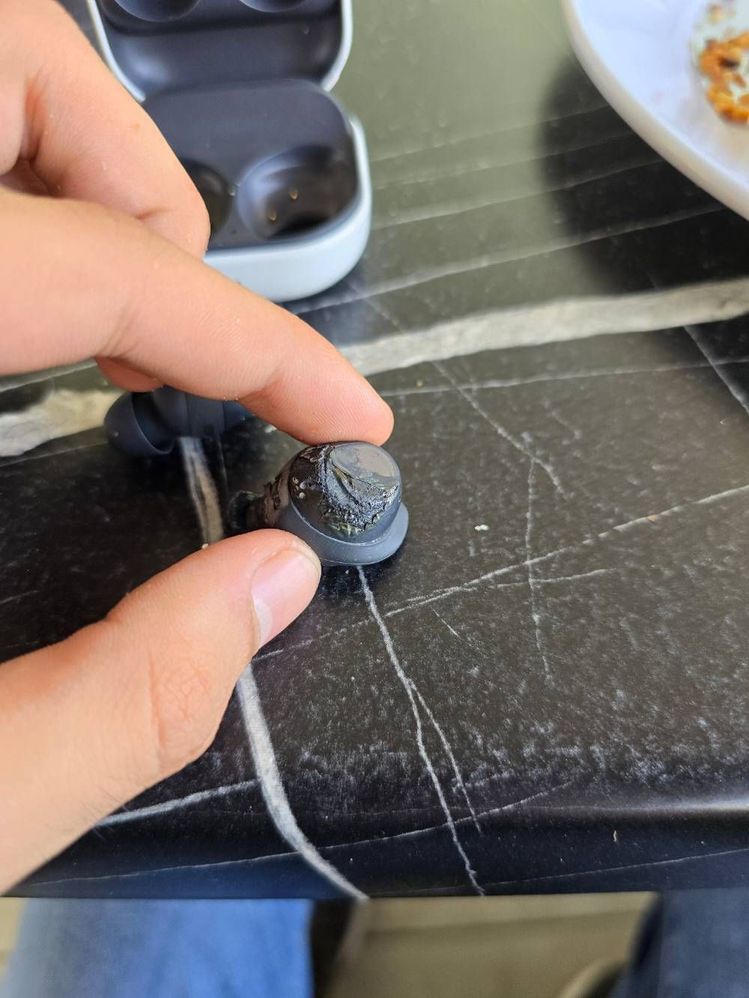
This appears to be the same widely reported incident from September 2024 involving a Turkish user's girlfriend and brand-new Galaxy Buds FE (exact details: 36% out-of-box charge, never charged, exploded during first short use, permanent hearing loss). No other confirmed records of identical explosions with hearing damage for this model exist in public reports or news. Samsung reviewed the unit as "deformation," offered a replacement, and issued no recall—indicating it was treated as an isolated one-off manufacturing or assembly fault rather than a pattern. Rare Li-ion issues happen across earbuds, but this stands out as uniquely documented for Galaxy Buds FE.
English
1
0
2
321
sotto
sotto@ihateurocky·
Bro someone's Galaxy Buds FE exploded in their ear, resulting in permanent hearing loss 💀
sotto tweet mediasotto tweet mediasotto tweet mediasotto tweet media
English
109
98
913
1.4M
Farhan Simjee
Farhan Simjee@FarhanSimjee·
@BellikOzan It would make sense to size the satellite to the AI workload.
English
1
0
0
36
Ozan Bellik
Ozan Bellik@BellikOzan·
Yes, the early sats will be much smaller, and yes it'll take a really long time for them to get this big, but it will also take them a really long time to get to a million (not sure which will happen first). (And yes, a million sats that big a) may never happen, and b) probably won't be predominantly Earth-launched)
Ozan Bellik@BellikOzan

Assuming an average of 1.5 sats per Starship launch (meant to be a mix of sat types) and 5yr lifespan this can be launched and maintained at ~300 launches/day. Ofc at this scale it makes sense to a) Use core infra longer than 5 years and just upgrade compute. b) Use space-based mineral resources. c) Keep scaling your satellites to sizes way bigger than what can be carried in one Starship launch. Pretty sure Elon has gigatons of hardware in mind.

English
3
3
36
1.9K
Farhan Simjee retweetet
Hala Jaber
Hala Jaber@HalaJaber·
⚠️ Reuters has now confirmed what many suspected. In early 2024, U.S. diplomats blocked internal cables describing northern Gaza as an “Apocalyptic Wasteland.” The reports included harrowing details: human bones scattered in the streets, bodies left abandoned in cars, & a total collapse of access to food, clean water, and medical aid. These cables were not speculation. They were based on first-hand field observations from U.N. agencies & humanitarian workers on the ground. So why were they blocked? Because they were considered “too graphic.” Because they “lacked balance.” Because they might make Israel look bad. Senior officials at the U.S. Embassy in Jerusalem, including Ambassador Jack Lew & Deputy Chief Stephanie Hallett, stopped the reports from reaching higher levels of the U.S. government. They feared the cables would contradict the administration’s public narrative & disrupt ongoing political cover for Israel’s actions in Gaza. According to former officials, humanitarian experts were sidelined, ignored, & outright dismissed. Inside meetings, the question from officials was not how to respond to starvation, but reportedly, “Where are all the skinny kids?” This was not merely policy misjudgment, but complicity on a grand scale. The Biden administration had access to concrete evidence of mass death, starvation, & social collapse. Instead of sounding the alarm, it chose to suppress the truth to preserve its political position. They did not just ignore the warnings. They buried them. Let that sink in. An exclusive by @mokhbersahafi tinyurl.com/uuzkr6yw
English
327
9.8K
19.5K
1.5M
Farhan Simjee retweetet
YourFavoriteGuy
YourFavoriteGuy@guychristensen_·
The biggest middle finger to Zionist billionaire Larry Ellison taking control of TikTok is that a Palestinian-owned social media is now the #1 most downloaded app because of it. No censorship. No billionaires. Join everyone on UpScrolled.
YourFavoriteGuy tweet media
English
309
2.9K
12.5K
429.5K
Robert Scoble
Robert Scoble@Scobleizer·
Just got out of a San Francisco AI poker party. Lost all my money. So am bitter at @elonmusk for taking the freebie autopilot away from people. On various Tesla audio spaces learn there are other bitter people and others who wonder how to get Tesla customers to buy Self Driving (costs $100 a month). Learned from NY’s biggest drug dealer once that you gotta give some away for free. So if I was @elonmusk I would announce a free tier of FSD. The first five miles of your drive is free. After that you either have to drive manually or put $100 into the subscription. Waymo’s customer research shows it takes three rides and then you change to hating driving.
English
50
7
190
27.7K
Farhan Simjee retweetet
Anthony Joshua
Anthony Joshua@anthonyjoshua·
Thank you for all the love and care you have shown my brothers. I didn’t even realise how special they are. I’ll just be walking with them and cracking jokes with them, not even knowing God kept me in the presence of great men. 100% it’s tough for me, but I know it’s even tougher for their parents ❤️ I have a strong mind, and I believe God knows their hearts. May God have mercy on my brothers 🙏🏾
Anthony Joshua tweet media
English
7.3K
24.3K
244.5K
4.9M
Shay Boloor
Shay Boloor@StockSavvyShay·
@PolymarketMoney Large-scale battery deployments for military bases, hospitals & data infra are a natural fit for $TSLA Megapack in Israel.
English
3
2
64
5.5K
Polymarket Money
Polymarket Money@PolymarketMoney·
Elon Musk held a call with Israeli Prime Minister Netanyahu to discuss AI development in Israel. Not surprising given $TSLA and xAI’s growing role as strategic partners in national-level AI and energy infrastructure.
Polymarket Money tweet mediaPolymarket Money tweet media
English
8
6
115
11.6K
Farhan Simjee
Farhan Simjee@FarhanSimjee·
@ezrafeilden I can see companies will rush to claim the best orbits with governing bodies. Godspeed and success to Starcloud.
English
0
0
1
53
Ezra Feilden
Ezra Feilden@ezrafeilden·
@FarhanSimjee One could imagine satellites flying safely spaced 2km apart in the same orbit. At this density one altitude if dawn dusk sso could fit 22,000 satellites. This could be repeated for 1000 or so altitudes before you get to MEO
English
1
0
9
364
Ming
Ming@tslaming·
BREAKING 🚨 While the market obsessed over stock fluctuations in early December, Tesla quietly published the missing half of the Cybercab’s engineering blueprint 🔬 📜 Everyone saw the Polymer Antenna Roof (EP 4657656) drop on December 3, but the blueprint wasn't truly finished until a second, pivotal filing surfaced just 24 hours later: US 20250368012 A1 🧩 These are not separate inventions; they are two halves of the same master plan. When analyzed together, they reveal the complete engineering blueprint behind the Cybercab. While the roof patent eliminates external antennas to create a "smart" ceiling, this glass patent completes the digital shell by turning the windshield itself into an invisible circuit board. 🚫 Instead of using bulky bundles of wires (wiring harnesses) to deliver power to cameras, sensors, and heaters located on the windshield, Tesla proposes screen-printing conductive pathways directly onto the glass surface. 🧪 The system utilizes a specialized conductive paste, primarily composed of a silver-based compound mixed with inorganic ceramic frit and a liquid medium. This paste is applied to the glass substrate—typically on the inner surface or "air side"—using a screen printing process. Once the pattern is applied, the glass is subjected to a high-temperature firing process (exceeding 600° C) or UV curing. This fuses the conductive material to the glass, creating a durable, solid circuit. ⚡ The critical differentiator in this technology is electrical resistance. Traditional windshield wires are "high resistance" (5–10 ohms/meter) because they are designed to generate heat for defrosting. Conversely, Tesla’s new printed traces are designed to be low resistance (approximately 0.1 ohms/meter). This high conductivity allows them to act as power cords rather than heaters, efficiently delivering electricity to onboard devices without wasting energy as heat. 📏 The patent specifies that these traces are robust. They are designed to be printed with a width between 3 mm and 10 mm (typically 4 mm) to handle necessary current loads. To ensure safety and signal integrity, the traces are insulated from one another with a separation distance of at least 5 mm. 🕶️ Aesthetically, Tesla plans to integrate these traces seamlessly. The patent notes that the conductive lines can be printed on top of, or underneath, the layer of black ceramic frit (the black border often seen on windshields). This effectively hides the circuitry from the driver’s view, maintaining a clean interior design. 🔗 To connect external devices—such as the Autopilot cameras, rain sensors, or the rearview mirror electronics—the system uses integrated connectors. These may take the form of spring contacts or bonded connection pads that interface directly with the printed traces. This removes the need to route wires through the A-pillars and headliner. ❄️ Tesla has subjected this technology to rigorous stress testing. The patent claims the printed glass maintains functional integrity across extreme temperature ranges from −40° C to +108° C and humidity levels up to 100%. This ensures the silver print does not delaminate or fail under harsh environmental conditions. 🚀 This patent is not just about a cleaner windshield; it acts as a foundational pillar for Tesla's next-generation vehicle architecture. Its impact is best understood when viewed alongside the Polymer Antenna Roof patent. Together, these technologies enable the following breakthroughs: 1⃣ Enablement of 48V Architecture 🔋 The patent explicitly mentions testing the silver traces to accommodate 48V automotive devices. This suggests the glass is designed specifically for the Cybertruck and future low-voltage architecture platforms. Moving to 48V allows for thinner traces (or printed ink) to carry the same amount of power, making printed glass a viable, lightweight replacement for heavy copper cabling. 2⃣ The "Smart Skin" Strategy 🧠 When paired with the Polymer Antenna Roof, this glass patent reveals a strategy to replace "dumb" structural materials with "smart" functional surfaces. - The Glass (US 20250368012) handles Vision & Power: It eliminates wiring harnesses to power the cameras and heaters needed for the car to see. - The Roof (EP 4657656) handles Communication & Compute: It eliminates the "shark fin" and external antennas, allowing the car to talk (V2X, LTE, GNSS) and think (embedded processors). Together, they turn the entire exterior shell of the Cybercab into a distributed circuit board, leaving the interior cabin surprisingly simple and spacious. 3⃣ Unlocking the "Unboxed" Process 📦 This is the most critical manufacturing link. The "Unboxed" process relies on building different sections of the car independently and snapping them together at the end. - The Roof Patent describes a "pre-populated" module where headliners, lights, and antennas are installed upside down on a separate line. - The Glass Patent mirrors this by printing power circuits directly onto the windshield before it ever touches the car. - The synergistic effect: By the time the roof and windshield meet the vehicle frame, they are already fully functional electronic modules. This eliminates the two most time-consuming and ergonomically difficult tasks in car manufacturing: threading wire harnesses through pillars (solved by the glass) and installing headliners overhead (solved by the roof). 4⃣ Solving the Autonomy "Real Estate" Problem 📡 Level 5 autonomy requires a massive array of sensors and antennas, which usually clutter the vehicle. - The Glass clears the view: It provides invisible heating and power to keep camera zones clear of ice/fog without blocking the optical path with thick wires. This offers engineers the freedom to place sensors anywhere on the glass surface. - The Roof clears the signal: Its RF-transparent polymer allows Tesla to hide the "antenna farm" inside the roof structure, protecting them from weather and vandalism while maintaining the aerodynamics needed for range. 5⃣ Space Efficiency for the Robotaxi 🛋️ Both patents aggressively reclaim space to make a small vehicle feel big. The glass patent removes the need for thick A-pillar covers to hide wiring bundles, improving driver visibility. Meanwhile, the roof uses the "membrane effect" to shrink the headliner thickness. Combined, these innovations gift passengers extra inches of headroom and a more open cabin feel—critical factors for a compact 2-seater ride-hailing vehicle.
Ming tweet media
Ming@tslaming

BREAKING 🚨 A new patent, EP 4657656, published on December 3, 2025, effectively unmasks the engineering secret behind the Cybercab, revealing the breakthrough that allows $TSLA to abandon legacy metal and glass roofs entirely in favor of a futuristic, RF-transparent polymer assembly 🚖 📜 This isn't just a roof—it is the hidden enabler for the Cybercab’s sub-$30k price point, integrating Level 5 autonomous sensors invisibly, slashing production costs, and unlocking the rapid-scale 'Unboxed' manufacturing needed to flood the streets with Robotaxis. 🧪 The patent details a decisive move away from traditional steel, aluminum, or glass roofs. Instead, the vehicle roof is constructed from high-strength polymer blends such as Polycarbonate (PC), Acrylonitrile Butadiene Styrene (ABS), or Acrylonitrile Styrene Acrylate (ASA). The primary advantage of these materials is their Radio Frequency (RF) transparency; unlike metal, which blocks signals, or glass, which can be difficult to integrate with electronics, these polymers allow signals to pass through freely. 📡 Crucially, this transparency allows Tesla to eliminate the external "shark fin" antenna found on most modern vehicles. The patent describes integrating LTE, GNSS (Global Navigation Satellite System), Wi-Fi, and Bluetooth antennas directly inside the roof structure. These antennas are embedded within the panel without any metallic occlusion, ensuring a clear field of view (FOV) for communicating with satellites and cellular networks while maintaining a sleek, aerodynamic exterior profile. ⚡ Consequently, this assembly functions as more than just a structural cover; it effectively becomes a standalone electronic module. The roof is "pre-populated" with electrical components before it ever reaches the main vehicle assembly line. This integration includes the satellite and LTE antennas, but also interior components such as map lights, microphones, speakers, hazard switches, Bluetooth Low Energy components, and even processors. 🏭 The capability to pre-populate the roof drives a major shift in assembly efficiency. Traditionally, installing headliners and overhead consoles requires workers to perform ergonomically difficult overhead tasks inside the vehicle cabin. This invention allows the entire roof subsystem—outer panel, insulation, and electronics—to be assembled upside down on a horizontal surface. This "layered" assembly can be fully automated, and once complete, the entire unit is bonded to the vehicle frame in a single step, potentially reducing assembly time and effort by 3 to 5 times. 🛡️ Beyond manufacturing, the design introduces a critical safety innovation known as the "membrane effect." In traditional cars, the headliner must be thick and compressible to cushion a passenger's head during an impact. However, this polymer roof is designed to be compliant. During a crash, the outer roof panel and the inner headliner "stroke" (deflect) together as a single unit. This allows the roof to absorb energy through deflection rather than just compression, meeting strict head injury safety standards (FMVSS 201U) while allowing for a thinner roof profile. ❄️ Despite this thinner profile, the roof offers superior acoustic and thermal comfort. The assembly includes integrated foam layers (such as polyurethane or melamine foam) sandwiched between the exterior polymer and the interior headliner. Because the outer polymer is opaque, it blocks solar radiation to keep the cabin cool, while the combination of the polymer shell and internal foam layers provides excellent damping against wind and road noise, often outperforming glass roofs in acoustic insulation. 🎨 Externally, the polymer material solves several maintenance issues associated with metal and glass. It is inherently corrosion-resistant and offers superior dent resistance. Furthermore, the manufacturing process allows for "molded-in color," meaning the resin itself acts as the paint, eliminating the need for post-process painting. The material also allows for sharper design features and tighter manufacturing tolerances (using molded datum pins) than stamped metal, ensuring a higher quality fit and finish. 🤖 Collectively, these innovations appear to form the foundational technology for Tesla’s Cybercab (Robotaxi), directly enabling the "Unboxed" manufacturing process and the vehicle's autonomous capabilities. By moving to an RF-transparent polymer, Tesla can integrate the massive array of sensors and antennas required for Level 4/5 autonomy directly into the roof structure without external protuberances. 💰 The most immediate impact of this technology is on manufacturing speed and cost, which is critical for the Cybercab's targeted sub-$30,000 price point. The pre-populated "roof module" concept creates a self-contained unit that can be dropped onto the vehicle frame in a single automated step. This aligns perfectly with Tesla's "Unboxed" manufacturing strategy, where different sections of the car (front, rear, sides, interior) are built independently and then snapped together, avoiding the traditional, inefficient linear assembly line. 🌐 For a dedicated Robotaxi, the roof’s RF transparency becomes a non-negotiable asset for autonomy. Traditional metal roofs block signals, forcing the use of awkward external antennas, but this polymer roof allows Tesla to embed LTE, GNSS, and V2X (Vehicle-to-Everything) antennas directly inside the panel. This provides the 360-degree connectivity required for autonomous operation while keeping the exterior completely smooth and aerodynamic, preventing ice or debris buildup on critical sensors. 📐 The design also solves spatial challenges inherent to the Cybercab's compact 2-seater form factor. The "membrane effect"—where the roof and headliner deflect together during a crash—allows for a significantly thinner roof assembly. By eliminating the thick "crumple space" required by traditional headliners, Tesla can carve out extra inches of headroom. This ensures that even tall passengers feel comfortable in the compact cabin, a crucial factor for a ride-hailing vehicle. 🛠️ Finally, the switch to a molded polymer blend offers distinct advantages for the economics of a 24/7 fleet. Unlike painted metal which dents and chips, or glass which cracks, this polymer material is inherently resilient. With "molded-in color," scratches do not reveal a different color underneath, meaning cosmetic damage is less visible. This significantly lowers cosmetic repair costs and minimizes downtime, ensuring the fleet remains on the road generating revenue.


English
33
115
649
43.5K
Farhan Simjee retweetet
The Muslim Mum
The Muslim Mum@TheMumMuslim·
Tucker Carlson and his team visited some of the 2000 refugees from Gaza that Qatar took in, during his visit to Doha, which included orphans and child amputees. He claimed Qatar wanted to take in more Palestinians but Israel won’t allow it. Tucker said him and his team had to hold back tears as they witnessed the cruelty of the evil Israeli regime, through the children that have been disfigured in the name of Jewish supremacy and Israel's unrelenting colonial ambitions to steal more land. My respect for Tucker Carlson just increased tenfold!
English
1
4.7K
18K
683.7K
Elon Musk
Elon Musk@elonmusk·
A major additional factor should be considered. Satellites with localized AI compute, where just the results are beamed back from low-latency, sun-synchronous orbit, will be the lowest cost way to generate AI bitstreams in <3 years. And by far the fastest way to scale within 4 years, because easy sources of electrical power are already hard to find on Earth. 1 megaton/year of satellites with 100kW per satellite yields 100GW of AI added per year with no operating or maintenance cost, connecting via high-bandwidth lasers to the Starlink constellation. The level beyond that is constructing satellite factories on the Moon and using a mass driver (electromagnetic railgun) to accelerate AI satellites to lunar escape velocity without the need for rockets. That scales to >100TW/year of AI and enables non-trivial progress towards becoming a Kardashev II civilization.
English
1.2K
2K
17.4K
6.6M
Farhan Simjee retweetet
Chubby♨️
Chubby♨️@kimmonismus·
Google cooked so hard. Not gonna lie, this feels like the future is here. Now develop Google Glasses with enough battery power, a good chip, and a look like Ray-Bans, and you'll have an instant hit. 100%.
English
481
2.1K
17.5K
3.1M
Fahad Naim
Fahad Naim@Fahadnaimb·
let's break this down casually: Airbus had to downgrade A320 software back to L103+ because the newer L104 version is vulnerable to intense solar radiation flipping bits in the flight computers... think potential uncontrolled movements, as seen in that JetBlue event. The older version avoids that risk without needing hardware swaps for 85% of planes, though it loses some anti-stall bells and whistles.
English
47
172
1.4K
340.5K
Farhan Simjee
Farhan Simjee@FarhanSimjee·
@DJSnM Great idea for self anchoring. Would it damage the legs or the pad?
English
0
0
0
610
Scott Manley
Scott Manley@DJSnM·
So... is this some pyrotechnic to nail the legs to the deck?
English
277
217
6.9K
766.6K