

@TraderZ @traderstewie At what time do you buy on $AAOI? Often find it makes a massive move either way in the first minute of the day. Just curious when you pulled the trigger on this
English
FitzTrading
113 posts
@FitzCharts
Stock and options trader since 2016. Posting ideas for stocks for fun - not financial advice!


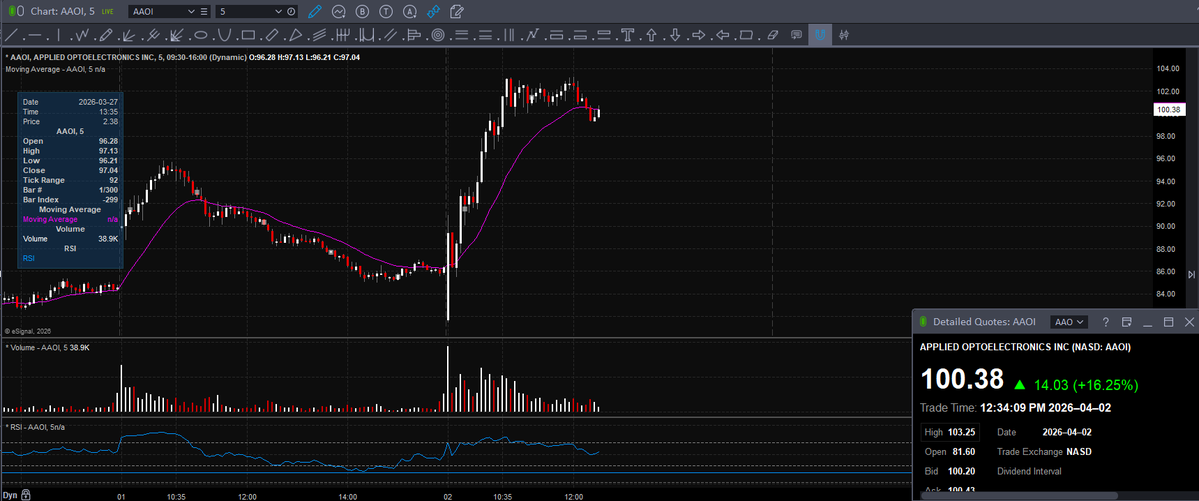
@AOTtrades Good morning Stewie and AoT! Focusing on $AAOI and $AXTI gap downs today, as well as $SOXL More weakness out of the open the better!

TRUMP: THEY ARE GOING TO MAKE A DEAL; THEY GAVE US A SIGNIFICANT PRIZE WORTH TREMENDOUS AMOUNT OF MONEY TRUMP ON HORMUZ: WE'LL HAVE CONTROL OF ANYTHING WE WANT



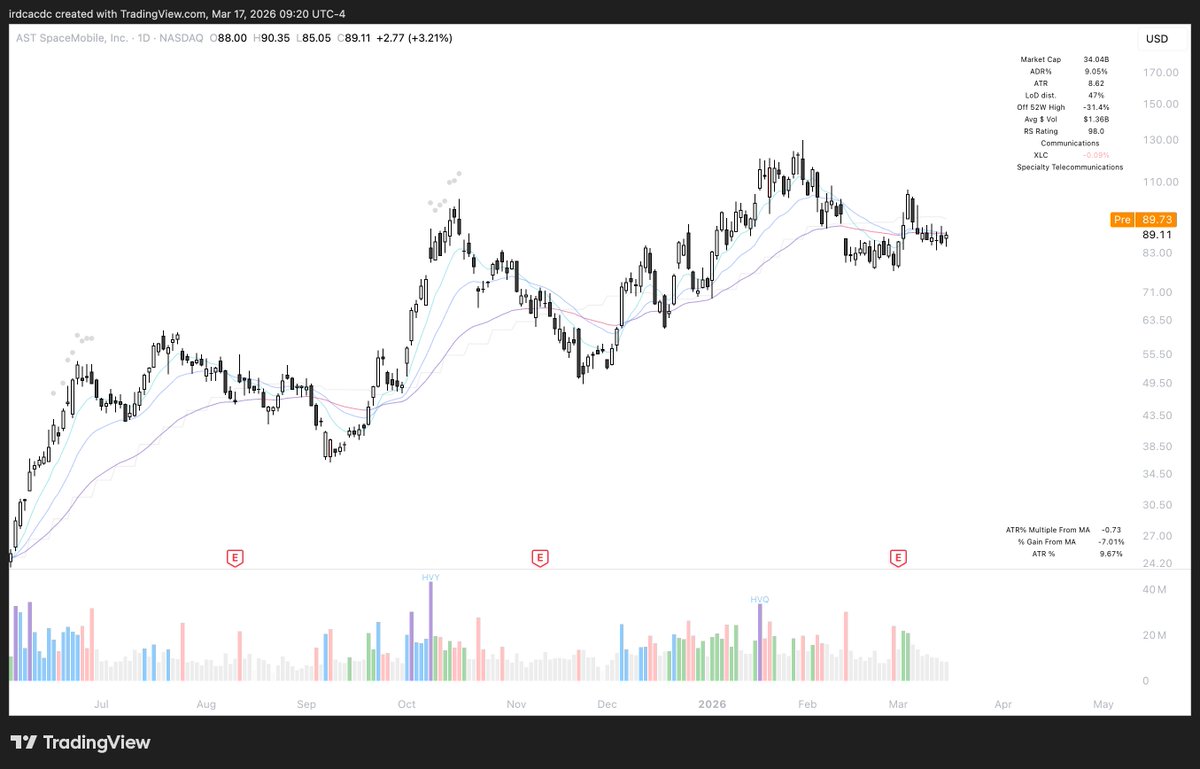

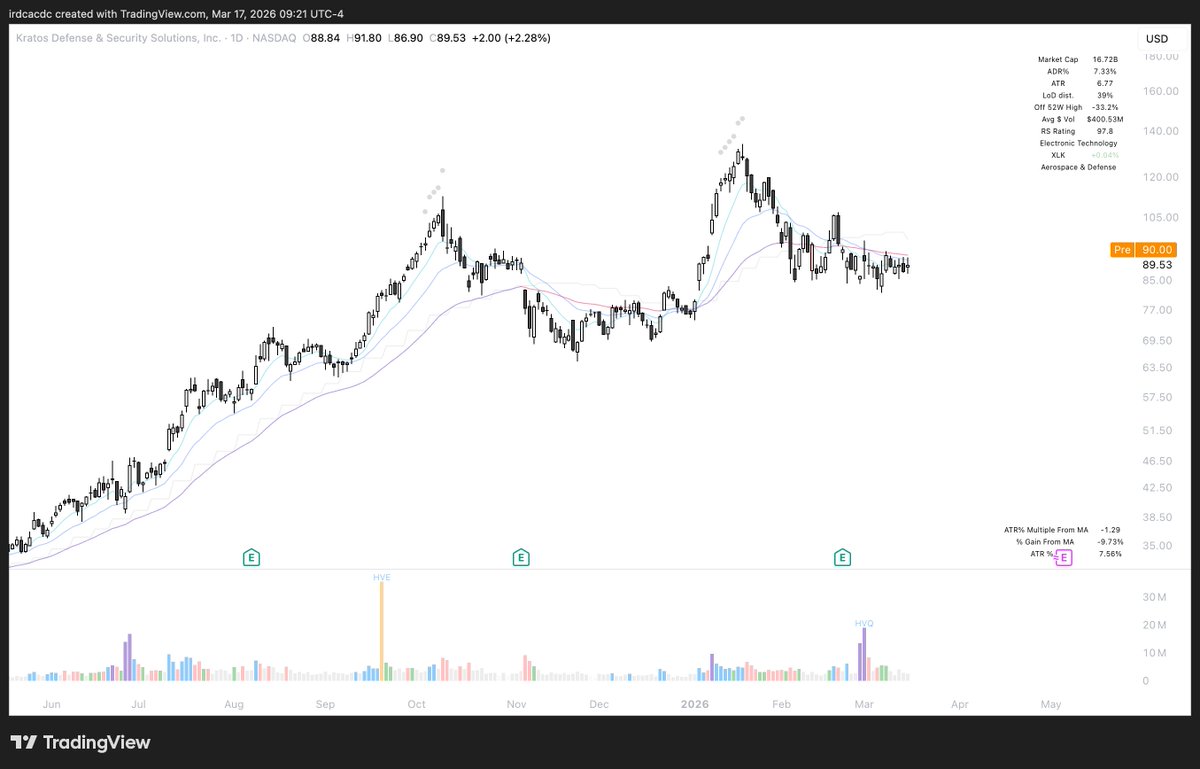
Compression leads to expansion. It sounds basic, but that concept is the backbone of my entire system. Markets move in cycles. Periods of tight price action build tension, and eventually that tension resolves into momentum. That’s exactly why $RKLB continues to stay on my watchlist. Yesterday the stock reclaimed and closed back above the 9/21 EMA into the close, which is a small detail most people probably ignore. But for me, those little signals matter. When a stock is compressing and begins reclaiming short-term moving averages, it often tells me buyers are quietly stepping back in. Now zoom out to the weekly chart. You’ll notice how tight this entire structure has become. The range keeps narrowing, volatility keeps contracting, and price continues to hold above key levels. And historically, $RKLB tends to make its biggest moves after these types of compression phases. Will it happen again this time? Of course, nobody knows. Trading isn’t about certainty. It’s about recognizing when a stock is setting up in the same way it has before and positioning yourself where the risk is small relative to the potential expansion. That’s the beauty of these setups. The tighter a stock gets, the clearer the risk becomes! And right now, it’s hard to ask for much more tightness than what $RKLB is showing on the weekly chart. To me, that’s the definition of a stock that should stay on watch. Because when compression lasts this long, the eventual move (in either direction) usually isn’t small. And it’s starting to feel like we’re getting close to that moment.




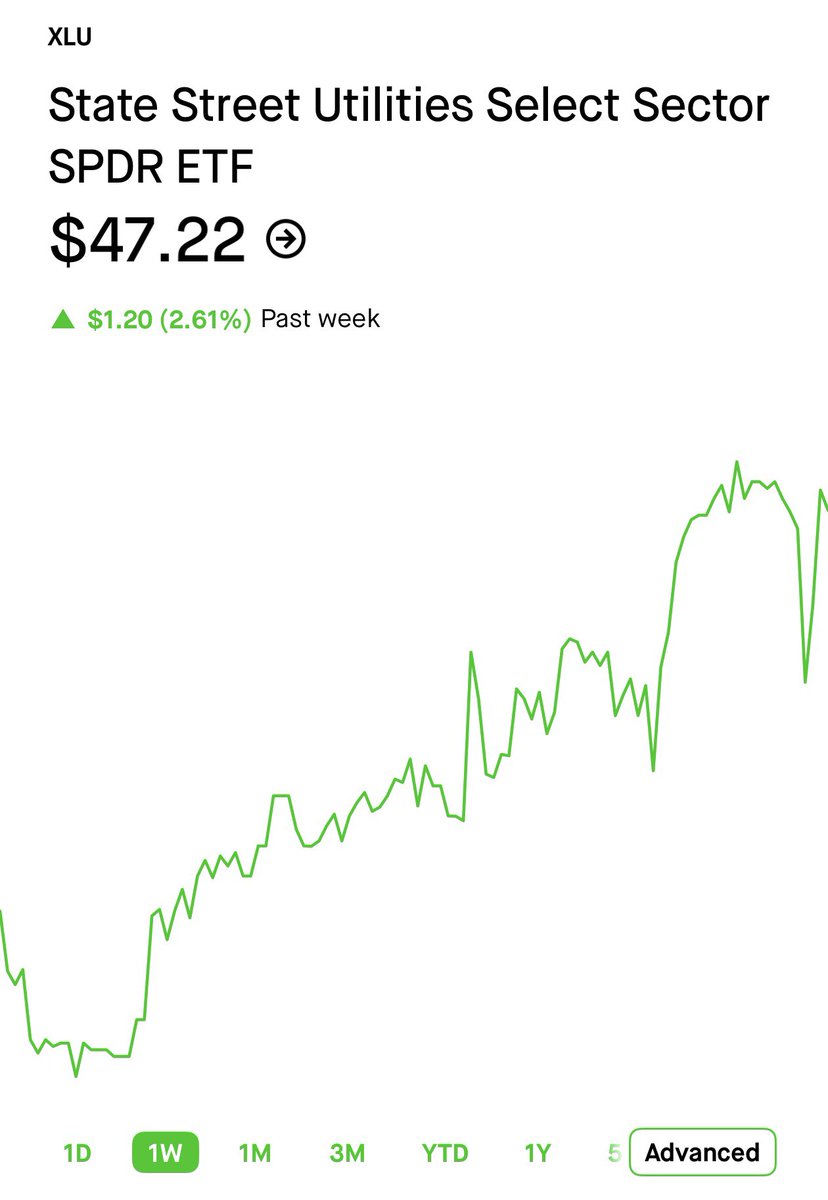
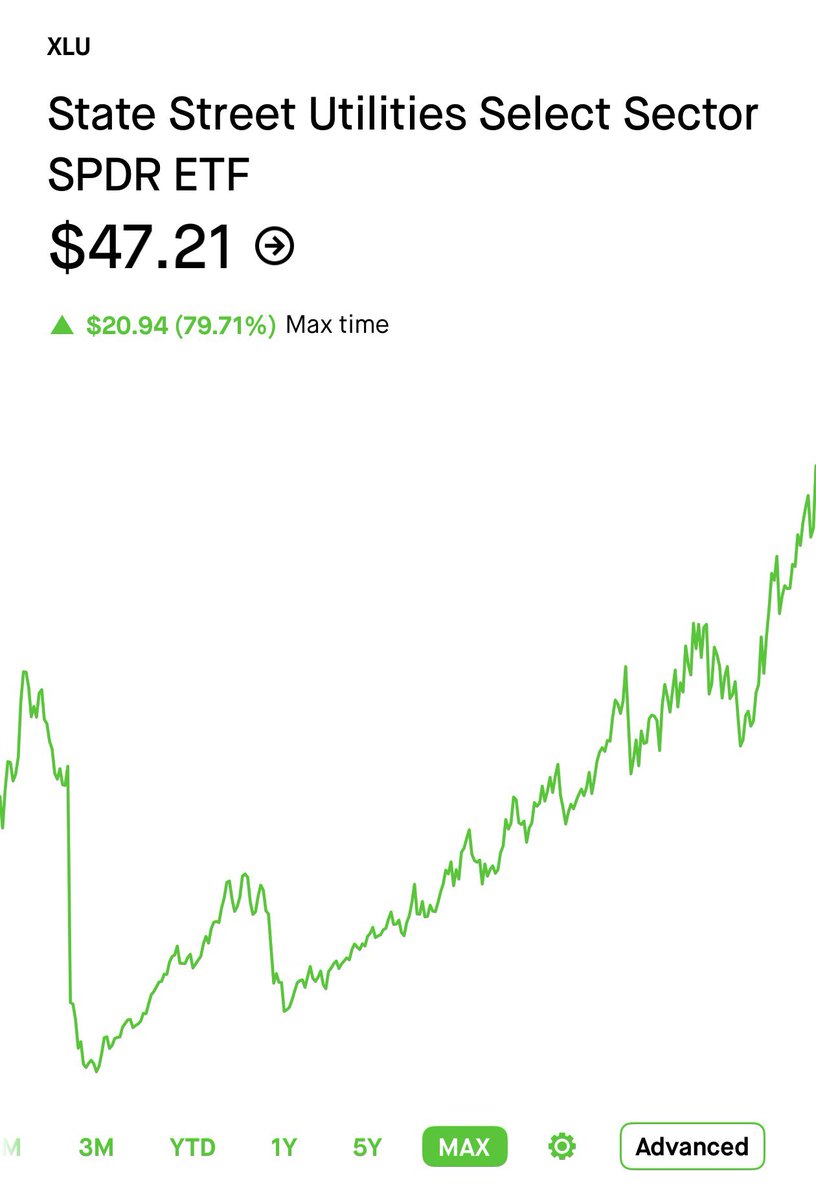
If I had to turn $100k -> $1M in 1 year. It would be: $XLU OTM 2 year leaps 2026 is the first time in modern history markets have: - falling interest rates - AI inference + buildout There's a potential ~40% for XLU (1000%+ OTM), from mapping. Here's my macro thesis: 1. Rate Cuts When the Fed cuts rates without a recession, utility debt becomes cheaper, and institutional rotates low-yielding cash to for utility dividends. This causes immediate valuation multiple expansion: 1995: The S&P Utilities sector returned +31.3% in 1995 and another +12.1% in 1996 - ~47% cumulative return 2019 Mid-Cycle Cut: Result: XLU generated a +25.9% total return in that single year Standard soft-landing rate-cut cycle naturally maps to a 25% to 30% baseline return. And we're entering a new rate cut cycle in 2026. 2. The Infrastructure Supercycle Capex Infra CapEx gives the sector compounding earnings growth. Following the early 2000s, utilities entered a massive CapEx cycle to modernize aging grid infrastructure. Because they were constantly spending and expanding their guaranteed rate base, XLU returned +23.5% in 2004, +16.3% in 2005, +20.8% in 2006, and +18.4% in 2007. However this time: The $800B+ AI buildout of 2026 makes the 2004 grid modernization look like pennies. So you have Valuation Multiple Expansion (+15% to +20%), from rate cuts from #1. EPS growth (+18% to +20%) from #2 from capex spend historically. Just from a history lesson. But 2026 is the most unique moment in history from AI usage. Just from my own model projections as all former estimates are likely wrong from extreme AI ramp (eg. DOE/LBNL projections): Hyperscaler CapEx Inflows (Spend) - (Amazon, Microsoft, Meta, Google, Oracle) into DCs est: 2024: $220 Billion 2025: $350 Billion 2026: $550 Billion 2027: $800 Billion 2028: $1.2 Trillion (Growth: +445% over 4 years) U.S. Data Center Power Usage: 2024: 190 TWh 2025: 280 TWh 2026: 430 TWh 2027: 650 TWh 2028: 980 TWh (Growth: +415% over 4 years) % of Total U.S. Electricity Consumed by AI: 2024: 4.5% of the U.S. grid 2025: 6.6% 2026: 8.2-10.2% 2027: 13.4-15.4% 2028: 21.3-23.3% Lawrence Berkeley National Laboratory and the Department of Energy seem off by AI usage (they're projecting ~12% by 2028) Physical Grid Capacity Demand: 2024: 18 GW 2025: 35 GW 2026: 65 GW 2027: 105 GW 2028: 160 GW Basically you can just see 2026 into 2028 being the inflection point whereas 2024-2025 where slower years on the ramp up. Then there's the "Desperation Premium" for independent companies. Because grid capacity is sold out, tech giants are paying massive premiums to utilities to cut the line. eg. PJM Interconnection (Virginia "Data Center Alley"), capacity prices spiked from $28.92 per MW-day in 2024 to an unfathomable $329.17 per MW-day for 2026/2027. $VST or Constellation are a large weighting in the ETF as independent power producers. Across the board, you can see the extreme ramp from 2026 (now) into 2028 compared to previous years, alongside extreme capex going into building the infrastructure. 2026 is the first time in modern market history that every single thing is firing at the same time for the boring grid/power sector with AI as the biggest tailwind. And as Elon quotes it: "Billions of dollars of the most advanced hardware. Sitting dark. Not because the chips won't work. Because there's not enough electricity to run on them". Again 2026 is an absolute historical anomaly due to AI and MMs have priced in historical IV (extremely flat ~14%-16%) for OTM calls. We're seeing an explosion in AI inference (beyond previous measurements) as well as training (per OpenAI report today). So the most boring sector on earth (power/grid), might just be the start of a major rally due to hyperscaler/gov spend into grid improvements -> extreme power consumption from AI inference/training -> rate cuts and others. This is just my personal thesis, options come with risk and magnifies downside too. These are also my own projections, no certainty if they will exceed or be lower than them. But basically: 2026 is an absolute historical anomaly. New bottleneck in the US is power. There's extreme demand from AI, extreme capex, rate cuts: $XLU looks like the best trade for exposure. Time will tell if this is right or not.
