Jill Seidner | Interior Design

23.7K posts

Jill Seidner | Interior Design banner
Jill Seidner | Interior Design

Jill Seidner | Interior Design

@JSInteriorDes

Interior Designer | Online Design | Top 100 Influencer 2017-2025 | Your Design Guide + Apartment Design Guide: https://t.co/qlNhRJl14O

Los Angeles Beigetreten Nisan 2010
500 Folgt17.1K Follower
Jill Seidner | Interior Design
New Apartment Checklist Before you start buying, start here. A simple checklist keeps everything clear: • Measure your space • Plan your layout • Identify your must-have pieces • Start with the foundation (sofa, bed, table) • Add lighting, rugs, and storage • Finish with art and accessories Most people skip the first two steps — and that’s where things go wrong. When you plan first, your apartment feels cohesive from day one. If you want a full room-by-room checklist with planning pages, my Apartment Setup Guide + Workbook walks you through it step-by-step: jsinteriordesign.gumroad.com/l/fformna — Jill
Jill Seidner | Interior Design tweet media
English
0
0
1
18
Jill Seidner | Interior Design
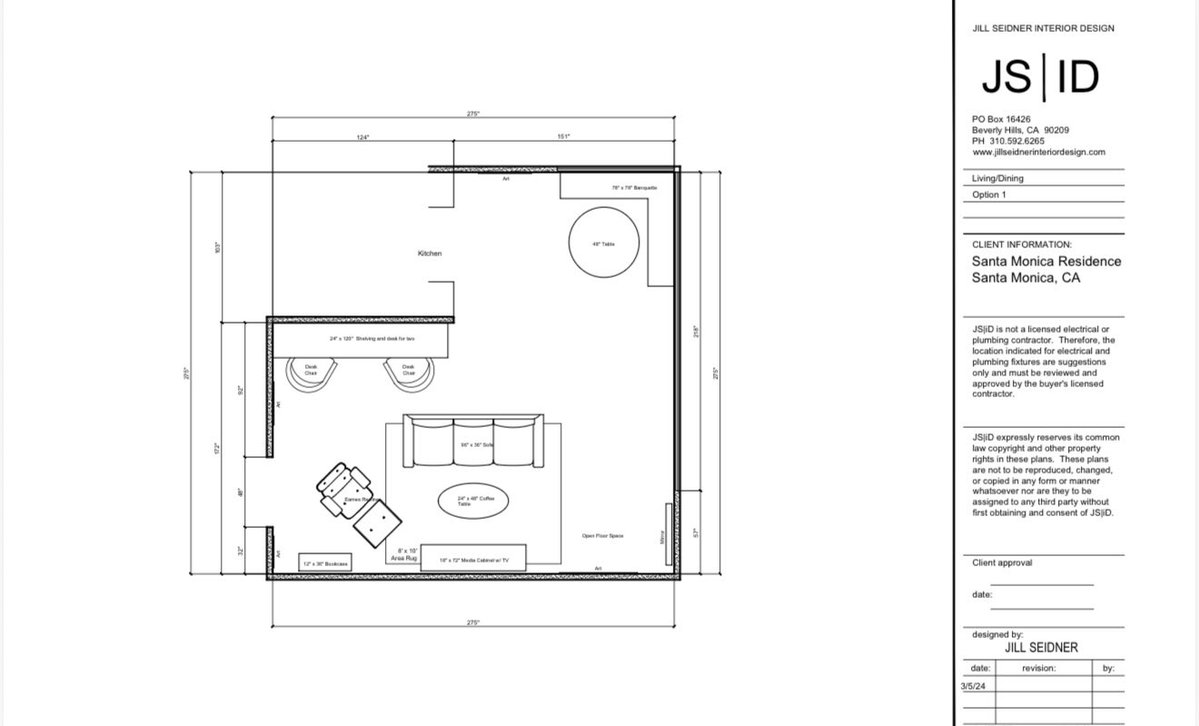
How to Add a Workspace to Your Living Room Most apartments don’t have a dedicated office. So the workspace ends up… wherever it fits. The key is making it feel intentional — not like an afterthought. Here’s what works: • Create a defined zone Even a small desk along a wall or behind a sofa works when it has its own space. • Align it with the layout Don’t fight the room. Let the desk follow existing lines — walls, shelving, or transitions. • Keep it visually quiet Simple chair, minimal accessories, controlled cords. • Use dual-purpose pieces A console, floating shelf, or built-in can double as a desk. • Maintain flow Leave enough space around it so the living area still feels open. When done right, the workspace blends into the room — but still functions. If you’re setting up a small apartment, I created a full Apartment Setup Guide + Workbook that walks through layout, zoning, and furniture planning room-by-room. You can find it here: jsinteriordesign.gumroad.com/l/fformna — Jill
Jill Seidner | Interior Design tweet media
English
0
0
2
36
Jill Seidner | Interior Design
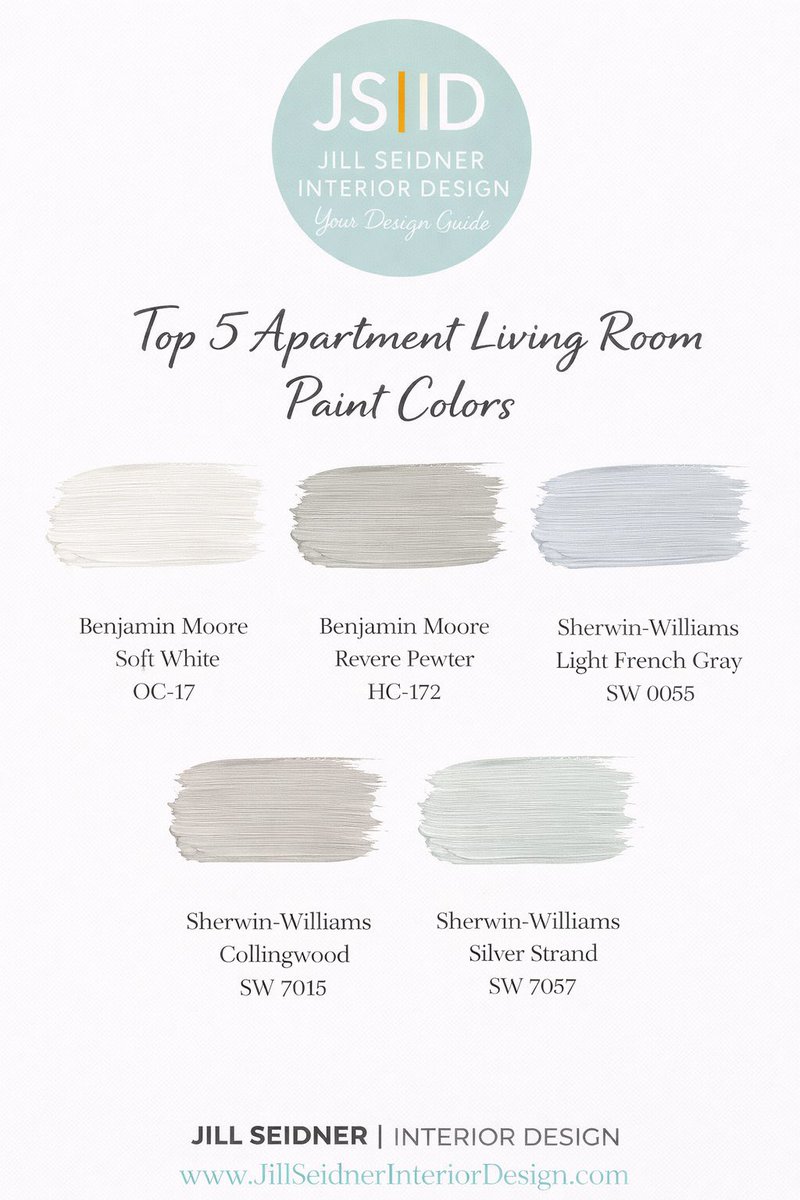
The Easiest Way to Choose a Living Room Paint Color The goal isn’t to find the perfect color — it’s to choose one that works with everything else in the room. A few simple guidelines: • Start with a soft neutral (warm white, greige, light gray). • Look at your flooring and furniture first — not the paint fan. • Test samples on multiple walls (light changes everything). • Avoid going too dark in smaller apartments unless you’re intentional. • Keep it cohesive with the rest of your space. Colors like Soft White, Revere Pewter, or Light French Gray work because they’re flexible — they adapt as your furniture and style evolve. If you’re setting up a new apartment, I created a full Apartment Setup Guide + Workbook that walks you through paint, layout, furniture, and room-by-room planning. You can find it here: jsinteriordesign.gumroad.com/l/fformna — Jill
Jill Seidner | Interior Design tweet media
English
0
0
0
42
Jill Seidner | Interior Design
Jill Seidner | Interior Design@JSInteriorDes·
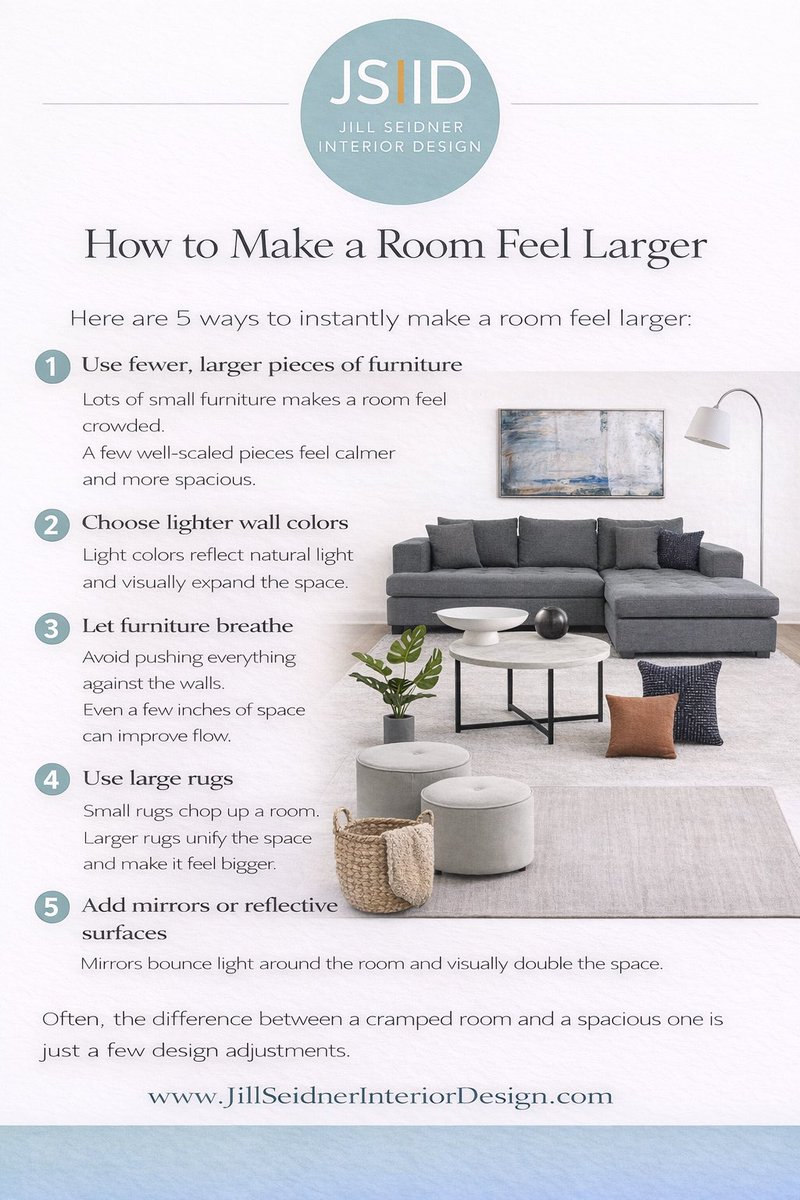
How to Make a Room Feel Larger Most rooms don’t feel small because of square footage — they feel small because of layout choices. Here are 5 simple ways to instantly make a room feel larger: • Use fewer, larger pieces of furniture Lots of small pieces create visual clutter. A few well-scaled pieces feel calmer and more spacious. • Choose lighter wall colors Light colors reflect natural light and visually expand the room. • Let furniture breathe Avoid pushing everything against the walls. Even a few inches of space improves flow. • Use larger rugs Small rugs break up the space. Larger rugs unify the room and make it feel bigger. • Add mirrors or reflective surfaces Mirrors bounce light around the room and visually double the space. Often the difference between a cramped room and a spacious one is just a few design adjustments. jillseidnerinteriordesign.com/blog/interior-…
Jill Seidner | Interior Design tweet media
English
0
1
1
38
Jill Seidner | Interior Design
Jill Seidner | Interior Design@JSInteriorDes·
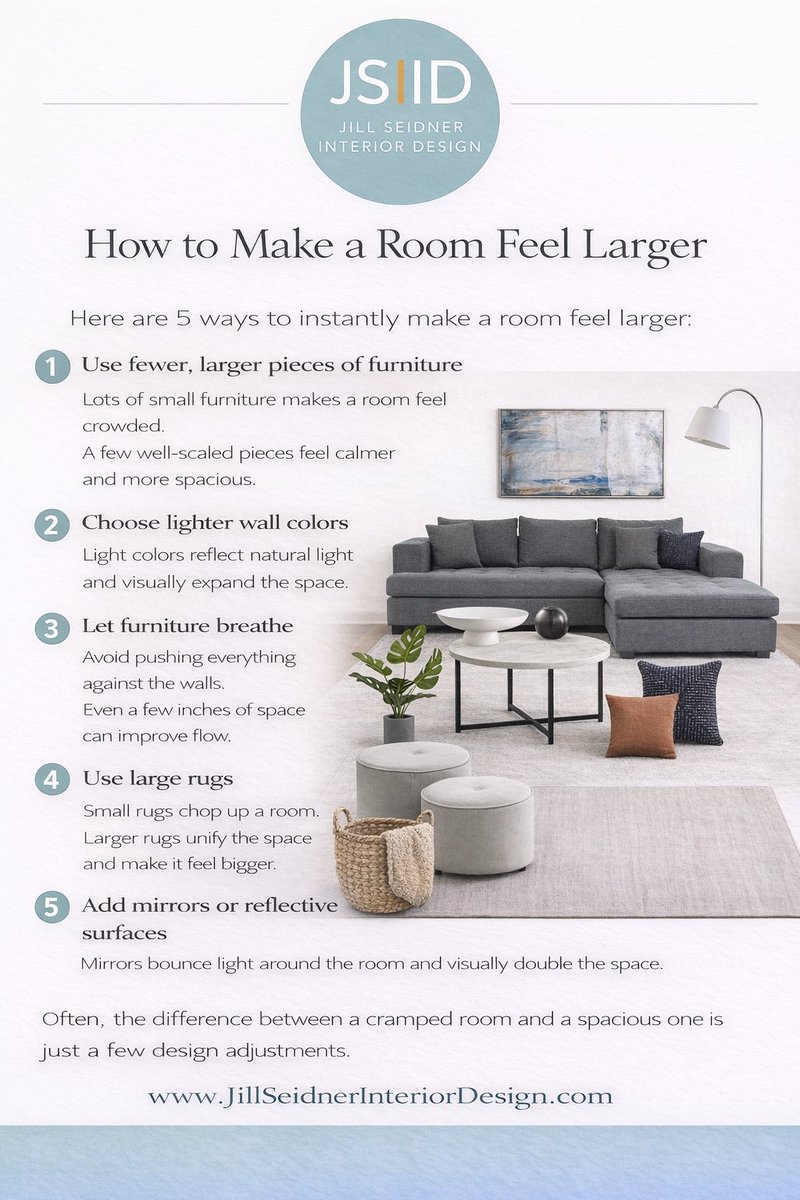
How to Make a Room Feel Larger ⸻ 1. Use fewer, larger pieces of furniture Lots of small furniture makes a room feel crowded. A few well-scaled pieces feel calmer and more spacious. 2. Choose lighter wall colors Light colors reflect natural light and visually expand the space. 3. Let furniture breathe Avoid pushing everything against the walls. Even a few inches of space can improve flow. 4. Use large rugs Small rugs chop up a room. Larger rugs unify the space and make it feel bigger. 5. Add mirrors or reflective surfaces Mirrors bounce light around the room and visually double the space.
Jill Seidner | Interior Design tweet media
English
0
0
0
37
Jill Seidner | Interior Design
Jill Seidner | Interior Design@JSInteriorDes·
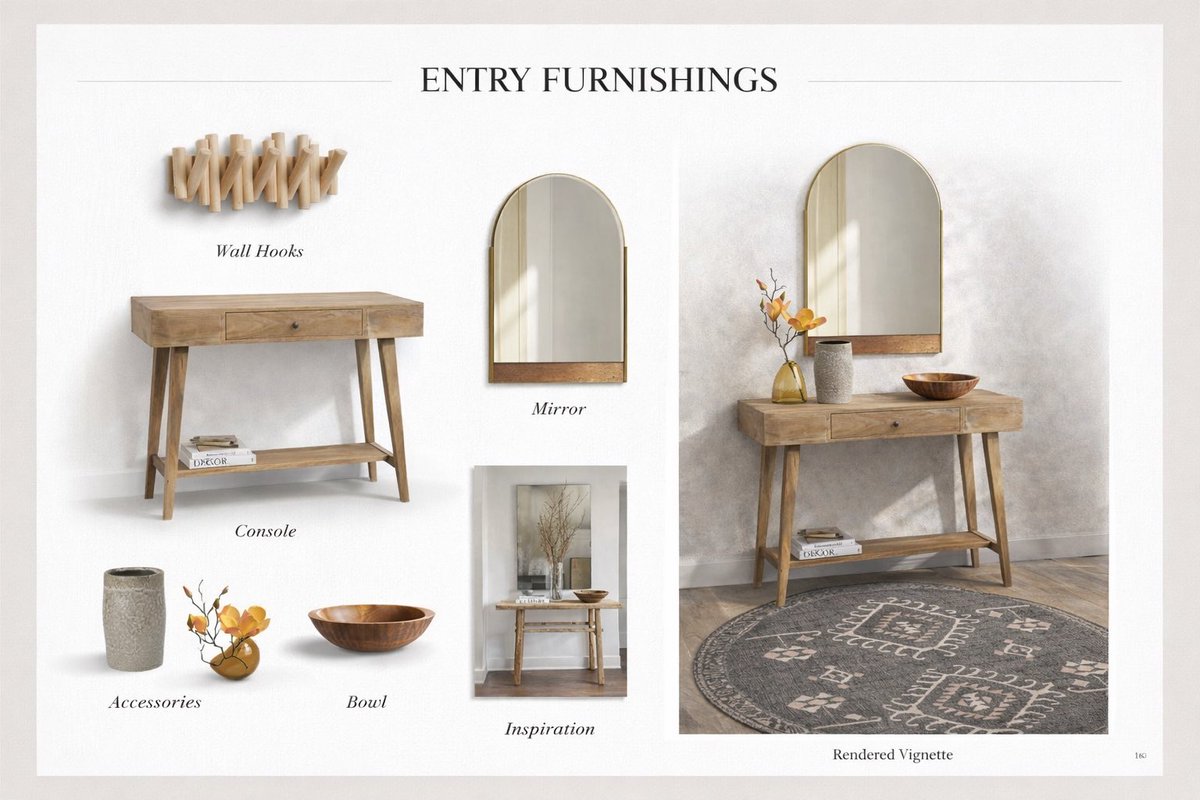
Designing a Very Small Entry A client once told me, “Our entry is so small we can’t really do anything with it.” But even the smallest entry needs to work. We kept it simple. A narrow console for keys and mail. A mirror to reflect light and make the space feel larger. A few hooks for everyday bags and jackets. One small bowl so everything has a place. Small spaces don’t need more things. They just need the right pieces. jillseidnerinteriordesign.com/blog/interior-… — Jill
Jill Seidner | Interior Design tweet media
English
2
1
2
62
Jill Seidner | Interior Design
Jill Seidner | Interior Design@JSInteriorDes·
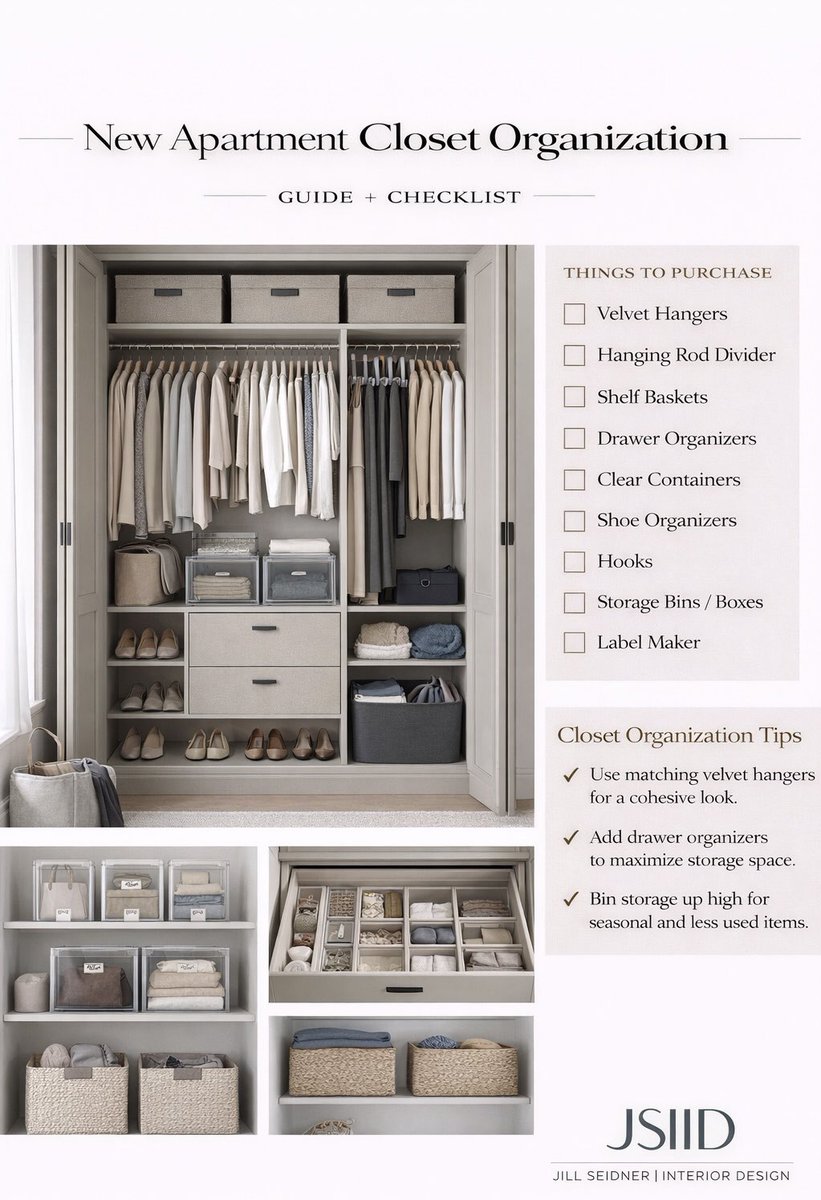
A Simple Way to Organize a Closet Closets feel chaotic when everything is competing for space. The fix is simple: create clear zones. Start with the basics: • Use matching hangers so clothing hangs evenly. • Add drawer organizers for smaller items. • Store seasonal pieces higher up in bins. • Use clear containers so you can see what you have. • Keep everyday items at eye level. When everything has a place, getting dressed becomes easier — and the whole closet feels calmer. jsinteriordesign.gumroad.com/l/fformna
Jill Seidner | Interior Design tweet media
English
0
1
1
79
Amazon Help
Amazon Help@AmazonHelp·
@JSInteriorDes Hello! We're sorry to know there's a problem with your order. In this case, you'll need to contact Grubhub directly: amzn.to/4b6JpEk. -Christie
English
1
0
0
25
Jill Seidner | Interior Design
Jill Seidner | Interior Design@JSInteriorDes·
The Simple Rule for Hanging Art Most art is hung too high. It’s one of the easiest ways a room can feel slightly “off.” A few simple guidelines help everything feel balanced: • Center art around 57 inches from the floor (average eye level). • Leave about 2–5 inches between frames when creating a gallery grouping. • Hang art 6–8 inches above furniture so it visually connects to the piece below. • Step back and adjust so the grouping reads as one composition. When art is placed correctly, the whole room feels more grounded. If you’d like more practical design guides and planning tools, you can find them here: stan.store/YourDesignGuide
Jill Seidner | Interior Design tweet media
English
0
1
0
43
Jill Seidner | Interior Design
Jill Seidner | Interior Design@JSInteriorDes·
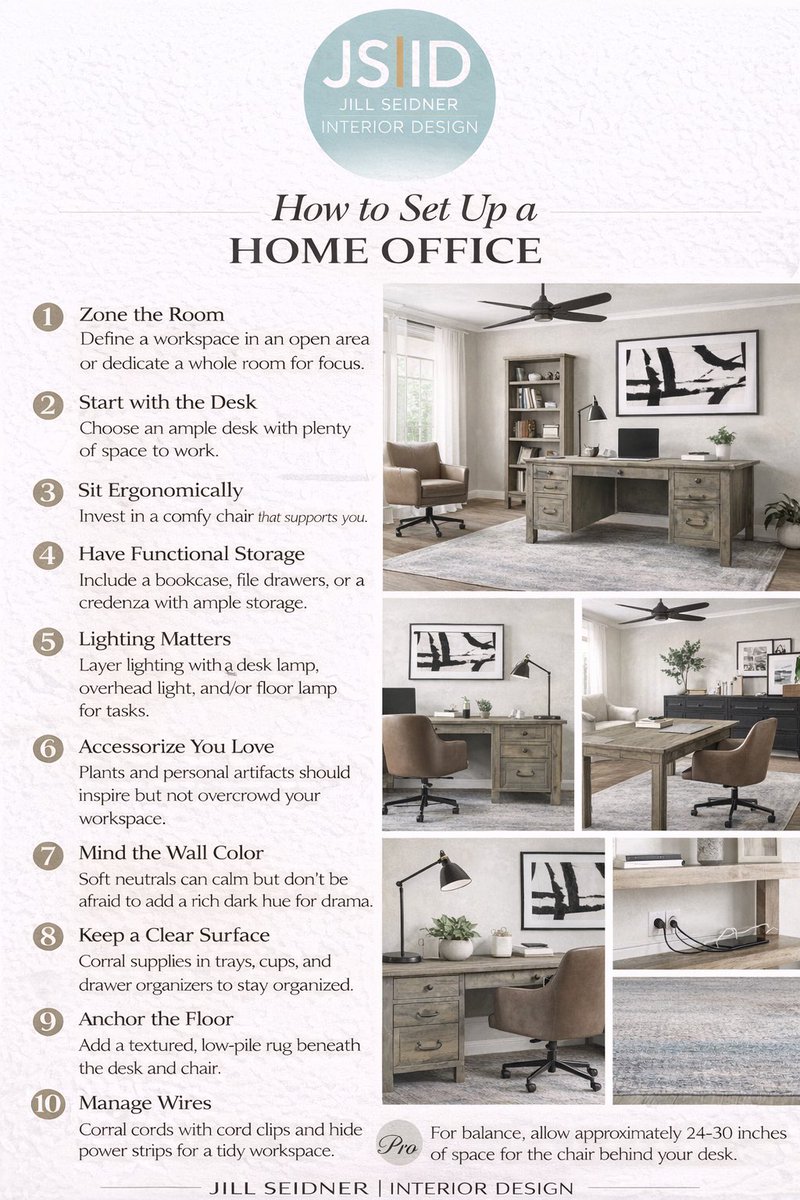
How to Set Up a Home Office That Actually Works A good home office isn’t about filling a room with furniture. It’s about creating a space that helps you focus. A few simple design principles make a big difference: • Start with the desk. Choose one with enough surface area so you’re not constantly clearing space. • Invest in a comfortable chair. You’ll feel the difference every day. • Layer your lighting. A desk lamp plus ambient light reduces eye strain. • Add storage early. Drawers, shelves, or a credenza keep clutter off your desk. • Anchor the space with a rug. It visually defines the workspace and adds warmth. • Keep surfaces simple. A few accessories or plants are enough. • Manage cords. Hidden wires instantly make a space feel calmer and more intentional. Small adjustments like these can completely change how a workspace feels. jillseidnerinteriordesign.com/blog/interior-… — Jill
Jill Seidner | Interior Design tweet media
English
0
1
1
53
Jill Seidner | Interior Design
Jill Seidner | Interior Design@JSInteriorDes·
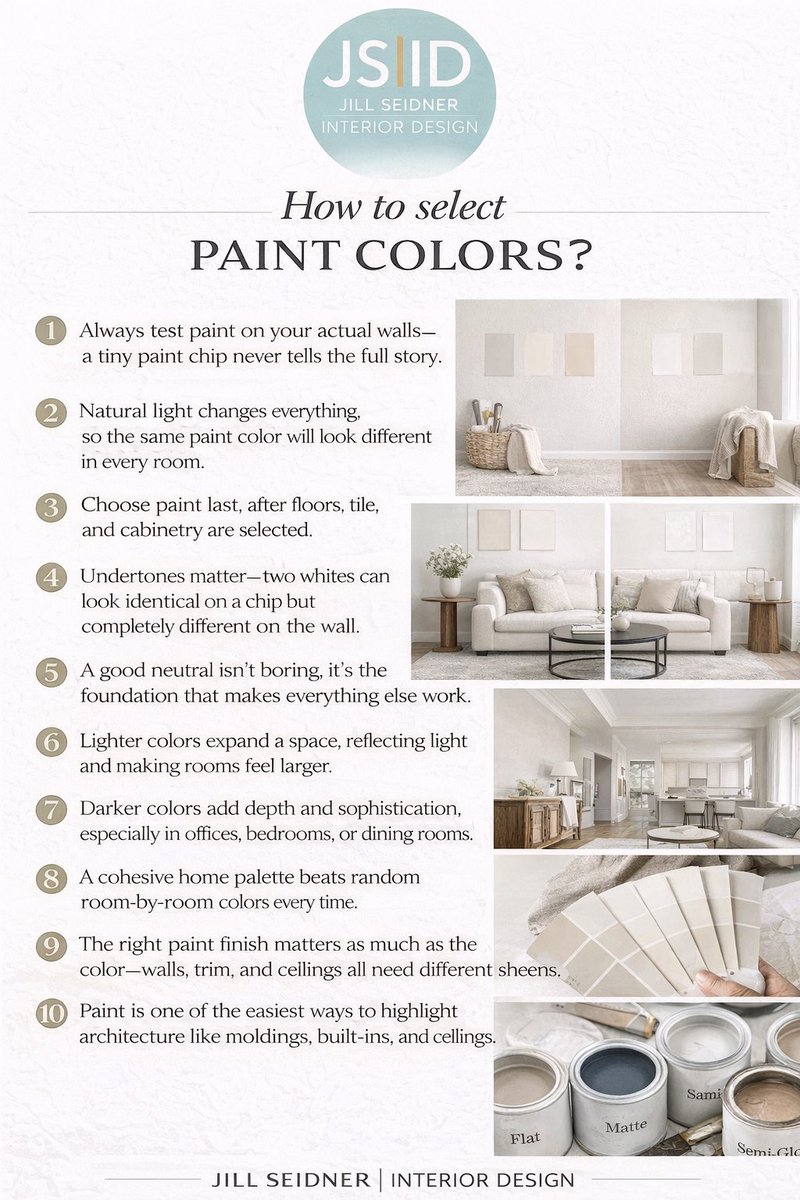
Tips for selecting paint colors: Always test paint on your actual walls—a tiny paint chip never tells the full story. Natural light changes everything, so the same paint color will look different in every room. Choose paint last, after floors, tile, and cabinetry are selected. Undertones matter—two whites can look identical on a chip but completely different on the wall. A good neutral isn’t boring, it’s the foundation that makes everything else work. Lighter colors expand a space, reflecting light and making rooms feel larger. Darker colors add depth and sophistication, especially in offices, bedrooms, or dining rooms. A cohesive home palette beats random room-by-room colors every time. The right paint finish matters as much as the color—walls, trim, and ceilings all need different sheens. Paint is one of the easiest ways to highlight architecture like moldings, built-ins, and ceilings. #color jillseidnerinteriordesign.com/blog/interior-…
Jill Seidner | Interior Design tweet media
English
0
0
3
40