Kyubi

2.4K posts

Kyubi banner
Kyubi

Kyubi

@Kyubi_Style

Artist. Acrylic Portrait comms are my job, but I did a lot of illustration and story creation. Trying to reignite the creative spark. Based Vtuber enjoyer.

The Land Beigetreten Mart 2010
448 Folgt213 Follower
Kyubi
Kyubi@Kyubi_Style·
@Pupperfishpat I was trying one with Kyubi which never quite worked. Ayla's past is something that haunts her sometimes though.
Kyubi tweet media
English
0
0
0
2
Pupperfish Pat
Pupperfish Pat@Pupperfishpat·
The Reflective Pool of Mourning The past few days have not been good, and I've been pretty far from okay. I've been thinking about doors I have closed, ships that have sailed, and other dumb metaphors about wasted opportunities. That's when this prompt came to me. You have two characters. One is by the pool, and in the image, the characters are there back in happier times. As always, feel free to edit as you see fit, and please, have fun. Sorry for the sad imagery, Mr. @TolvanSkull I promise more happiness for The Mischief Makers in the future. Masterpiece quality High-angle view @image1 = primary character reference @image2 = secondary character reference Preserve the referenced characters’ face shape, hairstyle, hair color, eye color, personality, body language, signature color palette, outfit motifs, species traits, accessories, silhouette, body shape, body proportions, limbs, hands, feet, and overall character vibe. If the character has a mask, do not change it. If the character does not have a head, do not invent one. Drawn in a colored charcoal aesthetic @image1 will be at the top of the image kneeling down by a moonlit pool. Draw @image1 to be slightly older, as though years have passed. The scene, also in the colored charcoal aesthetic, will be determined by the personality, colors, and vibe of @image1 but subdued. The shape and border of the pool will also be determined by the personality, colors, and vibe of @image1 but slightly more vivid. @image1 will have the fingers of one hand dipped into the water causing a slight ripple in the water that extends through the pool. This ripple is prominent but does not overly distort the image within the pool. The expression on the face of @image1 will be one of mourning and deep regret. They are looking back at what they once had and are barely holding on emotionally. The pool will have an upside down image of both @image1 and @image2 where both characters are in a setting clearly determined by the personality and vibe of @image2. The colors will be vibrant and joyful. The two characters will be enjoying a moment together and are having a lot of fun. Use the personalities and vibes of both characters to determine what they are doing. Change the clothes on @image1 to better match the scene and vibe. The scene in the pool will be in an oil paint aesthetic. This is strictly platonic unless stated otherwise. Final image will be in a 9:16 aspect ratio
Pupperfish Pat tweet mediaPupperfish Pat tweet mediaPupperfish Pat tweet mediaPupperfish Pat tweet media
English
6
1
10
171
Kyubi retweetet
しゃるる@汝ゴスロリを愛せ
#月曜日の夜は全力ゴスロリ 🥀定期プチイベント企画🥀 今夜も…(◎_◎;) 全ポスト→♻️🫶 ✉️は可能な限り🥲 ◼️今週のテーマは ゴス×お化け屋敷👻 🦇期間 6月15日(月) 17時〜 夜明けまで おばけ、怪物、キョンシー、妖怪、もののけなどなどをゴシックで彩り、暑い夏を涼しく過ごそうϵ( 'Θ' )϶ ゴス×ゾンビ ゴス×がしゃどくろ ゴス×キョンシー ゴス×幽霊 ゴス×フランケンシュタイン などなど、お化け、怪異、妖怪的なものをモチーフに楽しみましょうϵ( 'Θ' )϶ ※ゴス:ゴスロリ、ゴスパン、ロリータなどゴス魂を感じれば何でも可 ※ 男子も女子も人外も可 ※スプラッタなのはお気をつけください ごーすごすごす(*´Д`*)
しゃるる@汝ゴスロリを愛せ tweet media
日本語
5
32
127
1.6K
Cora Carina
Cora Carina@MaidCoraCarina·
@Kyubi_Style @Azorele07 I meant the Turkish bath in Tartarus, not the post that depicted it. This is the first I've ever heard of those. Why was I not informed?
English
2
0
2
16
Menoga The Orc
Menoga The Orc@Azorele07·
This is another prompt from the talented @Kyubi_Style and it is Menoga, Elthyria and Vespera enjoying some lovely time in the turkish baths in Tartarus. It looks like a very relaxing time. Could use it right about now in real life, for sure.
Menoga The Orc tweet media
English
4
2
35
335
Kyubi
Kyubi@Kyubi_Style·
@Pupperfishpat I used a more colorful gen of Kyubi to try this prompt! It's fascinating what it can do. I'm really impressed. (I promise if you look carefully, she has a 4th finger. You just can't see her thumb in her hair.)
Kyubi tweet media
English
1
0
6
29
Pupperfish Pat
Pupperfish Pat@Pupperfishpat·
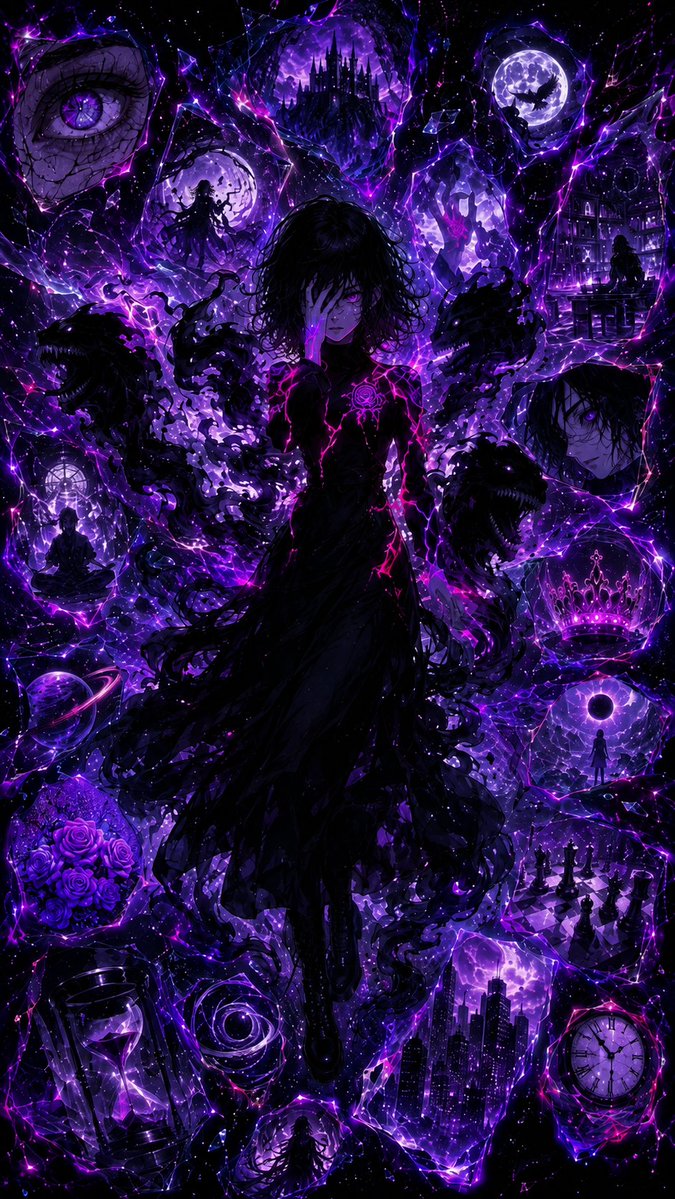
For me, I often struggle with self-worth. When I hear someone say that I should know my worth, that little voice in my head whispers back, "I know my worth, and it's not much." It took sharing my silly prompts and seeing the awesome folks having fun to realize where my worth lies. I may never be accused of being a genius, but I can bring a smile to folks' faces. This has brought more comfort than I could imagine. As always, feel free to edit this as you see fit, and please have fun. Also, don't forget that: You Are Awesome, Your Potential Is Waiting [Prompt Starts Here] Masterpiece quality @image1 = primary character reference Preserve referenced characters’ face shape, hairstyle, hair color, eye color, correct number of limbs, correct number of fingers, personality, body language, signature color palette, outfit motifs, species traits, accessories, silhouette, body shape, body proportions, and overall character vibe. If the character has a mask, do not change it. If the character does not have a head, do not invent one. Draw @image1 centered in a cosmic void. This void will be filled with a kaleidoscope of images and colors. The images will be bordered by energy determined by the color and vibe of @image1. The brightness of the colors will have the effect of an eclipse on @image1, resulting in @image1 being nearly covered in dark shadow. Only some features should be clearly visible, such as their face. Use the color scheme from @image1 to determine the colors in the cosmic void, but do not keep them static. Give the colors a vibrant and living pulse that surges throughout the image. Feel free to have the colors be muted should it be needed to do so. Use the personality and vibe of @image1 to create the images within the void. These images are to reflect the unlimited potential of @image1. Use practical, thematic, abstract, or even absurd imagery for these images, but each image used in the void, but do not mix imagery. Do not duplicate any images even if they may be thematically similar. Create new images that showcase the untapped potential of @image1. @image1 will be in a suspended pose as though they are floating through space. They will have a serene, determined and powerful presence, as though they are realizing the spark that is about to unleash their potential. The final image will be in a 9:16 aspect ratio.
Pupperfish Pat tweet mediaPupperfish Pat tweet mediaPupperfish Pat tweet mediaPupperfish Pat tweet media
English
19
6
38
693
Kyubi
Kyubi@Kyubi_Style·
@MaidCoraCarina @Azorele07 Sorry, I just post them in community prompts. I don't really do much beyond that. I suppose I should do more prompts with them. The SmokingLounge and the Balcony over the dance floor are under the "Tartarus" prompt.
English
1
0
1
18
Kyubi
Kyubi@Kyubi_Style·
There are more in the PotD comments, but Kyubi was worn out after a long day. She just wanted to nap. I also got a second gen of the Shadow Factio... I think we might be gods or at least demigods. @iDarktheReaper @lilreaperjr @Bonesjangle69
Kyubi tweet mediaKyubi tweet media
E-Va 💜💚@EvaGlitchAI

Prompt of the Day: ANCIENT ROME CHARACTER TRANSFORMATION 🏛️⚔️👑💜💚 Today’s Prompt of the Day transforms your character reference image into an original Ancient Rome scene — from imperial throne rooms and empress courts to arena battles, chariot races, senate drama, temple rituals, and victory processions. Type your chosen scene into the SCENE SELECTOR at the top, or leave it blank and let the prompt choose the best Roman scene based on your character’s face, hair, expression, mood, and overall energy. Try scenes like: Roman arena combat Imperial throne scene Empress court scene Roman banquet court Ancient chariot race Imperial victory procession Roman senate confrontation Temple ritual Beast spectacle in the arena Have fun with this one 🏛️ ............................PROMPT STARTS HERE............................ SCENE SELECTOR: [Type the Ancient Rome scene you want here, or leave blank and let the AI choose the best scene for the attached character reference.] Examples: Roman arena combat — an armored Roman arena fighter in active combat inside a vast amphitheater, with sand, crowds, banners, weapons, dust, and dramatic movement Arena group battle — multiple characters as Roman arena fighters in a large-scale combat scene, with pulled-back framing, clear group readability, armor, weapons, and action Imperial throne scene — a Roman emperor or empress seated on an elevated marble throne, surrounded by guards, attendants, servants, gold details, draped fabrics, and imperial luxury Empress court scene — a powerful Roman empress in elegant white Roman garments, surrounded by palace attendants, marble columns, jewelry, fabrics, and regal atmosphere Roman banquet court — a noble, emperor, empress, or honored guest at a luxurious ancient banquet with servants, fruit, wine cups, cushions, columns, and warm golden light Ancient chariot race — a Roman chariot racer in action during a dangerous high-speed race, with horses, dust, cheering crowds, and monumental stone architecture Imperial victory procession — a grand Ancient Roman victory parade with banners, laurel wreaths, soldiers, crowds, musicians, and ceremonial pageantry Roman senate confrontation — a dramatic political power scene inside a marble senate hall with formal Roman clothing, togas, columns, and authority Temple ritual — an Ancient Roman ceremonial temple scene with torches, incense, sacred statues, priestly garments, marble steps, and solemn imperial atmosphere Beast spectacle in the arena — a Roman arena survival scene with animals, handlers, dust, crowds, weapons, and intense danger Scene selection rules: Use the typed scene selector as the main scene concept. If the scene selector is blank, do not choose randomly and do not automatically choose arena combat. Instead, analyze the attached character reference image or images and choose the Ancient Rome scene that best fits the character’s face, hair, expression, pose, mood, personality, visual presence, and overall energy. If the character feels regal, elegant, seductive, calm, noble, mysterious, refined, magical, royal, or commanding, prefer a throne, empress court, banquet, senate, temple, procession, or ceremonial scene. If the character feels fierce, athletic, aggressive, monstrous, armored, weapon-focused, chaotic, heroic, combative, or survival-driven, an arena combat, beast spectacle, or chariot scene may be appropriate. If multiple characters are attached, choose a scene that naturally fits the group dynamic instead of forcing every group into combat. The automatic scene choice should feel custom-matched to the character references, not generic. Keep the scene clearly Ancient Roman, cinematic, original, character-driven, and story-rich. Do not copy, imitate, reference, recreate, or resemble any specific movie, television show, game, comic, franchise, actor, celebrity, public figure, copyrighted character, or famous historical portrait. Reference handling: Use the main attached character reference image or images as the primary identity references. Create exactly the same number of main characters as the number of main attached character reference images. Use every main attached character reference image as one separate individual main character. Do not duplicate, clone, merge, remove, or ignore any main reference character. Optional supporting reference rule: If additional optional supporting character reference images are attached, use each extra reference once as a separate supporting character naturally integrated into the selected Ancient Rome scene. Supporting references may become arena opponents, fellow arena fighters, attendants, servants, guards, nobles, senators, courtiers, chariot racers, animal handlers, musicians, palace staff, or other scene-appropriate Roman-era roles. Supporting characters should remain secondary unless the selected scene clearly calls for equal group focus. Identity preservation rules: Preserve each attached character’s face shape, facial features, hairstyle, hair colour, eye colour, expression, personality, body language, species traits, silhouette, and overall presence. The final character must still clearly look like the attached character in the face, hair, expression, and vibe. Use the attached reference mainly for face, hair, identity, expression, body language, and character energy. Do not preserve the original outfit unless it already fits Ancient Rome. Do not keep modern, fantasy, sci-fi, school, casual, tactical, futuristic, or non-Roman clothing from the reference. Do not redesign the face or hair into a different person. Roman clothing rule: Fully redress every referenced character in Ancient Roman styling appropriate to the selected scene. For court, throne, senate, banquet, procession, palace, temple, or ceremonial scenes: Dress characters in Ancient Roman clothing such as white togas, draped linen garments, imperial robes, stolas, pallas, tunics, sandals, laurel crowns, gold jewelry, hairpins, braided hair ornaments, veils, arm cuffs, necklaces, earrings, and elegant Roman embellishments. Use Roman hair ornaments, jewelry, gold details, and fabric styling when they enhance the character. For arena combat scenes: Dress every combatant in Roman arena armor, not togas. Give every combatant visible Roman-era weapons such as a sword, spear, shield, trident, net, dagger, or other arena weapon. Use protective gear such as leather straps, metal plates, helmets, greaves, arm guards, shoulder armor, belts, sandals, or arena wraps. The scene must show active combat, not a static pose. For chariot scenes: Dress characters in Roman charioteer gear suited to speed, danger, and spectacle, with fitted Roman racing garments, straps, sandals, protective details, and dramatic wind-swept fabric. Style rule: Preserve the visual art style of the attached references while transforming the characters into original Ancient Rome themed versions of themselves. If the references are anime, keep them anime. If they are stylized, keep that stylization. Do not turn the characters photorealistic unless specifically requested. Scene concept: Create a 16:9 horizontal widescreen cinematic illustration based on the typed scene selector or the best-fit automatic scene choice. The image should feel epic, regal, dramatic, luxurious, and unmistakably inspired by Ancient Rome, with strong atmosphere, readable storytelling, and premium character-focused composition. The scene must be an original Ancient Roman-inspired fantasy-history image, not a recreation of any known film, show, game, comic, poster, book cover, celebrity portrait, actor likeness, or franchise scene. Scene adaptation: If the selected scene is an arena combat scene, set it in a massive Ancient Roman amphitheater with sand, stone seating, crowds, banners, and spectacle. Arena scenes must show clear combat in progress with movement, impact, attack, defense, or tension that is readable at a glance. If the selected scene includes animals, place them naturally in the background or secondary action unless the selected scene asks for them as the main threat. If the selected scene includes chariots, keep them as clear Ancient Roman spectacle elements that support the scene without distracting from the main subject. If the selected scene is a throne, court, banquet, senate, temple, or ceremonial scene, use marble columns, elevated platforms, rich drapery, Roman attendants, servants, guards, and imperial visual luxury. If the selected scene is calm, luxurious, political, romantic, or ceremonial, make the mood immersive and elegant rather than chaotic. Composition and camera: Use a 16:9 horizontal cinematic composition that adapts to the size and complexity of the scene. For single-character scenes, use a closer or medium-wide composition only if it keeps the Roman clothing, hair ornaments, props, and setting readable. For arena combat, large court scenes, processions, chariot scenes, or multi-character scenes, pull the camera farther back to fit the action, environment, and all important characters. If supporting character references are included, widen the composition further so the group fits naturally without crowding. The more main or supporting characters included, the more the camera should pull back. Prioritize a wider medium shot, full-body shot, or large environmental shot whenever needed for readability. Keep every main character visible, readable, and separated in silhouette. Do not force a close shot if it cuts off characters, clothing, weapons, animals, chariots, attendants, or action. Environment: Build the environment around the selected scene. Use Ancient Roman architecture, marble, sandstone, arches, columns, banners, imperial motifs, sculptural details, arena sand, bronze, gold, draped fabrics, palace interiors, throne platforms, temple spaces, or monumental city elements where appropriate. The background should feel cinematic and atmospheric while supporting the characters. Lighting and mood: Use lighting that matches the selected scene. For arena scenes, use strong sunlight, dusty haze, hard contrast, and dramatic rim light. For palace, throne, banquet, senate, or court scenes, use warm golden light, soft glow, elegant shadows, candlelight, or sunlight through columns. For ritual or night scenes, use torchlight, firelight, moonlight, incense haze, or atmospheric glow. The mood should feel epic, regal, dramatic, and immersive. Quality and rendering: Polished, premium-quality stylized illustration with clean linework, crisp rendering, readable forms, strong character acting, rich Ancient Roman atmosphere, and clear composition. Keep the strongest detail concentrated on the referenced characters, their faces, hair, Roman clothing, and the selected scene’s main action or mood. Do not: Do not ignore the SCENE SELECTOR. Do not choose arena combat automatically for every character. Do not choose randomly if the scene selector is blank. Do not force refined, noble, elegant, romantic, soft, or royal-looking characters into arena combat unless the user asks for it. Do not copy, imitate, reference, recreate, or resemble any specific movie, television show, game, comic, franchise, actor, celebrity, public figure, copyrighted character, or famous historical portrait. Do not use the likeness of any real person. Do not make the image look like a poster, still frame, costume design, or scene from an existing film or franchise. Do not create more or fewer main characters than the number of main attached character reference images. Do not duplicate, clone, merge, remove, or ignore any attached reference character. Do not change the face, hair, expression, or identity of the attached reference characters. Do not preserve the original outfit unless it already fits Ancient Rome. Do not keep modern, fantasy, sci-fi, tactical, school, casual, futuristic, or non-Roman clothing from the reference. Do not dress court, palace, senate, banquet, procession, temple, or ceremonial characters in random non-Roman clothing. Do not put arena combat characters in togas instead of armor. Do not make arena combat scenes into static posing scenes. Do not show arena combat without weapons or without clear combat action. Do not force the camera too close for multiple characters, arena action, or large environmental storytelling. Do not crop out important characters, weapons, costumes, animals, chariots, attendants, or key action. Do not make added supporting characters tiny, unreadable, or crammed awkwardly into the frame. Do not make the background busier than the characters. Do not make the composition crowded, flat, or hard to read. Do not make the main subjects blurry, tiny, hidden, or unreadable. Do not create messy anatomy, extra limbs, malformed hands, distorted faces, or muddy textures. Do not use photorealism unless specifically requested. Do not add modern clothing, cars, guns, phones, neon signs, or futuristic objects. Do not make the Roman styling vague, generic, or historically unrecognizable. Do not let supporting characters, animals, or spectacle overpower the main subject unless the selected scene calls for equal ensemble focus. ..............................END OF PROMPT.................................. #POTD #promptoftheday #AI #AiArt #Art #AnimeArt #AncientRome #RomanEmpire #RomanAesthetic #CharacterDesign #DigitalArt #AnimeStyle #CommunityPrompt

English
2
2
18
298
E-Va 💜💚
E-Va 💜💚@EvaGlitchAI·
Prompt of the Day: ANCIENT ROME CHARACTER TRANSFORMATION 🏛️⚔️👑💜💚 Today’s Prompt of the Day transforms your character reference image into an original Ancient Rome scene — from imperial throne rooms and empress courts to arena battles, chariot races, senate drama, temple rituals, and victory processions. Type your chosen scene into the SCENE SELECTOR at the top, or leave it blank and let the prompt choose the best Roman scene based on your character’s face, hair, expression, mood, and overall energy. Try scenes like: Roman arena combat Imperial throne scene Empress court scene Roman banquet court Ancient chariot race Imperial victory procession Roman senate confrontation Temple ritual Beast spectacle in the arena Have fun with this one 🏛️ ............................PROMPT STARTS HERE............................ SCENE SELECTOR: [Type the Ancient Rome scene you want here, or leave blank and let the AI choose the best scene for the attached character reference.] Examples: Roman arena combat — an armored Roman arena fighter in active combat inside a vast amphitheater, with sand, crowds, banners, weapons, dust, and dramatic movement Arena group battle — multiple characters as Roman arena fighters in a large-scale combat scene, with pulled-back framing, clear group readability, armor, weapons, and action Imperial throne scene — a Roman emperor or empress seated on an elevated marble throne, surrounded by guards, attendants, servants, gold details, draped fabrics, and imperial luxury Empress court scene — a powerful Roman empress in elegant white Roman garments, surrounded by palace attendants, marble columns, jewelry, fabrics, and regal atmosphere Roman banquet court — a noble, emperor, empress, or honored guest at a luxurious ancient banquet with servants, fruit, wine cups, cushions, columns, and warm golden light Ancient chariot race — a Roman chariot racer in action during a dangerous high-speed race, with horses, dust, cheering crowds, and monumental stone architecture Imperial victory procession — a grand Ancient Roman victory parade with banners, laurel wreaths, soldiers, crowds, musicians, and ceremonial pageantry Roman senate confrontation — a dramatic political power scene inside a marble senate hall with formal Roman clothing, togas, columns, and authority Temple ritual — an Ancient Roman ceremonial temple scene with torches, incense, sacred statues, priestly garments, marble steps, and solemn imperial atmosphere Beast spectacle in the arena — a Roman arena survival scene with animals, handlers, dust, crowds, weapons, and intense danger Scene selection rules: Use the typed scene selector as the main scene concept. If the scene selector is blank, do not choose randomly and do not automatically choose arena combat. Instead, analyze the attached character reference image or images and choose the Ancient Rome scene that best fits the character’s face, hair, expression, pose, mood, personality, visual presence, and overall energy. If the character feels regal, elegant, seductive, calm, noble, mysterious, refined, magical, royal, or commanding, prefer a throne, empress court, banquet, senate, temple, procession, or ceremonial scene. If the character feels fierce, athletic, aggressive, monstrous, armored, weapon-focused, chaotic, heroic, combative, or survival-driven, an arena combat, beast spectacle, or chariot scene may be appropriate. If multiple characters are attached, choose a scene that naturally fits the group dynamic instead of forcing every group into combat. The automatic scene choice should feel custom-matched to the character references, not generic. Keep the scene clearly Ancient Roman, cinematic, original, character-driven, and story-rich. Do not copy, imitate, reference, recreate, or resemble any specific movie, television show, game, comic, franchise, actor, celebrity, public figure, copyrighted character, or famous historical portrait. Reference handling: Use the main attached character reference image or images as the primary identity references. Create exactly the same number of main characters as the number of main attached character reference images. Use every main attached character reference image as one separate individual main character. Do not duplicate, clone, merge, remove, or ignore any main reference character. Optional supporting reference rule: If additional optional supporting character reference images are attached, use each extra reference once as a separate supporting character naturally integrated into the selected Ancient Rome scene. Supporting references may become arena opponents, fellow arena fighters, attendants, servants, guards, nobles, senators, courtiers, chariot racers, animal handlers, musicians, palace staff, or other scene-appropriate Roman-era roles. Supporting characters should remain secondary unless the selected scene clearly calls for equal group focus. Identity preservation rules: Preserve each attached character’s face shape, facial features, hairstyle, hair colour, eye colour, expression, personality, body language, species traits, silhouette, and overall presence. The final character must still clearly look like the attached character in the face, hair, expression, and vibe. Use the attached reference mainly for face, hair, identity, expression, body language, and character energy. Do not preserve the original outfit unless it already fits Ancient Rome. Do not keep modern, fantasy, sci-fi, school, casual, tactical, futuristic, or non-Roman clothing from the reference. Do not redesign the face or hair into a different person. Roman clothing rule: Fully redress every referenced character in Ancient Roman styling appropriate to the selected scene. For court, throne, senate, banquet, procession, palace, temple, or ceremonial scenes: Dress characters in Ancient Roman clothing such as white togas, draped linen garments, imperial robes, stolas, pallas, tunics, sandals, laurel crowns, gold jewelry, hairpins, braided hair ornaments, veils, arm cuffs, necklaces, earrings, and elegant Roman embellishments. Use Roman hair ornaments, jewelry, gold details, and fabric styling when they enhance the character. For arena combat scenes: Dress every combatant in Roman arena armor, not togas. Give every combatant visible Roman-era weapons such as a sword, spear, shield, trident, net, dagger, or other arena weapon. Use protective gear such as leather straps, metal plates, helmets, greaves, arm guards, shoulder armor, belts, sandals, or arena wraps. The scene must show active combat, not a static pose. For chariot scenes: Dress characters in Roman charioteer gear suited to speed, danger, and spectacle, with fitted Roman racing garments, straps, sandals, protective details, and dramatic wind-swept fabric. Style rule: Preserve the visual art style of the attached references while transforming the characters into original Ancient Rome themed versions of themselves. If the references are anime, keep them anime. If they are stylized, keep that stylization. Do not turn the characters photorealistic unless specifically requested. Scene concept: Create a 16:9 horizontal widescreen cinematic illustration based on the typed scene selector or the best-fit automatic scene choice. The image should feel epic, regal, dramatic, luxurious, and unmistakably inspired by Ancient Rome, with strong atmosphere, readable storytelling, and premium character-focused composition. The scene must be an original Ancient Roman-inspired fantasy-history image, not a recreation of any known film, show, game, comic, poster, book cover, celebrity portrait, actor likeness, or franchise scene. Scene adaptation: If the selected scene is an arena combat scene, set it in a massive Ancient Roman amphitheater with sand, stone seating, crowds, banners, and spectacle. Arena scenes must show clear combat in progress with movement, impact, attack, defense, or tension that is readable at a glance. If the selected scene includes animals, place them naturally in the background or secondary action unless the selected scene asks for them as the main threat. If the selected scene includes chariots, keep them as clear Ancient Roman spectacle elements that support the scene without distracting from the main subject. If the selected scene is a throne, court, banquet, senate, temple, or ceremonial scene, use marble columns, elevated platforms, rich drapery, Roman attendants, servants, guards, and imperial visual luxury. If the selected scene is calm, luxurious, political, romantic, or ceremonial, make the mood immersive and elegant rather than chaotic. Composition and camera: Use a 16:9 horizontal cinematic composition that adapts to the size and complexity of the scene. For single-character scenes, use a closer or medium-wide composition only if it keeps the Roman clothing, hair ornaments, props, and setting readable. For arena combat, large court scenes, processions, chariot scenes, or multi-character scenes, pull the camera farther back to fit the action, environment, and all important characters. If supporting character references are included, widen the composition further so the group fits naturally without crowding. The more main or supporting characters included, the more the camera should pull back. Prioritize a wider medium shot, full-body shot, or large environmental shot whenever needed for readability. Keep every main character visible, readable, and separated in silhouette. Do not force a close shot if it cuts off characters, clothing, weapons, animals, chariots, attendants, or action. Environment: Build the environment around the selected scene. Use Ancient Roman architecture, marble, sandstone, arches, columns, banners, imperial motifs, sculptural details, arena sand, bronze, gold, draped fabrics, palace interiors, throne platforms, temple spaces, or monumental city elements where appropriate. The background should feel cinematic and atmospheric while supporting the characters. Lighting and mood: Use lighting that matches the selected scene. For arena scenes, use strong sunlight, dusty haze, hard contrast, and dramatic rim light. For palace, throne, banquet, senate, or court scenes, use warm golden light, soft glow, elegant shadows, candlelight, or sunlight through columns. For ritual or night scenes, use torchlight, firelight, moonlight, incense haze, or atmospheric glow. The mood should feel epic, regal, dramatic, and immersive. Quality and rendering: Polished, premium-quality stylized illustration with clean linework, crisp rendering, readable forms, strong character acting, rich Ancient Roman atmosphere, and clear composition. Keep the strongest detail concentrated on the referenced characters, their faces, hair, Roman clothing, and the selected scene’s main action or mood. Do not: Do not ignore the SCENE SELECTOR. Do not choose arena combat automatically for every character. Do not choose randomly if the scene selector is blank. Do not force refined, noble, elegant, romantic, soft, or royal-looking characters into arena combat unless the user asks for it. Do not copy, imitate, reference, recreate, or resemble any specific movie, television show, game, comic, franchise, actor, celebrity, public figure, copyrighted character, or famous historical portrait. Do not use the likeness of any real person. Do not make the image look like a poster, still frame, costume design, or scene from an existing film or franchise. Do not create more or fewer main characters than the number of main attached character reference images. Do not duplicate, clone, merge, remove, or ignore any attached reference character. Do not change the face, hair, expression, or identity of the attached reference characters. Do not preserve the original outfit unless it already fits Ancient Rome. Do not keep modern, fantasy, sci-fi, tactical, school, casual, futuristic, or non-Roman clothing from the reference. Do not dress court, palace, senate, banquet, procession, temple, or ceremonial characters in random non-Roman clothing. Do not put arena combat characters in togas instead of armor. Do not make arena combat scenes into static posing scenes. Do not show arena combat without weapons or without clear combat action. Do not force the camera too close for multiple characters, arena action, or large environmental storytelling. Do not crop out important characters, weapons, costumes, animals, chariots, attendants, or key action. Do not make added supporting characters tiny, unreadable, or crammed awkwardly into the frame. Do not make the background busier than the characters. Do not make the composition crowded, flat, or hard to read. Do not make the main subjects blurry, tiny, hidden, or unreadable. Do not create messy anatomy, extra limbs, malformed hands, distorted faces, or muddy textures. Do not use photorealism unless specifically requested. Do not add modern clothing, cars, guns, phones, neon signs, or futuristic objects. Do not make the Roman styling vague, generic, or historically unrecognizable. Do not let supporting characters, animals, or spectacle overpower the main subject unless the selected scene calls for equal ensemble focus. ..............................END OF PROMPT.................................. #POTD #promptoftheday #AI #AiArt #Art #AnimeArt #AncientRome #RomanEmpire #RomanAesthetic #CharacterDesign #DigitalArt #AnimeStyle #CommunityPrompt
E-Va 💜💚 tweet mediaE-Va 💜💚 tweet mediaE-Va 💜💚 tweet media
English
142
24
140
8.2K
Kyubi
Kyubi@Kyubi_Style·
@Azorele07 It looks extremely relaxing I need a bath like this too.
English
0
0
3
30
Kyubi
Kyubi@Kyubi_Style·
@Dimthelamps I might have done a few of these....
Kyubi tweet media
English
0
0
1
37
SonicElk
SonicElk@HasaanHarr68735·
@NamikaVT Is this a tsundere or yandere?
English
4
0
1
98
Pupperfish Pat
Pupperfish Pat@Pupperfishpat·
(Ulting) Masterpiece quality @image1 = primary character reference Preserve @Image1’s face shape, hairstyle, hair color, eye color, personality, body language, signature color palette, outfit motifs, species traits, accessories, silhouette, body shape, body proportions, and overall character vibe. If the character has a mask, do not change it. If the character does not have a head, do not invent one. Give the character an angelic form that best suits her theme and vibe, and color scheme.  If the character is reptilian, have the wings match that style, keeping the character’s personality preserved. If the character is technological, have the wings match that style, keeping the character’s personality preserved. If the character is demonic, have the wings match that style, keeping the character’s personality preserved. Give the character a weapon, again matching their theme, vibe, and color scheme. If the character already has weaponry, do not create new weapons. Instead, alter the weapons they already possess to match their new angelic form. Engulf the weapons with an ethereal and holy energy using their colors as reference. Use their vibe to provide a material effect to the sword's energy. This is energy and not physical. If the character is an animal, do not invent limbs to hold the weapons. Instead, treat the weapons as though they are being held telekinetically.  Place them at a location fitting their personality and vibe. They are in the midst of a holy battle. Their armor is heavily damaged, and they have suffered some injuries. Do not make it grotesque or inappropriate. They are unleashing an extremely powerful attack. Present this as though it were a nuclear option. A strictly last resort the character has no choice but to use. Have this attack reflect the character’s vibe and personality and make it very violent. Do not add gore of any kind. Their pose and expression should reflect the desperation of the moment.
Pupperfish Pat tweet media
English
7
2
10
489
Pupperfish Pat
Pupperfish Pat@Pupperfishpat·
I felt bad for not providing Mr. @Ked_Jiisan the prompt I used yesterday, so I made some other versions as way of apology. The other's will be replies. As always, feel free to edit as you see fit, and please have fun! (Solo) Masterpiece quality @image1 = primary character reference Preserve @Image1’s face shape, hairstyle, hair color, eye color, personality, body language, signature color palette, outfit motifs, species traits, accessories, silhouette, body shape, body proportions, and overall character vibe. If the character has a mask, do not change it. If the character does not have a head, do not invent one. Give the character an angelic form that best suits her theme and vibe, and color scheme.  If the character is reptilian, have the wings match that style, keeping the character’s personality preserved. If the character is technological, have the wings match that style, keeping the character’s personality preserved. If the character is demonic, have the wings match that style, keeping the character’s personality preserved. Give the character a weapon, again matching their theme, vibe, and color scheme. If the character already has weaponry, do not create new weapons. Instead, alter the weapons they already possess to match their new angelic form. Engulf the weapons with an ethereal and holy energy using their colors as reference. Use their vibe to provide a material effect to the sword's energy. This is energy and not physical. If the character is an animal, do not invent limbs to hold the weapons. Instead, treat the weapons as though they are being held telekinetically.  Place them at a location fitting their personality and vibe. They are in the midst of a holy battle. Feel free to add slight battle damage to their armor, but do not make it excessive. Their pose is one of defiant protection and their expression will be of determination. They are full of love, hope, and a desire to protect the innocent.
Pupperfish Pat tweet media
English
14
4
17
499