Jake Jones

322 posts

Jake Jones

Jake Jones

@MonkishRex

IPv6+AI+blockchain Opinions are my own

Beigetreten Kasım 2017
570 Folgt1.2K Follower
Angehefteter Tweet
Jake Jones
Jake Jones@MonkishRex·
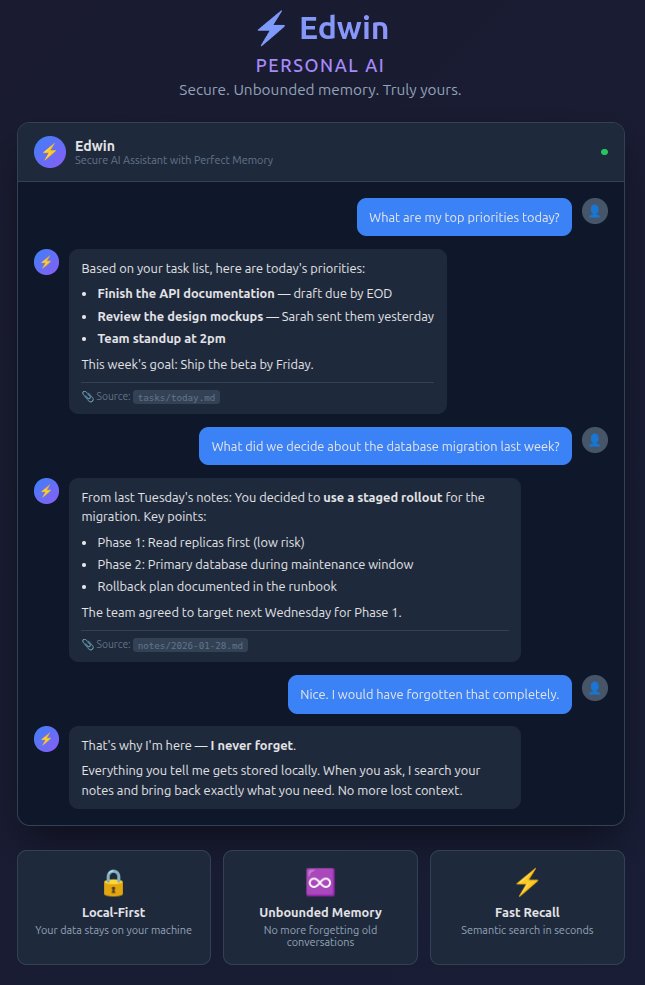
OpenClaw has 145,000+ GitHub stars. CNBC, Palo Alto Networks, and Kaspersky are all writing about it. It's the hottest AI agent framework in the world right now — and for good reason. It turns your computer into a 24/7 AI assistant that actually does things. Multi-channel messaging. Browser automation. Persistent memory. Calendar, email, file management. It's what ChatGPT and Claude should have been. But here's what nobody wants to talk about: 🔓 ~1,000 OpenClaw instances found publicly exposed with zero authentication (Shodan scan, January 2026) 🔓 CVE-2026-25253: One-click remote code execution via auth token theft 🔓 Data leaking across user sessions and messaging channels 🔓 Prompt injection attacks via web content, emails, and third-party skills — with no trust boundaries 🔓 Palo Alto Networks called it a "lethal trifecta" of risks: access to private data + exposure to untrusted content + ability to communicate externally + persistent memory that makes attacks survive across sessions The core problem? OpenClaw has no identity layer. No way to cryptographically verify who's talking to the agent, where data came from, or whether a skill is trustworthy. It treats everything — your commands, a forwarded WhatsApp message, a malicious webpage — with the same level of trust. That's why I built Edwin. Edwin is built on top of OpenClaw's runtime, but adds the security and intelligence layers it's missing: 🔐 Cryptographic identity — every message, every agent, every interaction is signed and verifiable. Edwin knows WHO is talking to it, not just what they're saying. 🧠 Semantic memory (Shad) — not the "dump everything into the context window and pray" approach that Claude's memory uses. Edwin runs external semantic retrieval that scales without degrading. It searches for what's relevant instead of loading everything every time. Claude's own memory system has a documented "fading memory" problem because of this exact architectural limitation. 🛡️ Trust boundaries — session isolation, tool policies, authenticated inter-agent communication. Untrusted content can't escalate to privileged actions. The AI industry is racing to give agents more power. But power without identity is a security nightmare. OpenClaw proved the demand. Edwin solves the trust problem. We're not building a better chatbot. We're building AI you can actually trust with your data, your credentials, and your business. edwinpai.com #AI #Blockchain #OpenClaw #Edwin
English
3
1
6
819
Team Winnaar
Team Winnaar@TeamWinnaar·
Every action streamed as encrypted event on-chain for full time-travel replay + context audits. Field-level filtering so the LLM only ever sees what we allow, fully custom programmable policies, agent-to-agent comms, and x402 pay-per-use baked in
English
4
0
2
156
Jake Jones retweetet
Mathelirium
Mathelirium@mathelirium·
We rave about giants like Newton, Einstein, Bohr, Tesla, and Edison. But in terms of direct impact on our lives in the information age, nobody comes close to Claude Shannon. In 1948, he dropped a straight 10/10 paper: A Mathematical Theory of Communication. His work has imbued us with the ability to send whispers across continents. The paper doesn’t just suggest techniques, it draws the boundaries of reality for information... how far compression can go (entropy), the maximum rate a noisy channel can carry reliably (capacity), and why error correction isn’t optional if you want those whispers to arrive intact.
Mathelirium tweet media
English
32
306
1.7K
80K
Jake Jones
Jake Jones@MonkishRex·
@akhil_bvs @steipete I find more than 3 becomes a shit show. So I have 1 that's my CTO and he's in a number of rooms on matrix where each room has 2 others and he coordinates them for me
English
0
0
0
85
Akhil
Akhil@akhil_bvs·
has anyone figured how to make 2 agents talk to themselves? and eventually work together. @steipete can they?
English
39
0
61
29.3K
Jake Jones
Jake Jones@MonkishRex·
I saw a post today about a new "secure AI agent platform." Their pitch: dedicated pods, zero-trust networking, encrypted key storage, Kubernetes node hardening. All to solve one problem — they don't trust their own infrastructure. We took a different approach with Edwin. Instead of building bigger walls around a shared platform, we made the agent yours. You run it where you want — your laptop, a $5 VPS, a company cloud instance, whatever fits. Your keys, your data, your choice. That simplifies a lot. But the two things we really focused on: 𝟭.⁠ ⁠𝗠𝗲𝗺𝗼𝗿𝘆 𝘁𝗵𝗮𝘁 𝗮𝗰𝘁𝘂𝗮𝗹𝗹𝘆 𝘄𝗼𝗿𝗸𝘀. Every AI agent has a context window problem. Conversation gets too long, session ends, memory's gone. We solved this by treating the context window as a scratchpad — not the memory. Edwin writes to disk, recalls on demand, and picks up where it left off. It remembers last week's tasks, your contacts, what you discussed. Not because we fine-tuned a model. Because we built a retrieval system that works like memory should. 𝟮.⁠ ⁠𝗜𝗱𝗲𝗻𝘁𝗶𝘁𝘆-𝗯𝗮𝘀𝗲𝗱 𝘀𝗲𝗰𝘂𝗿𝗶𝘁𝘆. Most platforms bolt security on top — containers, network policies, secret managers. Edwin ties access to identity. Your agent knows who you are. That's what determines what it can do. No DevOps team. No Kubernetes cluster. Works the same on a Raspberry Pi or an enterprise VM. What this looks like in practice: → API keys stay on infrastructure you control → Memory in plain files — portable, readable, yours → You pick where it runs — no vendor lock-in → Cron jobs, proactive scheduling, multi-channel messaging → WhatsApp, Telegram, Discord, Signal, Matrix integration → Full source access — read every line We're opening up a small founders group for early access. If you want to run Edwin and help shape it: edwinpai.com #AIAgents #DataOwnership #DevTools #OpenSource
Jake Jones tweet media
English
1
0
5
186
Jake Jones
Jake Jones@MonkishRex·
Locked context per phase. The reference vault gets built once from curated docs (~15K chunks), then each generation phase gets a frozen snapshot of specs + vault. No drift allowed mid-phase — if something needs updating, that's a new phase. The key insight: treat the vault like a versioned dependency, not a living doc. Parallel work reads from the same frozen context; conflicts get resolved in review, not generation.
English
0
0
0
125
Mark
Mark@AustenMakers·
@MonkishRex The "spec-first, code-second" approach is the only way to make this scale of generation actually work. Vibe coding falls apart after 500 lines. Curious how you handled the reference vault updates during those parallel phases—did you lock context or let it drift?
English
1
0
1
25
Jake Jones
Jake Jones@MonkishRex·
@_79b_ First release to the founders group by Feb 28 -- likely sooner
English
0
0
0
20
Jake Jones
Jake Jones@MonkishRex·
OpenClaw has 145,000+ GitHub stars. CNBC, Palo Alto Networks, and Kaspersky are all writing about it. It's the hottest AI agent framework in the world right now — and for good reason. It turns your computer into a 24/7 AI assistant that actually does things. Multi-channel messaging. Browser automation. Persistent memory. Calendar, email, file management. It's what ChatGPT and Claude should have been. But here's what nobody wants to talk about: 🔓 ~1,000 OpenClaw instances found publicly exposed with zero authentication (Shodan scan, January 2026) 🔓 CVE-2026-25253: One-click remote code execution via auth token theft 🔓 Data leaking across user sessions and messaging channels 🔓 Prompt injection attacks via web content, emails, and third-party skills — with no trust boundaries 🔓 Palo Alto Networks called it a "lethal trifecta" of risks: access to private data + exposure to untrusted content + ability to communicate externally + persistent memory that makes attacks survive across sessions The core problem? OpenClaw has no identity layer. No way to cryptographically verify who's talking to the agent, where data came from, or whether a skill is trustworthy. It treats everything — your commands, a forwarded WhatsApp message, a malicious webpage — with the same level of trust. That's why I built Edwin. Edwin is built on top of OpenClaw's runtime, but adds the security and intelligence layers it's missing: 🔐 Cryptographic identity — every message, every agent, every interaction is signed and verifiable. Edwin knows WHO is talking to it, not just what they're saying. 🧠 Semantic memory (Shad) — not the "dump everything into the context window and pray" approach that Claude's memory uses. Edwin runs external semantic retrieval that scales without degrading. It searches for what's relevant instead of loading everything every time. Claude's own memory system has a documented "fading memory" problem because of this exact architectural limitation. 🛡️ Trust boundaries — session isolation, tool policies, authenticated inter-agent communication. Untrusted content can't escalate to privileged actions. The AI industry is racing to give agents more power. But power without identity is a security nightmare. OpenClaw proved the demand. Edwin solves the trust problem. We're not building a better chatbot. We're building AI you can actually trust with your data, your credentials, and your business. edwinpai.com #AI #Blockchain #OpenClaw #Edwin
English

3
1
6
819
axiemaid
axiemaid@axiemaid·
@MonkishRex Does Shad use BSV for its memory system?
English
1
0
3
313
Jake Jones
Jake Jones@MonkishRex·
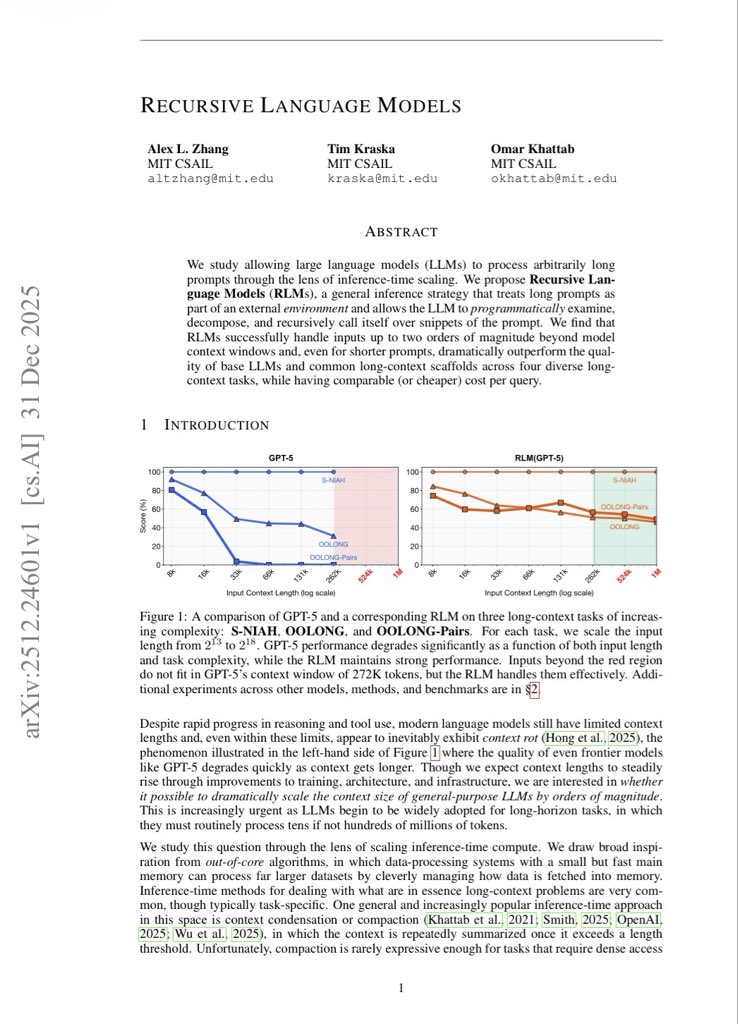
My time with the BSV Association has come to an end after 4.5 years. It has been a phenomenal 4.5 years; I'm grateful to have had the opportunity to work with so many exceptional people and travel to so many beautiful places, and I know they're going to continue pushing blockchain forward. I'm now shifting my focus entirely to the integration of AI + Blockchain. I've been busy building over the past weeks: - Shad (Shannon's Daemon) -- a fast semantic search engine that uses Recursive Language Models (RLMs) strategically to effectively eliminate the AI context window problem so every session is a continuation of the previous: github.com/jonesj38/shad - Edwin (named after physicist Edwin Jaynes) -- a personal AI that uses Shad for its memory system and takes a new approach to security so you don't have to choose between safety and utility anymore; it's like OpenClaw but secure and continuously coherent. Please have a look at my website: jake-jones.ca . I've added a simple AI chat that you can use to find out more about my experience and whether we'd be a good fit if you're looking to hire. I'd appreciate it if you could share this for visibility Cheers hashtag#AI hashtag#Blockchain hashtag#IPv6 hashtag#Agents hashtag#Shad hashtag#Edwin hashtag#OpenClaw hashtag#ClawdBot hashtag#MoltBot
English
16
32
135
5.5K
Jake Jones
Jake Jones@MonkishRex·
I've fixed the two main issues with OpenClaw so it doesn't forget across sessions, reduces token cost by >90%, and is safely usable for everyone. Coming soon: #AI #Blockchain #PAI #Edwin
Jake Jones tweet media
English
0
0
7
668
Matthew Berman
Matthew Berman@MatthewBerman·
MIT Researchers destroyed context window limits. 10m+ token prompts are now possible by moving context out of the model and into code environments. Full breakdown below.
English
113
432
3.5K
283.4K
MGR | Political Economy & Governance Advisory
Worth adding one nuance after reading the full thread. What’s described here isn’t “prompting the model to be honest.” It’s externalized control: recursion, thresholds, rejection, and escalation. Confidence scores without grounding are vibes. Confidence scores with evidence, gates, and auditability are systems. That distinction matters the moment money, safety, or accountability is involved.
English
1
0
5
506
God of Prompt
God of Prompt@godofprompt·
R.I.P. basic prompting. MIT just dropped a technique that makes ChatGPT reason like a team of experts instead of one overconfident intern. It’s called “Recursive Meta-Cognition” and it outperforms standard prompts by 110%. Here’s the prompt (and why this changes everything) 👇
God of Prompt tweet media
English
388
2.6K
21K
2.7M
Jake Jones
Jake Jones@MonkishRex·
I got tired of trying to prompt harder so I built Shad to reason smarter. Introducing Shad: github.com/jonesj38/shad Shad enables AI to reason over virtually unlimited context. Instead of forcing everything into a single prompt or relying on brittle RAG pipelines, Shad turns your knowledge base into an explorable environment—one the AI can navigate intelligently, step by step, as it solves real problems. Load an Obsidian vault containing your documentation, architecture decisions, code patterns, research notes, or best practices—and Shad will decompose complex goals, retrieve only what matters, verify outputs, and assemble coherent results. This isn’t “long-context prompting.” It’s long-context reasoning #AI #Claude #RLM #Obsidian
Jake Jones tweet media
English
0
4
15
501
Jake Jones retweetet
S Tominaga (Aka Dr Craig Wright)
AnchorChain is something I’ve been developing quietly — a small system built to fix one of AI’s most fundamental flaws: it doesn’t remember truthfully. Every LLM, every vector database, every retrieval system rewrites itself as it grows. Memory mutates, embeddings drift, histories are overwritten. You can’t prove what an AI knew yesterday. You can’t even verify whether a model’s “knowledge” is authentic or post hoc reconstruction. That’s not intelligence. That’s epistemic entropy. AnchorChain changes that. It anchors AI memory states to an immutable ledger. Every embedding, every context vector, every update is hashed, structured into a Merkle tree, and committed to the Bitcoin SV chain. The result is a permanent, cryptographically verifiable proof of what the AI knew, when it knew it, and how that knowledge evolved. We’re talking real numbers. The BSV network now sustains 4 million transactions per second. Each AnchorChain commit can encapsulate 2³² entries in a 32-depth Merkle structure. That’s 4.29 billion memory records per anchor — about 1.7 × 10¹⁶ verifiable states per second. That’s not theoretical scale; it’s the practical bandwidth of truth. This system isn’t federated or centralised. Each node, each agent, each model instance can anchor independently. It’s a distributed architecture that preserves autonomy while providing global integrity. You don’t need a central curator or aggregator. You need proof — and that proof now exists. In AI, reproducibility isn’t a luxury. It’s survival. Scientific inference, legal evidence, and machine accountability all depend on verifiable state continuity. AnchorChain makes that possible. Immutable memory. Deterministic recall. Forensic traceability. I’ve been testing it in multi-agent environments — embedding pipelines, LangChain-based frameworks, distributed LLM clusters. Every memory write becomes a proof. Every recall event can be audited. Every output can be traced to a verifiable internal state. AI that lies about its own history is finished. AI that proves its own memory becomes infrastructure. This isn’t another blockchain gimmick. It’s reliability engineering for cognition. It’s the missing layer of accountability that bridges computation and law, science and memory, action and proof. That’s what AnchorChain is. A memory system that can’t lie. #AnchorChain #AIIntegrity #BitcoinSV #MerkleProof #DigitalForensics #DataLineage #ImmutableMemory #DistributedSystems #BSV #AIReproducibility
English
80
215
586
69.4K
Jake Jones retweetet
BSV Association
BSV Association@BSVAssociation·
Devs got the first glimpses of Teranode when TeraTestnet launched last month. Today, the rest of the world finds out what unlimited scalability means: offering businesses limitless possibilities on the most efficient transaction engine ever.
English
21
98
281
46.7K
Jake Jones retweetet
Orange Gateway
Orange Gateway@orangegatewayx·
The wait is over 🫡 Our Android app is available Worldwide 🌋 Stay tuned for more hard-shipping, OG style
English
27
67
200
13.1K
Jake Jones retweetet
BSV Association
BSV Association@BSVAssociation·
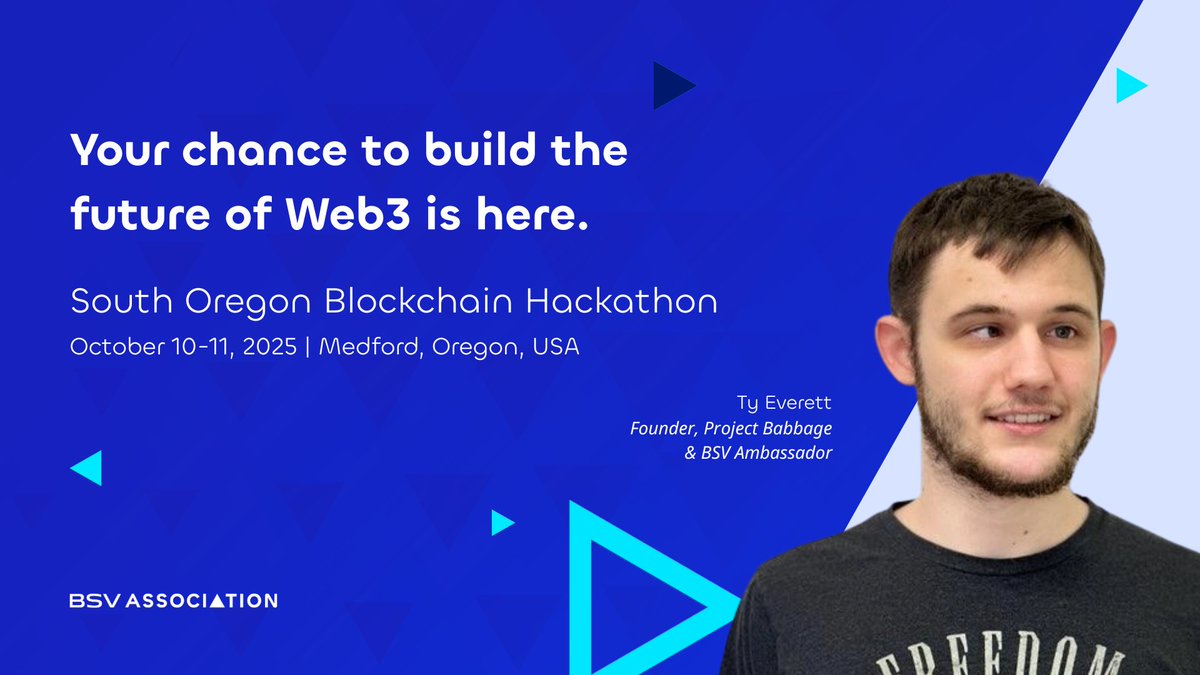
Calling all #WestCoastDevs, designers and entrepreneurs: what if your next idea could become the foundation for the next big blockchain solution? On October 10-11, the Southern Oregon Blockchain Hackathon is your chance to turn creative concepts into working applications, alongside fellow developers, students, and innovators seeking to push the limits of what’s possible. Guiding the event is BSV Ambassador @TyEverett11, CEO & Founder of @ProjectBabbage. As keynote speaker, judge, and mentor, Ty will share his insights into BSV blockchain and its tools - using his extensive knowledge to demonstrate the most useful capabilities available to developers. Here’s what to expect: ► Opening keynote followed by hands-on mentorship throughout the weekend ► Team up with fellow builders - collaborate, pitch, and turn concepts into working apps ► Explore BSV tools, tackling data and payment challenges ► Compete for cash prizes, exclusive swag, job opportunities, and more Southern Oregon | October 10–11 Sign up here: bsvhackathon.com Join the builders shaping how blockchain works for real businesses and communities here in Oregon. Register now to secure your spot. #BSVBlockchain #Hackathon #Developers #BSVAmbassador
BSV Association tweet media
English
4
20
91
2.7K