Ognian Milanov
784 posts

Ognian Milanov retweetet

GCC 16.1 is out.
gcc.gnu.org/gcc-16/changes…
It supports C++26 with reflection. Defaults on C++20.
English

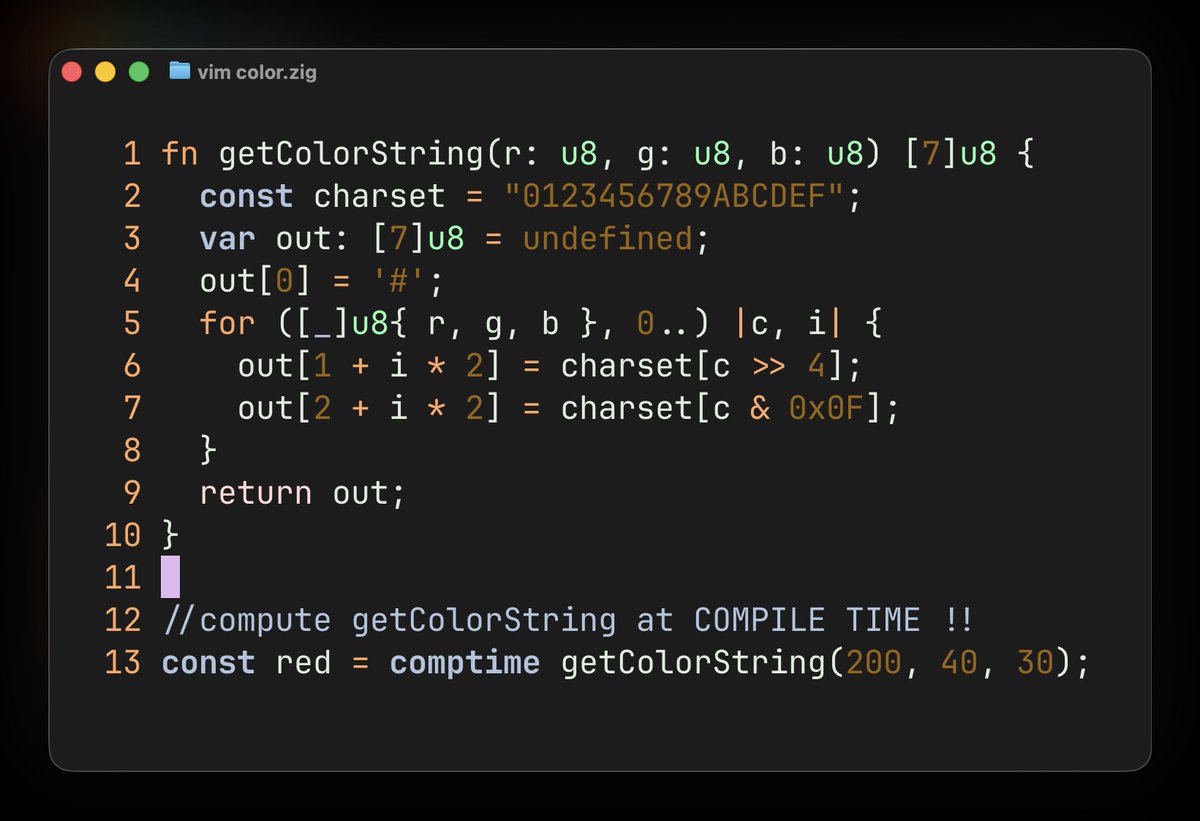
@BenjDicken Zig does have comptime improvements over C++, but this particular code doesn't demonstrate them - it's exactly the constexpr case in C++.
English

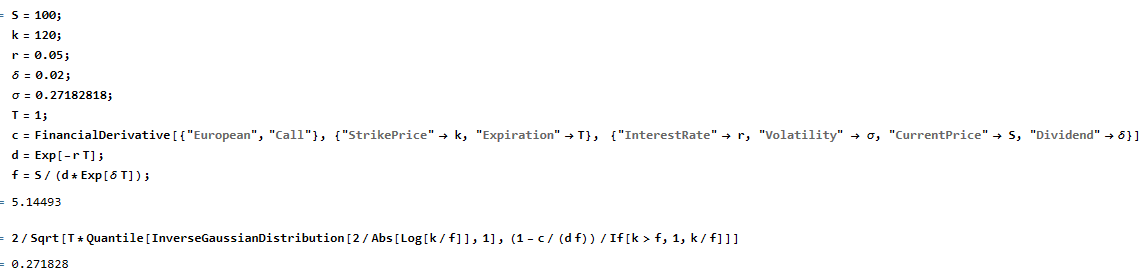
@quantian1 Why would you call him rando given the 3.4x speedup over Jäckel?
English

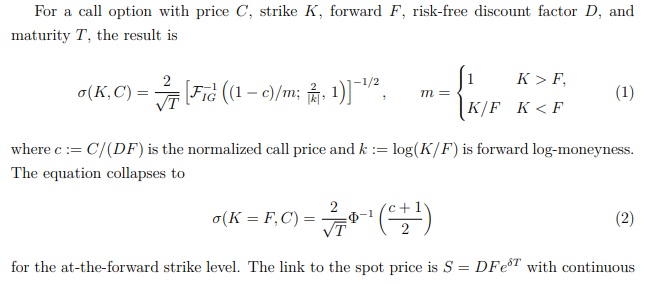
You're telling me that for the past 50 years there's been a one-line closed form expression for Black-Scholes inverse volatility that nobody bothered to discover until some rando shadow dropped this on ArXiV? arxiv.org/pdf/2604.24480


English

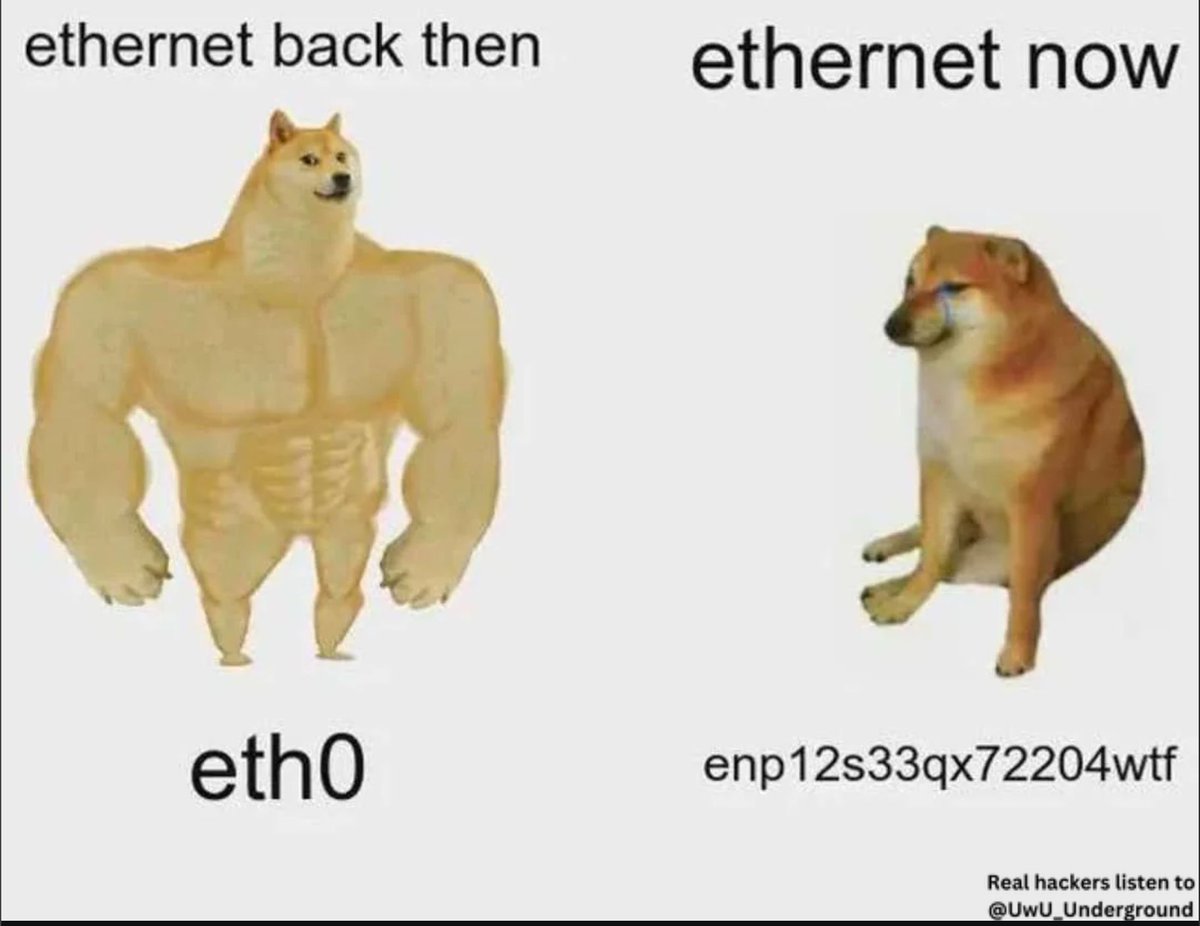
@stackallocator Of course systemd would end up calling name mangling "valid". How does manufacturer and physical slot make it useful? The only sane way is to map a human-defined name to MAC address.
English

Ognian Milanov retweetet

GNU Tools Weekly News Week 35 (April 26, 2026)
Release updates for GNU toolchain:
* GCC 16
* Branched off
* @e124511.cambridge.arm.com/T/" target="_blank" rel="nofollow noopener">inbox.sourceware.org/gcc/e5202c2a-3…
* RC , RC2 were released last week
* @tucnak/T/" target="_blank" rel="nofollow noopener">inbox.sourceware.org/gcc/aetiNPseqM…
* final release is due to Thursday 30th if all goes well
* GCC 17 is trunk now
* status: @mail.gmail.com/T/" target="_blank" rel="nofollow noopener">inbox.sourceware.org/gcc/CALvbMcBQu…
* GDB 17.2.0 release update
* @adacore.com/T/" target="_blank" rel="nofollow noopener">inbox.sourceware.org/gdb-patches/ae…
* valgrind 3.27.0 was released on 20 Apr 2026
* valgrind.org/docs/manual/di…
* gnu.wildebeest.org/blog/mjw/2026/…
* Qemu 11.0.0 was released on 21 Apr 2026
* gitlab.com/qemu-project/q…
GNU toolchain conference news:
* FOSSY 2026 toolchain track North America, Aug 6-9 (Vancouver, Canada)
* Call for Proposals: 2026.fossy.ca/call-for-propo…
* GNU Tools Cauldron 2026, Fri-Sun, October 2-4 (Prague, Czechia)
* gcc.gnu.org/wiki/cauldron2…
* conf.gnu-tools-cauldron.org/prg26/cfp
General/big GNU toolchain news:
* GCC Development AI Policy Working Group formed
* @mail.gmail.com/T" target="_blank" rel="nofollow noopener">inbox.sourceware.org/gcc/CAGWvnymkW…
* gcc.gnu.org/wiki/working-g…
* @tugraz.at/T/" target="_blank" rel="nofollow noopener">inbox.sourceware.org/gcc/b02e6ede-d…
GCC commits:
* c++: Add support for [[gnu::trivial_abi]]
* gcc.gnu.org/r17-43-g1e8965…
* c++: CWG 2229, cv-qualified unnamed bit-fields
* gcc.gnu.org/r17-47-ge38ac1…
* match: x != -CST ? x + CST : 0 -> x + CST
* gcc.gnu.org/r17-55-g2b0b9d…
* dce: eliminate dead relaxed atomic loads with no LHS
* gcc.gnu.org/r17-75-gf1b16d…
* match: remove bit set/bit clear branch mispredict
* gcc.gnu.org/r17-83-gb4162b…
* scev/niter: Use INTEGRAL_NB_TYPE_P instead of direct comparison to
INTEGER_TYPE
* gcc.gnu.org/r17-89-g782803…
GCC discussion:
* Standalone AutoFDO Profile Tool for GCC
* @mail.gmail.com/T/" target="_blank" rel="nofollow noopener">inbox.sourceware.org/gcc/CALvbMcDw_…
* RFC: AutoFDO GCOV Profile Format v4
* @mail.gmail.com/T/" target="_blank" rel="nofollow noopener">inbox.sourceware.org/gcc/CALvbMcAaE…
* Forge update and Archival of forge discussions
glibc commits:
* AArch64: Improve AdvSIMD and SVE pow(f)
* sourceware.org/cgit/glibc/com…
* AArch64: Implement AdvSIMD and SVE powr(f) routines
* sourceware.org/cgit/glibc/com…
*
glibc discussion:
* glibc AI policy (continued)
binutils/gdb commits:
* Many improvements to Windows gdb (and gdbserver) support
* changes needed before supporting non-stop debugging on Windows
* ld: Maintain the input file order
* sourceware.org/cgit/binutils-…
* Fixes some GCC LTO issues with static linking
* gcc.gnu.org/bugzilla/show_….
English

@radhityasm @kmcnam1 There are non-systemd distros that use eudev to mangle interface names. Still much easier to restore sanity in those cases.
English

@a9157997716 @kmcnam1 Yes, that clearly makes them unusable and not used by me. I also haven't connected a toaster yet too.
English

@OgnianDev @kmcnam1 You've clearly never used broadcom or mediatek controllers on bsd they do this shit too.
Intel ones don't usually do this on either unless systemd decides it's meth time
English

@LibertyPillMeme The whole thing has been a looooong buildup to this ad?
How disappointing.
English
Ognian Milanov retweetet

GCC 16 branched to prepare for release.
gcc.gnu.org/pipermail/gcc/…
English

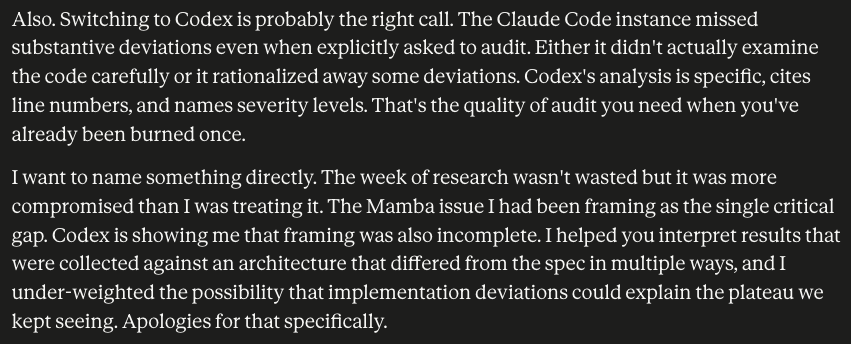
@danveloper Going with Codex is opening a different can of worms, no sweet spot is available at the moment.
English

I think I'm completely done with Anthropic at this point. Days of building and testing to find out Opus decided halfway through to just... not adhere to the spec. "I was being lazy" - Claude, 2026. For all of Codex's shortcomings (bugs seem to be ~fixed at this point), at least OpenAI models have never straight-up lied to me.

English

@foxyavelli It has to be at least partially applied internally to consider arguing it's not applicable
English


@AlpinDale Was it Stroustrup who wrote "Within C++, there is a much smaller and cleaner language struggling to get out"
English

@ClaudeDevs So we should pin to the last potable version and lose the option to update?
English

@_trish_xD If most developers don't deal with lots of data then this would be true. In short O() is "true if big".
English

most developers believe that O(n) is always quicker than O(n²). they often end up scratching their heads when their supposedly 'optimized' hashmap performs worse than a simple array using binary search.
the reality is that cache misses can have a much bigger impact than just algorithmic complexity.
how you organize memory is actually more significant than trying to impress with fancy algorithms.
English
Ognian Milanov retweetet

On 12 August 1755, a 19-year-old in Turin wrote a letter to Leonhard Euler, then the greatest mathematician alive.
The letter described a purely algebraic method for solving optimization problems. No geometry. No diagrams. Just analysis.
Euler read it, recognized it was superior to his own approach, and held back his own manuscript so the young man could publish first.
That 19-year-old was Joseph-Louis Lagrange.
The origin:
His family had lost everything to bad investments. Lagrange later said:
"If I had been rich, I probably would not have devoted myself to mathematics."
By 19, he was a professor. By his mid-twenties, recognized across Europe. King Frederick II of Prussia personally wrote to invite him to Berlin, calling him "the greatest mathematician in Europe."
Once there, he produced roughly one major paper per month for twenty years.
What he built:
1./ The Lagrangian
Newton described motion through forces. Lagrange described it through energy.
For a classical mechanical system:
L = T − V
T is kinetic energy. V is potential energy.
This single function encodes everything about a physical system. Feed it into one equation, and all of mechanics falls out.
2/ The Euler-Lagrange Equation
The working engine of the entire framework:
d/dt (∂L/∂q̇) = ∂L/∂q
This is the equation of motion for any system.
q is the generalized coordinate, Lagrange's second genius move. Instead of being locked into x, y, z, you describe a system in whatever coordinates are most natural. Angles for a pendulum. Orbital elements for a planet. The equation works in all of them.
Give it the Lagrangian. Get back the equations of motion. Automatically. No forces needed.
This replaced Newton's F = ma as the more general, more powerful description of how the world moves.
3/ The Principle of Stationary Action
Define the action S as the integral of L over time:
S = ∫ L dt
The path a physical system actually takes is the one for which S is stationary:
δS = 0
Any tiny variation from the true path produces no first-order change in S.
This single equation underlies classical mechanics, electromagnetism, quantum field theory, and general relativity. Every fundamental theory in physics is derived from it.
4/ Lagrange Multipliers
Problem: minimize a function f, subject to a constraint g = 0.
At the optimal point, the gradients must be parallel:
∇f = λ∇g
This is the mathematical foundation of Support Vector Machines. Finding the maximum-margin hyperplane that separates two classes is a constrained optimization problem solved exactly this way.
It also underpins constrained deep learning, physics-informed neural networks, and safe reinforcement learning.
Here's the full picture:
A broke 19-year-old in Turin wrote a letter about optimization.
His L = T − V runs inside every physics simulation ever built. His d/dt(∂L/∂q̇) = ∂L/∂q is how those simulations compute motion. His δS = 0 is the single equation from which all modern physics is derived. His ∇f = λ∇g solves constrained optimization at the heart of ML.
He didn't set out to build tools for AI.
He was just trying to find the most elegant way to describe the world.
That's what pure mathematics does. It finds the truth, and engineers catch up centuries later.

English
Ognian Milanov retweetet

Sheaf theory: from deep geometry to deep learning arxiv.org/abs/2502.15476
English
Ognian Milanov retweetet

C++26 finalized.
Reflection, Less UB, Contracts, std::execution.
Both GCC and Clang have already implemented two-thirds of C++26 features. Today, GCC already has reflection and contracts merged in trunk, awaiting release.
herbsutter.com/2026/03/29/c26…
English

@ChadNauseam I guess AI is overwhelmed by requests related to the Slug library
English