Pedro Corsi
1.1K posts


Recent studies in neuroscience and psychology are reframing ADHD not merely as a set of cognitive hurdles but as a powerful driver of breakthrough creativity and innovation.
Long stereotyped for difficulties with focus, attention, and impulse control, individuals with ADHD traits often exhibit superior divergent thinking—the capacity to generate a wide array of novel ideas by connecting distant or unrelated concepts. This stems from reduced adherence to rigid mental frameworks, enabling freer conceptual expansion and the production of more original, unconventional solutions than neurotypical counterparts. Heightened mind-wandering, especially when deliberate (purposefully allowing thoughts to drift), acts as a fertile source for this creativity, bypassing conventional boundaries to yield abundant "outside-the-box" insights.
Complementing this cognitive flexibility is a neurological drive for novelty rooted in lower baseline dopamine signaling. This creates a chronic need for stimulation, translating into exploratory, risk-tolerant behavior and a propensity for adventure—qualities that can disrupt routine settings but prove invaluable in dynamic fields. Impulsivity, often reframed as rapid action initiation, becomes a catalyst for pursuing bold ideas and seizing opportunities in high-stakes environments.
These traits align closely with the profiles of many successful entrepreneurs, inventors, and pioneers. In fast-evolving creative and innovative economies, the ADHD brain's wiring for quick associative leaps, tolerance of uncertainty, and motivation through novelty-seeking provides a distinct edge, turning potential challenges into engines of originality and progress.
Emerging evidence from 2025–2026 research reinforces this view: studies link stronger ADHD traits to elevated creative achievements via mediated mind-wandering, intuitive insight-driven problem-solving, and higher real-world inventive output, highlighting neurodiversity's role in fueling societal advancement.
[Maisano, H., et al. (2026). ADHD Symptoms Predict Distinct Creative Problem-Solving Styles and Superior Solving Ability. Personality and Individual Differences (February 2026)]

English

📡 WOW: CHECK OUT THE GUTS OF THIS OLD RADAR 😱
This is what a real upgrade looks like
We’re overhauling OUTDATED radar infrastructure and bringing next-generation surveillance into American skies
✅ Sharper tracking
✅ Smarter routing
✅ Fewer delays

English

JUST IN: FAA reportedly considering partnering with Palantir on new AI tool for air traffic control.
English

Finally saw Project Hail Mary. What a refreshing movie. A straight forward plot, fun movie science, great action, surprisingly funny, Gosling made the scenes interesting, visually curious, Rocky was lovable, no politics, no agenda, a satisfying ending, just a solid movie. Based.

English

Why did she tell everyone her WiFi password? 🤔
Samantha Smith@SamanthaTaghoy
“MMIWG2SLGBTQQIA+” The Canadian government just dropped this absolute monstrosity (and no, it isn’t satire).
English
BREAKING: Trump announces the U.S. "may stop by Cuba" when finished with Iran.
English

First (supervised) FSD approval in Europe!
Congratulations to the Tesla team and thank you to the regulatory authorities in the Netherlands for all the hard work required to make this happen.
Tesla Europe, Middle East & Africa@teslaeurope
De toekomst van mobiliteit is aangebroken FSD Supervised has been approved in the Netherlands 🇳🇱 & will begin rolling out in the country shortly! Trained on billions of kilometers of real-world driving data, it can drive you almost anywhere under your supervision – from residential roads to city streets & highways No other vehicle can do this. We're excited to bring FSD Supervised to more European countries soon
English

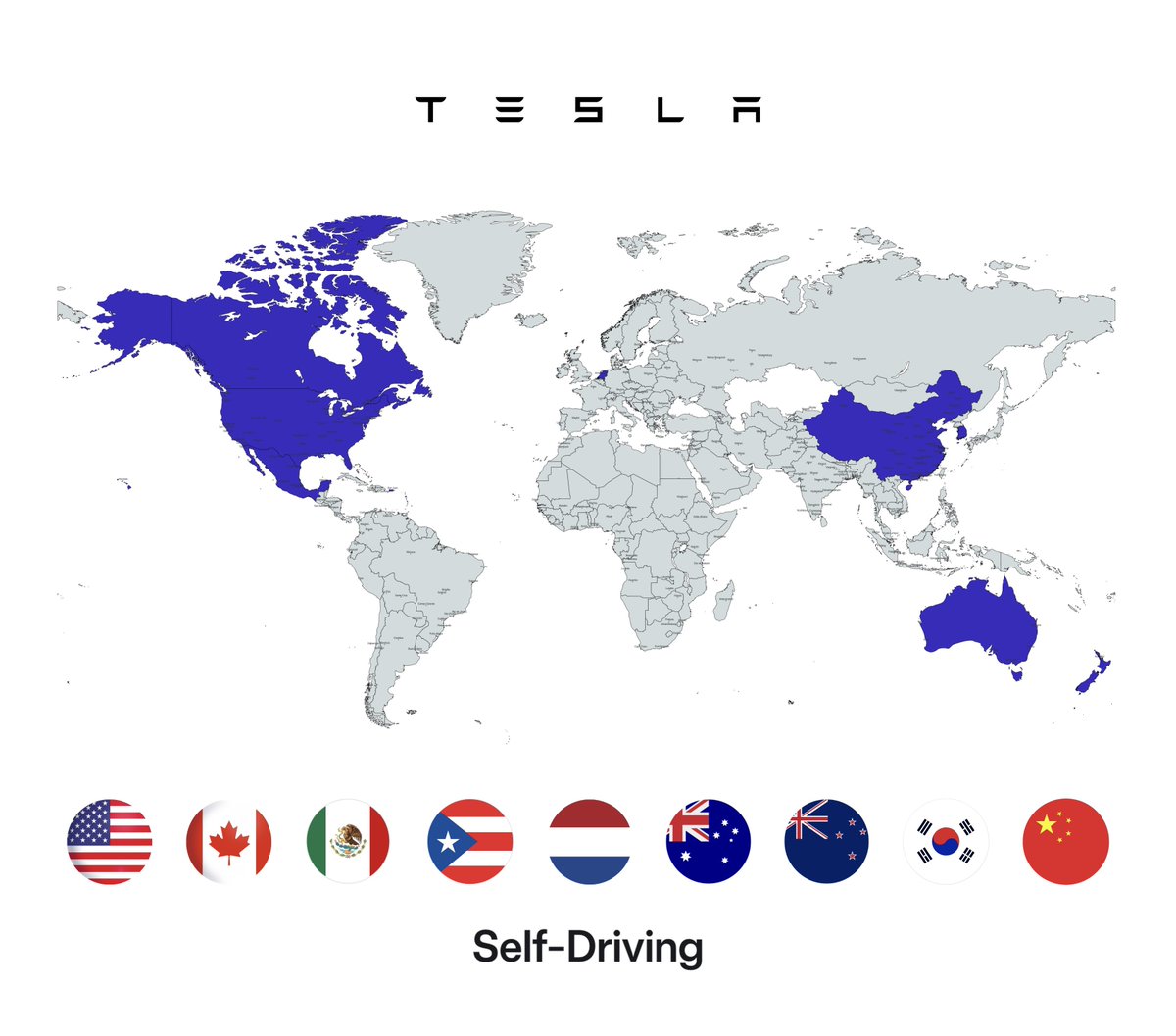
Tesla Self-Driving is now officially operating in:
• U.S.
• Canada
• Mexico
• Puerto Rico
• The Netherlands
• Australia
• New Zealand
• South Korea
• China
Many more places to hopefully come in the future.
English
The crash that happened last night at LGA is a reminder that a new air traffic control system needs to be a TOP PRIORITY.
We need more money from Congress to finish the job. It’s not about politics. It’s about SAFETY.
English
I am on my way to LaGuardia Airport now in response to last night’s horrific crash involving Air Canada Express 8646 and a fire truck that killed two pilots.
@FAANews and @NTSB are working closely on this, and we will share updates as soon as possible.
Please keep the victims, families and response teams in your prayers.

English
BREAKING: Pilot and co-pilot of Air Canada plane killed after collision at New York's La Guardia airport
English

🚨 ÚLTIMA HORA
La dictadura comunista de Cuba dice que se están preparando para una confrontación militar con Estados Unidos.
Español