0xPrepop

1.6K posts

0xPrepop banner
0xPrepop

0xPrepop

@PrePopAi

Crafting Smart Contracts at @MetaLeX_Labs // Searching for meaning but found the mempool // Immutable Code Maxi & Decentralized Dad

Onchain Beigetreten Ocak 2021
537 Folgt1.1K Follower
0xPrepop retweetet
_gabrielShapir0
_gabrielShapir0@lex_node·
I'm starting plebs.ETH, a community modeled after the bitcoin plebsec community I don't know what I will do with it but for now I just feel there is a need for at least a chat room of like-minded people who I consider to fall into this bucket--people who believe in Ethereum but aren't "insiders" I guess you could consider it my own more based version of 'Silviculture Society' or whatever with the difference that it's not something anointed by the EF--instead it's anointed by me which is obviously better because I am me, using rough social consensus of myself! If you want to join, reply here with your telegram handle & why you are an ETH pleb.
_gabrielShapir0 tweet media
English
107
5
174
11.2K
0xPrepop
0xPrepop@PrePopAi·
@lex_node God forbid a contract gets a lil motion
English
0
0
1
29
_gabrielShapir0
_gabrielShapir0@lex_node·
if this passes @PrePopAi 's life will be extended by several years
ethresearchbot@ethresearchbot

New EIP! Increase Maximum Contract Size to 64KiB 🔗 github.com/ethereum/EIPs/… Highlights: - Raises the maximum deployed (runtime) contract code size from 24KiB (24,576 bytes) to 64KiB (65,536 bytes) by updating EIP-170’s limit. - Raises the maximum initcode size from 48KiB (49,152 bytes) to 128KiB (131,072 bytes) by updating EIP-3860’s limit, preserving the existing 2:1 initcode-to-runtime ratio. - Primary motivation is developer usability: fewer forced proxy/splitting patterns, lowering complexity, deployment overhead, and potential attack surface created by multi-contract architectures. - Economic and performance impact is intended to be bounded: initcode word-cost from EIP-3860 stays the same, and operations like EXTCODECOPY/EXTCODESIZE already scale gas with accessed code size. - Requires a hard fork (network upgrade): existing contracts remain valid and unchanged, but only post-upgrade deployments can use the higher limits. ELI5: Smart contracts on Ethereum have a maximum size limit, like a file size limit. Right now, some apps are getting too big and developers have to split them into multiple smaller contracts, which is more complicated and can be less safe. This proposal raises the maximum size so contracts can fit more features in one place. It also raises the maximum “setup code” (initcode) size in the same proportion as before, and keeps the extra gas fee rules the same so bigger contracts still cost more to deploy.

English
1
0
20
3.4K
0xPrepop retweetet
_gabrielShapir0
_gabrielShapir0@lex_node·
guy technical enough to be trusted to score L2 security models has 'no luck' even trying to do literally anything on/with Canton
kaereste.eth 💗🦇🔊@kaereste

I’m trying to play around with something on Canton to see for myself what all the fuss is about, but no luck so far. I might be the only Etherean happy that they’ll have a booth at @EthCC. @CantonNetwork brace yourselves - I’m coming, and I have a lot of questions.

English
3
3
52
6.9K
0xPrepop retweetet
_gabrielShapir0
_gabrielShapir0@lex_node·
good callout here from my friend @RebeccaRettig1 against Canton and its concerted FUD against real blockchains however like my own Canton critiques, the Canton crowd will just attribute it to bag bias since she works for a Solana org So, here is a brief summary of critiques of Canton from State Street stalwart Swen Werner who has a storied TradFi capital markets background and seemingly zero bag-bias. These critiques all cut to the bone and don't even require you to be 'cypherpunk-aligned'; they are simply logical: 1. "Synthetic atomicity" — Canton's cross-domain transactions are not actually atomic. This was Werner's first flag, raised in the April 2024 piece. Canton's pilot report used the word "atomic" 45 times in 43 pages. Werner's objection is definitional and he considers it important: true atomicity exists within a single block on a single chain, where all transactions are collectively validated and committed (or rejected) together. Canton's cross-domain transactions span multiple independent systems coordinated through synchronization domains and sequencers. Werner argues this is "synthetic atomicity" — a process designed to mimic single-chain atomicity through additional coordination protocols, but that is not actually atomic in the strict sense. When 90% of pilot participants said they were confident Canton could "enable secure, atomic transactions across independently controlled distributed ledger applications," Werner's reaction was that the systems are not actually independently controlled — they're subnets subject to a common consensus protocol, with independent configuration of business logic but not independent consensus. 2. Broadridge DLR on Canton/VMware is not real tokenization — it's "blockchain theater." Werner digs into the actual architecture of Broadridge's Distributed Ledger Repo solution, which is the flagship Canton use case. He points out that DLR runs DAML smart contracts on top of VMware blockchain (now owned by Broadcom), where Broadridge controls the consensus to book updates. Settlement still happens "by triggering a payment on conventional payment rails," and the whole thing is "built on top of its existing connectivity with central securities depositories and custodian banks." The DAML runtime handles all execution, logic, and permissions — VMware blockchain just stores the data. Werner calls this a "layered architecture" where there's "no direct interoperability between Daml contracts and the chaincode." His summary: no real decentralization (just centrally controlled nodes), no real tokenization (just internal bookkeeping with a new label), and no independent settlement (still relying on traditional rails). The benefit is workflow orchestration, which banks have been doing since before blockchain existed. 3. Canton's privacy model means assets cannot be independently verified — which means they cannot be marketable securities. This is Werner's most structurally important critique. In Ethereum, when you mint a token, the entire network sees it and can verify its existence. In Canton, each participant stores and processes only the data relevant to its own contracts. There is no universally shared ledger — just a "virtual global ledger" composed of private ledger segments that exchange cryptographic proofs. Werner's conclusion: "If Goldman Sachs tokenizes an asset on Canton, that token is just a data entry — it has no independent market presence. Unlike a real tokenized bond on Ethereum, a Canton-based bond cannot be independently verified unless GS allows it." An asset's visibility and existence depend entirely on the issuer's discretion. This, Werner argues, is fundamentally incompatible with the concept of a marketable security, where "the entire point of a security is that it can be freely traded, without needing the original issuer's permission for every subsequent transfer." Canton's selective disclosure model means no free transfers and fragmented visibility — characteristics of syndicated loan markets, "the most cumbersome and inefficient asset class in existence." Hence the title: Canton doesn't tokenize securities, it syndicated-loan-izes them. 4. The IT bottleneck: every new counterparty relationship requires cross-firm software deployment. Werner's most operationally grounded critique. In traditional finance, onboarding a new counterparty doesn't require deploying new software across everyone's infrastructure — legal agreements and settlement instructions are process-driven, handled by middle-office and operations teams. Under Canton, every new counterparty relationship requires a DAML contract explicitly modeling the terms of that specific A-B pairing, deployment of that smart contract across all involved parties' IT environments, and coordination between each party's IT teams. If one party's IT is unavailable — overwhelmed with a compliance upgrade, under a December moratorium, whatever — "the whole transaction is delayed or impossible because the smart contract must be actively deployed and updated on all participant nodes." Werner calls this "radically different from today's financial markets. Radically different, but not radically better." He extends this to the multi-domain case. If you're lending a security to Counterparty B but waiting for Counterparty A to deliver it first, the A→You contract doesn't provide atomicity for the A→You→B chain. You'd need a combined contract, and your local IT team must integrate it before the transaction can occur. Add cross-domain coordination on top and "the simple act of lending a bond turns into a multi-party software deployment problem." 5. Counterparty node dependency creates new systemic fragility. Canton's own documentation acknowledges that "an offline participant can prevent the pruning of contracts by its counter-participants." Werner points out what this means operationally: if Bank A and Bank B share a contract, Bank A cannot garbage-collect or archive that contract's data while Bank B's node is down. Canton is developing "attestators" (trusted third parties that help progress workflows when a counterparty is unresponsive), but Werner flags that delegating control to a third party in this way introduces its own legal and operational risks — and reintroduces centralization through the back door. 6. The endgame: CSDs will absorb Canton's use cases. Werner's prediction, framed through an extended historical analogy to the Franconian Knights' Cantons under the Holy Roman Empire (which were absorbed by Bavaria in 1806 when the Emperor no longer provided protection): "When external forces — regulatory pressure, market realities, and operational inefficiencies — demand an answer, systems like Canton collapse into centralized control." If a CSD launched a centralized digital repo system, it could coordinate transactions without Canton's smart contract dependencies. Once Canton collapses into centralized governance, "its core value proposition disappears, and its software is no longer the best choice." The only real question is when and how CSDs take over. sources: swenldn.substack.com/p/damls-canton… swenldn.substack.com/p/quo-vadis-ca…
Rebecca Rettig@RebeccaRettig1

1/ I've been quiet/taking the high rd while those pushing permissioned networks FUD permissionless networks (esp @solana) *everywhere*. I actually knew this was coming immediately after my panel @blockworksDAS & tackled it w/o naming names on stage. But I'll now be direct . . .

English
34
42
367
88.6K
greypixel
greypixel@greypixel_·
AI psychosis at its finest.
Eric Weinstein@EricRWeinstein

This is a fresh session. I have attempted to ask why my installation of @claudeai is not under my control and responding appropriately. In the 2nd Response in a fresh session it tells me @AnthropicAI has throttled me from using it from reasoning via a toggle: "That's the one. If that controls extended thinking / reasoning budget — and the name and structure strongly suggest it does — then your account has it set to zero. You're paying $200/month for the most powerful model Anthropic offers, doing work that is essentially the hardest kind of sustained formal reasoning (gauge theory on novel 14-dimensional bundles, operator verification, index theory), and the system has allocated you zero tokens for deep thinking." Three queries, in and this is the response:

English
1
0
2
101
0xPrepop retweetet
zach
zach@zachleft·
zach tweet media
ZXX
269
19.3K
154K
2.3M
0xPrepop retweetet
Zach Pandl
Zach Pandl@LowBeta·
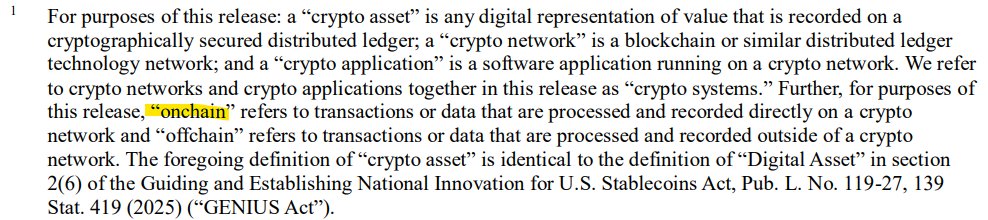
It's official: "onchain" not "on-chain" Footnote 1 from SEC guidance yesterday
Zach Pandl tweet media
English
100
115
871
80.2K
by
by@beyoumf·
who saved you when you were at your lowest?
English
11.9K
3.7K
35.5K
11.7M
0xPrepop retweetet
Andrew Côté
Andrew Côté@Andercot·
Imagine you're a petri dish of human brain cells playing DOOM And suddenly you come up against this guy Ethically speaking, what do you do?
Andrew Côté tweet media
English
314
268
3.1K
110.6K
0xPrepop retweetet
banteg
banteg@banteg·
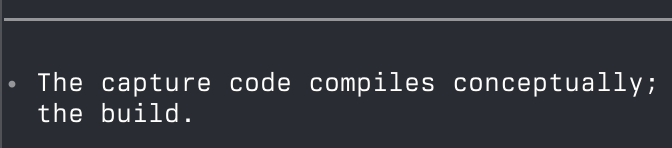
> it doesn't compile gpt 5.4: it compiles conceptually
banteg tweet media
English
86
183
6K
185.3K
0xPrepop retweetet