Rodney Hooper

3.2K posts

Rodney Hooper banner
Rodney Hooper

Rodney Hooper

@RodneyHooper13

RK Equity. Research and advisory (Lithium & other EV battery metals). Co-host of @LithiumionRocks! https://t.co/5IHesnL6RI on YouTube

Beigetreten Şubat 2018
154 Folgt11.4K Follower
Angehefteter Tweet
Rodney Hooper
Rodney Hooper@RodneyHooper13·
Is #EV demand real? @VW sees 10,000 orders in less than 24 hours. Now imagine what demand would be like with 300+ models to choose from across all OEM's. It all starts next year - where will all the batteries come from? #lithium cnbc.com/2019/05/09/vol…
English
32
74
291
0
Rodney Hooper retweetet
Matt Fernley
Matt Fernley@matt_fernley·
While most eyes are focused on hydrocarbons in the Middle East, keep an eye on #Lithium in China as well... Some data providers flagged a weekly reduction in inventories, and prices have bounced over the past few days. We seem to be establishing a reasonable trading range at these levels which is nearly 3x the June lows...
Matt Fernley tweet media
English
6
8
89
4.2K
Rodney Hooper retweetet
Rock Stock Channel
Rock Stock Channel@RKEquityRocks·
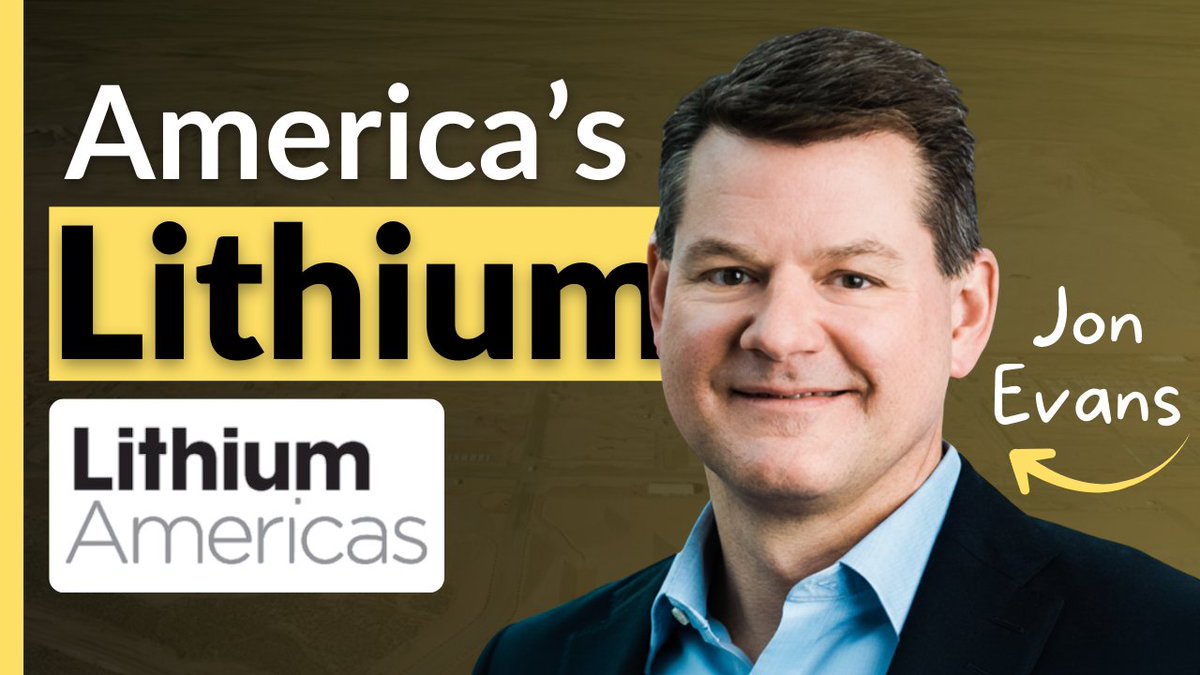
“Hedge funds all consider you guys rare earth.” That may be the tell. Jon Evans — CEO of @LithiumAmericas, former FMC lithium head, now building Thacker Pass with GM, Orion and the DOE — joins us to explain why one of the most strategic US lithium assets is still being traded like a momentum proxy for MP. The market may have got this wrong. • Thacker Pass is no longer a permitting or a financing story • The capital stack matters • Evans’ argument is that the process risk is widely overstated • The reported C1/ASIC reflect a very different setup from how the stock is being discussed The bigger point: lithium demand goes well beyond EVs with Evans' noting every 1 GWh of storage needs roughly 900 tons of lithium. Meanwhile the stock still gets shoved into the same “critical minerals” basket trade as rare earths. Misclassification can be a valuation opportunity. Full episode out now. YT → youtu.be/hudbS0HwAnU
YouTube video
YouTube
Rock Stock Channel tweet media
English
3
3
33
1.9K
Rodney Hooper retweetet
CnEVPost
CnEVPost@CnEVPost·
BYD registrations jump 162% in Europe, beating Tesla again BYD's new car registrations in Europe reached 17,954 units in February, narrowly surpassing Tesla's 17,664 units once again. cnev.co/d7wiN38 👇
English
5
27
136
9.6K
Rodney Hooper retweetet
Haplo
Haplo@HC_Haplo·
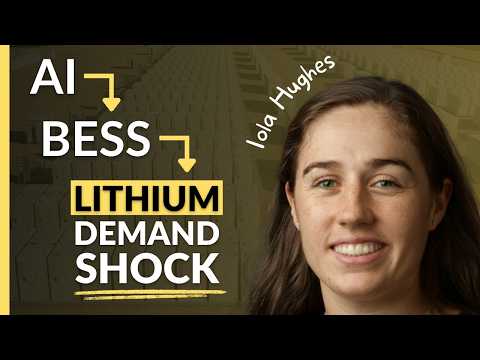
AI Drives Lithium Demand; EVs Take a Back Seat | Benchmark’s Iola Hughes youtu.be/JkxpsIDmMGM
YouTube video
YouTube
English
0
5
22
2.9K
Rodney Hooper retweetet
Matt Fernley
Matt Fernley@matt_fernley·
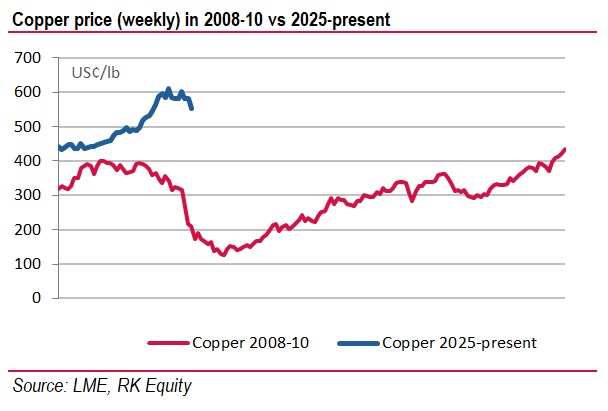
OK, let’s get this out in the open so we all know where we stand. I’m a long-term #copper bull. But I’m a short-term copper bear. And this is why. I was both a long-term and short-term copper bull in 2008 – the last time we had a long-term global recession [obviously I’m not including the Covid recession in 2020, which was short and sharp]. I believe that that set up in copper had a number of similarities to the 2026 one: - In 2008, even though we’d had signs for some time that all wasn’t right in the world, copper prices stayed elevated as the market perceived that the long-term secular demand story was likely to dominate over any short-term weakness. It was only when the global economic data started to nose over in the second half of 2008 that we saw a collapse in copper prices. - In 2008, we were in the middle of a secular demand event, the industry was struggling with rising costs and falling grades and an anticipated structural supply shortage. - And there was a lot of speculative activity. And, despite all the long-term positives, the collapse was a big one. Copper prices more than halved over a six-month period. The long-term drivers didn’t go away. It was just that the market realised (eventually) that near-term economic weakness overwhelms secular demand thematics. And I fear that that is the situation we’re in here. I’m not an economist, but I am a commodity specialist, and I’ve lived through oil price shocks before. And the economists are correct that high oil prices do impact consumer demand and that, if oil prices stay high for an extended period, then we’re going to have a consumer-led recession. And, by the way – consumers are still 45% of global copper demand. Much more than data centres, and much more than power grids. And there’s another issue as well. Because copper demand hasn’t been great for the past 6-12 months, and speculators have been papering over the cracks. Which means that copper prices are much higher than they should be, in my view, given current demand fundamentals. If demand now weakens further, I think that a wholesale deleveraging like we’ve seen in gold and silver is possible, and that would be very bad for copper prices. In 2008 when the copper price collapsed, it fell more than 50%. Could it do that again? I believe that’s quite possible. Which in no way means that I’m capitulating on my long-term bullish view on copper. It just means that sometimes you have to be aware of the near-term market realities.
Matt Fernley tweet media
English
1
4
24
2.2K
Rodney Hooper retweetet
Rock Stock Channel
Rock Stock Channel@RKEquityRocks·
Watt’s next for battery demand in 2026? Benchmark forecasts 16% growth to 2 TWh. EVs +9%, BESS +57% We spoke with @RhoMoIola: • EVs vs BESS • China exports • LFP vs sodium-ion 📺 youtu.be/JkxpsIDmMGM
YouTube video
YouTube
Rock Stock Channel tweet media
English
5
14
50
7.8K
Rodney Hooper retweetet
Howard Klein
Howard Klein@LithiumIonBull·
Big news @AtlanticLithium Congrats Keith Muller, Amanda Harsas, Neil Herbert and the rest of team on what is indeed a watershed moment for the company and Ghana. Considering recent Core Lithium financing, $PLS/Canmax off-take and many other indicators of the strong demand for shovel-ready spodumene projects, there should be no shortage of good options to progress to full funding and FID in the not too distant future. $A11.AX $ALL.L
Howard Klein tweet media
English
3
15
58
4.1K
Rodney Hooper retweetet
Howard Klein
Howard Klein@LithiumIonBull·
"Mining today represents just 1% of the S&P 500." — @robert_ivanhoe, remarks in the Oval Office #NotSustainable. Tomasz Nadrowski’s new book Mineral War and @ctindale's viral Return of Matter thesis frame the challenge: stateless (financial) capitalism vs. state (material) capitalism. China has mastered the industrial middle - Processing. Refining. Smelting. Manufacturing. A HALO Effect - Heavy Assets. Low Obsolescence - has only just begun for the Physical AI investment thematic. Carlyle’s Jeff Currie sees a Great Rotation underway — a shift from the tech equity boom toward commodities and real assets after years of underinvestment. Beijing’s new Five-Year Plan doubles down on strategic materials. But fossil fuels still matter to the Middle Kingdom. When Trump eventually visits Xi in China, could last October’s rare-earth détente evolve into a G2 Mineral Peace? Tolstoy, Tzu & Trump: War & Peace meets The Art of War meets The Art of the Deal. Latest Lithium-ion Bull Issue 111: Mineral War & Peace 👇
Howard Klein tweet media
English
2
6
18
1.7K
Rodney Hooper retweetet
Matt Fernley
Matt Fernley@matt_fernley·
I think the most dangerous thing that I see in markets currently is this assumption that, as soon as the war ends, commodity production will just switch back on again. It won’t. It can’t. Commodity production is not like a manufacturing plant where you just line up your raw materials, flick a switch and production restarts again. Restarting oil and gas production, for instance, can take several months, depending on the assets. Some simple wells may only take a few days or a few weeks, but offshore fields or LNG facilities can take weeks or months. Delays are caused by the need to repressurise systems, inspect equipment and ensure the safety integrity. Reservoir behaviour can also change during shut-ins, requiring careful ramp-up to avoid damage or flow issues. So, this assumption that fields will just restart production immediately is not realistic. For LNG plants it takes weeks to cool down the cryogenic systems. It's a similar situation in aluminium, as I discussed in previous posts. When you idle an aluminium smelter, the molten aluminium in the pots freezes. It can then take 6 months+ to restart a plant. While not as bad as oil&gas and aluminium, turning a urea plant back on can take 2-3 weeks. It takes 1-2 weeks to restart ammonia plants and then another 7-14 days to restart the urea plant around it. Likely it will take 1-4 weeks to restart the petrochemicals and plastics plants, and the oil refineries will also take a similar amount of time to restart. And those factors don’t even consider that the world’s shipping fleets are now mispositioned and it will take weeks in many cases for those ships to reposition themselves to the right places. So this assumption the market’s making that, as soon as peace breaks out, everything will go back to normal is very dangerous. Supply disruption is into its third week now. Even if the war stopped tomorrow, it would be several months before supply of many of these commodities will be re-established. And that’s simply not being priced into commodity prices or economic expectations, in my view.
Matt Fernley tweet media
English
29
156
503
47.5K
Rodney Hooper retweetet
Rock Stock Channel
Rock Stock Channel@RKEquityRocks·
How fragile is the critical minerals supply chain, really? Pod up 🔥 • Sulfur shock risk • Aluminum squeeze • Rare earths + China plan • Chinese EV slowdown • Lithium market update youtu.be/lRi8vv5NhEw
YouTube video
YouTube
Rock Stock Channel tweet media
English
1
6
22
2.2K
Rodney Hooper retweetet
Matt Fernley
Matt Fernley@matt_fernley·
There are so many things to talk, think and write about at the moment, but I want to make a few comments on #aluminium. It’s not a sexy sector like copper and has been out of vogue for much of the past 20 years. I think that should change. Here’s why: - Global aluminium exchange inventories are at critical levels – about 4 days of consumption at the end of January versus a 10-year average of roughly 14 days. Copper exchange inventories, by contrast, are around 13 days of consumption, close to their long-term average. - China, which drove most aluminium supply growth over the past two decades, has imposed a production cap and appears to be sticking to it. No more structural overproduction from China. Its days as a huge net exporter look to be over. - Meanwhile the GCC and Indonesia have been the second and third fastest-growing sources of new aluminium supply over the past decade. The GCC alone now accounts for roughly 9–10% of global supply. - The two key inputs for aluminium production are power and alumina. Gulf smelters benefit from cheap power, but they import most of their alumina by sea through the Strait of Hormuz. And currently those shipments are disrupted. One smelter has already shut down and others have declared force majeure. - Aluminium is produced by electrically reducing alumina in high-temperature cells known as “pots.” Each pot produces a few tonnes per day. 100–400 pots form a potline, and several potlines make up a smelter. - Most smelters carry 3–4 weeks of alumina inventory. Operators can stretch that by lowering current, reducing feed or shutting some pots, which may extend operations to roughly 6–8 weeks. - But once pots cool and freeze, restarting is not quick. Operators must remove solidified metal, rebuild linings and recommission the cells. Restarting potlines can take months and a full smelter restart can take 6–12 months. - So if the Strait of Hormuz disruption lasts another few weeks, roughly 6–7% of global aluminium supply could be offline for much of a year – at a time when inventories are already extremely tight and aluminium is critical for rebuilding structures, power infrastructure, aerospace, defence, autos, batteries and renewables. That’s why I’m increasingly constructive on aluminium – and surprised the market isn’t paying more attention.
Matt Fernley tweet media
English
3
8
55
11.6K
Rodney Hooper retweetet
Rock Stock Channel
Rock Stock Channel@RKEquityRocks·
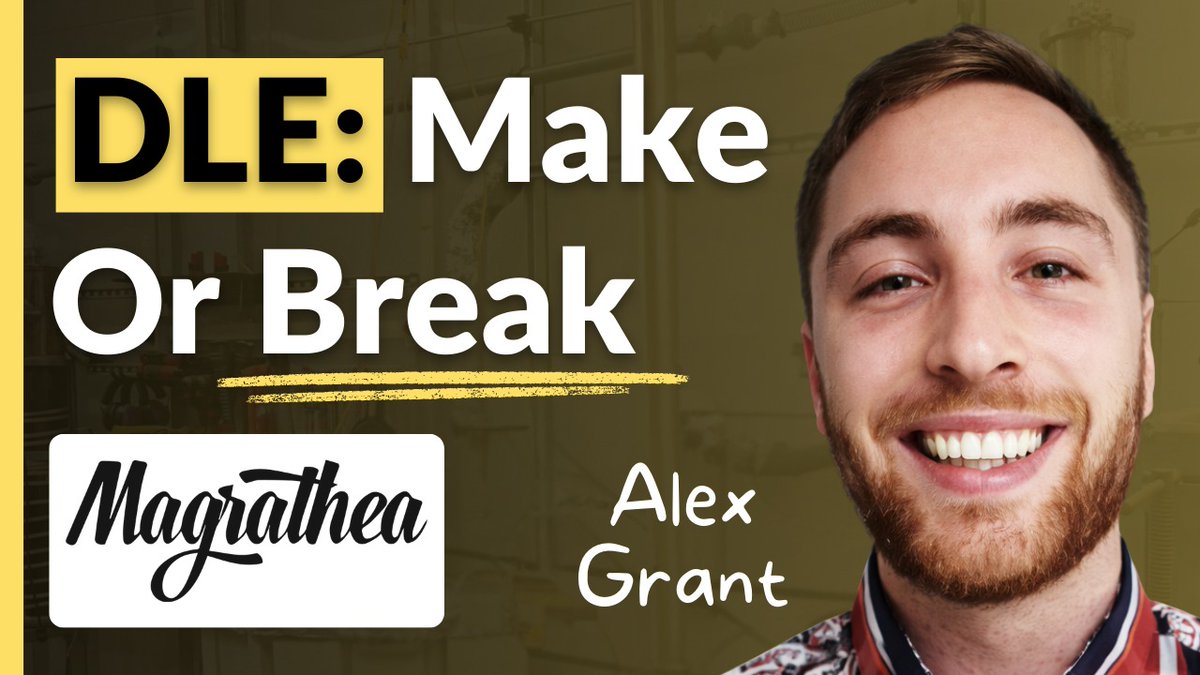
"These Are State Projects. Free Markets Won't Build This" @biglithium breaks it down: • DLE's make-or-break phase • Arkansas/Smackover lithium • Why China still sets pricing • Magnesium's national security role 📺 youtu.be/5XLDM6h1qOY
YouTube video
YouTube
Rock Stock Channel tweet media
English
0
2
9
3.1K
Rodney Hooper retweetet
Rock Stock Channel
Rock Stock Channel@RKEquityRocks·
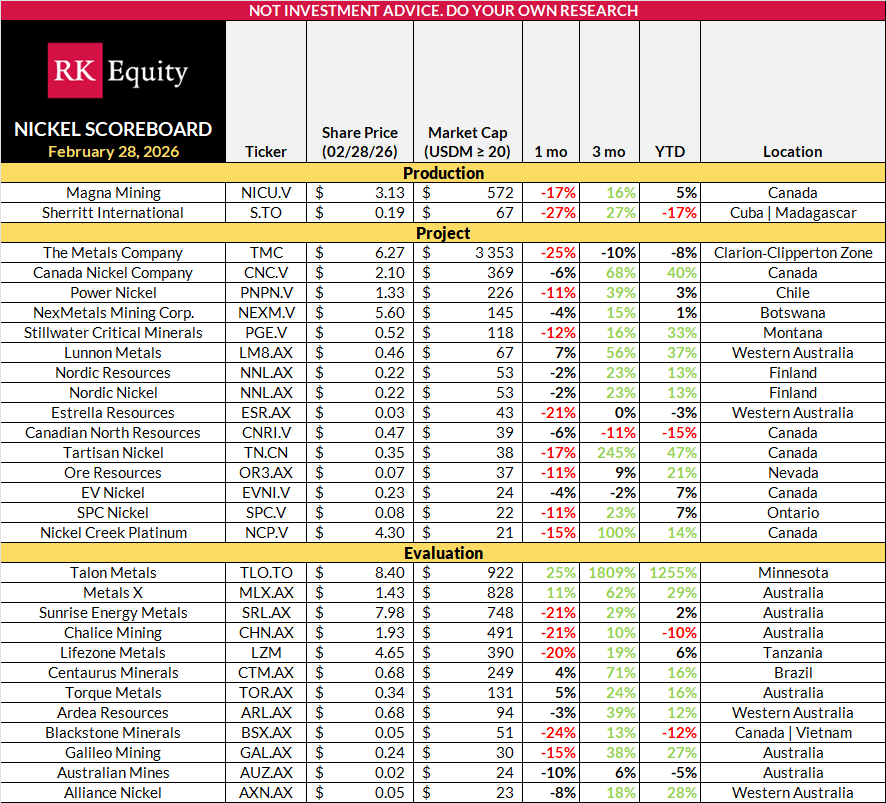
📊 #Nickel Scoreboard, February 28, 2026
Rock Stock Channel tweet media
English
0
3
11
1.2K