Ernie Marx
407 posts

Ernie Marx
@ScottAdd5
Soil scientist, carbon offset skeptic.
Beigetreten Mayıs 2022
105 Folgt28 Follower

@simonmaechling @Ryan_Cupo @simonmaechling I agree with you re: glyphosate. But I would stay away from paraquat. Can cause lung damage. Nasty stuff. Not sure about residue toxicity, but for the applicator it is bad news and I would avoid it.
English

@Ryan_Cupo Thanks for the question.
I could tell you that recent research, particularly from the Agricultural Health Study, finds NO association between the herbicide and Parkinson’s.
But, I don’t think you are interested in that.
esmed.org/MRA/mra/articl…
English

RFK Jr. is lying.
99.99% of the pesticides in the American diet are chemicals that plants produce to defend themselves.
↳ The comparative hazards of synthetic pesticide residues are insignificant.
Robert F. Kennedy Jr@RobertKennedyJr
The only president that is going to get toxins out of our food is Donald J. Trump. Get out and vote, America. Let's Make America Healthy Again. 🇺🇸
English

@Yeagerofmars @simonmaechling They aren't giving up on the glyphosate market. They are only ending sales to residential consumers because that is the source of frivolous lawsuits. They will continue to produce glyphosate for the ag market.
English

@simonmaechling It boils down to risk analysis, if there was a chance they’d lose, there’s no way they’d give up on a $12 Billion + market of which they were the leader. Clearly there’s some counter risk in the lawsuit.
English

@TerryDaynard Several reasons. Winter wheat would replace generally more profitable crops (corn and soy). Summer rains in Iowa would cause problems with WW dry down before harvest (Iowa is rain fed ag, not irrigated).
English

@agronomistag @atrembath @hausfath ...and sometimes getting rid of that pesky "outlier" data helps to make the findings a little more dramatic.
English

"In the top journals like Science and Nature, you are much, much more likely to have a shot at getting a paper in there — which, at least in the traditional academic sense, can be somewhat career-defining — if you have a dramatic finding."
- @hausfath
grist.org/science/patric…
English

@TerryDaynard @UofGuelphOAC @UoGAgMet @OMAFRA In the right context/environment/soil, cover crops can provide benefits to soil quality. But reducing N2O emissions probably isn't one of those benefits. Which is one of many reasons why soil GHG offsets are nothing more than green washing and those programs should end.
English

A good summary of @UofGuelphOAC research results on cover crops and N2O emissions. Thanks @UoGAgMet and @OMAFRA .
fieldcropnews.com/2024/08/crop-r…
English

@TamarHaspel Is there a reason why nutrition labels don't list "absorbed calories"? Wouldn't that be more useful information? Something similar to NDF or ADF for livestock feeds. This could help encourage more whole grain, high fiber foods for calorie counters.
English

Yes, this, exactly.
The reason I go on about CICO isn't that I think it's a helpful weight-loss strategy.
It's because there are people out there who believe it to be false.
Garth Brown@garthcbrown
@TamarHaspel You say: "All calories consumed will be expended, excreted, or stored. Whatever the particular strategy, losing weight is the result of a net caloric deficit." Somehow, people hear: "Counting calories is an easy way to lose weight."
English

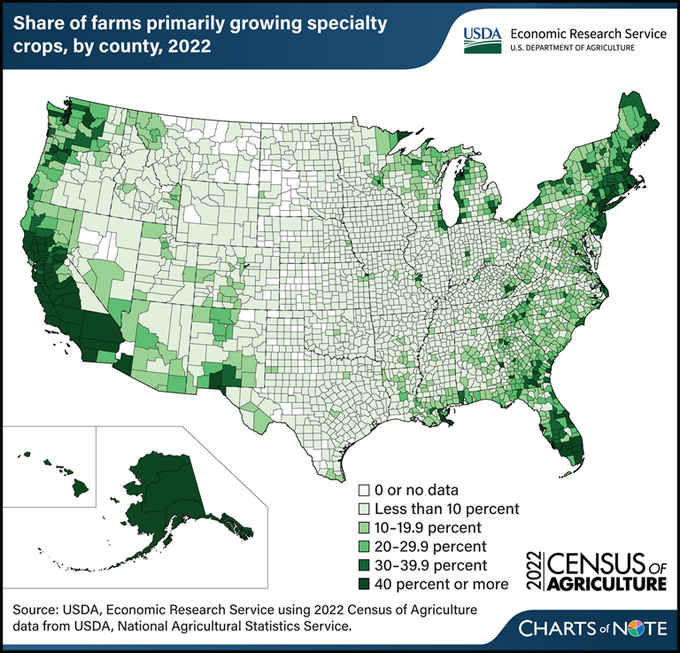
@USDA_ERS It would be interesting to see a similar map showing share of acres, as compared to farms, growing specialty crops.
English

2022 Census of Agriculture: Most U.S. counties with high concentration of specialty crop farms are located along coasts. Learn more: ers.usda.gov/data-products/….
#ICYMI #AgCensus

English

@TamarHaspel Also, you didn't mention pastured beef takes longer to reach market weight than feedlot beef. That means the animals live longer and emit methane for a longer period. Your final point remains the same...beef has a big environmental impact and there's no good way to greenwash it.
English

This right here is why we need "regenerative" and "sustainable" to actually mean something!
Slap that label on stuff people want to eat, and people get to eat beef AND feel good about their environmental impact.
foodinstitute.com/focus/grass-fe…
English

@TamarHaspel @ADowling34 The most sustainable food production is usually growing plants where they grow best. This reduces inputs and increases production. Is this the kind of efficiency Tamar is referring to? Transportation of product gets too much attention and efficiency of production gets too little.
English

@ADowling34 Most food grown locally is grown less efficiently, and that more than makes up for the small difference in transport GHG.
ourworldindata.org/food-choice-vs…
English

3 things everyone wants to be good for the climate, but aren't, in order of their badness for the climate:
1. grass-fed beef
2. organics
3. local food
They ALL have other advantages! They're not bad things, they're just bad in the GHG equation.
theguardian.com/commentisfree/…
English
Ernie Marx retweetet

@PowlsonDavid This has become all too common in research. Investigators begin with a conclusion, then look for supporting evidence. Conflicting data are too often dismissed as "outliers". In the end, science works and will prevail. But a lot of time and money get wasted along the way.
English

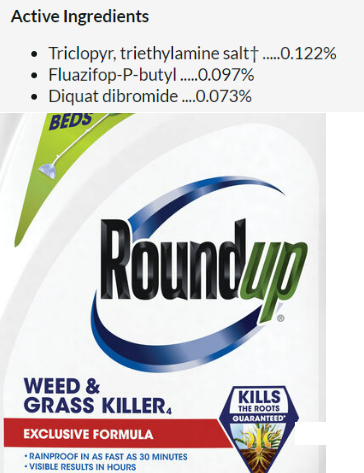
@agronomistag I'm wondering if they put the diquat in there for a rapid appearance of burned/dead leaves. But I agree with the others: diquat does not belong in these products. I thought it was restricted use.
English
Ernie Marx retweetet

Interesting article about how to define #carbon sequestration in soils and climate change mitigation by Axel Don et al. @Thuenen_SOM @JensLeifeld @ClaireChenu2 and others doi.org/10.1111/gcb.16…

English

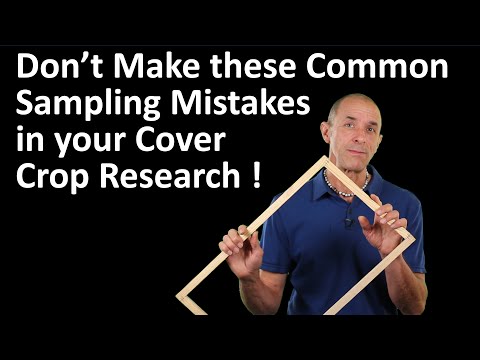
@EBrennanScience @ASA_CSSA_SSSA Your video highlights good sampling issues. Also important that quadrat is placed Y inches from end of the plot and X inches from the side of the plot. X and Y are generated randomly before sampling. This addresses potential bias in placing the quadrat where plants look good/bad.
English

Cover crop researchers often use quadrats to sample biomass, BUT this can lead to inaccurate data. My video explains this & was shown @ASA_CSSA_SSSA meeting last week. Please share it with cover crop researchers to help avoid common mistakes youtu.be/NExav9AdzTM

YouTube
English

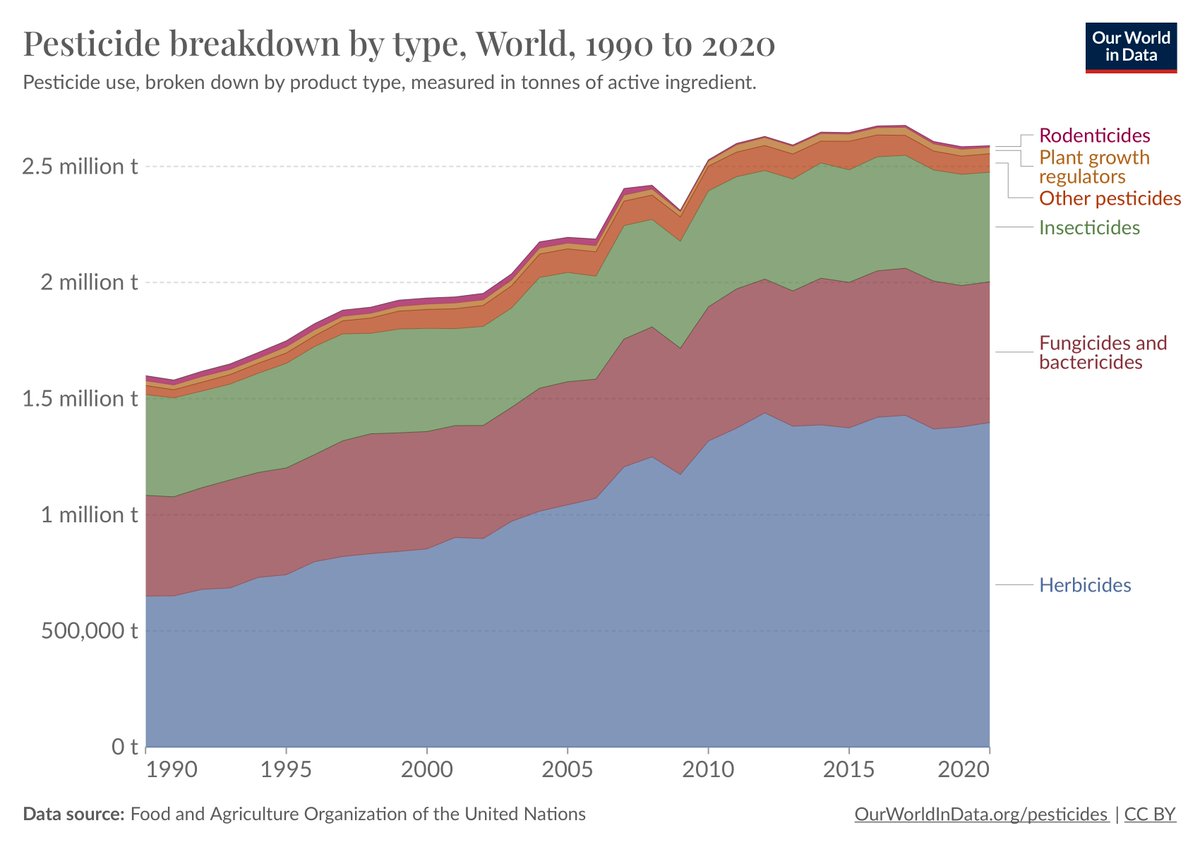
@samdknowlton Weight (tons of pesticide) is not a useful metric. Some newer, safer pesticides are applied at higher rates but are less toxic. Unfortunately, the graph you shared doesn't tell us anything about environmental or food safety.
English

Over the past 30 years, pesticide use on farms worldwide has increased by 60%, even though global cropland has declined by approximately 1 million square kilometers.
Despite this significant increase in pesticide use, we lose between 20-40% of all crops to pests and disease each year.
The overapplication of pesticides breeds resistance in the target pests, typically resulting in increased application of one or more pesticides.
Most pesticides damage a broad spectrum of beneficial insects and microorganisms, not just the target pest. This disrupts the biological controls that are essential in keeping pests and diseases in check. Without biological controls, crops suffer, and many growers respond with more and stronger chemical interventions.
This is the chemical treadmill on which so many farmers find themselves stuck.

English

@RemiCardinael @NatureGeosci @JLehmannCornell I think most people agree that maintaining or restoring SOC has many benefits. But maintaining or restoring SOC should not be used as an excuse for continued GHG emissions via dubious carbon offset markets. When that happens, the net environmental benefit of SOC is erased.
English

Global crop production increase by #soilorganiccarbon @NatureGeosci @JLehmannCornell
nature.com/articles/s4156…
English

Despite extensive research indicating soil carbon sequestration potential has been greatly exaggerated, USDA continues to march towards carbon markets. Lots of $$ changing hands.Lots of corporate & gov't greenwashing. Not much solid science. Disappointing.
usda.gov/media/press-re…
English
Ernie Marx retweetet

"Cover crops do not increase soil organic carbon stocks as much as has been claimed: What is the way forward?"
pubmed.ncbi.nlm.nih.gov/37638821/
English
Ernie Marx retweetet

This is absolutely and completely 100% unsurprising. I think we all secretly know how true this is. But damn, the quantification of it. Showing us just how much analytical decisions influence our conclusions. 😱 😱
Tim Parker@TimParker88
When many different researchers analyze the same data, results vary .... A LOT! Our Many-Analysts study from ecology and evo-bio is FINALLY up on @ecoevorxiv doi.org/10.32942/X2GG62 Thanks to the HUNDREDS of researchers who made this study possible.
Leipzig, Germany 🇩🇪 English