
S. Sean Tu

57 posts

S. Sean Tu banner
S. Sean Tu

S. Sean Tu

@SeanTu2

Professor of Law, University of Alabama Visiting Professor, Program On Regulation, Therapeutics, And Law (PORTAL), Brigham and Women's Hospital

Tuscaloosa, AL Beigetreten Şubat 2013
104 Folgt115 Follower
S. Sean Tu
S. Sean Tu@SeanTu2·
In our new JAMA Health Forum paper, Ana Santos Rutschman and I show how big drug companies exploit every part of IP: patents, trademarks, copyrights, trade secrets. Drug companies do this not to innovate, but to block competition and keep prices high. jamanetwork.com/journals/jama-…
English
0
0
1
72
S. Sean Tu
S. Sean Tu@SeanTu2·
@SquirrelTheWR @johnarnold See JAMA 2024; 332(24):2101-2108. "Differential Legal Protections for Biologics vs. Small-Molecules Drugs in the US"
English
0
0
0
24
S. Sean Tu
S. Sean Tu@SeanTu2·
@SquirrelTheWR @johnarnold 4. Biologic peak revenues= $1.1 billion vs. 0.5 billion 5. Biologic annual cost of treatment = $92,000 vs. $33,000. Yes, biologics cost more to develop, but they make MUCH more for MUCH longer periods of time.
English
2
0
0
29
S. Sean Tu retweetet
John Arnold
John Arnold@johnarnold·
A post on drug patents, exclusivity periods, and Medicare negotiation, and how pharma is trying to use the complexity to pull a fast one to grab $10 billion. A pharma company gets 20 years of patent protection on a drug, starting from date of filing. However, due to lengthy clinical trials and reg approval, the effective patent life can be materially shorter. Given this, the industry pushed for other protections including an exclusivity period free from generic competition starting at the date of drug approval. Hatch-Waxman established a 5-year exclusivity period for small molecules. When the ACA created a pathway for biosimilars (essentially generic biologic drugs), pharma argued that biologics are more complex and costly to develop and should get a longer time. In exchange for industry support for the ACA, the Obama admin granted a longer exclusivity period for biologics: 12 years. The provisions for Medicare negotiations in the IRA follow this precedent, with biologics getting 13 years before being eligible for price negotiation vs 9 for small molecule. But now pharma has flipped the rhetoric. Instead of biologics getting extra years, the new phrase is a "pill penalty." They are arguing that small molecule drugs are now at a disadvantage and that Medicare negotiation timing should be aligned. Of course, they're not arguing that biologics should not get the added years, or that instead of one being 9 and the other 13 that it could be averaged to 11, but that pills should also now get 13 years. This is despite decades of argument that biologics are different and deserve more. Pharma has gotten some support from members of Congress (remember, pharma ranks among the top spenders on federal lobbying.). The EPIC Act removes the so-called "pill penalty" and would mandate 13 years before small molecule drugs be eligible for negotiation. This would cost the federal govt $10 billion and hurt access by patients. In an executive order last month entitled "Lowering Drug Prices by Once Again Putting Americans First," Trump specifically called out the "pill penalty" and wrote the HHS Secretary should work with Congress to: "align the treatment of small molecule prescription drugs with that of biological products, ending the distortion that undermines relative investment in small molecule prescription drugs, coupled with other reforms to prevent any increase in overall costs to Medicare and its beneficiaries." The order specifically acknowledges that it would raise costs but then makes hand gestures that some unmentioned action should also happen to make sure it doesn't. This does not "Lower Drug Prices" as the title suggests. Meanwhile, the administration is putting out feelers for other ways to reduce costs. Step 1 is to stop considering policies that increase them. Drug lobbyists did a great job and should get a big bonus this year. But if we want lower pharma costs, more access, and lower deficits, the biologic premium should be brought down to match small molecules, not the other way around.
English
9
24
146
30.7K
S. Sean Tu retweetet
Dana Brown
Dana Brown@DanaMarinBrown·
1/Thrilled to share this pre-print of my latest with @SeanTu2 & @alexhmoss on the case for publicly owned & controlled pharmaceutical R&D: rb.gy/4cl5ki (forthcoming in @JLME_ASLME)
English
1
2
8
1.8K
S. Sean Tu retweetet
Dana Brown
Dana Brown@DanaMarinBrown·
5/and if you ever get the chance to write or otherwise work with @SeanTu2 or @alexhmoss, consider yourself very lucky. You guys make it easy!
English
0
1
1
203
S. Sean Tu
S. Sean Tu@SeanTu2·
Here is one of two JAMA papers that I published this week with a great researcher at Fresenius-Kabi. We show that some drug firms are using trade secrets and patents in a way that unjustly extends their monopoly power by over 10 years.
S. Sean Tu tweet media
English
0
0
5
1.3K
S. Sean Tu
S. Sean Tu@SeanTu2·
Here is one of two JAMA papers that I published this week with some amazing Harvard Medical School Folks. We show that FDA-regulated products suffer from "inequitable conduct" more frequently than any other industry.
S. Sean Tu tweet media
English
0
0
4
237
S. Sean Tu retweetet
Ben Rome
Ben Rome@bnrome·
Thanks @Luhby @CNN for including me in this great piece about impact of Medicare price negotiation. Major savings for taxpayers and patients coming soon. cnn.com/2023/08/29/pol…
English
1
2
14
1.1K
S. Sean Tu
S. Sean Tu@SeanTu2·
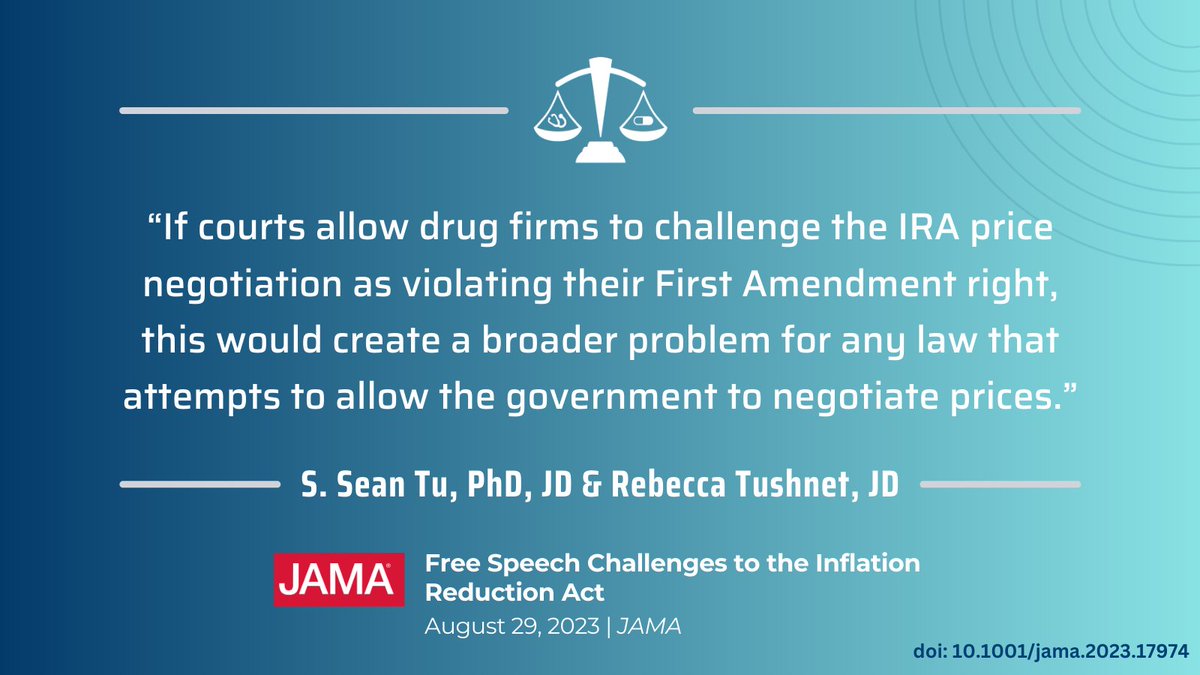
Here is a quote from my new JAMA paper with Rebecca Tushnet.
S. Sean Tu tweet media
English
1
0
4
210
S. Sean Tu
S. Sean Tu@SeanTu2·
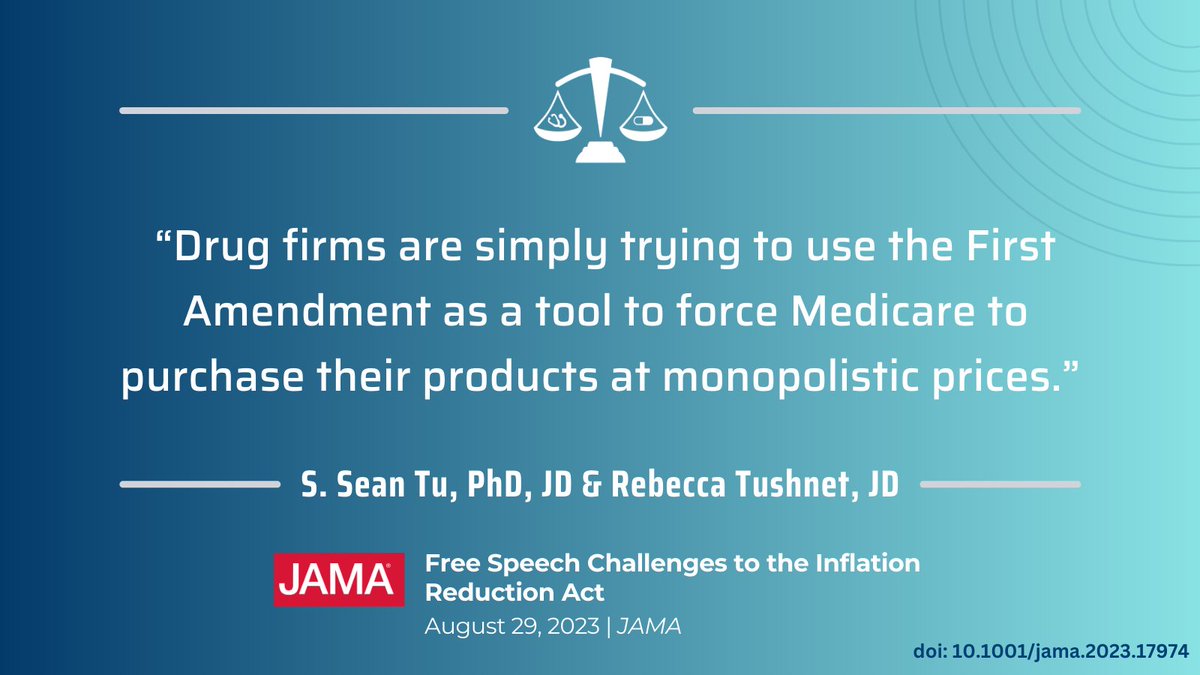
Here is a quote from my new JAMA paper with Rebecca Tushnet.
S. Sean Tu tweet media
English
0
1
2
659