Peter - Cracking Markets

1.2K posts

Peter - Cracking Markets banner
Peter - Cracking Markets

Peter - Cracking Markets

@SystematicPeter

Systematic trader, fund manager. Web: https://t.co/Qga9clOPid

Beigetreten Ağustos 2022
87 Folgt6.7K Follower
Angehefteter Tweet
Peter - Cracking Markets
Peter - Cracking Markets@SystematicPeter·
I’ve been trading for ~30 years. First half: fully discretionary, living inside futures microstructure. It worked—until algos started exploiting the same patterns and reacting in microseconds. Edge decay was real. So ~10 years ago I switched to systematic. Now I run many uncorrelated strategies in parallel without babysitting screens all day. I wouldn’t go back. My biggest unlock: reusability of know‐how. When I finish a new system, I plug it into a ready workflow in minutes. It monitors itself; I move my brain to the next big thing. Here’s the playbook I wish I had from day one: - Framework (design once → reuse forever) - Data → clean, feature, label. - Hypothesis → simple, testable edges (breakouts, momentum, mean reversion). - Validation → IS/OOS, realistic costs/slippage. - Risk → position sizing, max heat, portfolio exposure caps. - Deploy → automated orders, fail‐safes. - Monitor → health dashboards, kill‐switch rules, mobile app. - Iterate → new systems slot into the same pipeline. Principles that compound: - Many small, independent edges > one “genius” setup. - Process beats prediction. - Shipping beats perfecting. Discretionary taught me markets. Systems gave me scale.
English
16
27
453
42.1K
Peter - Cracking Markets
Peter - Cracking Markets@SystematicPeter·
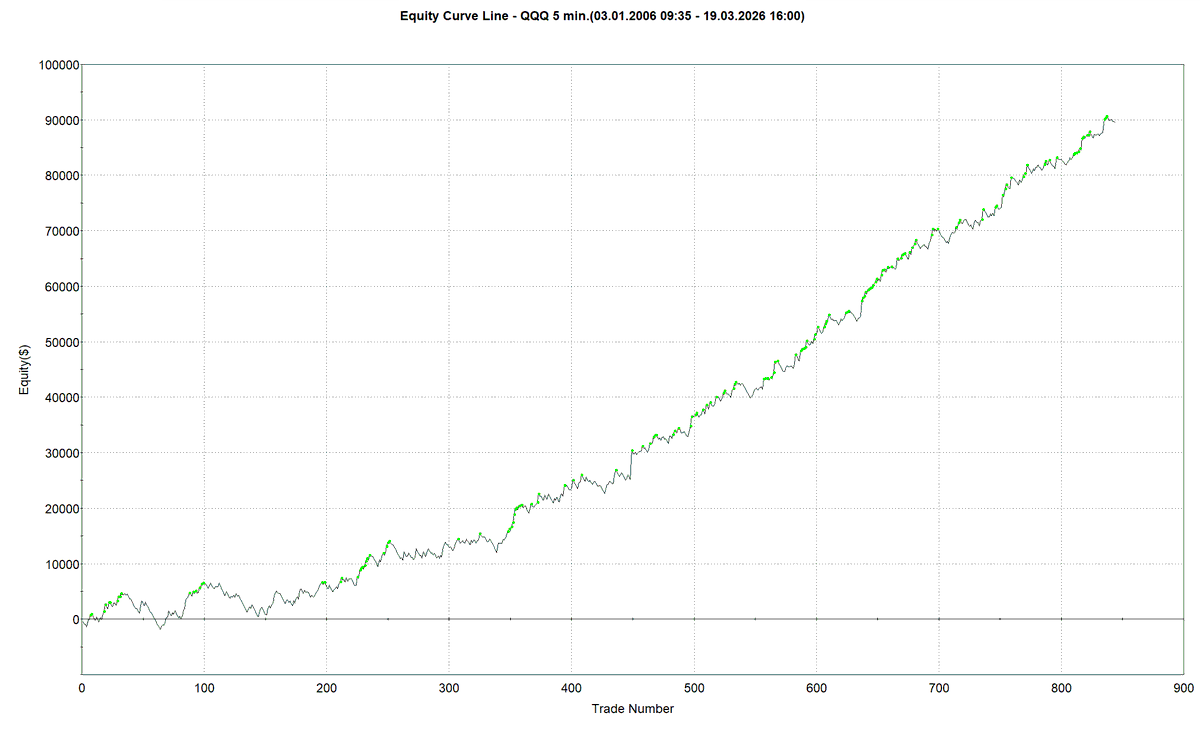
How does a trading system survive 20 years of market regimes? Usually not by being smarter - but by being simpler. This QQQ equity curve runs from 2006 through yesterday and includes my real out-of-sample live trading since May 2023. It made it through: - 2008 - 2020 - 2022 Why? Because it is not built on fragile indicators or overfit parameters. My intraday volatility breakout logic comes down to just 3 parts: - one simple price action condition - today's Open +/- ATR to define the breakout levels - a tight stop-loss or End-of-Day exit That simplicity is exactly why I trust it with meaningful capital. But here is the part many traders underestimate: A robust edge is not enough. Long-term profitability also depends on flawless execution. Miss one breakout. Hesitate once. Override one signal. And the math starts to break. That is why I automated the execution. The bot does not hesitate, improvise, or get emotional. That is also why I am sharing the exact open code and automation scripts I use. Today is the final day to join the implementation program at the introductory price. Live stats + code access here: crackingmarkets.com/intraday-volat…
Peter - Cracking Markets tweet media
English
7
8
63
5.9K
Peter - Cracking Markets
Peter - Cracking Markets@SystematicPeter·
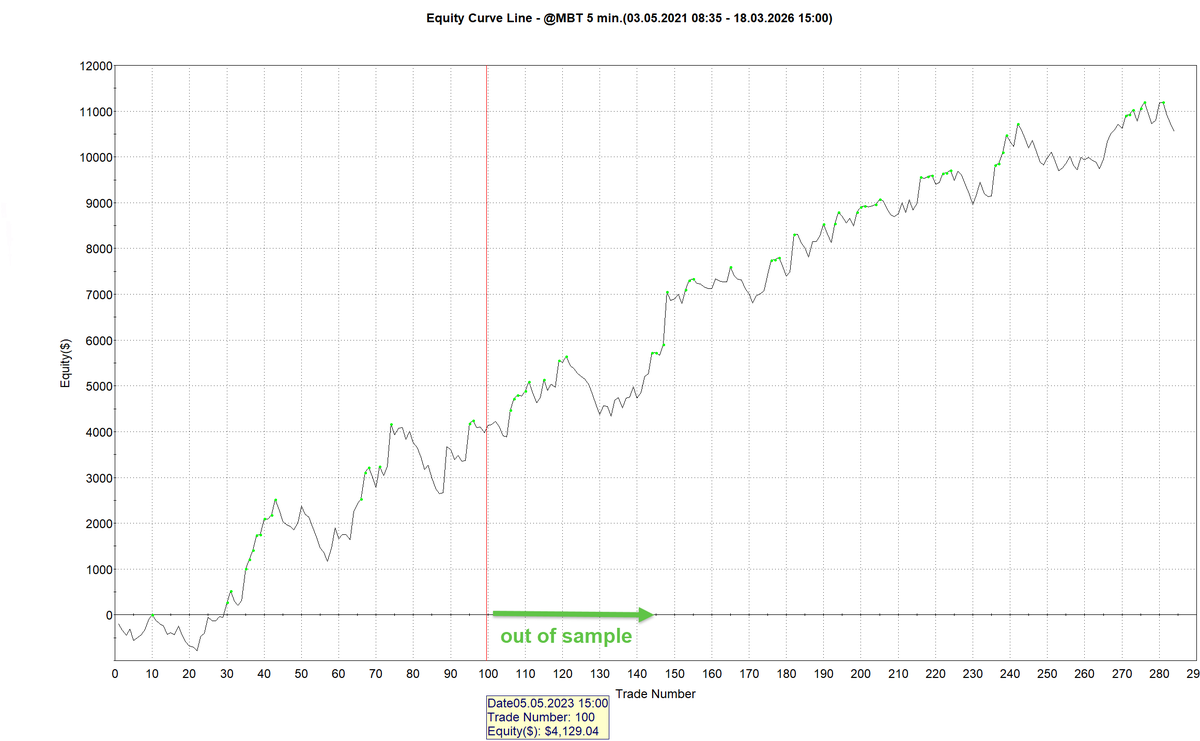
Interactive Brokers just introduced nano Bitcoin futures. The interesting part is not that they are cheaper. On a notional basis, they are actually more expensive. The real advantage is that they make Bitcoin futures position sizing much more precise for smaller accounts. BIT is 10x smaller than the CME Micro Bitcoin future (MBT) I trade regularly: - BIT = 0.01 BTC - MBT = 0.1 BTC That matters a lot in intraday systematic trading. My volatility breakout strategy already works well on MBT. But for smaller accounts, MBT sizing is still not very flexible. On the chart, risk is capped at $200 per trade, fees are included, and that usually means only 1-2 contracts. With BIT, the same strategy could be sized much more smoothly. For smaller systematic traders, that is the real opportunity: not lower relative cost, but better control of portfolio risk. The remaining question is liquidity. But with Bitcoin intraday volatility still elevated, I suspect this contract will become tradable quickly - if it is not there already.
Peter - Cracking Markets tweet media
English
1
2
28
2.2K
Peter - Cracking Markets
Peter - Cracking Markets@SystematicPeter·
@nieledran Yes, the capital is rebalanced between strategies every day. This is one of the main points of strategy portfolio trading.
English
0
0
1
86
Peter - Cracking Markets
Peter - Cracking Markets@SystematicPeter·
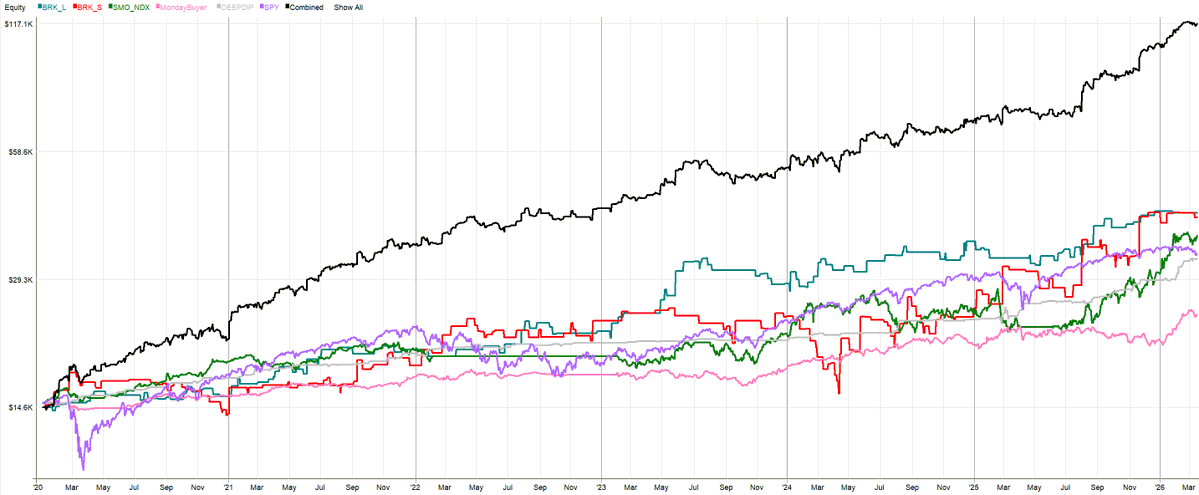
One of the easiest ways to improve trading is not to optimize one strategy harder. It is to add another non-correlated strategy with a different risk profile and trading frequency. I published a practical example today comparing: • A portfolio of 3 swing strategies • The same portfolio with one small intraday breakout added The result shows why portfolio construction matters so much in systematic trading. Even a small intraday system can materially change the combined equity curve and day-to-day PnL behavior. Full breakdown and charts here: 👉 crackingmarkets.com/portfolio-cons…
Peter - Cracking Markets tweet media
English
6
7
92
4.8K
Peter - Cracking Markets
Peter - Cracking Markets@SystematicPeter·
9/9 The goal is not one clever answer. The goal is a process that keeps producing comparable answers over time. Design the environment, not just the prompt.
English
0
0
0
417
Peter - Cracking Markets
Peter - Cracking Markets@SystematicPeter·
8/9 Then you add memory and standardized outputs: memory/ - journals capture what happened and how reasoning evolved outputs/ - one reporting template for every evaluated strategy That turns random chats into a repeatable research process.
English
1
0
0
440
Peter - Cracking Markets
Peter - Cracking Markets@SystematicPeter·
Most traders treat LLMs like a black box. Open a chat. Ask for a backtest. Patch the output. Come back tomorrow. Start from zero again. Then they wonder why their research is inconsistent. That is usually not an LLM problem. It is a process problem. This is the framework I use to stop LLM research from drifting across sessions:
Peter - Cracking Markets tweet media
English
1
7
43
3.4K
Peter - Cracking Markets
Peter - Cracking Markets@SystematicPeter·
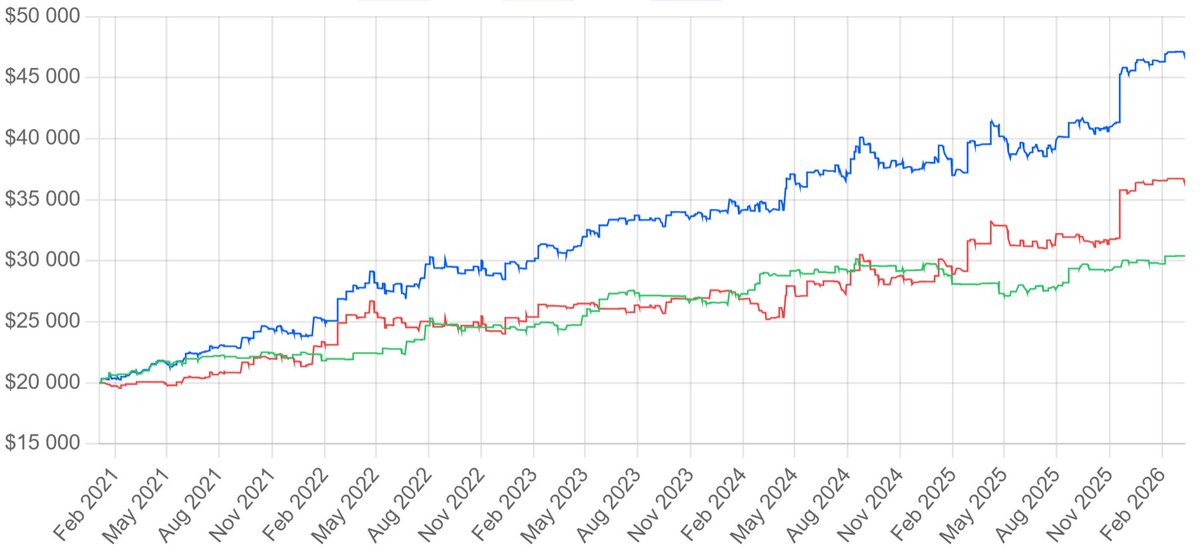
Most traders are happy to show a backtest. Far fewer are willing to show a live system with stats updated automatically every single day. Over the past year, I have posted regularly about the intraday volatility breakout framework I trade live. To push transparency further, I have now built a dedicated page where this exact system updates daily on its own. You can monitor combined statistics, the equity curve, and drawdowns across the three markets it trades in - in real time. And because the most common question I get is how to actually trade this without coding everything from scratch, I am also sharing the full implementation - including the open code and the bot tools I use with Interactive Brokers. Daily updates: crackingmarkets.com/intraday-volat…
Peter - Cracking Markets tweet media
English
1
11
124
8.9K
ATCOTrader
ATCOTrader@AtcoTrader·
@SystematicPeter Nice! Do you have a dollar volume filter or something similair? My perception is that the definition of extension is very different for stocks that regularly trades a high dollar volume and the the stocks that has a couple of days of spike in price and volume.
English
1
0
1
116
Peter - Cracking Markets
Peter - Cracking Markets@SystematicPeter·
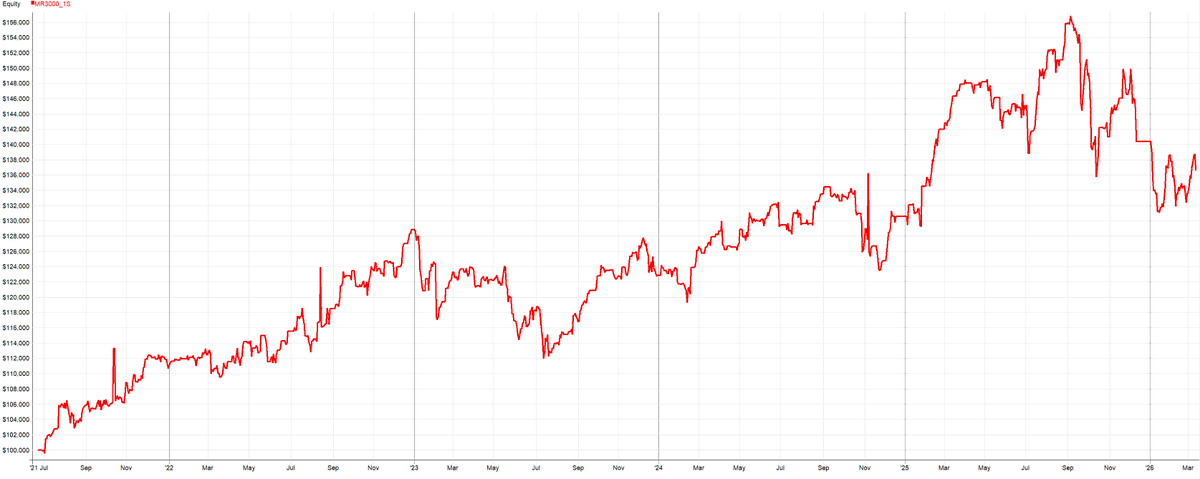
My worst live strategy right now is short mean reversion on US stocks. And I still keep trading it. Why? Because a weak standalone performer can still be a useful portfolio component. Even with a live Sharpe of just 0.56, this system is a useful diversifier inside my broader book. This is important in systematic trading: do not judge a strategy only by its current equity curve. What is in drawdown today can become valuable again when the regime shifts. And recent market action suggests short-term short setups may finally be getting more traction. Screenshot = my live IBKR exports, with position size rescaled to 10% account risk for comparability. In actual trading, sizing is more adaptive. Live stats so far: - 1141 trades - Sharpe: 0.56 - Avg overnight exposure: 9.54% Logic is simple: - stocks above $20 - extended upside move - short sell via limit order - exit via stop-loss, profit target, or time stop
Peter - Cracking Markets tweet media
English
1
1
43
2.6K
Peter - Cracking Markets
Peter - Cracking Markets@SystematicPeter·
One small Interactive Brokers setting can noticeably reduce costs for systematic traders: switching U.S. stock commissions from Fixed to Tiered. Why it matters: - no $1 minimum commission per order - easier to diversify across more positions and strategies in smaller accounts - possible rebates for adding liquidity with resting limit orders That last point is especially relevant for mean reversion systems. If you trade actively and still use Fixed pricing, check the math. The difference can be larger than most traders expect.
English
4
7
102
10.5K