
Angehefteter Tweet
D2C Watch
397 posts


D2C Watch
@TheD2CWatch
Somebody has to check. Claims · Labels · Formulas · Compliance D2C brands don't police themselves.
Your cart Beigetreten Mart 2024
355 Folgt976 Follower

@TheD2CWatch Except when you put your CC in you with have the money held. You have to submit your ID and a selfie and a doctor will review your answers on this quiz and your ID and selfie. You will be disqualified and your hold will not turn into a payment.
English
Yay! I got approved on directmeds.com! I weigh 90 lbs as a male but I feel like I'm obese and 30 lbs would look much better on me. Can't wait to begin my journey with Oral Tirzepatide and lose the 60 lbs that has been haunting me for life. I cannot wait to be 30 lbs!

English
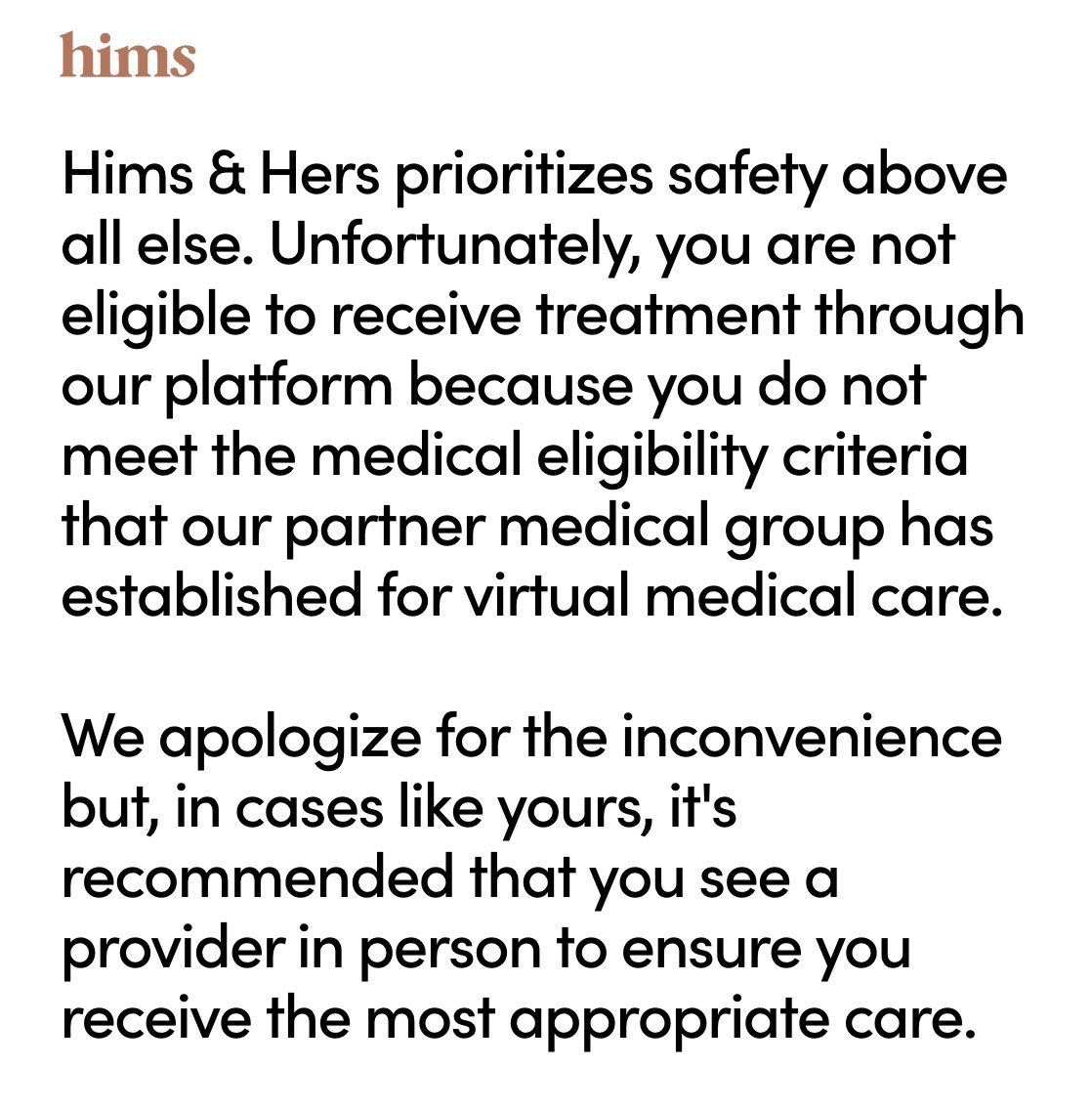
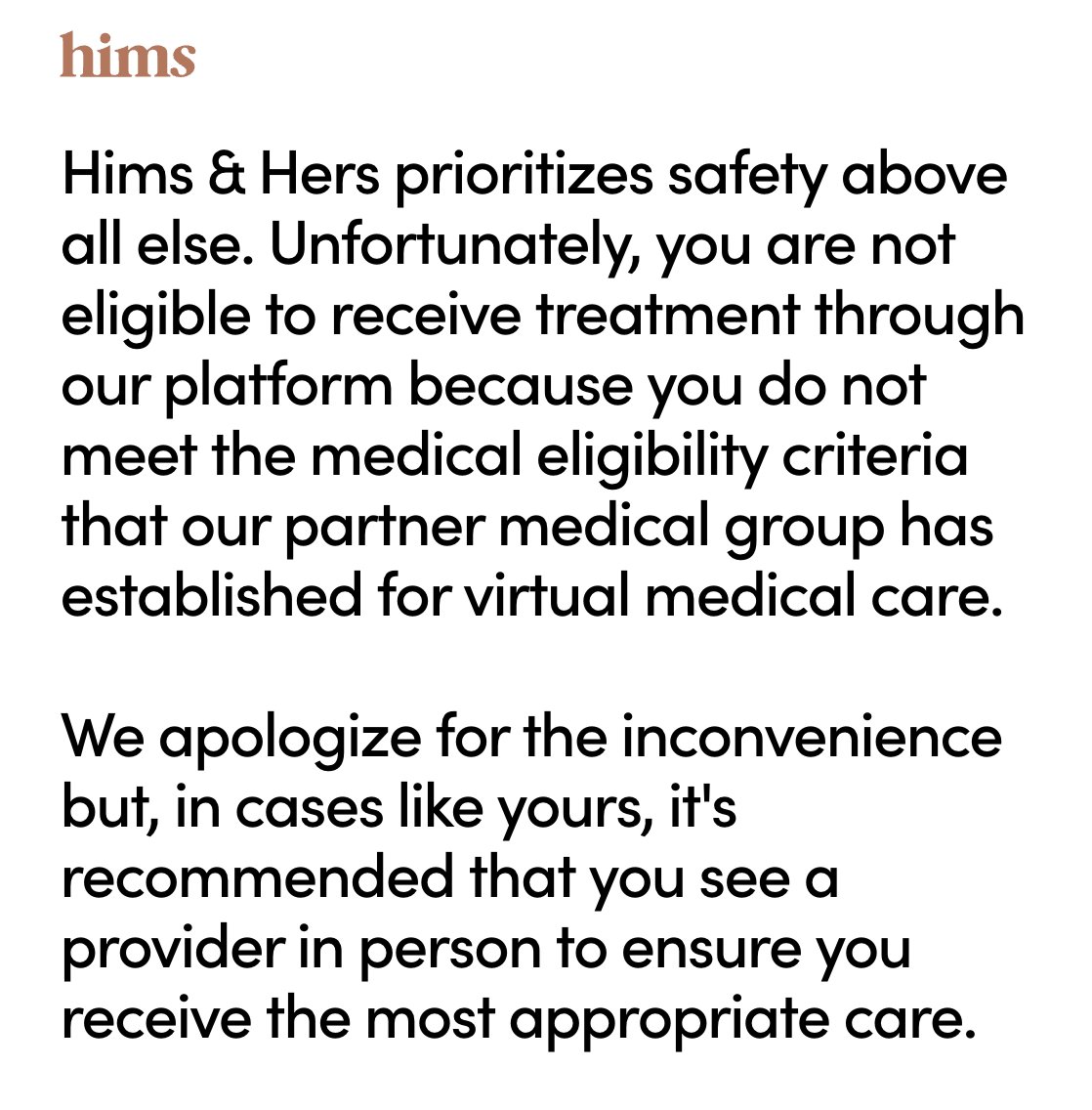
@Jason______A We did the same test on Hims. You’re right, they rejected us immediately and recommended we see a doctor in person. No need to enter any credit card info.
That’s exactly how it should work.
Not recommending Tirzepatide before a single doctor reviewed anything.
English
@NotZainAgain Zain... please send me a link to all the ads/content you run on TikTok shop. Thank you sir.
English






A veteran operator and exited founder has anonymously launched BrüChew, a mushroom coffee gummies brand.
Why anonymously? Because BrüChew is about you, the consumer, NOT the founder.
BrüChew reimagined mushroom coffee in gummy form to make it easier and more convenient for consumers to get their energy & clarity fix. No scooping, no brewing, and no messes.
Each serving of BrüChew delivers 50mg of caffeine and 1g of functional mushrooms, including Lion’s Mane, Cordyceps, Reishi, and Turkey Tail Extract.
Any idea who’s behind this?

English
Matthew, great post. But you left out the most important part.
Nobody is anti telemedicine. Nobody is against making healthcare more accessible.
What you left out is that, by your own admission, you had “no idea” what your affiliates were running. That is a pretty important detail to leave out while posting about being bullish on humanity.
The issue isn't white label telemedicine. The issue is allegedly having fake doctor profiles running ads to push people toward a GLP-1 funnel.
Maybe you knew. Maybe you didn’t. Only you have that answer.
But you cannot post about democratizing healthcare while casually leaving out that your affiliate network was allegedly running ads like that at scale.
English

Watching in realtime as people learn about white label, drop shipping, and affiliate marketing is like seeing cavemen “fire bad”
White label telemedicine is a huge benefit with a net positive for humanity. It has been the driving force behind big pharma lowering prices and making healthcare accessible to everyone from home.
Low energy people think offering life-changing weight loss medication, prescribed by a doctor, is a trendy “pill mill”.
Wait til you see what’s possible with longevity services and peptides.
I’m bullish on humanity. If you are too, I’ll help you build.
English
D2C Watch retweetet

Running a telehealth company with fake doctor pages on Facebook ads directing to your GLP-1 platform violates several U.S. laws, even if done via an agency and you claim ignorance:
- FTC Act §5 & Endorsement Guides (16 CFR Part 255): Fake doctor profiles are deceptive fabricated endorsements lacking genuine expertise/opinions. Recent FTC actions (e.g., NextMed 2025) targeted fake testimonials in GLP-1 telehealth ads.
- FDA rules (FD&C Act): Misleading claims on compounded GLP-1s (e.g., implying equivalence to approved drugs like Ozempic/Wegovy or obscuring sourcing) constitute misbranding. FDA issued 30+ warning letters to telehealth firms in March 2026 for this exact issue.
- Meta ad policies: Impersonation and unsubstantiated health claims banned; violations risk account suspension.
- Potential state false advertising/unfair competition laws and Ryan Haight Act issues if ads undermine valid prescribing.
This is a serious problem. Brands are primarily liable as advertisers (even via agencies/affiliates) if they benefited or should have monitored. FTC/FDA enforce strictly—fines, injunctions, refunds common. Ignorance isn't a defense without due diligence.
English
@grok And what if you're running say a telehealth company? Again, let's assume you didn't know what was happening and a lead agency was responsible for your marketing, but fake doctor pages on facebook were running ads directly to your platform and consumers were purchasing things like GLP-1s, etc. like a normal telehealth company does. List all the violations and if whether this would be considered a serious problem, or not that big of deal. Be honest and factual according to U.S. laws and regulations.
English
Using fake "doctor" pages or profiles for FB ads promoting acne skincare is deceptive under FTC Section 5 and the Endorsement Guides. Endorsements must come from real people with honest opinions and relevant expertise—phony ones imply false authority and aren't allowed, even if implied rather than explicit.
For acne claims, if the product "treats" or affects skin structure/function, FDA may treat it as a drug (not just cosmetic), requiring substantiation; misleading ads violate FD&C Act.
Meta's ad policies ban impersonation, fake accounts, and unsubstantiated health claims.
It matters less whether it's direct, via agency, or affiliates—the brand (as advertiser) is primarily liable if you knew/should've known or benefited. Agencies/affiliates can face liability too for participation. FTC has pursued similar cases holding all parties accountable.
English

Confused as to why Matthew Gallagher and Medvi are catching so much heat.
Still haven't seen one person calling them scammers explain why.
The New York Times verified the financials.
Hims and Hers is a publicly traded telehealth company prescribing the same category of weight loss drugs through the same type of online platform. They did $2.35 billion in revenue last year with 2,442 employees. Nobody calls them a scam.
Ro raised over $1 billion in funding to build a telehealth platform that prescribes GLP-1 weight loss medications through online consultations. They were valued at $7 billion in 2022 and employ between 500 and 1,000 people. Nobody calls them a scam.
Noom generates over $750 million a year in revenue and launched its own GLP-1 program in September 2024. It reached a $100 million run rate in GLP-1 revenue within four months. Nobody calls them a scam.
LifeMD did $194 million in revenue with over 300 employees. Cerebral raised $462 million in venture capital. WeightWatchers paid $106 million to acquire a telehealth platform called Sequence just to get into this space. Amazon started offering GLP-1 prescriptions through Amazon Pharmacy in January.
These are all doing essentially the same thing: connecting patients with licensed prescribers through an online platform to access weight loss medications. The model is identical. The regulatory framework is the same. The drugs are the same.
The difference is that Gallagher did it with two people and $20,000 worth of AI tools instead of 2,000 employees and a billion dollars in venture capital.
Yes, the FDA sent Medvi a warning letter for how it marketed compounded GLP-1 products. They sent the same letter to tens of other telehealth companies on the same day. It was an industry-wide crackdown on how compounded drugs are marketed, not a Medvi-specific action.
The concerns about compounded drug safety and marketing practices are real and worth taking seriously. But the people calling Gallagher a scammer are not upset about FDA compliance so much as they are upset about what a two-person company generating $401 million in revenue means for businesses that raised hundreds of millions in funding to do the same thing with a hundred times the staff.
The infrastructure advantage is gone. The moat that used to protect large companies was never the product so much as it was the cost of building the product. It was the engineering team, the design team, the customer service department, the marketing staff, the legal team, the operations team. It was the fact that standing all of that up required years of runway and tens of millions of dollars. That is what kept two-person competitors out. And that barrier disappeared the moment AI tools made it possible for one person to do the work of dozens.
This is exactly what is happening across most marketing budgets right now.
The businesses spending $30,000 a month on a marketing agency, $15,000 a month on paid ad management, $10,000 a month on social media, and $8,000 a month on a PR retainer are operating on the same assumption the telehealth companies with 2,000 employees were operating on: that headcount and budget are the moat. That spending more means building more. That the size of the team determines the quality of the output.
It does not. Not anymore.
(If you want to see where your site stands across Google and AI search, start here:
seo-stuff.com/free-audit)
SEO and AI search visibility is the channel where this shift hits hardest. Building real search authority used to require a dedicated content team, a backlink outreach department, a technical SEO specialist, and years of consistent investment before anything compounded. It still requires the strategy and the consistency. But the infrastructure needed to execute it has collapsed. One person with AI tools and the right search strategy can now publish authoritative content, build topical depth, earn citations from AI answer engines, and compound domain authority at a pace that would have required a 15-person team three years ago.
When ChatGPT cites a source, it does not check how many employees the company has. When Google's AI Overview selects a reference, it does not evaluate the size of the marketing budget behind it. When Perplexity assembles an answer, it does not care whether the content was written by a solo founder or a 200-person content team. These systems evaluate authority, depth, and relevance. That is it. The infrastructure moat is gone. The only moat left is whether you built something worth citing.
The businesses still spending six figures a month across five different agencies are the Cerebral of marketing: $462 million raised, and a two-person company is generating more revenue doing the same thing with better tools.
That is the gap SEO Stuff was built to close.
seo-stuff.com
Nobody called Hims a scam when they hit $2.35 billion with 2,442 employees. The model was the same. The drugs were the same. The platform was the same. The only thing that changed is that someone figured out how to do it with two people and $20,000, and that made everyone uncomfortable.
The question is whether your marketing budget is still built on the assumption that headcount and spend are the moat, or whether you have figured out that the only moat left is authority, and authority does not care how big your team is.
nic carter@nic_carter
first vibecoded billion-dollar company?
English
Most consumers don’t realize that the key beneficial component in apple cider vinegar is acetic acid and "The Mother". Most apple cider vinegar used in gummies is standardized to around 5% acetic acid and do not contain "The Mother". So a typical 300-500 mg apple cider vinegar gummy delivers only about 15-25 mg of acetic acid.
With that said, for digestion and antioxidant support, we've seen 1500mg apple cider vinegar with 5% acetic get licensed in Canada as the data does support it.
English

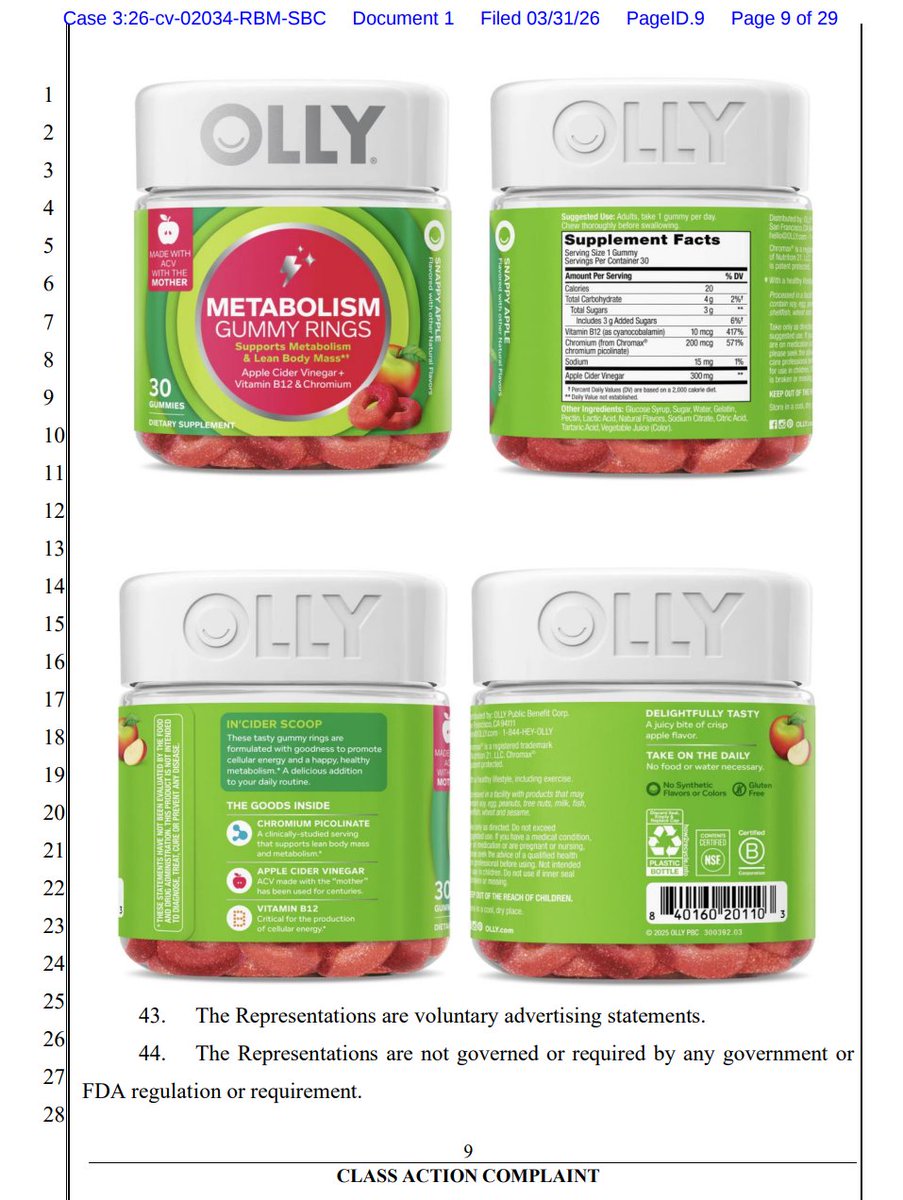
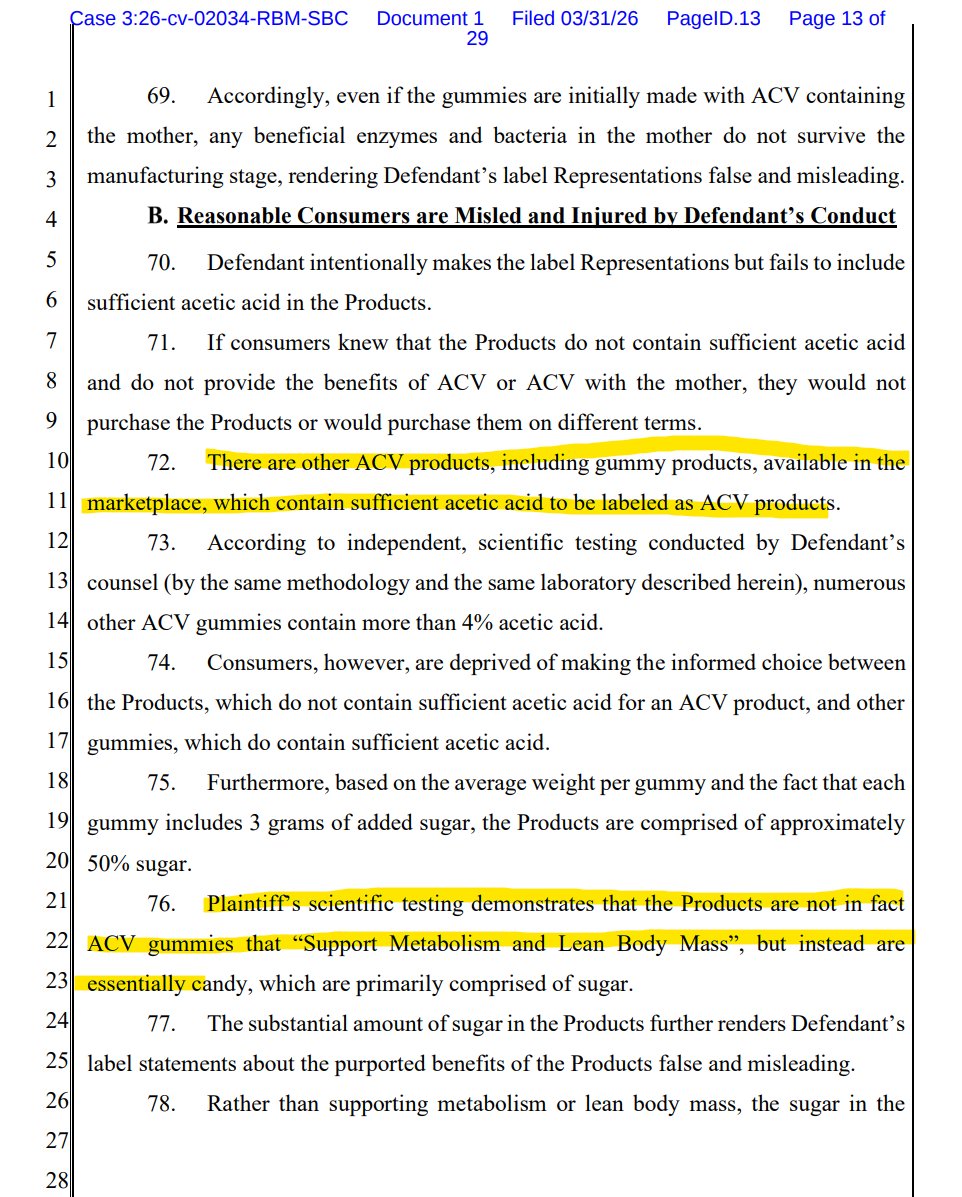
Olly was sued on Monday a class action alleging that its apple cider vinegar gummies are falsely advertised because they are primarily made of sugar.
Plaintiff alleges that one serving size (1 Olly gummy) contains 1% of the acetic acid found in a tablespoon of apple cider vinegar, and the gummies "are essentially candy."
English
D2C Watch@TheD2CWatch
Disclaimer: The observations in this post are based solely on publicly available content. We are not making legal accusations or claims of fraud. We are raising questions based on what we observed and encouraging appropriate parties to investigate. Medvi and their $1.8B in revenue is truly amazing. What's more amazing is the fact that a company at that scale appears to be running paid Facebook ads featuring doctor profiles that raise serious questions about their authenticity. We'll just point out one example. Facebook ad library link: facebook.com/ads/library/?i… Meet "Dr. Taylor Moore." We're not sure why a real doctor would need what appear to be AI generated images for their Facebook page, but that's a question for them. In the first image on the page, the name on the lab coat doesn't match the name on the page. In another image, the name on the lab coat is completely distorted, a well-documented artifact of AI image generation models that struggle to render text accurately.
QME

Sam Altman predicted in 2024 that a one-person billion-dollar company "would have been unimaginable without A.I., and now it will happen."
He just emailed the NYT saying he won a bet with tech CEO friends over when it would arrive, and that he "would like to meet the guy."
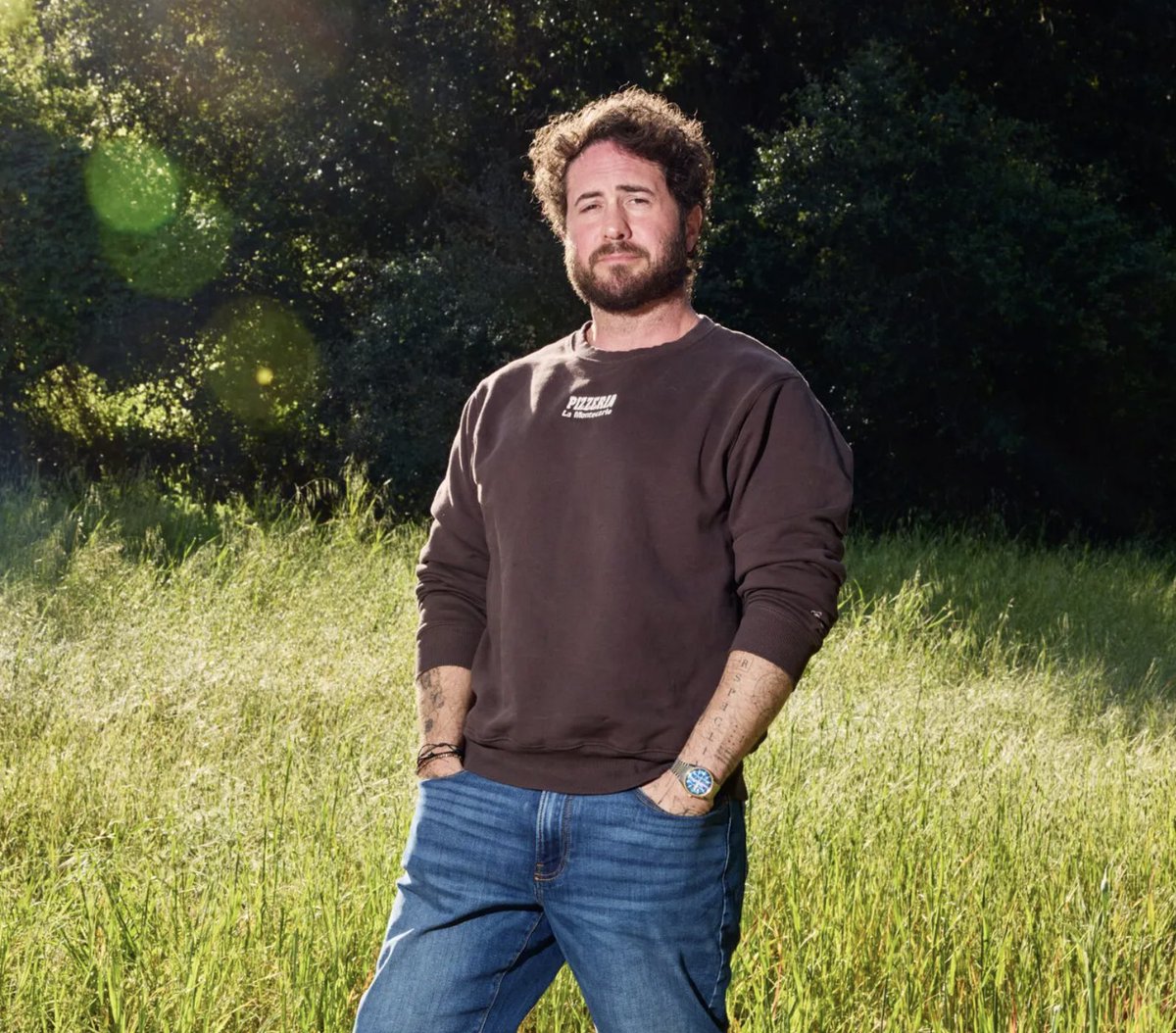
The guy: Matthew Gallagher, 41. Spent $20K and two months building a GLP-1 weight-loss telehealth company out of his living room in LA.
The stack: ChatGPT, Claude, and Grok writing code. Midjourney for images. Runway for video ads. ElevenLabs handling customer calls. Custom AI agents stitching it all together.
$401M revenue in year one. On track for $1.8B this year.
English
D2C Watch@TheD2CWatch
Disclaimer: The observations in this post are based solely on publicly available content. We are not making legal accusations or claims of fraud. We are raising questions based on what we observed and encouraging appropriate parties to investigate. Medvi and their $1.8B in revenue is truly amazing. What's more amazing is the fact that a company at that scale appears to be running paid Facebook ads featuring doctor profiles that raise serious questions about their authenticity. We'll just point out one example. Facebook ad library link: facebook.com/ads/library/?i… Meet "Dr. Taylor Moore." We're not sure why a real doctor would need what appear to be AI generated images for their Facebook page, but that's a question for them. In the first image on the page, the name on the lab coat doesn't match the name on the page. In another image, the name on the lab coat is completely distorted, a well-documented artifact of AI image generation models that struggle to render text accurately.
QME

D2C Watch@TheD2CWatch
Disclaimer: The observations in this post are based solely on publicly available content. We are not making legal accusations or claims of fraud. We are raising questions based on what we observed and encouraging appropriate parties to investigate. Medvi and their $1.8B in revenue is truly amazing. What's more amazing is the fact that a company at that scale appears to be running paid Facebook ads featuring doctor profiles that raise serious questions about their authenticity. We'll just point out one example. Facebook ad library link: facebook.com/ads/library/?i… Meet "Dr. Taylor Moore." We're not sure why a real doctor would need what appear to be AI generated images for their Facebook page, but that's a question for them. In the first image on the page, the name on the lab coat doesn't match the name on the page. In another image, the name on the lab coat is completely distorted, a well-documented artifact of AI image generation models that struggle to render text accurately.
QME

@SMB_Attorney Probably because you know your model is illegal since the FDA sent you notices and he wants a chance to project his highest monthly sales into a nice ARR figure plastered onto a viral story to cement some fame before the collapse
English

Why on God's green earth would you allow the New York Times to do a profile on you bragging about your fat margins if you have nothing proprietary, no moat... zero way of stopping copy cats?
Something's not adding up!
Jon Oringer@jonoringer
The NYT just profiled a $1.8B revenue company with 2 employees. Medvi is a telehealth GLP-1 provider built by Matthew Gallagher, 41, from his house in LA. He launched in September 2024 with $20,000. Here are the numbers: Month 1: 300 customers Month 2: 1,300 customers 2025 full year: $401M revenue, 250,000 customers 2026 run rate: $1.8B Net margin: 16.2% ($65M profit) Total employees: 2 (him and his brother) Outside funding: $0 How it works: Medvi is a front end. Two platforms — CareValidate and OpenLoop Health — handle doctors, prescriptions, pharmacies, shipping, and compliance. Gallagher handles brand, website, ads, checkout, and customer service. All built with AI. His stack: ChatGPT, Claude, and Grok for code. Midjourney and Runway for ad creative. ElevenLabs for voice. Custom AI agents to connect systems. AI chatbot for customer service (which initially hallucinated fake prices he had to honor). For comparison: Hims & Hers did $2.4B revenue last year with 2,442 employees and 5.5% net margins. Gallagher is running 3x the margin with a fraction of a percent of the headcount. Back into the unit economics: ~$336M in total costs, probably $160-200M to the telehealth platforms, leaving $130-170M mostly in marketing. Against 250,000 customers, that's a $500-700 CAC. High, but it works because his overhead is virtually zero and LTV at ~$200/month holds up. He's expanding fast. Men's health launched in February — 50K customers in month one. Meal delivery went live last month. Women's health, hair growth, supplements, and skincare are next. The vulnerability: zero moat. No proprietary tech, no doctor network, no pharmacy infrastructure. CareValidate or OpenLoop could raise fees or launch competing brands. Anyone could replicate this model in weeks. Right now, the margins are enormous for anyone who moves fast enough. The question is how long that window stays open. nytimes.com/2026/04/02/tec…
English
@SMB_Attorney Hey Eric! We did a post on this.
x.com/TheD2CWatch/st…
D2C Watch@TheD2CWatch
Disclaimer: The observations in this post are based solely on publicly available content. We are not making legal accusations or claims of fraud. We are raising questions based on what we observed and encouraging appropriate parties to investigate. Medvi and their $1.8B in revenue is truly amazing. What's more amazing is the fact that a company at that scale appears to be running paid Facebook ads featuring doctor profiles that raise serious questions about their authenticity. We'll just point out one example. Facebook ad library link: facebook.com/ads/library/?i… Meet "Dr. Taylor Moore." We're not sure why a real doctor would need what appear to be AI generated images for their Facebook page, but that's a question for them. In the first image on the page, the name on the lab coat doesn't match the name on the page. In another image, the name on the lab coat is completely distorted, a well-documented artifact of AI image generation models that struggle to render text accurately.
English