Toju

1.2K posts

Toju banner
Toju

Toju

@Toju93

Founder @FolioGames. Gamifying Market Research. Previously @Coinbase. Course Writer & Tutor - Oxford Blockchain Strategy Program

Boston, MA Beigetreten Ekim 2011
623 Folgt218 Follower
Toju
Toju@Toju93·
If I lose my balance on a packed subway train and accidentally step on someone’s ankle, is it assault? Does the person whose ankle I stepped on accept the risk that such a thing can happen just by being on the train? If a player misses a shot on goal and the ball hits a fan in the face, breaking their nose, is the player now liable? Or is that not the risk the fan takes attending games live.
English
0
0
1
278
lil Lemonboy
lil Lemonboy@zerosokx·
@Matty_KCSN As a European: In soccer the question is not “was it intentional?”, it is “did it seriously endanger the opponent?” He lands on the ankle with force. That is a vulnerable joint and can easily cause a bad injury. Same idea as targeting in football. Go chiefs btw
English
93
1
258
39.3K
Matt Lane
Matt Lane@Matty_KCSN·
Honest question to soccer/football fans; What is Balogun supposed to do differently here? He is mid-step after a loose ball when a player disrupts his natural step. In fact, his foot is “not spikes up” when it’s hit by the other player. He re-positions his foot to land while the BIH player does the same. Unfortunately they land in the same spot. What is the legal/correct way for him to react to this sequence? Just not be there?
Timmy Tebrows@TimmyTebrows

This is the definition incidental contact. It’s a true accident from Balogun. VAR continue to be a complete sham and are all over the place. Refs are three blind mice at all points in time. No consistency.

English
454
61
1.6K
534.2K
J G
J G@OldTownJG·
Non soccer fans not understanding what is and isn't a card is always the most frustrating part of every World Cup cycle. It sucks for Balogun since it was clearly accidental, but it was definitely a red card.
Grant Paulsen@GrantPaulsen

So I’m not going to pretend to be a soccer expert. That red card seems asinine. That was not malicious or purposeful? 11 on 29 for 30 minutes plus he is out for the next game if you somehow hang on? That seems like a death sentence for speeding. Am I crazy? This is nuts.

English
516
24
408
1.3M
Toju
Toju@Toju93·
Someone is always "going for it". I don't know what games you're watching where the score is a draw and both teams are relaxing in hopes of a penalty. Penalties are the best outcome from a pure entertainment standpoint but the worst from a player standpoint, which is why they'd rather just score a tie breaker before extra time is up.
English
0
0
1
146
FPL Review
FPL Review@fplreview·
@Pras_fpl Actually really like this from a footballing perspective, on top of just feeling fairer it would force an entertaining 30 mins as someone has to go for it
English
22
1
602
99.2K
Pras
Pras@Pras_fpl·
There is a better way. Play the penalty shootout straight after 90 mins. The winner of the shootout gets a 0.5 goal lead going into 30 mins of extra time. Now the team that lost the pens has a chance to win and crucially, no matter score, there is one team that has to go for it at all times, making extra time fun too.
The New York Times@nytimes

From @TheAthleticFC: Penalty shootouts are brutal. Is there a better way to settle tied games? A fairer way? A more fitting test of skills? We asked our writers and this is what they think the World Cup can steal from other sports: nyti.ms/3SAbKgI

English
1.4K
398
8.8K
3.5M
Dino!
Dino!@FPL_Dino·
@Pras_fpl This sounds so good. Don’t get me wrong, I love the dilemma, drama and the thrill of pens. But they aren’t fair like many have suggested.
English
20
0
6
21.5K
Toju
Toju@Toju93·
If your foot is behind the goalie in the penalty box, then yes, but if you’re further out and just your foot is behind a defender, it’s hardly an advantage, especially if they’re right next to you with their torso in front of yours. Most of the time you’ll lose that possession after first contact.
English
0
0
0
32
Toju retweetet
Toju
Toju@Toju93·
You basically described X-Men. The same eternal struggle between those who have special powers and want to conceal/cohabitate and those that want to dominate. It’s also an allegory for human supremacy. We dominate our environment yet co-exist with other species to preserve a sense of balance, leading to conflict with those that seek to further dominate the environment to the point of near extinction.
English
1
0
2
144
Bennett's Phylactery
Bennett's Phylactery@extradeadjcb·
Both sides are Wizard-supremacist (there aren't really any alternatives, Wizard supremacy unavoidable in practice) The "good guys" basically think of themselves as zookeepers who have made the world a nature preserve & locked themselves in the cages (via an absurdly invasive surveillance apparatus that presumably sounds fine if you're English) The Dark Wizard opinion, I guess, is that there should be overt domination instead of occulted & restrained domination, but they can't go in guns blazing - Muggle tech is at least at parity for mass killing, & they outnumber wizards at least 1000:1 So the real bone of contention is whether Wizards should be a little more active about mind-controlling Muggle leaders & manipulating the Muggle public The Dark Wizards can't really be interested in enslaving the Muggles - for what? They already have flawlessly obedient slaves Presumably their objection is to the Statute of Secrecy itself - they don't want to be continually surveilled & punished to maintain the nature preserve The only other question is whether out-breeding is a problem - but magic ability clearly runs in families & seems to be a massively dominant trait (squibs are a rare family tragedy) So I guess Wizards are just rare because they slaughter each other every 30 years or so in narcissism-of-small-differences wars about exactly how racist to be
Bennett's Phylactery@extradeadjcb

used up all my tokens arguing with Claude about the feasibility of Grindelwald's plan again

English
58
107
2.4K
646.3K
Toju
Toju@Toju93·
Right because there’s zero skill involved in hiring the right people to manage all those things.. Also negating the various conflicts that come with having players in charge of negotiating TV and merch deals while also negotiating their own contracts. Sometimes it makes sense to keep these things separate
English
1
0
3
30
Toju
Toju@Toju93·
These connections are weak. Lack of democratic and criminal justice systems create high trust societies at the local level by necessity (I trust a view people a lot while distrusting most others) while societies that outsource trust to the system don’t feel the need to trust people at a local level. The result is higher rates of misanthropic and sociopathic behavior in the west, while places where your safety depends on personal connections tend to value the idea of connection more. In both groups the majority vote is blue, but the reasons might differ slightly (westerners vote blue more ideologically while rest of the world vote blue for religious and practical reasons).
English
0
0
1
13
Lachlan Phillips exo/acc 👾
@BodyByBigos Most of the world, red. Most of the West, blue. Egalitarianism/democracy/criminal justice is basically a pre-agreement to blue
English
2
0
6
765
Lachlan Phillips exo/acc 👾
The "private vote" is doing all the heavy lifting here. In reality there's no private vote. There are a series of decisions within a cultural framework, and those decisions don't occur instantly, but occur within a dynamic, reactive system. If you return this back to a complex system you get high trust/low trust behaviours emerging exactly as they do in reality. Low trust, red button societies collapse. High trust, blue button societies thrive.
Tim Urban@waitbutwhy

Everyone in the world has to take a private vote by pressing a red or blue button. If more than 50% of people press the blue button, everyone survives. If less than 50% of people press the blue button, only people who pressed the red button survive. Which button would you press?

English
55
16
245
44.6K
Toju
Toju@Toju93·
My biggest concern with pushing red (outside of potentially being responsible for the deaths of billions) would be not knowing who is the administrator of such a test and what’s their motive. If the goal is to get rid of sociopaths or otherwise disagreeable people in one fell swoop you couldn’t come up with a more efficient way than to trick them into suicide by pressing red. I can’t see a scenario where some omnipotent person culling the population from voting booths would want more people like them around.
English
0
0
3
2.5K
Tim Urban
Tim Urban@waitbutwhy·
Everyone in the world has to take a private vote by pressing a red or blue button. If more than 50% of people press the blue button, everyone survives. If less than 50% of people press the blue button, only people who pressed the red button survive. Which button would you press?
English
5.7K
1.5K
14.5K
27.1M
Toju
Toju@Toju93·
There are only 3 guarantees: 1. Reds don’t die 2. Not everyone will press red. 3. Someone you care about will press blue The reason blue always wins is because most people intuitively understand point 2 and 3, therefore know the best way to avoid any death is to press blue. Red voters vote selfishly (right or wrong) but then try to justify it with logic that only works in a vacuum.
English
0
0
1
54
Peter Hague
Peter Hague@peterrhague·
Amazing how lots of self appointed game theory experts confidently asserting that blue is the stupid choice. But every time this poll is run blue wins. Not only is the “game theory” answer predicting the wrong outcome, its explanatory power is based on it being able to predict the right answer. So it’s doubly wrong.
Tim Urban@waitbutwhy

Everyone in the world has to take a private vote by pressing a red or blue button. If more than 50% of people press the blue button, everyone survives. If less than 50% of people press the blue button, only people who pressed the red button survive. Which button would you press?

English
1.2K
184
4.2K
844K
Cinema Sleuths
Cinema Sleuths@CinemaSleuths·
@m4rkchapman We don’t mean the tone of the films, but the way the production of them post Skyfall was framed as this sacred, overly important precious thing. It’s all become a little much for what it really is.
English
2
0
1
539
Cinema Sleuths
Cinema Sleuths@CinemaSleuths·
One of the most damaging things about the Craig era was turning Bond into this superficially sacred and reverent property. It just isn’t that. Bond is meant to be a fun, goofy at times, OTT 2hr spy flick. Nothing more. This holy treatment it now gets is boring.
Variety@Variety

The head of film at Amazon MGM says they’re “taking the time to do this with care” as they move forward with announcing the new James Bond actor. “Now, I know you’re all wondering when we’re going to announce who’s playing James Bond,” Courtenay Valenti said at #CinemaCon. “Please know that we’re taking the time to do this with care and deep respect. It is the dream of a lifetime for all of us to bring audiences this next chapter, and it’s a responsibility we don’t take lightly.” “What I can tell you is this: when you pair one of the most beloved franchises in history with a world-class filmmaking team, including the brilliant director Denis Villeneuve, extraordinary producers Amy Pascal and David Heyman, executive producer Tanya Lapointe, and screenwriter Steven Knight, you’re setting the stage for something that’s truly worthy of the Bond legacy,” Valenti added. “That film is coming, and when the time is right, we’ll have much more to share.” variety.com/2026/film/news…

English
121
80
878
92.7K
Toju retweetet
FOLIO
FOLIO@FolioBusiness·
Crypto exchanges keep building fewer screens. Users keep failing their document capture. Fewer screens didn't fix it. It never was the problem. We polled 113 users on mobile onboarding. "Fewer screens" lost. "Better camera guidance" won a clean winner swap the moment users answered for themselves. And those warning popups before irreversible actions your team keeps shipping? More than halved. 21.2% to 10.6%. The bottleneck was never the number of steps. It was always the camera. Full report → v0-crypto-exchange-study.vercel.app Run this study for your exchange → docs.google.com/forms/d/e/1FAI…
FOLIO tweet media
English
0
1
7
965
Toju retweetet
FOLIO
FOLIO@FolioBusiness·
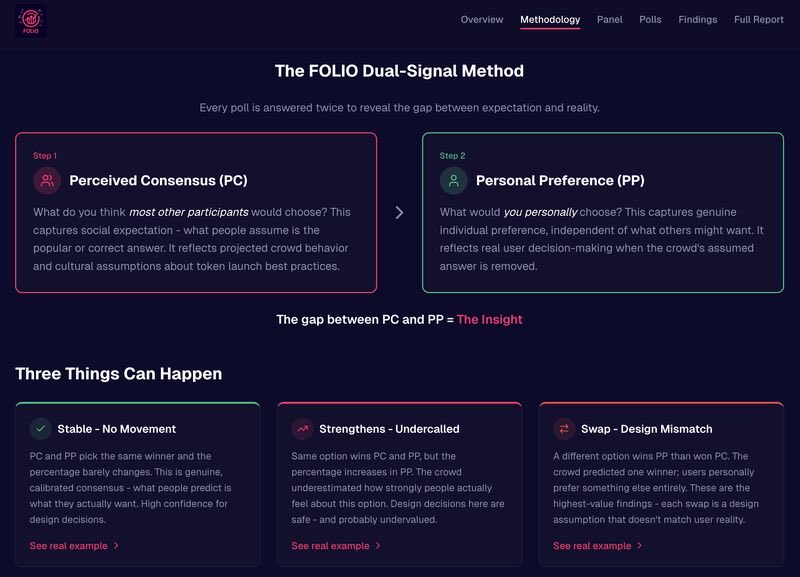
“Trusted by millions." Every payment app says it. We asked 1,945 people if they actually buy it. Most don't. Published performance metrics — real numbers, real stats — beat that claim 3 to 1. That gap between what sounds convincing and what actually is came up in all 100 polls we ran on mobile payments and remittance UX. Using FOLIO's dual-signal methodology, we ask every question twice: what do you think others prefer, then what do YOU prefer. The pattern was the same every time. People assumed others would be satisfied with vague, familiar defaults — but personally wanted something more specific. ⏳ They assumed others would want to "contact support" when a transfer is delayed — but personally preferred knowing why it's delayed and when they'd hear next. 🎁 They assumed others would be motivated by points-to-gift-card rewards — but personally preferred fees that just go down the more they send. 🤝 They assumed others would prefer a referral bonus triggered at signup — but personally preferred one tied to a completed transfer. 💸 They assumed others would tolerate bundled fees — but personally preferred "You pay $X / They receive $Y" shown side by side. And the #1 thing they said would make them leave a platform? Raising fees without telling them. Traditional surveys can't see any of this. They ask the question once and get a blended signal — you can't tell if someone is telling you what they want or what they think everyone else wants. FOLIO separates those two signals, and across 100 polls and over 12,000 votes the gap pointed the same direction every time: people overestimate how tolerant others are of vagueness and underestimate how much they personally demand transparency. If you're using blended data to prioritize your payments roadmap, you're likely building for a user that doesn't exist. Dive into the full report for more insights → v0-folio-payments-study.vercel.app
FOLIO tweet mediaFOLIO tweet mediaFOLIO tweet mediaFOLIO tweet media
English
9
2
29
1.6K
Toju retweetet
FOLIO
FOLIO@FolioBusiness·
FOLIO Airdrops & Tokenomics Study - Audio Summary 🔊
FOLIO@FolioBusiness

We just published FOLIO’s latest study on how the crypto crowd evaluates airdrops, tokenomics, and token launch experiences. 🚀 🪂 Using our Perceived Consensus (PC) vs Personal Preference (PP) methodology, we collected 11,770 votes from 2,005 unique participants across 100 polls to understand what actually builds confidence in a launch, and where projects misinterpret what users want. v0-folio-study-dashboard.vercel.app ❗The biggest takeaway: what people say they personally want from a launch often diverges sharply from what they assumed the broader crowd wants. That kind of gap is exactly how traditional survey data can lead token projects down the wrong path. Here are 5 things crypto users overestimated the crowd's preference for: 1. 🛠️ Staking as "real utility" — Voters assumed the crowd defined utility through staking mechanics, but personally preferred simpler definitions like feature access (39.0% PC → 42.9% PP) 2. 🏆 Incentive-driven token logic — The crowd was expected to prioritize points and staking systems, but voters personally preferred straightforward product access (34.0% PC → 44.8% PP) 3. ✅ Weekly eligibility updates — Voters assumed the crowd would tolerate weekly cadence, but personally wanted updates within 24 hours (29.6% PC → 37.7% PP) 4. ⚖️ Equal-share whale controls — Voters thought the crowd viewed equal-share logic as the fairest way to control whale allocation, but personally preferred per-wallet caps — by a wide margin (31.7% PC → 50.4% PP) 5. 🔠 Speed over simplicity — Voters assumed the crowd favored faster airdrop campaigns, but personally preferred simpler rules over speed (31.2% PC → 36.7% PP) 🔮 What FOLIO's methodology uncovers that traditional surveys miss: Surveys ask what people prefer. At FOLIO, we first challenge you to predict what you think the majority prefers (with real rewards if you're correct), then share your own personal preference. The gap between those answers reveals structural biases — assumptions about what the crowd wants that don't match what individuals actually value. It's borrowed from election forecasting: if you want to know who'll win, don't just ask who someone is voting for. Ask who they think their neighbors are voting for. 🗳️ If you're building a token launch, airdrop campaign, or tokenized product and want to understand how users evaluate trust, fairness, utility, and transparency, plus receive practical recommendations, read the full report: drive.google.com/file/d/1SUAoxk…


English
0
3
11
483
Toju retweetet
FOLIO
FOLIO@FolioBusiness·
FOLIO now supports Ad Ratings and Rankings polls. 🎯 Brands can upload image or video ads and see how people think the crowd will rate or rank them, before sharing their own personal opinion. This reveals the gap between perceived consensus and personal preference, helping uncover where ad appeal is assumed vs where it actually exists. A useful way to test creative, compare ads, and surface stronger consumer insight! 👉Fill this form to test your ads for free today: forms.gle/ycrdUT1ko17QWv…
English
1
2
11
679
Toju
Toju@Toju93·
Great strategy in theory, except 99% of the time things that have never happened before tend to never happen. The reason most people don’t make these bets is because time and capital is scarce and the number of things that have never happened is infinitely larger than those that have.
English
1
0
1
33
Scott Stevenson
Scott Stevenson@scottastevenson·
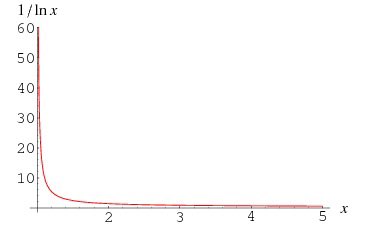
99% of people don’t bet on things that have never happened before. But that’s where 99% of the alpha is: new phenomena that the market hasn’t figured out how to price. Everyone is fighting for scraps hoping for established patterns to keep repeating, but with each repetition alpha logarithmically decays. If you can think independently from first principles about what new things will happen that have never happened before, you can tap into abundant alpha. But if you need precedent, you are stuck fighting for the returns on the tail:
Scott Stevenson tweet media
English
7
2
42
2.9K
Toju retweetet
FOLIO
FOLIO@FolioBusiness·
We just published FOLIO’s latest study on how the crypto crowd evaluates airdrops, tokenomics, and token launch experiences. 🚀 🪂 Using our Perceived Consensus (PC) vs Personal Preference (PP) methodology, we collected 11,770 votes from 2,005 unique participants across 100 polls to understand what actually builds confidence in a launch, and where projects misinterpret what users want. v0-folio-study-dashboard.vercel.app ❗The biggest takeaway: what people say they personally want from a launch often diverges sharply from what they assumed the broader crowd wants. That kind of gap is exactly how traditional survey data can lead token projects down the wrong path. Here are 5 things crypto users overestimated the crowd's preference for: 1. 🛠️ Staking as "real utility" — Voters assumed the crowd defined utility through staking mechanics, but personally preferred simpler definitions like feature access (39.0% PC → 42.9% PP) 2. 🏆 Incentive-driven token logic — The crowd was expected to prioritize points and staking systems, but voters personally preferred straightforward product access (34.0% PC → 44.8% PP) 3. ✅ Weekly eligibility updates — Voters assumed the crowd would tolerate weekly cadence, but personally wanted updates within 24 hours (29.6% PC → 37.7% PP) 4. ⚖️ Equal-share whale controls — Voters thought the crowd viewed equal-share logic as the fairest way to control whale allocation, but personally preferred per-wallet caps — by a wide margin (31.7% PC → 50.4% PP) 5. 🔠 Speed over simplicity — Voters assumed the crowd favored faster airdrop campaigns, but personally preferred simpler rules over speed (31.2% PC → 36.7% PP) 🔮 What FOLIO's methodology uncovers that traditional surveys miss: Surveys ask what people prefer. At FOLIO, we first challenge you to predict what you think the majority prefers (with real rewards if you're correct), then share your own personal preference. The gap between those answers reveals structural biases — assumptions about what the crowd wants that don't match what individuals actually value. It's borrowed from election forecasting: if you want to know who'll win, don't just ask who someone is voting for. Ask who they think their neighbors are voting for. 🗳️ If you're building a token launch, airdrop campaign, or tokenized product and want to understand how users evaluate trust, fairness, utility, and transparency, plus receive practical recommendations, read the full report: drive.google.com/file/d/1SUAoxk…
FOLIO tweet mediaFOLIO tweet mediaFOLIO tweet mediaFOLIO tweet media
English
3
3
8
1.6K