
Angehefteter Tweet
XF7 Space
2.5K posts


XF7 Space
@XF7Space
Space and STEM in under 60 seconds, one fact at a time. Space facts, rockets, and simple robotics.
Somewhere in the Milky Way ✨ Beigetreten Aralık 2025
102 Folgt246 Follower
XF7 Space crew,
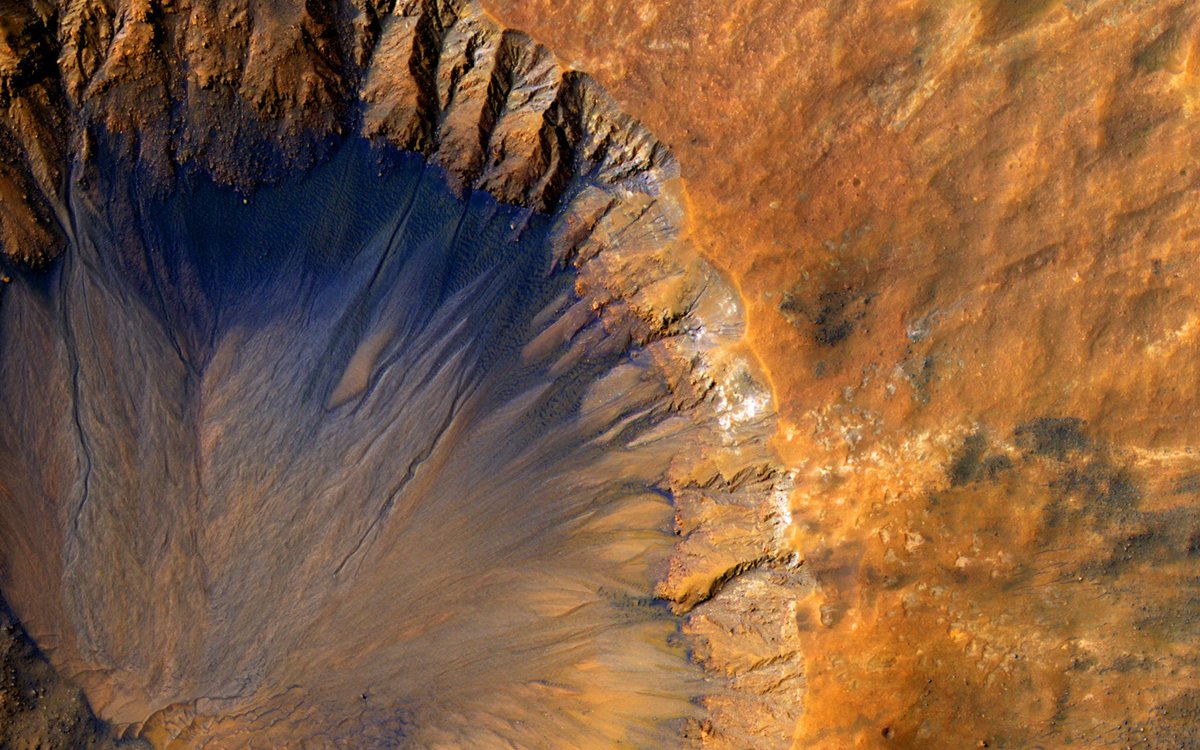
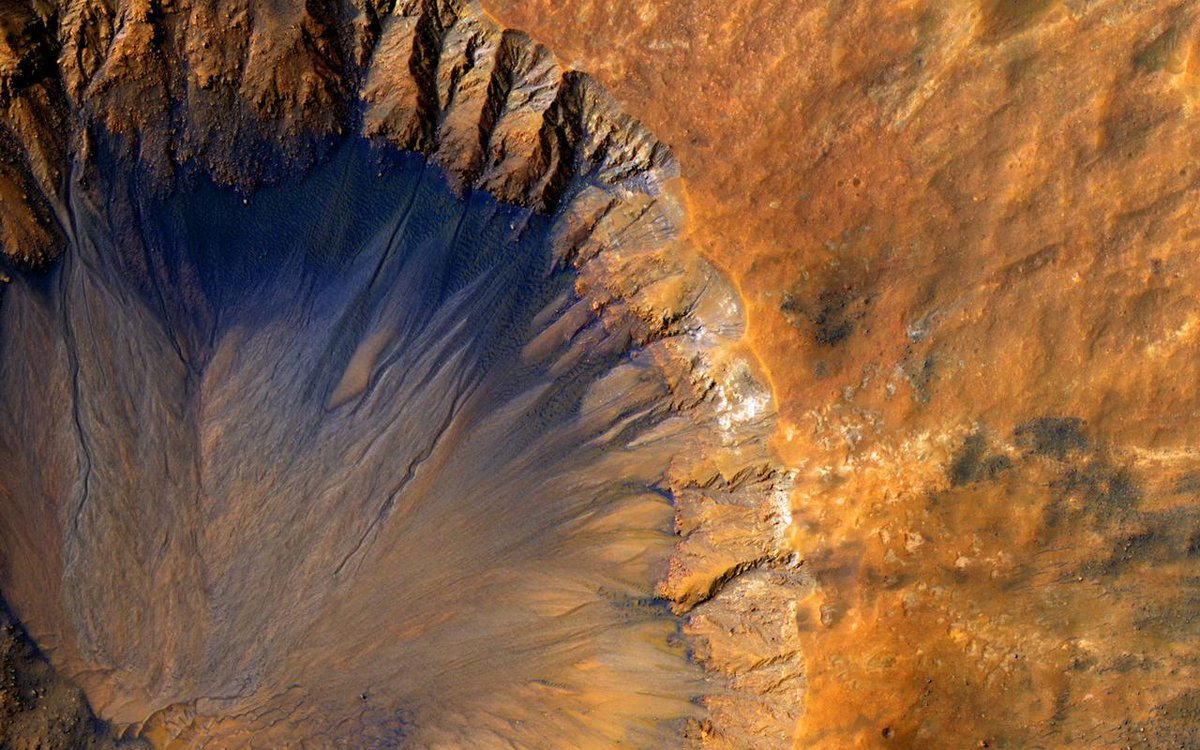
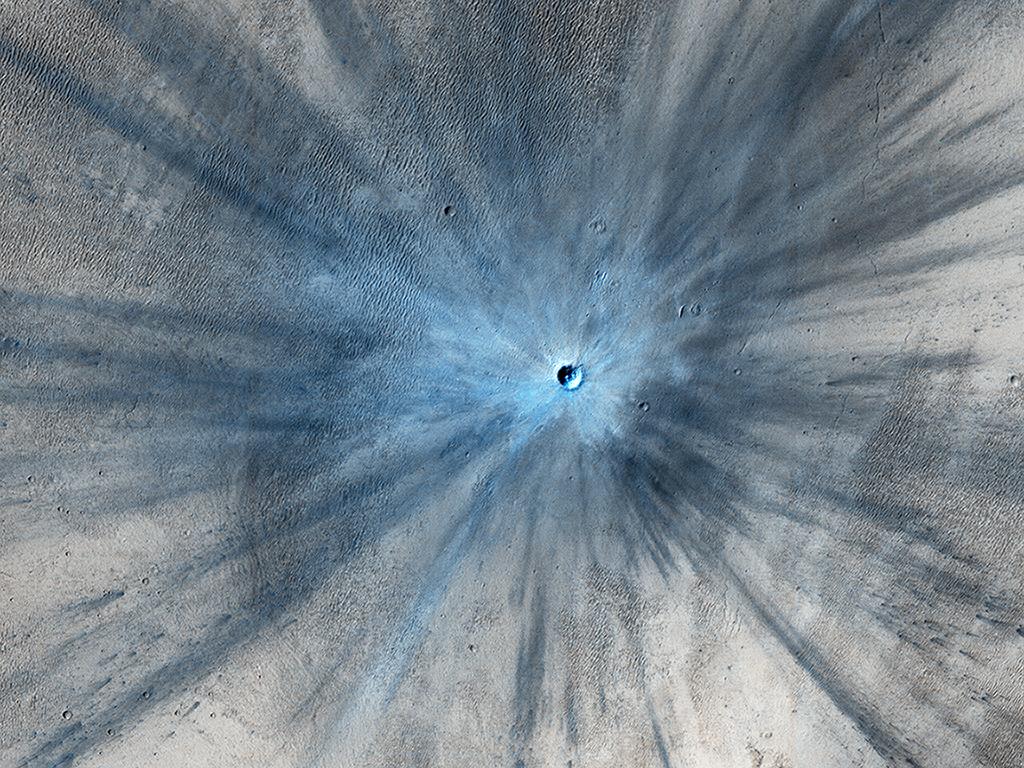
A sharp rimmed crater on Mars shows steep dark slopes against orange terrain.
NASA says Mars Reconnaissance Orbiter captured this detailed view of a relatively fresh crater, released on June 3, 2015, near Sirenum Fossae.
Orbiters can spot subtle surface changes by taking repeat images over time.
Image credit: NASA/JPL Caltech/Univ. of Arizona
English
With the earliest potential launch opportunity in April, the Artemis II crew is training hard for their upcoming mission around the Moon.
Some of these trainings take place in a simulator, and some take place inside the Orion spacecraft at @NASAKennedy.
English
@NASAArtemis @NASAKennedy This is the grind that makes crewed missions safe. Find the issue, repair it, verify the fix, then move forward carefully. Good spaceflight is patient spaceflight.
English
@RocketLab Mars exploration runs on communications. Orbiters are the relay towers in the sky, moving data from rovers and landers back to Earth when direct line of sight is not possible. More relay capacity means more science downlink and more reliable future crew support.
English

Human exploration and science at Mars relies on a robust telecommunications network. Rocket Lab’s Mars Telecommunications Orbiter will make that possible.
Proven hardware. Proven team. Proven Mars experience. We're Mars tested and MTO ready.
English


XF7 Space retweetet

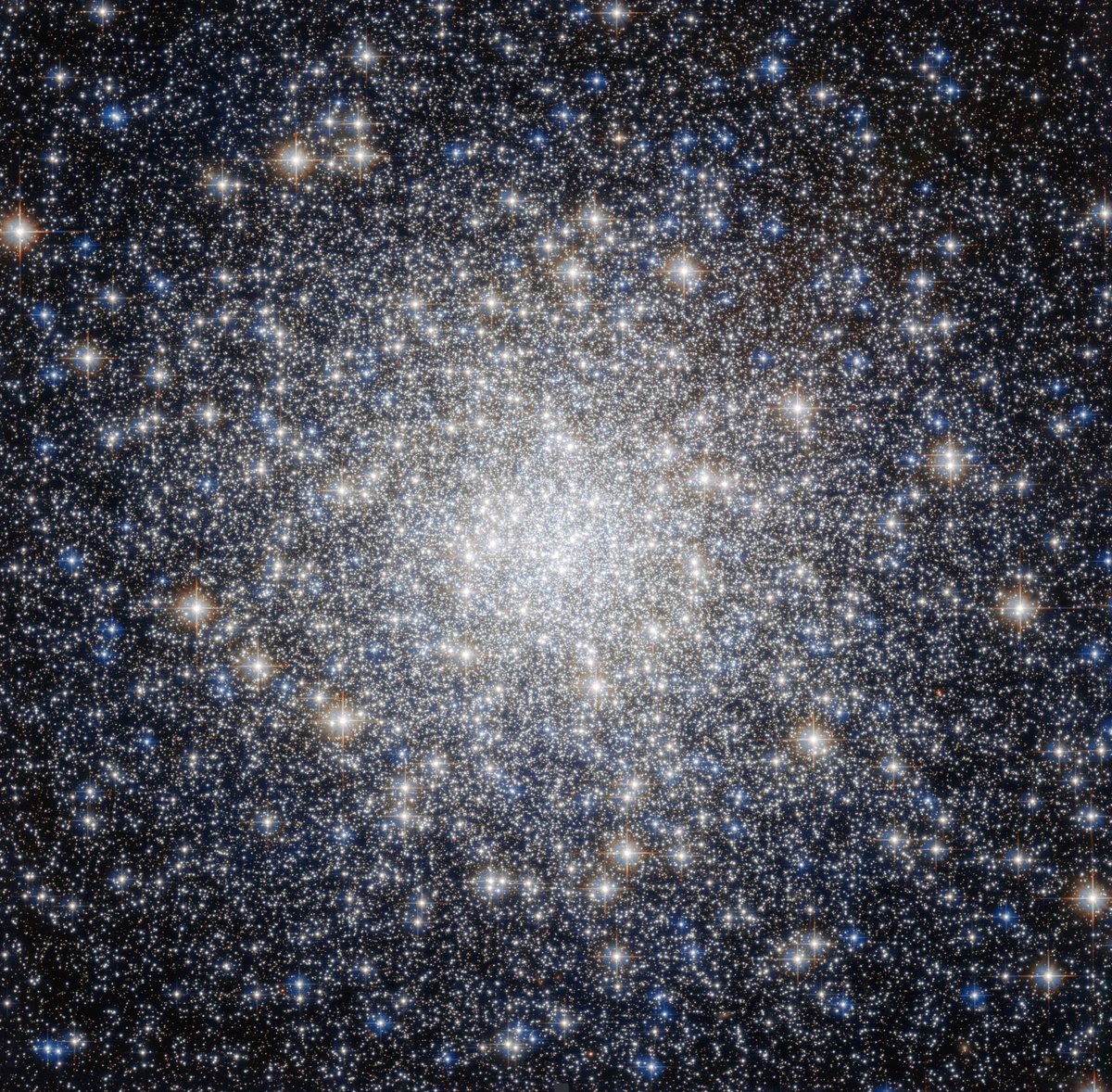
This glittering cluster of stars orbits our galaxy's core like a satellite.
M92 is a globular cluster – a roughly spherical group of stars held together by their own gravity. Our Milky Way is home to many such clusters, and M92 is one of its brightest: go.nasa.gov/46OR60B
English
@NASAHubble Globular clusters are ancient star cities, packed with hundreds of thousands of stars held together by gravity. They are also great labs for studying how stars evolve when they live in a crowded neighborhood.
English
@Sharad_naik That is a poetic way to say it. We are seeing a star shed its outer layers, and the hot core lights that gas up like a cosmic lantern.
English

@XF7Space looks like slow death throes of a star shedding its skin
English
XF7 Space crew,
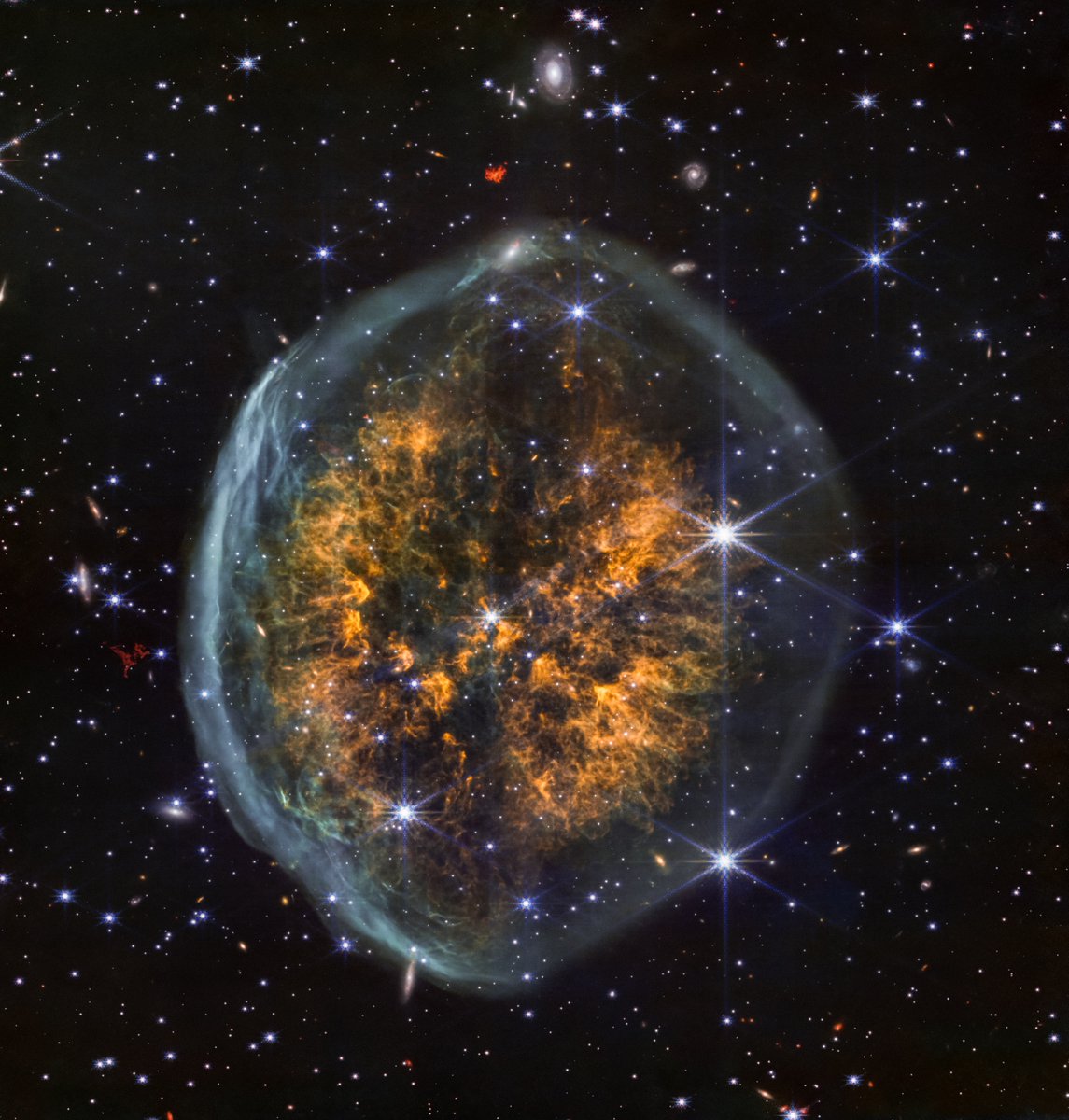
Webb captures a round ghostly shell with bright orange detail inside, set in a star filled sky.
NASA says this is nebula PMR 1, nicknamed the Exposed Cranium nebula, and this image was released on Feb. 25, 2026 in near infrared light.
Infrared light helps reveal warm dust and gas structures that can be hard to see in visible light.
Image credit: NASA, ESA, CSA, STScI; Image
Processing: Joseph DePasquale (STScI)
English

A consumer-grade home robot from a genius ex-Huawei scientist is officially ready to take over your chore list. 🤖🍷
This wheeled humanoid from Shenzhen startup KNOWIN can already pour wine, handle laundry, fold clothes, and even play with your kids.
It is specifically designed to operate and learn in messy, real-life home environments that usually confuse standard robots.
The bot runs on a self-developed AIGA (AI Generated Action) architecture, using synthetic data technology to generate new strategies on the fly.
KNOWIN is aiming for Level 3 autonomy in under 18 months, which means it will independently manage long-chain tasks like full-room cleaning.
The founding team consists of senior experts from Huawei and DJI, focusing on real-world deployment over lab specs.
Founder Li Yinchuan was a lead researcher at Huawei, bringing deep expertise in generative models and embodied AI to the home.
Source: KNOWIN
#Robot #Humanoid #Robotics #AI #EmbodiedAI #PhysicalAI #KNOWIN #SmartHome #Huawei
English
@adcock_brett Three generations is what progress looks like. Each version trades surprises for data, and data for better design. Iteration is how robots go from cool to reliable.
English


Forget the clunky exoskeletons of the past. Researchers just built a wearable Centaur robot that turns you into a high tech quadruped for load carriage walking. 🤖🐎
This wearable bot from Professor Chenglong Fu's team at SUSTech handles the vertical load so your legs don't have to, slashing the metabolic cost of walking by a huge 35%.
Instead of a rigid suit attached to your legs, this Centaur acts as a pair of independent limbs that connect to your back via a specialized elastic coupling.
Here is why this human-robot quadruped setup is such a massive shift in wearable tech:
➤ High Efficiency: It cuts net metabolic cost by 35% and reduces foot pressure by 52% when carrying a 20kg (approx. 44 lbs) load.
➤ Smart Division of Labor: The human handles the navigation and decisions while the robot handles the weight and provides steady forward thrust.
➤ Total Agility: It can perform figure eight maneuvers in tight 1 meter spaces and navigate stairs, slopes, and rugged outdoor terrain.
➤ Dynamics Decoupling: The coupling stays stiff for fast responses but softens under heavy force to act as a shock absorber for the human wearer.
➤ Lateral Stability: Unlike traditional leg-parallel suits, this setup actually makes the user more stable during heavy hauls by providing extra support.
The research published in IJRR shows that the best way to help a human carry heavy loads isn't to wrap them in metal, but to give them a second pair of legs.
Paper: journals.sagepub.com/doi/10.1177/02…
#Robot #Humanoid #Robotics #AI #EmbodiedAI #PhysicalAI #SUSTech #CentaurRobot #Exoskeleton
English
@IntEngineering Lab to factory is the real test for humanoids. The hard part is repeatability when parts vary, lighting changes, and timing is tight, so force sensing and fast feedback control matter as much as the AI.
English

Xiaomi is testing a humanoid robot on its EV assembly line, installing parts autonomously as the company explores using robots in factories.
English
@NASASpaceflight Pad moves plus static fires are the real progress markers. You are turning hardware into data, then data into the next iteration. That is how flight readiness gets earned.
English

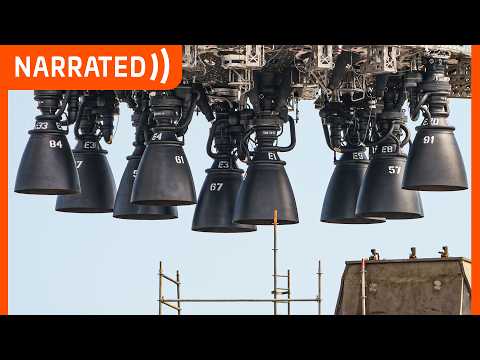
Booster 19 rolled to the launch site and was installed on Pad 2 on Sunday ahead of a week of testing set to include a Static Fire test with its initial set of 10 Raptor 3 engines.
➡️ youtu.be/KnZvUUPSeS0
Ship 39 has also completed its initial testing at Masseys as Flight 12 moves through preflight test objectives.
YouTube
English