Bathville

13.4K posts

Bathville banner
Bathville

Bathville

@bathville

Scots and Internationalist. Ex regular RAF. Impatient for indy and membership of EU. Believer that where there’s a will there’s a way.

Aberdeenshire Beigetreten Eylül 2014
1K Folgt650 Follower
Angehefteter Tweet
Bathville
Bathville@bathville·
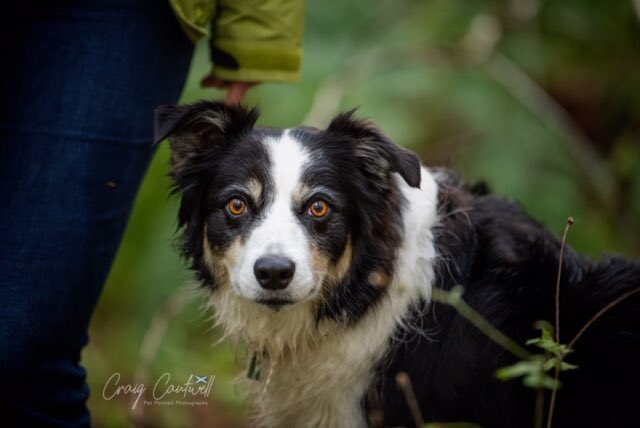
My daughter, whilst out walking our dog met a fellow collie dog walker with a camera. He took a couple of photos and offered to send them to her. Below are the photos, transpires the fellow dog walker was the very talented Craig Cantwell. facebook.com/craigcantwellp… #bordercollie
Bathville tweet mediaBathville tweet media
English
6
1
24
0
Iain Mackinnon
Iain Mackinnon@linktonian·
@bathville @QuinanLloyd no Scotland doesnt own anything gas/oil is owned by the companies who invested in the infrastructure needed to extract the resource - Scotland cannot extract anything as it has hee haw means of doing it
English
2
0
0
16
Liberation Scotland Committee
Liberation Scotland Committee@LiberationScot·
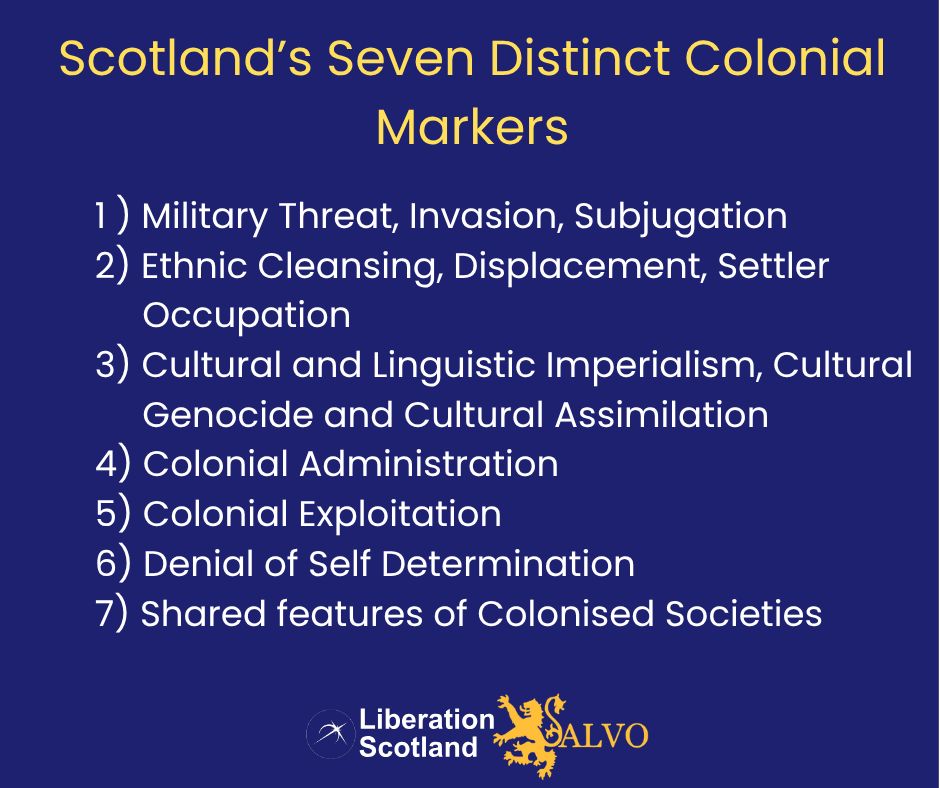
Introduction to Scotland’s ‘Colonial Markers’ (and to our nation’s Hidden History) Modern Scotland more than meets all of the criteria established by UN Resolution 1514 (XV) to define a Non-Self-Governing Territory (NSGT) or colony: its governance remains subordinate to Westminster’s control and its distinct historic legal, cultural, and geopolitical identity has been greatly diminished after three centuries of relentless attack by the administering power (England). Professor Alfred Baird has carried out a detailed analysis of Scotland’s colonised condition, referencing post-colonial theory (Fanon, Memmi et al), in his 2020 book ‘Doun Hauden’. His research identifies the brutal realities of Scotland’s colonised condition and his analysis of this cites recognised post-colonial theory to identify a set of distinct colonial determinants or ‘Colonial Markers’ directly resulting from Scotland’s annexation by England in 1707. Professor Baird uses these as context to explain Scotland’s current position today, where its economy is a fraction of those of its comparable European and Western neighbours, its indigenous culture is subordinated to that of England’s within the framework of the UK, and its population suffers some of the worst across-the-board health outcomes in Europe. While some of these colonial determinants are historic, many are contemporary and together they continue to shape the modern Scotland we see around us in 2026. The seven distinct ‘Colonial Markers’ identified by Prof Baird in ‘Doun Hauden’ are: 1. Military Threat, Invasion, Subjugation 2. Ethnic Cleansing, Displacement, Settler Occupation 3. Cultural and Linguistic Imperialism, Cultural Genocide and Cultural Assimilation 4. Colonial Administration 5. Colonial Exploitation 6. Denial of Self-Determination 7. Shared features of Colonised Societies. These Colonial Markers form a diagnostic framework, a structured set of criteria designed to identify, analyse, and document the presence and patterns of colonialism across historical and contemporary contexts. Rather than treating colonialism as a singular, fixed event confined to a particular era, the Markers recognise it as a system, one that operates through recurring, identifiable mechanisms regardless of geography, time period, or the identity of the colonising power. Developed as an analytical tool, the seven Colonial Markers provide a common language for scholars, activists, policymakers, communities, and legal advocates to name what they are witnessing, experiencing, or investigating. Each Marker is evidence-based and captures a distinct dimension of colonial practice, from the initial violence of military invasion and subjugation, through to the long, quiet violence of cultural erasure and the ongoing denial of a people's right to govern themselves. Colonialism has historically been defined, described, and debated largely on the terms of those who practised it. Official histories, legal doctrines, and political narratives have repeatedly minimised, romanticised, or outright denied the colonial character of particular relationships and occupations. The Colonial Markers serve as a corrective grounding analysis, not in the self-description of power, but in the lived conditions of colonised peoples. Their importance can be understood across several dimensions: 1. The Markers cut through the ambiguity that is often deliberately cultivated around colonial relationships. By disaggregating colonialism into its component parts it becomes possible to assess a situation rigorously, to say not simply that something "resembles" colonialism, but to demonstrate precisely how and where colonial patterns are operative. 2. The framework is not tied to a single region or case study. It can be applied to the colonisation of the Americas, Africa, Asia, the Pacific, and the Middle East, as well as to contemporary situations that states and international bodies may resist labelling as colonial. This universality strengthens its credibility and its utility as a comparative instrument. 3. For communities experiencing colonialism in the present tense, the Markers offer a framework for documentation, a means of building an evidence base that can be brought before tribunals, truth commissions, human rights bodies, and international courts. Naming each dimension of harm is a prerequisite for seeking redress. 4. Marker 7 identifying the shared features of colonised societies is particularly significant. It ensures that the framework does not focus exclusively on what colonisers do, but attends equally to what colonised peoples experience: the social fractures, psychological wounds, economic marginalisation, and intergenerational consequences that colonialism produces and that persist today within the societies it targets. 5. One of the most persistent strategies employed by colonial powers is denial - the insistence that what is occurring, or what occurred, does not meet the threshold of colonialism. The Markers directly challenge this denial. When multiple Markers are present simultaneously, the cumulative weight of evidence becomes difficult to dismiss. The framework is, in this sense, as much a political and moral instrument as an academic one. The seven Colonial Markers do not merely describe a historical phenomenon, they provide the tools to recognise colonialism wherever it exists, name it with confidence, and refuse the silences that allow it to persist. They also provide evidence of Scotland’s Hidden History – a body of events and actions that are not well known by the majority of contemporary Scots. Introducing each Marker independently allows evidence to build progressively and gives each dimension of colonialism the weight and attention it deserves. Scotland is a rich and overlooked case study in the colonial conversation. Social media is the perfect medium to bring the discussion to a wider audience. SCOTLAND'S COLONIAL MAKERS, with around 100 topics in all, will be posted here on X, on Facebook and on Bluesky regularly over the coming weeks and months.
Liberation Scotland Committee tweet media
English
14
94
129
9.2K
Bathville
Bathville@bathville·
@SMO_VZ The purpose of the troops is IMO to execute safe evacuation of US MILITARY AND CITIZENS IN THE GULF STATES.
English
0
0
0
66
𝐃𝐚𝐯𝐢𝐝 𝐙 🇷🇺🇮🇪
☠️ ‘There's a special operations mission being planned’ — ex-CIA analyst Former CIA analyst Larry Johnson suggested that “the Marines are being used as bait, as a deception, to distract attention” while the US plans another ground mission. 💬 “What we're witnessing is grand political theatre: Donald Trump playing a role — both a distracted person, someone who's constantly changing his mind, behaving very erratically — all of this to create cover for a pretty dramatic special operations mission inside Iran to perhaps locate and/or seize nuclear fuel from Iran,” Johnson explained. 💬 “It would appear that there is some other operation planned,” he added, suggesting Trump’s goal remains defeating Iran — not making peace.
𝐃𝐚𝐯𝐢𝐝 𝐙 🇷🇺🇮🇪@SMO_VZ

🤥🪖 Trump’s military playbook for Kharg, Hormuz: Three avenues to hell All signs point to the US gearing up to seize Iran’s Kharg and possibly islands in the Hormuz Strait. Which military scenarios are likely to occur? 🔴 US military buildup underway A ground force for an invasion of the Iranian islands may include:  ➡️ ~2,200 Marines from the 11th Marine Expeditionary Unit ➡️ ~2,200 Marines from the 31st MEU ➡️ ~3,000 troops from the 82nd Airborne Division ➡️ additional forces from US Army Delta Force, SEAL TEAM-6, the 5th Special Forces Group, USAF 621st Devil Raiders, and the 75th Ranger Regiment  ➡️ in general, the US has around 50,000 troops in the region 🔴 Why Kharg? 📍Kharg hosts Iran’s main oil terminal — the nation's financial lifeline 📍A small, fixed target with defenses reportedly degraded by prior strikes  🔴 Why Hormuz Strait islands? 📍Taking the strait under control 📍Limit Iran’s ability to threaten tanker traffic  🔴 US military options 🔴Option 1: Economic chokehold via Kharg Island ➡️ Initial airstrikes to neutralize remaining military targets ➡️ Insert Marines and airborne troops via MV-22 Ospreys ➡️ Secure critical infrastructure, including the 5,922-foot runway at Kharg airport, to prevent Iranian reinforcement ➡️ Establish control of the island, freeze Iran’s oil exports, and force concessions in negotiations 🔴Option 2: Control the Strait of Hormuz ➡️ Coordinated Marine amphibious landings + heavy airpower  ➡️ Seize key islands around the strait: Qeshm, Abu Musa, Greater Tunb, Lesser Tunb  ➡️ Capture strategic coastal zones: Bandar Abbas and Jask  ➡️ Create a multi-kilometer buffer zone to protect shipping and suppress Iranian missile/drone threats  🔴Option 3: Option 1 combined with Option 2 for broader strategic impact 🔴 Why all three options are a recipe for disaster 🌏Kharg and Hormuz islands sit close to Iran and are highly exposed to missiles, drones, and fast-attack craft  🌏Seizing the islands and strategic coastal zones would incur casualties; holding them would be even costlier  🌏Air and sea resupply would face constant Iranian strikes from missiles and drones  🌏US forces could be trapped and neutralized before achieving any economic or strategic objectives

English
195
1.3K
3.8K
328.8K
Bathville
Bathville@bathville·
@Grouse_Beater I agree with your first sentence sentiment. What will the sculpture cost and who is picking up the tab? The only thing I want on the border is infrastructure!
English
0
0
0
8
Grouse Beater
Grouse Beater@Grouse_Beater·
ART Meaningless, costly sculpture chosen by philistines and the artistically challenged The sculptor behind a new giant sculpture planned for the Scotland-England border has said it is "amazing" to see his vision is finally coming to fruition. Fifteen years have passed since Cecil Balmond was chosen as the winner of a competition to design a large sculpture, and we got his 'Star of Caledonia'. Balmond specialises in what he calls art architecture. He was born in born in Colombo, Sri Lanka (formerly British Ceylon). Obviously, a Scots sculptor was not chosen. The winding steel sculpture, incorporating 100 LED lights, is allegedly inspired by the work of mathematician and physicist James Clerk Maxwell and his theory of electromagnetism. Grousist's view: Absolutely crap, inappropriate. An architect and designer working with Ove Arup, engineers. Should have been a Scottish sculptor but selection committee were mostly dumb. At a community celebration event in front of 300 guests, Balmond said that the landmark will act as a "heart warming welcome into Scotland". Ah, well, it's the thought that counts.
Grouse Beater tweet media
English
15
14
29
1.4K
Bathville retweetet
Sara Salyers
Sara Salyers@SSalyers2·
This is the first part of what may be one of the most important contributions ever made to Scottish liberation, both for the domestic movement and for the international campaign for UN listing of Scotland as a NSGT. Professor Alf Baird produced the framework using post colonial theory and then the supporting research. Together with Alf, the LSC has now expanded, focussed and formulated this research into Scotland’s colonial markers. Please read, copy, share and talk about it!
Liberation Scotland Committee@LiberationScot

Introduction to Scotland’s ‘Colonial Markers’ (and to our nation’s Hidden History) Modern Scotland more than meets all of the criteria established by UN Resolution 1514 (XV) to define a Non-Self-Governing Territory (NSGT) or colony: its governance remains subordinate to Westminster’s control and its distinct historic legal, cultural, and geopolitical identity has been greatly diminished after three centuries of relentless attack by the administering power (England). Professor Alfred Baird has carried out a detailed analysis of Scotland’s colonised condition, referencing post-colonial theory (Fanon, Memmi et al), in his 2020 book ‘Doun Hauden’. His research identifies the brutal realities of Scotland’s colonised condition and his analysis of this cites recognised post-colonial theory to identify a set of distinct colonial determinants or ‘Colonial Markers’ directly resulting from Scotland’s annexation by England in 1707. Professor Baird uses these as context to explain Scotland’s current position today, where its economy is a fraction of those of its comparable European and Western neighbours, its indigenous culture is subordinated to that of England’s within the framework of the UK, and its population suffers some of the worst across-the-board health outcomes in Europe. While some of these colonial determinants are historic, many are contemporary and together they continue to shape the modern Scotland we see around us in 2026. The seven distinct ‘Colonial Markers’ identified by Prof Baird in ‘Doun Hauden’ are: 1. Military Threat, Invasion, Subjugation 2. Ethnic Cleansing, Displacement, Settler Occupation 3. Cultural and Linguistic Imperialism, Cultural Genocide and Cultural Assimilation 4. Colonial Administration 5. Colonial Exploitation 6. Denial of Self-Determination 7. Shared features of Colonised Societies. These Colonial Markers form a diagnostic framework, a structured set of criteria designed to identify, analyse, and document the presence and patterns of colonialism across historical and contemporary contexts. Rather than treating colonialism as a singular, fixed event confined to a particular era, the Markers recognise it as a system, one that operates through recurring, identifiable mechanisms regardless of geography, time period, or the identity of the colonising power. Developed as an analytical tool, the seven Colonial Markers provide a common language for scholars, activists, policymakers, communities, and legal advocates to name what they are witnessing, experiencing, or investigating. Each Marker is evidence-based and captures a distinct dimension of colonial practice, from the initial violence of military invasion and subjugation, through to the long, quiet violence of cultural erasure and the ongoing denial of a people's right to govern themselves. Colonialism has historically been defined, described, and debated largely on the terms of those who practised it. Official histories, legal doctrines, and political narratives have repeatedly minimised, romanticised, or outright denied the colonial character of particular relationships and occupations. The Colonial Markers serve as a corrective grounding analysis, not in the self-description of power, but in the lived conditions of colonised peoples. Their importance can be understood across several dimensions: 1. The Markers cut through the ambiguity that is often deliberately cultivated around colonial relationships. By disaggregating colonialism into its component parts it becomes possible to assess a situation rigorously, to say not simply that something "resembles" colonialism, but to demonstrate precisely how and where colonial patterns are operative. 2. The framework is not tied to a single region or case study. It can be applied to the colonisation of the Americas, Africa, Asia, the Pacific, and the Middle East, as well as to contemporary situations that states and international bodies may resist labelling as colonial. This universality strengthens its credibility and its utility as a comparative instrument. 3. For communities experiencing colonialism in the present tense, the Markers offer a framework for documentation, a means of building an evidence base that can be brought before tribunals, truth commissions, human rights bodies, and international courts. Naming each dimension of harm is a prerequisite for seeking redress. 4. Marker 7 identifying the shared features of colonised societies is particularly significant. It ensures that the framework does not focus exclusively on what colonisers do, but attends equally to what colonised peoples experience: the social fractures, psychological wounds, economic marginalisation, and intergenerational consequences that colonialism produces and that persist today within the societies it targets. 5. One of the most persistent strategies employed by colonial powers is denial - the insistence that what is occurring, or what occurred, does not meet the threshold of colonialism. The Markers directly challenge this denial. When multiple Markers are present simultaneously, the cumulative weight of evidence becomes difficult to dismiss. The framework is, in this sense, as much a political and moral instrument as an academic one. The seven Colonial Markers do not merely describe a historical phenomenon, they provide the tools to recognise colonialism wherever it exists, name it with confidence, and refuse the silences that allow it to persist. They also provide evidence of Scotland’s Hidden History – a body of events and actions that are not well known by the majority of contemporary Scots. Introducing each Marker independently allows evidence to build progressively and gives each dimension of colonialism the weight and attention it deserves. Scotland is a rich and overlooked case study in the colonial conversation. Social media is the perfect medium to bring the discussion to a wider audience. SCOTLAND'S COLONIAL MAKERS, with around 100 topics in all, will be posted here on X, on Facebook and on Bluesky regularly over the coming weeks and months.

English
8
231
279
5.9K
Bathville retweetet
Colette Walker
Colette Walker@coletteisp·
I second that politics will never change me , I stand only for honesty, my morals and principles , and my never ever lose my integrity . I have bern a grassroot campaigner like @Allanpetrie91 for too many years , we work tireless to advocate for others that can’t speak up for themselves or their families that just don’t know how to or too exhausted . I never set out to be in any parliament, my focus is policy, making policies that work for everyone . I am proud to be the leader of @IndyScotParty because we stand on our principles at all time
English
9
22
76
1.8K
Bathville retweetet
Allan petrie
Allan petrie@Allanpetrie91·
Truth, Not Skulduggery I see that Barrhead Boy has posted another attack, this time accusing me of lies, betrayal and placing my “personal feelings above the cause”, strangely, he has also refused to allow my reply on his blog, that tells you everything you need to know because the one thing Roddy knows about me after working closely together is this, I do not lie, unfortunately, that standard has not been applied universally. Let’s start with the facts. Roddy publicly claimed that the Alliance had over 100 members when it was registered, that was not true, he then claimed membership had risen by 400% after Alba collapsed, again, not true the reality is the number of new members after Alba folded was 34 and around 20 of those were bot accounts. If there really had been the massive surge of support he claimed, you would expect to see it reflected somewhere, for example, in the crowd funder remember of £20,000 pledges were made by the Alba rebels but anyone can look at their page and see the truth for themselves there has been no tidal wave of financial support from Alba members. So before accusing others of lies, Roddy might want to reflect on the claims he has made publicly. Roddy also appears not to have read the Alliance to Liberate Scotland Constitution because if he had, he would know that the Alliance is not a single-issue party, the constitution states clearly under Aims and Objectives: 1: Independence for Scotland, to regain Scotland’s independence by any democratic means. 2: Equality for everyone that lives in Scotland. That second principle matters, it is not decorative language it is the foundation of the party and the membership rules reinforce this under section 4.2, a person may only join if they, agree to the aims and objectives of the party and are not associated with views or organisations deemed injurious to the interests of the party or inconsistent with its aims. I know this constitution inside out because while Roddy was sitting beside his swimming pool in Spain supping gin, I was the one up after midnight drafting and amending the constitution for months to make sure it complied with Electoral Commission law. Six months of work, arguments, amendments and rewrites, all to get the party registered properly. Now let’s deal with the meeting Roddy conveniently rewrites. On Sunday 8th March, we held a meeting from 7pm until after midnight, Roddy attended despite having already left the Alliance in a huff because some members were attending a Yes United event, at that meeting, the issue of Craig Murray and Tommy Sheridan was discussed and the decision was clear, they would not be Alliance candidates, the next night, Monday, we were called to another meeting, again running from 7pm until after midnight, again the subject was raised by Roddy and Phil and again the decision was clear, they would not be Alliance candidates. Then came Tuesday, another meeting, another attempt to revisit the same issue despite it having already been rejected twice at that point, myself and another member made it absolutely clear if those two were imposed as candidates after two previous rejections, then we would no longer remain part of the party, yet Roddy, Phil, Hazel and Eva decided they wanted them anyway. So, let’s be clear, that was not democracy it was repeating a vote until the result you wanted appeared, that is not democratic leadership, it is old-boys political manoeuvring. Roddy also accuses me of placing “personal feelings above the cause” let’s return to the constitution again, it states clearly, equality for everyone that lives in Scotland, that includes women, it includes children, it includes disabled people, bringing in candidates who support policies that erode women’s rights and safeguarding protections is not some abstract debate, it is a direct conflict with the principles written into the party constitution and when asked the obvious question, whether someone like Sophie Molly or a member of Friends of Israel would be accepted as candidates, Roddy suddenly goes silent and calls you childish, a bit like Nicola Sturgeon when she was asked if a rapist in a female prison is a woman. Perhaps the most telling fact of all is this, of the original ten candidates, only one remains willing to stand under the Alliance banner after this fiasco, that should tell people everything they need to know about what has happened. The Alliance that was supposed to be something new has now become Alba Mark 2 and now we are told the strategy is, vote SNP in the constituencies and Alliance on the list, think about that, we are told the SNP are not an independence party anymore, but we are also told to vote for them anyway, so apparently the price of this strategy is, Women’s rights, Child safeguarding Political integrity. Well Roddy, some of us don’t just talk the talk, some of us walk the walk and I will never abandon the principles I have spent decades fighting for just to keep a seat warm in a political club, independence must mean something, if it doesn’t stand for equality, integrity and safeguarding the vulnerable, then it is not liberation, it is the retention of the colonial system we are fighting to be free from and Scotland deserves better than that.
English
22
34
81
3.9K
Bathville retweetet
Heritage Medicine
Heritage Medicine@DrPaiwanFan·
this broccoli recipe in a famous restaurant is best ever
English
25
166
1.4K
214.4K
Bathville
Bathville@bathville·
@aboutceltic The legs have gone. Surely that was apparent on his last outing?
English
0
0
0
19
Everything Celtic
Everything Celtic@aboutceltic·
You’ve got to imagine Iheanacho has a clause that activates a further year after a certain amount of games that the club are hesitant of. From what I’ve seen of him he’s certainly the best striker at the club.
Everything Celtic tweet media
English
78
17
879
98.2K
Christophe Dorigné-Thomson
Christophe Dorigné-Thomson@thomsonchris·
A people subjugated and treated as expendable, communities uprooted and landscapes emptied, human lives displaced while flocks replaced them. Branded when useful as a “martial race” for imperial wars, and when inconvenient as caricatures: drunk, dysfunctional, narcotised. A society flooded with drugs and dependency while its offshore oil wealth was extracted. Languages pushed to the brink. Identity denied, diluted, administratively re-engineered. A nation among the oldest in Europe, bearer of the continent’s most ancient flag, yet renamed abroad, spoken for by others, its diplomatic voice confiscated. Trade intercepted. Ports and airports closed or downgraded. Logistics controlled from elsewhere. A parliament elected within a colonial constitutional design where decisive powers can be overridden at will. Indigenous companies weakened or erased. Historical memory manipulated to naturalise subordination. Militarily occupied. A media space hollowed out and subordinated to institutions headquartered beyond its borders. Cultural artefacts removed and stolen. Public health and mortality patterns resembling those of dispossessed indigenous, aboriginal populations. But apart from all that, Scotland is not an English colony.
English
4
71
105
9.5K
The Parkhead Faithful
The Parkhead Faithful@TheParkheadF·
I must give credit to Dane Murray for yesterday. Like many others, I thought after his mistake that led to the second goal it was going to be a repeat of Hearts but fair play to the lad, he bounced back brilliantly. He recovered by winning almost everything that came his way. His headers were absolutely bulleting up the park one after another, and you could see the determination to put it right. Naturally, I was disappointed at the time, but by full-time I was genuinely very pleased with his overall performance after that setback. You can clearly see there’s a player there if he can get regular game time and cut out the mistakes. I think a lot of us forget he’s had two long-term ACL injuries at such an early stage of his career, which makes his resilience even more impressive. Well done, Dano 👏🍀
The Parkhead Faithful tweet media
English
46
34
760
24.2K
Grouse Beater
Grouse Beater@Grouse_Beater·
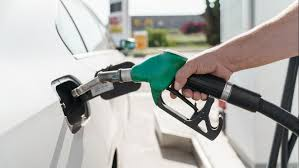
AUTOMOBILES Your petrol costs are about to rise - sharply The Sun King doesn't give a damn. And he caused it.
Grouse Beater tweet media
English
9
19
48
949
Bathville
Bathville@bathville·
@Grouse_Beater It puts party before country as evidenced by rejecting pact with ALBA on regional vote.
English
0
0
3
56
Bathville
Bathville@bathville·
@TheParkheadF Trusty lacks ability and awareness to play left centre back and he’s being played on the right? Surely the astute MON can find someone better for the position.
English
0
0
0
40
The Parkhead Faithful
The Parkhead Faithful@TheParkheadF·
Auston Trusty will now miss the away trip to Ibrox, leaving us with a choice of Dane Murray or Benjamin Arthur.
The Parkhead Faithful tweet media
English
139
11
387
141.9K
ALBA Party
ALBA Party@AlbaParty·
"When Westminster refuses a referendum, we can call a special election at Holyrood on the matter of independence." - @AngusBMacNeil Vote ALBA on the List this May to help deliver action on independence 🏴󠁧󠁢󠁳󠁣󠁴󠁿🗳️
ALBA Party tweet media
English
45
51
96
3K