Kusha
2.6K posts

@compoundlessons
Full-time Trader | @CoinMarketCap | @BloFin_Exchange


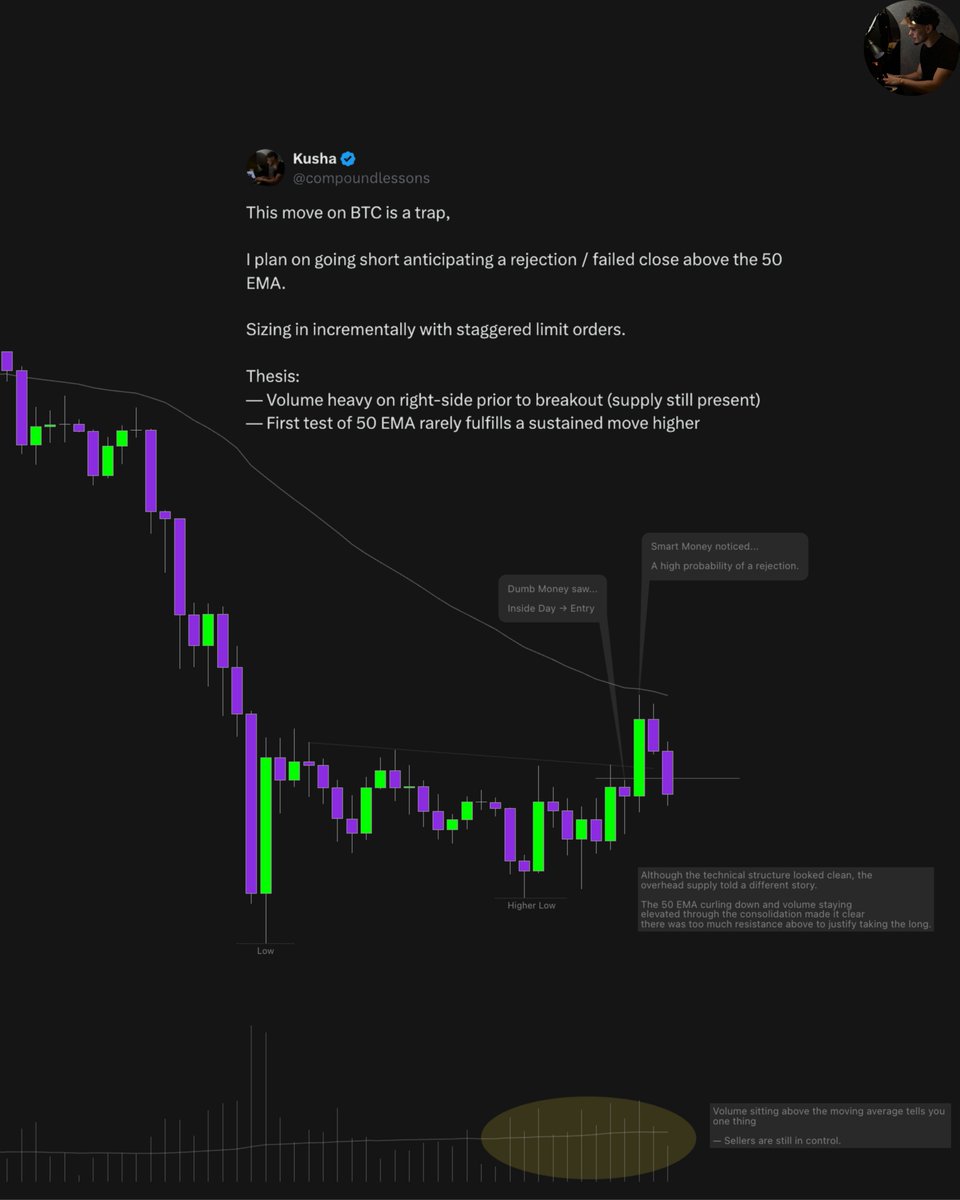
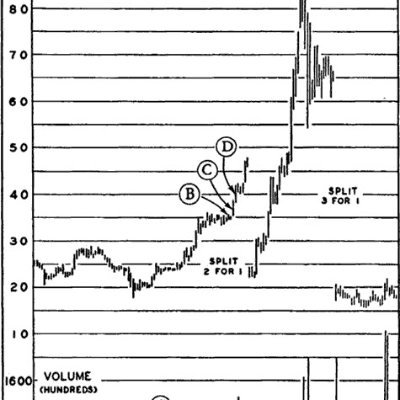
This move on BTC is a trap, I plan on going short anticipating a rejection / failed close above the 50 EMA. Sizing in incrementally with staggered limit orders. Thesis: — Volume heavy on right-side prior to breakout (supply still present) — First test of 50 EMA rarely fulfills a sustained move higher — This move is a draw of retail hope anticipating the bottom being in, paired with base counting suggesting another leg lower is evident to fulfill 4-5 bases lower in a cycle (William O’Neal)


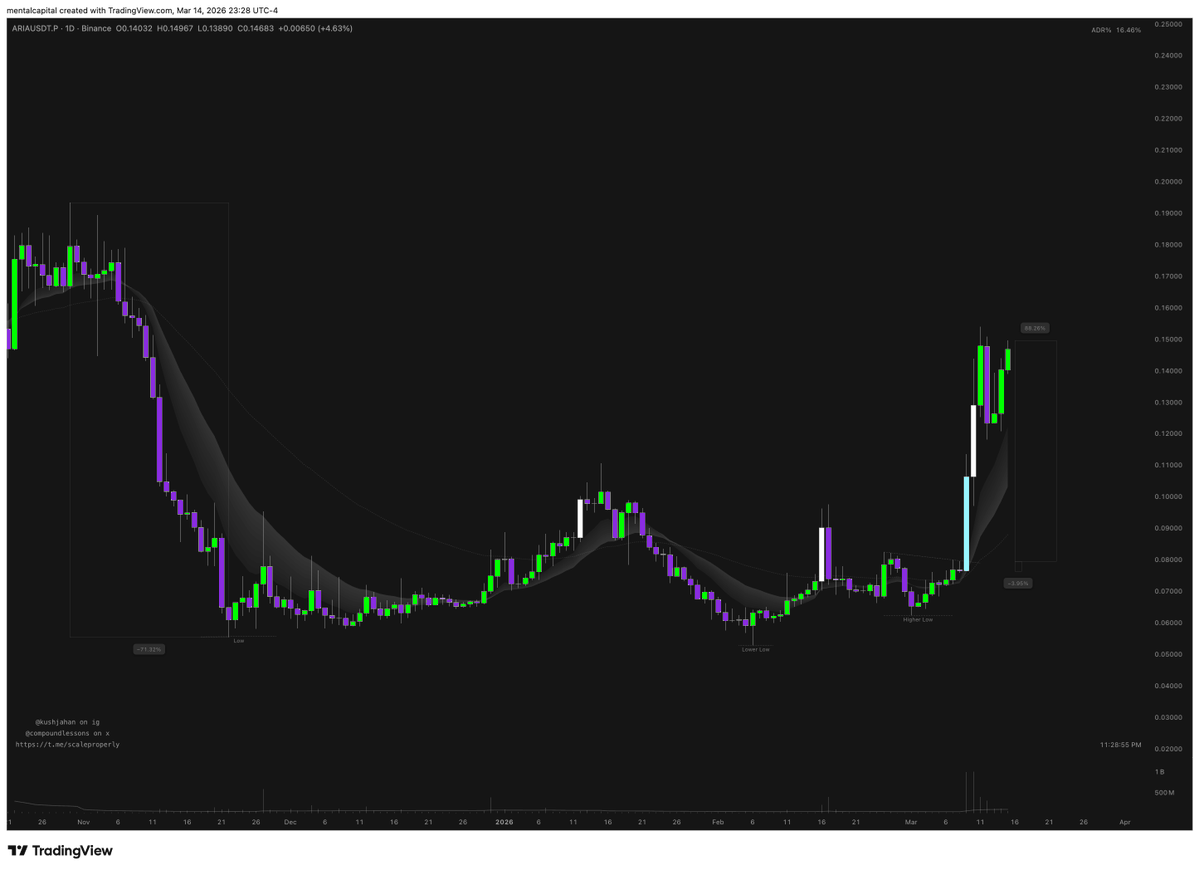
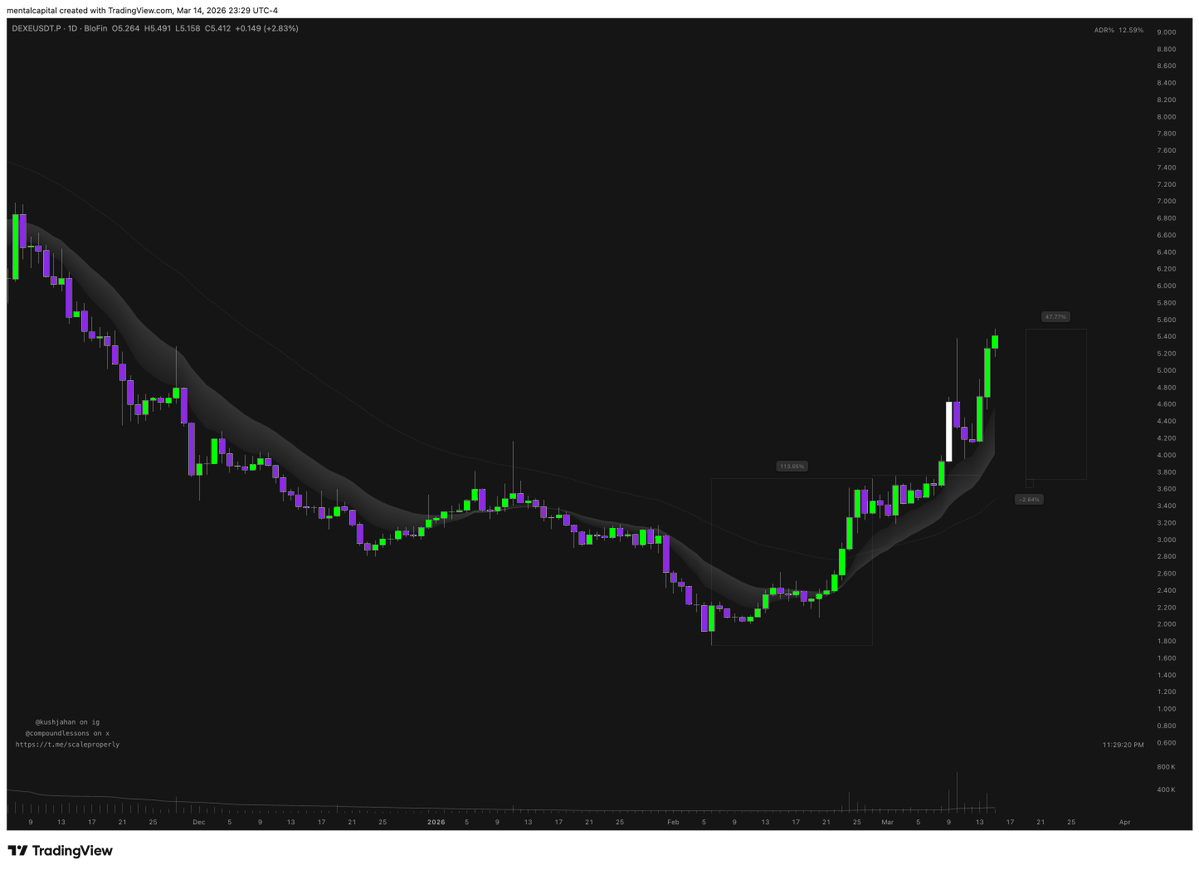
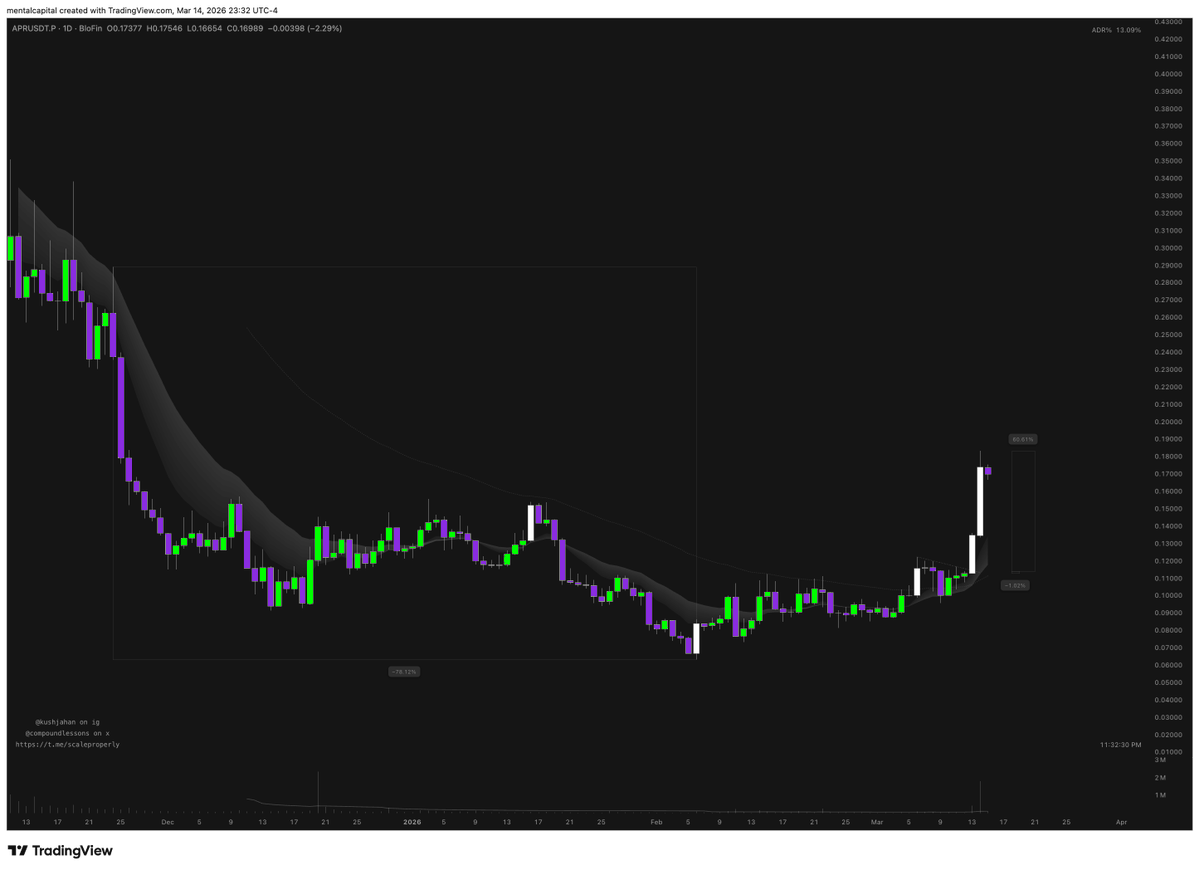
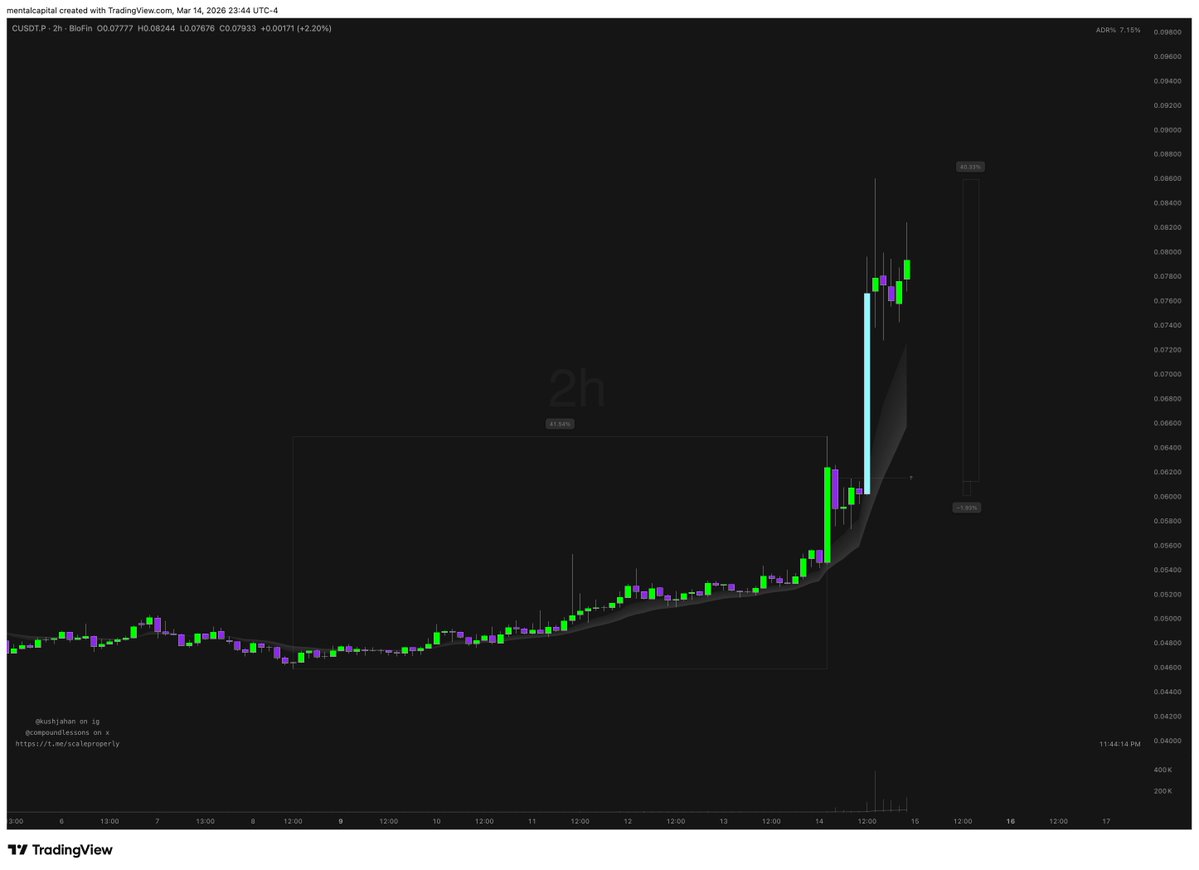
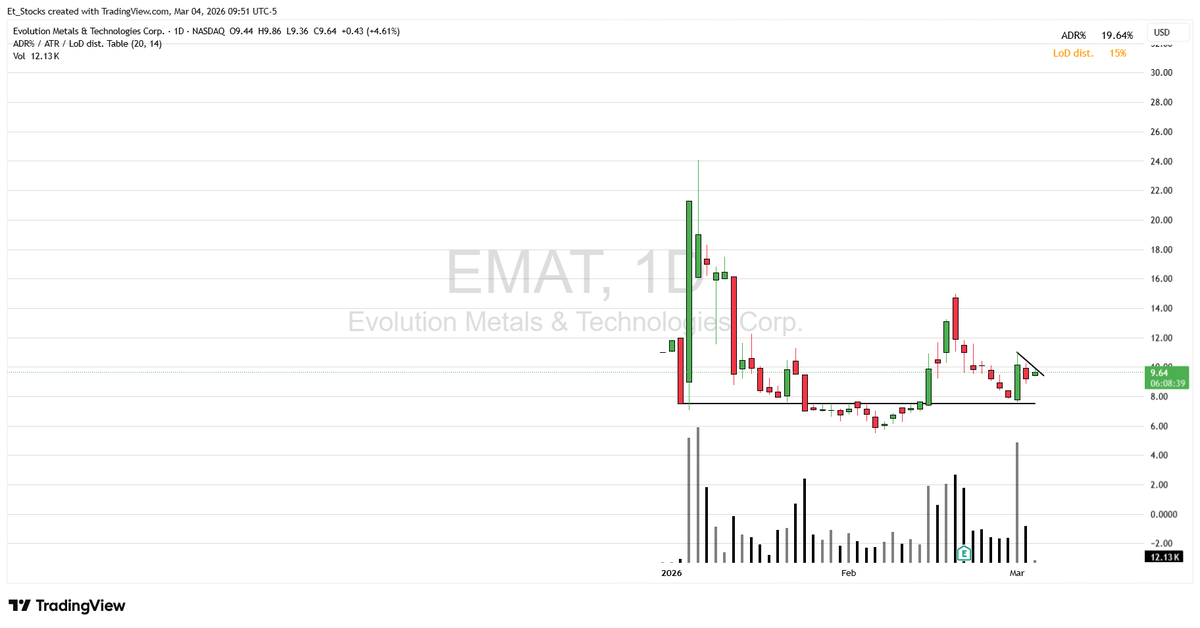
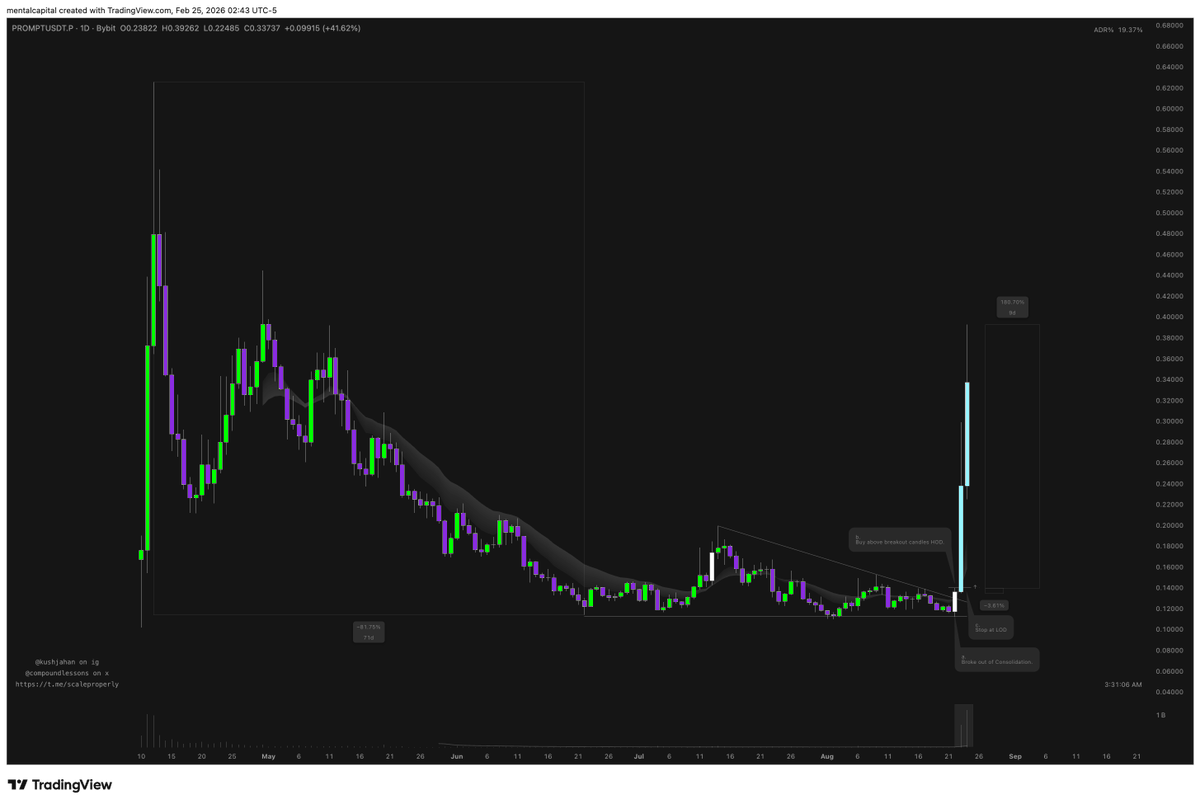
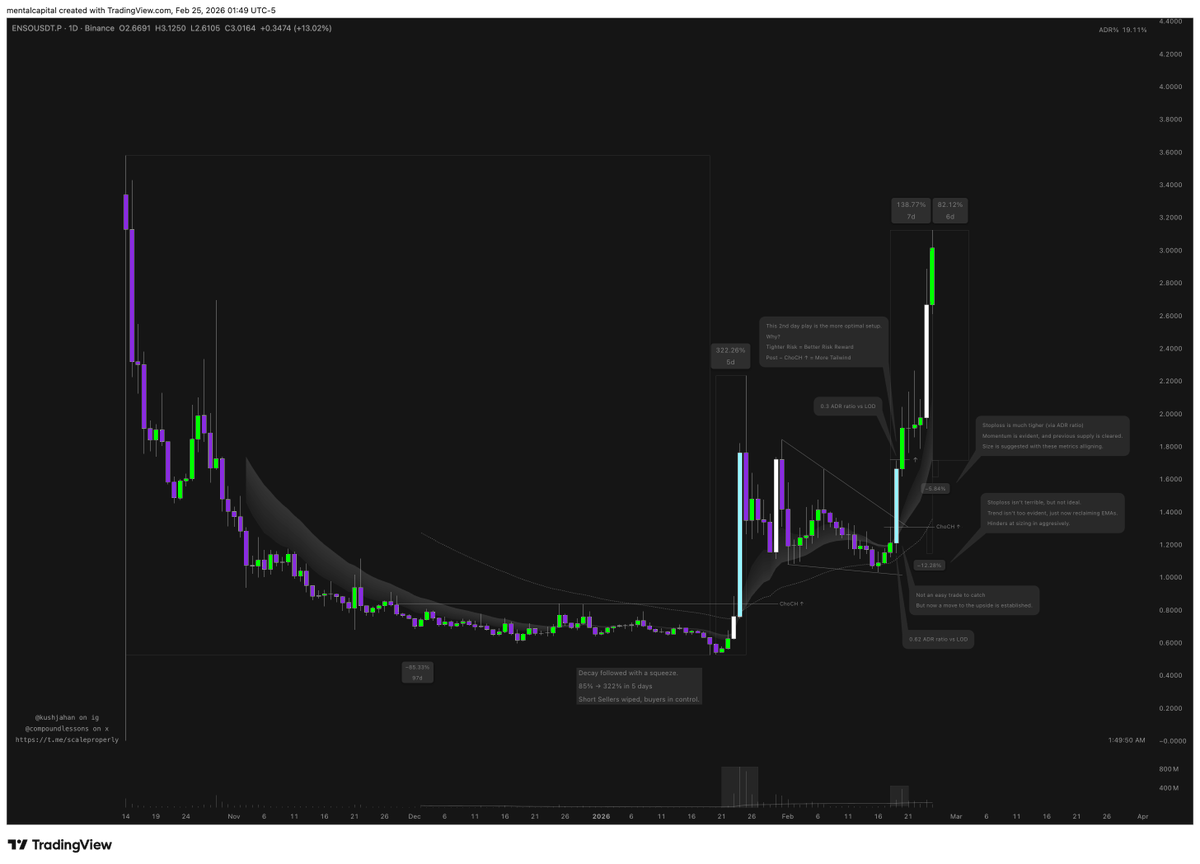
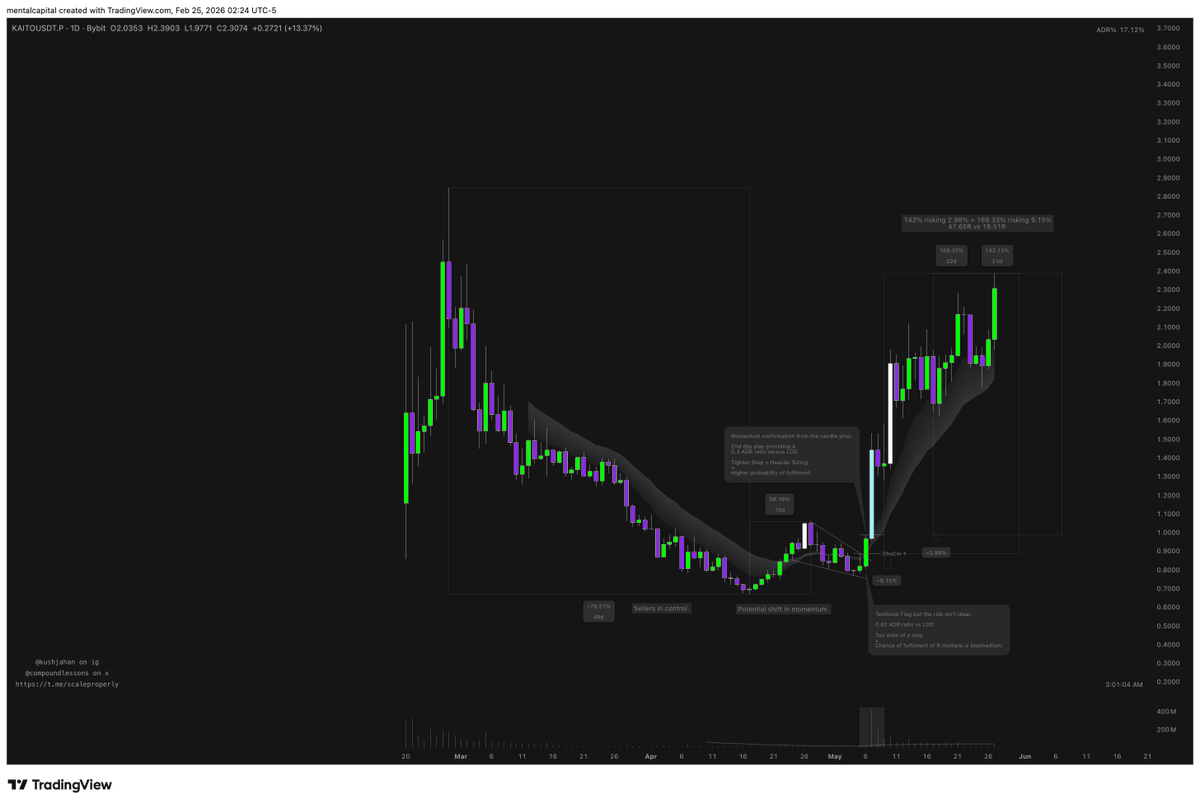
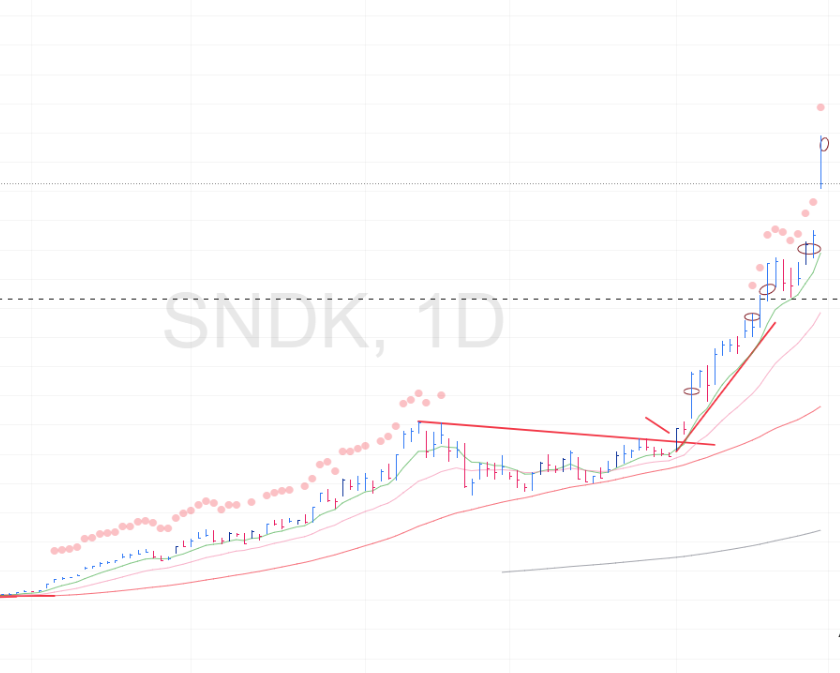
Why the Best Trades aren't the ones that moved the most... The Illusion behind Big Moves Notice how the first trade opportunity yielded 139% while the second only put up 82%. Most people see that and assume the first trade was better. It wasn't. The first trade returned 11R. The second returned 14R on a smaller percentage gain. This is one of the most misunderstood concepts in trading. A smaller percentage move with a tighter stop allows you to allocate significantly more size. More size on a high probability move will always outperform light size on a speculative one. The math is non negotiable. Think about it from the asset's perspective. It does not care how much capital you have behind your position. It only cares about the probability of reaching a given price level. So which is more likely, a 100% move or a 20% move? The answer is obvious. And if the 20% move is more probable, then the optimal strategy is to size aggressively into that setup rather than spread yourself thin chasing an extended target with reduced conviction. There is also a structural reason the second trade carries higher probability. The first leg already did the heavy lifting. It absorbed the overhead supply, cleared the sellers, and established a new range of acceptance. By the time the second leg initiates, it is riding clean momentum into a path of least resistance. There is no longer a wall of trapped participants waiting to exit. The supply has already been consumed. That means the second move does not need the same amount of energy to travel, and it has a significantly higher chance of following through to higher levels. This is why the second entry, the one that comes after the initial breakout and offers a definable, tight level of risk, is almost always the superior trade. You are not sacrificing upside. You are engineering a position where probability, size, and execution are all working in your favor simultaneously. Stop expecting fulfillment of unreasonable targets. Start taking the highest probability setup with the most efficient risk structure, and primed risk reward. Those are where your best trades are located.