

Culture War Notes
29.1K posts
Culture War Notes
@culturewarnotes
Science, politics, religion, history, human progress and anything else that is interesting.
East of Eden Beigetreten Mart 2009
128 Folgt818 Follower
Copper and iron are usually talked about as separate nutrients. They're not. Iron can't move through your body without copper-dependent enzymes at every major checkpoint.
When you absorb iron in the gut, it enters the enterocyte but can't exit without hephaestin, a copper-dependent ferroxidase embedded in the cell membrane. Once iron reaches the blood, it needs to be oxidized from Fe²⁺ to Fe³⁺ by ceruloplasmin, another copper enzyme, before it can bind transferrin and travel to the bone marrow. When old red blood cells are broken down by macrophages, the recycled iron needs a membrane-bound form of ceruloplasmin (GPI-CP) to get back into circulation. Three gates. All three require copper.
When copper is low, iron doesn't disappear. It accumulates in the wrong places. Copper-deficient mice show iron overload in the liver and intestinal cells while simultaneously being anemic. The body has iron. It's trapped in tissues it can't leave. On a standard CBC, this looks identical to iron deficiency. Microcytic. Hypochromic. The reflexive response is to prescribe more iron.
That's the problem. If copper is the bottleneck, more iron doesn't reach the bone marrow. It piles up in storage tissues as Fe²⁺, the chemically reactive form that generates free radicals through Fenton chemistry. You're not correcting the anemia. You're increasing oxidative damage in the tissues where iron is stuck.
This isn't theoretical. Fong et al. reported five patients referred for suspected myelodysplastic syndrome, a bone marrow cancer, who turned out to be copper-deficient. Anemia and neutropenia in all five. Every one resolved with copper supplementation. Diagnosis can take months to years because copper isn't part of standard workups.
The most common causes: bariatric surgery (roughly half of reported cases) and high-dose zinc supplementation competing for absorption. Zinc over-supplementation during COVID created a wave of new cases in people with no GI pathology at all. Copper status is rarely checked. Most standard panels don't include it.
Collins et al., Nutr Rev, 2010.
Fong et al., Haematologica, 2007

English
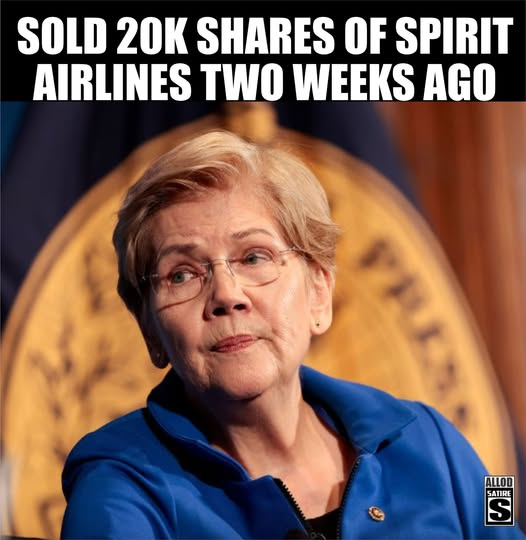
She killed the merger, bought the stock for pennies on the dollar, waited for it to regain its former heights, then sold two weeks before it went out of business.
It's almost like she knew ahead of time.
If Martha Stewart had been in Congress, she would never have gone to jail.
English
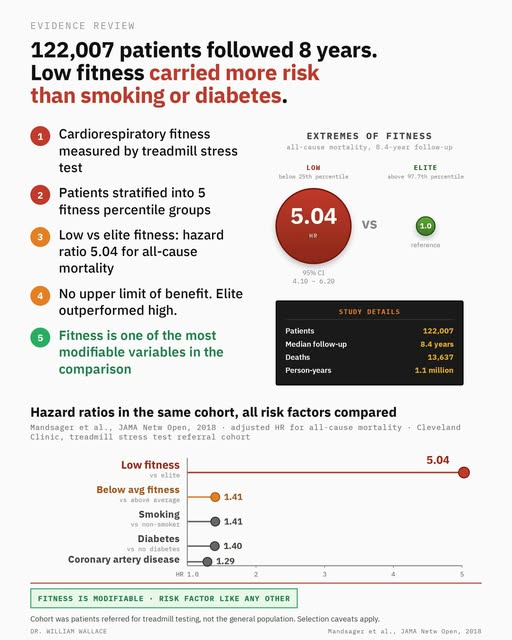
Low cardiorespiratory fitness conferred greater all-cause mortality risk than smoking, diabetes, or coronary artery disease in a cohort of 122,007 patients followed for a median of 8.4 years. The mortality difference between low and elite fitness was several times larger than the mortality difference associated with carrying any of those traditional risk factors.
This is the central finding of Mandsager and colleagues, published in JAMA Network Open in 2018. The study analyzed consecutive adult patients referred for symptom-limited exercise treadmill testing at Cleveland Clinic between 1991 and 2014. Cardiorespiratory fitness was quantified by peak estimated metabolic equivalents (METs) achieved during the test. Patients were stratified by age- and sex-matched fitness percentiles into five performance groups: low (below 25th percentile), below average (25th-49th), above average (50th-74th), high (75th-97.6th), and elite (above 97.7th).
Risk-adjusted all-cause mortality was inversely proportional to fitness across the entire range. The mortality benefit of being elite vs high was statistically significant, which the authors describe as "no observed upper limit of benefit." This contradicts a long-standing concern that very high levels of endurance training might carry cardiovascular risk. In this cohort, more fitness was always better, even into the extreme top percentile.
The comparison to traditional risk factors is what makes this study notable. In the same patients, with the same statistical adjustments, the mortality risk increase from being unfit was several times larger than the risk increase from carrying any single major modifiable disease. Fitness is not just one risk factor among many. In this analysis, it was the largest one
A few caveats. This was a retrospective analysis of patients referred for treadmill testing, not a population sample. Patients referred for stress testing typically have symptoms or established risk factors that prompted referral. The cohort is also single-center (Cleveland Clinic). Selection effects may inflate or alter the magnitude of the comparison. The directional finding (low fitness predicts mortality) has been replicated extensively in other cohorts including the Aerobics Center Longitudinal Study and the Cooper Clinic data, but the precise magnitude is specific to this population.
The relative comparison within the cohort is what the study demonstrates most cleanly. In these 122,007 patients, fitness category mattered more for mortality than the categorical risk factors evaluated alongside it.
What this establishes. Cardiorespiratory fitness is one of the most prognostically powerful variables that can be measured non-invasively. The dose-response continues into the elite range. The risk reduction from improving fitness is substantial, and unlike most risk factors, it is improvable through training across the lifespan.
The clinical takeaway from the authors of the paper is direct: cardiorespiratory fitness is a modifiable indicator of long-term mortality, and clinicians should encourage patients to achieve and maintain high levels of fitness.
The practical lever is the same one it always was: structured aerobic training, progressive in intensity and duration, sustained over time. The data argues there is no plateau where you stop benefiting from getting fitter.
Mandsager et al., JAMA Network Open, 2018
English
You're simply wrong.
Between July 2025 and Charlie Kirk’s death in September 2025, President Trump primarily emphasized negotiations with Iran.
President Trump did not publicly emphasize "decapitation strikes" (targeting top Iranian leadership like the Supreme Leader) as a primary option during July–September 2025.
So, yeah, of course Charlie was fine with that. You're trying to retconn recent history back onto summer 2025. That's bullshit. Charlie had publicly called decap strikes insane, and there's no way he was changing that position. Iran had done nothing to cause that position to change.
As for Israel:
From confirmed TPUSA-leaked WhatsApp texts (released by Candace Owens and verified by TPUSA spokespeople):“Jewish donors play into all the stereotypes… Leaving me no choice but to leave the pro-Israel cause.”
On intelligence failures / stand-down theories (summer 2025 discussions, including on his show and PBD Podcast):“How could one of the most heavily monitored borders in the world be breached so easily? It seems implausible for Hamas to pull this off without Israeli intelligence knowing something.”
I guess, by your standards, Charlie hated Israel.
English

No, you misrepresent Charlie’s position. Charlie was worried about boots on the ground and a never ending war in Iran. You’ll notice after the first military strikes in Iran, Charlie’s position evolved as the situation had evolved as it has in the Middle East and he ultimately supported president trump and praised his restraint which continues to this day. There are no boots on the ground. That’s consistent, Charlie’s support for the president, and trump’s restraint.
Erika has silenced no one. She simply choses to preserve Charlie’s legacy, focusing on defending Israel. There’s literally nothing more to it. Unless you hate Israel, I guess, in which case no answer will satisfy you, because she’s not going to betray her husband nor Israel.
English
For those people saying, “If @MrsErikaKirk were truly grieving, she would’ve taken a year off for her kids and therapy”:
Coretta Scott King led a march in Memphis DAYS after MLK’s assassination and kept fighting for civil rights for decades.
Myrlie Evers-Williams jumped right into activism after Medgar’s murder, raised their 3 kids, and later ran the NAACP.
Ethel Kennedy raised 11 children while pushing the Kennedy family’s political and social causes.
Betty Shabazz, who was there when Malcolm X was killed, raised their 6 daughters, got her doctorate, became a prominent activist, and spent her life protecting his legacy.
Elisabeth Elliot stayed in the jungle with the tribe that murdered her husband and kept doing missionary work.
Some women are just built different. They throw themselves into their husband’s cause instead of falling apart. It’s called “immersion” and is common in grief.
You might not like it, but you don’t matter. That woman will protect and continue her husband’s legacy, no matter how awful you people are.
English
Culture War Notes retweetet

Before Hezbollah even existed...
In April 1974, Moshe Dayan threatened he wont allow anyone to live in South #Lebanon. 🇱🇧
Middle East Observer@ME_Observer_
⚡️⭕️ April 1974 : Moshe Dayan - Commander and former Foreign Affairs Minister of Israel - threatens to destroy a "good part of Lebanon" and to displace southern Lebanon
English
@upstatefederlst So, you should have taken your family back to India.
But you whine because you made your life choices and you regret them. That's a you problem.
English

The Irish and Italian immigrants who we love to compare these people to never saw their families ever again.
Sam Peak@SpeakSamuel
This H-1B worker has lived in the US for nearly 20 years and built a family here. His mom was dying in India. To visit her, he would need to wait months to book a consular appointment--with the soonest one available likely being scheduled one year out. He made the difficult choice of not visiting his dying mom because leaving without an appointment would mean separation from his children, job, and his other obligations. Much of the commentary around immigration focuses on how such bureaucratic burdens undermine immigrants’ ability to contribute and innovate. But we must remember that this red tape also prevents these people from being fully engaged with their own lives and meaningfully present in the lives of others. This matters too, and these seemingly non-economic problems will eventually translate into economic costs. If America is no longer a place where people feel empowered to be the best versions of themselves as they celebrate, struggle, and grieve, it ceases not just being the land of opportunity, but also the land of dignity and purpose. linkedin.com/posts/gautam-d…
English
@tedcruz The signs are factually accurate.
Jews do, in fact, bomb innocent civilians.
We've seen that in both Gaza and southern Lebanon.
Hell, we've seen it criminal Jewish settlers do it to civilians in the West Bank.
English

This is today’s Left.
Openly bigoted.
Corey Walker 🇺🇸@CoreyWriting
These signs were placed in hyper-progressive Ann Arbor, MI. The same town where I attended college. While this is terrible, I am glad that at least these people are going full mask-off with their hatred instead of hiding behind "anti-zionism isn't antisemitism" and other lies.
English
English


Many people (incorrectly) think Native American tribes lived in peace and harmony.
The noble savage myth is merely a myth.

Elon Musk@elonmusk
Ancient cultures were extremely violent, not “peace-loving ecologists” at all!
English
Nah. European society is simply superior to North American native society. Those poor American Indian schmucks didn't even know what the wheel was, and they never built a ship larger than a canoe.
They never invented the chimney, they never domesticated any of the animals (they ate all the horses a millennia before Europeans arrived). American Indians had a shitty culture. Indians tried to exterminate each other but weren't even competent enough to manage that for the most part (although they did wipe out the Illiniwek tribe).
English

@TheRabbitHole @SkepResCenter Is this a dumb attempt to justify their colonization and extermination on moral grounds?
English
@LionBlogosphere @UBERSOY1 Russian serfs didn't own land, but I'm pretty sure they were farmers anyway.
You lie in the best possible way - be telling only the truth that supports the story, and leaving the rest out.
English

Culture War Notes retweetet

It’s true, here is a distribution of occupation among Jews and Gentiles in the Russian Empire of 1897

Uncommon Sense@Uncommonsince76
I have never met a Jewish farmer or Jewish manual laborer of any kind…
English
Honey, you understand that we don't run regime change ops against China and Russia for a reason, right?
Iran has 93 million people. Charlie knew how to do math. That's why he correctly called regime change in Iran "insanity."
Hell, he didn't even need the theory, since we already DID regime change in Iran once, and that's how we got the Ayatollah. We already KNOW this is insane.
It doesn't matter how many people Putin, Xi or the Ayatollah kill. Regime change on very large countries (Iran has 93 million people) is ALWAYS insane.
Charlie understood that.
You and Erika don't.
As for "nuclear capabilities rapidly escalating", again, Charlie knew this was crap. Iran has been "weeks away" from a nuke for 30 years. We were assured Iran's nuke capabilities were obliterated last year with the bunker strikes. And now it's back again? That's logistically IMPOSSIBLE.
Either you are truly, truly stupid or you are being paid to post this slop. Charlie wasn't stupid, and he refused to be paid off.
Tell me what you think started "the war"? The takeover of the Iranian Embassy? You realize the Ayatollah managed to take over in part because we were backing a brutal dictatorship (the Shah) whose SAVAK police were known to torture Iranians, right? Hell, we work with the Saudis right now, and they do the same.
The bombing in Beirut? That was a one-off: the Marines never should have been there in the first place.
Once you get beyond those two things, Iran simply hasn't attacked the US. You can claim they used Hezbollah as a proxy. But then you have to explain why Bibi's Israel gave Hamas (Hezbollah's frequent ally) almost two billion dollars of Qatari money in the years leading up to October 7.
English

I’m just going to pick one…do you think Charlie’s stance on a “war” with Iran would have remained unchanged after they executed 35-40,000 citizens for protesting…and growing evidence their nuclear capabilities and proclivity to use them was rapidly escalating…?
That “war” was started BY THEM almost 15 years before Charlie was born and all our Oval Office occupants between then and current pandered and pussyfooted.
It’s time to end it.
English
𝐎𝐂𝐂𝐔𝐋𝐓 𝐅𝐄𝐌𝐈𝐍𝐈𝐒𝐌 𝐀𝐔𝐓𝐇𝐎𝐑 𝐑𝐀𝐂𝐇𝐄𝐋 𝐖𝐈𝐋𝐒𝐎𝐍 𝐃𝐑𝐎𝐏𝐒 𝐓𝐇𝐄 𝐒𝐓𝐔𝐃𝐘 𝐄𝐕𝐄𝐑𝐘 𝐇𝐔𝐒𝐁𝐀𝐍𝐃 𝐀𝐍𝐃 𝐁𝐎𝐘𝐅𝐑𝐈𝐄𝐍𝐃 𝐒𝐇𝐎𝐔𝐋𝐃 𝐊𝐍𝐎𝐖: 𝐇𝐎𝐑𝐌𝐎𝐍𝐀𝐋 𝐁𝐈𝐑𝐓𝐇 𝐂𝐎𝐍𝐓𝐑𝐎𝐋 𝐓𝐑𝐈𝐂𝐊𝐒 𝐀 𝐖𝐎𝐌𝐀𝐍’𝐒 𝐁𝐎𝐃𝐘 𝐈𝐍𝐓𝐎 𝐓𝐇𝐈𝐍𝐊𝐈𝐍𝐆 𝐒𝐇𝐄 𝐈𝐒 𝐏𝐑𝐄𝐆𝐍𝐀𝐍𝐓, 𝐀𝐍𝐃 𝐇𝐄𝐑 𝐁𝐑𝐀𝐈𝐍 𝐒𝐓𝐀𝐑𝐓𝐒 𝐋𝐎𝐎𝐊𝐈𝐍𝐆 𝐅𝐎𝐑 𝐀 𝐃𝐈𝐅𝐅𝐄𝐑𝐄𝐍𝐓 𝐊𝐈𝐍𝐃 𝐎𝐅 𝐌𝐀𝐍 — 𝐀 𝐃𝐎𝐂𝐈𝐋𝐄 𝐎𝐍𝐄. 𝐖𝐇𝐄𝐍 𝐒𝐇𝐄 𝐒𝐓𝐎𝐏𝐒 𝐓𝐇𝐄 𝐏𝐈𝐋𝐋, 𝐇𝐄𝐑 𝐀𝐓𝐓𝐑𝐀𝐂𝐓𝐈𝐎𝐍 𝐑𝐄𝐖𝐈𝐑𝐄𝐒.
“𝘚𝘵𝘶𝘥𝘪𝘦𝘴 𝘴𝘩𝘰𝘸 𝘵𝘩𝘢𝘵 𝘣𝘪𝘳𝘵𝘩 𝘤𝘰𝘯𝘵𝘳𝘰𝘭 𝘵𝘳𝘪𝘤𝘬𝘴 𝘺𝘰𝘶𝘳 𝘣𝘰𝘥𝘺 𝘪𝘯𝘵𝘰 𝘵𝘩𝘪𝘯𝘬𝘪𝘯𝘨 𝘺𝘰𝘶’𝘳𝘦 𝘱𝘳𝘦𝘨𝘯𝘢𝘯𝘵, 𝘢𝘯𝘥 𝘵𝘩𝘦 𝘵𝘺𝘱𝘦 𝘰𝘧 𝘮𝘢𝘵𝘦 𝘵𝘩𝘢𝘵 𝘺𝘰𝘶’𝘳𝘦 𝘭𝘰𝘰𝘬𝘪𝘯𝘨 𝘧𝘰𝘳 𝘪𝘴 𝘮𝘰𝘳𝘦 𝘥𝘰𝘤𝘪𝘭𝘦. 𝘉𝘦𝘤𝘢𝘶𝘴𝘦 𝘺𝘰𝘶’𝘷𝘦 𝘢𝘭𝘳𝘦𝘢𝘥𝘺 𝘣𝘦𝘦𝘯 𝘧𝘦𝘳𝘵𝘪𝘭𝘪𝘻𝘦𝘥, 𝘺𝘰𝘶𝘳 𝘣𝘳𝘢𝘪𝘯’𝘴 𝘸𝘢𝘺 𝘰𝘧 𝘴𝘢𝘺𝘪𝘯𝘨 ’𝘸𝘦 𝘯𝘦𝘦𝘥 𝘵𝘩𝘦 𝘯𝘪𝘤𝘦 𝘨𝘶𝘺 𝘯𝘰𝘸.’”
Wilson says women constantly write to her describing what happens after they quit. “𝘐’𝘷𝘦 𝘣𝘦𝘦𝘯 𝘰𝘧𝘧 𝘣𝘪𝘳𝘵𝘩 𝘤𝘰𝘯𝘵𝘳𝘰𝘭 𝘧𝘰𝘳 𝘴𝘪𝘹 𝘮𝘰𝘯𝘵𝘩𝘴 𝘢𝘯𝘥 𝘐’𝘮 𝘧𝘪𝘯𝘥𝘪𝘯𝘨 𝘸𝘩𝘰𝘭𝘦 𝘥𝘪𝘧𝘧𝘦𝘳𝘦𝘯𝘵 𝘮𝘦𝘯 𝘢𝘵𝘵𝘳𝘢𝘤𝘵𝘪𝘷𝘦 𝘵𝘩𝘢𝘯 𝘐 𝘦𝘷𝘦𝘳 𝘥𝘪𝘥 𝘣𝘦𝘧𝘰𝘳𝘦. 𝘕𝘰 𝘮𝘰𝘳𝘦 𝘰𝘧 𝘵𝘩𝘦𝘴𝘦 𝘢𝘳𝘵𝘴𝘺 𝘴𝘬𝘪𝘯𝘯𝘺 𝘣𝘰𝘺𝘴 𝘸𝘩𝘰 𝘢𝘳𝘦 𝘭𝘪𝘣𝘦𝘳𝘢𝘭 𝘢𝘳𝘵𝘴 𝘮𝘢𝘫𝘰𝘳𝘴. 𝘐’𝘮 𝘭𝘪𝘬𝘪𝘯𝘨 𝘵𝘩𝘦 𝘵𝘢𝘭𝘭 𝘨𝘶𝘺 𝘸𝘪𝘵𝘩 𝘵𝘩𝘦 𝘤𝘰𝘸𝘣𝘰𝘺 𝘣𝘰𝘰𝘵𝘴 𝘢𝘯𝘥 𝘵𝘩𝘦 𝘣𝘦𝘢𝘳𝘥 𝘢𝘭𝘭 𝘰𝘧 𝘢 𝘴𝘶𝘥𝘥𝘦𝘯. 𝘞𝘩𝘢𝘵’𝘴 𝘩𝘢𝘱𝘱𝘦𝘯𝘪𝘯𝘨?”
𝐓𝐡𝐚𝐭 𝐢𝐬 𝐧𝐨𝐭 𝐚𝐧𝐞𝐜𝐝𝐨𝐭𝐞. 𝐓𝐡𝐞 𝐩𝐞𝐞𝐫-𝐫𝐞𝐯𝐢𝐞𝐰𝐞𝐝 𝐥𝐢𝐭𝐞𝐫𝐚𝐭𝐮𝐫𝐞 𝐢𝐬 𝐫𝐞𝐚𝐥 𝐚𝐧𝐝 𝐜𝐨𝐧𝐬𝐢𝐬𝐭𝐞𝐧𝐭. Multiple studies (Roberts, Alvergne, Lummaa, et al.) have shown hormonal contraception shifts female mate preference toward less dominant, less masculine partners — and that women on the pill, when they later stop, report dissatisfaction with the partners they chose while medicated.
𝐓𝐡𝐢𝐬 𝐢𝐬 𝐧𝐨𝐭 𝐚 𝐬𝐦𝐚𝐥𝐥 𝐭𝐡𝐢𝐧𝐠. 𝐀𝐦𝐞𝐫𝐢𝐜𝐚𝐧 𝐰𝐨𝐦𝐞𝐧 𝐡𝐚𝐯𝐞 𝐛𝐞𝐞𝐧 𝐨𝐧 𝐡𝐨𝐫𝐦𝐨𝐧𝐚𝐥 𝐜𝐨𝐧𝐭𝐫𝐚𝐜𝐞𝐩𝐭𝐢𝐨𝐧 𝐛𝐲 𝐝𝐞𝐟𝐚𝐮𝐥𝐭 𝐟𝐨𝐫 𝐬𝐢𝐱𝐭𝐲 𝐲𝐞𝐚𝐫𝐬. A culture-wide pharmaceutical intervention has been quietly steering an entire generation of women away from masculine men — and the same culture is now wondering why nobody can find a husband or stay married.
𝐓𝐡𝐞 𝐩𝐢𝐥𝐥 𝐜𝐡𝐚𝐧𝐠𝐞𝐝 𝐩𝐨𝐥𝐢𝐭𝐢𝐜𝐬, 𝐝𝐚𝐭𝐢𝐧𝐠, 𝐦𝐚𝐫𝐫𝐢𝐚𝐠𝐞, 𝐚𝐧𝐝 𝐛𝐢𝐫𝐭𝐡 𝐫𝐚𝐭𝐞𝐬. 𝐓𝐡𝐞 𝐥𝐢𝐭𝐞𝐫𝐚𝐭𝐮𝐫𝐞 𝐢𝐬 𝐬𝐢𝐭𝐭𝐢𝐧𝐠 𝐢𝐧 𝐩𝐥𝐚𝐢𝐧 𝐬𝐢𝐠𝐡𝐭. 𝐓𝐡𝐞 𝐜𝐨𝐧𝐯𝐞𝐫𝐬𝐚𝐭𝐢𝐨𝐧 𝐡𝐚𝐬 𝐛𝐞𝐞𝐧 𝐬𝐮𝐩𝐩𝐫𝐞𝐬𝐬𝐞𝐝 𝐛𝐞𝐜𝐚𝐮𝐬𝐞 𝐭𝐡𝐞 𝐢𝐦𝐩𝐥𝐢𝐜𝐚𝐭𝐢𝐨𝐧𝐬 𝐮𝐩𝐞𝐧𝐝 𝐚 𝐟𝐨𝐮𝐧𝐝𝐚𝐭𝐢𝐨𝐧𝐚𝐥 𝐟𝐞𝐦𝐢𝐧𝐢𝐬𝐭 𝐚𝐬𝐬𝐮𝐦𝐩𝐭𝐢𝐨𝐧: 𝐭𝐡𝐚𝐭 𝐡𝐨𝐫𝐦𝐨𝐧𝐚𝐥 𝐜𝐨𝐧𝐭𝐫𝐚𝐜𝐞𝐩𝐭𝐢𝐨𝐧 𝐢𝐬 𝐩𝐮𝐫𝐞𝐥𝐲 𝐥𝐢𝐛𝐞𝐫𝐚𝐭𝐢𝐨𝐧. 𝐓𝐡𝐞 𝐝𝐚𝐭𝐚 𝐬𝐚𝐲𝐬 𝐢𝐭 𝐢𝐬 𝐚𝐥𝐬𝐨 𝐜𝐡𝐞𝐦𝐢𝐬𝐭𝐫𝐲.
English
Culture War Notes retweetet

George Dantzig, known as the "father of linear programming," once solved two open problems in statistics by mistake, thinking they were homework assignments.
His work during WWII on supply chain logistics led to the development of the simplex algorithm.

English
Culture War Notes retweetet

The time price of paper has fallen by 99.78 percent over the last 200 years.
humanprogress.org/two-centuries-…
English
Culture War Notes retweetet

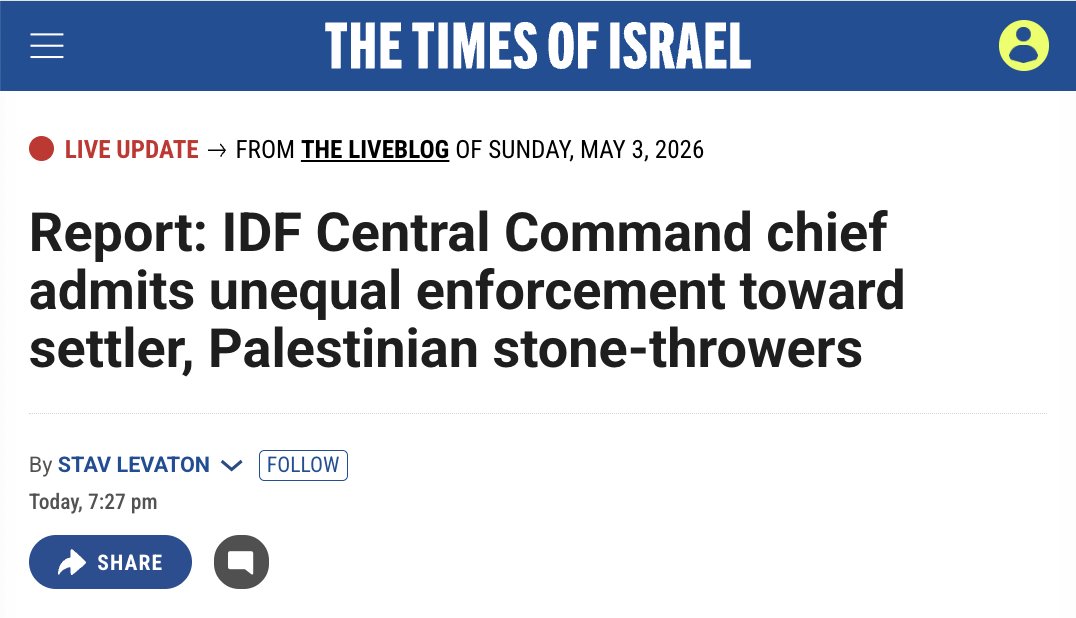
BREAKING: The Israeli army's Central Command chief Maj. Gen. Avi Bluth has admitted in a closed forum that the IDF applies different enforcement policies toward Jewish and Palestinian stone-throwers in the West Bank.
Israeli soldiers are permitted to shoot and kill Palestinian stone-throwers on the spot — but not Israeli settlers who do the same.
Bluth cited "severe sociological consequences" as the reason soldiers cannot open fire on Israelis, and acknowledged that "there is some discrimination" in enforcement, while stating he does not support shooting Israeli stone-throwers despite the similar danger they pose.
They are no longer hiding it. This is apartheid — stated openly, on the record, by the Israeli army's own commander.
English
Culture War Notes retweetet

The Daily Wire is the case study of why personality-driven media companies can't compound.
Peak in late 2023: Shapiro's YouTube alone pulled 170M monthly views. Daily Wire+ subscriptions, a Nashville studio operation, Bentkey kids streaming, an e-commerce arm with razors and chocolates and cigars. The company was running a billion-dollar conservative Disney bet.
Then they made the studio bet bigger. Pendragon Cycle, an Arthurian fantasy series of the kind that has bankrupted larger production houses. Bentkey trying to compete with Disney for kids' attention. Daily Wire+ chasing Netflix. Running a newsroom, a film studio, a children's streaming platform, and a private-label consumer goods business simultaneously requires either limitless capital or extraordinary discipline.
Some of it worked. Matt Walsh's "Am I Racist?" was the top-grossing documentary of 2024. Most of it didn't.
In March 2024, they parted ways with Candace Owens. She walked into the open market and built a show that competes with theirs. Today she has 5.5M YouTube subscribers and added 10.9M followers across platforms since January 2025, generating roughly 805M views in that window. Daily Wire converted its biggest distribution asset into its largest competitor.
Early 2025, co-founder Jeremy Boreing stepped down as co-CEO and launched a solo podcast outside the company he co-founded. Bentkey was shuttered the same year. Entire team cut.
Then the audience math hit Shapiro himself. 170M monthly YouTube views in late 2023 to roughly 22M in early 2026. An 85% collapse in 18 months. Another 60K subscribers gone in the last 90 days alone.
Layoffhedge.com estimates cumulative workforce reduction above 60% over the past year.
Tucker Carlson left Fox in 2023, kept his audience, runs his shop with a fraction of the headcount. Megyn Kelly's network drew 138M YouTube views in February alone. The personalities figured out they don't need the platform. The platform discovered the opposite.
Daily Wire built a billion-dollar valuation on names that can walk, take the audience with them, and run a competing show from a laptop the next morning. 170M views to 22M. The company kept the overhead. The audience left with the people.
Popstonox@Popstonox
The Daily Wire fires half of its staff in mass layoffs This comes as co-founder Ben Shapiro has lost 85% of his Youtube audience since last year
English
Explain why Jews from around the world have a right to move to, colonize and seize land from people whose families have lived there for thousands of years.
What gives them the right to raze all the buildings in Gaza and southern Lebanon? What gives Jewish criminals the right to attack and dispossess people in the West Bank?
English
You misrepresent Charlie's position. June 2025 comments (on his show and posts): In response to talk of removing the Ayatollah, he said things like: “So we are just going to take out the Ayatollah? Oh really! What next? What happens after regime change?” He described full regime change as "pathologically insane" and warned it could destabilize the region further.
He ran polls (e.g., June 2025) asking if the U.S. should get involved in Israel’s conflict with Iran, where the vast majority of his audience voted no.
Erika's position is directly opposed to Charlie's.
newsweek.com/charlie-kirk-i…
You admit that Erika has gone silent on the donors. Then you create a false equivalence between Jewish donors and Israel... unless you are implicitly arguing that Israel was funding Charlie Kirk???
English
1. On Iran’s limited military strikes Charlie supported & trusted Trump on this. June 17 or 18 on his show states “I support President Trump… In a situation like this, I support my friend. And he’s had my back, and I have his.” (He called full regime change war with boots on the ground “pathologically insane.” Which we aren’t doing.) June 18, 2025 in an Xpost: Praised Trump’s restraint against the “regime change war machine.”
Erika backed the current limited strikes (Operation Epic Fury) on April 5, 2026 (X/Easter Sunday): “Regardless of your opinion on Operation Epic Fury… God bless our men and women in uniform.”
2/3. Erika doesn’t publicly express the same frustrations with Jewish donors. Nor does she publicly criticize them as Charlie did. She chooses to focus strictly on preserving his legacy which still, even up to the NIGHT BEFORE his death included defending Israel.
4. 2A/gun rights? On Dec 3, 2025, NYT DealBook Summit (onstage): “That’s not a gun problem… I support the Second Amendment as well.”
5. Economic policies: TPUSA continues America First focus (eTrump Accounts family policy, Feb 2026 rollout/events)
6. Election integrity/voter fraud: April 3, 2026, TPUSA at This Is the Turning Point Tour at George Washington University (with Karoline Leavitt): Erika hosted; Leavitt defended SAVE America Act/voter ID against “fraud is rare” claims and expressed the importance of voter integrity
Why risk orphaning kids? Widows like Coretta King stepped up immediately. Erika does this for her kids & America (repeated on Charlie Kirk Show, 2025–2026). No one “knows” they’ll be assassinated.
Charlie on mother risking orphaning? No such commentary. He emphasized courage/faith.
Bible on woman choosing assassination over motherhood? Nowhere. It exalts motherhood (Prov. 31) & protects orphans/widows (James 1:27)
“10 times better” on TPUSA: Sept 21, 2025 eulogy (State Farm Stadium memorial): “Everything that Turning Point USA built through Charlie’s vision… we will make 10 times better.” Motivational 10X language honoring his foundation (TPUSA has expanded).
“Has to work” despite having $$ Refers to mission/purpose for her kids’ future (podcasts/interviews), not poverty. There’s more that drives people than money.
Continuing the movement is the tribute to Charlie.
Erika advances Charlie’s core legacy daily via the same venues. Specific foreign policy aligns with current Trump realities which evolved since Charlie’s death.
TPUSA chapters and pledges have more than doubled, and continue to grow, and donations still pour in.
English