

Duke E. Wanogho
7K posts

Duke E. Wanogho
@duke4first
A Professional Safety Supervisor,pls always think safety first in all u do,
Warri, Nigeria Beigetreten Eylül 2012
4.3K Folgt2.6K Follower

English

Good afternoon, Baba Hamma. I'm glad we're discussing this.Let’s set the issue of zoning aside and focus on individuals who can actually win the election.Starting with Alhaji AA We all know he previously relied heavily on the PDP structure, which is no longer as formidable. He also leaned on financial strength, but he currently cannot match the APC in that regard. Additionally, he hails from the North East the same zone as the current Vice President which further weakens his position. Overall, his chances appear very slim .Now, let’s consider Peter Obi: He is a much younger candidate who enjoys massive support from the younger generation. If you look at his impressive performance in the last election delivering strong numbers despite running under an unknown party with zero established structure and limited nationwide awareness you can confidently say he stands out as the strongest option overall.What he needs most is the backing of key Northern politicians. With that support secured, he is ready to go, and Nigeria will be just fine.
Hamma@HAHayatu
A party with no power at hand should not be talking about zoning but what best will make it get power. This simple political strategy is difficult for some to understand.
English


Hey creators online right now!
Drop a quick "Hi" below.
I'm checking out and following active accounts. Let's connect! ✨

English

Morning gainners where are you at?
Under 10k followers?
Say 👉 active 👀
Let's support you 🙋

English
@Ivory1957 This is Huge 😻😲😻😲😲😲 God pls help this Country Overcome our leader's
English

The Emperor Has No Clothes: Nigeria’s Educated Class Has Finally Had Enough
By Kio Amachree | Stockholm, Sweden
The Walls Are Closing In
Something seismic is happening in Nigeria, and it has nothing to do with economics or infrastructure projections. It is a cultural and intellectual awakening — a quiet but gathering storm among the educated, the principled, and the historically grounded members of Nigerian society who have watched in increasing horror as a man of demonstrably questionable origins, fabricated biography, and documented criminal associations has occupied the highest office in the land and now appears to believe that office is his personal inheritance.
The Jagaban of Lagos — a title self-appointed, like so much else about this man — is discovering something that every imposter eventually discovers: you can purchase image consultants, you can retain spin doctors, you can flood social media with manufactured mythology, but you cannot indefinitely fool people who were actually there. People who attended the institutions you falsely claim. People who belong to the families whose names confer legitimacy. People who know what authentic leadership, authentic pedigree, and authentic public service actually look like — because they lived it, inherited it, and were raised inside it.
Those people are speaking now. And the noise cannot be managed away.
The Mass Exodus From Aso Rock
The canary in the coal mine is the extraordinary parade of departures from Tinubu’s administration. Consider the pattern. Finance Minister Wale Edun stepped down citing health concerns. Defence Minister Mohammed Badaru Abubakar also resigned citing health reasons.  Inspector-General of Police Kayode Egbetokun resigned in February 2026, stating he wished to spend more time with his family. Minister of Innovation Uche Nnaji resigned following allegations of certificate forgery.  In Edun’s case, a top source reported that he had fainted upon learning his name appeared on a purported kill list compiled by military officers allegedly planning to overthrow the administration. 
Let us be precise about what we are witnessing. These are not ordinary political reshuffles. These are educated, credentialled, internationally exposed professionals who arrived at Aso Rock with their reputations intact — and found something inside that administration they could not reconcile with who they are, where they come from, and what they stand for. When a Finance Minister who holds responsibility for the economic future of 250 million people collapses under the weight of what he has encountered, it tells you everything about the character of the environment in which he was operating.
Professionals of substance do not leave power willingly unless what they have discovered is more terrifying than the loss of power itself.
The Files That Cannot Be Buried
Then there is the matter of the American courts, which are immune to Nigerian spin operations.
A U.S. federal judge has ordered the FBI and DEA to release investigative records relating to President Tinubu, stemming from a narcotics trafficking investigation in the 1990s. Judge Beryl Howell of the U.S. District Court for the District of Columbia rejected the government agencies’ attempts to withhold the documents, ruling that the public interest in understanding the records surrounding Tinubu’s alleged involvement outweighed the privacy interests he claimed. 
A 1993 DOJ affidavit by IRS Special Agent Kevin Moss stated that there was probable cause to believe that funds in bank accounts controlled by Bola Tinubu were involved in financial transactions that laundered proceeds from narcotics trafficking, tying him to a heroin ring operating in Chicago. 
Judge Howell issued a final ultimatum ordering complete disclosure by June 1, 2026, and directed both the FBI and DEA to file joint status reports on their progress every fourteen days until all records are produced. 
The June 1 deadline is six weeks away. What those files contain, Tinubu already knows. His lawyers know. His financiers know. And the frantic delay tactics — years of missed deadlines, Glomar responses struck down as implausible, agency lawyers rebuked by a federal judge — are not the behaviour of a man with nothing to hide. They are the behaviour of a man who forfeited $460,000 to the United States Treasury rather than face trial, and who has spent the three decades since constructing an alternate universe in which that event simply did not occur.
It occurred.
The Architecture of the Lie
Nigeria has a recurring affliction: men of limited moral formation, thin educational grounding, and no genuine family tradition of public service ascend to positions of national leadership — and then mistake the grandeur of the office for a personal coronation. They surround themselves with the professionally credentialled to compensate for what they lack internally. They purchase the imagery of statecraft without possessing its substance. They confuse the power to appoint with the authority to lead.
Tinubu’s entire political biography is the most ambitious exercise in personal reinvention in Nigerian political history. The school certificates. The claimed lineage. The cultivated mythology of Lagos as a personal kingdom built by genius rather than by ruthless manipulation of electoral machinery and business networks that intersect, repeatedly, with the very criminal enterprises now being investigated by American federal courts.
What the educated class of Nigeria — the diaspora, the lawyers, the academics, the former officials — has recognised is that this reinvention was always structurally fraudulent. You can hire a hundred speechwriters. You cannot manufacture the thing that comes from being raised inside a home where public service was a calling, where intellectual rigour was demanded, where ethics were non-negotiable household currency. That formation either exists or it does not. In Tinubu’s case, the evidence of its absence is now a matter of federal court record.
The Dynasty Delusion
Most dangerous of all is what those close to this administration have been whispering for years: the ambition here is not merely presidential. It is dynastic. The Lagos playpen. The son as crown prince. The Lebanese business partners whose networks run through the Nigerian oil sector like veins through a body. The aspiration — delusional in a nation of 250 million increasingly impatient, increasingly networked, increasingly enraged citizens — to die in the presidency and hand it down like a family estate.
Nigeria is not a family estate. It is a civilisation in waiting — ancient, proud, historically magnificent, and currently being administered by people unworthy of the responsibility. The Niger Delta alone carries six centuries of royal lineage, of statecraft, of governance philosophy that pre-dates the colonial intrusion by generations. To have that inheritance — and the inheritance of every other great Nigerian tradition — subordinated to the ambitions of a man whose name was not his name, whose certificates were not his certificates, and whose money was not earned in any way a decent person would recognise as legitimate, is an offence against Nigerian history itself.
The Verdict of History
History does not negotiate. It does not accept settlements. It does not honour Glomar responses.
The educated and experienced members of Nigerian society who are now speaking — loudly, internationally, with increasing legal and institutional force — are not engaging in politics. They are engaging in an act of historical hygiene. They are insisting that the record be accurate. That the file be opened. That the masks come off.
To Tinubu and those around him who still believe this can be managed, who still believe the right combination of money and intimidation and media manipulation can hold the line: look at the calendar. Look at June 1. Look at the empty chairs where your Finance Minister, your Defence Minister, your Inspector-General of Police used to sit.
The professionals have assessed what you are. And they have chosen the exit door.
Nigeria’s verdict is coming. And unlike the men who made you, it cannot be bought.
Kio Amachree | Stockholm, Sweden
#Nigeria #Tinubu #NigerianPolitics #Accountability #NigerianDiaspora #FBI #DEA #JusticeForNigeria #2027Elections #NigeriaDecides #TinubuMustGo #AfricanGovernance #NigerianLeadership #TransparencyNow #TheKioSolution

English
Nigeria’s young people deserve better than reckless profiling.
The claim by the Chairman of the Economic and Financial Crimes Commission that 60% of students are criminals is not law enforcement—it is stigmatisation.
1/ This statement is outside the mandate of the EFCC.
Its job is to investigate financial crimes—not label an entire generation as suspects. The Nigeria Constitution does not permit this kind of blanket profiling.
2/ Being young in Nigeria today is already a challenge.
Unemployment, inflation, uncertainty.
Now imagine being officially branded a criminal simply for being a student. That is damaging—and dangerous.
3/ Let’s be clear: students are not the ones looting public funds.
The EFCC was created to pursue high-level corruption—especially politically exposed persons. That’s where the real damage to Nigeria happens.
4/ Yet, the record of the EFCC in holding powerful politicians accountable is, at best, inconsistent.
There is a widespread perception of selective enforcement—harsh on the weak, cautious with the powerful.
5/ Where is the evidence?
If this “60%” claim is based on any study, publish it.
Show the data. Show the methodology. Let Nigerians assess it.
6/ Without proof, this is not intelligence—it is speculation backed by authority. And that is unacceptable.
7/ Even worse, prioritising students over entrenched corruption at the top reflects a troubling misplacement of focus.
Nigeria’s real problem is not its youth—it is systemic impunity.
8/ When institutions fail to hold the powerful accountable, they often turn on the vulnerable.
That is exactly what this looks like.
Nigeria’s students are not criminals.
They are the future.
And they deserve leadership that acts like it.
English
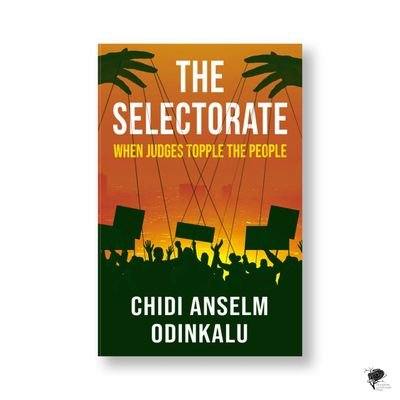
Let's be clear: The claim by the chairman of @officialEFCC labelling 60% of students in #Nigeria's tertiary universities as criminals is plainly irresponsible & unconscionable.
It is not law enforcement.
1st, it is outside the statutory responsibility of the #EFCC to profile a demographic or social group by reason of or with reference to their station in life. #Nigeria's constitution actually prohibits that.
2nd, it is already difficult enough to be young in Nigeria at this time without having to deal with being officially labelled as expendable by the authority of the Chairman of the EFCC.
3rd, the EFCC was established to go after high profile criminals & #PoliticallyExposedPersons who have designs on Nigeria's patrimony. Those are not students. They are politicians & in pursuit of that species, the record of the EFCC is - at best - abysmal. The only political rogues whom the EFCC is able or willing to pursue are those who are in opposition. Even in that, it mostly has worse than a patchy record. Those of them in the ruling party are patrons of the EFCC.
4th, the EFCC has not provided proof that its claim against or about students is founded on any study or survey that can stand the test of minimal methodological rigour. If it had, then the thing to do would be to make that report public so that its claims can be assessed with due regard to its methods.
Above all, even assuming that the EFCC has undertaken a rigorous study to inform this claim, it amounts to an irresponsible waste of public resources to focus on or prioritise students over & above the politicians who have kidnapped Nigeria & hold its citizens & communities hostage to sovereign ransom.
It will be interesting to see the EFCC's study on what proportion of Nigerian politicians are involved in criminal pillage or, in fact, what proportion of civil servants or even judges & magistrates are thieves.
Until the EFCC Chairman can produce such studies, his attempt to criminalise Nigeria's young people, especially students, must assume its pitiful place in a disreputable pantheon.
The Chairman of @officialEFCC has not yet made good on his promise to bring @OfficialGYBKogi to account.
He is still unable to comply with the order of @SupremeCourtNg to ensure the retrial of @OUKtweets.
The Commission seems congenitally wired to fail in bringing every senior politician to account, including those caught with their hands in the proverbial cookie jar.
The EFCC should not be this idle or distracted.
It is unfortunate that a succession of public servants with pathetically thin records of achievement turn on Nigeria's young people & students when they should have more important things to do.
dailytrust.com/efcc-chair-6-o…
English
@GunterFehlinger He already knows, and we will make sure he never gets close to power again be it Abuja or lagos
English
No 2nd term for this failed Nigerian President
Nigeria Stories@NigeriaStories
“My Enemies Want To Use Insecurity In The Country To Get Rid Of Me, But I’m a Stubborn Politician Who Refuses To Go and I will campaign for my second term” ~ President Bola Tinubu says
English
@MascotDeOracle @duke4first @aonanuga1956 Olodo. They have used your brain finish. 2027 they go still use you as thug
English
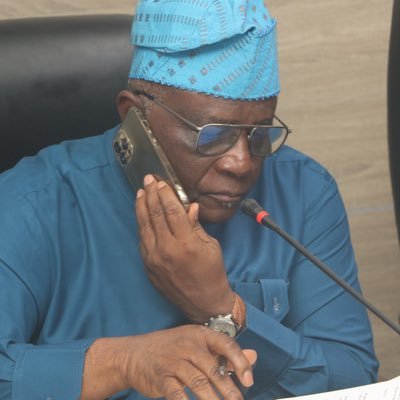
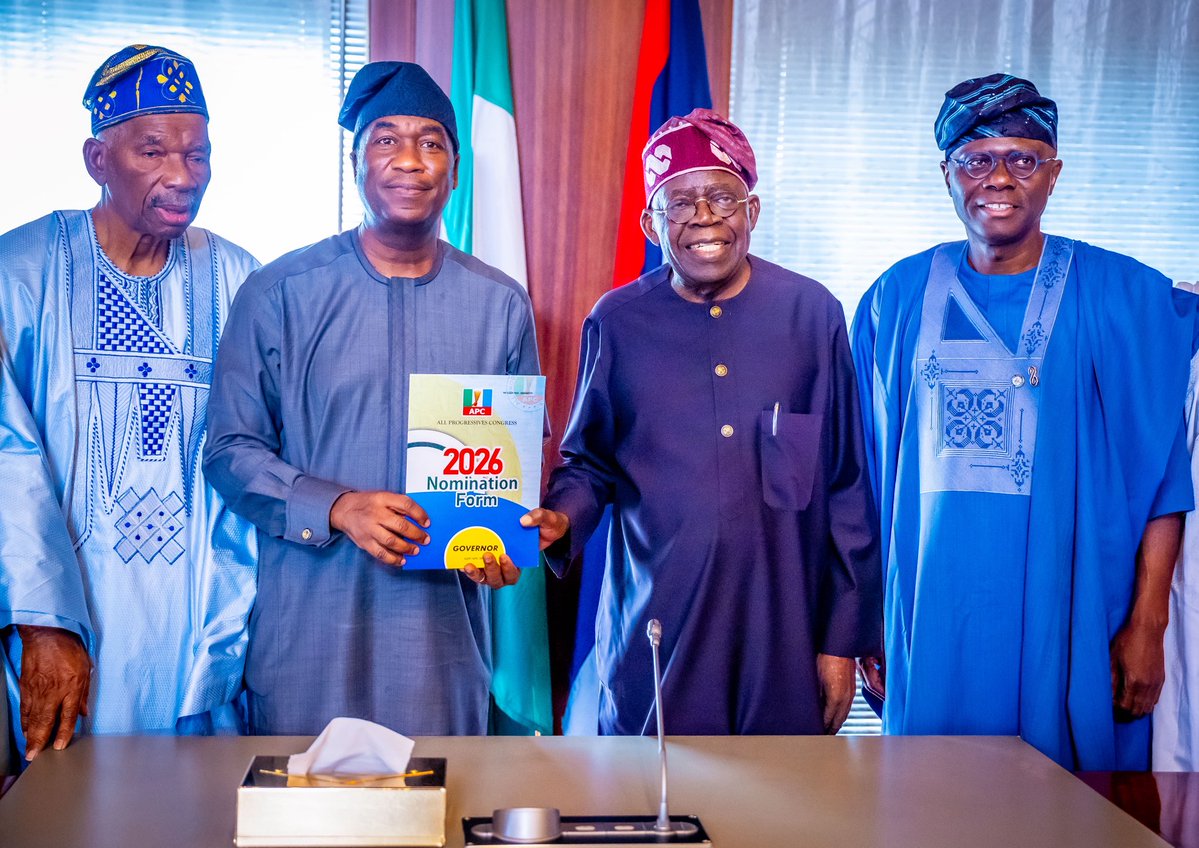
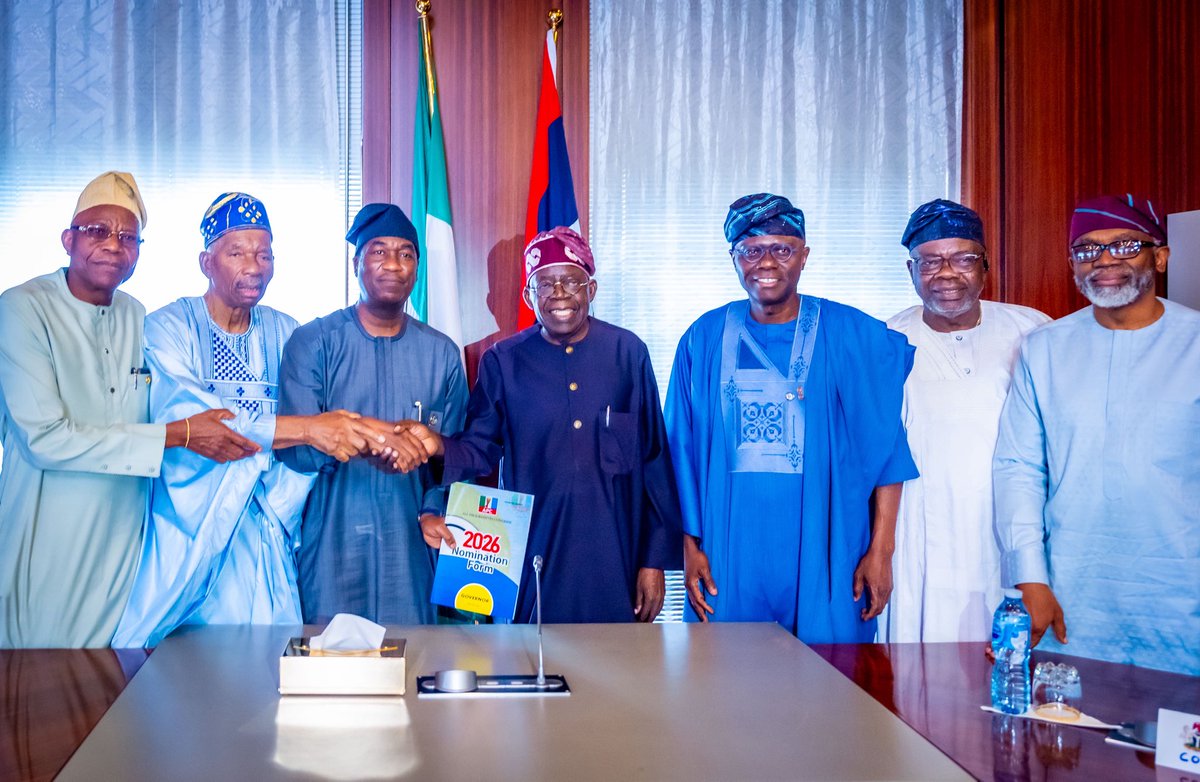
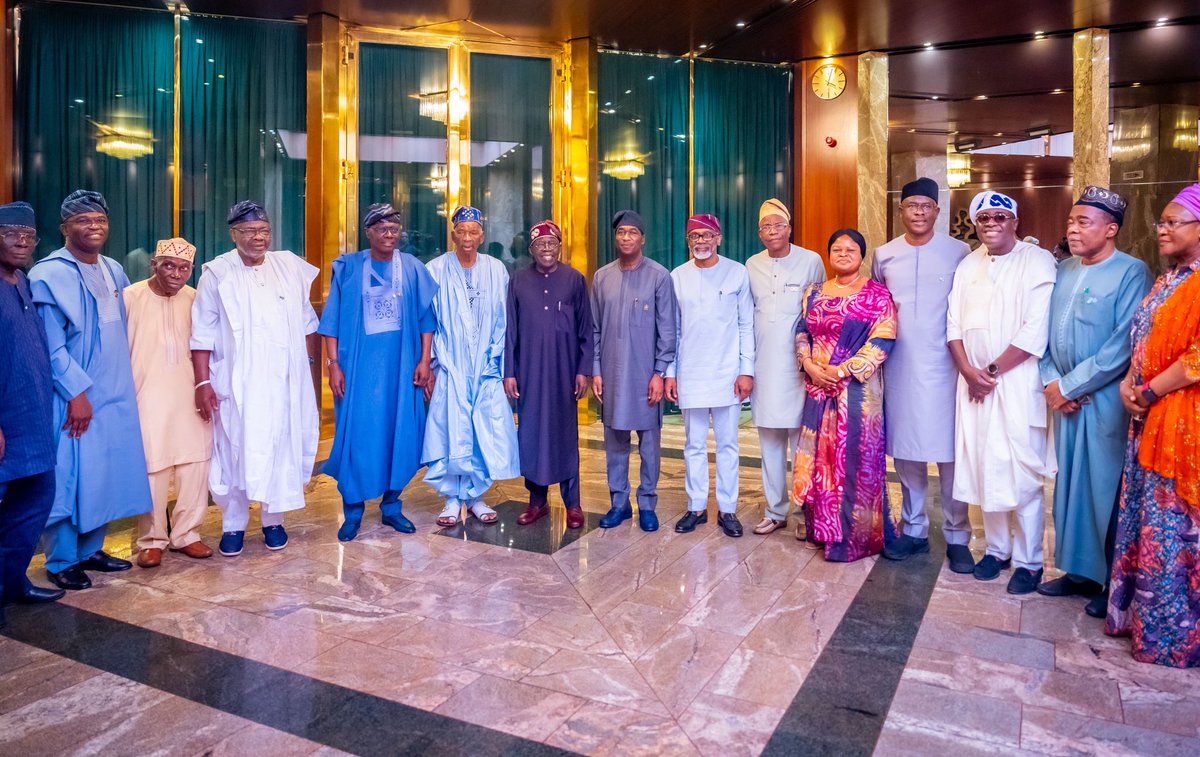
President Tinubu formally endorses the Lagos APC consensus governorship candidate Obafemi Hamzat at a meeting with members of the Lagos Governance Advisory Council, led by the Prince Tajudeen Oluyole Olusi and Governor Babajide Sanwo-Olu
English
@jon_d_doe @YOUNGPGTECH I'm here too to support in what ever ways
English
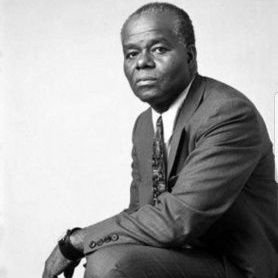
I want to make this declaration.
If Peter Obi and Kwankwaso emerge as the presidential flag bearers, I will use my platform to campaign for them.
And I'll vote for them.
I'll not accept any penny to do this.
I don't like President Tinubu.
And that's that.
End.
English
While Atiku Abubakar represents the old political order that depends on structure and funding, Peter Obi represents a new electoral reality—driven by voter consciousness, youth participation, and organic support. If he complements this with strategic Northern alliances, he becomes the most viable candidate to win a truly competitive national election.”
English
Structural weakness vs. momentum
For Atiku Abubakar, the biggest issue isn’t just zoning—it’s declining political infrastructure.
The People's Democratic Party is no longer the dominant nationwide machine it once was. Internal divisions and defections have weakened its reach.
In contrast, the All Progressives Congress currently controls federal power and has deeper grassroots penetration in many states.
Elections in Nigeria are still heavily structure-driven; weakening structure = reduced electoral viability.
👉 Point: Without a strong, united party machinery, even a well-known candidate struggles to convert popularity into votes.
2. Regional fatigue and strategic disadvantage
Atiku coming again from the North East creates “regional fatigue,” especially since the current Vice President, Kashim Shettima, is also from that zone.
Nigerian politics often balances power informally across regions; repeating the same zone reduces acceptability.
👉 Point: Electoral success in Nigeria depends on perceived balance—regional repetition weakens national appeal.
3. Financial power is no longer enough
While money remains influential, the 2023 election showed that financial dominance alone cannot guarantee victory.
The APC still has stronger access to state resources and networks, making it hard for any opposition candidate to outspend them.
👉 Point: The political environment has shifted—money without mass enthusiasm and structure is no longer decisive.
4. Peter Obi’s “structure of the people” effect
For Peter Obi:
He built an organic support base (often called a “movement”) rather than relying on traditional political godfathers.
Despite running under the relatively smaller Labour Party, he achieved nationwide visibility and competitiveness.
He performed strongly in urban centers and among educated voters—key influencers in modern elections.
👉 Point: He has already proven he can generate votes without traditional structure—something rare in Nigerian politics.
5. Youth demographic advantage
Nigeria’s population is overwhelmingly young, and Obi connects strongly with this demographic.
Youth engagement (especially via digital platforms) played a major role in his previous performance.
👉 Point: A candidate with strong youth appeal is better positioned for future elections as voter demographics shift.
6. Evidence from the last election
Obi’s performance wasn’t theoretical—he won key states and remained competitive nationally despite:
Limited party agents in many polling units
Late campaign build-up
Minimal traditional backing
👉 Point: If he could achieve that under constraints, improved coordination and alliances could significantly increase his chances.
7. The Northern factor (critical swing bloc)
Nigerian presidential elections are often decided by Northern voting strength.
If Obi secures endorsements or alliances from influential Northern politicians and grassroots networks, it neutralizes his biggest perceived weakness.
👉 Point: With Northern political backing, Obi transitions from a “regional + youth candidate” to a truly national contender.
8. Perception of credibility and governance
Obi is widely perceived as disciplined with public finances and governance.
In an economy facing inflation and debt concerns, that image resonates with voters seeking stability.
👉 Point: Economic credibility is becoming a stronger voting factor than ethnic or party loyalty.
English
@thebardogbamola @PeterObi @ADCNig @GEJonathan Tinubu don't have the right to say who will contest and who will not if Obi is not on the ballot 2027 there will be no elections

English
If Tinubu doesn't want @PeterObi to contest in @ADCNig , then, the opposition should get proactive and get @GEJonathan on the ballot of NDC, it's high time they start playing Tinubu to his game and forget about personal interest.. GEJ with another strong Northener will do magic
English

In essence, people can continue to die, as long as he remains President, you all can rot in hell.
This pandemic must end come 2027!
Ire o✌🏾
English


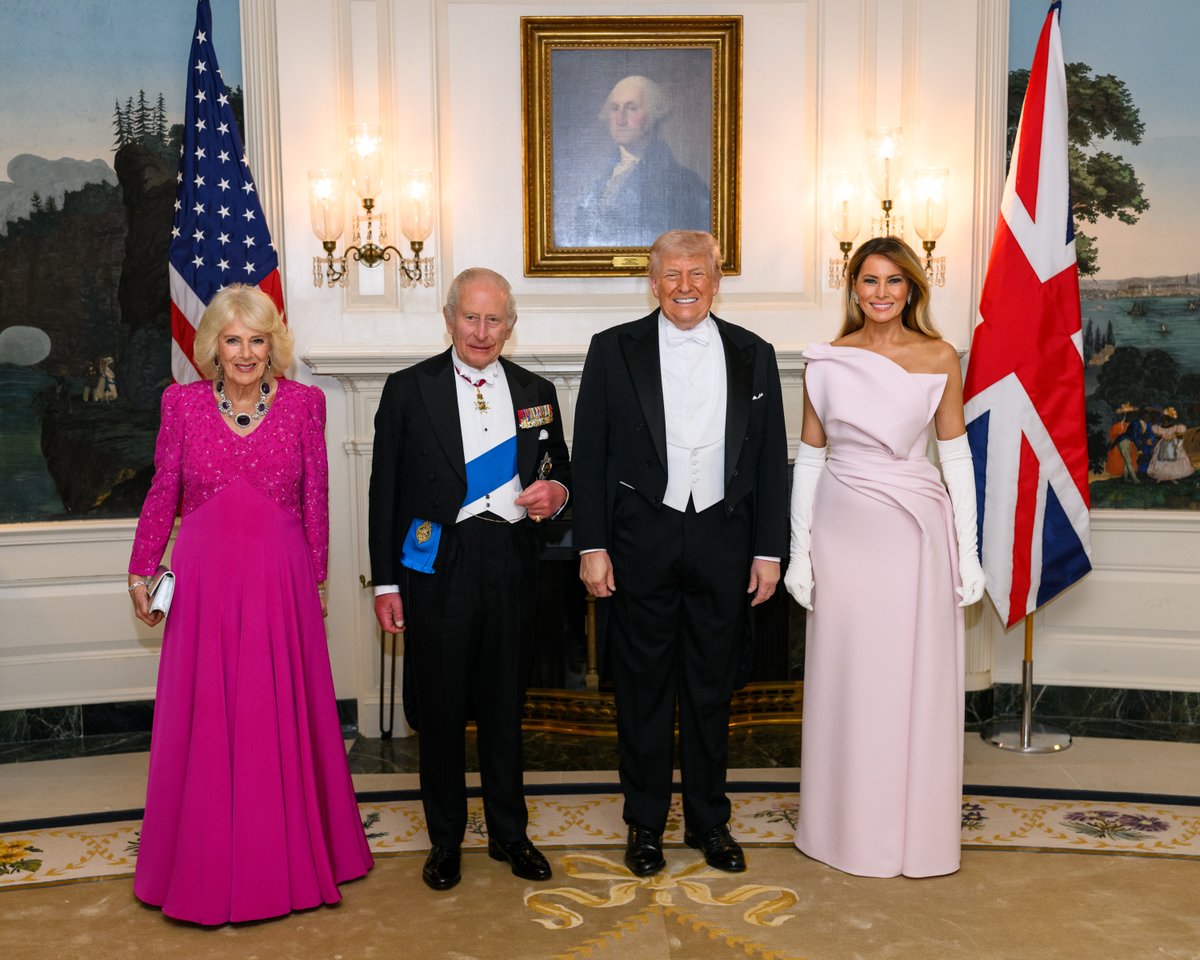
President Donald J. Trump and First Lady Melania Trump alongside King Charles III and Queen Camilla at the State Dinner — honoring the unbreakable friendship between the U.S. and U.K. 🇺🇸🇬🇧
English

If you’re suffering from low engagements, drop a comment here, let’s engage you.
English

“My Enemies Want To Use Insecurity In The Country To Get Rid Of Me, But I’m a Stubborn Politician Who Refuses To Go and I will campaign for my second term”
~ President Bola Tinubu says
English