eitjuh
796 posts

eitjuh retweetet
eitjuh retweetet
LIQUIDATION CONTAGION
Wealth taxes are even worse than you think. Any asset held by Californian billionaires or Dutch citizens is now at risk of experiencing forced liquidation pressure.
So: it’s not just that you don’t want to hold assets as a Dutchman. You also don’t want a Dutchman to hold your assets. Because the logic of forced liquidation is contagion.
Let’s think it through.
(1) First, suppose there is an asset with a total market cap of $10,000, with 10 shares total, of which 1 share each is held by 10 different holders, all in the Netherlands. To simplify the math, assume the Dutch holders bought those shares at par, or close to $0.
(2) Now suppose today is the unrealized cap gains tax day, and the share price is $1,000 per share. Each Dutch guy is hit with a 36% tax, and owes $360. The first guy sells his one share, gets $1,000, and pays $360 in tax while retaining $640.
(3) But the first guy’s sale reduces the market price to $960 per share. So when the second guy sells, he only retains $600 after paying $360 in tax.
(4) Now assume that by the 7th guy, all the selling has pushed the share price to collapse to $200 per share. This is a very reasonable scenario if 60% of the cap table has suddenly been dumped. Indeed it might go much lower.
(5) At $200 per share, the 7th guy actually has to go into debt to pay the tax as he owes $360. He sells his one share, pays all $200 of the proceeds in tax. And still owes $160 more in tax.
(6) The 8th, 9th, and 10th guys are even more screwed. By the time they sell, the price will likely have crashed to $100 per share or less. As with the 7th guy, even 100% liquidation will not cover their tax burden.
(7) So we immediately see many negative things about the Dutch unrealized cap gains tax bill.
(a) First, it will cause large simultaneous forced liquidations. Everyone must sell 36% of their stake near the same time.
(b) Second, it may be literally impossible to pay if a critical mass of the cap table is all subject to it at the same time. In the example above it was 100% Dutch holders, but has it been just 60% the result would have been much the same: a collapse in the share price.
(c) Third, that means it would be disastrous to have too many Dutch citizens (or Californian billionaires!) on the cap table. Their forced sales will crash your share price.
(d) So, you might have to start mass blocking those resident in wealth-taxing jurisdictions from investing in your companies.
(e) This in turn makes the poor Western European guy even poorer, as he gets locked out of high growth assets.
To be clear: I really do feel bad for the formerly Flying Dutchmen, now Crying Dutchmen. They invented much of modern capitalism. They founded New Amsterdam, now New York. They’ve punched way above their weight. I wish them only the best.
Nevertheless…they should prepare for the worst. This may be a tough century for Western Europe. The first ones out might get to freedom, while the slowest may be stuck behind a new Iron Curtain, spending a century paying off the debts their states incurred over the last century.
Because the long run fruits of Western Keynesianism are the same as Soviet Communism, in the sense of wealth seizure and pauperization.
I mean, if you knew the future, you wouldn’t want to co-own a farm with a Russian in 1916. For similar reasons, you might not want to co-own a share of stock with Dutch national in 2026. Or with anyone in a seizure-curious jurisdiction…which unfortunately includes much of Western Europe, Canada, and Blue America.
You instead want assets that are not held by those subject to forced liquidations. Now, I grant that this is an unusual way to rank assets…Dutch holders considered harmful?!? Yet it might sadly be necessary to minimize your exposure to liquidation contagion.
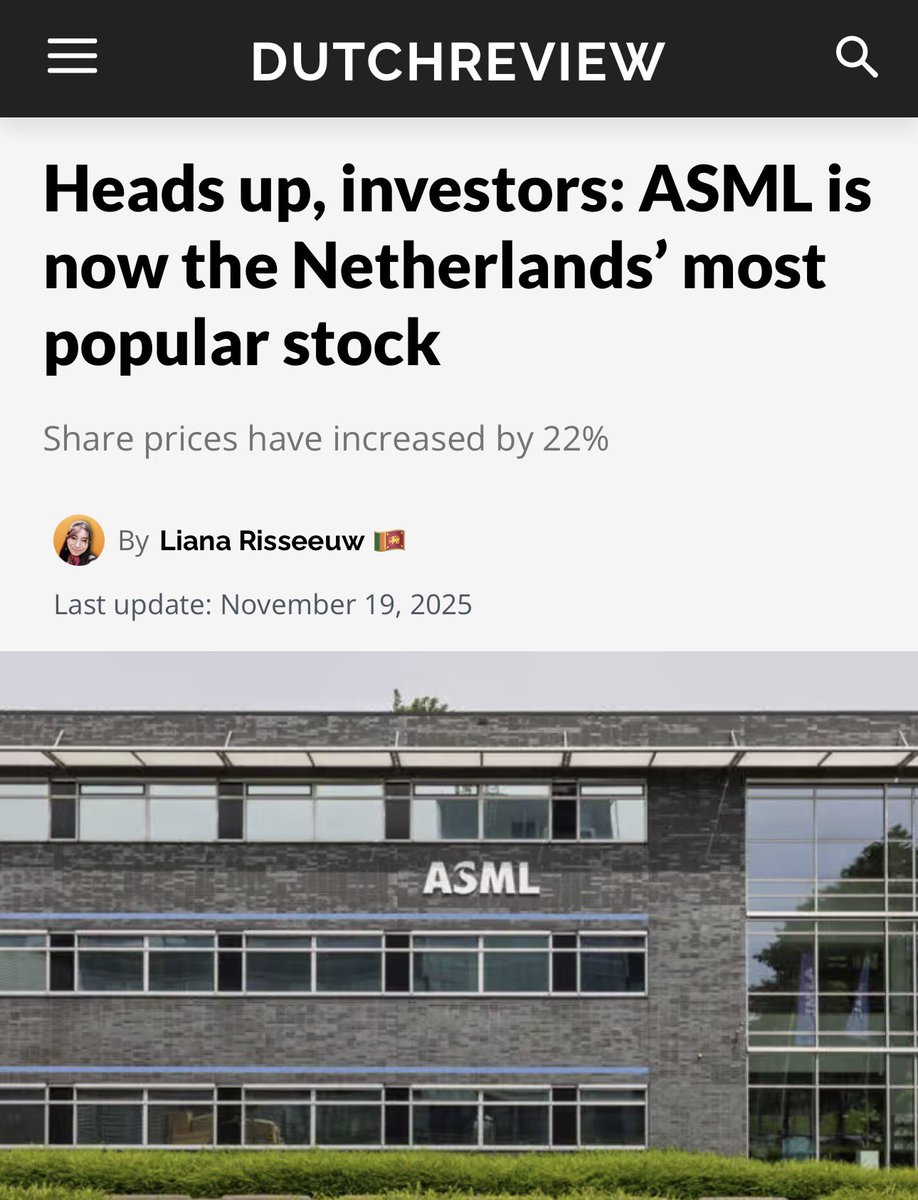
PS: guess which crucial stock is most held by the Dutch? ASML. So: this unrealized cap gains tax may not literally be a communist plot, but it would have the same effect.
English


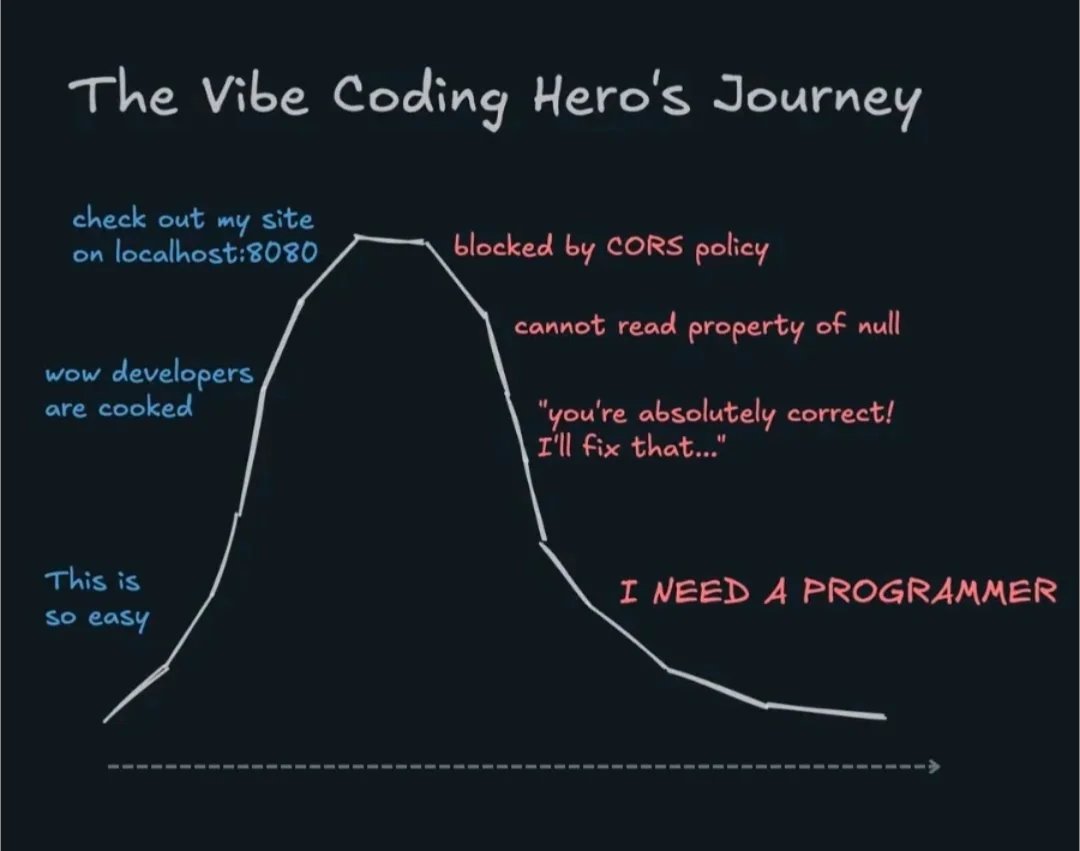
Firstly I love AI and my sites are AI so I am very pro-AI
Secondly it's becoming so good that I'm starting to feel kind of unaccomplished because AI does all my coding now
So it feels like my daily accomplishments are more like "wow great job managing" than coding like before
English

eitjuh retweetet

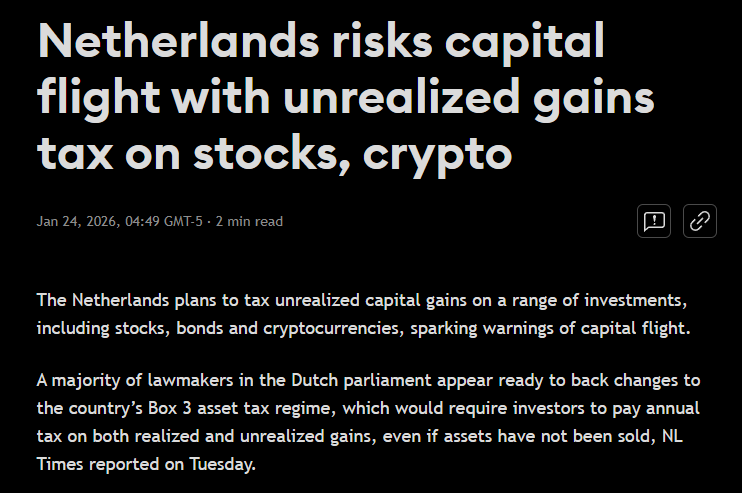
The new radical left wing govt in the Netherlands is imposing a wealth tax on unrealized gains on stocks.
Just like in other countries where this has been tried, it will likely result in the wealthy moving to another tax jurisdiction.
English

@bryan_johnson Unplugging is impossible for most because for example financial stability/social pressure
English

I can’t help but think (and feel) that the world is generally very sad right now. Injured really.
Yesterday I was in Utah with family. Three generations. We played sports, enjoyed good food, saw friends, and just messed around all day. One of the best days in recent memory for all of us. This is where I grew up. It took me back to my childhood. Allowing me to embody those psychological states and feel the comparative difference between then and now.
The hollowing and sadness of the modern world seems to stem in part from our phones, social media, and the ferocious need to be seen and relevant in every moment. We have mistakenly idolized a specific kind of dysfunction: a manic, sleepless hyper-vigilance that needs to be omnipresent.
Everyone I know who’s unplugged for a week, returns reporting life-changing levels of improved life satisfaction. I’ve never met anyone who didn’t return feeling spry and vibrant and clear-eyed about the corrosive nature of current social culture. The science supports them feeling that way. They were in a dopamine deficit from the hyper-stimulated state of the world so everything felt gray.
So why don’t we unplug more and more often? We’re all kind of trapped in a prisoner's dilemma. Most want to move to the mountains and be relieved of it all but are terrified that if they unplug, they’ll be invisible. Real life consequences of reduced power and status. So we stay plugged in and drink the poison. This hypervigilant state keeps us in chronic fight or flight (anxiety). Simultaneously, our addiction creates a dopamine deficit (the emptiness/grayness feeling) and a background hum of anxiety.
Mammals are biologically hardwired to co-regulate: physical touch, eye contact, proximity and in-person vibes. Things which release oxytocin and activate the vagal nerve's parasympathetic system. Screens eliminate all of this goodness.
There are small wins to be had here. More in-person time. A day off technology per week. A block of 4 hours. One hour before bedtime. I hope that there’s a collective awakening that we’re all being mined for engagement. Then we get trapped. And then trap each other.
English

The software devs who are absolutely fucked with the rise of AI are the super particular, super fussy Senior/Staff engineers who spent their whole career refusing to learn anything about their product or collaborate like a human, and just terrorized PMs with unbearably pedantic questions about JIRA tickets.
English