Federico Martelli

163 posts

Federico Martelli

Federico Martelli

@fel1de

$5M to make data run factories🧠 | Forbes 30U30 Europe | Founder @ Forgis

Beigetreten Nisan 2026
48 Folgt30 Follower
Angehefteter Tweet
Federico Martelli
I'm Federico we raised €5M in 36 hours, the fastest pre-seed in Europe and joined Forbes 30 Under 30 Europe 2026 shortly after I'm starting on X to share what I've been building and what I've learned along the way but first, a bit about me 27, Italian, CEO of Forgis, based in Zurich 4 months after founding, we had 5 term sheets from international funds won the ABB Startup Challenge against hundreds of startups and got deployed inside Fortune 500 plants all while obsessing over one question: why is the West handing its industrial base to China, and what can actually be done about it I've been writing about this on LinkedIn for the past year 10,000 followers, 800K monthly impressions turns out a lot of people in manufacturing, automation and deep tech care about this stuff I'm here to build the same thing on X expect real insights on manufacturing, industrial AI, robotics, reshoring and the geopolitics of production no fluff, no startup motivation content just first principles thinking from someone actually building in this space if that's your world, follow along
Federico Martelli tweet media
English
9
1
19
1.1K
Federico Martelli
@saguppa replacing the human workaround with actual intelligence is the right move. the managed service was just proof the product wasn't finished.
English
0
0
1
3
Saurav
Saurav@saguppa·
I built a SaaS to $1M ARR. Here's why I'm walking away from it and building a new product for cold outreach. On almost every sales call we ran, someone said some version of the same thing: "I just want someone to handle this for me." I heard it for five years. But I kept building features instead. Quick context: I'm the founder of SalesRobot, a LinkedIn and email outreach automation tool. We hit $1M ARR this year. 4,000+ users. 150+ agencies on the platform. But I'm thinking of taking it to the next level. And to explain why, I have to be honest about what SalesRobot actually is. SR automates outreach actions. Connection requests, follow-up sequences, inbox management. Cloud-based, safe, works while your laptop is off. The product does what it says. What it doesn't do is think. You still have to decide who to target. Write the messages yourself. Build the campaign structure. Figure out what to say when someone replies with "maybe, send me more info." We handled the execution. The strategy was always on you. That sounds reasonable. It's how most tools in this category work. The problem is that most people buying outreach software aren't outbound experts. They're founders and small sales teams who need a pipeline. They don't want to learn targeting strategies or write 6-step sequences. They just want meetings. So we built a managed service. $349/month, our team handles everything. Customers got results faster. Commercially, it worked. But it also told me something uncomfortable about the product. The managed service was a team of humans doing manually what the software should have been doing. We'd built a capable automation layer, then staffed an entire human layer on top of it to compensate for what the product couldn't do alone. That wasn’t a solution, just a workaround. And even that workaround had a ceiling. One call I remember specifically. A prospect asked: "How does your platform help me figure out which leads to actually go after?" Our rep answered honestly. We don't really help with that. The call ended. That question sat with me for a long time. Because it's the right question. And five years in, we still had no answer. So I'm building Kuron.ai. The idea is straightforward. You describe your ICP and your goal. The AI builds the lead list, writes personalised outreach, runs campaigns across channels, reads replies, and books meetings. Not a tool you operate. An outbound function that runs. I know what the execution layer looks like now. Kuron is me starting over on the thinking layer, one that can sit on top of whatever tool you're already running. Will it work? I don't know yet. I'm at the start. If you're building something similar or just curious how it goes, Kuron is taking waitlist signups now.
English
2
1
4
111
Federico Martelli
@BrianLaManna_ specificity is the only signal that survives the inbox. generic subject lines are just polite spam.
English
0
0
0
8
Brian LaManna
Brian LaManna@BrianLaManna_·
Subject lines in emails are like the gatekeeper on a cold call. Pretend every single email you are sending goes to a gatekeeper and they have to decide from the subject line alone - should we delete this? Or pass this along to the intended person? No open = no response. All work wasted. Your goal should be to use some sort of company-specific verbiage in the subject (𝗦𝘁𝗿𝗼𝗻𝗴) 𝗘𝘅𝗮𝗺𝗽𝗹𝗲𝘀 * launching in Ireland * your time at microsoft * engage 2.0 * venminder acquisition * enplug for zoom * meddpicc rollout (Engage is a product name) (Venminder is a company they acquired) (MEDDPICC is a sales methodology they’re rolling out) (𝗕𝗮𝗱) 𝗘𝘅𝗮𝗺𝗽𝗹𝗲𝘀 * How Gong helps sales teams in 2025 * Brian, looking to grow revenue next year? * SaaS Sales @ a hyper growth startup - Series A funded! * Quick Question, Brian * #1 lead generation platform on G2 * All in one platform for revenue organizations Bonus points for unique company verbiage. Never longer than 4 words. Let’s get it.
English
4
1
31
2.9K
Federico Martelli
@borancakir measuring output similarity instead of decision consistency is how you build agents that look right and fail in production
English
0
0
0
2
Boran Cakir
Boran Cakir@borancakir·
An output can look nothing like the reference and still be right. It can look identical and still cause the agent to fail. New research shows the metric everyone uses, text similarity, tells you nothing about whether the agent will make the correct decision next. What actually matters is whether the trajectory stays decision-consistent under the same conditions. Most evals are measuring the wrong thing. The question is not does this output look correct. It is does this output lead to the same decision.
English
3
0
3
53
Federico Martelli
@medinism staying in your lane is advice from people who were never trying to win. category expansion is the only defensive strategy that compounds.
English
0
0
0
6
Manuel Medina
Manuel Medina@medinism·
My biggest regret as founder of Outreach: I stopped trying to kill the competition. Early on, I had no choice. We raised 2M. Yesware had raised 30M. ToutApp had raised 60M. It was either they lived and we died. Or the other way around. So we out-innovated them. And it worked. But then I got talked into getting soft. "Focus on your own race." "There will be many winners." "They can own X, you can own Y." "Focus on employee engagement and Glassdoor reviews." "Focus on brand and culture." That was all bullshit. Your job as a VC-backed founder is to win. And to win big. Full stop. You need to be a multi-x returner to your VCs. They hired you to do that job. If you split the market, the most likely exit is a PE acquisition. Not great for your VCs, not great for you. That’s how you get fired. Killing your competition IS your job description. If you're not up for it, don't be a founder. Let's be real. We all want to create monopolies. No one actually wants to compete. The founders who pulled it off had incredible runs. Made fortunes for themselves and their investors. They got disrupted eventually. But while they held the monopoly, it was untouchable. Here's how they did it: 1- Acquire your competition DiscoverOrg bought its two biggest rivals (ZoomInfo and RainKing) and became what is now ZoomInfo. They were the only contact data solution for almost a decade. OneTrust bought every top player in trust and privacy. They reigned uncontested for 10 years. 2- Drown your competition Salesforce was not the first CRM to move to the cloud and take on Siebel. But they outspent every other cloud CRM into irrelevance. Marketing. Advertising. Feet on the street. By the time competitors looked up, Benioff was on CNBC and no one had heard of Act or Goldmine. 3- Have dumb competitors ServiceNow was the first ITSM to move to the cloud. The incumbents (BMC and HP) just didn't follow. Who the fuck knows why. ServiceNow destroyed them. The playbook after that is simple: become #1 and kill #2. Then watch for any challenger coming from the side. Especially ones with momentum. Copy their offering. Bundle it into your product. Suffocate them before they scale. Apollo would not exist if Outreach had bundled data with workflows. Gong would not exist if Outreach had bundled call recording. Those are billion-dollar companies built in gaps I left open. Because I listened to people who told me to "stay in my lane." I watched Apollo hit a $1.6B valuation selling data to my own customers. I have to live with that every day. Founders who stick to their knitting end up splitting markets. Founders who expand to conquer everything touching their business live on. That's why Uber's market cap is 30x Lyft's. Uber was run by a maniacal visionary who would not stop at anything. I don't even remember who ran Lyft. Do you? Winners are expansive, aggressive, and they play to win. That's the job.
English
37
20
419
51.8K
Federico Martelli
@andruyeung equity for effort is only asymmetric when the upside is real. network and category dominance are the only two variables that matter.
English
0
0
0
17
Andrew Yeung
Andrew Yeung@andruyeung·
I often meet mentors who are looking for "young and hungry operators" to help them build out their businesses, offering equity. The truth is, this deal is usually a bad one for the operator because the equity is worth nothing, unless it satisfies one out of two of this criteria. 1. The mentor is in the top 99th percentile of their category 2. The mentor has access to a rare network It is a bad deal in every other scenario.
English
4
1
19
1.8K
Federico Martelli
@lukcombinator the best onboarding makes the status quo feel unbearable before it offers the exit. framing is the product.
English
0
0
0
2
Lukas
Lukas@lukcombinator·
"life in dots" is brutal in the best way. the trick is that they didn't pitch the app, they pitched the mortality reminder, then handed you the only obvious cure. so much of onboarding is just dramatizing the cost of not changing
English
1
0
0
7
Federico Martelli
@sherifgjini great product in a vacuum is just an expensive prototype. distribution is where companies actually get built.
English
0
0
1
5
Gini
Gini@sherifgjini·
Most founders are not stuck on product. They are stuck on being ignored. That is a distribution problem, not a talent problem.
English
40
3
49
1.2K
Federico Martelli
@osidenko_ revenue leaks at the handoff between commercial and legal. owning the clock is a sales discipline, not a legal one.
English
0
0
0
4
Oleksandr Sidenko
Oleksandr Sidenko@osidenko_·
Most deals don't die at 'no'. They die at 'we'll redline it next week' three Fridays running. The bottleneck isn't legal capacity. It's that nobody commercial-side owns the contract clock.
English
1
0
1
30
Federico Martelli
@altantutar physical deployment creates switching costs software can't replicate. the moat is in the workflow, not the code.
English
0
0
0
1
altan tutar
altan tutar@altantutar·
Arguments to why you must build in hardware & robotics over software: 1/ Hardware has become a lot easier & cheaper to build over the last couple of years. 2/ It's now a lot easier and faster than ever for a small team to prototype a demo & product. 3/Computer vision has just become so much better, and a lot of cameras we deployed all around the world are simply very dummy. 4/ Hardware has compounding moats software no longer doesn't. Once a robot is in a customer's workflow, switching costs are huge. That's just not going to be the case with software going forward. 5/ Foundation models removed the per-task engineering tax. You no longer hand-engineer behavior for every task, which is a big advantage. Anything else I've missed?
English
4
0
15
657
Nick Venturi
Nick Venturi@nickvnturi·
Please dear algorithm, stop showing me claude generated content from php devs shaming other builders because they use claude thanks
English
1
1
2
33
Federico Martelli
@Brent_Fulfer the pitch sharpens under pressure, not in preparation. reps in the room beat rehearsal every time.
English
1
0
1
23
Brent Fulfer
Brent Fulfer@Brent_Fulfer·
If you've been raising for more than 3 months and still haven't closed.. It's not the market. It's one of these two things: 1- You've been pitching for months with no clear investor list — just hoping the right person finds you. 2- You think you need the "perfect" investor and aren't getting doing enough outreach. Both are the same mistake. You don't get ready and then raise. You raise and get ready at the same time. The pitch gets better in the room. Not before it. Stop waiting. Start meeting people. If your stuck, comment "SPRINT" and lets fix this.
English
19
1
21
1.1K
Ivan Burazin
Ivan Burazin@ivanburazin·
The idea that having kids kills productivity is pure cope. I know founders with kids who outwork founders without kids. I didn't want kids for a long time because I thought they'd take too much time from the company. It turns out that you actually work better when you have kids. I don't know exactly why, but the focus is sharper, time management is tighter, and the stakes are clearer 🤷‍♂️
English
21
2
68
4.4K
Federico Martelli
Federico Martelli@fel1de·
Western factories in 2015: -70% OEE on a good day -machines from 3 different decades -incompatible protocols, no shared data -one engineer who knows how everything works -no one touching the PLC unless something breaks Western factories + industrial intelligence in 2025: -unified data layer across legacy equipment -real-time anomaly detection before downtime hits -AI agents coordinating production automatically -energy waste cut without replacing a single machine -plant managers making decisions with actual data same factory floor. different brain on top.
English
1
0
3
59
Dev
Dev@thedevchandra·
building in 2026 is brutal because you're not a founder if nobody knows you content and brand is more important than product.
English
4
0
10
244
Federico Martelli
@TheGeorgePu coordination overhead was always the hidden cost. AI just made the org chart honest about what was actually necessary.
English
0
0
1
630
George Pu
George Pu@TheGeorgePu·
Amazon is firing 30,000 people and hiring 11,000. I sat there and thought - why? Why fire and hire at the same time? So I dug in. The 30,000 cuts? Mostly middle managers. The 11,000 hires? Individual contributor engineers. Amazon thinks there are too many managers. AI can replace your managers. Now it all made sense. AI didn't kill the developer job. AI killed the manager job. Think about it. When one engineer with Claude does what 5 used to do. You don't need the manager who managed the 5 people. You don't need their manager either. The org chart isn't shrinking from the bottom. It's collapsing from the middle. If your job is to manage people. AI is coming for you.
English
28
7
83
10.5K
Federico Martelli
@RetentionAdam the sunk cost trap in venture is real. folding the wrong thing fast is how you get to the right thing at all.
English
0
0
0
6
Adam Robinson
Adam Robinson@RetentionAdam·
Founders think the biggest risk of taking VC money is running out of cash and going bankrupt. It's not. It’s being chained to something that LOOKED promising for a decade. The decisions you're forced to make are tied to the money you took and what you said you'd do when you took it. If you just raised $20M saying you'd spend it in 18 months and burn a lot of dough... you can't read one of my posts and say "Now I'm going to run a profitable business." That’s not how this works. Your reputation is the most important thing. You have to fulfill the promises you made. So go for it. Really f*cking go for it. But part of really going for it is accepting that if it's not working after you really tried, folding and going to do something else is part of it. That's what your investors expect you to do too. This is the trap I'm always warning founders about. It's not the catastrophic blow-up you should be worried about when you take VC. It's being stuck in something - FOR A DECADE OR MORE - that looked like it was promising but actually wasn't. Don't have too much pride to fold something that isn't worth your time. Because the upside of something that IS worth your time is so much greater than you realize.
English
4
4
20
889
Federico Martelli
@artyomvnsv traction is the only pitch that closes itself. everything else is just a conversation about potential.
English
1
0
1
22
Artyom ⚡️
Artyom ⚡️@artyomvnsv·
Stop chasing investors if you're launching a startup. Focus on chasing customers instead. Validate your idea by building an MVP. Get real traction. Demonstrate growth. This completely flips the dynamic. Once you have customers, investors start chasing you.
English
4
0
9
140
Federico Martelli
@HopeRemy direction beats motivation every time. interest without a vector is just energy with nowhere to go.
English
0
0
0
8
Hillary Remy
Hillary Remy@HopeRemy·
Most people interested in tech are not struggling with interest. They are struggling with direction. Not knowing where to start is what keeps many people stuck for a long time.
English
7
0
17
599
Aleksas Petravičius
Aleksas Petravičius@petravicaleksas·
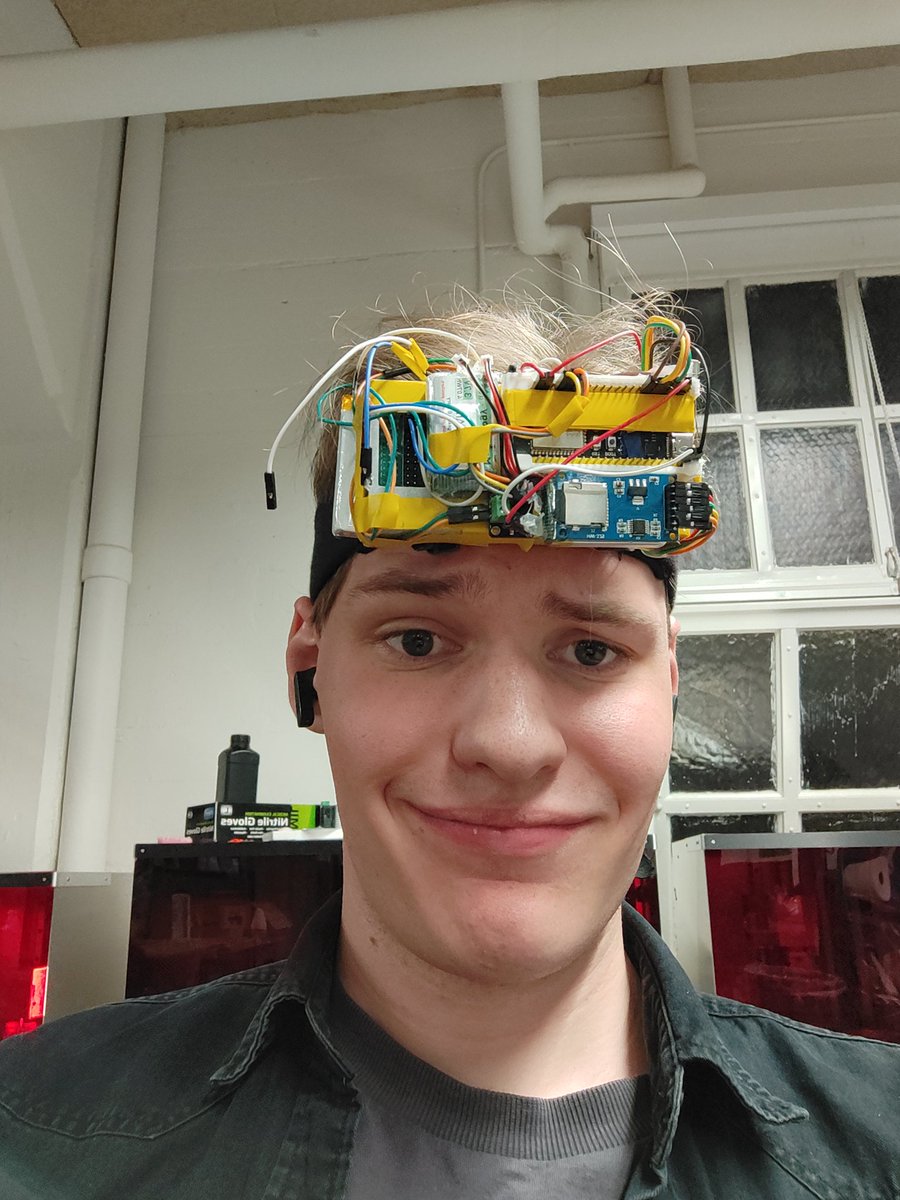
day in the life of a hardware co-founder: learning how to sew soldering the next prototype eating lunch with wires taped to my face fun times...
Aleksas Petravičius tweet mediaAleksas Petravičius tweet mediaAleksas Petravičius tweet media
English
19
3
124
4.6K
Federico Martelli
@r_mcguire physical AI in surgery has the same trajectory as industrial automation. precision at scale always wins over manual execution.
English
0
0
0
75
Ryan McGuire
Ryan McGuire@r_mcguire·
autonomous surgical robots are a $10T opportunity this will be orders of magnitude bigger than anything medtech has ever seen
English
17
12
165
14K