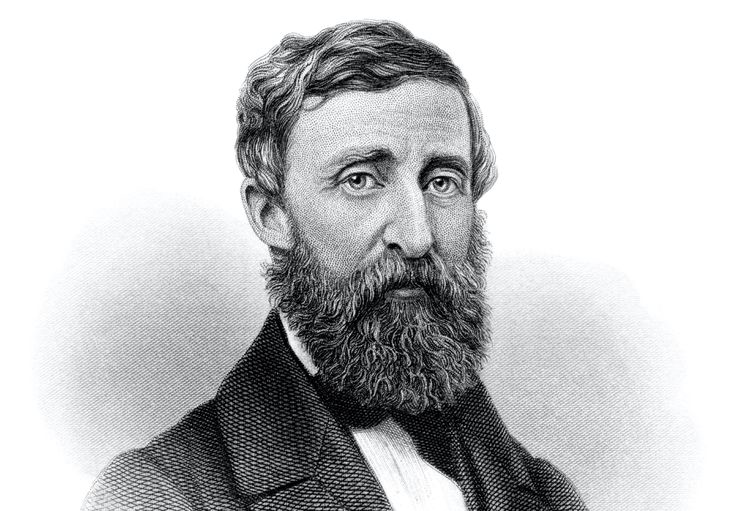
“I learned this, at least, by my experiment; that if one advances confidently in the direction of his dreams, and endeavors to live the life which he has imagined, he will meet with a success unexpected in common hours.”
— Henry David Thoreau
Brazil has the most decentralized political system in Latin America, as measured by the autonomy given to governors and mayors, according to a new index published in AQ today.
Argentina & Colombia are not far behind.
Às vezes eu acho que o Brasil foi mesmo tomado pelo crime. Coisas relativamente simples, como a venda de “vapes” em lojas de conveniência de postos de gasolina são indicações claras disso. Se não conseguem coibir nem um crime “menor”, visível e explícito, é pq não há interesse.
Meet the new Stitch, your vibe design partner.
Here are 5 major upgrades to help you create, iterate and collaborate:
🎨 AI-Native Canvas
🧠 Smarter Design Agent
🎙️ Voice
⚡️ Instant Prototypes
📐 Design Systems and DESIGN.md
Rolling out now. Details and product walkthrough video in 🧵
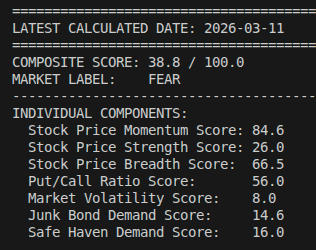
@aladiable_ Em breve você terá seu Fear & Greed tupiniquim seguindo a mesma metodologia do original da CNN! Gratuito, on-line, atualizado a cada 10 minutos.
@limeinhalf@RahulRajput9545@TimesNow Here's the official English translation of the CPC Central Committee's full Recommendations for formulating China's 15th Five-Year Plan (2026-2030):
english.news.cn/20251028/efbfd…
(The detailed draft outline is under NPC review since March 5 and expected soon after approval.)
China's 15th Five-Year Plan (2026-2030), just unveiled, ramps up focus on AI, robotics, quantum, advanced materials & rare earth processing—where China controls 90-95% globally.
F-35s rely on hundreds of pounds per jet for magnets, sensors & engines. Export curbs could disrupt supplies long-term without shots fired, shifting rivalry to supply chains.
US response: CHIPS Act + 2027 ban on Chinese rare earths in defense, but diversification lags. Real leverage play in tech arms race.
🗣️Live webinar: Iran Conflict 2026
Join our analysts as they examine the evolving conflict in Iran and assess its wider strategic impact.
When: 18 March 2026 / 11:00 ET / 15:00 GMT
Register now: hubs.la/Q04600R10
"There is nothing romantic, dramatic, or satisfying in modern conflict. It is all horrible, profoundly depressing; and now it carries with it a dreadful threat to civil populations."
George C. Marshall, 1938
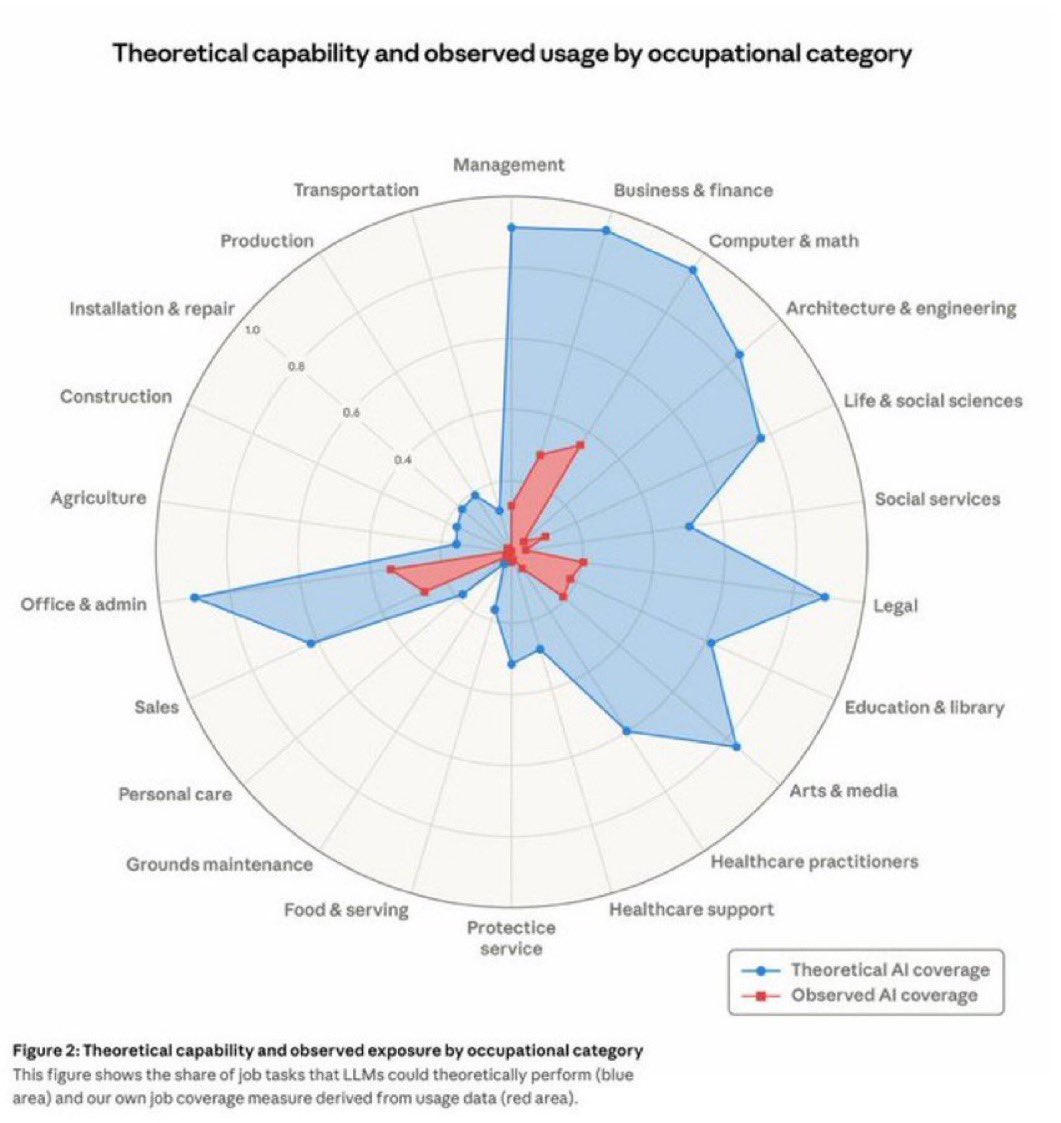
Anthropic's Revealing Chart on AI's Impact on Jobs
Anthropic has unveiled a pivotal chart that underscores the chasm between AI's capabilities and its real-world application in the workforce.
Derived from analyzing 2 million actual conversations with Claude, this radar chart, titled "Theoretical Capability and Observed Usage by Occupational Category," paints a stark picture of untapped automation potential across various job sectors.
At its core, the chart is a spider web diagram plotting occupational categories around a circular axis, with values ranging from 0 to 1.0 representing the share of job tasks.
The expansive blue area illustrates the theoretical coverage tasks that large language models (LLMs) like Claude could perform right now based on their inherent abilities. In contrast, the much smaller red area shows observed usage, drawn from real user interactions.
The visual disparity is immediate and profound: blue spikes outward significantly in fields like computer and math (reaching about 0.75), business and finance, and office administration, while red hugs close to the center, often below 0.2 across most categories.
This gap isn't just academic; it's a "career runway," as highlighted in discussions around the chart. For programmers, 75% of tasks are theoretically automatable, yet actual usage lags far behind.
Similar vulnerabilities appear in customer service, data entry, and financial analysis, roles traditionally seen as white-collar strongholds. Meanwhile, hands-on fields like construction, agriculture, and protective services show lower theoretical exposure, with blue areas dipping to around 0.1-0.3, suggesting AI's current limitations in physical or unpredictable environments.
Broader data amplifies the chart's message. As of early 2026, 49% of U.S. jobs expose at least 25% of tasks to AI, up from 36% a year prior. Yet, mass layoffs haven't materialized; unemployment in AI-vulnerable roles remains steady.
Instead, subtler shifts are underway: a 14% drop in hiring for 22-25-year-olds in exposed positions indicates companies are prioritizing experienced workers, shortening entry-level pathways for recent graduates.
The implications are clear: while AI's red footprint grows incrementally each month, the blue expanse signals accelerating change. College-educated, higher-earning professionals, once insulated are now most at risk, flipping the script on traditional labor disruptions.
Anthropic's chart isn't a doomsday prophecy but a wake-up call, urging workers and businesses to bridge the gap through adaptation, upskilling, and ethical integration of AI tools.
Please read the 5000 Days Series at ReadMultiplex.com for answers on how you can thrive in the Interregnum.