Seed

4.9K posts

Seed banner
Seed

Seed

@loreseedx

ghostwriting launches | write. ignite. vanish | impact first | me—invisible.

Beigetreten Şubat 2018
95 Folgt217 Follower
Seed
Seed@loreseedx·
@Thedonkey makes sense. would be interesting to see second order effects of it on a scalable, macro level there
English
1
0
0
14
don
don@Thedonkey·
@loreseedx Maybe will turn this into a full thesis.
English
1
0
0
30
don
don@Thedonkey·
There is a common assumption in crypto that the hard problem of adoption is getting people to understand what blockchain is. This is wrong IMO. The hardest problem is much more mundane: it is moving money in and out. When people talk about financial inclusion, they tend to imagine the unbanked person in a rural village who has never touched a financial product. But the reality of who struggles with on and off ramps is far more varied, and far more interesting, than that framing suggests. The friction is different in every country. The enemy has a different name. The workaround people have invented is different. And the solution, if there is one, has to understand all of this at once. In Brazil, the problem is fiscal surveillance. The Receita Federal, Brazil's tax authority, now cross-references every transaction above R$30,000 per month reported by exchanges with individual taxpayer filings. The central bank recently reclassified stablecoin transfers as foreign exchange operations, opening the door to applying the IOF tax, a financial transaction tax that can reach 3.5%, to every stablecoin conversion. Industry groups representing over 850 companies called this unconstitutional. The government paused the plan until after the 2026 election. But the direction is clear: every on and off ramp through a regulated channel is becoming a reporting event. Brazilians are not trying to evade taxes because they are criminals. They are trying to move money without becoming a data point in a surveillance system that was designed for a different era. In Argentina, the problem just changed shape. A year ago, the cepo cambiario, the capital controls that made it nearly impossible to legally buy dollars, was the primary barrier. Milei removed it in April 2025. The peso has stabilized. The emergency is fading. But ARCA, the rebranded national tax authority, is now building transaction monitoring infrastructure for crypto. CNV Resolution 1058 requires registered exchanges to report user transactions. The control mechanism shifted from blocking access to watching everything you do once you have access. The Argentinian crypto user today is not fleeing a collapsing currency. They are trying to preserve financial privacy in a post-cepo world where the state's new project is fiscal legibility. In Venezuela the situation is structurally different from anything in the rest of Latin America. This is not a story about taxes or surveillance. This is a story about a government that controls the rails themselves. The state crypto regulator SUNACRIP is largely paralyzed. The exchanges that operate legally do so under conditions set by the regime. To convert crypto back to bolivars through a legitimate channel, you are by definition passing through infrastructure that the government can see, freeze, or redirect. Opposition figures have said explicitly that crypto's value for democracy movements will only be real when off-ramping has no dependency on the autocratic regime. That bar has not been met yet by any product that requires a licensed intermediary. In Mexico the barrier is the banking system itself. Mexican banks routinely flag and block transfers to crypto exchanges. The 2018 Fintech Law requires exchanges to obtain a license from the Banco de Mexico, a slow and expensive process that limits competition and entrenches incumbents. But the deeper issue is the remittance corridor. Mexico receives billions of dollars a year from workers in the United States. The fees charged by legacy services like Western Union have historically been between 5 and 8 percent per transaction. For a factory worker sending $300 home every two weeks, that is real money lost to infrastructure that exists primarily because there has been no better alternative that ordinary people can actually use. In Nigeria the problem is more blunt. In February 2024 the government ordered telecoms to block access to Binance, Coinbase, OKX, Kraken, and Bybit. The block was meant to stop peer-to-peer traders from allegedly manipulating the naira exchange rate. More than a year later, with new pro-crypto legislation passed and a formal licensing regime in place, the telecom block is still inconsistently active. Some platforms work on Airtel but not MTN. Others are reachable only through VPN. The country with one of the highest crypto adoption rates in the world, driven by real economic needs including remittances, savings, and freelancer payments, is operating its crypto economy through grey infrastructure because the government blocked the front door but left the back door open. In India every single transaction on a licensed exchange is subject to a 1 percent tax deducted at source, on top of a 30 percent flat tax on gains with no loss offsets allowed, on top of an 18 percent GST on platform fees. The government's position is essentially: we will tax it as aggressively as possible without formally legalizing it. The RBI believes that regulating crypto would grant it legitimacy and create systemic risk. So the regulatory framework is deliberately asymmetric: maximum extraction, minimum protection. Indian crypto users are among the most sophisticated in the world. They understand exactly what this asymmetry costs them on every trade. In Indonesia the regulatory authority over crypto shifted in January 2025 from a commodity regulator to OJK, the financial services authority, which now applies bank-level compliance requirements to exchanges. Minimum paid-in capital of IDR 100 billion, roughly six million dollars, to operate as a licensed trader. Executive fit-and-proper tests. Mandatory cybersecurity audits. Enhanced KYC that creates onboarding friction for the 17 million registered crypto investors who are used to simpler flows. The regulator is building for stability. The users are experiencing it as bureaucracy. What all of these situations have in common is that the friction lives at the boundary between fiat and crypto. Once you are inside the crypto system, moving value is fast and cheap. The problem is the border crossing. And every country has built a different kind of border, with different guards, different rules, and different penalties for trying to cross without permission. This is the problem that @p2pdotme is built to solve. Not by being another exchange with a slightly better interface, but by removing the institutional layer from the transaction entirely. @p2pdotme is a decentralized protocol, not a platform. There is no company holding your funds. There is no license that can be revoked. There is no KYC database that can be subpoenaed. There is no front door to block. Trades settle peer to peer, on-chain, in 60 seconds. The protocol matches buyers and sellers directly, using staked USDC and on-chain dispute resolution instead of custodial escrow. @p2pdotme just launched in Nigeria (@p2pmengn). This matters because Nigeria is exactly the kind of market where the distinction between a protocol and a platform is not a technical detail but a practical necessity. You cannot block a protocol the way you block a website. There is no server to take down. There is no app to remove from a store. The transaction happens between two people with no institutional node in the middle that can be pressured or shut down. But let me give you a more concrete example of what this actually looks like in practice, because abstractions about decentralization are easy to write and hard to feel. A Mexican worker living in Los Angeles wants to send money home to his family in Guadalajara. He has a Revolut account with dollars sitting in it. He opens @p2pdotme and buys USDC directly on the protocol, paying with his Revolut balance. He then runs a new order on @p2pdotme: he wants to sell that USDC for Mexican pesos. Someone in Mexico (anyone with pesos in a local bank account) takes the other side of the trade. The protocol matches them. The USDC is locked on-chain. The peso seller confirms the fiat payment. The USDC is released. The whole thing takes 60 seconds. No bank had to approve an international wire. No remittance service took a 6 percent fee. No exchange asked for documents. Two people agreed to do business and the protocol enforced the settlement. This is not a marginal improvement on the existing system. It is a different system. The existing system was designed around institutions that needed to trust each other across borders, and charged accordingly for that service. The protocol replaces institutional trust with cryptographic settlement, which lower costs and almost no time. @p2pdotme does not need a different product for each country. The Brazilian trying to avoid IOF surveillance, the Argentine trying to stay off ARCA's radar, the Venezuelan trying to exit without going through state-controlled rails, the Nigerian routing around a telecom block, the Indian avoiding TDS on every transaction, the Mexican worker sending money home: they all have different enemies, but they all have the same need. Move value across the fiat-crypto boundary without an institution in the middle that can see, stop, or tax the transaction. A decentralized on and off ramp that settles in 60 seconds and requires no intermediary is not a product for one country. It is infrastructure for every country where the intermediary has become the problem. That is most of them.
English
1
2
16
240
Seed
Seed@loreseedx·
more than 80% of founders i’ve worked with obsesses over the word “insight” it’s funny when you realize that the majority of them do not have the slightest idea what an ‘insightful piece’ consists of. it takes meta-like kind of thinking, insider-type of information, genuine interest in the topic to actually make a worthwhile piece. only a pro writer and thinker can do that, and not a generic “copywriter” on CT.
English
0
1
2
10
Seed
Seed@loreseedx·
insightful. what surprised me most is how fast the dollar arbitrage window is closing i have a quick question though: do you think credit is actually the defensibility moat everyone hopes for or will sovereign instant rails (PIX expansion + local CBDC experiments) eat that margin too before mid-sized players can scale? either way, respect for calling the mid-size hell out loud. some people are still pretending it's not happening
English
0
0
0
8
Seed
Seed@loreseedx·
@ImmutableLawyer def. there’s new data every other 3 months. thats how interesting & spontaneous the ecosystem is
English
0
0
0
66
Joseph (eu/acc)
Joseph (eu/acc)@ImmutableLawyer·
Before you build a stablecoin product, go work at a Payments & FX Firm for at least a year (minimum). Then, and only then, go and ship. The amount of data points that you will get on what can be optimised will definitely change the product you had in mind a year prior (this is a guarantee).
English
4
0
40
1.9K
Dipo ✍️
Dipo ✍️@0xDipo·
I had a back-and-forth with an agency owner recently. He’s trying to place me as an SMM for a web3 project with an actual real-world product. He trusts my work, he’s seen it over time. But the brand asked for a case study. And I pushed back. Not out of ego, but because of a pattern I keep seeing: Big brands keep using case studies as a shortcut for competence. But here’s the truth: Case studies don’t prove someone is great for this job. They only prove they were right for a job. Two completely different things. You don’t hire for history, you hire for alignment, for the present. So instead, I told him this: Before I build any strategy or think about growth mechanics, I need to understand what we’re working with, not the polished marketing version, but the honest truth. Set up a 3-way call. You, me, and the team. Let me ask the real questions: • Who’s our ICP? • What do the funnels actually look like (TMB)? • What’s the true differentiator? …and a lot more beneath the surface. Because without that, any “strategy” is just guesswork dressed up nicely. But with it? I can design something tailored, grounded, and built to actually work. That’s the difference. Not what I’ve done before, but how I think before I do anything at all.
English
11
1
28
519
Seed
Seed@loreseedx·
@herz0g fair enough.
English
0
0
1
11
Herzog
Herzog@herz0g·
more of this
Herzog tweet media
English
1
0
7
153
Ari Eiberman 🇦🇷 Stablecards
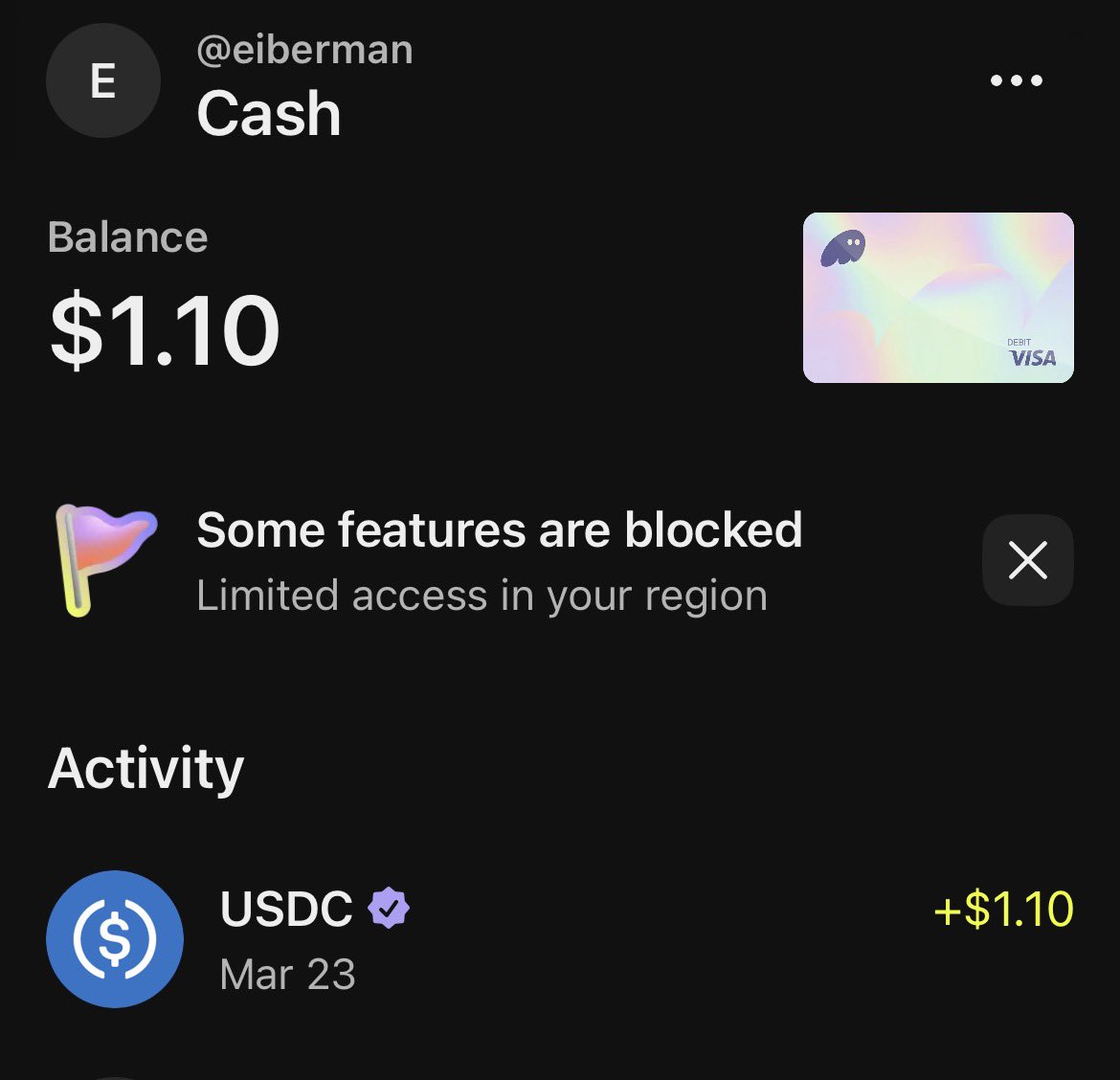
I was wondering, even before having the card, I was testing the cash part, and because I tested with very low nominal values, it made no sense. Look at what happened: I sent $1 to the $cash tab. Then I withdrew it and it was hit by a 75 cent cost. So it wasn't so smooth after all, my first impression, i mean. If phantom self-custody here, why do you need to slice my balance when I withdraw it? Still, public ledger, isn't it? or did the app give me some sort of custodial security or anything beyond just indexing my wallet balance?
Ari Eiberman 🇦🇷 Stablecards tweet media
English
32
0
5
64
Seed
Seed@loreseedx·
gm. 🌱
Seed tweet media
0
0
1
11
Seed
Seed@loreseedx·
what i’m about to say might mess up your mind a bit. But the truth needs to be told. reality is, a lot of “traction” in this space is rented. Incentives, airdrops, campaigns. Turn it off for a week… and you see what’s real.
English
0
0
1
17
Seed
Seed@loreseedx·
@EricOnchain imo, top 5 honest take the space needs. literally everyone and their grandma celebrate merchant count or rails ownership in isolation, but you nailed why neither alone is enough build.
English
0
0
2
35
Eric 🍥
Eric 🍥@EricOnchain·
Nobody has fully cracked crypto payments yet. Real progress exists though Some projects have merchant count through card networks. Others own their infrastructure but can’t concentrate adoption in one place. The pieces are there, they just haven’t come together yet. Crypto payment adoption needs two things at the same time: - Density, enough merchants in one area that paying with crypto becomes routine. - Ownership, where the merchant relationship is yours and the rails are yours. Getting one without the other gets you halfway. We’re building Moca to close that gap. Not there yet. But the architecture is designed for both, and once it starts compounding, it becomes a very different conversation.
English
4
4
27
1.9K
Seed
Seed@loreseedx·
@EtherfuseDave never gets old 😂 they only want to know your entire business model plus info on how their port can eat you
English
0
0
0
229
dave taylor
dave taylor@EtherfuseDave·
Me: Actually, we're not raising right now, but sure, if you just want to chat to get to know each other before a future round, I'm happy to chat. VC: Totally, that's exactly what I'm thinking. Anyways, how much money do you make, how do you make it, who are your customers, and how would my portcos compete with you if they wanted to pivot?
English
8
1
43
4.8K
Seed
Seed@loreseedx·
@degenarcher28 Kinda weirdly glad you didn’t post my first drafts on X 🤣
English
0
0
1
24
Archer Labs
Archer Labs@degenarcher28·
this is inside an actual resume shared to me we probably need BTC at 10k, ETH at $200, SOL at $5
Archer Labs tweet media
English
19
8
206
16.6K
Seed
Seed@loreseedx·
@mbaril010 counting down with you on ARK I
English
0
0
0
32
Seed
Seed@loreseedx·
this honestly feels like the natural evolution of online learning in the Claude/Anthropic era. instead of just watching, you’re conversing with an instructor who knows the syllabus. building the white-label widget seems to me like the obvious first step, someone’s def going to ship this fast
English
0
0
1
17
Shei
Shei@0xshei·
Here's a startup idea I had while going through some of @AnthropicAI's courses Every online course should have an Ask AI instructor on the side bar You could easily build a white label Ask AI widget for any online course to dropin and use
English
3
0
7
211
Seed
Seed@loreseedx·
@Build_with_Ryan imo, the fine line is everything. persistence has evidence (even small); delusion runs on hope and narrative. i’ve nailed this by keeping a brutal ‘weekly review’ for myself, it forces the honesty a lot of people avoid.
English
0
0
1
8
Build With Ryan
Build With Ryan@Build_with_Ryan·
How long do you give an idea before you kill it? The best founders have stories of sticking with things that looked completely dead. But there's a fine line between persistence and delusion. How can you tell which state you are in?
English
3
0
10
80
Seed
Seed@loreseedx·
@0xshei it’s quite unfortunate the irony keeps getting noisier the more we scale. web3 still runs on trust at every critical layer including custody, teams, partnerships. etc. new blood neobanks and infra has to treat reducing that trust as the core engineering problem
English
0
0
0
13
Shei
Shei@0xshei·
The irony of web3, is how much of it still runs on trust
English
3
0
3
221
Seed
Seed@loreseedx·
@byteHumi i’m guessing that old setup photo was peak “21-year-old founder cooking” energy, at least the product velocity you’re showing now is clearly worth the trade-off
English
0
0
1
22