Michael Kosicki

636 posts

Michael Kosicki

Michael Kosicki

@michaelkosicki

Postdoc in Method Development, Developmental Enhancerology, Embryo Engineer, Former Allele Hunter, Film Buff Without a Cause, Staunch Believer in Sentence Case.
Arc Institute Beigetreten Kasım 2017
461 Folgt443 Follower
Michael Kosicki
Michael Kosicki@michaelkosicki·
@ATinyGreenCell Can you get it to go inside the virus or inside the cell just infected with a virus? Small molecule inhibitors mostly work because they can.
English
0
0
1
51
Michael Kosicki
Michael Kosicki@michaelkosicki·
@JulioSongC What's your personalization prompt? Mine helps me a lot, clear difference with a clean session I sometimes open on my phone.
English
1
0
0
88
Julio Song
Julio Song@JulioSongC·
Lately I've grown increasingly annoyed by ChatGPT's hallucination, verbosity & eagerness to censor/preach, so I've switched to Gemini&Grok for a change. So far I'm loving them both!🫡 A truly refreshing experience! As a user, I think ChatGPT has forgotten what it's meant to be.🙄
Elon Musk@elonmusk

Let’s see if @Grok 5 can beat the best human team @LeagueOfLegends in 2026 with these important constraints: 1. Can only look at the monitor with a camera, seeing no more than what a person with 20/20 vision would see. 2. Reaction latency and click rate no faster than human. Join @xAI if you are interested in solving this element of AGI. Note, Grok 5 is designed to be able to play any game just by reading the instructions and experimenting.

English
1
0
0
247
Michael Kosicki
Michael Kosicki@michaelkosicki·
@TanentzapfLab I find it's an excellent filter both ways - if I do not find anyone I could imagine working with, why apply? Also, if the committee is upset enough about including someone to deal you out - bullet dodged.
English
0
0
1
88
Tanentzapf Lab
Tanentzapf Lab@TanentzapfLab·
Advice from having served on faculty search committees: ALWAYS list in cover letter faculty at place you are applying to whose research aligns with yours & that you could work with. At the very least it shows you're interested enough to put minimal effort to visit their webpage.
English
5
9
110
13.1K
Michael Kosicki retweetet
Paul Datlinger
Paul Datlinger@PaulDatlinger·
#CELLFIE for CAR T screening, out in @Nature today—a new mRNA-based platform for screening primary cells. CAR + gRNA library are delivered by lentivirus, CRISPR modifiers as electroporated mRNA. That’s more flexible and effective than existing T cell screening methods. (1/7)
Paul Datlinger tweet media
English
8
55
281
62.7K
Michael Kosicki retweetet
Santiago Mille
Santiago Mille@santimillef·
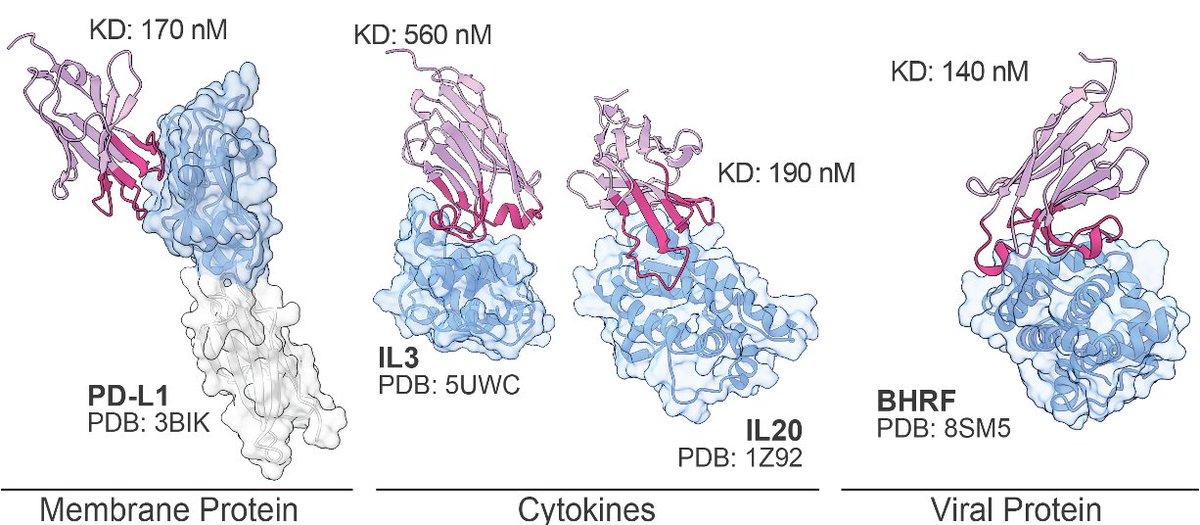
The ability to design antibodies against any protein of interest has major implications for medicine, biotech, and basic science. Today, we introduce Germinal, a pipeline for epitope-targeted de novo antibody design achieving  4–22% success rates with efficient experimental validation.
Santiago Mille tweet media
English
23
156
761
129.9K
Michael Kosicki retweetet
Anshul Kundaje
Anshul Kundaje@anshulkundaje·
New faculty position opening @Stanford_ChEMH. Especially interested in candidates with deep expertise and vision for the future of AI/ML/computational models of biomolecules. Please RT
Polly Fordyce@fordycelab

Please apply to our tenure-track faculty position at @Stanford_ChEMH! We are searching for a new colleague working at the interface between computation and molecular sciences. See post below and pls forward widely! chemh.stanford.edu/opportunities/…


English
1
12
44
12.7K
Michael Kosicki retweetet
Isha Jain
Isha Jain@ishahjain·
🚨Exciting opportunity! (In addition to post-doc openings), we’re hiring an In Vivo Research Scientist w/ @genophoria (Hani Goodarzi's Lab) @arcinstitute (Palo Alto): shorturl.at/zqW9l Experience with advanced in vivo work preferred (survival surgeries, etc.).
English
1
43
142
15.3K
Michael Kosicki retweetet
Developmental Cell
Developmental Cell@Dev_Cell·
Online now: Efficient stem cell-derived mouse embryo models for environmental studies dlvr.it/TMl3LF
English
0
5
41
4.2K
Michael Kosicki retweetet
Alissa Greenwald
Alissa Greenwald@alissacg·
I'm thrilled to share that I'll be starting my lab (greenwald-lab.org) at the Lunenfeld-Tanenbaum Research Institute @SinaiHealth and joining @MoGen_Grad at the University of Toronto as an assistant professor this fall. 1/
English
10
11
52
4.4K
Michael Kosicki retweetet
Anshul Kundaje
Anshul Kundaje@anshulkundaje·
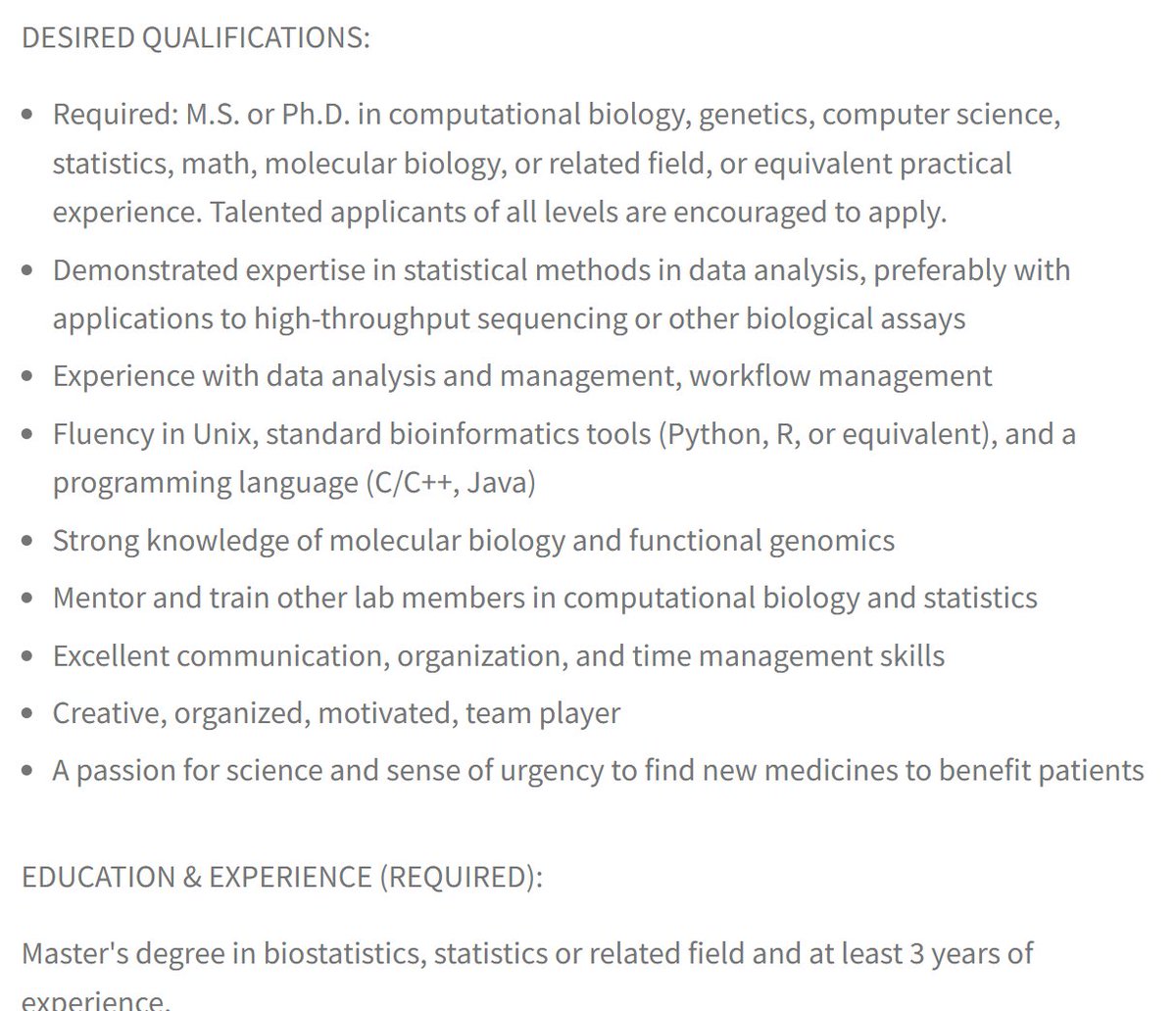
@jengreitz & I are looking to hire a computational biologist/biostatistician with project management expertise to collaborate with our teams to map the regulatory code of the human genome and discover genetic mechanisms of disease. Details below careersearch.stanford.edu/jobs/computati… Plz RT
Anshul Kundaje tweet mediaAnshul Kundaje tweet media
English
1
16
22
4.3K
Michael Kosicki retweetet
Society for Developmental Biology
✨Not a rainbow trout… a rainbow zebrafish 🌈 🐟 The expression of 10 different genes simultaneously including Hox genes along the body axis, somites, brain regions, skeletal muscle, and heart 🔬Video by Alice Sherrard, Gabby Jerz & Nipam Patel 🧪 #FluorescenceFriday
English
0
17
76
3.1K
Michael Kosicki retweetet
Peter Sudmant
Peter Sudmant@psudmant·
The Sudmant lab at UC Berkeley is seeking a postdoc to work on a fully funded NIH project to understand differences in DNA repair and somatic mutation across the primate tree of life. Please spread widely to those who may be interested aprecruit.berkeley.edu/JPF05052
English
0
19
39
8K
Michael Kosicki
Michael Kosicki@michaelkosicki·
@SashaGusevPosts @markmccarthyoxf While it's a problem for modeling complex diseases, I wouldn't demonize it - physicians (and patients) often need to make a fairly binary decisions. It's complicated and of unknown utility to e.g. take statins proportional to your PRS. For now.
English
0
0
0
37
Sasha Gusev
Sasha Gusev@SashaGusevPosts·
@markmccarthyoxf Yes, a much more common problem than I would have ever expected. And something that has to get solved as we develop more and more integrative/multifactorial predictive models.
English
1
0
2
325
Sasha Gusev
Sasha Gusev@SashaGusevPosts·
I wrote about how genetic risk works in the context of embryo selection and how people often think about it all wrong. A short 🧵:
Sasha Gusev tweet media
English
9
38
216
46.8K
Michael Kosicki retweetet
Xiaoyu Chen
Xiaoyu Chen@XiaoyuChenxy·
I am thrilled to share that I will be starting my lab in the Center for Pediatric Neurological Disease Research (CPNDR) at St. Jude Children’s Research Hospital as a faculty member @StJude @StJudeResearch. Deeply grateful for the incredible mentorship, support and camaraderie in the @Sergiu_P_Pasca lab. In this next chapter at St. Jude, the Chen lab is hiring postdoctoral research associates and welcomes visiting students and scholars to join us!!! Our lab aims to accelerate therapeutic development for brain disorders, leveraging human (stem cell)-derived models and gene targeting tools. Research themes: - How do genetic variants contribute to pediatric neurological disease at the molecular, cellular, circuit and organismal levels? - How can we push the boundaries of human-derived models to tackle disease (e.g., benchmarking 3D culture and high throughput drug discovery)? Interested? Reach out for collaborations or apply for postdoc positions 👇: talent.stjude.org/careers/jobs/J… Postdoc Benefits (including a 7% 403b match): stjude.org/education-trai… #postdoc #organoids #Neuroscience
English
21
13
160
17.6K
Michael Kosicki retweetet
Niko McCarty.
Niko McCarty.@NikoMcCarty·
This paper is really elegant and beautiful. Researchers took a vesicle, filled it with a single type of enzyme and some protein pores, and showed that this "minimal cell," made from just three components (!!), could "actively propel itself toward an enzyme substrate gradient." Here are some more details on what they did and why this is so cool. First, they encapsuled one enzyme (either urease or glucose oxidase) into the vesicle. They also included some pore proteins (α-hemolysin) to allow molecules to freely diffuse into, and out of, the vesicles. Next, these loaded vesicles were put in a microfluidic chamber with a substrate gradient (either glucose or urea) and watched under a microscope. Vesicles without any pores drifted around aimlessly. But, oddly enough, the vesicles carrying a single enzyme and some pores were able to actively move up the substrate gradient. The vesicles loaded with urease, for example, moved 0.3 µm/s up the gradient. (They did not move whatsoever in the y-direction.) This is really surprising to me because these vesicles have no flagellum or energy source. Indeed, they don't have any obvious mechanism to move whatsoever! All they have is this one enzyme and some pores poked in the vesicle's membrane. The researchers, appropriately, tried to explain how these vesicles move in the paper. Here's what they think is going on. When you drop a vesicle into a chemical gradient, there is a different concentration of molecules on each side. One side of the vesicle is "exposed" to a higher concentration of, say, urea than the other side. These molecules bump into the vesicle and tug on it, but generally the effects are random and small. But now, if you add an enzyme and a pore to that vesicle, it isn't passive anymore. Substrates are diffusing into the vesicle, and then the enzyme inside is transforming them and spitting out new products. These new "products" build up inside the vesicle and need to escape through the pores. This gradually sets up a tiny imbalance in chemical concentrations around the vesicle, which is enough for the vesicle to basically recoil from its own "exhaust pipe." Note that this effect is REALLY different for different enzymes. Urease triggered the fastest movements, whereas other enzymes led to much smaller effects. It all depends on how quickly the enzyme makes products, what those products are, how many pores are in the vesicle, and so on. There are a lot of variables. But still, the researchers ran LOTS of control experiments for this paper just to be sure this wasn't a fluke. They watched and recorded "empty vesicles, empty vesicles with pores..." and other controls, too. None of them had any "appreciable difference in drift." The movements were "only observed when vesicles incorporate both an encapsulated enzyme and functional pores." I really like this paper (and all its math equations), because it shows just how complicated it can be to understand even a super simple biochemical system; in this case, a system made of little more than a vesicle, an enzyme, and a pore.
Niko McCarty. tweet mediaNiko McCarty. tweet mediaNiko McCarty. tweet media
English
13
108
606
40.2K
Michael Kosicki retweetet
Asimov Press
Asimov Press@AsimovPress·
Our Issue 07 launch party in San Francisco was a smashing success. 🏏 Thanks to everyone who came and played Biology Trivia. Winning teams got copies of our DNA books, hats, and posters. It was a really fun time! See you in the fall, in Boston, for the next one. :)
Asimov Press tweet mediaAsimov Press tweet media
English
0
3
29
3K
Michael Kosicki retweetet
LomvardasLab
LomvardasLab@LomvardasLab·
nature.com/articles/s4158… Wow! 1,700 transgenic mice for the most comprehensive enhancer characterization ever. Leo and Axel never cease to amaze!
English
1
30
126
11.2K
Michael Kosicki retweetet
Erik Garrison
Erik Garrison@erikgarrison·
Postdoc position opening in my group! Research projects: pangenomes for diverse organisms, genome evolution, biocomputing, language models. Please reach out if interested!
English
3
37
74
6.1K