ReadingZone

19.2K posts

ReadingZone banner
ReadingZone

ReadingZone

@readingzone

All about children's & YA books for teachers, parent & librarians!📚 Sharing teacher reviews, extracts, author interviews. #kidlit #rfp 📧: [email protected]

UK Beigetreten Mayıs 2009
6.7K Folgt10K Follower
ReadingZone retweetet
Give A Shit About Nature
Give A Shit About Nature@giveashitnature·
Farmers have figured out that the cheapest pesticide is a strip of flowers. When you plant wildflowers through a crop field, not just around the edge but in strips running through the middle, you get ladybugs, lacewings, hoverflies, and parasitic wasps living in the field instead of visiting it. They eat the aphids, the caterpillars, and the mites for free, all summer long. In controlled trials, fields with tailored flower strips had leaf-beetle numbers 40 to 50% lower and crop damage cut by around 60%, enough to drop below the threshold where spraying was even considered worth it. The flowers attract a standing army to our fields. We spent decades engineering chemicals to kill the insects eating the crop, when the insects that eat those insects would have worked for the price of seed.
Give A Shit About Nature tweet media
English
716
19.1K
63.8K
3.1M
ReadingZone retweetet
Ihtesham Ali
Ihtesham Ali@ihtesham2005·
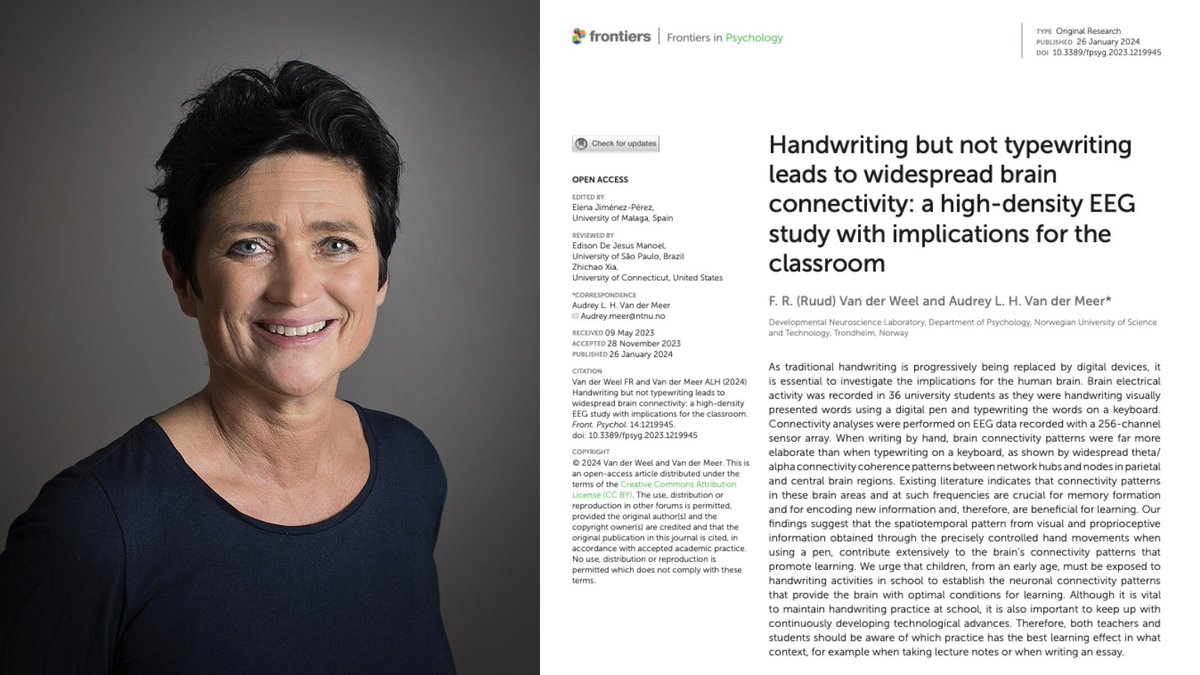
A Norwegian neuroscientist spent 20 years proving that the act of writing by hand changes the human brain in ways typing physically cannot, and almost nobody outside her field has read the paper. Her name is Audrey van der Meer. She runs a brain research lab in Trondheim, and the paper that closed the argument was published in 2024 in a journal called Frontiers in Psychology. The finding is brutal enough that it should have changed every classroom on Earth. The experiment was simple. She recruited 36 university students and put each one in a cap with 256 sensors pressed against their scalp to record brain activity. Words flashed on a screen one at a time. Sometimes the students wrote the word by hand on a touchscreen using a digital pen, and sometimes they typed the same word on a keyboard. Every neural response was recorded for the full five seconds the word stayed on screen. Then her team looked at the part of the data most researchers had ignored for years, which is how different parts of the brain were communicating with each other during the task. When the students wrote by hand, the brain lit up everywhere at once. The regions responsible for memory, sensory integration, and the encoding of new information were all firing together in a coordinated pattern that spread across the entire cortex. The whole network was awake and connected. When the same students typed the same word, that pattern collapsed almost completely. Most of the brain went quiet, and the connections between regions that had been alive seconds earlier were nowhere to be found on the EEG. Same word, same brain, same person, and two completely different neurological events. The reason turned out to be something nobody had really paid attention to before her work. Writing by hand is not one motion but a sequence of thousands of tiny micro-movements coordinated with your eyes in real time, where each letter is a different shape that requires the brain to solve a slightly different spatial problem. Your fingers, wrist, vision, and the parts of your brain that track position in space are all working together to produce one letter, then the next, then the next. Typing throws all of that away. Every key on a keyboard requires the exact same finger motion regardless of which letter you are pressing, which means the brain has almost nothing to integrate and almost no problem to solve. Van der Meer said it plainly in her interviews. Pressing the same key with the same finger over and over does not stimulate the brain in any meaningful way, and she pointed out something that should scare every parent who handed their kid an iPad. Children who learn to read and write on tablets often cannot tell letters like b and d apart, because they have never physically felt with their bodies what it takes to actually produce those letters on a page. A decade before her, two researchers at Princeton ran the same fight using a completely different method and ended up at the same answer. Pam Mueller and Daniel Oppenheimer tested 327 students across three experiments, where half took notes on laptops with the internet disabled and half took notes by hand, before testing everyone on what they actually understood from the lectures they had watched. The handwriting group won by a wide margin on every question that required real understanding rather than surface recall. The reason was hiding in the transcripts of what the two groups had actually written down. The laptop students typed almost word for word, capturing more total content but processing almost none of it as they went, while the handwriting students physically could not write fast enough to transcribe a lecture in real time, which forced them to listen carefully, decide what actually mattered, and put it in their own words on the page. That single act of choosing what to keep was the learning itself, and the keyboard had quietly skipped the choosing and skipped the learning along with it. Two studies. Two countries. Same answer. Handwriting makes the brain work. Typing lets it coast. Every note you have ever typed instead of written went into your brain through a thinner pipe. Every meeting, every book highlight, every idea you captured on your phone instead of on paper was processed at half depth. You did not forget those things because your memory is bad. You forgot them because typing never woke the part of the brain that would have made them stick. The fix is the thing your grandmother already knew. Pick up a pen. Write the thing down. The slower road is the faster one.
Ihtesham Ali tweet media
English
2.5K
44.7K
120.9K
10.3M
ReadingZone retweetet
Carl Hendrick
Carl Hendrick@C_Hendrick·
My sense is that the emergence of frontier AI has created 3 types of users right now which is effectively running a real-time social experiment in cognition: 1.) Group 1 (bootstrappers) - those who are using it to bootstrap their thinking and to learn as much as they can 2.) Group 2 (offloaders) - those who use it to avoid all thinking and yet are producing high quality outputs but learn absolutely nothing 3.) Group 3 is (business as usual) - those who more or less ignore it, or use it like a slightly better Google.
English
3
9
69
8.9K
ReadingZone retweetet
Barbara Band
Barbara Band@bcb567·
I've never understood how institutions that are in the business of teaching children to read and learn and acquire numerous skills and qualifications do not consider a library to be an essential part of this process.
Sue Williamson MBE@librarychampion

Did you know that in the UK, we spend £12 per capita on our public libraries, while the European average is £25 and in Finland, they spend £50 per capita? We insist that there are libraries in our prisons, but not in our schools and public libraries are constantly under threat.

English
0
13
27
1.3K
ReadingZone retweetet
Sama Hoole
Sama Hoole@SamaHoole·
Myth: "I only wear vegan fabrics. Better for the animals, better for the planet." Let's check in on Doris's annual contribution. Once a year, in late spring, Doris is sheared. The procedure takes approximately three minutes. Doris does not enjoy it. Doris does not, by any visible measure, suffer from it. Doris is, immediately afterwards, a noticeably more comfortable animal in the British summer. The fleece weighs approximately 3 kilograms. It is sold to the British Wool Marketing Board for, depending on the year, between £0.40 and £2.50 per kilogram. The shearing costs more than the wool fetches. Brian is shearing Doris at a loss. The wool is then: - Naturally flame-retardant - Naturally antibacterial - Moisture-wicking - Biodegradable - Renewable, annually - Carbon-storing while in use The replacement, in performance fabrics: - Polyester - Polyamide - Acrylic - Polypropylene - All petroleum-derived - All shedding microplastics on every wash - All requiring fossil fuel inputs to produce - All non-biodegradable, with a typical landfill lifespan of 200-500 years A single wash of a polyester fleece can release up to 700,000 microplastic fibres into the water system. These fibres are now in: every tested water source on earth, every tested human placenta, every tested rainfall sample, the deep ocean, the Arctic ice, and the lungs of marine mammals. A single wash of a wool jumper releases: nothing. The wool, when eventually disposed of, returns to soil within a few years. The fabric being marketed as the "ethical" alternative to wool is plastic. The plastic is "ethical" because nobody has been asked to slaughter the polymer. The polymer also has not been asked. Doris, by being a sheep on a fell, is producing the most thoroughly sustainable performance fabric humans have ever made. Brian is selling it at a loss. The fashion industry, meanwhile, is selling petroleum at a profit and calling it ethical. Reject plastic. Wear wool. Doris is, this morning, growing next year's batch.
Sama Hoole tweet media
English
272
3.3K
12K
183.6K
ReadingZone retweetet
Kenechi Udogu
Kenechi Udogu@KenechiUdogu·
Augmented has won the People's Book Prize in the Children's Literature Category! What a way to start the month! Exceptionally happy as this is an award voted for by the public. Thanks to the team, and congratulations to all the other winners! peoplesbookprize.com/https://people… @FaberBooks
Kenechi Udogu tweet media
English
6
8
24
893
ReadingZone retweetet
Camus
Camus@newstart_2024·
This MRI study on young kids just exposed something terrifying: They scanned the brains of 60 children aged 3–5 — including 5-year-old Rose — and found interactive screen time is causing measurable loss of white matter in their developing brains. Even just 2 hours a day is linked to impaired neural connectivity, language, and literacy development. Professor Mike Nagel (neuroscientist and father) said his first reaction was simply: “Wow… I was not anticipating seeing anything like that.” We’re physically changing children’s brains before they even start school — and the damage is visible on scans. This one actually unsettled me. I’ve always suspected too much screen time was bad, but seeing real white matter loss in toddlers hits different. Parents of little ones — has this kind of research changed how much screen time you allow?
English
586
9.5K
28.4K
10.1M
ReadingZone
ReadingZone@readingzone·
What a wonderful range of children's and YA books shortlisted for this year's @BranfordBoase Award 2026. The award celebrates strong debut writers and their editors. These are new writers to watch out for! readingzone.com/news/branford-…
ReadingZone tweet media
English
2
3
11
139
ReadingZone
ReadingZone@readingzone·
Author Sophie Anderson talks to @ReadingZone about The House with Chicken Legs Runs Away, the sequel to her international bestseller @Usborne "The characters from The House with Chicken Legs have stayed with me - I've thought about them often." ▶️ readingzone.com/authors/sophie…
ReadingZone tweet media
English
0
6
17
738
ReadingZone
ReadingZone@readingzone·
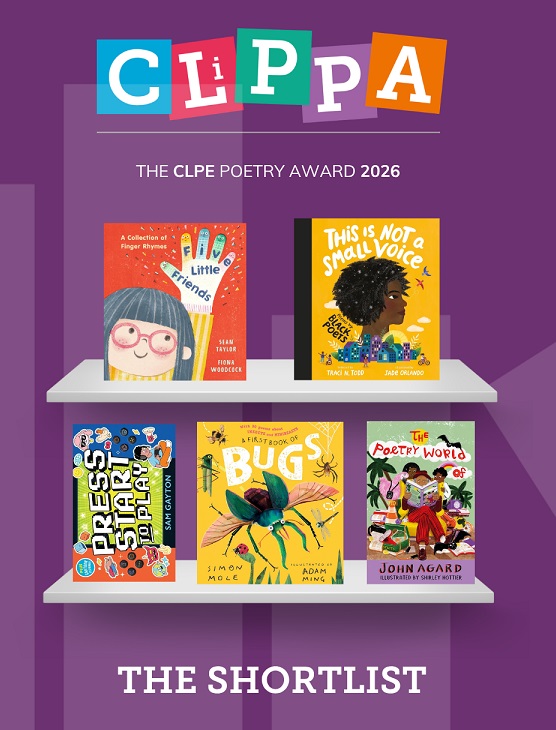
The #CLiPPA26 poetry award shortlist is announced - and @ReadingZone has a set of shortlisted books to give away! ➡️RT & share to enter the draw. ➡️Ends 5pm today! ➡️Inspire a love of poetry - take part in the CLiPPA Shadowing Scheme: readingzone.com/news/clippa-po…
ReadingZone tweet mediaReadingZone tweet media
English
2
7
7
330