Angehefteter Tweet

【AIと生きる時代の〈理解〉考】
第1回:LLMは理解しているのか?rmaruy.hatenablog.com/entry/2026/02/…
...見切り発車で始めた連載の第1回です。改めて「LLMは理解しているのだろうか?」という問いを取り上げ、生成AIブームの前後の議論をもとに考えてみました。
#AIと生きる時代の理解考
日本語
R. Maruyama
13.1K posts

@rmaruy
丸山隆一 / "metascience communicator" *2026年2月刊行*『現代社会を生きるための AI×哲学』(谷口忠大・鈴木貴之・丸山隆一) Thinking about conceptual issues around “understanding.”
In English: Zhuge, Schmidhuber et al. propose "Neural Computers": what if the model itself is the computer? I found the paper very exciting and wrote up some non-technical, quasi-philosophical thoughts on it. @rmaruy3/can-code-symbol-systems-emerge-inside-a-single-neural-network-9e6f788a0fb4" target="_blank" rel="nofollow noopener">medium.com/@rmaruy3/can-c…
🫱 Introducing 𝐍𝐞𝐮𝐫𝐚𝐥 𝐂𝐨𝐦𝐩𝐮𝐭𝐞𝐫s: 𝐰𝐡𝐚𝐭 𝐢𝐟 𝐀𝐈 𝐝𝐨𝐞𝐬 𝐧𝐨𝐭 𝐣𝐮𝐬𝐭 𝐮𝐬𝐞 𝐜𝐨𝐦𝐩𝐮𝐭𝐞𝐫𝐬 𝐛𝐞𝐭𝐭𝐞𝐫, 𝐛𝐮𝐭 𝐛𝐞𝐠𝐢𝐧𝐬 𝐭𝐨 𝐛𝐞𝐜𝐨𝐦𝐞 𝐭𝐡𝐞 𝐫𝐮𝐧𝐧𝐢𝐧𝐠 𝐜𝐨𝐦𝐩𝐮𝐭𝐞𝐫 𝐢𝐭𝐬𝐞𝐥𝐟? Beyond today's conventional computers, agents, and world models, Neural Computers (NCs) are new frontiers where computation, memory, and I/O move into a learned runtime state. We ask: whether parts of runtime can move inward into the learning system itself. This is our first step toward the Completely Neural Computer (CNC): a general-purpose neural computer with stable execution, explicit reprogramming, and durable capability reuse. Work done with Mingchen Zhuge (@MingchenZhuge), Changsheng Zhao, Haozhe Liu (@HaoZhe65347 ), Zijian Zhou (@ZijianZhou524 ), Shuming Liu (@shuming96 ), Wenyi Wang (@Wenyi_AI_Wang ), Ernie Chang (@erniecyc ), Gael Le Lan, Junjie Fei, Wenxuan Zhang, Zhipeng Cai (@cai_zhipeng ), Zechun Liu (@zechunliu ), Yunyang Xiong (@YoungXiong1 ), Yining Yang, Yuandong Tian (@tydsh ), Yangyang Shi, Vikas Chandra (@vikasc), Juergen Schmidhuber (@SchmidhuberAI)

一つのニューラルネットに符号と記号は創発しうるか?:Zhuge et al. 2026「Neural Computers」論文から考える - 重ね描き日記(rmaruy_blogあらため) rmaruy.hatenablog.com/entry/2026/04/… ... 数日前に出たNeural Computers論文が自身の #記号創発システム論 に絡む関心に強く響き、感想を書いてみました。
"Neural Computers"なる主張が強い論文が流れてきたので見てみると意外とMeta AIでまともそう...と思ったら最後に我らがシュミットフーバー! コンピュータの振る舞いをニューラルネットで再現して完全ニューラルコンピュータ(CNC)を目指し、新しいコンピュータパラダイムの確立を狙うという... World Model論文以来のなんともシュミットフーバーらしい野心的なアイディア。そして、論文の図にもシュミットフーバーみが出ている気がする。
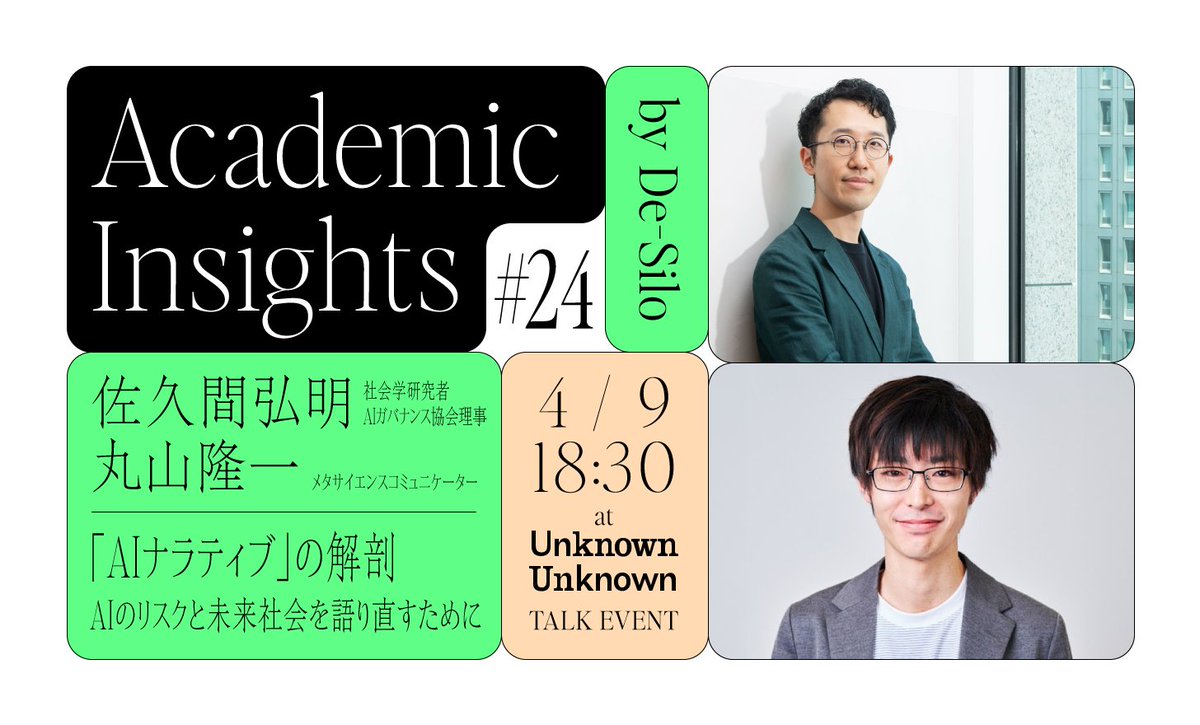



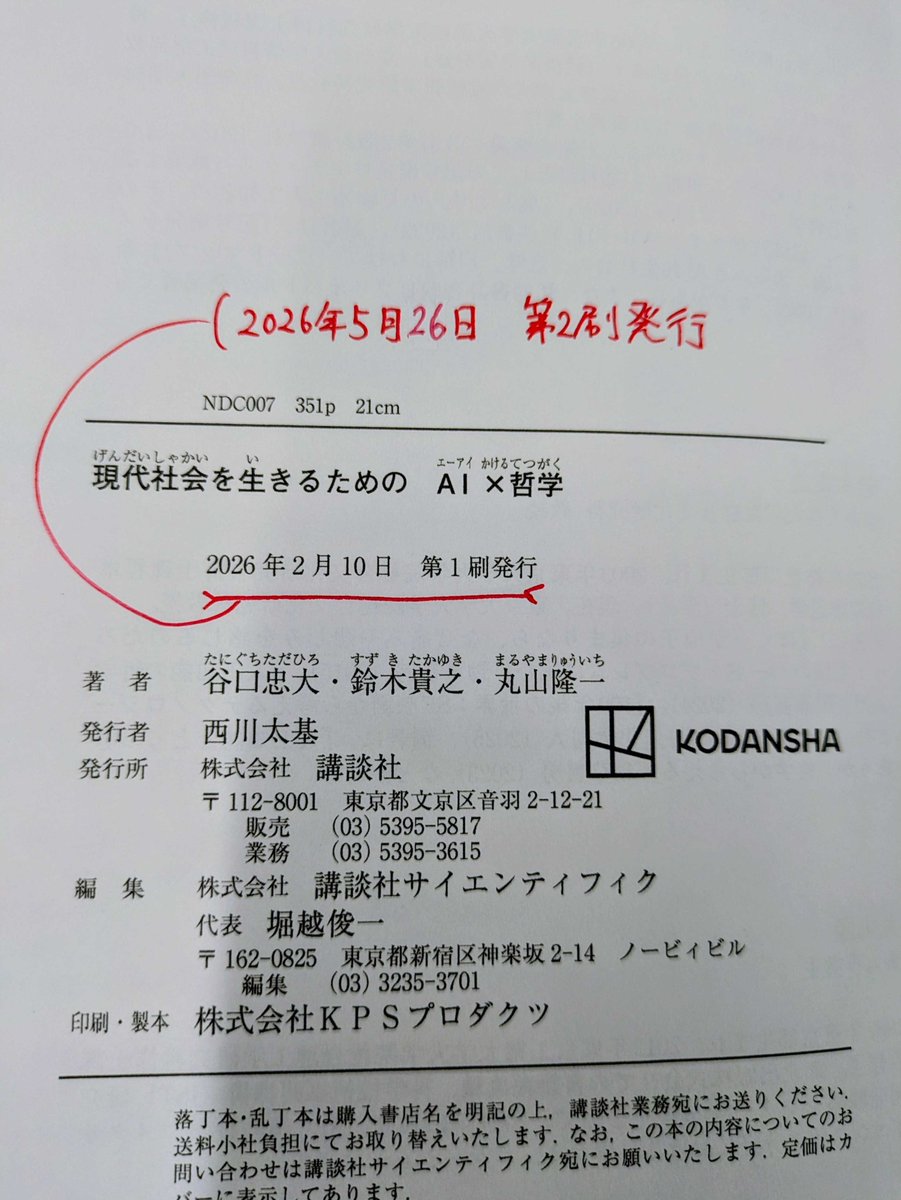
【🦸発売日迫る📣いよいよ来週】 \ 2026年2月10日(火)発売 📝/ 編集部に見本が到着しました‼️ 谷口忠大・鈴木貴之・丸山隆一 『現代社会を生きるための AI×哲学』 文系・理系といった枠を超え、現代社会を生きるすべての人に向けた羅針盤となる一冊です✨どうぞ、よろしくお願いいたします📣
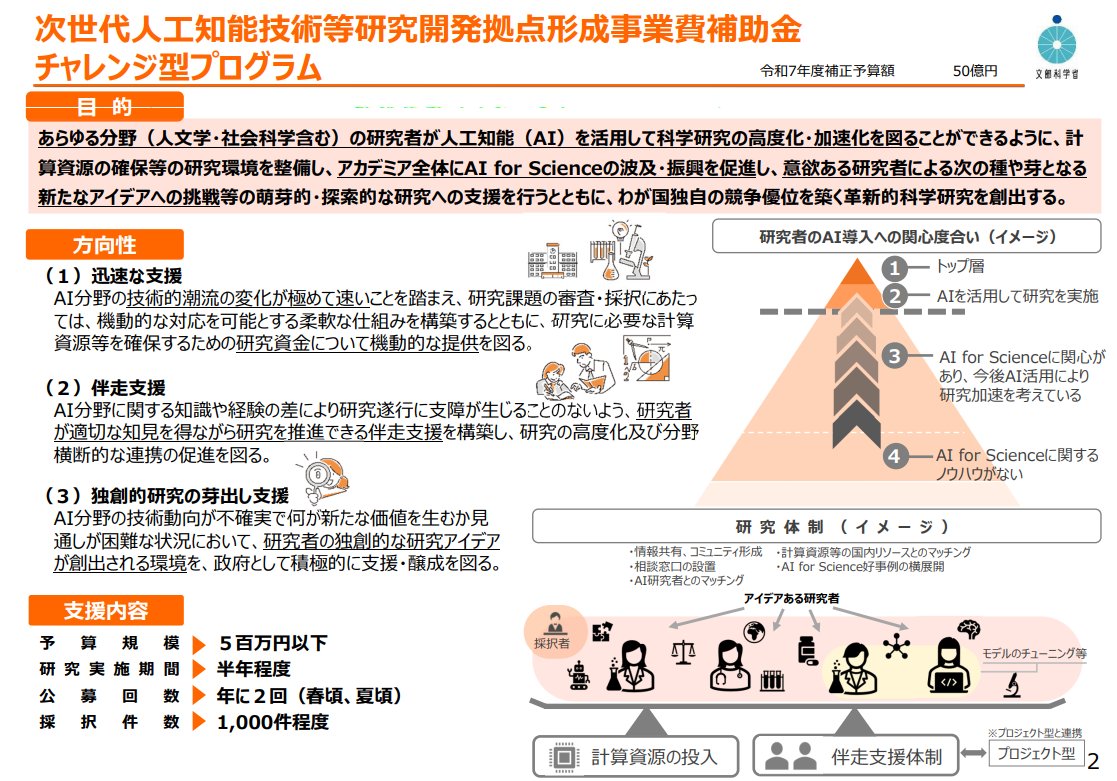
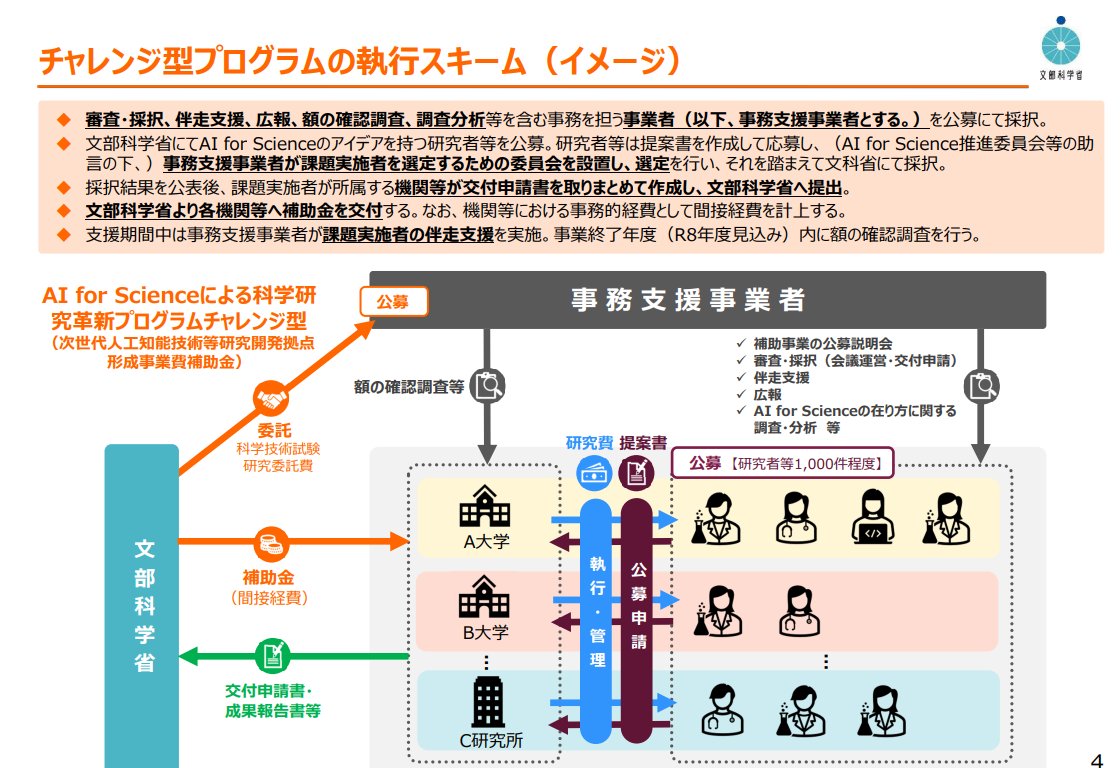
最大500万円×計1,000件! 文部科学省AI for Science 萌芽的挑戦研究創出事業(SPReAD 1000)。第1回公募は4/17(金)〜5/18(月)正午。1課題あたり最大500万円。人文、社会科学OK、学生OK。審査方法も挑戦的。
Really enjoyed chatting with @michael_nielsen about how we recognize scientific progress. It's especially relevant for closing the RL verification loop for scientific discovery. But it's also a surprisingly mysterious and elusive question when you look at the history of human science. We approach this question stories like Einstein (who claimed that he hadn't even heard of the famous Michelson-Morley experiment, which is supposed to have motivated special relativity, until after he had come up with the theory), Darwin (why did it take till 1859 to lay out an idea whose essence every farmer since antiquity must have observed?), Prout (how do you recognize that isotopes exist if you cannot chemically separate them?), and many others. The verification loop on scientific ideas is often extremely long and weirdly hostile. Ancient Athenians dismissed Aristarchus's heliocentrism in the 3rd century BC because it would imply that the stars should shift in the sky as the Earth orbits the sun. The first successful measurement of stellar parallax was in 1838. That's a 2,000-year verification loop. But clearly human science is able to make progress faster than raw experimental falsification/verification would imply, and in cases where experiments are very ambiguous. How? Michael has some very deep and provocative hypotheses about the nature of progress. One I found especially thought-provoking is that aliens will likely have a VERY different science + tech stack than us. Which contradicts the common sense picture of a linear tech tree that I was assuming. And has some interesting implications about how future civilizations might trade and cooperate with each other. So many other interesting ideas. Hope you enjoy this as much as I did. 0:00:00 – How scientific progress outpaces its verification loops 0:17:51 – Newton was the last of the magicians 0:23:26 – Why wasn’t natural selection obvious much earlier? 0:29:52 – Could gradient descent have discovered general relativity? 0:50:54 – Why aliens will have a different tech stack than us 1:15:26 – Are there infinitely many deep scientific principles left to discover? 1:26:25 – What drew Michael to quantum computing so early? 1:35:29 – Does science need a new way to assign credit? 1:43:57 – Prolificness versus depth 1:49:17 – What it takes to actually internalize what you learn Look up Dwarkesh Podcast on YouTube, Apple Podcasts, or Spotify.
📣CPC Spring Camp 2026のレポート公開📣 3/21~26日、滋賀県高浜市にて59名の研究者による学際的な研究合宿 #CPCCamp2026 が開催されました。 その模様を、詳しめにレポートしました。 sites.google.com/view/cpc-sprin…