Нереальный аспект кандибобера

62.6K posts

Нереальный аспект кандибобера banner
Нереальный аспект кандибобера

Нереальный аспект кандибобера

@theaspect

Велосипедист, сноубордист, программист, плечист и бородат

Beigetreten Aralık 2008
369 Folgt322 Follower
Сергей Аверьянов
С этими токенами все ещё наплачутся лет через 5, когда подсядут окончательно, а с живыми разработчиками будет примерно так, как сейчас с разработчиками на Коболе: новых, которые могут написать hello world без дорогой ИИ-няньки, нет, а старых мало и они просят много денег.
Paul@SwedPaul

Лицо вашего CEO в момент, когда он понял, что бюджет на AI токены больше, чем зарплаты людей, которых он уволил

Русский
18
7
290
17.9K
Малюта
Малюта@yadowit·
@theaspect @paladeltrabajo Китаю, КНДР, подобная идеология, работать только для себя, нисколько не мешает.
Русский
1
0
0
11
Armchair Warlord
Armchair Warlord@ArmchairW·
I'm endlessly amused by how the figures so oft-cited by Russophrenics on indoor plumbing in Russia are systematically skewed by the fact that tens of millions of Russians have rustic vacation cottages that are counted in the official statistics.
𝐃𝐚𝐯𝐢𝐝 𝐙 🇷🇺🇮🇪@SMO_VZ

The "DACHA" ! The Jewel of the Russian Countryside! Russia has approximately 18–20 million Dachas (or Dacha-style garden plots), making it the world’s largest such phenomenon. Recent estimates put the number of garden plots and seasonal homes at over 24 million, clustered in about 80,000 garden communities near major cities. More than 60 million Russians (roughly 40–50% of the population, especially urban families) own or have access to one—often shared among relatives. This figure has remained remarkably stable since the Soviet era, when millions received small “6 sotok” (600 m²) plots, with some growth from modern year-round homes. Since 2020, dachas and household plots (личные подсобные хозяйства) have continued to supply a vital, high-quality share of Russia’s fresh food, especially potatoes, vegetables, fruits, and berries. According to Rosstat data: Potatoes: Households produced around 50–60% of the national total annually. In 2025, they accounted for 11 million tonnes out of 19.5 million tonnes total (about 56%). Earlier years showed similar dominance (e.g., 60%+ in many seasons). Vegetables: Households contribute roughly half the open-field and fresh produce. In 2025, the organized (commercial) sector hit 7.6 million tonnes, with households adding another ~6–6.5 million tonnes—keeping Russia near 90% self-sufficiency overall. These figures have held steady or declined only slightly in share as large farms modernized, but the absolute volume from dachas remains enormous—often 10–12 million tonnes of potatoes and 6+ million tonnes of vegetables yearly. Much of this is consumed fresh by families or preserved for winter, providing unmatched freshness & nutrition. Sure sign of the overall Good health of the Population Quality, Benefits & Historic Relevance: Dacha-grown food stands out for its exceptional quality: homegrown produce is typically fresher, tastier, and richer in nutrients than store-bought equivalents. Families tend plots with care—often using minimal chemicals—yielding organic-style potatoes, tomatoes, cucumbers, berries, apples & herbs bursting with flavor. It’s food grown with love, eaten with pride, and shared generously among neighbors. The benefits to the Russian population are profound and multifaceted. Dachas promote physical health through gardening and fresh air, mental well-being via escape from urban stress & strong family bonds during weekends and summers. They bolster food security (especially during economic challenges), reduce grocery costs, and foster self-reliance—many families cover a large portion of their vegetable and potato needs. Socially, they build community: barbecues (шашлык), tea on the veranda & shared harvests strengthen ties across generations. Historically, dachas trace back to Peter the Great’s era (18th century), when “dacha” (from “to give”) meant land grants for loyal subjects. They evolved into elite retreats, then exploded in the Soviet period as vital survival tools—urban workers grew food on tiny plots during shortages. Post-1990s, they helped millions weather crisis. Today, they symbolize resilience, continuity, and Russia’s deep connection to the land—a living heritage blending practicality with joy. Their Colourful Beauty Russian dachas are a feast for the eyes: imagine clusters of charming wooden houses painted in vibrant hues—bright blues, sunny yellows, emerald greens, and cheerful reds—with ornate carved window frames (наличники) and contrasting shutters. Surrounding them are lush gardens overflowing with colorful flower beds (peonies, marigolds, roses), vegetable patches, fruit trees heavy with apples or cherries & berry bushes. Winding paths lead past berry-laden fences, while birch groves and meadows frame the scene. In summer, the air fills with the scent of blooming lilacs, fresh earth, and grilling shashlik. These modest yet picturesque settlements create a uniquely Russian pastoral idyll—humble, lively, and irresistibly inviting. >>

English
39
86
1.5K
54.8K
Herovych
Herovych@herovych·
@bald2b Последние вакансии прямо просят об уверенном умении использования ии агентов, техник, всей хуйни связанной с ии агентами для пром. разработки. Так что "ловить" на такие вопросы это уже признак дуркомата
Русский
1
0
58
3.2K
bald2b
bald2b@bald2b·
Коллега поделился лайфхаком как распознать ИИшника на собесе: даешь ему задачу на SQL высчитать моду и дисперсию, если сделает значит AI-агент, без вариантов
Русский
35
4
614
65.4K
Нереальный аспект кандибобера retweetet
Herovych
Herovych@herovych·
@mortalezz Пиздатые у вас татаров конечно развлечения
Русский
1
1
17
389
Малюта
Малюта@yadowit·
@paladeltrabajo СССР в том виде, в котором он был - и правда не нужен. Потому что он пытался за свой счёт осчастливить весь мир. Но на это никаких ресурсов не хватит, даже у такой мощной страны. СССР 2.0 должен быть другим и не содержать прорву дармоедов.
Русский
1
1
0
177
soy una pala
soy una pala@paladeltrabajo·
@crocrod4an Lo peor es que el muy infeliz cree que los que le dicen que su comunismo no sirve, no son rusos de verdad y que nos agentes pagos del mossad
Español
1
0
153
4.3K
East_Calling
East_Calling@East_Calling·
I can't believe this is still a thing... For the record, 90% of Russian households have indoor toilets. Russia's population is 75% urban and 25% rural. 35 to 50% of rural homes do not have a toilet in the main living area, but in a separate building. This toilet is almost always a functionally modern toilet, but it is connected to a septic tank or cesspool due to the fact that municipal plumbing is difficult in very cold areas that deal with permafrost and freezing pipes. My brother and his wife live in Alaska and clear 200k per year in income, and they have a septic tank and use well water. But nafos and western propagandists take the rural percentage, apply it to the whole country, and depict the statistic as meaning that half of the population is literally pooping in holes, because they are so poor and backward.
-- GEROMAN -- time will tell - 👀 --@GeromanAT

Arrogance and ignorance is the main reason for the fall of the Collective West.

English
89
147
2K
88.4K
Peter 🇬🇧
Peter 🇬🇧@pistolpeteukr·
@theaspect @East_Calling Yes. You will definitely be able to see russian orcs stealing toilet pans and washing machines from Ukrainian homes outside Kyiv in Feb/March/April 2022, never looting shops and houses and then sending it via Belarus to russia
English
1
0
0
301
Dmitry
Dmitry@dmitry_avdeev·
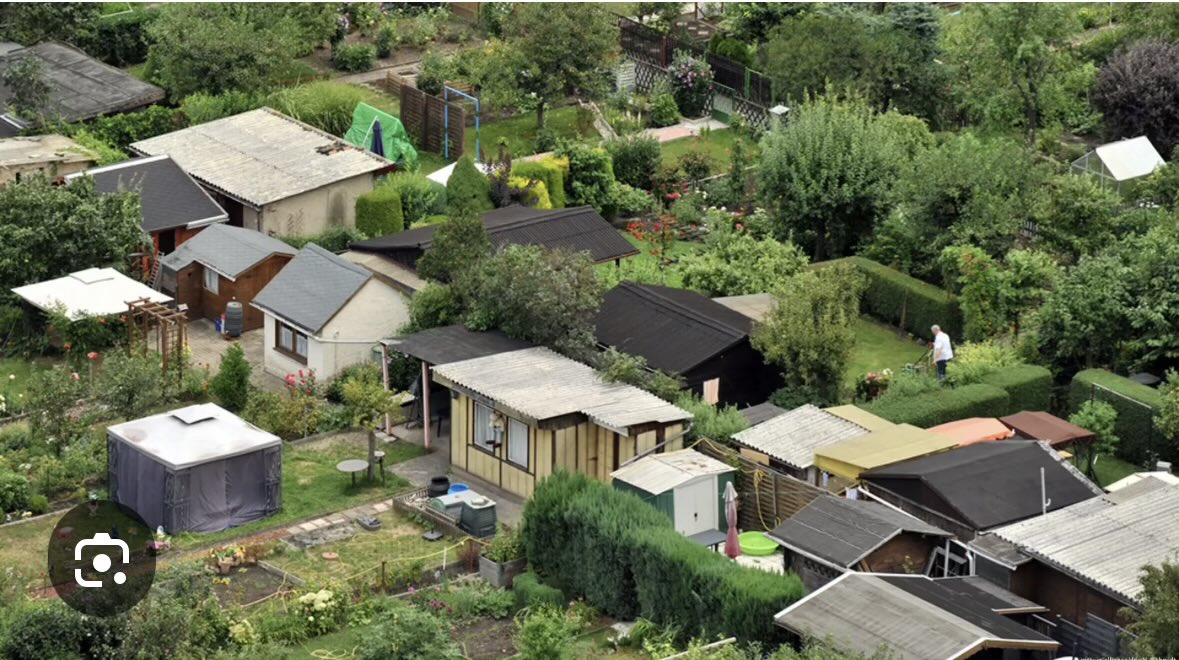
@ArmchairW This is how a typical German or British allotment/dacha looks like
Dmitry tweet media
English
3
0
41
2.8K
Нереальный аспект кандибобера retweetet
Devon Eriksen
Devon Eriksen@Devon_Eriksen_·
The Mailbox Test, like the breakfast test, is an excellent way to tell who you can allow to wield power in your society. Goes like this: If someone is hurt trying to destroy someone else's stuff in order to take pleasure from their pain, do you sympathize with... The aggressor because he got hurt? Or with the guy who owns the stuff, because he wasn't the aggressor? You can have people in your society who fail the Mailbox Test. That's okay... they can work at hospices, or shelters for orphaned kittens, or something. But you cannot allow them to vote, or otherwise wield political power. Because if you do, they will open the gates of the city to the enemy. I am personally tired of everyone pretending that people who enjoy ruining things for random strangers are just kewt smol beans who are only aggressive because of all the complex socioeconomic factors and lack of resources. They knew someone would be hurt by what they did. They knew that someone had done literally nothing harmful to them. And those two ideas, in combination made them feel pleasure. And they went and did it. That is the sign of a rotten soul. Defending ourselves and our property is not just a right, it's a moral obligation. Otherwise, we just kick the can down the road for someone else to deal with, someone who may not be able to defend herself. I don't care if a vandal breaks his arms trying to destroy my stuff. Because I value my stuff more than a vandal's arms. And the fact that he tried to destroy somebody else's stuff shows that he, too, values his arms less than the opportunity to hurt somebody. We cannot allow such people inside the city, and we cannot give the keys to those who would open the gates for them.
Devon Eriksen tweet media
The Blessed Salt 🧂@theblessedsalt

This post is an excellent litmus test for understanding of just war theory. Despite the fact that I can see how effective this would be, I must oppose it because the damage it would do to my enemy (who bashes in my mailbox) would far outweigh the good of saving my mailbox. Its disproportionality is opposed by our duty in charity (and even justice) to watch out even for the good of our enemies. (Yes, by the way, I have had my mailbox bashed in by random vandals.)

English
448
2.4K
20.1K
753.2K
The Blessed Salt 🧂
The Blessed Salt 🧂@theblessedsalt·
This post is an excellent litmus test for understanding of just war theory. Despite the fact that I can see how effective this would be, I must oppose it because the damage it would do to my enemy (who bashes in my mailbox) would far outweigh the good of saving my mailbox. Its disproportionality is opposed by our duty in charity (and even justice) to watch out even for the good of our enemies. (Yes, by the way, I have had my mailbox bashed in by random vandals.)
My moms caregiver@mymomcare

People who have lived in the country understand this!

English
4.2K
208
4.7K
4M
Aspireachieve
Aspireachieve@Aspireachievee·
Why smart parents spend money on trips with their kids: // Thread //
Aspireachieve tweet media
English
11
128
935
360.8K
Нереальный аспект кандибобера retweetet
Pisolda
Pisolda@tabularasa31·
Зацените как я смешно пошутила над немцем
Pisolda tweet media
Русский
35
98
10.5K
161.5K
Leonard T. Bayard
Leonard T. Bayard@leonard_bayard·
@Handre annnnd you had to ruin a perfectly good post with AI slop and get muted to boot, bit of a waste...
Leonard T. Bayard tweet media
English
3
1
35
2K
Handre
Handre@Handre·
Soviet chandelier factories received production quotas measured in tons, not quality or function. Factory managers responded rationally to the incentive structure: they packed chandeliers with extra metal, concrete, and lead weights to hit their tonnage targets. The heavier the chandelier, the better their performance metrics looked to central planners in Moscow. Apartment dwellers across the USSR paid the price. Chandeliers weighing hundreds of pounds crashed through ceilings, destroying furniture and injuring families below. Reports from the 1970s and 1980s document dozens of ceiling collapses in Kiev, Leningrad, and Moscow as these industrial monstrosities proved too heavy for residential construction. Factory managers got their bonuses while citizens dodged falling light fixtures. The system worked exactly as designed. When you divorce production decisions from market prices and consumer preferences, you get perverse outcomes. Central planners measured success through crude metrics they could track from their desks, not through the satisfaction of end users. Factory managers optimized for the measurement system, not for making chandeliers that actually functioned as lighting. You see identical dynamics today wherever bureaucrats substitute their judgment for market mechanisms. Public school systems optimize for standardized test scores rather than education. Hospitals game Medicare reimbursement codes rather than focus on patient outcomes. Police departments chase arrest quotas rather than reducing crime. The Soviet chandelier problem lives on in every corner of the administrative state. The market solves the chandelier problem instantly through profit and loss. Customers refuse to buy chandeliers that destroy their homes, driving bad producers out of business and rewarding those who build functional products.
Handre tweet media
English
152
764
4.1K
416.2K