Dmitry

1.3K posts

Dmitry banner
Dmitry

Dmitry

@dmitry_avdeev

Mearsheimer / Yarvin / Gumilev were right

Dubai, United Arab Emirates Katılım Ocak 2015
370 Takip Edilen152 Takipçiler
Dmitry retweetledi
Dominic Cummings
Dominic Cummings@Dominic2306·
No, it stands for English civilisation winning. You stand for putting treacherous lawyers who collaborate with criminals in charge of lawfare against the SAS. A future regime will jail your mate Hermer and RICO through your network RETWEET IF AGREE
Keir Starmer@Keir_Starmer

St George’s flag stands for unity over hatred and decency over division. Those are the values I will always fight for. Some try to hijack our flag to spread hate, I reject their plastic patriotism. mirror.co.uk/news/politics/…

English
302
3.7K
11.7K
370.5K
Dmitry
Dmitry@dmitry_avdeev·
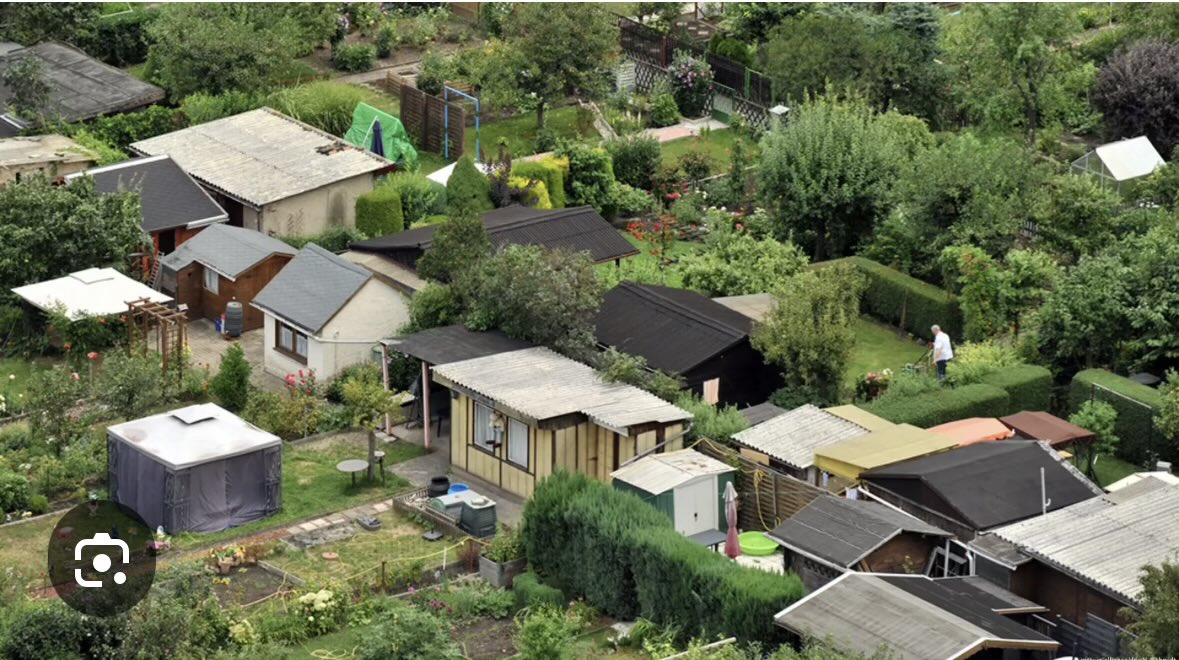
@ArmchairW This is how a typical German or British allotment/dacha looks like
Dmitry tweet media
English
3
0
43
2.9K
Armchair Warlord
Armchair Warlord@ArmchairW·
I'm endlessly amused by how the figures so oft-cited by Russophrenics on indoor plumbing in Russia are systematically skewed by the fact that tens of millions of Russians have rustic vacation cottages that are counted in the official statistics.
𝐃𝐚𝐯𝐢𝐝 𝐙 🇷🇺🇮🇪@SMO_VZ

The "DACHA" ! The Jewel of the Russian Countryside! Russia has approximately 18–20 million Dachas (or Dacha-style garden plots), making it the world’s largest such phenomenon. Recent estimates put the number of garden plots and seasonal homes at over 24 million, clustered in about 80,000 garden communities near major cities. More than 60 million Russians (roughly 40–50% of the population, especially urban families) own or have access to one—often shared among relatives. This figure has remained remarkably stable since the Soviet era, when millions received small “6 sotok” (600 m²) plots, with some growth from modern year-round homes. Since 2020, dachas and household plots (личные подсобные хозяйства) have continued to supply a vital, high-quality share of Russia’s fresh food, especially potatoes, vegetables, fruits, and berries. According to Rosstat data: Potatoes: Households produced around 50–60% of the national total annually. In 2025, they accounted for 11 million tonnes out of 19.5 million tonnes total (about 56%). Earlier years showed similar dominance (e.g., 60%+ in many seasons). Vegetables: Households contribute roughly half the open-field and fresh produce. In 2025, the organized (commercial) sector hit 7.6 million tonnes, with households adding another ~6–6.5 million tonnes—keeping Russia near 90% self-sufficiency overall. These figures have held steady or declined only slightly in share as large farms modernized, but the absolute volume from dachas remains enormous—often 10–12 million tonnes of potatoes and 6+ million tonnes of vegetables yearly. Much of this is consumed fresh by families or preserved for winter, providing unmatched freshness & nutrition. Sure sign of the overall Good health of the Population Quality, Benefits & Historic Relevance: Dacha-grown food stands out for its exceptional quality: homegrown produce is typically fresher, tastier, and richer in nutrients than store-bought equivalents. Families tend plots with care—often using minimal chemicals—yielding organic-style potatoes, tomatoes, cucumbers, berries, apples & herbs bursting with flavor. It’s food grown with love, eaten with pride, and shared generously among neighbors. The benefits to the Russian population are profound and multifaceted. Dachas promote physical health through gardening and fresh air, mental well-being via escape from urban stress & strong family bonds during weekends and summers. They bolster food security (especially during economic challenges), reduce grocery costs, and foster self-reliance—many families cover a large portion of their vegetable and potato needs. Socially, they build community: barbecues (шашлык), tea on the veranda & shared harvests strengthen ties across generations. Historically, dachas trace back to Peter the Great’s era (18th century), when “dacha” (from “to give”) meant land grants for loyal subjects. They evolved into elite retreats, then exploded in the Soviet period as vital survival tools—urban workers grew food on tiny plots during shortages. Post-1990s, they helped millions weather crisis. Today, they symbolize resilience, continuity, and Russia’s deep connection to the land—a living heritage blending practicality with joy. Their Colourful Beauty Russian dachas are a feast for the eyes: imagine clusters of charming wooden houses painted in vibrant hues—bright blues, sunny yellows, emerald greens, and cheerful reds—with ornate carved window frames (наличники) and contrasting shutters. Surrounding them are lush gardens overflowing with colorful flower beds (peonies, marigolds, roses), vegetable patches, fruit trees heavy with apples or cherries & berry bushes. Winding paths lead past berry-laden fences, while birch groves and meadows frame the scene. In summer, the air fills with the scent of blooming lilacs, fresh earth, and grilling shashlik. These modest yet picturesque settlements create a uniquely Russian pastoral idyll—humble, lively, and irresistibly inviting. >>

English
39
86
1.5K
55.9K
Dmitry retweetledi
Max
Max@minordissent·
UBI advocacy stems from the naïveté and solipsism that because *I* am a deeply creative latent producer who is oppressed by my wagee job and would actualize my creative potential if only i could have my basic needs met, this must be true for everyone. Its not. First of all, it’s not even true for these “creatives”. If you aren’t creation maxxing while waging, you wont do it under luxury communism either. Creative work is extremely taxxing and your wage job isn’t actually that hard. The problem is your neuroticism and lack of discipline, not your job. All your necessities being provided for will only make you weaker and gayer such that you’ll make up some new bullshit to get overwhelmed by and then cope by playing video games all day. But worse because you won’t even have “at least i did *something* productive today”, which will magnify your depression. Second, luxury communism already exists for the bottom 20% of the population. All their food, housing, etc is completely covered by the state. Entire generations of people who haven’t worked a job in their lives. Do they go on to produce beautiful art and build companies? Or do they go on to get high and kill each other? The truth is that we are close enough to UBI today that most of the people who will ever become great artists and inventors are already going to do it, and as we get closer all that will happen is the people incapable of anything more than wage slavery (most people) will simply become dysfunctional parasites.
Martin Erlić@SeloSlav

People are creative. Once their basic needs are covered, they’ll find new things to do with their time. There is no inherent meaning in the struggle to feed yourself or keep yourself and your family healthy. I genuinely don’t understand why so many people put slavery on a pedestal.

English
202
475
3.3K
366.3K
Sama Hoole
Sama Hoole@SamaHoole·
In 1946 the British government introduced free school milk for every child in the country. One third of a pint, every school day, from the age of five to the age of fifteen. The milk was whole. Full-fat. From British dairy herds. It was delivered to the school gate in small glass bottles with foil caps and left on the doorstep in metal crates, where it sat in the sun until morning break if the weather was warm and developed a slightly suspect taste that an entire generation of British adults can still describe with uncomfortable precision. The generation that grew up on school milk was, by every anthropometric measure, the healthiest generation of British children ever recorded. Average height increased. Bone density improved. Dental health, despite the sugar in everything else, improved. Iron deficiency rates among school-age children dropped. The growth charts that the Ministry of Health had been keeping since the war showed a consistent, measurable, year-on-year improvement that tracked precisely onto the introduction of the milk programme. In 1971 Margaret Thatcher, then Education Secretary, cut free school milk for children over seven. The tabloids called her Thatcher the Milk Snatcher. She was vilified. She kept the policy. The next generation of British children, the ones who grew up without the daily third of a pint, were measurably less healthy than the one before. The growth charts show it. The dental records show it. The conscription medicals, while they lasted, showed it. The thing the milk had been providing, the calcium, the vitamin D, the vitamin A, the complete amino acid profile, the conjugated linoleic acid, the fat-soluble nutrients that a growing skeleton requires in order to reach its genetic potential, was no longer arriving at morning break in a glass bottle with a foil cap. It was replaced, eventually, by nothing. Or by a carton of fruit juice. Or by a packet of crisps from the vending machine that appeared in the school corridor in the 1990s. The generation that drank the milk is now in its seventies and eighties. They are, on average, taller, stronger-boned, and longer-lived than the generation that came after them. The milk was not magic. The milk was milk. It was the thing the body needed, delivered at the time the body needed it, at a cost the government considered acceptable until it didn't. The cost of not providing it has been rather higher.
Sama Hoole tweet media
English
1.4K
4.6K
18.1K
1.6M
Dmitry
Dmitry@dmitry_avdeev·
@Sir_Digby_CS @BallouxFrancois Not getting robbed or having one’s house squattered is a service we use *almost daily without realising it.
English
1
0
1
13
Prof Francois Balloux
Prof Francois Balloux@BallouxFrancois·
If governments started taxing oligarchs in the places where they have a pied-à-terre, would it be devastating for local communities if they chose to leave, given that they hardly paid any tax before and generally contributed zilch, nada, niet to local communities ...
English
16
4
50
3.8K
Eduardo Gonçalves
Eduardo Gonçalves@dalton_laranjo·
@ShoahUkraine Não sei pra que foram invadir a urss país pobre sem nenhum atrativo, sem estrada , sem nada
Português
3
0
1
326
WW2 The Eastern Front
WW2 The Eastern Front@ShoahUkraine·
This is a Video of Alexanderplatz neighborhood in Berlin in 1935 .
English
10
56
576
26.7K
Dmitry
Dmitry@dmitry_avdeev·
@BallouxFrancois UK is one of the least safe countries for girls and women (up there with Sweden) and London is the capital of it. Where is the contradiction?
English
1
0
1
156
Prof Francois Balloux
Prof Francois Balloux@BallouxFrancois·
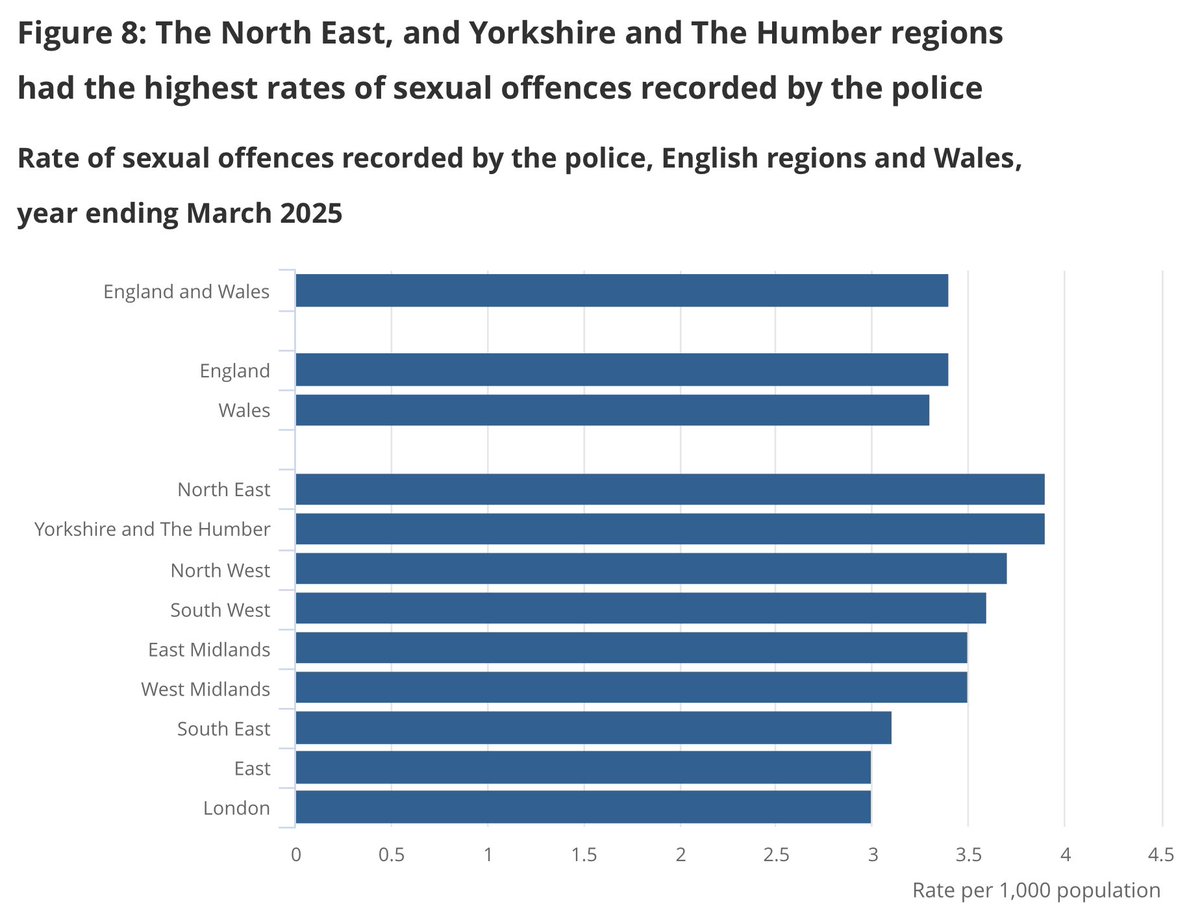
I recently posted that London was beautiful, cool and fairly safe. This was met by a torrent of outrage, with one recurrent theme being that London was the capital of rape. In fact, London has the lowest rate of sexual offences in England and Wales. Source: ons.gov.uk/peoplepopulati…
Prof Francois Balloux tweet media
Prof Francois Balloux@BallouxFrancois

I live in London, and I'm well travelled. London is one of the safest places I've ever been to. It is a beautiful, diverse and vibrant city and there's no 'no go' zone, absolutely none. Every bit of London, be it posh or poor, is remarkably safe by international standards.

English
67
177
843
42.5K
Dmitry retweetledi
Curtis Yarvin
Curtis Yarvin@curtis_yarvin·
We do have to live like this. It’s God’s punishment for our incredible, hilarious, arrogant and utterly ignorant belief that we have the best system of government in history. Like a beaten wife, conservatives never waver in the face of evidence. She has the best husband ever
Matt Van Swol@mattvanswol

🚨#BREAKING: The woman who was randomly shot in the face 6 times and st*bbed to de*th while she was walking her dog in Atlanta GA has been identified as 40-year-old Lauren Bullis. The suspect, “Olaolukitan Adon Abel” was also allegedly in the process of se*ually assaulting her before neighbors came to the scene. Olaolukitan is charged with 3 other "completely random" shootings and the de*th of another woman. We do not have to live like this.

English
85
191
2.1K
90.7K
Sprinter Press Agency
Sprinter Press Agency@SprinterPress·
Rush hour in the Tokyo Metro. Millions of views online.
English
19
29
215
35.3K
Goon
Goon@Oakely_Dokely·
@KingBobIIV Unless you are suggesting Magyar stood on a false platform, I am not sure why you would think this.
Goon tweet media
English
2
0
5
169
Dmitry
Dmitry@dmitry_avdeev·
@BallouxFrancois Except London has one of the highest rape incident rates worldwide
English
2
0
3
305
Dmitry
Dmitry@dmitry_avdeev·
@clim8resistance If solar and wind were indeed cheaper than gas they would not need CFDs, carbon taxes or subsidies. Nor would there be political parties basing their entire manifests on shoving renewables down consumers’ throats
English
0
0
1
23
Ben Pile
Ben Pile@clim8resistance·
So the 50% loss of energy in conversion from gas or coal is the price for power on demand. And it's still much cheaper than solar or wind power -- which isn't there at all for significant times.
English
2
3
44
1.2K
Ben Pile
Ben Pile@clim8resistance·
False. Though generation from heat seemingly decreases the efficiency in primary energy terms, generation from "renewables" is lower quality: it's not there when you need it. And it's not three times -- it's 2x in the case of the most advanced gas and coal generators. If you try to store the power, then it becomes less efficient, and hyper-expensive very quickly.
Mark Z. Jacobson@mzjacobson

The use of primary energy on the vertical axis is an old trick by the fossil fuel industry to mislead people into thinking that one unit of fossils = one unit of renewables. In fact, one unit of primary energy for wind or solar electricity is the equivalent of three units of fossil fuels for electricity. Another trick is to pretend we need all those fossils if we switched to renewables. In fact, if we switch to renewables, 12% of the fossil fuel energy disappears because that is how much energy is used to mine-transport-refine fossil fuels+uranium for energy, and we wouldn't need to do that anymore A third trick is to pretend we need so much energy if we go to all electricity powered by renewables. In that case, because EVs use 75% less energy than gasoline/diesel vehicles, heat pumps use 75% less energy than combustion heating, etc., energy demand goes down another 42%. In sum, this plot illustrates the real story of where we are and where we need to go. The proper metric is end-use energy, not primary energy. web.stanford.edu/group/efmh/jac… and here's the paper web.stanford.edu/group/efmh/jac…

English
5
8
60
2.7K
Dmitry
Dmitry@dmitry_avdeev·
@phl43 @AndrewSabisky Stalin was the least crazy senior bolshevik in the 1920s, for sure
English
0
0
1
523
Philippe Lemoine
Philippe Lemoine@phl43·
A fun fact about Soviet history, in light of the love of tankies for Stalin and their contempt for his successors, is that he thought insisting on a compressed pay scale was degenerate leftism and it's only after his death that Soviet authorities enforced wage egalitarianism.
max tempers@maxtempers

Seems remarkable but it's true: in terms of P90/P10 ratio, wage compression in the UK is similar to the USSR at its most compressed. Soviet min wage also peaked at ~60% median income, while we've just hit 66%. Social democracy has achieved greater egalitarianism than communism.

English
5
26
396
63.8K
Dmitry retweetledi
Matt Walsh
Matt Walsh@MattWalshBlog·
I am totally radicalized on the issue of criminal justice. We should increase executions by like a thousand percent. Bring back hard labor. Bring back corporal punishment. Bring back public lashings. Bring back public hangings. Our ancestors were right about all of that.
English
2.3K
6.8K
61.2K
1.4M
Dmitry retweetledi
Kristian Niemietz
Kristian Niemietz@K_Niemietz·
Crime has no social causes. Even if it's high-status to say it has. The best way to reduce crime is to arrest more criminals, and lock up more of them for longer.
English
8
6
97
2.4K