Udayan Umapathi
1.4K posts

Udayan Umapathi
@udayan2025
Founder and CEO @voltalabsinc to build bio-automation from the ground up. Before: experimental physics, design, art, electronics @medialab @CypressSemi.


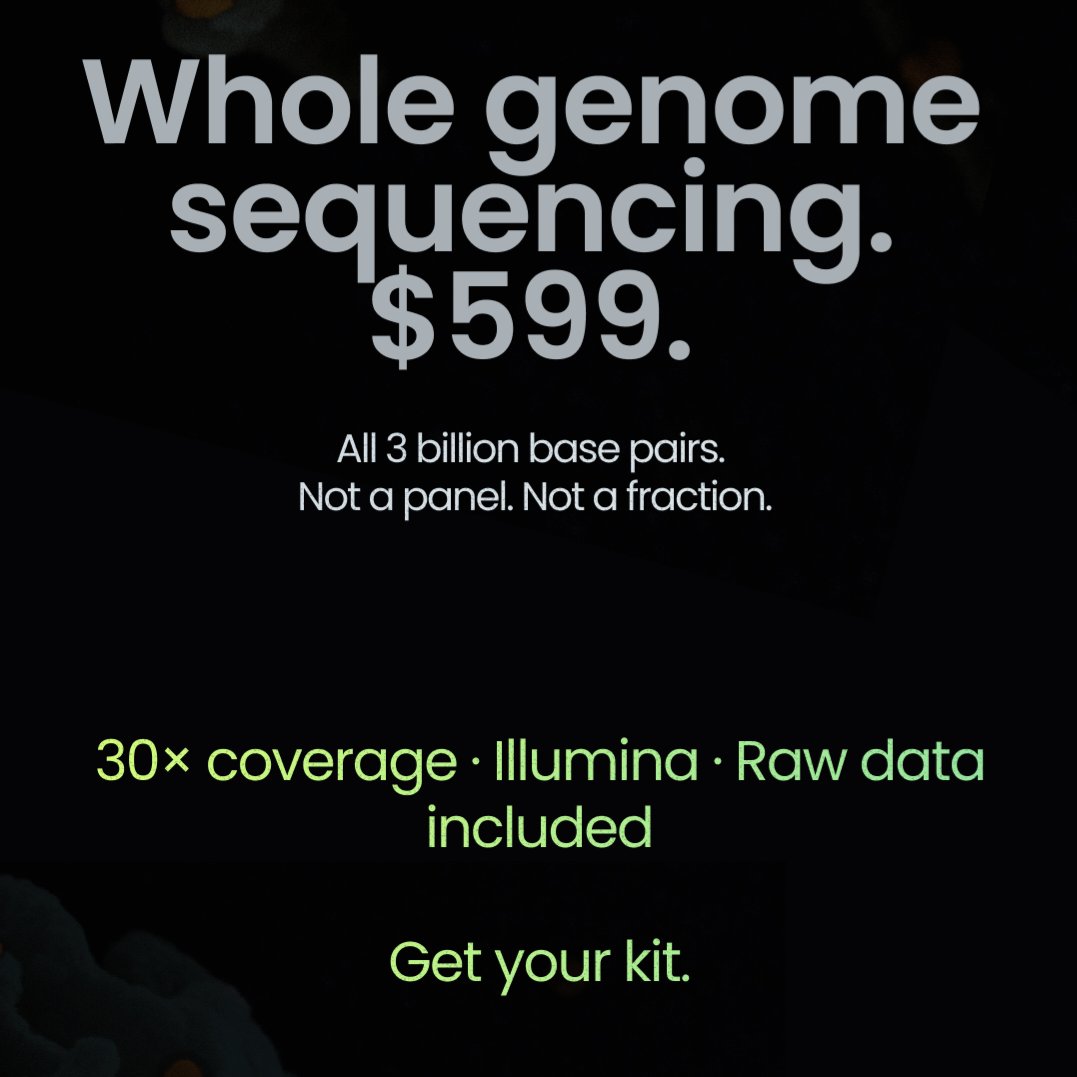
I'm lucky enough to have a great doctor and access to excellent Bay Area medical care. I've taken lots of standard screening tests over the years and have tried lots of "health tech" devices and tools. With all this said, by far the most useful preventative medical advice that I've ever received has come from unleashing coding agents on my genome, having them investigate my specific mutations, and having them recommend specific follow-on tests and treatments. Population averages are population averages, but we ourselves are not averages. For example, it turns out that I probably have a 30x(!) higher-than-average predisposition to melanoma. Fortunately, there are both specific supplements that help counteract the particular mutations I have, and of course I can significantly dial up my screening frequency. So, this is very useful to know. I don't know exactly how much the analysis cost, but probably less than $100. Sequencing my genome cost a few hundred dollars. (One often sees papers and articles claiming that models aren't very good at medical reasoning. These analyses are usually based on employing several-year-old models, which is a kind of ludicrous malpractice. It is true that you still have to carefully monitor the agents' reasoning, and they do on occasion jump to conclusions or skip steps, requiring some nudging and re-steering. But, overall, they are almost literally infinitely better for this kind of work than what one can otherwise obtain today.) There are still lots of questions about how this will diffuse and get adopted, but it seems very clear that medical practice is about to improve enormously. Exciting times!


"We really love that some of the complicated workflows that are not that easy to do by hand, can be fully automated in a walk away fashion with Callisto." – Stefan Green, Director of Core Laboratory Services and faculty advisor at @RushUniversity Medical Center. Stefan and his team are looking to the future with Callisto to expand their WES workflow capabilities and reduce hands-on time. 🔬 Curious what Callisto can do for your lab? Learn more: voltalabs.com/the-callisto-s… #Genomics #Automation #CoreLabs #NGS

Big win for science + design! 🚀 We're thrilled that Callisto has won the @reddot Award: Product Design 2025! 🏆 Proud of our team—and honored to be recognized among the world’s best in design innovation. 🔬 Discover how Callisto brings automation, precision & simplicity to your NGS workflow: voltalabs.com/the-callisto-s… #RedDotAward #NGS #Genomics #LabAutomation #DesignInnovation #Callisto


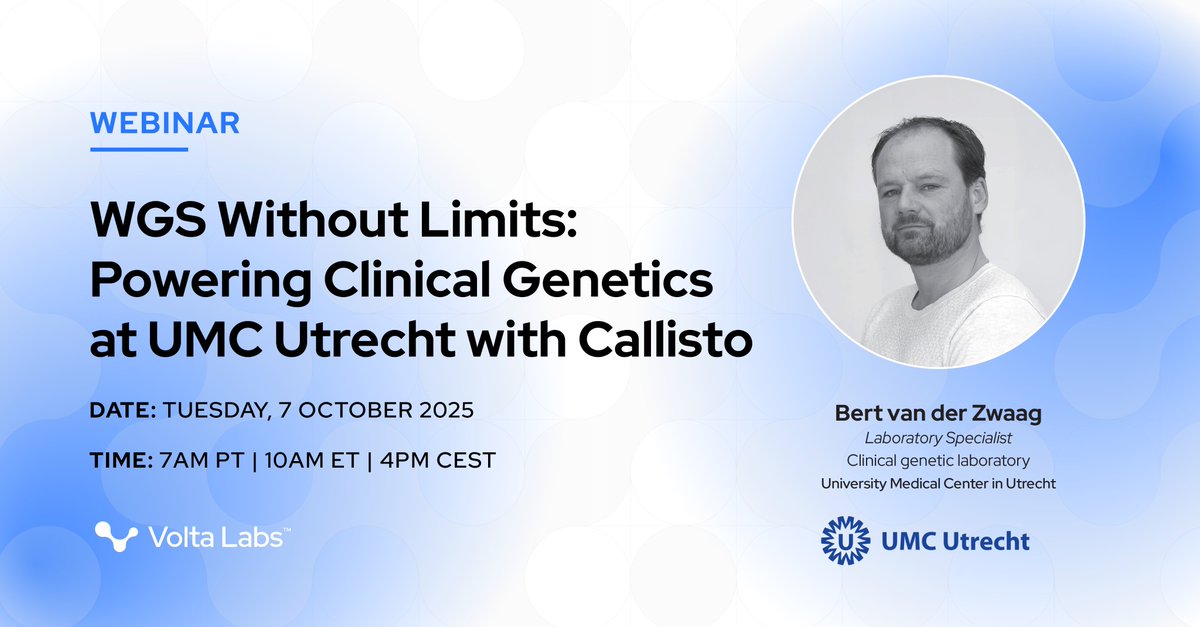
Hello from the Netherlands! 🇳🇱 Come along as our team installs multiple Callisto units in a high-throughput diagnostic environment at @UMCUtrecht, one of the largest public healthcare institutions in the Netherlands. We can’t wait to see Callisto power thousands of WGS-based prenatal and postnatal tests. Learn more about our partnership with UMC Utrecht: prnewswire.com/news-releases/… #VoltaLabs #Callisto #Genomics #UMCUtrecht #Biotechnology


The US is abandoning its scientific leadership at a time when China's research spending is approaching US levels arstechnica.com/science/2025/0…

Workflow


Biotech doesn’t face an early stage funding deficit. Huge LP commitments made in past few years, VC investing is &20-25B per year. More early stage companies isn’t necessarily a good thing (see scarcity blog). Not sure what the real problem is we’re trying to solve with an early stage focused EIF-like fund. If anything, the limiting factor in biotech (vs tech) is lack of late-stage private growth capital to allow biotechs to stay private longer at escalating valuations. We have had to push emerging biotechs public to access growth capital via IPOs/FOPOs. And the public mkts are very fickle and cyclical - creating turbulence. The bigger limiting factors in biotech (since it’s not capital) include: - experienced & savvy management talent - regulatory clarity & efficiency - competitive TTPs (not hyper crowded me-tops) - global pricing power (and less differential pricing in major mkts) - IP/exclusivity timeframes - strong basic research enterprise (without reproducibility issues) - to name a few…

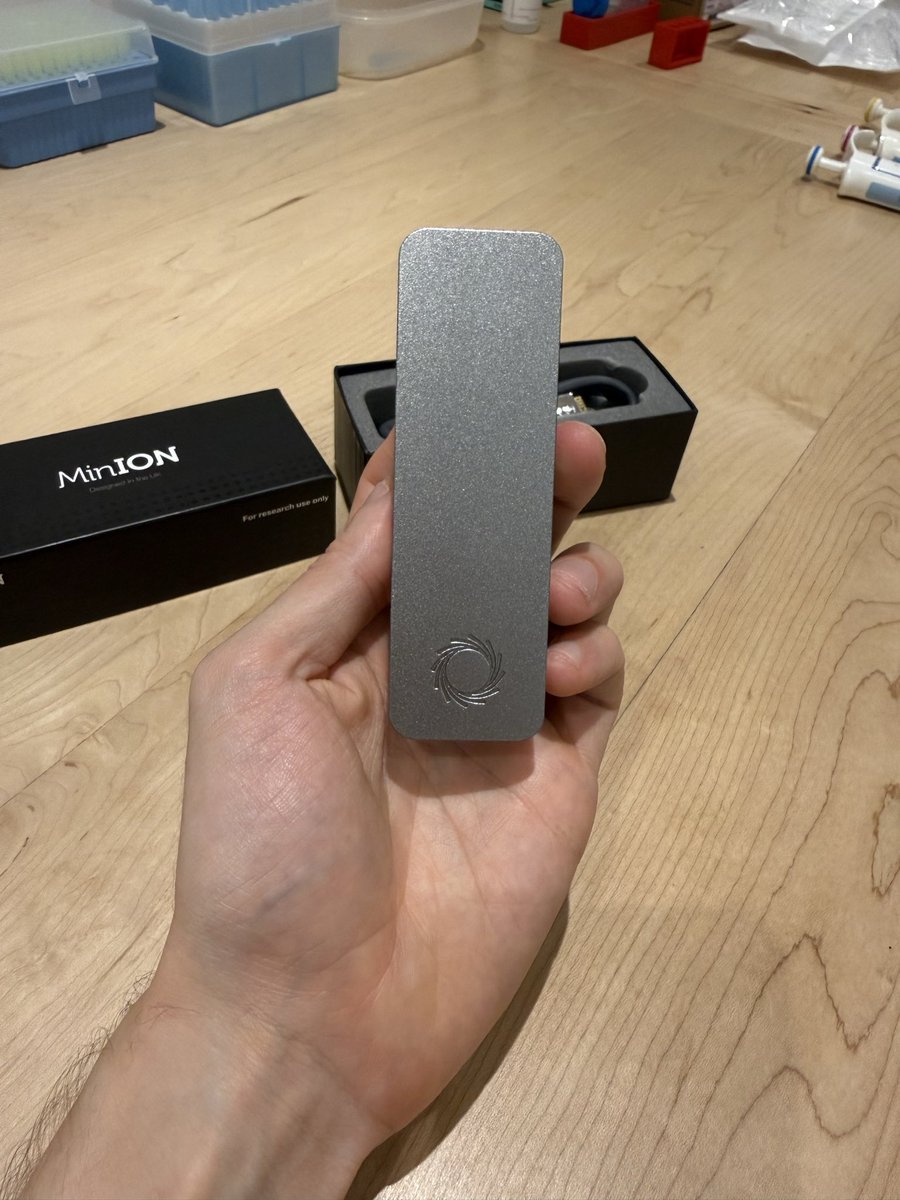
Extremely clever new NGS tech from Roche 🧬 If it's hard to discriminate between nucleic acids accurately with a nanopore, why not synthesize a new polymer off a DNA template that is easier to sequence? It's an intuitively simple idea, but took *a ton* of creative nucleic acid chemistry + enzyme engineering to design modified NTPs and create polymers of them. It's been very interesting to see Roche move into the NGS market, and time will tell how this stacks up with the growing set of totally orthogonal approaches people are cooking up for sequencing tech. It feels like we are entering another renaissance for biological measurement infrastructure—which is super important. “Progress depends on the interplay of techniques, discoveries, and ideas, probably in that order." - Sydney Brenner (These animations of sequencing tech will never get old to me. What a time to be a biologist!)