4intelligence

20K posts

4intelligence banner
4intelligence

4intelligence

@4intelligenceIA

Soluções estratégicas em economia e inteligência preditiva

Avenida Paulista, 1337 Joined Nisan 2017
1.4K Following10.1K Followers
4intelligence
4intelligence@4intelligenceIA·
A corrida presidencial de 2026 já começou — e o cenário está mudando rápido. Flávio Bolsonaro vai até o fim? Tarcísio está mesmo fora? A “terceira via” tem chance? Lula é favorito? Vamos discutir tudo isso no nosso webinar dia 26/02, às 10h. @7d9e02ea-7954-4806-be98-52607772498f" target="_blank" rel="nofollow noopener">events.teams.microsoft.com/event/5089f44c…
Português
0
0
0
174
4intelligence retweeted
Jesús Fernández-Villaverde
Jesús Fernández-Villaverde@JesusFerna7026·
Over the weekend, I wrapped up a new version of my paper “The Neoclassical Growth of China” with Lee Ohanian and Wen Yao: sas.upenn.edu/~jesusfv/Neocl… The main change from previous versions is that we thoroughly redid the analysis using PWT 11.0. This was important because it allowed us to extend the sample to 2023. The additional years are quite informative, although to our pleasant surprise, in full agreement with what the model in the previous version of the paper had predicted using data up to 2019. I include my favorite figure from the paper in this post, which compares China with other East Asian economies at similar income per capita levels. To do so, we identify the year in which each of China, Korea, and Taiwan reached Japan’s 1950 per capita income level; the earliest year available for Japan in PWT 11.0. Japan's income per capita in 1950 was $3,138 (2021 PPP dollars), matching China’s in 1995, Korea’s in 1972, and Taiwan’s in 1961. Also, this initial per capita income of $3,138 is close to the middle-income threshold ($3,000) used by many international institutions and statistical agencies. We then trace the evolution of GDP and investment for each economy from that point onward. What do we see? First, China’s growth since 1995 has been remarkably similar to that of other East Asian economies when they were at the same level of GDP per capita, even though the distance to the technological frontier (proxied by the U.S.) was larger for China than for other East Asian economies because China took off later. Second, the growth pattern of all East Asian countries is amazingly similar. Third, in this pattern, there is a clear slowdown in growth once a country gets to around two-thirds of U.S. income per capita. While China might depart from the growth pattern of other East Asian countries in the future, there is absolutely nothing in the growth data to suggest this has happened so far. We tried all the variations of the same figure one could imagine. Some are in the paper, some got “cut” from the draft. But the main point is sharp: China is different because of its population size, not because of its growth pattern. Personally, I also think this graph shows that the burden of proof lies with those who argue that China’s future growth will differ from that of other East Asian economies. With a total fertility rate of 0.93, my bet is that China’s growth future will not be that different from Japan’s present.
Jesús Fernández-Villaverde tweet media
English
34
103
478
79.6K
4intelligence retweeted
Jesús Fernández-Villaverde
Jesús Fernández-Villaverde@JesusFerna7026·
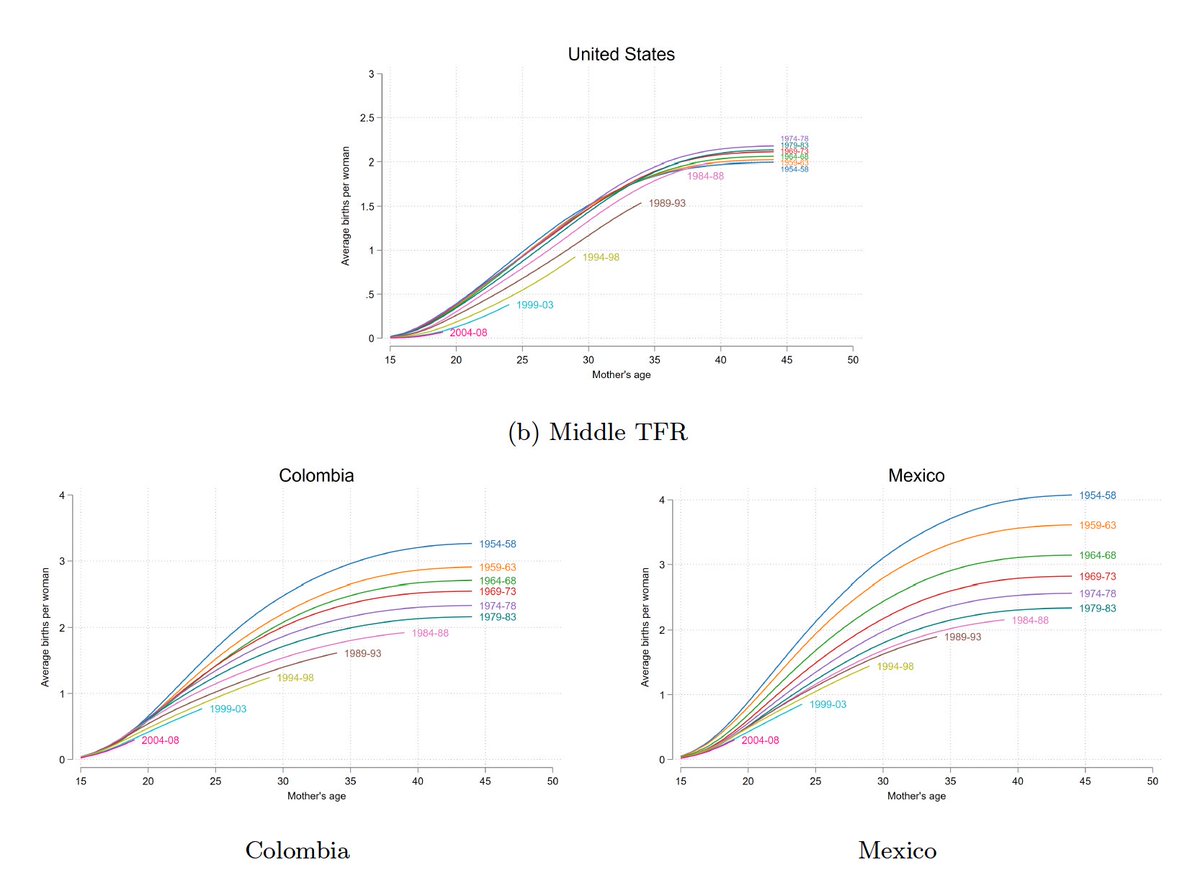
Few facts are more surprising than that, as of early 2026, Latin America has a lower fertility rate than the U.S., reversing a long-standing historical pattern. I was therefore very glad to see this morning a truly fascinating paper by Milagros Onofri, Inés Berniell (@InesBerniell), Raquel Fernández (@raquel1fernan), and Azul Menduiña on Latin America’s recent fertility decline at @nberpubs: Understanding Latin America’s Fertility Decline: Age, Education, and Cohort Dynamics nber.org/papers/w34749 I have not yet had time to fully digest all its findings, but I will be reading it repeatedly over the next few weeks. From a first reading, here are five key results (which align very well with some of my previous posts here on X): 1️⃣ The decline in period fertility between 2000 and 2022 is driven primarily by reductions in within-group birth rates, rather than by changes in population composition. 2️⃣ The largest contributions to the fertility reduction come from younger and less-educated women. 3️⃣ The decline in completed fertility reflects substantial reductions in the average number of children per woman. 4️⃣ This is driven primarily by lower fertility among mothers, rather than by rising childlessness. 5️⃣ There is currently a negative correlation between female labor force participation and the total fertility rate, suggesting that greater engagement of women in market work is not directly driving the fertility decline. Findings 2️⃣ and 5️⃣ contradict some of the overfacile explanations one often reads in the media (or in the comments section): the reduction in fertility in Latin America is not concentrated among “liberated,” highly educated women with jobs in the market. Finding 3️⃣ says the observed reduction in fertility is not mainly about timing. Yes, timing matters, but much less so than reductions in completed fertility. Finding 4️⃣ is interesting, and perhaps different from more advanced economies. My own conjectures (not the authors’!): 1️⃣ Their data end in 2022, since they need to rely on final consolidated sources. Everything I have seen in the provisional data for 2023–2025 fully supports their findings and perhaps even reinforces them. 2️⃣ By looking at the cohort level, I do not see much of a differential effect between cohorts with and without access to cell phones. Instead, I see a constant decline over time. To make this latter point, I include one of the figures from the paper, plotting, for several countries and five-year birth cohorts from 1954–1958 to 2004–2008, the cumulative average number of children a woman has had by each age. The only point where perhaps I diverge somewhat from the authors is in their more optimistic assessment of the WPP data than mine. But that is a very minor quibble. Otherwise, anyone interested in Latin America’s fertility should read this paper with utmost attention. This is social science research at its best.
Jesús Fernández-Villaverde tweet media
English
41
194
772
134.7K
4intelligence retweeted
Richard Baldwin
Richard Baldwin@BaldwinRE·
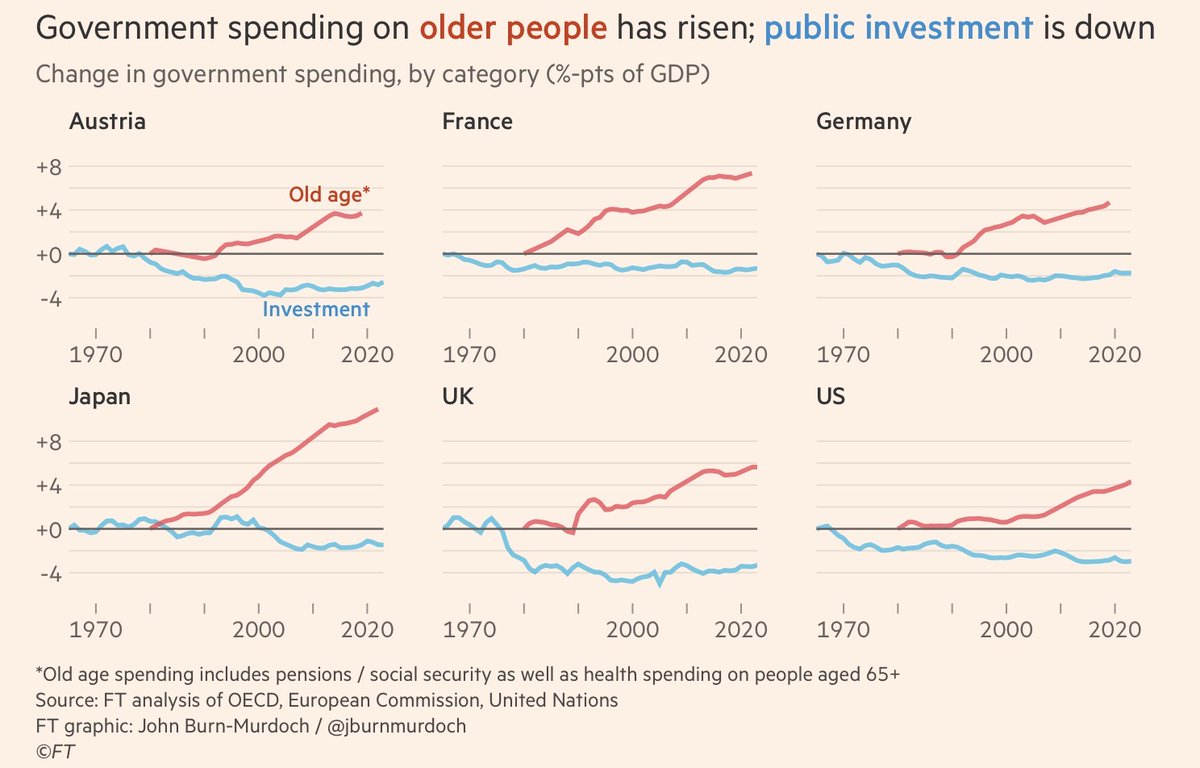
✍️ John Burn-Murdoch @ftopinion 👉”while Donald Trump is clearly a singularly disruptive figure, his rise is also symptomatic of much broader social and economic shifts — changed conditions that do not look set to reverse any time soon.”
Richard Baldwin tweet media
English
7
42
68
18.4K
4intelligence retweeted
Rajeev Mantri
Rajeev Mantri@RMantri·
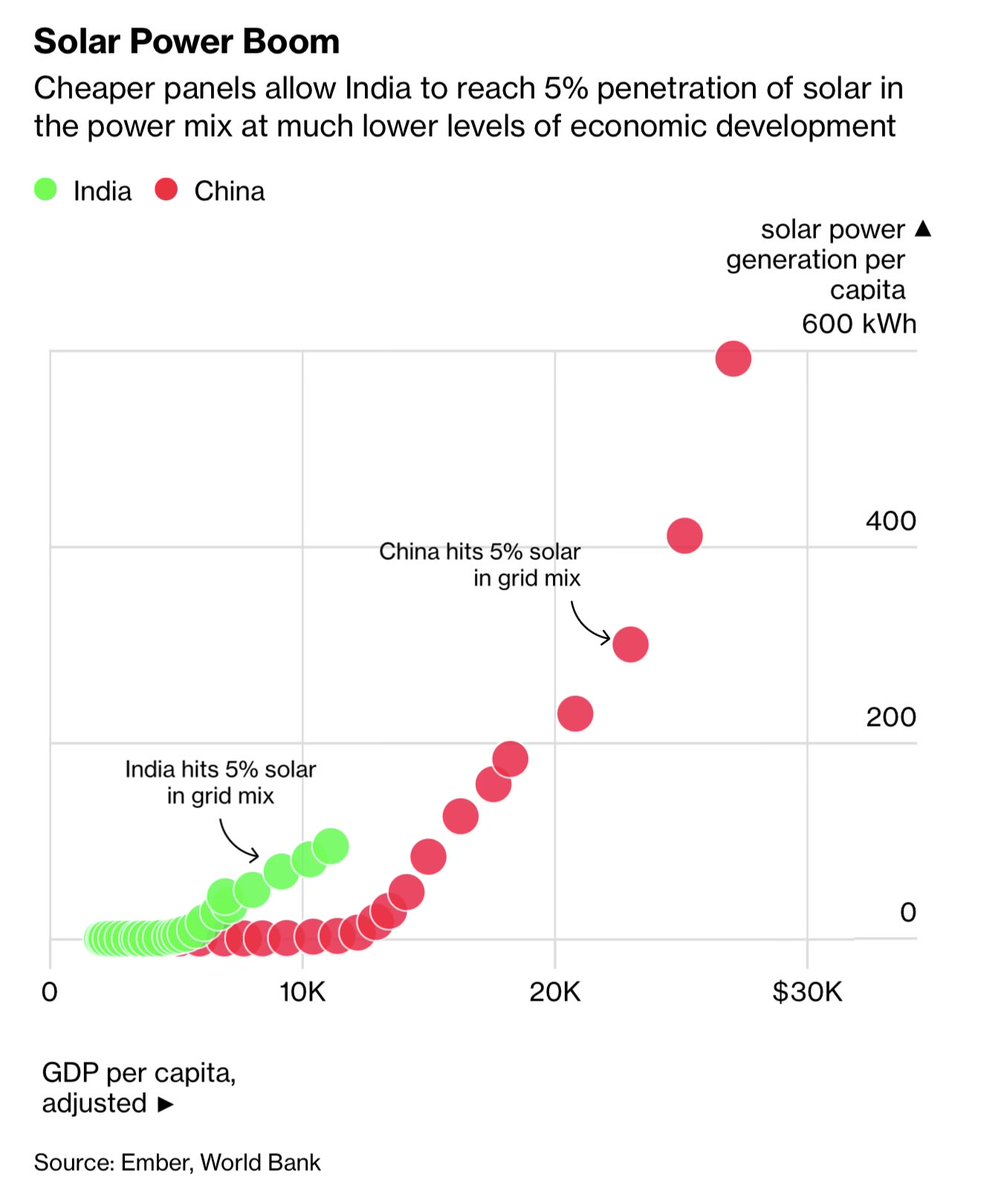
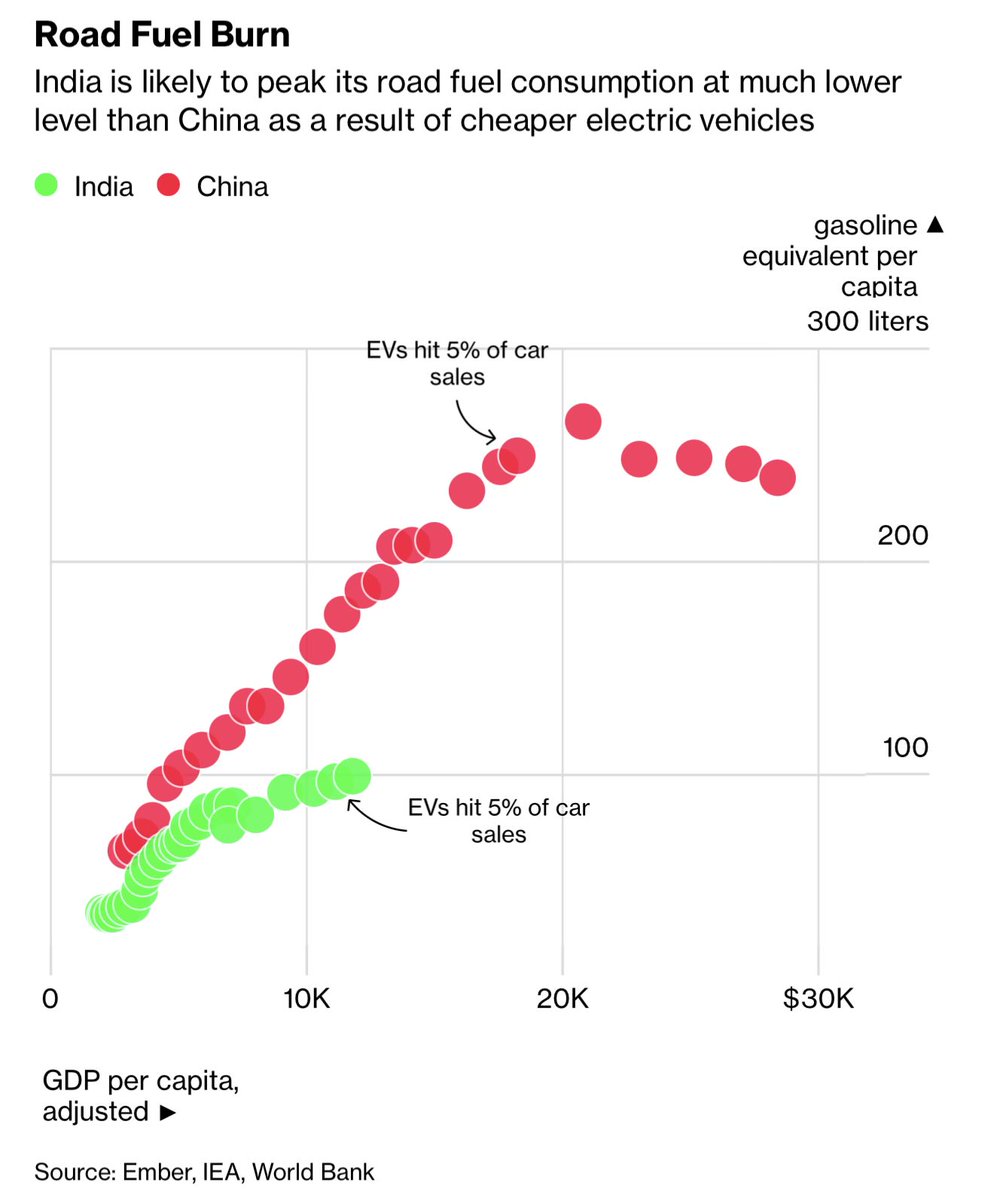
India is adopting green tech and climate tech even faster than China did: “India is electrifying faster than China did at a similar level of economic development, using fewer fossil fuels per capita. This is largely due to the availability of cheaper solar panels and electric cars, allowing India to reach 5% solar penetration in its power mix and 5% electric car sales at lower income levels. While India still relies heavily on fossil fuels, its per-capita consumption is significantly lower than China’s was at the same stage of development.” bloomberg.com/news/articles/…
Rajeev Mantri tweet mediaRajeev Mantri tweet mediaRajeev Mantri tweet media
English
50
313
1.3K
75K
4intelligence retweeted
Fernando Dantas
Fernando Dantas@FDantasEstado·
"Trump, Carney e a nova desordem global" Contraste entre discursos do presidente americano e do primeiro-ministro canadense em Davos é uma chave de compreensão para o novo e turbulento momento mundial. estadao.com.br/economia/ferna…
Português
0
1
1
588
4intelligence retweeted
Carbon Brief
Carbon Brief@CarbonBrief·
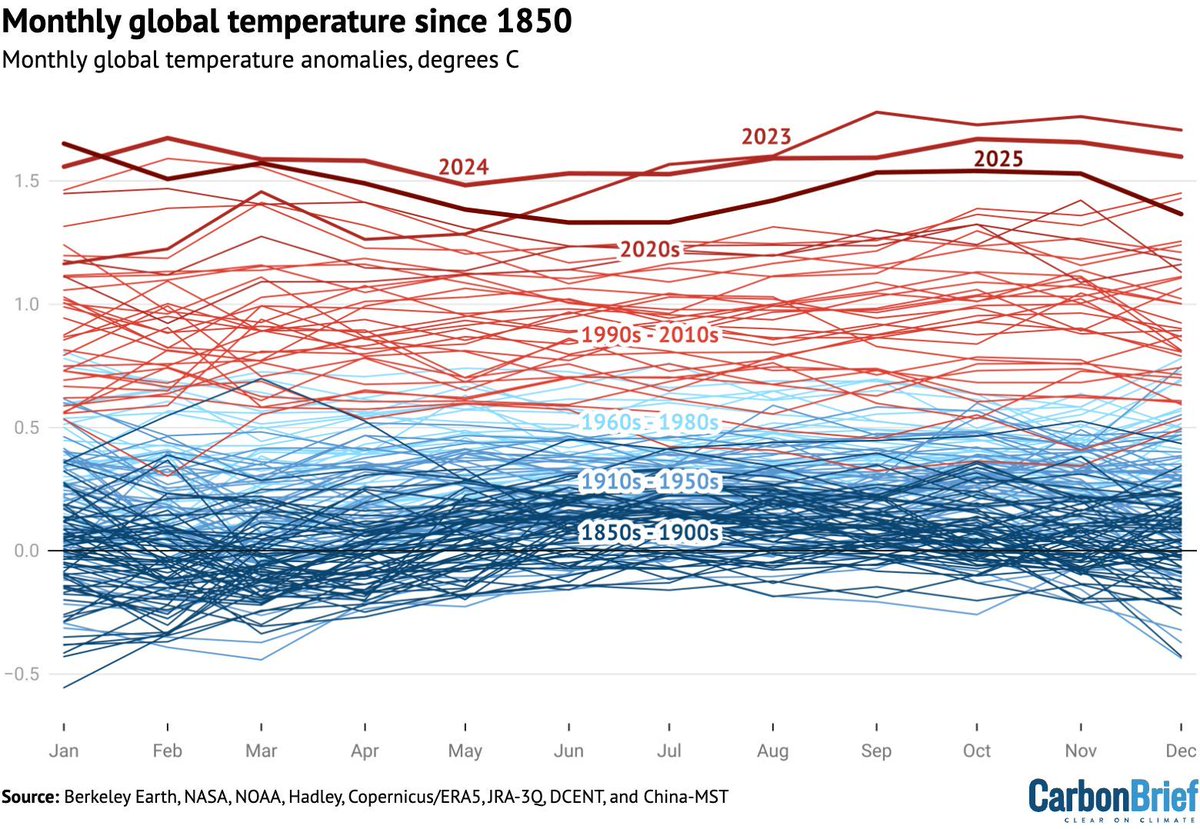
State of the climate: 2025 in top-three hottest years on record as ocean heat surges | @hausfath Read here: buff.ly/rS0iFS7
Carbon Brief tweet media
English
1
6
6
818
4intelligence retweeted
Julian Hinz
Julian Hinz@julianhinz·
A lot has been said about the Greenland tariffs in the past couple of days. We've been looking at the broader picture: who actually pays the tariffs? We analyzed 25 million shipments worth nearly $4 trillion. The answer: Americans pay 96%. Foreign exporters absorb just 4%. 1/n
Julian Hinz tweet media
English
124
1.5K
3.9K
384.2K
4intelligence retweeted
Financial Times
Financial Times@FT·
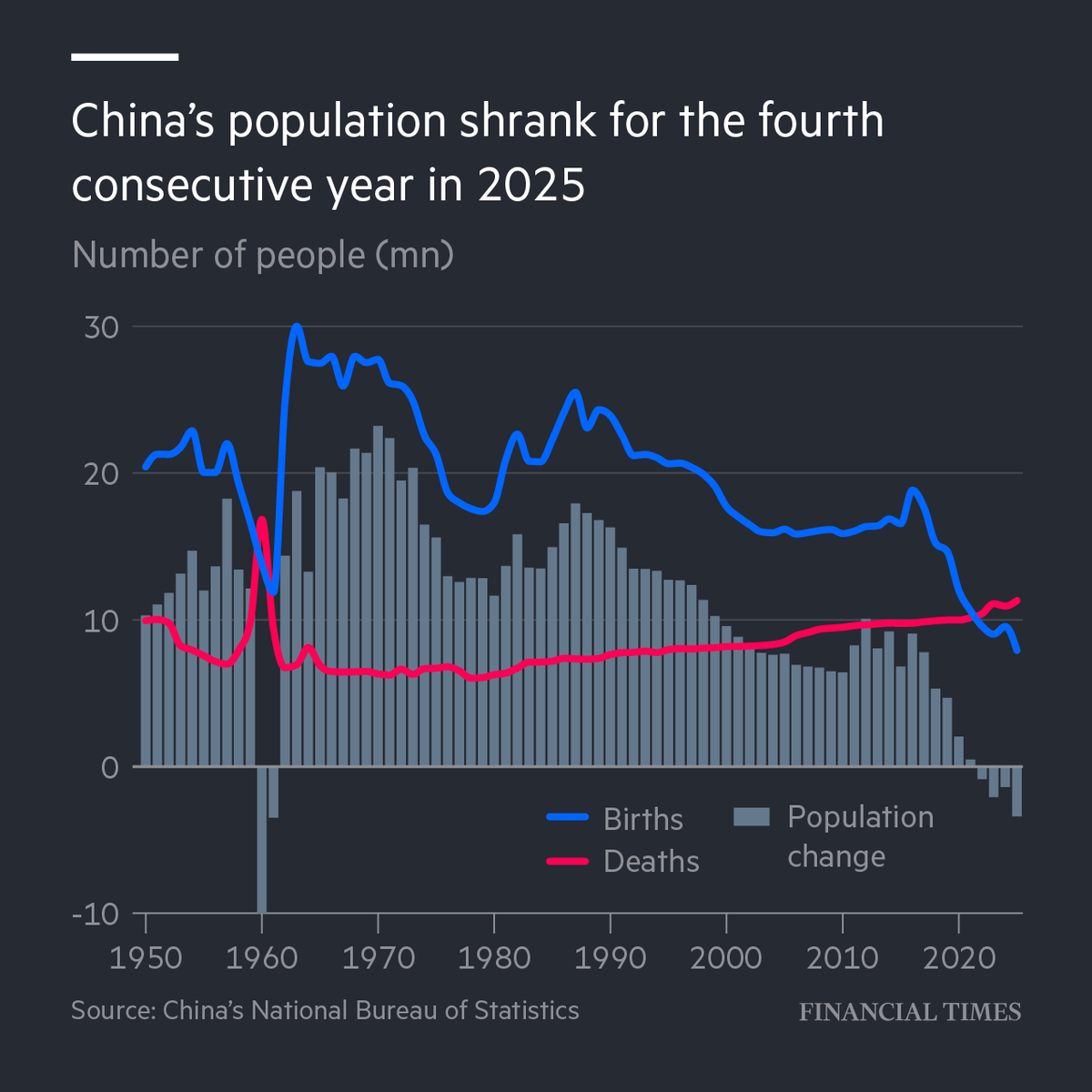
China last year registered the lowest number of births since records began, marking the fourth consecutive year of population decline as policymakers grapple with a demographic crisis. ft.trib.al/fQHMNJk
Financial Times tweet media
English
38
219
781
146.1K
4intelligence retweeted
Ministério da Fazenda
Ministério da Fazenda@MinFazenda·
Confira o que é mito e o que é verdade na Reforma Tributária.
Ministério da Fazenda tweet mediaMinistério da Fazenda tweet mediaMinistério da Fazenda tweet media
Português
24
64
153
4.3K
4intelligence retweeted
Alex Etra
Alex Etra@EtraAlex·
"Sell America" Redux: Greenland Edition a 🧵 @ExanteData @jnordvig Has long tracked pension FX and hedging activity. With thanks also to Maria Casteneda and at the request of @Brad_Setser
English
3
25
78
35.8K
4intelligence retweeted
LSE Inequalities
LSE Inequalities@LSEInequalities·
📄 New III working paper: This paper describes a new public-access online database containing internationally comparable estimates of inequality of opportunity for seventy-two countries, covering two-thirds of the world’s population. 🔗 buff.ly/3IEgjiU
LSE Inequalities tweet media
English
3
39
104
8.2K
4intelligence retweeted
Carlos Góes
Carlos Góes@goescarlos·
A imigração sempre foi o superpoder dos EUA. Enquanto Ásia e Europa enfrentam problemas graves pela sua pirâmide etária, os EUA conseguia atrair uma combinação ótima de (a) trabalhadores altamente qualificados e inovadores e (b) trabalhadores jovens de baixa qualificação dispostos a manter custos baixos em setores chaves. Como tem pouca intersecção com a população local (qualificação média), mais complementa que compete no mercado de trabalho. Talvez nunca antes tenha agido um caso de auto sabotagem ao poder do próprio país.
Carlos Góes tweet media
Leading Report@LeadingReport

BREAKING: Sec. Marco Rubio freezes all foreign visa processing indefinitely from 75 countries: Afghanistan, Albania, Algeria, Antigua and Barbuda, Armenia, Azerbaijan, Bahamas, Bangladesh, Barbados, Belarus, Belize, Bhutan, Bosnia, Brazil, Burma, Cambodia, Cameroon, Cape Verde, Colombia, Cote d’Ivoire, Cuba, Democratic Republic of the Congo, Dominica, Egypt, Eritrea, Ethiopia, Fiji, Gambia, Georgia, Ghana, Grenada, Guatemala, Guinea, Haiti, Iran, Iraq, Jamaica, Jordan, Kazakhstan, Kosovo, Kuwait, Kyrgyzstan, Laos, Lebanon, Liberia, Libya, Macedonia, Moldova, Mongolia, Montenegro, Morocco, Nepal, Nicaragua, Nigeria, Pakistan, Republic of the Congo, Russia, Rwanda, Saint Kitts and Nevis, Saint Lucia, Saint Vincent and the Grenadines, Senegal, Sierra Leone, Somalia, South Sudan, Sudan, Syria, Tanzania, Thailand, Togo, Tunisia, Uganda, Uruguay, Uzbekistan and Yemen.

Português
25
71
872
63.6K
4intelligence retweeted
Cleiton Silva
Cleiton Silva@Cleiton_CSJ·
Atualizando...
Cleiton Silva tweet media
Português
4
1
54
5.1K
4intelligence retweeted
Philipp Heimberger
Philipp Heimberger@heimbergecon·
Our paper is out in "Applied Economics Letters". Public investment shocks in EU27 (a) have favourable effects on output (investment multpliers >1) and unemployment (short to medium run); (b) don't crowd out private investment; and (c) don't jeopardise public debt sustainability.
Philipp Heimberger tweet media
English
2
52
128
12.2K
4intelligence retweeted
Brazil Journal
Brazil Journal@BrazilJournal·
ECONOMIA. Os grandes riscos de 2026, segundo a Eurasia. (É de arrancar os cabelos) braziljournal.com/1ot8
Brazil Journal tweet media
Português
2
8
46
6.3K