AHA Science

13.4K posts

AHA Science banner
AHA Science

AHA Science

@AHAScience

@American_Heart’s official account for meetings, science news, funding opportunities and membership. RTs/Follows not endorsements. Pump up your career, here.

Dallas, TX Joined Ocak 2009
4.8K Following74.9K Followers
Pinned Tweet
AHA Science
AHA Science@AHAScience·
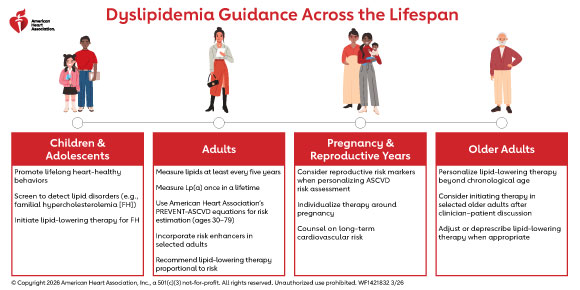
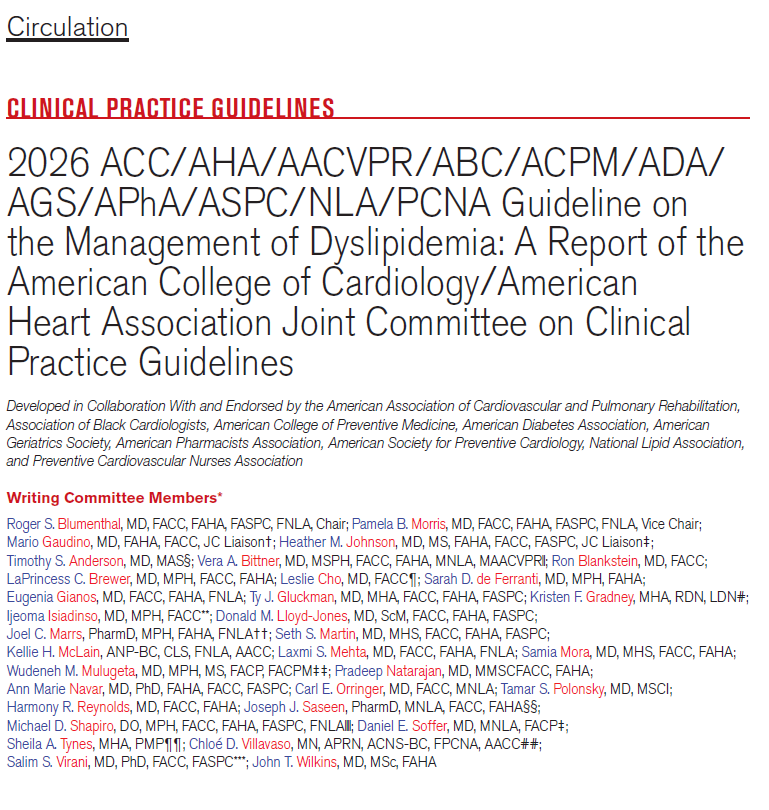
Key updates to this guideline include: ➡️ The use of the American Heart Association PREVENT-ASCVD equations to guide primary-prevention and lipid-lowering therapy decisions. ➡️ Testing Lp(a) at least once in a lifetime and selective apolipoprotein B measurement to improve risk assessment and guide treatment ➡️ The return of LDL-C and non-high-density lipoprotein cholesterol treatment goals (with lower targets for higher-risk groups) ➡️ Expanded use of coronary artery calcium scoring to reclassify risk[ME1.1] ✍🏼 @rblument1 @tygluckman @RonBlankstein @PamelaBMorris @pnatarajanmd @AnnMarieNavar @SethShayMartin @APRN_CNS @nyulangone @DrMichaelShapir @kgradneyrd @eugeniagianos @virani_md @KellieMcLain1 @ijeomaheartdoc @SamiaMoraMD @DrHeatherJohn @dmljmd
AHA Science tweet media
English
7
142
311
100.7K
AHA Science
AHA Science@AHAScience·
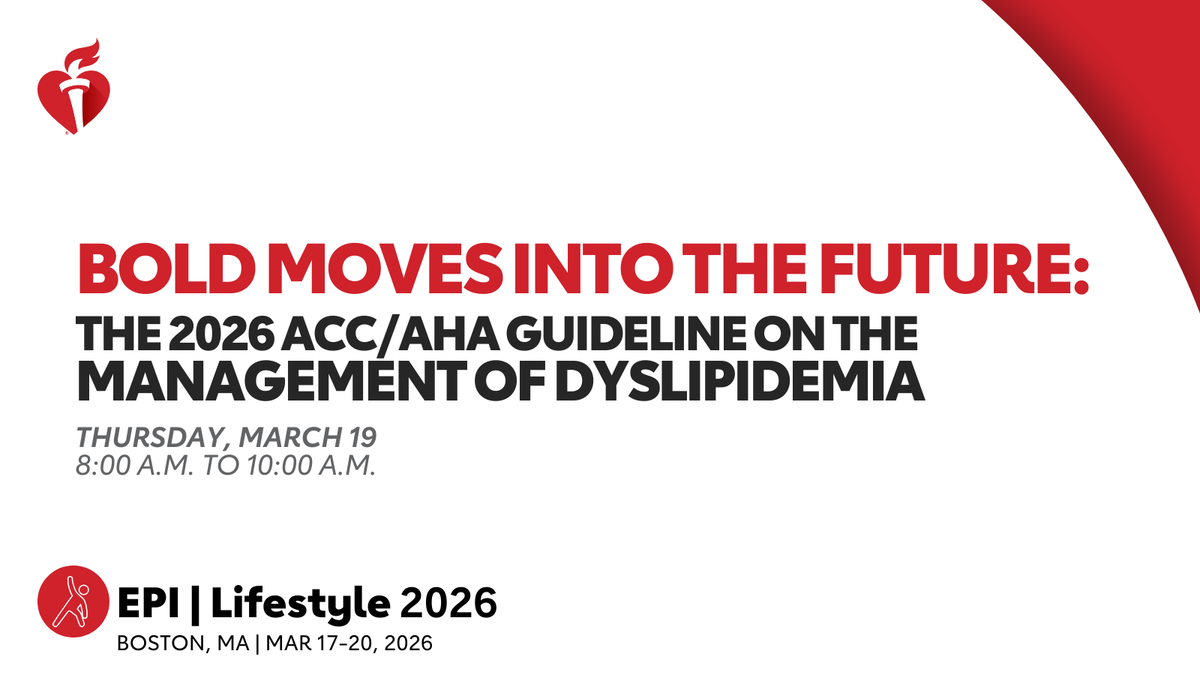
Meet the authors of the 2026 ACC/AHA Dyslipidemia Guideline! Join us at 8 a.m. Thursday for an in-depth discussion of the updated recommendations in the new guideline – an update to the 2018 joint cholesterol guideline – and their implications for clinical practice. #EPILifestyle26
AHA Science tweet media
English
0
10
20
1.7K
AHA Science
AHA Science@AHAScience·
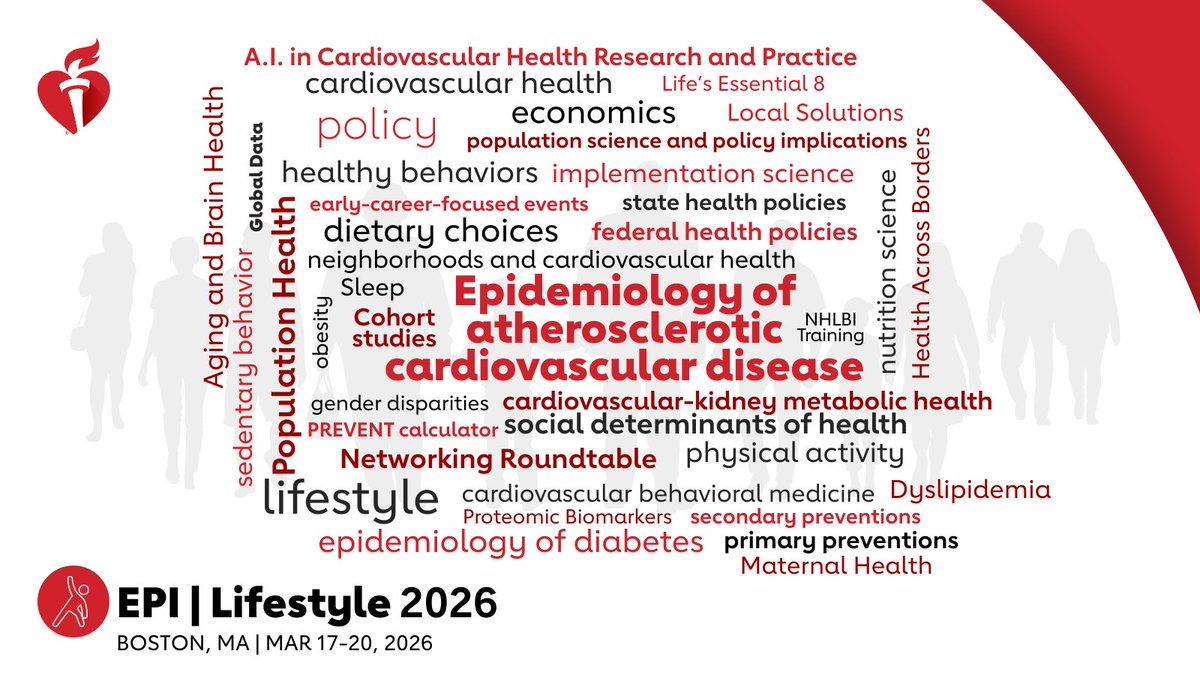
Welcome to Boston and #EPILifestyle26! Hit repost and share the big moments you’re looking forward to most. Let’s make this week unforgettable, together.
AHA Science tweet media
English
0
1
4
477
AHA Science retweeted
AHA Science
AHA Science@AHAScience·
Abnormal lipid levels are common in adults and children (age 18 years and younger), affecting 20% to 25% of the population. Screening asymptomatic individuals can identify both multifactorial dyslipidemias and monogenic disorders, such as FH (familial hypercholesterolemia), which may not present as clinical ASCVD for decades. The 2026 Guideline on the Management of Dyslipidemia was published today. ✍🏼@rblument1 @tygluckman @RonBlankstein @PamelaBMorris @pnatarajanmd @AnnMarieNavar @SethShayMartin @APRN_CNS @nyulangone @DrMichaelShapir @kgradneyrd @eugeniagianos @virani_md @KellieMcLain1 @ijeomaheartdoc @SamiaMoraMD @DrHeatherJohn @dmljmd
AHA Science tweet media
English
2
26
71
9.6K
AHA Science
AHA Science@AHAScience·
Key updates to this guideline include: ➡️ The use of the American Heart Association PREVENT-ASCVD equations to guide primary-prevention and lipid-lowering therapy decisions. ➡️ Testing Lp(a) at least once in a lifetime and selective apolipoprotein B measurement to improve risk assessment and guide treatment ➡️ The return of LDL-C and non-high-density lipoprotein cholesterol treatment goals (with lower targets for higher-risk groups) ➡️ Expanded use of coronary artery calcium scoring to reclassify risk[ME1.1] ✍🏼 @rblument1 @tygluckman @RonBlankstein @PamelaBMorris @pnatarajanmd @AnnMarieNavar @SethShayMartin @APRN_CNS @nyulangone @DrMichaelShapir @kgradneyrd @eugeniagianos @virani_md @KellieMcLain1 @ijeomaheartdoc @SamiaMoraMD @DrHeatherJohn @dmljmd
AHA Science tweet media
English
7
142
311
100.7K
AHA Science retweeted
Braydon Dymm, MD
Braydon Dymm, MD@BraydonDymm·
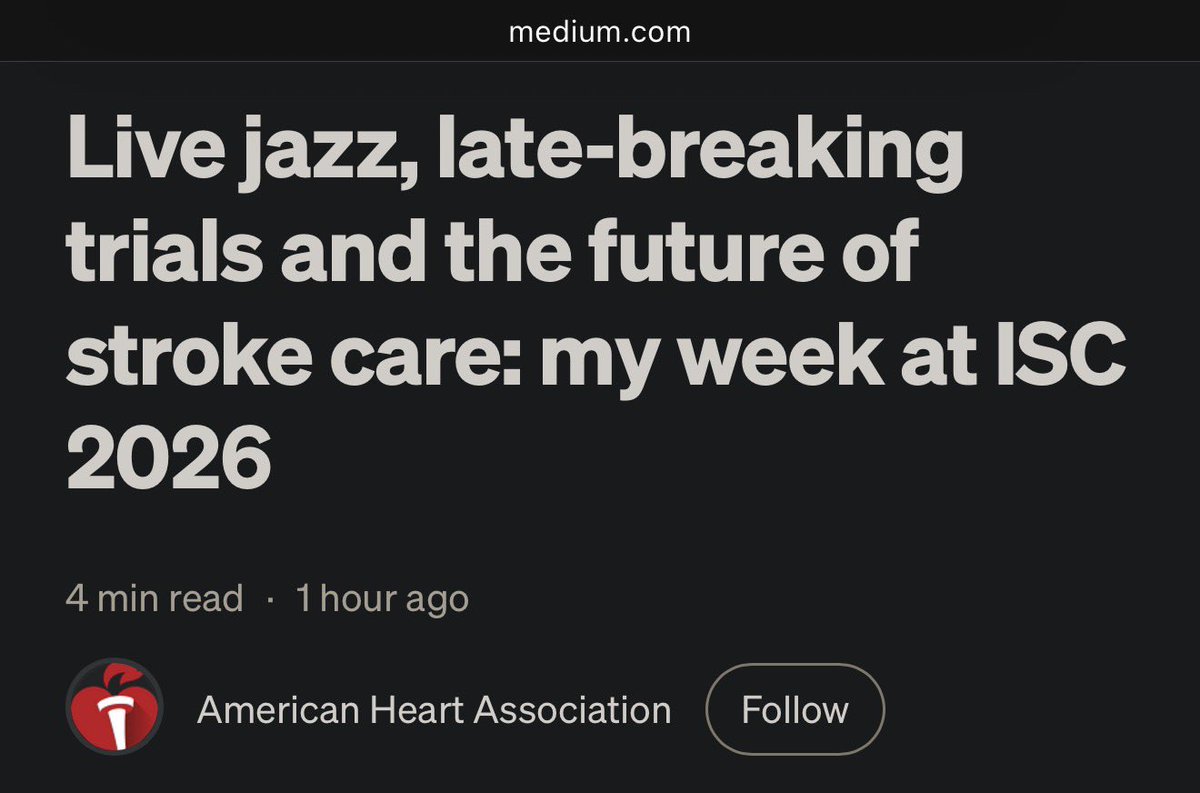
Check out the post here: @AmericanHeart/live-jazz-late-breaking-trials-and-the-future-of-stroke-care-my-week-at-isc-2026-344e45fa0bdf" target="_blank" rel="nofollow noopener">medium.com/@AmericanHeart
English
1
1
3
1.6K
AHA Science retweeted
Braydon Dymm, MD
Braydon Dymm, MD@BraydonDymm·
Jazz on the Mississippi, 7:30 AM sessions, and a room full of stroke neurologists clapping at trial results. My #ISC26 recap for @American_Heart
Braydon Dymm, MD tweet mediaBraydon Dymm, MD tweet media
English
2
4
13
1.4K
AHA Science
AHA Science@AHAScience·
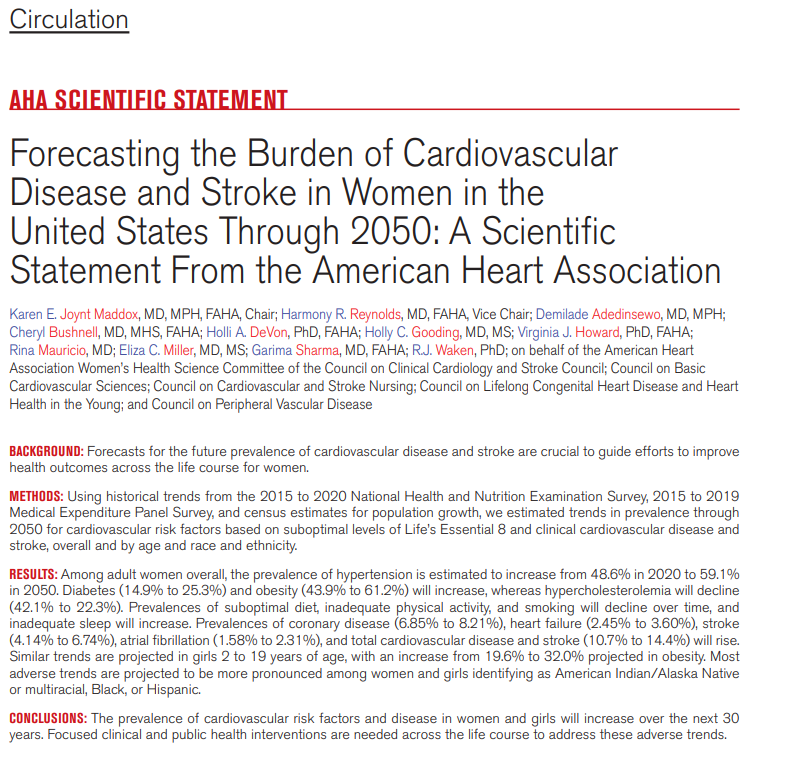
In the US between 2017 and 2020, over sixty-two million women had some form of CVD (coronary heart disease (CHD), heart failure (HF), atrial fibrillation (AF), or stroke) or hypertension (HTN), with an overall prevalence of almost 45%. This paper forecasts the future prevalence of cardiovascular disease and stroke are crucial to guide efforts to improve health outcomes across the life course for women. ✍🏼 @kejoynt @GarimaVSharmaMD @rmaurciomd
AHA Science tweet media
English
1
4
9
1.5K
AHA Science
AHA Science@AHAScience·
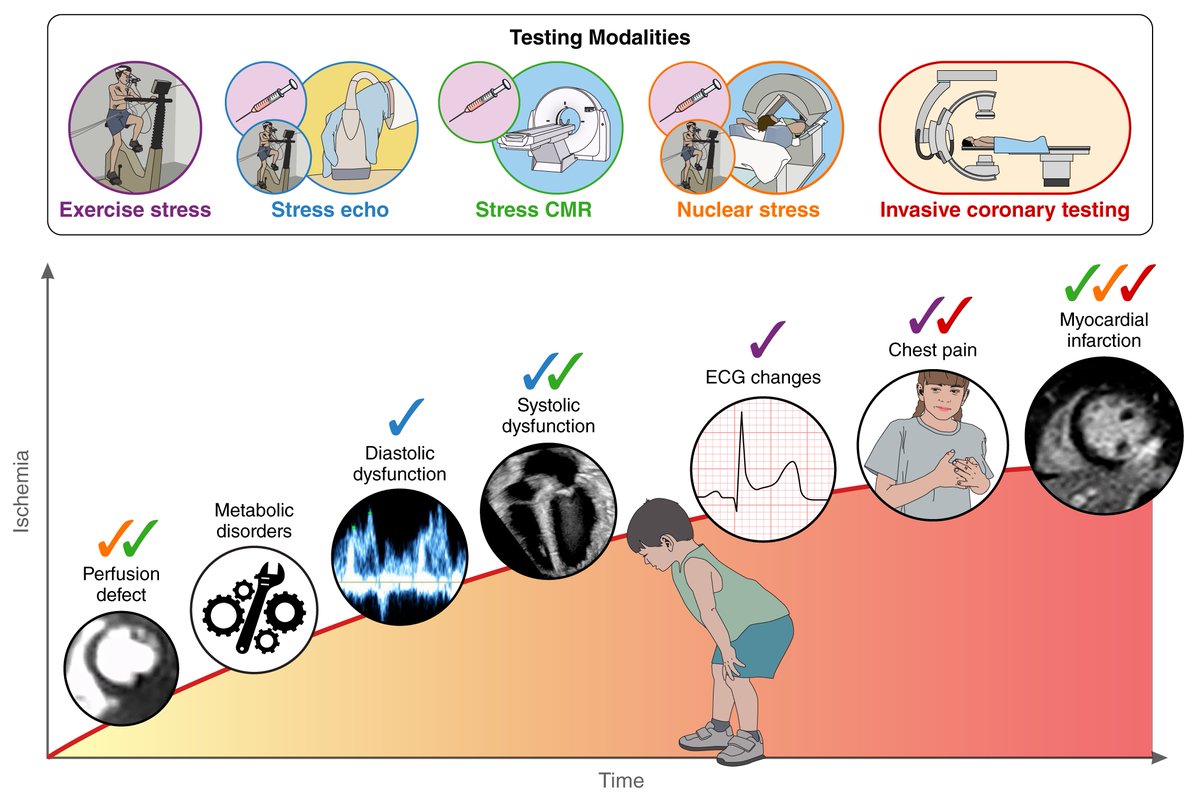
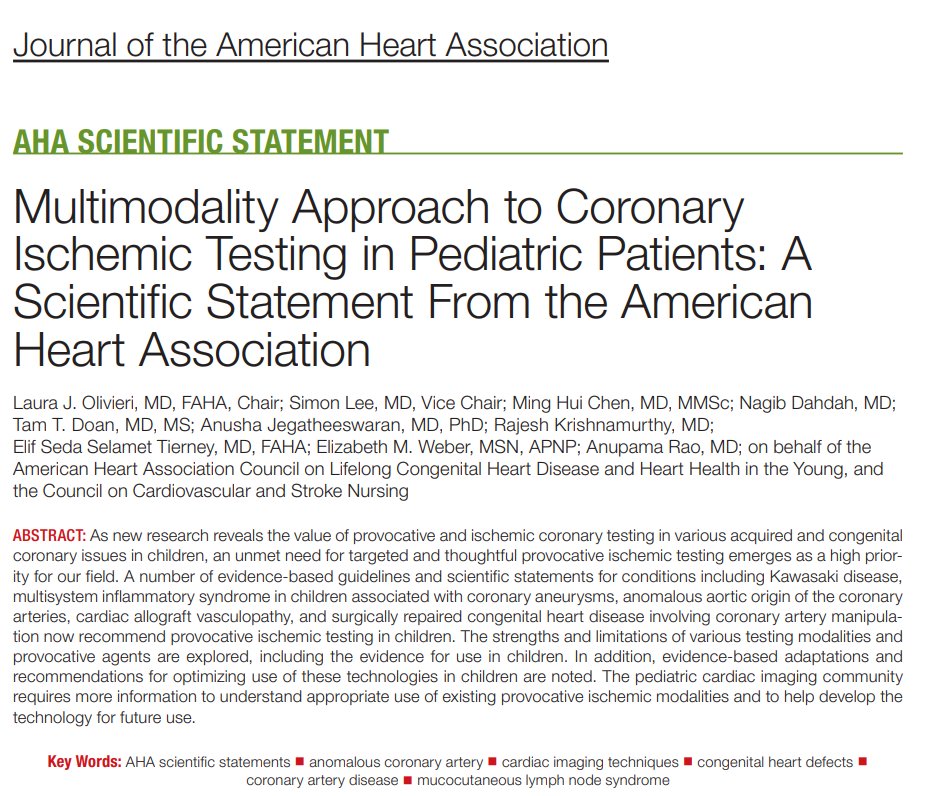
Published today, Multimodality Approach to Coronary Ischemic Testing in Pediatric Patients: A Scientific Statement From the American Heart Association. Provocative and ischemic coronary testing is used in both acquired and congenital heart disease to evaluate the physiologic significance of coronary artery abnormalities by assessing myocardial blood flow and detecting ischemia or vasospasm. ✍🏼 @DahdahNagib @SedaTierney @tamtdoan 📷 The ischemic cascade in children.
AHA Science tweet media
English
3
4
11
1.3K
AHA Science
AHA Science@AHAScience·
This scientific statement aims to summarize the current modalities used in pediatric provocative ischemic testing, promote their appropriate application in clinical practice, and guide future technological advancements. ✍🏼 @DahdahNagib @SedaTierney @tamtdoan
AHA Science tweet media
English
2
4
11
1.4K
AHA Science
AHA Science@AHAScience·
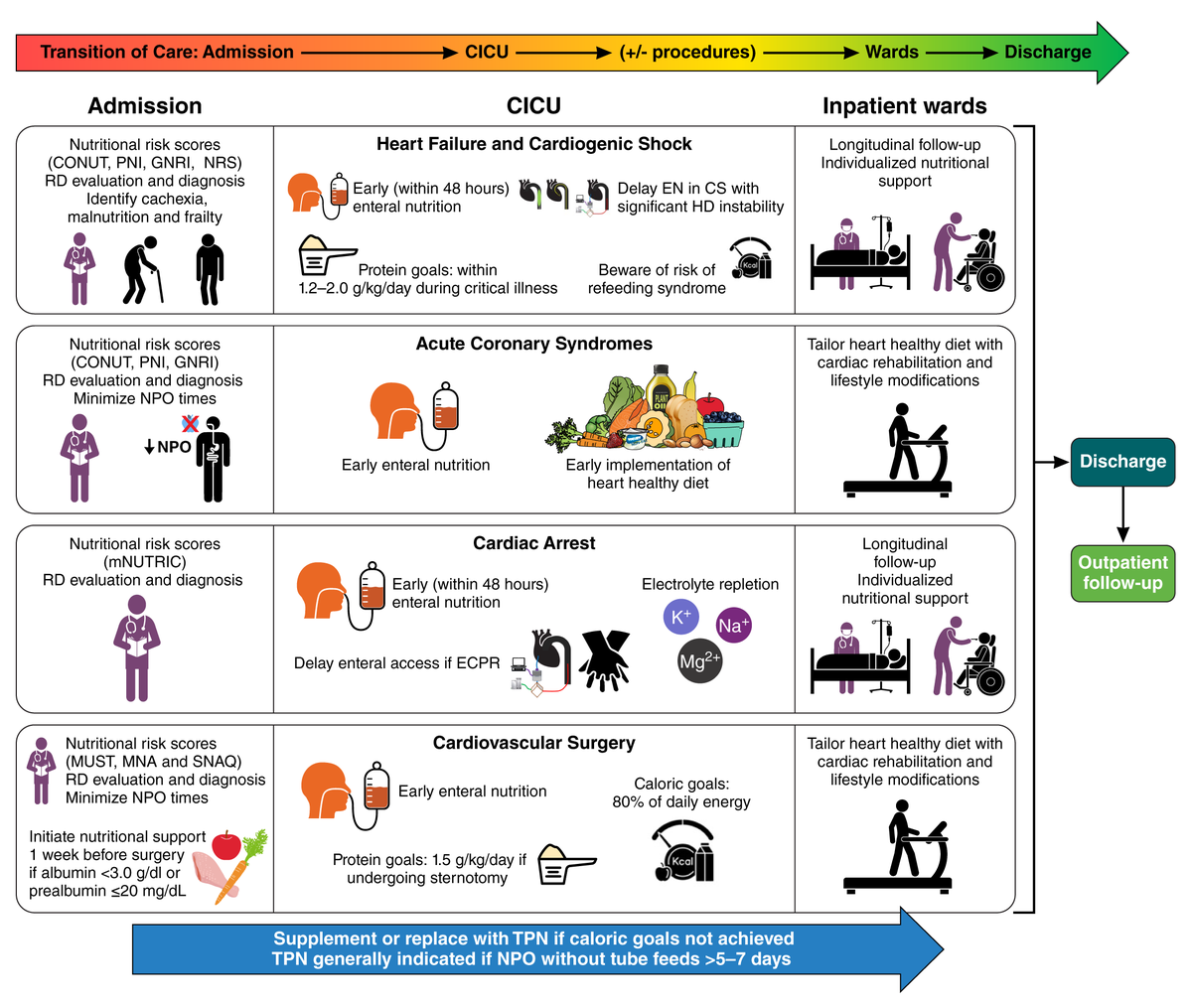
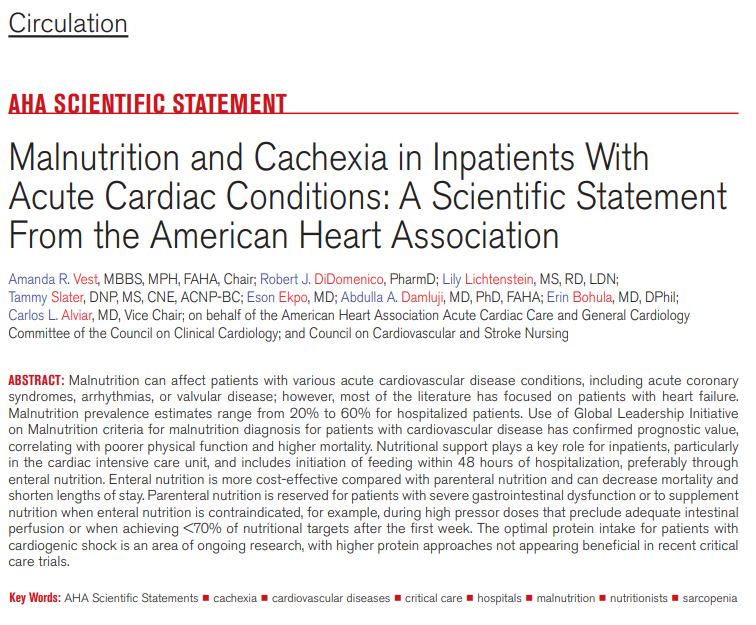
Published today, a new American Heart Association scientific statement on Malnutrition and Cachexia in Inpatients with Acute Cardiac Conditions. Malnutrition prevalence estimates range from 20% to 60% for hospitalized patients. Nutritional support plays a key role for inpatients, particularly in the cardiac intensive care unit, and includes initiation of feeding within 48 hours of hospitalization, preferably through enteral nutrition. 📷 Summary of nutritional strategies for patients with cardiovascular conditions across the domains of care ✍🏼 @NutritionHF @tmslaterACNP @CardiBeatMD @DrDamluji @EBohula @carlosalviar
AHA Science tweet media
English
2
6
20
2.4K
AHA Science
AHA Science@AHAScience·
Malnutrition remains common yet underrecognized in patients with cardiovascular disease, particularly in critical care. The use of validated screening tools to identify at-risk patients, followed by assessment using standardized diagnostic criteria and timely nutrition intervention, is key to improving clinical outcomes. ✍🏼 @NutritionHF @tmslaterACNP @CardiBeatMD @DrDamluji @EBohula @carlosalviar
AHA Science tweet media
English
1
6
13
1.6K