

New positions for PhD students in computational cancer research in Berlin within the graduate program CompCancer!
Apply here: karriere.charite.de/stellenangebot…
More info: comp-cancer.de
English
CompCancer
262 posts

@CompCancerRTG
PhD Programme in Computational Cancer Research in Berlin, @dfg_public founded, RTG2424, @ChariteBerlin @HumboldtUNI @MDC_Berlin @IRILifeSciences
How long does an mRNA stay in the nucleus? How long does it stay in the cytoplasm? Together with @landthaler_m's group , we used metabolic labeling, cell fractionation and mathematical modeling to quantify mRNA flow through the cell. Finally out in MSB doi.org/10.1038/s44320…
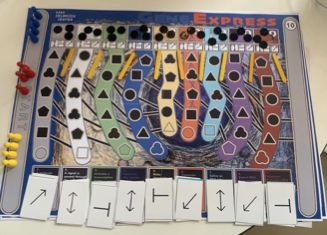
Wenn Biologie auf Spieltheorie trifft: Stolz vorgestellt haben das gemeinsam entwickelte Brettspiel Wissenschaftskommunikator Russ Hodge und Game Designer Steffen Bogen. Nicht auf dem Bild, aber als Lebenswissenschaftlerin involviert war Jennifer von Schlichting (@ChariteBerlin).
In the last part of its "100 most important minds of Berlin's science" series, the @Tagesspiegel | @TspWissenschaft featured #mdcBerlin researcher and group leader Dagmar Kainmüller! Congratulations 🥳 tagesspiegel.de/wissen/sie-mac… (German, paywall)

Why does age make COVID-19 more dangerous? Our latest study shows molecular shifts with age, revealing how changes in immune signaling drive enhanced inflammation across the immune cell landscape. biorxiv.org/content/10.110…


Excited to share the publication of my first paper in @NatureComms, introducing a comprehensive approach to study time-of-day effects of anti-#cancer drugs ⏰ Many thanks to the whole team, especially Adrián @Granada_Lab! Check out our work here: nature.com/articles/s4146…
Out now on @biorxivpreprint: w/ Markus Morkel's group on "Tracking CRC cells resistant to active-state RAS inhibition as they emerge". Uses a modified FIRE reporter system (@albecklab) for monitoring ERK activity in the nucleus and the cytoplasm. biorxiv.org/cgi/content/sh…

📍Posting live from the grounds of @ChariteBerlin in Mitte! We @compcancer are showcasing the importance of computational tools in cancer research at the Long Night of Science @lndwberlin. @SidAnnaldasula @JavierMarchenaH


Using CyTOF for signaling investigations? CyTOF data shows strong covariance between nearly all markers, caused by variations in cell size and probably also labeling. Spearheaded by @rosasta_g, we developed RUCova to remove such unwanted covariance. biorxiv.org/cgi/content/sh….