
Gee

29.9K posts

Gee banner
Gee

Gee

@Gyifted

Lagos, Nigeria Joined Mart 2014
3.1K Following892 Followers
Gee retweeted
Osaretin Victor Asemota
I am tired of all this meaningless speculation without facts, and of tarnishing the image of someone who worked very hard to build his assets. Since people would assume I am biased because Herbert was like my brother, I asked Claude about the likelihood of someone owning 106 houses as a beneficial owner in London. To be clear, Late Herbert Wigwe was discovered to be a "Beneficial Owner" and NOT a nominee. I know younger people who already legally own about half of that asset portfolio, and they are still working professionals. A doctor I know owns 45 assets around England, but not concentrated in London, and many Indians like him own many more properties than 100. For a banker who has worked for decades to own assets worth about 100 million pounds is not strange. The problem is that he didn't diversify the holdings for some reason. Since I know him very well, the likely reason is that he felt London was the safest place to own those assets, since his mentors and role models had already done the same. To be clear: The fact that investigators identified him as the beneficial owner suggests they traced the economic benefit to him: the money flows, the decision-making authority, the enjoyment of the assets. Here is Claude's full answer below: When a Nigerian Banker Dies and Is Discovered as the Beneficial Owner of 106 London Houses What "Beneficial Owner" Means Here In English property law, the beneficial owner is the person who truly owns the property in substance — they enjoy the rental income, the capital gains, and the proceeds on sale. The legal title may sit with someone else entirely: a nominee company, a solicitor, a family member, or a shell entity. But the beneficial owner is the real owner in the eyes of equity and, increasingly, in the eyes of enforcement agencies. If this banker was discovered to be the beneficial owner of 106 London houses, it means the properties were held in his interest by others. He was not the trustee. He was the principal. The names on the Land Registry were his proxies. Could He Still Have Been Holding Them in Trust for Others? It is theoretically possible but structurally unlikely at this scale. Here is why. A beneficial owner can, in principle, declare himself a trustee over assets he beneficially owns — creating a sub-trust where he holds his beneficial interest for yet another layer of people. But this is unusual in practice for several reasons. First, the entire point of using proxies and nominee structures is to keep the real owner hidden. Adding another trust layer beneath the beneficial owner adds complexity that serves little purpose unless there is a specific tax, succession, or concealment reason. Second, if he were merely a conduit for others, those others would typically be identified as the beneficial owners in the first place — not him. The fact that investigators identified him as the beneficial owner suggests they traced the economic benefit to him: the money flows, the decision-making authority, the enjoyment of the assets. Third, the defence of "I was just holding for someone else" is the single most common claim made by politically exposed persons when their assets are discovered. Courts and enforcement agencies treat it with deep scepticism, particularly when the claim surfaces only after death or after an investigation begins, when there is no contemporaneous written trust documentation, when the supposed beneficiaries cannot be clearly identified, or when the pattern of acquisition, management, and income collection points to a single controlling mind. The More Likely Reality A Nigerian banker who is the beneficial owner of 106 London properties, held through nominee structures, fits a pattern that UK enforcement agencies now know well. Properties were acquired over years or decades, often during periods of access to significant financial flows. Legal title was placed with nominees — sometimes UK-registered companies, sometimes family members or associates, sometimes offshore vehicles — to avoid detection by Nigerian regulators like the EFCC and the CBN, and to stay below the radar of UK authorities. The beneficial owner controlled everything: which properties to buy, how to finance them, who managed them, where the rental income went. The nominees were not independent trustees exercising discretion. They were instruments of the beneficial owner's will. At the scale of 106 properties — potentially representing £25 million to over £100 million depending on location — this is not casual wealth diversification. This is a systematic programme of asset accumulation in a jurisdiction perceived as safe, liquid, and opaque. What Happens Now That He Has Died His death creates a cascading set of problems. The estate enters probate, and the executors or administrators must account for all assets in which the deceased had a beneficial interest — not just those in his name. If investigators or HMRC have identified him as beneficial owner of 106 properties, those properties are part of his taxable estate regardless of whose name is on the title. Inheritance tax at 40% applies to the value above the nil-rate band, which could mean a tax liability running into tens of millions of pounds. HMRC will investigate whether rental income from these properties was ever declared for UK income tax. If it was not, the estate faces back taxes, interest, and penalties that could stretch back 20 years under the discovery assessment rules. The National Crime Agency may issue Unexplained Wealth Orders requiring the estate to demonstrate that the properties were acquired with legitimately obtained funds. The burden of proof is on the estate, not on the NCA. If the estate cannot provide a credible explanation for the source of funds used to acquire 106 properties, the NCA can seek civil recovery under the Proceeds of Crime Act 2002 on the balance of probabilities. Anyone who served as a nominee or legal titleholder may themselves face scrutiny for facilitating the concealment of beneficial ownership, particularly under the new Register of Overseas Entities regime and the evolving UK anti-money laundering framework. The Trusteeship Defence in Context If family members, associates, or other claimants now come forward asserting that some of these properties were actually held by the deceased in trust for them, they face a brutal dilemma. To claim, they must identify themselves and explain their own source of funds. They must produce trust documentation — ideally contemporaneous, written, and consistent with the actual pattern of property management. They must explain why the arrangement was structured to conceal their interest. And they must do all of this under the scrutiny of agencies that are specifically looking for exactly this kind of claim as evidence of a wider network of concealed wealth. The absence of clear, contemporaneous trust deeds is almost always fatal to such claims. And even if documentation exists, enforcement agencies will examine whether the trusts were genuine — meaning the trustee actually acted in the beneficiaries' interests and the beneficiaries had real control — or whether they were shams designed to create a paper trail. The Bottom Line When someone is identified as the beneficial owner of 106 London houses, the default inference is that they were genuinely his. The nominee structures existed to hide him, not to hide someone behind him. The trusteeship defence — "I was holding for others" — is available in theory but treated with heavy scepticism in practice, especially when it is raised posthumously, at scale, and in the context of a politically exposed person from a jurisdiction with well-documented patterns of illicit capital flight into London property. The real question is not whether he was holding for others. The real question is where the money came from.
English
17
40
140
24.6K
Gee
Gee@Gyifted·
An Ikwerre man to the core.
Filipino
0
0
0
54
Gee retweeted
Andrew Kersley
Andrew Kersley@AndrewKersley·
After getting tonnes of interest in this story, we've just decided to get rid of the paywall on this investigation so as many of you as possible can read it. Trust me, it's worth your time
The Londoner@_TheLondoner

Everything from Camden Market to the Admiral Duncan pub and central London Harry Potter stores are owned by shell companies in tax havens. For years, they hid the identities of their real owners. Today, @AndrewKersley pulls back the curtain. the-londoner.co.uk/we-reveal-the-…

English
13
606
3.7K
416.4K
Gee retweeted
Andrew Kersley
Andrew Kersley@AndrewKersley·
I had to manually go through 32,000 land registry filings for this piece and have forgotten many treasured memories in favour of weird details about London attractions owned by overseas billionaires. Please make my toil worth it by giving the piece a read
The Londoner@_TheLondoner

Everything from Camden Market to the Admiral Duncan pub and central London Harry Potter stores are owned by shell companies in tax havens. For years, they hid the identities of their real owners. Today, @AndrewKersley pulls back the curtain. the-londoner.co.uk/we-reveal-the-…

English
19
797
4.8K
290.1K
Gee retweeted
Comfort Creator
Comfort Creator@joeys_sf·
As someone who is living in Aba, we don't even have time to argue... As I'm typing, I have stable light to cushion the effect of high cost of petrol to run my business and maintain my home.. I just got my Abịa connect card to enjoy subsidized cost of transport to cushion the impact of the horrible Tinubu government.. Make una dey argue with person wey no fit win SUG government with 14k votes
Comfort Creator tweet media
English
115
1.3K
4.2K
150.3K
Gee retweeted
s🐆
s🐆@byshaaaaaa·
i don’t get the outrage over lewis’ personal life. since when did being a fan mean you get authority over his choices? whether it’s pr or genuine is irrelevant. your role here is to watch, support, and move on, not dictate.
English
1
26
203
5.8K
Gee retweeted
Babájídé
Babájídé@Babajiide·
- Made the significant decision to accept a pay cut and successfully transitioned from a career in banking to the technology industry - Entering into marriage with a partner who shares similar lifestyle values and financial perspectives - Developing a deeper understanding of my personal psychology and emotional relationship around money
King Investing 👑@kinginvestings

What’s a money move that changed your life?

English
4
71
446
35.1K
Gee retweeted
Formula 1
Formula 1@F1·
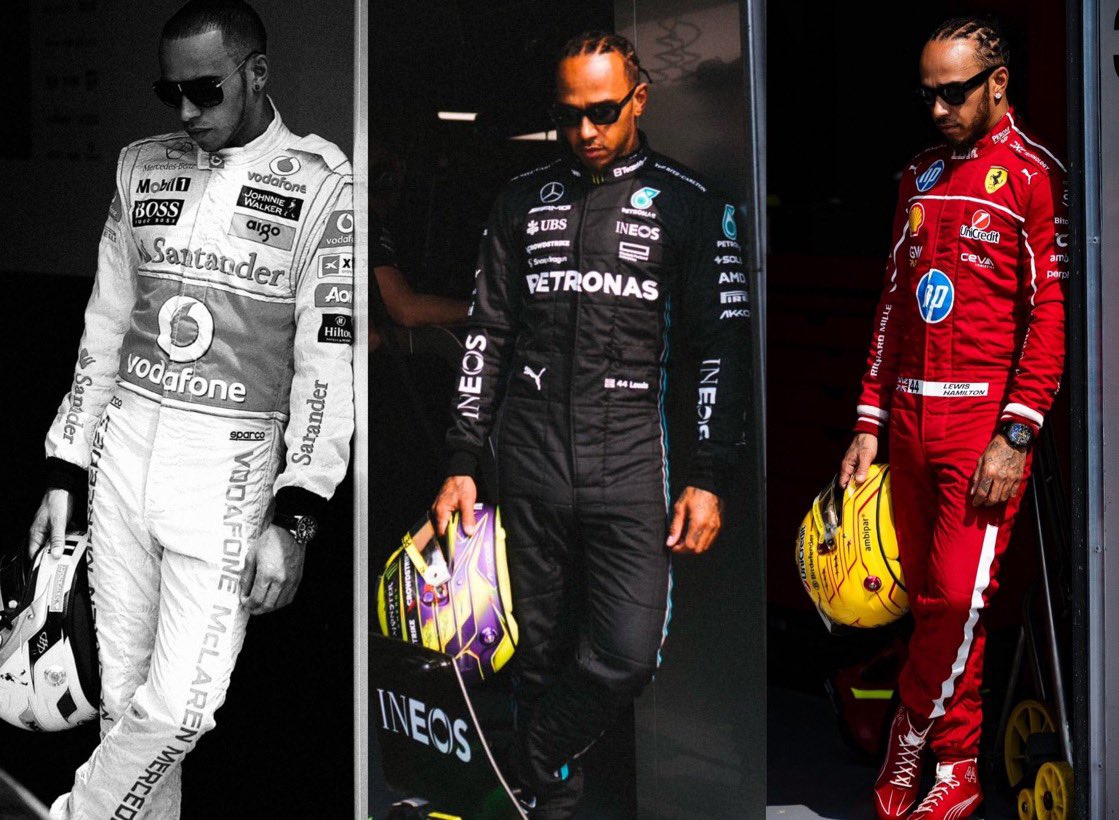
A first podium in red for Lewis Hamilton!! 👏❤️ #F1 #ChineseGP
Formula 1 tweet media
English
1.2K
36.4K
179K
2.1M
Gee retweeted
sim
sim@simscircuit·
Sir Lewis Hamilton becomes the first driver in Formula One history to have a podium with McLaren, Mercedes, and Ferrari. 🐐
sim tweet media
English
150
10.9K
66.9K
616.8K
Gee retweeted
Charms
Charms@The_amakaaa·
A life can look full and beautiful on the outside while being held together by an invisible string of exhaustion that no one else sees. I wrote about it in my latest substack essay. Read here open.substack.com/pub/theamaka/p…
Charms tweet media
English
3
14
50
2.3K
Gee retweeted
Olúwatósìn Olaseinde
Olúwatósìn Olaseinde@tosinolaseinde·
I spent the last 1 week at the Harvard Kennedy School and during the course, a case study was brought up that I can’t stop pondering on. Did you know that in the past, the SAT had negative marking meaning if you guessed wrong, you actually lost points. Researchers found that women were more likely to skip questions when they weren’t sure, while men were more likely to guess. On average, more men would take the chance of 1 out of 4 alternatives being correct (that is a 25% chance) than women did. This difference lowered women’s average scores even when knowledge levels were similar. What’s interesting is that this didn’t necessarily reflect ability. Instead, it pointed to differences in risk tolerance. Many women avoided guessing because the downside felt too costly. And this pattern doesn’t just show up on tests. It shows up in real life, especially in financial decisions. Being overly cautious can sometimes mean missing opportunities for growth. That’s why I want to offer a FREE financial literacy class focused specifically on understanding and managing risk. How to evaluate trade-offs, make informed decisions, and feel more confident navigating uncertainty. Pls sign up for our FREE risk management class. Happy International Women’s Day url-shortener.me/G6JI #GiveToGain
Olúwatósìn Olaseinde tweet media
English
19
151
841
38.2K
Gee retweeted
Olúwatósìn Olaseinde
Olúwatósìn Olaseinde@tosinolaseinde·
“I like money. I like the lifestyle money affords me. I like the things that happen when I give money away. I like money.”
English
17
1K
2.6K
60.2K