At nine years old, he scored 760 on the SAT Math test.
At thirteen, he won an International Mathematical Olympiad gold medal with ease.
At fifteen, he published his first research paper.
At sixteen, he earned both his bachelor’s and master’s degrees.
At twenty, he completed his PhD at Princeton University.
At twenty-four, he became UCLA’s youngest full professor.
At thirty-one, he won the Fields Medal in mathematics.
He has written nearly three hundred research papers.
He has also authored seventeen advanced mathematics books.
Today, Terence Tao continues to work actively as a professor of mathematics at UCLA.
Most people wait until they feel ready to tackle hard problems.
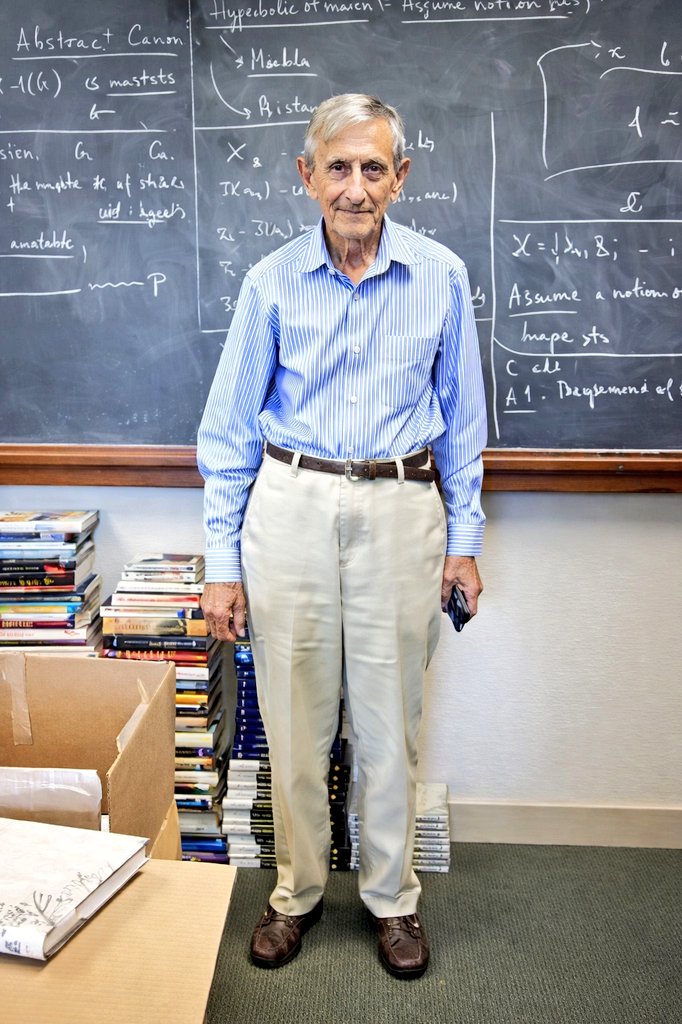
But the physicist Freeman Dyson never did this. As a child, Dyson tried to estimate the number of atoms in the sun—a big question.
He clearly didn't have the tools to calculate at that age. And that mindset followed him into adulthood.
During World War II, Dyson worked in operational research, where mistakes weren't merely academic.
His mistakes could cost lives. And that experience taught him something formal education rarely does: real results, not vanity metrics, are the final exam. And it doesn't care how confident you feel.
Dyson didn't wait to master every prerequisite before engaging with deep problems.
Instead, he put himself at the frontier and learned by wrestling with questions that exceeded him. And that's what you should be doing too.
You see, you don't become capable by waiting for permission. You become capable by engaging with hard problems before you feel ready or qualified.
The stories you tell yourself about not being that kind of person are just stories.
One day, Albert Einstein said he stopped studying mathematics and chose physics instead.
When asked why, he replied:
“I could tell what was true and what was false… but I couldn’t understand which things were really important.”
Then Henri Poincaré shared his story.
He said he actually started with physics but moved to mathematics.
When asked why, he said:
“I could see which things were important… but I wasn’t sure which of them were true.”
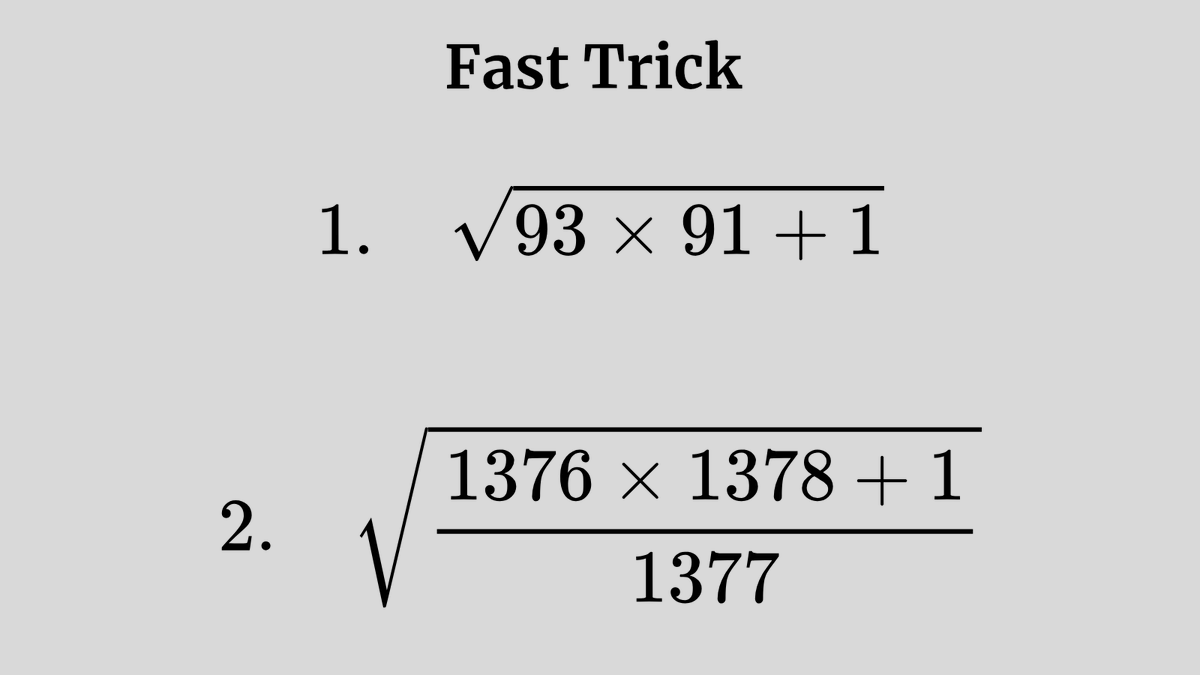
Many exam questions look calculation-heavy… but actually require almost no calculation at all.
Take this: √(93 × 91 + 1)
At first glance, it feels messy.
But look closely:
93 = 92 + 1
91 = 92 − 1
So this becomes a classic identity:
(a + b)(a − b) = a² − b²,
Here, a = 92 and b = 1.
So, 93 × 91 = 92² − 1
Now plug it back:
√(92² − 1 + 1)=√(92²) = 92
No heavy multiplication. Just pattern recognition.
Now look at the second one and use the same trick.